Can Warped Rotors Be Resurfaced: What to Know and Why It Matters
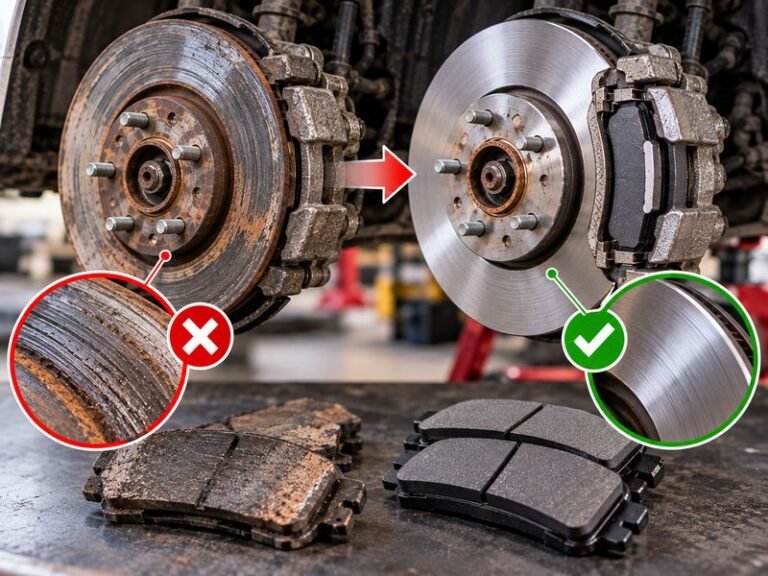
Yes, warped rotors can often be resurfaced, but only if the metal is thick enough to meet the manufacturer’s minimum thickness specification and the surface is not severely cracked or heat-damaged. This article explains the relevant conditions, exceptions, limitations, and practical details that determine whether machining is a safe, cost-effective choice or a wasted effort that compromises your braking system.
When you feel a pulsation through the brake pedal or steering wheel, the natural first instinct is to ask whether the rotors can simply be turned rather than replaced. The goal is to save money and avoid unnecessary waste, but a rushed decision could overlook the critical difference between a rotor that is truly warped and one that has uneven pad transfer. If you machine a rotor that is already below spec, you risk brake fade, vibration, and a dangerous loss of stopping power.
Conversely, if you replace rotors that could have been resurfaced, you spend more than necessary. To make the right call confidently, you need to understand how rotor thickness is measured, what causes the distortion, and how modern brake lathes differ from the old-school methods you may have heard about.
After reading this, you will know how to check for the minimum thickness stamp, recognize the signs of heat damage versus true runout, and decide when resurfacing is a viable repair. You will also understand the critical safety point about the discard thickness and why a cheap repair can become an expensive liability if you skip the measurement step. I will walk you through the process, the exceptions, and the questions you should ask your mechanic before authorizing the work.
What Does “Warped” Actually Mean?
The term “warped rotor” is often a misnomer. In most cases, the rotor itself has not physically bent or distorted like a piece of warped wood. What you are feeling as a pulsation is usually the result of lateral runout combined with uneven brake pad material deposited on the rotor surface.
When you press the brake pedal, the caliper squeezes the pads against the rotor. If the rotor surface has high spots or uneven friction material, the brake pads will grab and release rapidly, creating the familiar shudder.
True warping—where the metal itself has deformed—is less common and usually caused by extreme heat and rapid cooling, such as driving through a deep puddle after heavy braking. This can cause a slight thickness variation across the rotor face. Regardless of the cause, the repair process is similar: you must remove a thin layer of metal from both sides of the rotor to create a perfectly flat, smooth surface.
The Core Question: Can the Rotor Be Machined?
The answer hinges on one primary factor: the rotor’s current thickness relative to its discard specification. Every rotor has a minimum thickness number cast into the hub or stamped on the edge. This number, often abbreviated as “Min Th” or “MIN,” represents the thinnest the rotor can be while still safely dissipating heat and resisting structural failure.
When a rotor is resurfaced, a brake lathe removes a small amount of metal from each side. If the rotor is already close to or below the minimum thickness, machining it will push it into the danger zone. A rotor that is too thin cannot absorb and dissipate heat effectively, leading to brake fade, cracking, and potential rotor failure.
How to Find the Minimum Thickness
Look for the stamped number on the rotor’s hub or outer edge. It is usually expressed in millimeters (e.g., “MIN 22.4 mm”). If you cannot find it, consult the vehicle’s service manual or an online parts database.
Never guess. A rotor that looks fine visually can be dangerously thin after machining.
The Resurfacing Process: What Happens at the Shop
When you take your car to a shop for rotor resurfacing, the technician will measure the rotor thickness with a micrometer at several points. This is not a quick visual check. The measurement must be taken at the thinnest point, usually the center of the braking surface where the pads make contact.
If the rotor has enough metal, the technician will mount it on a brake lathe. There are two common types:
- On-car lathes: These machine the rotor while it is still mounted on the vehicle’s hub. This method corrects runout relative to the wheel bearing and is often preferred for modern vehicles with sensitive anti-lock brake systems (ABS).
- Bench lathes: The rotor is removed and mounted on a stand-alone machine. This is a traditional method that works well but does not account for any runout in the hub itself.
The lathe uses a cutting tool to shave a consistent layer off both sides of the rotor. The goal is to remove just enough material to eliminate the grooves, scoring, and uneven surface. After machining, the rotor should have a smooth, non-directional finish that allows the new brake pads to bed in properly.
When Resurfacing Is a Good Idea
Resurfacing is an excellent option when the rotor meets all of the following conditions:
- Adequate thickness: The rotor is at least 1.5 to 2 millimeters above the minimum discard thickness. This margin allows the lathe to take a clean cut without compromising the rotor’s structural integrity.
- No deep cracks: Hairline surface cracks from heat stress are common, but deep cracks that extend toward the hub are a sign of imminent failure.
- No severe blueing: A dark blue or purple discoloration indicates the rotor was overheated to the point where the metal’s temper changed. This makes the rotor hard and brittle, and it may not machine cleanly.
- No excessive scoring: Deep grooves from worn-out brake pads can sometimes be machined out, but if the grooves are too deep, the rotor will be too thin after cutting.
If your rotors meet these criteria, resurfacing can extend their life by 20,000 to 30,000 miles and save you the cost of new parts.
When Replacement Is the Only Safe Choice
There are clear situations where resurfacing is not worth the risk or the money.
Rotor Is Below Minimum Thickness
This is the absolute deal-breaker. If the rotor measures at or below the minimum stamped thickness, it must be replaced. Machining it would leave it too thin to handle the heat of braking, and it could crack or shatter under load.
Do not let a shop talk you into “just a light cut” if the rotor is already at spec.
Severe Heat Cracking
If you see a network of cracks radiating from the brake pad contact area, the rotor has been subjected to severe thermal stress. These cracks can propagate and cause the rotor to fail suddenly. Resurfacing will not remove the structural damage deep within the metal.
Rust and Corrosion
Surface rust from sitting is normal and can be machined off. However, if the rotor has deep pitting or rust that has eaten into the metal, the rotor is compromised. This is common on vehicles that have sat for months or years.
Cost Comparison
Sometimes, replacement is simply cheaper. Economy rotors for many common vehicles cost between $30 and $60 each. If a shop charges $25 to $40 per rotor to resurface, plus the cost of new brake pads, the labor savings may be minimal.
When you factor in the time it takes to remove, machine, and reinstall the rotors, buying new ones can be a smarter investment.
The Hidden Danger: Uneven Pad Transfer
One of the most common causes of brake pulsation is not a warped rotor but uneven pad transfer. When you brake hard and come to a complete stop, the brake pads can leave a layer of friction material on the rotor. This creates a high spot that causes the pedal to pulse.
In this case, the rotor metal is perfectly flat, but the surface is uneven.
Resurfacing will fix this by removing the pad material and the top layer of metal. However, if you simply install new pads on a rotor with old pad transfer, the pulsation will likely return. This is why resurfacing is often paired with new brake pads.
What About “Turning” Rotors at Home?
Some DIYers attempt to resurface rotors with an angle grinder or sandpaper. This is almost always a bad idea. Achieving a perfectly flat, parallel surface requires a precision lathe.
Hand tools will leave the rotor uneven, causing new brake pads to wear prematurely and the pulsation to return. If you are not equipped with a proper brake lathe and micrometer, leave this job to a professional.
The Role of Brake Pad Quality
The condition of your brake pads directly affects whether resurfacing is worth it. If your pads are worn unevenly or contaminated with oil or brake fluid, they need to be replaced regardless. When you resurface the rotors, you should always install new pads.
Old pads have a wear pattern that matches the old rotor surface, and they will not bed in correctly on a freshly machined surface.
How Long Does Resurfacing Last?
A properly resurfaced rotor can last as long as a new one, provided you do not repeat the habits that caused the warping in the first place. Aggressive braking, riding the brakes down long hills, and driving through deep water after hard braking can all cause the problem to return. If you address the root cause, resurfaced rotors can provide years of trouble-free service.
Signs You Need Immediate Attention
If you experience any of the following, do not drive the vehicle until a professional has inspected the brakes:
- Severe vibration that shakes the entire vehicle when braking
- Grinding noises that indicate metal-on-metal contact
- Pulling to one side when braking
- A soft or spongy brake pedal that sinks to the floor
These symptoms can indicate a rotor that is beyond resurfacing or a more serious hydraulic problem.
What to Ask Your Mechanic
Before you authorize any brake work, ask these specific questions:
1. What is the current rotor thickness and what is the minimum spec? 2.
Will you measure all four rotors or just the ones that are pulsating? 3. Do you use an on-car lathe or a bench lathe?
4. Are you replacing the brake pads as part of this service? 5.
Will you provide the measurements before and after machining?
A reputable shop will have no problem answering these questions. If they hesitate or give vague answers, get a second opinion.
FAQ: Can Warped Rotors Be Resurfaced?
How much does it cost to resurface a rotor?
The cost typically ranges from $15 to $30 per rotor at an independent shop, but this does not include the labor to remove and reinstall the rotors. When you factor in the full labor charge, the total cost can be $80 to $150 per axle. Compare this to the price of new rotors, which can be similar for budget parts.
Can I resurface only the front rotors?
Yes, you can resurface only the front rotors if the rear rotors are in good condition and not causing vibration. However, it is generally recommended to address both sides of an axle at the same time to ensure even braking performance. If the rear rotors are worn, they should be serviced as well.
How many times can a rotor be resurfaced?
There is no fixed number. It depends entirely on the rotor’s original thickness and how much material was removed each time. A thick, heavy-duty rotor might be machined twice, while a lightweight economy rotor may only be machinable once.
The only way to know is to measure the rotor before each cut.
Will resurfacing fix a steering wheel shake?
It will fix a shake that occurs only when you apply the brakes. If the steering wheel shakes while driving straight without braking, the problem is likely in your tires, suspension, or wheel balance, not the rotors. Resurfacing will not fix an out-of-balance tire.
Is it safe to drive with a warped rotor?
It is not safe to continue driving with a severely warped rotor. The pulsation reduces braking efficiency and can cause the ABS system to activate unnecessarily. More importantly, a rotor that is cracked or too thin can fail suddenly.
If you feel a strong vibration, have the brakes inspected immediately.
Can warped rotors be resurfaced without removing them
Yes, this is done with an on-car brake lathe. The machine attaches to the vehicle’s hub and turns the rotor in place. This method is often more accurate because it corrects runout relative to the wheel bearing.
It is a common professional practice for modern vehicles.
Conclusion: Measure Twice, Cut Once
The decision to resurface warped rotors comes down to one non-negotiable measurement: the rotor’s thickness. If there is enough metal above the discard spec and the surface is free of severe cracks, resurfacing is a safe, economical repair that can restore smooth braking. However, if the rotor is thin, deeply scored, or heat-damaged, replacement is the only safe option.
Never prioritize saving a few dollars over the integrity of your braking system. Have a professional measure the rotors, ask for the numbers, and make your decision based on the data rather than a guess. If the rotors are within spec, resurfacing with new pads is a smart way to extend their life.
If they are not, invest in new rotors and drive with confidence.