Are Brake Drums and Rotors the Same Thing? Key Differences Explained
If you are learning about your vehicle’s braking system, you may wonder, are brake drums and rotors the same thing? The short answer is no. Brake drums and brake rotors perform a similar basic job—helping slow and stop a vehicle—but they are completely different components used in different types of braking systems.
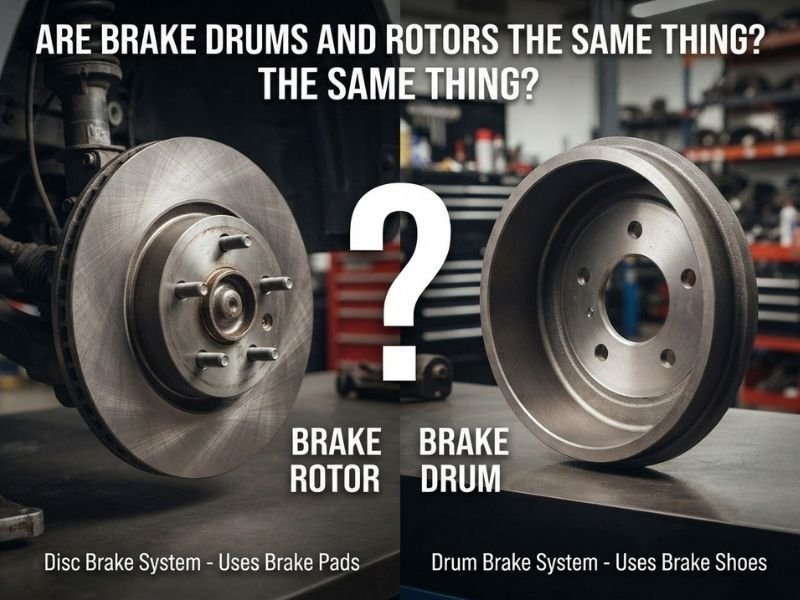
Brake rotors are part of a disc brake system, where brake pads squeeze against a flat metal disc. Brake drums belong to a drum brake system, where curved brake shoes press outward against the inside surface of a drum.
Many modern vehicles use disc brakes on all four wheels, while others use disc brakes in the front and drum brakes in the rear. Understanding how drums and rotors differ can make brake maintenance easier and help you recognize problems before they become serious.
Are Brake Drums and Rotors the Same Thing?
No, brake drums and rotors are not the same thing.
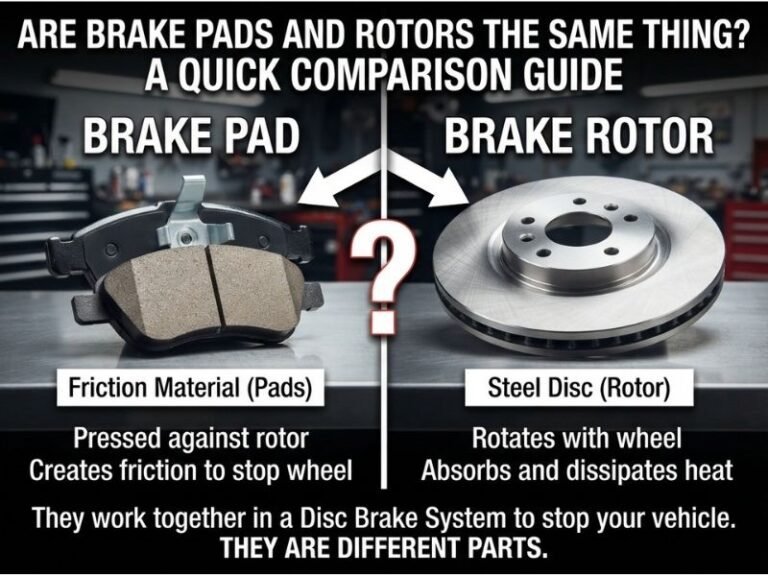
A brake rotor is a flat, round metal disc mounted to the wheel hub. When you press the brake pedal, a brake caliper pushes brake pads against both sides of the rotor. The friction created between the pads and rotor slows the wheel.
A brake drum, on the other hand, is shaped more like a deep metal bowl or cylinder. Brake shoes sit inside the drum. When you apply the brakes, the shoes expand outward and press against the drum’s inner surface.
Both systems convert the vehicle’s kinetic energy into heat through friction, but they use different designs and components.
In simple terms:
- Rotors work with brake pads and calipers.
- Drums work with brake shoes and wheel cylinders.
- Rotors are exposed to airflow.
- Drum brake components are enclosed inside the drum.
- Disc brakes generally handle heat better.
- Drum brakes are often cheaper and commonly used on rear wheels.
Understanding this difference is important when shopping for replacement brake parts because a rotor cannot replace a brake drum, and a brake pad cannot replace a brake shoe.
What Is a Brake Rotor?
A brake rotor, sometimes called a brake disc, is one of the main components of a disc brake system.
The rotor is attached to the wheel hub and rotates whenever the wheel turns. A brake caliper sits over part of the rotor and contains one or more pistons along with the brake pads.
When the driver presses the brake pedal, hydraulic pressure travels through the brake lines and activates the caliper. The caliper then pushes the brake pads against the rotor.
The resulting friction slows the rotor, which slows the wheel and eventually stops the vehicle.
Most rotors are made from cast iron, although certain performance vehicles may use carbon-ceramic or other specialized materials.
Common Types of Brake Rotors
Brake rotors are available in several designs.
Solid rotors are simple metal discs commonly found on smaller or lighter vehicles.
Vented rotors contain channels between two rotor surfaces. These channels allow air to flow through the rotor and help dissipate heat.
Slotted rotors contain grooves cut into the rotor surface. These grooves can help remove brake dust, gases, and moisture from the contact area.
Drilled rotors have holes drilled through the rotor surface to improve heat management and water evacuation.
Many everyday vehicles use solid rear rotors and vented front rotors.
What Is a Brake Drum?
A brake drum is the main friction surface in a drum brake system.
Instead of having brake pads squeeze a disc, drum brakes use curved brake shoes positioned inside the drum.
When the brake pedal is pressed, hydraulic pressure activates a wheel cylinder. The wheel cylinder pushes the brake shoes outward until they contact the inside surface of the rotating drum.
The friction between the brake shoes and drum slows the wheel.
When the driver releases the brake pedal, return springs pull the shoes away from the drum.
Drum brakes also contain several smaller components, including:
- Brake shoes
- Wheel cylinders
- Return springs
- Hold-down springs
- Adjusters
- Parking brake hardware
Because these components operate inside the drum, the braking mechanism is less exposed than a disc brake system.
Brake Drums vs Rotors: Main Differences
Although brake drums and rotors serve the same overall purpose, their designs and performance characteristics differ significantly.
1. Design
The most obvious difference is their physical shape.
A rotor is a relatively flat metal disc.
A brake drum is deeper and shaped like a bowl or cylinder.
Disc brake components operate around the outside edges of the rotor, while drum brake components operate inside the drum.
2. Friction Components
Rotors use brake pads.
Drums use brake shoes.
Brake pads are generally flat pieces of friction material mounted in a brake caliper.
Brake shoes are curved components designed to match the inner surface of the brake drum.
3. Heat Dissipation
Disc brakes usually dissipate heat more efficiently than drum brakes.
Because rotors are exposed to airflow, heat generated during braking can escape relatively quickly. Vented rotors improve cooling even further.
Drum brakes trap more heat because the braking components are enclosed inside the drum.
Excessive heat can contribute to brake fade during repeated heavy braking.
4. Wet-Weather Performance
Disc brakes usually perform better in wet conditions.
Water can escape more easily from an exposed rotor surface.
A drum brake can temporarily trap moisture inside the drum, although modern drum brake systems are still effective for normal driving conditions.
5. Maintenance
Disc brakes are generally easier to inspect.
You can often see the rotor and sometimes part of the brake pad through the wheel.
Drum brakes usually require removing the drum before the brake shoes and internal hardware can be thoroughly inspected.
6. Cost
Drum brake systems are generally inexpensive to manufacture.
For this reason, some manufacturers continue using drum brakes on the rear wheels of economy vehicles, compact cars, and certain trucks.
Disc brake systems may cost more but offer stronger heat management and easier serviceability.
7. Parking Brake Design
Drum brakes work particularly well with mechanical parking brake systems.
The parking brake cable can directly activate the brake shoes.
Vehicles with rear disc brakes may use a separate small drum brake inside the rotor hat for the parking brake, while others use an electronic or mechanical caliper-based parking brake.
Do Cars Have Brake Drums and Rotors at the Same Time?
Yes. Many vehicles use both systems.
A common configuration is:
Front wheels: disc brakes and rotors
Rear wheels: drum brakes
Front brakes usually perform a larger percentage of the braking work because weight transfers toward the front of the vehicle during braking.
Disc brakes are therefore commonly installed on the front axle because they handle heat efficiently.
Rear brakes generally experience lower braking loads, making drum brakes adequate for many vehicles.
However, many newer vehicles now use four-wheel disc brakes, meaning they have rotors at both the front and rear.
Why Are Disc Brakes More Common Today?
Disc brakes have become increasingly common because they offer several performance advantages.
Their open design allows heat to escape quickly, which reduces the possibility of brake fade.
Disc brakes can also provide more consistent braking during repeated stops.
Another advantage is inspection and servicing. Brake pads and rotors are generally easier to access than the internal components of drum brakes.
Disc brakes are especially beneficial for:
- Heavy vehicles
- Highway driving
- Towing
- Performance vehicles
- Mountain driving
- Frequent stop-and-go traffic
However, drum brakes remain practical for many applications, especially on rear axles where braking demands are lower.
Are Brake Drums Better Than Rotors?
Neither system is automatically better in every situation.
Disc brakes generally provide better heat dissipation, consistent braking performance, and easier servicing.
Drum brakes offer advantages such as lower manufacturing costs and long brake shoe life in some applications.
Drum brakes also generate a strong braking force because of a phenomenon known as the self-energizing effect. As the brake shoe contacts the rotating drum, the rotation can help pull the shoe more firmly against the braking surface.
This design allows drum brakes to produce significant braking force without requiring extremely high hydraulic pressure.
For ordinary rear braking applications, drum brakes can therefore be very effective.
Are Rotors More Expensive Than Brake Drums?
Costs vary depending on the vehicle and component quality.
Basic replacement rotors can sometimes be inexpensive, while large truck rotors or performance rotors can cost significantly more.
Brake drums can also vary widely in price.
The total repair cost depends on more than the friction surface itself. Drum brake repairs may involve replacing shoes, wheel cylinders, springs, adjusters, and other hardware.
Disc brake repairs typically involve pads, rotors, calipers, and related hardware.
Labor costs can also differ because drum brakes usually contain more small mechanical components.
How Long Do Brake Rotors Last?
Rotor lifespan varies considerably.
Driving habits, vehicle weight, brake pad quality, climate, road conditions, and braking frequency all affect rotor wear.
Many rotors can last tens of thousands of miles, and some may remain usable through multiple sets of brake pads.
However, rotors eventually become too thin, warped, heavily rusted, cracked, or uneven.
Every rotor has a manufacturer-specified minimum thickness. Once the rotor reaches this limit, it should be replaced.
Routine brake inspections help determine whether a rotor is still safe to use.
How Long Do Brake Drums Last?
Brake drums can often last a long time because rear drum brakes may perform less work than front brakes.
However, the actual lifespan depends on vehicle design, driving conditions, adjustment, brake shoe condition, and maintenance.
Like rotors, brake drums have a maximum allowable internal diameter.
Every time brake shoes wear against the drum, a small amount of material is removed from the drum surface.
Eventually, the drum may become too large internally to remain within specification.
At that point, replacement is necessary.
Signs of Worn Brake Rotors
Worn or damaged brake rotors can cause several symptoms.
Steering Wheel Vibration
If a front rotor develops uneven thickness or excessive runout, the steering wheel may shake when braking.
Brake Pedal Pulsation
A pulsing sensation through the brake pedal can indicate uneven rotor surfaces.
Grinding Noise
Grinding may occur when brake pads become severely worn and metal contacts the rotor.
Deep Grooves
Visible grooves or scoring on the rotor can indicate excessive wear.
Longer Stopping Distance
Damaged brake components can reduce braking effectiveness.
Any noticeable change in braking performance should be inspected promptly.
Signs of Worn Brake Drums
Drum brakes can produce slightly different symptoms.
Scraping or Grinding
Damaged brake shoes or contaminated components may create scraping sounds.
Weak Parking Brake
Because many parking brake systems operate through rear drum brakes, poor adjustment or worn shoes can reduce parking brake effectiveness.
Brake Pedal Pulsation
An out-of-round drum may cause pulsation during braking.
Uneven Braking
A sticking wheel cylinder, contaminated shoe, or adjustment problem can cause one side of the vehicle to brake differently from the other.
Excessive Brake Dust
Large amounts of accumulated dust inside the drum may indicate significant shoe wear.
Can Brake Drums Be Resurfaced Like Rotors?
In some cases, both rotors and brake drums can be machined or resurfaced.
Resurfacing removes a small amount of metal to create a smoother friction surface.
However, resurfacing is only possible when the component will remain within the manufacturer’s dimensional specifications afterward.
For rotors, technicians measure thickness.
For drums, technicians measure internal diameter.
If machining would exceed the allowable limit, replacement is required.
Many modern replacement rotors are relatively affordable, so technicians sometimes recommend installing new rotors instead of resurfacing old ones.
Can You Replace Drum Brakes With Disc Brakes?
Yes, certain vehicles can be converted from rear drum brakes to disc brakes using appropriately engineered conversion components.
However, this is not simply a matter of replacing the drum with a rotor.
A complete conversion may require:
- Rotors
- Calipers
- Caliper brackets
- Brake pads
- Brake hoses
- Parking brake hardware
- Modified backing plates
- Different master cylinder or proportioning components
Brake balance is extremely important.
Improper modifications can negatively affect stopping performance, so brake conversions should be carefully researched and installed correctly.
For most daily-driven vehicles, properly maintained factory drum brakes are entirely adequate.
Can You Put Brake Pads on Drum Brakes?
No.
Brake pads are designed for disc brake systems.
Drum brake systems use brake shoes.
Although both components contain friction material, they have completely different shapes and mounting systems.
Likewise, brake shoes cannot be installed in a disc brake caliper.
When purchasing replacement brake components, always confirm whether your vehicle uses discs or drums on the axle being serviced.
Do Front Brakes Use Rotors or Drums?
Most modern vehicles use front disc brakes with rotors.
Front brakes typically perform more braking work than rear brakes because the vehicle’s weight shifts forward during deceleration.
This creates greater braking demand at the front wheels.
Disc brakes are well suited for this task because they dissipate heat efficiently and provide consistent braking performance.
Some older vehicles used front drum brakes, but this design is uncommon on modern passenger vehicles.
Do Rear Brakes Use Drums or Rotors?
Rear brakes can use either system.
Some vehicles have:
- Front disc brakes and rear drum brakes
- Four-wheel disc brakes
Economy cars and some compact vehicles may use rear drum brakes because they are cost-effective and capable of handling normal rear braking loads.
Larger, more powerful, or performance-oriented vehicles commonly use rear disc brakes.
The easiest way to determine your vehicle’s rear brake type is to inspect the wheel area or check the vehicle’s service information.
Brake Rotor vs Brake Drum Maintenance
Both systems require periodic inspection.
For disc brakes, technicians generally inspect:
- Brake pad thickness
- Rotor thickness
- Rotor surface condition
- Caliper operation
- Brake hoses
- Hardware
For drum brakes, inspection may include:
- Brake shoe thickness
- Drum diameter
- Wheel cylinder leakage
- Return springs
- Adjuster operation
- Parking brake mechanism
Brake fluid condition should also be checked because both systems depend on hydraulic pressure during normal braking.
Which Brake System Is Safer?
Both drum and disc brakes can provide safe braking when properly designed and maintained.
Disc brakes offer better resistance to heat buildup, which can provide an advantage during repeated hard braking.
However, millions of vehicles safely use rear drum brakes every day.
The condition of the braking system matters more than simply whether the vehicle uses drums or rotors.
A damaged rotor, worn brake pad, leaking wheel cylinder, contaminated brake shoe, or low brake fluid can compromise braking performance.
Regular inspection is therefore essential regardless of brake design.
Frequently Asked Questions
Are brake drums and brake rotors interchangeable?
No, brake drums and rotors are designed for completely different braking systems.
Rotors work with brake pads and calipers, while drums work with brake shoes and wheel cylinders. Their mounting arrangements, friction surfaces, and supporting components are different. You cannot simply install a rotor where a brake drum was located without converting the entire braking system.
Are brake rotors also called brake discs?
Yes, brake rotor and brake disc usually refer to the same component.
Both names describe the flat circular braking surface used in a disc brake system. The term “rotor” is especially common in North America, while “brake disc” is commonly used in other regions.
Do drum brakes have brake pads?
No, drum brake systems use brake shoes instead of brake pads.
Brake shoes are curved to match the inside surface of the brake drum. When hydraulic pressure activates the wheel cylinder, the shoes move outward and create friction against the drum.
Do all four wheels have rotors?
Not every vehicle has rotors on all four wheels.
Many modern vehicles use four-wheel disc brakes, but some vehicles have front rotors and rear drums. The exact configuration depends on the vehicle’s design, size, performance requirements, and manufacturer.
Why do some cars still use drum brakes?
Drum brakes remain common because they are durable, effective, and relatively inexpensive.
Rear wheels generally require less braking force than front wheels, so drum brakes can perform adequately in many vehicles. Their design also integrates easily with mechanical parking brake systems.
Do brake drums need to be replaced with brake shoes?
Not necessarily, because drum condition should be measured before replacement.
Brake shoes may wear out while the drum remains within specification. However, a drum that is excessively worn, cracked, damaged, or beyond its maximum internal diameter should be replaced.
Can worn rotors affect stopping distance?
Yes, severely worn or damaged rotors can reduce braking performance.
Uneven, overheated, cracked, or undersized rotors may prevent brake pads from maintaining proper contact. This can contribute to vibration, reduced braking consistency, and potentially longer stopping distances.
Which lasts longer, brake drums or rotors?
Brake drums can sometimes last longer, particularly when used on rear wheels.
Rear brakes often perform less work, so drums may wear slowly. However, component lifespan depends heavily on driving habits, vehicle weight, environment, maintenance, and braking system design.
Are rear drum brakes bad?
No, properly maintained rear drum brakes are not inherently bad or unsafe.
They are used because they can provide adequate braking performance for rear-wheel applications while remaining economical and durable. Their biggest disadvantages are reduced heat dissipation and somewhat more complicated servicing.
How do I know whether my car has drums or rotors?
You can usually identify the brake type by looking through or behind the wheel.
A disc brake system normally reveals a flat rotor and brake caliper. A drum brake system typically appears as a solid round metal housing. Your owner’s manual or vehicle service information can also confirm the brake configuration.
Final Thoughts
So, are brake drums and rotors the same thing? No. They perform the same basic function of creating friction to slow your vehicle, but they belong to two different braking system designs.
Brake rotors are flat discs used with brake pads and calipers. Brake drums are enclosed cylindrical components used with brake shoes and wheel cylinders.
Rotors generally offer better heat dissipation, easier inspection, and consistent braking performance, which is why disc brakes are now common on the front wheels and often all four wheels of modern vehicles.
Drum brakes remain useful because they are durable, cost-effective, and effective for many rear-wheel applications.
Neither design should be judged only by its age or appearance. A properly maintained drum brake system can work reliably, while neglected disc brakes can become unsafe.
The most important thing is knowing which system your vehicle uses and keeping its pads, shoes, rotors, drums, hydraulic components, and brake fluid in good condition. If you experience grinding, vibration, pulling, reduced stopping power, or unusual brake pedal behavior, have the braking system inspected before continuing normal driving.