How Much Are Rotors for Toyota Corolla: Important Facts Explained
For most U.S. Toyota Corolla owners, replacement brake rotors cost about $40 to $150 per rotor for aftermarket parts, while an installed front-axle job commonly totals roughly $250 to $600. Dealer pricing, OEM parts, the Corolla’s model year, and whether brake pads are replaced at the same time can move the final bill higher.
If you are researching how much are rotors for toyota corolla, the important point is that there is no single price for every Corolla. The estimate depends on the number of rotors needed, the parts selected, labor rates, and the condition of the complete brake system. The ranges below show what a reasonable repair quote usually includes and how to judge it.
Toyota Corolla Rotor Cost at a Glance
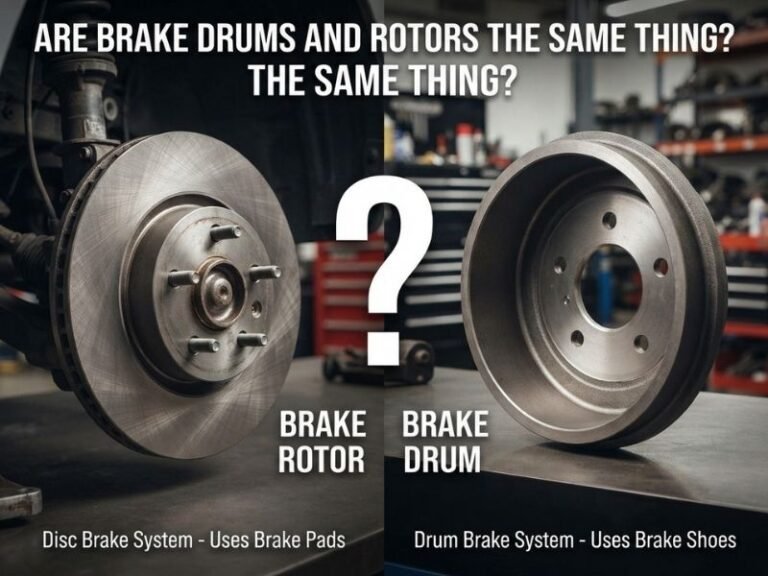
A Toyota Corolla has four brake rotors when it uses disc brakes at both the front and rear. Some configurations use rear drums instead of rear disc brakes, so the vehicle may not have four replaceable rotors. The front rotors handle more braking force and are often the first to require replacement.
| Repair item | Typical U.S. price range |
|---|---|
| One aftermarket rotor | $40–$150 |
| One OEM Toyota rotor | $90–$250 or more |
| Two front rotors | $80–$300 for parts |
| Two rear rotors | $80–$300 for parts |
| Installed front rotors and pads | $250–$600 |
| Installed rear rotors and pads | $250–$600 |
| All four rotors and pads installed | $500–$1,200 or more |
These are planning ranges, not guaranteed quotes. A small independent shop may charge less than a dealership, while a high-cost city, rust-related work, premium parts, or additional brake repairs can increase the total.
What Determines the Price?
Model year and brake configuration
Rotor fitment changes by model year, trim, engine, and brake configuration. A 2005 Corolla and a 2024 Corolla may use different rotor dimensions, mounting designs, and rear brake systems. Even two Corollas from the same year can require different parts if one has rear disc brakes and another has rear drum brakes.
A parts catalog or vehicle identification number, commonly called a VIN, helps confirm the correct rotor. The rotor’s diameter, thickness, height, and bolt pattern must match the vehicle. Ordering by the general phrase “Toyota Corolla rotor” can produce the wrong part if the year and trim are not included.
Front or rear axle
Front rotors are often more expensive or more frequently replaced because the front brakes provide most of the vehicle’s stopping force. Rear rotors may cost a similar amount per unit, but the exact price depends on the Corolla generation and the available brake design.
Brake work should normally be performed on both sides of the same axle. Replacing only one front rotor can create uneven braking because the two sides may have different friction surfaces and thicknesses. A quote for “front rotors” generally means two rotors, one on each side.
Aftermarket versus OEM parts
Aftermarket rotors are made by companies other than Toyota. They are often the least expensive option and can be suitable when they meet the correct specifications and come from a reputable manufacturer. Prices commonly fall near the lower or middle part of the range.
OEM Toyota rotors are produced for Toyota’s original equipment specifications. They may provide a closer match to the factory part, but they usually cost more. A dealer may quote OEM parts along with a higher labor rate, which is why the total can be substantially above an independent shop’s estimate.
Coated, slotted, drilled, or otherwise upgraded rotors can also cost more. Those features are not automatically necessary for a standard Corolla used for normal commuting. The correct plain or coated replacement rotor is usually the relevant choice unless a qualified technician identifies a specific need.
Labor and shop rates
Rotor replacement is commonly priced by axle rather than by individual wheel. Labor for a straightforward rotor and pad replacement may add about $150 to $350 per axle, although local rates vary widely. Dealership labor can exceed independent-shop pricing, particularly in metropolitan areas.
The labor estimate may increase if the rotor is seized to the hub, fasteners are heavily corroded, the caliper hardware is damaged, or the parking-brake mechanism needs attention. A shop should explain any added charge instead of presenting an unexplained increase after the work begins.
Do New Rotors Include Brake Pads?
Usually, no. The rotor and the brake pad are separate parts, and a rotor-only price does not normally include pads, installation, taxes, or disposal fees. Many shops recommend replacing pads with rotors because old pads can have an uneven wear pattern that prevents the new rotor from making smooth contact.
A typical Corolla front brake service may include two rotors, one set of front pads, hardware or lubricant where appropriate, and labor. That package often costs more than rotors alone but may be better value than paying labor twice. If the pads are nearly new, evenly worn, and compatible with the replacement rotors, a technician may determine that they can remain in service.
Brake pads should not be replaced automatically without inspection. The remaining friction material, wear pattern, rotor condition, and manufacturer specifications all matter. A clear estimate should list the price of the rotors and pads separately so you can see what the additional work costs.
When Does a Corolla Need New Rotors?
Rotors may need replacement when they are below the manufacturer’s minimum thickness, severely rusted, cracked, warped beyond service limits, or damaged by deep grooves. A technician measures rotor thickness with a micrometer and compares it with the minimum specification. Visual appearance alone does not always prove that replacement is necessary.
Common symptoms include a steering-wheel shake or brake-pedal pulsation during braking, grinding, repeated squealing, visible scoring, or a braking surface with severe corrosion. These signs can also result from worn pads, a sticking caliper, loose suspension components, or another brake-system problem.
Light surface rust after rain is normal and often disappears after several stops. Heavy flaking, a pronounced ridge, blue heat spots, or uneven wear deserves inspection. If the brake pedal feels soft, the vehicle pulls strongly to one side, or grinding is continuous, the car should be checked promptly rather than driven until the noise becomes worse.
Can Rotors Be Resurfaced?
Some shops can machine, or resurface, a rotor by removing a thin layer from its braking surface. Resurfacing is only appropriate when the rotor remains above the minimum thickness, has enough material to machine safely, and is not cracked, badly corroded, or heat-damaged.
Modern rotors can be relatively inexpensive, so replacement is often selected when machining costs nearly as much as a new part. A new rotor also avoids leaving behind a thin component with limited remaining service life. The decision should be based on measurements and the rotor manufacturer’s service limits, not just on a general preference.
Resurfacing a rotor does not correct a seized caliper, worn wheel bearing, bent hub, or other cause of uneven braking. If the underlying issue remains, the replacement or machined rotor may wear unevenly again.
How to Read a Rotor Replacement Estimate
A useful written estimate should identify the Corolla’s model year and axle, the number of rotors, the brand or part type, pad replacement, labor, shop supplies, taxes, and any additional hardware. “Brake job” by itself is too vague to show what you are paying for.
- Confirm the axle: Ask whether the quote covers the front, rear, or both.
- Confirm the quantity: Rotor replacement is generally performed as a pair on one axle.
- Separate parts and labor: This makes it easier to compare estimates.
- Ask about pads: Find out whether the price includes new pads or only rotors.
- Check the part type: Ask whether the rotors are OEM, standard aftermarket, or an upgraded design.
- Ask about added repairs: Calipers, brake hoses, wheel bearings, and seized hardware can change the total.
- Confirm the warranty: Review coverage for parts and labor before authorizing the work.
The lowest estimate is not always the best value if it uses the wrong part, excludes pads that are already worn, or leaves out necessary installation charges. A much higher quote also deserves an explanation. Comparing two or three itemized estimates can reveal whether the difference comes from parts, labor, or additional repairs.
Rotor Cost at a Dealership Versus an Independent Shop
A Toyota dealership may charge more because of its labor rate, facility costs, and preference for OEM parts. It can be a practical choice when the vehicle is under a service agreement, the brake system has a specialized configuration, or factory parts are important to the owner.
An independent repair shop may offer a lower total by using competitive labor rates and quality aftermarket parts. The shop should still verify the exact Corolla application and provide a parts warranty. Certification, clear communication, and a detailed estimate matter more than the shop category alone.
Online parts prices can look much lower than an installed repair because they exclude labor, shipping, taxes, shop supplies, and the time required to inspect and install the parts. A do-it-yourself parts total should not be compared directly with a professional installed quote.
Frequently Asked Questions
How much are two front rotors for a Toyota Corolla?
Two aftermarket front rotors commonly cost about $80 to $300 before labor and tax. With new front pads and installation, the total is often around $250 to $600. OEM Toyota rotors or dealership labor can raise the price.
How much are rear rotors for a Toyota Corolla?
When the Corolla has rear disc brakes, two rear rotors may cost approximately $80 to $300 for parts. A complete rear rotor-and-pad service commonly falls near $250 to $600 installed. Corollas with rear drum brakes do not use rear rotors.
Should I replace all four Corolla rotors at once?
Not necessarily. Rotors are normally replaced by axle, so the front pair may be replaced while the rear pair remains in service if the rear rotors meet thickness and condition requirements. All four are replaced only when inspection shows that both axles need service or when the owner chooses to complete the work together.
Is $600 too much for Corolla rotors and pads?
$600 is within a common range for one axle with two rotors, pads, and professional installation, especially at a dealership or in a high-cost area. It may be high for parts alone. The estimate should state whether it covers one axle, which parts are included, and whether extra repairs or taxes are part of the total.
Can I replace only one rotor?
Replacing only one rotor is generally discouraged. The two rotors on the same axle should provide comparable braking performance, and replacing them as a pair helps maintain balanced friction and wear. A technician should inspect both sides before recommending the repair.
How long do Toyota Corolla rotors last?
Rotor life varies with driving habits, traffic, climate, vehicle load, pad material, and caliper condition. There is no dependable replacement interval that fits every Corolla. Measurement and inspection are more accurate than replacing rotors at a fixed mileage.
Conclusion
For most U.S. models, how much are rotors for toyota corolla depends mainly on the year, axle, brake configuration, part quality, and labor rate. Plan on roughly $40 to $150 per aftermarket rotor, about $250 to $600 for one installed axle with pads, and more for OEM parts or dealership service. Request an itemized quote and confirm that the correct rotors, pad condition, labor, and any additional repairs are clearly included.