
Do New Brake Pads and Rotors Smell? Normal vs Warning Signs
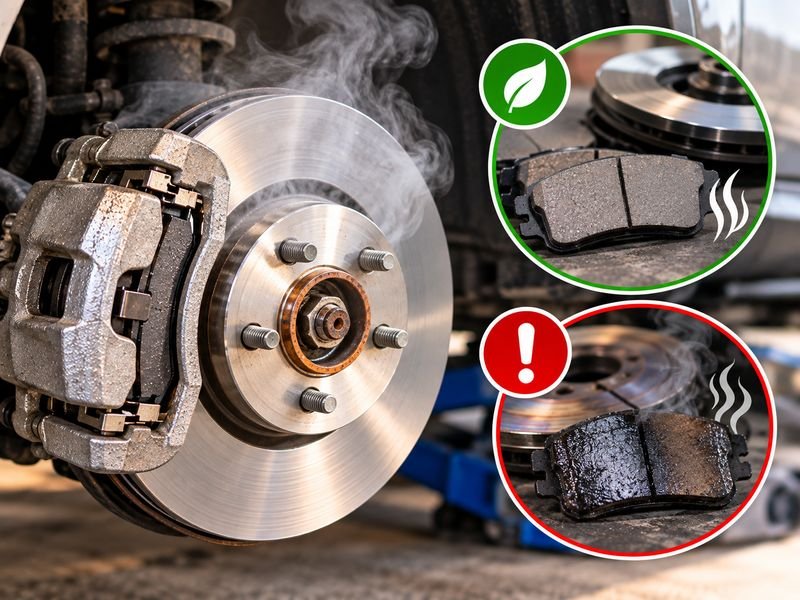
Yes, new brake pads and rotors can produce a noticeable smell, especially during their first few drives or while completing the recommended bedding-in process. The odor usually comes from the new brake pad friction material heating for the first time and may smell like hot chemicals, resin, warm metal, or something slightly burnt.
A mild smell that appears after braking and gradually becomes weaker is usually not a reason to panic if the car stops normally and there is no smoke, pulling, grinding, or excessive heat from one wheel.
However, a strong burning brake smell that continues after normal driving, keeps returning from one wheel, gets worse instead of better, or comes with smoke or reduced braking can indicate a problem such as a sticking caliper, incorrectly installed pad, dragging parking brake, or overheating brake components.
New brakes need time to establish proper contact between the brake pads and rotor surfaces, but they should not continuously overheat.
The key is knowing the difference between a normal new-brake odor and a warning sign that deserves inspection.
Do New Brake Pads and Rotors Smell?
Yes. A temporary smell from new brake pads and rotors can be normal.
When new pads first contact the rotor, friction produces heat. The pad’s friction material contains binders and other compounds that can release a noticeable odor during their initial heat cycles.
This is particularly noticeable during:
- The initial bedding process
- Repeated moderate stops
- Stop-and-go traffic
- Driving down hills
- The first few trips after a brake job
The rotor itself generally contributes less odor than the brake pad.
However, a new rotor may have a protective coating or residue from manufacturing and storage. Depending on the rotor design, any material that is intended to be removed before installation should be properly cleaned according to the manufacturer’s instructions.
Once the pads have begun bedding into the rotors and the new components have completed their first heat cycles, the smell should gradually become less noticeable.
Why Do New Brake Pads Smell?
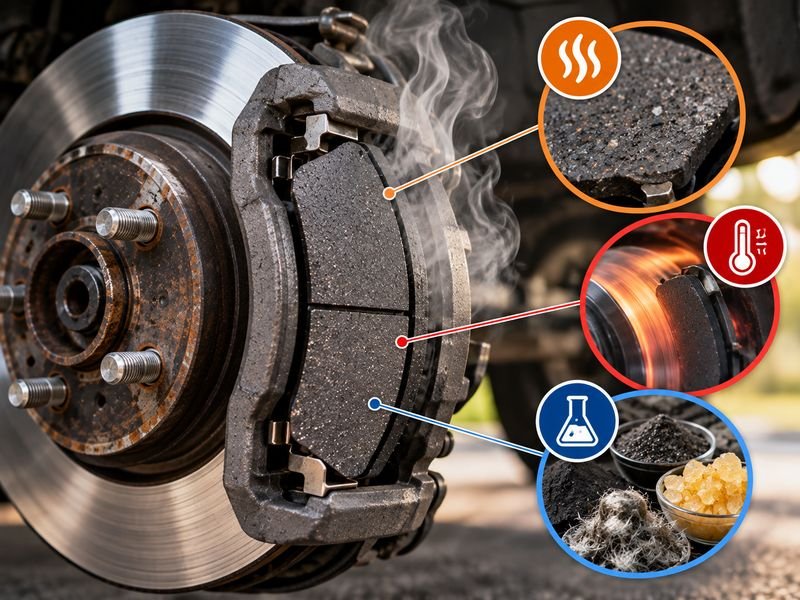
New brake pads are made from friction material designed to operate at high temperatures.
When the pads are first used, several changes occur at their surface.
The pad begins establishing consistent contact with the rotor, the components go through their first heating and cooling cycles, and a thin transfer layer of friction material can begin developing on the rotor.
This process is commonly known as bedding, bedding-in, or burnishing.
Heat generated during this process can create a temporary chemical or resin-like odor.
Different brake pad compounds may smell slightly different.
For example, you may notice an odor that resembles:
- Hot resin
- Heated chemicals
- Warm metal
- Burnt material
- Hot brakes
A smell alone does not necessarily mean the pads are burning up.
The other symptoms matter just as much.
Do New Brake Rotors Smell?
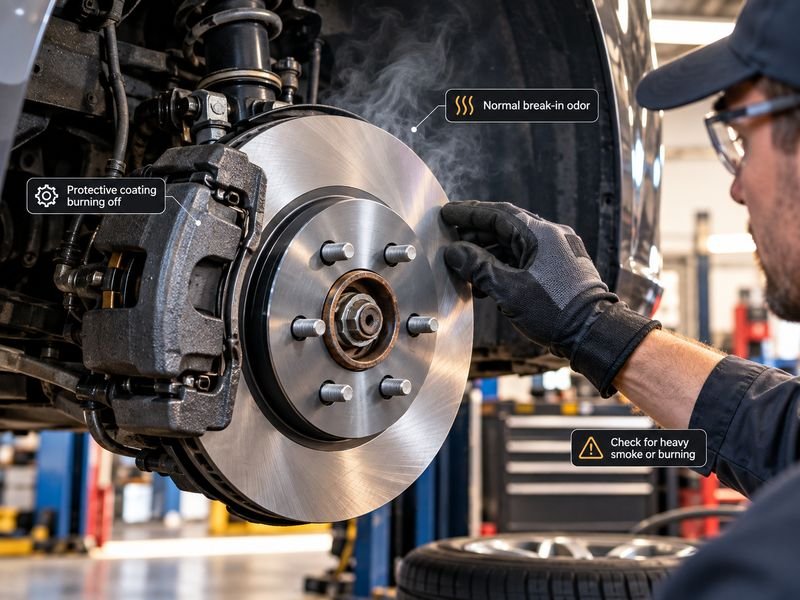
New rotors can contribute to an odor, but the brake pads are usually the more significant source of break-in smell.
Some new rotors may have protective oils, coatings, or manufacturing residue.
Certain rotor coatings are designed to remain on specific areas, while other protective material may need to be removed from the braking surface before installation.
That means you should follow the rotor manufacturer’s instructions rather than automatically using the same cleaning process on every new rotor.
If unwanted protective oil remains on a rotor braking surface, it can heat during use and create an odor.
It can also contaminate the brake pads.
For that reason, correct preparation during installation is important.
What Does a Normal New-Brake Smell Like?
A normal break-in smell is generally mild to moderate and temporary.
It may become noticeable after you park the vehicle following several brake applications.
You might smell something similar to:
Hot chemicals: New friction material heating for the first time can produce a chemical-like odor.
Resin: Some brake pads may have a distinct resin-like smell when heated.
Warm metal: The rotors and surrounding brake components become hot during braking.
Slight burning smell: Mild break-in odor can sometimes be described as burnt, even when nothing is actually failing.
More important than the exact smell is how the brakes behave.
With normal bedding, you should generally still have:
- Normal braking response
- A firm, consistent brake pedal
- No significant pulling
- No persistent grinding
- No obvious smoke
- An odor that becomes less noticeable over time
How Long Do New Brake Pads and Rotors Smell?
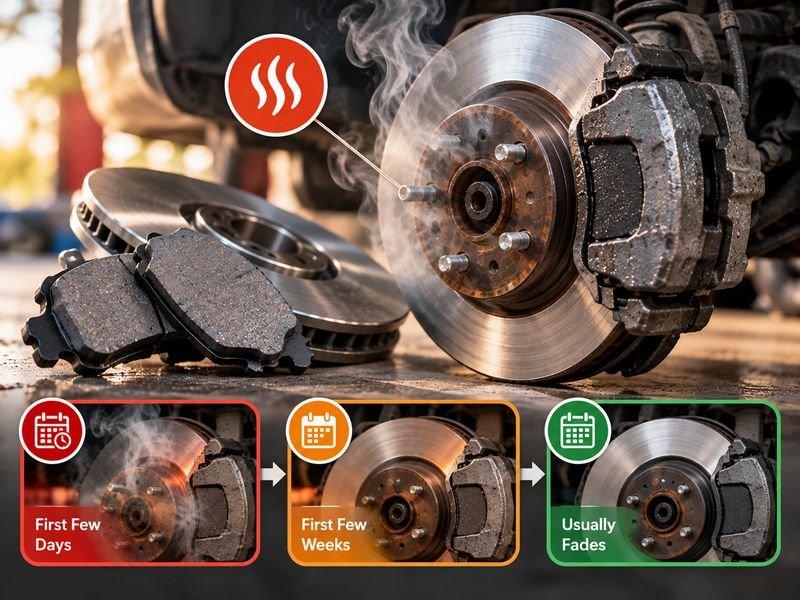
There is no exact mileage or number of days that applies to every brake pad and rotor combination.
The smell depends on:
- Brake pad compound
- Rotor design
- Manufacturer bedding instructions
- Driving style
- Vehicle weight
- Traffic
- Road grade
- Brake temperature
The odor may be strongest during the first few drives or during the initial bedding procedure.
After that, it should generally decrease rather than remain equally strong.
Some manufacturers recommend a specific controlled bedding procedure. Others recommend a period of gentle driving before using the brakes aggressively.
Always follow the instructions supplied with the brake pads, rotors, or vehicle.
If the brakes still produce a strong burning smell after ordinary trips and the smell is not becoming weaker, have them inspected.
Is a Burning Smell Normal After Changing Brake Pads?
A light temporary hot or resin smell can be normal after changing brake pads.
A strong burning odor is different.
Pay attention to the intensity and circumstances.
A mild smell immediately after controlled bedding may be expected.
A strong smell after a short, gentle drive may indicate that a brake is staying partially applied.
That can happen when:
- A caliper piston sticks
- Caliper slide pins bind
- Brake pads are too tight in the bracket
- Hardware is incorrectly installed
- The parking brake does not release completely
- A hydraulic problem prevents pressure from releasing
If the smell is severe or repeatedly returns during easy driving, do not simply assume the new pads are still “breaking in.”
Why Do My New Brakes Smell After Driving?
The answer depends on how the vehicle was driven.
If you recently installed new pads and rotors and completed several controlled stops according to the manufacturer’s bedding procedure, temporary odor can be expected.
If you drove normally for a short distance and one wheel smells extremely hot, that is less typical.
New brakes may smell because of:
Normal Bedding
Friction material is going through its initial heat cycles and establishing contact with the rotor.
Heavy Braking
Repeated hard stops can make even correctly installed new brakes very hot.
Driving Down a Long Hill
Continuous braking creates considerable heat.
Use appropriate driving techniques and avoid riding the brakes.
A Sticking Caliper
A piston or caliper slide that does not release properly can keep the pad pressed against the rotor.
Brake Pads Binding in the Bracket
Rust beneath the abutment clips or improper fit can prevent a pad from moving freely.
Parking Brake Drag
Rear brake components can overheat if the parking brake mechanism remains partially applied.
Installation Problems
Incorrect hardware placement, wrong parts, or other assembly issues can cause abnormal contact.
Are New Brakes Supposed to Smoke?
Visible smoke should not simply be dismissed as normal because the brakes are new.
The bedding process generates considerable heat, and a temporary smell may be expected.
But visible smoke can also mean the brakes are overheating or something on the brake assembly is burning.
If you see smoke coming from a wheel:
- Stop safely when possible.
- Do not touch the wheel, rotor, or caliper.
- Allow the brake components to cool naturally.
- Do not pour water onto extremely hot brakes.
- Have the braking system inspected if the cause is not clearly understood.
Smoke combined with poor braking, a soft pedal, pulling, or an extremely hot wheel deserves immediate attention.
Why Does Only One New Brake Smell?
A strong smell from one wheel only is more concerning than a mild odor from both sides during an initial bedding procedure.
The brakes on one axle should generally be doing similar work.
If one corner becomes dramatically hotter or smellier than the others, something may be causing that brake to drag.
Possible causes include:
- Sticking caliper piston
- Binding slide pins
- Brake pad stuck in the bracket
- Incorrectly installed hardware
- Parking brake problem
- Restricted brake hose
- Uneven pad contact
Do not test brake temperature by touching the rotor.
Brake rotors can become hot enough to cause serious burns.
If one wheel repeatedly smells after short, easy drives, inspect the brake before continuing normal use.
New Brake Pads Smell Like Burning Rubber: Is That Normal?
People describe brake smells differently, so what one person calls “burning rubber” may actually be hot friction material.
A mild rubber-like or chemical odor that only occurs during the first heat cycles may simply be part of the bedding process.
However, a strong burning-rubber smell should not automatically be blamed on the pads.
Check for problems such as:
- Plastic or rubber touching a hot component
- A damaged brake hose
- Tire contact
- Overheated brakes
- Debris stuck near the rotor
If the smell becomes stronger or continues after the brakes cool and the vehicle is driven normally, inspect the area.
Why Do My New Brakes Smell Like Chemicals?
A chemical smell is relatively common when new friction material becomes hot.
Brake pads contain several materials engineered to work together under friction and high temperature.
Their first heat cycles can produce an odor that is different from the smell of older brakes.
A chemical smell is less concerning when:
- The brakes were just installed
- It happens mainly during initial bedding
- The smell becomes weaker
- There is no smoke
- The car stops normally
- No wheel is unusually hot
If the smell remains very strong after repeated normal drives, investigate further.
Why Do My Brakes Still Smell After a Week?
A calendar week by itself does not tell you whether the smell is normal.
A vehicle driven only a few miles during that week may still be early in the break-in process.
A vehicle driven hundreds of miles under ordinary conditions should generally show a clear reduction in break-in odor.
What matters is the trend.
Ask:
Is the smell becoming weaker?
If yes, the brakes may simply be completing their initial bedding.
Does it happen only after hard braking?
That may be heat-related.
Does one wheel smell much more strongly?
That raises concern for brake drag.
Does the smell occur after every easy trip?
That deserves inspection.
Persistent strong brake smell should not be ignored merely because the components are new.
Do New Brake Pads Need to Be Bedded In?
Many replacement brake pads and rotors require some form of bedding or burnishing.
Bedding helps establish consistent contact between the pad and rotor and encourages an even layer of friction material on the rotor surface.
However, bedding procedures vary significantly between brake manufacturers and pad compounds.
One manufacturer may call for several controlled stops.
Another may recommend gentle braking for a specified distance.
Because of those differences, avoid using a random universal procedure.
Follow this order:
- Vehicle manufacturer’s instructions
- Brake pad manufacturer’s instructions
- Rotor or brake kit manufacturer’s instructions
If the installer already completed the bedding process, you may only need to drive normally while monitoring brake performance.
Can Improper Bedding Make New Brakes Smell?
Yes.
Excessively aggressive braking before the components are properly bedded can create too much heat.
That may produce:
- Strong brake odor
- Pad glazing
- Brake fade
- Uneven pad deposits
- Vibration
- Reduced braking consistency
Bedding does require heat, but more heat is not automatically better.
Repeated emergency-style stops are not a substitute for following the manufacturer’s procedure.
Avoid trying to deliberately make the brakes extremely hot just to finish the break-in faster.
Can I Drive With a Smell From New Brake Pads?
If the odor is mild, temporary, and clearly associated with new brake bedding, you can generally continue using the vehicle cautiously while following the manufacturer’s break-in instructions.
Braking should otherwise feel normal.
Do not continue driving simply to “burn off” the smell if you notice:
- Visible smoke
- Strong or worsening burning odor
- One wheel much hotter than the others
- Car pulling to one side
- Reduced braking power
- Soft or sinking pedal
- Grinding or severe scraping
- Brake warning light
- Fluid leakage
Those symptoms suggest more than normal bedding.
Can New Brake Pads Overheat?
Yes.
New pads are not immune to brake overheating.
They can become excessively hot because of:
- Aggressive braking
- Riding the brake pedal
- Long downhill braking
- Towing heavy loads
- Sticking calipers
- Binding brake pads
- Installation problems
Overheating can reduce braking performance and damage the friction material.
A strong acrid smell together with reduced braking is a warning sign rather than an expected part of installing new brakes.
Why Are My New Brakes Hot After Driving?
Brakes naturally become warm or hot because friction converts vehicle motion into heat.
After moderate braking, the rotor temperature can be much higher than surrounding components.
But a major temperature difference between wheels deserves attention.
For example, if one wheel appears to radiate much more heat than the wheel on the opposite side after ordinary driving, the brake may not be releasing correctly.
Possible causes include a sticking caliper, binding pad, or parking brake problem.
Do not touch the rotor to compare temperature.
Have the brake system inspected safely.
Can Protective Coating on New Rotors Cause a Smell?
It can, depending on the type of rotor and coating.
Some replacement rotors have corrosion-resistant coatings intended to remain on parts of the rotor.
Other rotors may have a protective shipping film that requires removal before installation.
Follow the rotor manufacturer’s preparation instructions.
Do not automatically remove every coating, and do not install a rotor with oily residue on the friction surface unless the manufacturer specifically directs otherwise.
Oil on the rotor can transfer to the brake pad friction material, potentially reducing braking performance.
Can Brake Cleaner Cause a Smell After a Brake Job?
A brake cleaner that has not fully evaporated or residue from another chemical used during installation may contribute to a temporary odor.
Brake cleaner should be used according to its instructions and allowed to evaporate completely.
More importantly, only brake-approved products should be used around friction surfaces.
Do not allow:
- General-purpose grease
- Penetrating oil
- Engine oil
- Silicone lubricant
- WD-40-type lubricants
- Brake fluid
to contaminate the pad friction surface or rotor track.
If the pad becomes significantly contaminated with oil or grease, replacement may be necessary.
How Can You Tell Normal Brake Smell From Overheating?
A few practical differences can help.
| Sign | Normal New-Brake Bedding | Possible Brake Problem |
|---|---|---|
| Odor | Mild hot/resin smell | Strong acrid or burning smell |
| Duration | Gradually fades | Continues or worsens |
| Smoke | Usually none | May be present |
| Braking | Normal | May feel weak or inconsistent |
| Vehicle pull | No | Possible |
| One wheel much hotter | No | Possible |
| Grinding | No | Possible |
| Frequency | Mainly early break-in | Returns after normal drives |
When several warning signs appear together, assume the brakes need inspection rather than continuing to drive and hoping the problem disappears.
What Should You Do If New Brakes Smell?
Start by considering how recently the brakes were installed and what happened before the odor appeared.
If the smell is mild and occurred during the manufacturer’s bedding procedure:
Allow the brakes to cool naturally.
Then continue following the correct break-in instructions.
If the smell occurred after ordinary driving:
Check whether it is coming from one wheel or both sides.
Do not touch the brakes.
If one wheel appears unusually hot or smells much stronger, schedule an inspection.
If the smell comes with smoke or reduced braking:
Stop driving when it is safe to do so.
Allow the brakes to cool and arrange for inspection or roadside assistance if braking performance is compromised.
When Should New Brakes Be Inspected?
Have new brakes checked if you experience any of the following:
- Strong smell after every trip
- Odor that becomes worse instead of better
- Smoke from a wheel
- One wheel overheating
- Vehicle pulling
- Soft or unusual brake pedal
- Reduced braking performance
- Persistent grinding
- Severe vibration
- Fluid leakage
- Brake warning light
A recent brake job does not mean every smell or noise is automatically part of the break-in process.
Installation problems can happen, and identifying them early can prevent damage to the new pads and rotors.
FAQs About Do New Brake Pads and Rotors Smell?
Is It Normal for New Brake Pads to Smell?
Yes. A mild temporary hot, chemical, or resin-like smell can occur while new brake pads are bedding into the rotors. It should become less noticeable as the brakes complete their initial heat cycles.
How Long Should New Brakes Smell?
There is no universal mileage or number of days. The smell is usually strongest early in the break-in period and should gradually decrease. Follow the brake manufacturer’s bedding instructions.
Why Do New Brake Pads Smell Like Burning?
The heat generated during bedding can create an odor from the pad’s friction material. A mild temporary odor can be normal; a strong persistent burning smell can indicate overheating or brake drag.
Is It Normal for New Brake Pads and Rotors to Smoke?
Do not automatically treat visible smoke as normal. New brakes may produce an odor during bedding, but smoke can indicate excessive heat, contamination, or a mechanical problem and should be investigated.
Why Do My New Brakes Smell After Every Drive?
If the smell repeatedly appears after gentle everyday driving, check for a dragging brake, sticking caliper, tight pad, parking brake problem, contamination, or installation issue.
Do New Rotors Give Off a Burning Smell?
They can contribute to an odor if protective material or a coating is heating, but the brake pad friction material is often the stronger source of normal break-in smell.
Can I Drive With New Brakes Smelling?
A mild smell with normal braking and no smoke may simply be part of bedding. Stop and investigate if the smell is strong or worsening, one wheel overheats, smoke appears, the car pulls, or stopping performance changes.
Why Does Only One Wheel Smell After New Brakes?
A strong odor from one wheel can indicate a sticking caliper, binding pad, slide-pin problem, parking brake issue, or incorrect installation. It deserves inspection.
Is a Chemical Smell Normal After New Brake Pads?
A temporary chemical or resin smell can occur as the new friction material heats during initial use. It should gradually fade.
Can New Brake Pads Overheat During Break-In?
Yes. Excessively aggressive braking or a mechanical problem can overheat new pads. Follow the correct bedding instructions rather than trying to heat the brakes as much as possible.
Should New Brakes Smell After a Week?
A slight odor may still occur depending on mileage and use, but it should generally be getting weaker. A strong smell after every normal drive should be investigated.
Conclusion: Do New Brake Pads and Rotors Smell?
So, do new brake pads and rotors smell? Yes, they can.
A temporary hot, chemical, or resin-like odor is common when new brake pads go through their first heat cycles and begin bedding into the rotors.
What matters is how the smell develops.
A mild odor that gradually fades while the brakes continue to work normally is generally consistent with normal break-in.
A strong burning smell that keeps returning, comes from one wheel, gets worse, or appears with smoke, pulling, grinding, excessive heat, or reduced braking performance should not be treated as normal.
Follow the bedding procedure specified for your particular brakes, avoid unnecessary hard braking during the initial period, and have the system inspected if anything about the smell or braking behavior seems abnormal.
New brakes may smell for a while. They should not continuously smell like they are overheating.

Betting on Brazilian football used to mean dealing with sluggish interfaces and confusing menus, but this spot flips that script. The live odds update in real time, the app feels incredibly lightweight, and I actually get notifications that make sense. It is like having a personal sportsbook right in my pocket. Head straight to brkingpandabet and feel the energy.