Are Brake Shoes and Rotors the Same: Differences That Matter
No, brake shoes and rotors are not the same; they are two different components found in different types of braking systems. Brake shoes are friction components used inside drum brakes, while rotors (also called brake discs) are metal discs used with brake pads in disc brakes. This article explains the relevant differences, how each system works, and what it means for your vehicle’s maintenance and repair costs.
To understand why this distinction matters, consider two contrasting cases. A driver with a older pickup truck might hear a grinding noise from the rear wheels and be told they need new brake shoes. Meanwhile, a neighbor with a modern sedan hears the same noise and is quoted for new rotors and pads.
Both drivers face a similar symptom, but the parts, labor, and costs are entirely different because their vehicles use different braking technologies.
The confusion between these terms is common, especially since many people simply say “brakes” when referring to the entire system. However, using the wrong term when ordering parts or discussing repairs can lead to significant mistakes. After reading this article, you will be able to identify which system your vehicle uses, understand the function of each part, and know what to check when you hear noises or feel vibrations during braking.
The Core Difference: Drum Brakes vs. Disc Brakes
The fundamental distinction between brake shoes and rotors comes down to the design of the braking system itself. Vehicles use one of two primary types of brakes: drum brakes or disc brakes. Some vehicles use disc brakes on all four wheels, while others use disc brakes in the front and drum brakes in the rear.
This combination is common because front brakes handle most of the stopping power, so the less expensive drum brakes can be used in the rear to save manufacturing costs.
How Drum Brakes Work
Drum brakes are an older design that uses brake shoes inside a hollow metal drum. When you press the brake pedal, hydraulic fluid pushes wheel cylinders that force the brake shoes outward against the inside of the spinning drum. The friction between the shoes and the drum slows the wheel.
The entire assembly is enclosed, which protects it from dirt and water but also makes it harder to inspect visually.
How Disc Brakes Work
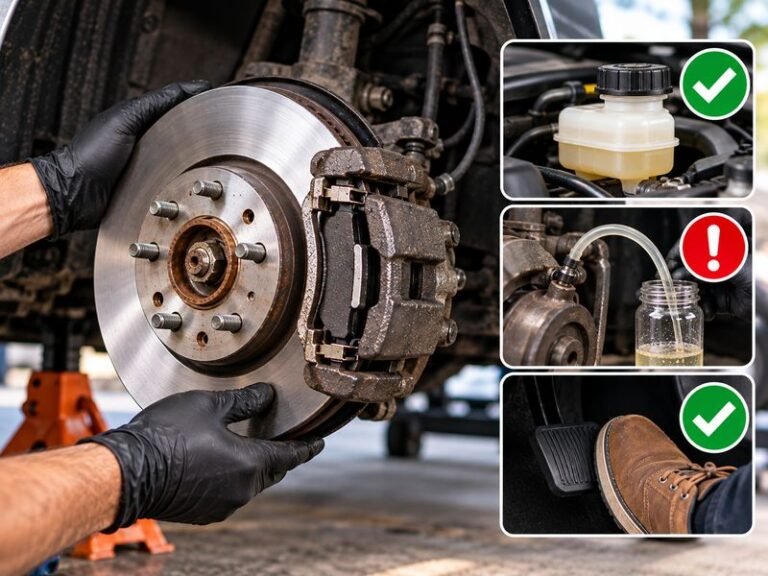
Disc brakes use a rotor, which is a flat, circular metal disc that spins with the wheel. When you brake, calipers squeeze brake pads against both sides of the rotor. This clamping action creates friction to slow the vehicle.
Rotors are exposed to air, which helps them cool faster than drum brakes, making them more effective at resisting brake fade during repeated hard stops.
Physical and Functional Differences
Brake shoes and rotors differ not only in location but also in shape, material, and wear patterns. Understanding these differences helps you communicate effectively with mechanics and make informed repair decisions.
Shape and Design
Brake shoes are curved metal pieces with friction material bonded or riveted to one side. They fit inside the drum and press outward. Rotors are flat discs, usually made of cast iron or composite materials, that are visible behind the wheel spokes.
Pads clamp onto the rotor surface from both sides.
Wear Patterns and Lifespan
Brake shoes typically last longer than brake pads because drum brakes often handle a smaller portion of the braking force. However, they wear differently. Shoes wear unevenly at the ends, and the friction material can become glazed if overheated.
Rotors wear in a different way. The surface develops grooves or scoring from the pads, and repeated heating and cooling can cause them to warp or develop hot spots.
Replacement Costs
Generally, replacing brake shoes is less expensive than replacing rotors. Brake shoes are smaller and use less material. Rotors are larger, heavier, and often require more labor to replace.
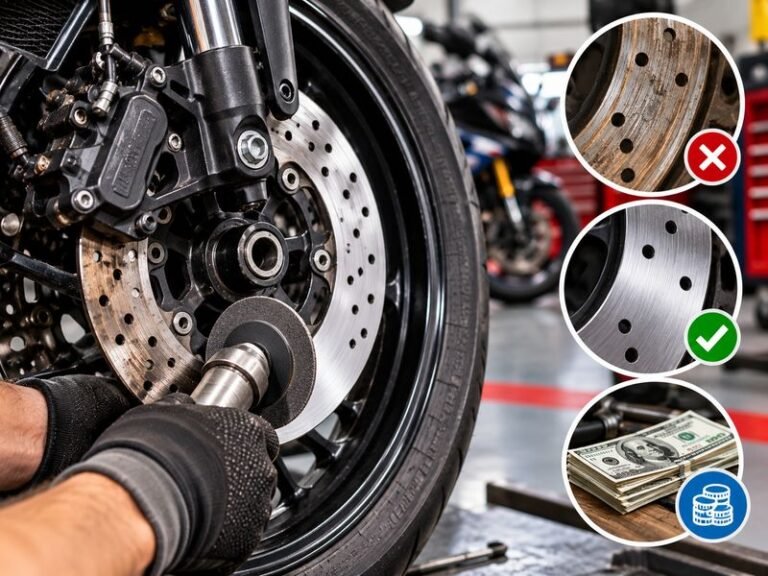
However, rotors can sometimes be resurfaced (machined smooth) rather than replaced, which can save money if they still have enough thickness.
Signs That Your Brake Shoes or Rotors Need Attention
Both brake shoes and rotors eventually wear out and require service. Recognizing the warning signs early can prevent more expensive damage to other brake components.
Symptoms of Worn Brake Shoes
- Squealing or squeaking when braking, especially if a wear indicator is built into the shoe
- Grinding noise that indicates the friction material is completely worn and metal is contacting metal
- Reduced braking performance or a pedal that feels low or spongy
- Pulling to one side when braking if the shoes wear unevenly
Symptoms of Worn or Damaged Rotors
- Pulsation or vibration through the brake pedal when stopping, often caused by warped rotors
- Scoring or deep grooves visible on the rotor surface
- Blue discoloration from overheating, which can reduce friction effectiveness
- Thickness below minimum specification, which requires replacement rather than resurfacing
Can You Replace One Without the Other?
A common question is whether you can replace brake shoes without touching the drums, or replace rotors without changing pads. The answer depends on the condition of each component.
Brake Shoes and Drums
When replacing brake shoes, a mechanic will inspect the drums for scoring, cracks, or out-of-round conditions. If the drums are in good shape, they can be reused. However, if the drums are worn beyond specification, they must be replaced.
It is not safe to install new shoes against damaged drums because the new friction material will not seat properly.
Rotors and Pads
When replacing brake pads, many mechanics recommend resurfacing or replacing the rotors. This is because new pads need a smooth, flat surface to bed in correctly. If the rotors are heavily scored or warped, they should be replaced.
Some vehicles have rotors that are too thin to resurface, so replacement is the only option.
Which System Does Your Vehicle Have?
Knowing whether your car uses brake shoes or rotors is essential for maintenance planning. You can usually determine this by looking at your vehicle through the wheel spokes.
Visual Inspection
If you can see a shiny metal disc behind the wheel, your vehicle has disc brakes with rotors. If you see a solid metal drum with no visible disc, your vehicle has drum brakes with brake shoes. Many vehicles have disc brakes in the front and drum brakes in the rear, so you may need to check both axles.
Checking Your Owner’s Manual
Your owner’s manual will specify the type of braking system on your vehicle. It will also provide maintenance schedules and specifications for minimum thickness and wear limits. This information is valuable when discussing repairs with a mechanic.
Maintenance and Replacement Considerations
Proper maintenance extends the life of both brake shoes and rotors. However, the service procedures differ significantly.
Servicing Brake Shoes
Brake shoe replacement involves removing the wheel, drum, and several springs and clips. The process is labor-intensive and requires careful attention to the spring tension. Many DIYers find drum brakes more challenging to service than disc brakes.
Additionally, brake dust accumulates inside the drum, which should be cleaned with brake cleaner, not compressed air, to avoid inhaling asbestos fibers in older vehicles.
Servicing Rotors
Rotor replacement is generally more straightforward. After removing the wheel and caliper, the rotor slides off the hub. Some rotors are held in place by a small screw.
Before installing a new rotor, it is important to clean the protective coating off the surface with brake cleaner. If you are keeping the existing rotors, they may need to be resurfaced on a lathe to restore a smooth, flat surface.
Cost Comparison and Budget Planning
Understanding the cost difference between brake shoes and rotors helps you budget for repairs. However, prices vary widely based on vehicle make and model, part quality, and labor rates in your area.
Typical Cost Ranges
Brake shoe replacement for one axle typically costs between $150 and $300, including parts and labor. Rotor replacement is more expensive. A single rotor can cost between $50 and $150 for the part alone, and labor adds another $100 to $200 per axle.
If you need new pads as well, the total can reach $300 to $500 per axle.
Quality Considerations
Choosing quality parts matters for both brake shoes and rotors. Cheap components may wear faster or produce more noise. Premium rotors with anti-corrosion coatings can last longer and look better behind your wheels.
For brake shoes, ceramic or semi-metallic friction materials offer different performance characteristics, so consult your mechanic for recommendations based on your driving habits.
Safety Implications and Professional Help
Brakes are the most critical safety system on your vehicle. Attempting to service them without proper knowledge and tools can lead to brake failure. If you are not confident in your ability to replace brake shoes or rotors, seek professional help.
When to See a Mechanic
- If you hear grinding noises, stop driving and have the brakes inspected immediately
- If the brake pedal feels soft, spongy, or goes to the floor
- If the vehicle pulls to one side during braking
- If you see warning lights on the dashboard related to the braking system
Importance of Proper Torque
Wheel lug nuts must be tightened to the manufacturer’s specified torque after any brake service. Over-tightening can warp rotors, while under-tightening can cause wheels to come loose. A torque wrench is essential for this task.
FAQ
Are brake shoes and rotors the same thing?
No, brake shoes and rotors are not the same. Brake shoes are curved friction components that press outward inside a drum, while rotors are flat discs that brake pads clamp onto. They serve similar purposes but operate in completely different braking systems.
Can I use brake shoes on a rotor?
No, brake shoes cannot be used on a rotor. They are designed specifically for drum brake systems. Using brake shoes on a rotor would be physically impossible because the mounting and actuation mechanisms are entirely different.
Do all cars have rotors?
No, not all cars have rotors on all four wheels. Many modern vehicles have rotors on the front wheels and drum brakes with brake shoes on the rear wheels. Some economy cars and trucks still use drum brakes on the rear axle to reduce costs.
Which lasts longer, brake shoes or rotors?
Brake shoes often last longer than rotors because they are typically used on the rear axle, which handles less braking force. However, rotors can last a long time if they are not warped or scored. Brake pads, which press against rotors, usually wear out faster than brake shoes.
How often should brake shoes and rotors be replaced?
There is no fixed interval for replacement. Brake shoes typically last between 30,000 and 60,000 miles, while rotors can last 50,000 miles or more depending on driving conditions and pad quality. Always follow the manufacturer’s recommendations and inspect them during routine maintenance.
Is it safe to replace only the brake shoes
It can be safe if the drums are within specification and have a smooth surface. However, a mechanic should measure the drum’s inner diameter and check for cracks or scoring. If the drums are worn beyond limits, they must be replaced to ensure proper braking performance.
Why do my new rotors vibrate when braking?
New rotors can vibrate if they are not properly cleaned before installation, if the hub has rust or debris, or if the lug nuts are over-tightened unevenly. In some cases, cheap rotors may be warped from the factory. Have a professional inspect the installation if vibration persists.
Conclusion
Understanding the difference between brake shoes and rotors is essential for any vehicle owner. Brake shoes belong to drum brake systems and press outward against a drum, while rotors are part of disc brake systems and are squeezed by pads. Knowing which type your vehicle uses helps you communicate with mechanics, anticipate repair costs, and recognize warning signs early.
The most important safety point is to never ignore unusual noises or pedal behavior, as brake failure can lead to serious accidents. If you are unsure about your vehicle’s braking system, check your owner’s manual or have a trusted mechanic inspect your brakes during your next oil change.