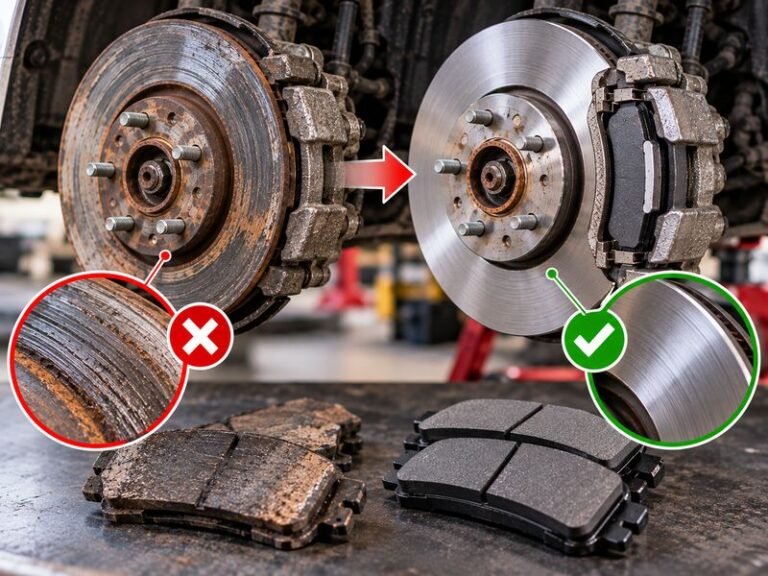
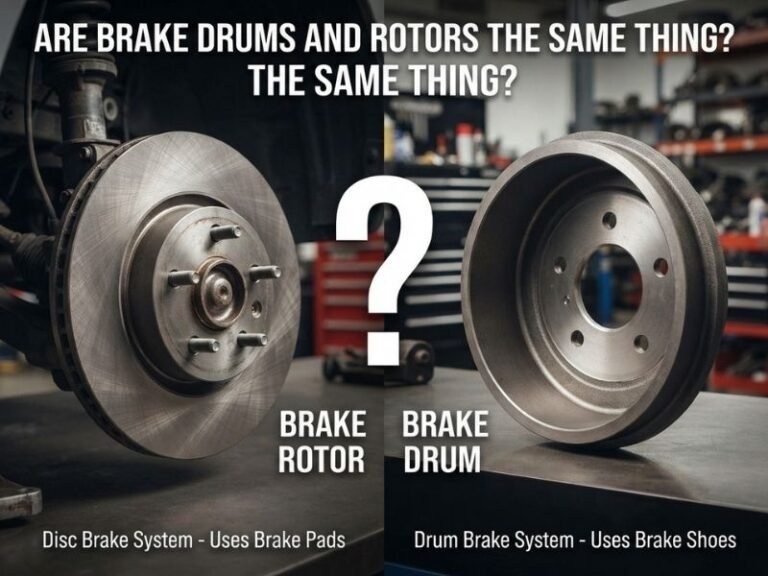
Do I Need to Bleed Brakes When Changing Rotors? Full Guide
No, you usually do not need to bleed the brakes when changing rotors if the brake hose stays connected, the bleeder screw remains closed, and no brake fluid leaks from the hydraulic system.
Replacing a brake rotor is mainly a mechanical job. You normally remove the wheel, caliper, caliper bracket, and old rotor without opening the brake fluid circuit. Because the system stays sealed, air should not enter the brake lines.
However, bleeding may become necessary if you disconnect a brake hose, open a brake line, replace a caliper, open a bleeder screw, lose brake fluid, or otherwise allow air into the system.
You may also need to investigate further if the brake pedal remains soft or spongy after the repair.
Simply pushing the caliper piston back to make room for new pads normally does not introduce air. It moves brake fluid back toward the master-cylinder reservoir.
The important distinction is simple: changing rotors does not automatically require bleeding, but opening the hydraulic brake system can.
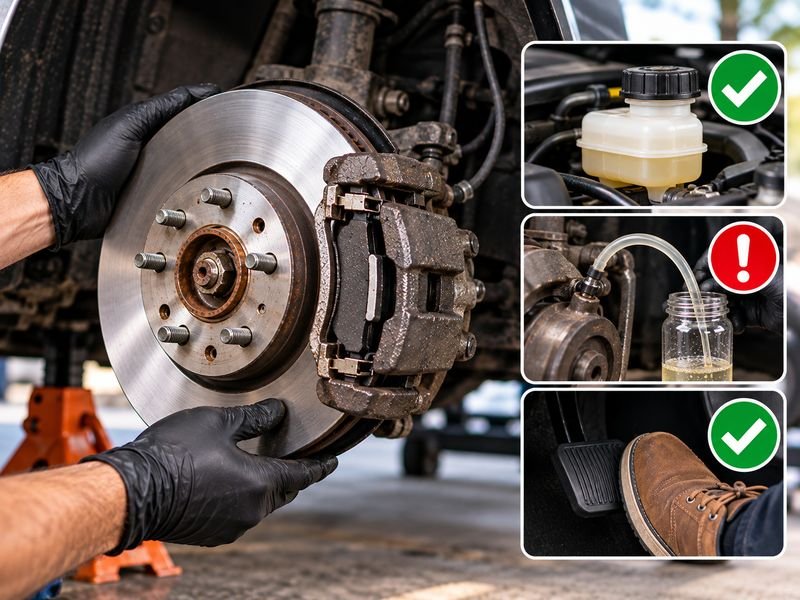
Do I Need to Bleed Brakes When Changing Rotors?
In most cases, no.
A normal rotor replacement does not require you to disconnect the hydraulic brake system.
You typically:
- Remove the wheel.
- Unbolt and support the brake caliper.
- Remove the caliper bracket if necessary.
- Remove the old rotor.
- Install the new rotor.
- Reinstall the bracket, pads, and caliper.
- Pump the brake pedal until it becomes firm.
If the brake hose remains connected throughout the job, air generally has no path into the system.
That means there is normally nothing to bleed out.
The same basic principle applies when replacing brake pads at the same time.
Why Doesn’t Changing Rotors Normally Require Brake Bleeding?
Brake bleeding is used to remove air from the hydraulic brake system.
Your brake pedal creates hydraulic pressure through the brake fluid. That pressure travels through the brake lines and hoses to the calipers.
Brake fluid is effectively incompressible for this purpose, while air can compress.
If air enters the brake lines, part of the pedal movement may compress that trapped air instead of immediately applying full hydraulic pressure at the brakes.
That can create a soft or spongy brake pedal.
Changing a rotor does not normally open any of these hydraulic passages.
The rotor itself is a mechanical friction component. Brake fluid does not flow through it.
Therefore:
Rotor replacement alone does not introduce air into the brake lines.
When Do You Need to Bleed the Brakes During a Rotor Change?
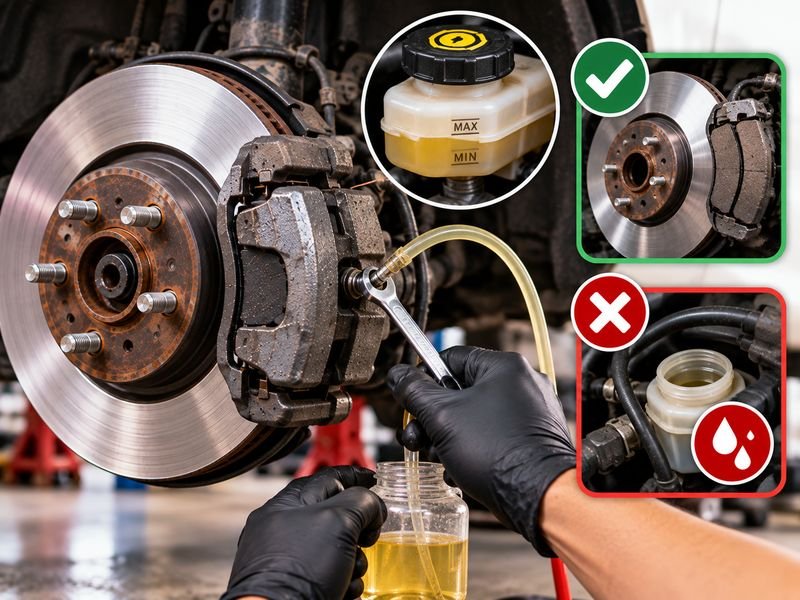
Bleeding becomes necessary or advisable when the hydraulic system has been opened or air may have entered.
Common situations include the following.
You Disconnected the Brake Hose
If you disconnect the flexible brake hose from the caliper, the hydraulic circuit is open.
Brake fluid can escape and air can enter.
After reconnecting the hose, the affected portion of the brake system needs to be bled according to the manufacturer’s procedure.
You Replaced the Brake Caliper
Replacing a caliper normally requires disconnecting the brake hose.
The replacement caliper also contains air before being filled with brake fluid.
That air must be removed.
A caliper replacement therefore normally requires brake bleeding.
You Opened a Brake Line or Fitting
Loosening a hydraulic fitting creates another path for air to enter.
This includes work involving brake hoses, hard lines, master cylinders, ABS hydraulic components, and other parts of the fluid circuit.
Brake Fluid Leaked Out
A hydraulic leak can allow the reservoir level to fall and air to enter the system.
Fix the leak first.
Then refill the reservoir with the correct brake fluid and bleed the system using the proper procedure.
The Master-Cylinder Reservoir Ran Dry
Never allow the brake fluid reservoir to become empty during service.
If it runs dry, air can enter the master cylinder and brake lines.
Bleeding may then become much more involved, particularly on vehicles with ABS.
The Brake Pedal Remains Spongy
If the brake pedal remains soft after the brake job, trapped air is one possible cause.
However, do not automatically assume bleeding is the only solution.
A soft or abnormal pedal can also result from:
- A brake fluid leak
- Incorrect pad installation
- Excessive caliper piston movement
- A hydraulic problem
- An improperly installed component
- A master-cylinder problem
- Another brake-system fault
Inspect the repair before simply bleeding the brakes repeatedly.
Do I Need to Bleed Brakes After Changing Pads and Rotors?
Usually not.
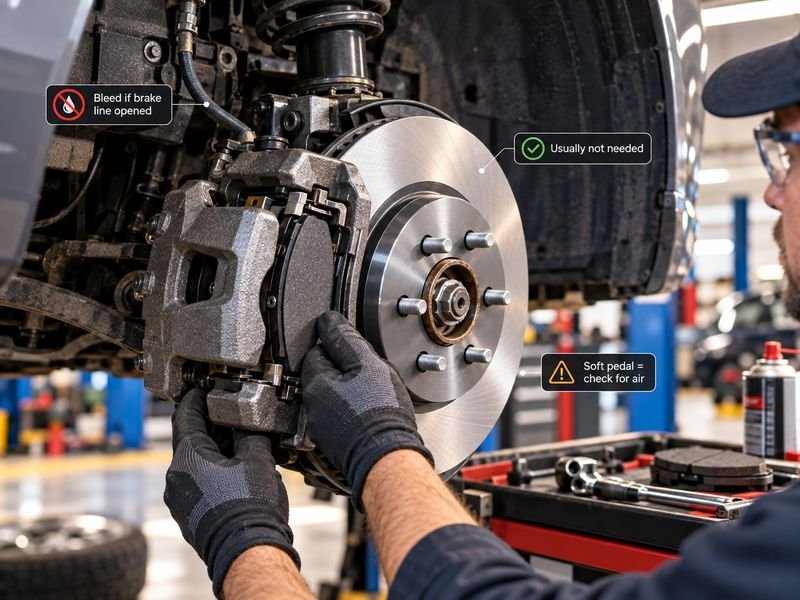
Replacing brake pads and rotors together normally leaves the hydraulic circuit sealed.
You will usually need to push the caliper piston back into its bore to create enough room for the new, thicker brake pads.
That movement sends brake fluid backward through the brake line toward the master-cylinder reservoir.
It does not normally pull air into the system.
Therefore, changing pads and rotors does not by itself create a reason to bleed the brakes.
However, always follow the service procedure for your exact vehicle and the instructions supplied with the brake components.
Some brake manufacturers recommend bleeding or replacing brake fluid as part of a complete brake service even when air has not entered the system.
That is maintenance guidance rather than proof that rotor replacement itself introduces air.
Do You Need to Bleed Brakes After Removing the Caliper?
It depends on what you mean by removing the caliper.
Caliper Unbolted but Brake Hose Still Connected
No, bleeding is normally unnecessary.
During a typical rotor replacement, you unbolt the caliper and move it out of the way while leaving the brake hose attached.
Support the caliper with a proper hook, wire, or other suitable support.
Never let it hang by the flexible brake hose.
The weight of the caliper can strain or damage the hose.
Caliper Completely Disconnected From the Brake Hose
Yes.
Once you disconnect the hydraulic hose, the system is open.
Air can enter, and brake fluid can escape.
After reconnecting or replacing the caliper, bleed the system according to the manufacturer’s procedure.
Should I Bleed the Brakes When Compressing the Caliper Piston?
Normally, simply retracting the caliper piston does not require bleeding.
When you push the piston back into the caliper, brake fluid moves back toward the reservoir.
No air should enter a properly sealed system.
However, check the reservoir before compressing the piston.
If the reservoir is already close to the MAX line, returning fluid can cause it to overflow.
Brake fluid can damage painted surfaces, so avoid spills and clean them promptly using an appropriate method.
What If I Open the Bleeder Screw While Compressing the Piston?
Some service procedures or technicians open the bleeder screw while retracting the piston so old fluid is expelled instead of being pushed backward through the system.
If you open the bleeder, you are intentionally opening the hydraulic system.
Follow the correct vehicle-specific bleeding procedure afterward and make sure no air remains in the caliper or brake line.
Do not open a bleeder casually if you do not intend to perform the required hydraulic checks afterward.
Why Is My Brake Pedal Soft After Changing Rotors?
A rotor replacement alone should not cause a permanently soft brake pedal.
However, the pedal may initially travel farther than expected immediately after reassembly.
When the caliper piston has been pushed fully back, there may temporarily be extra clearance between the pads and rotor.
Pressing the brake pedal several times moves the piston and pads back into their normal operating positions.
The pedal should then become firm.
Pump the Brake Pedal Before Driving
Before starting to drive:
- Make sure all brake components are correctly installed.
- Check the brake fluid level.
- Sit in the driver’s seat.
- Press the brake pedal several times.
- Confirm that the pedal becomes firm.
Do this before shifting into gear.
The first few pedal presses after a brake job can have additional travel while the pads move back toward the rotor.
That is different from a pedal that remains spongy.
If the Pedal Stays Soft
Do not drive the vehicle until the cause is identified.
Inspect for:
- Brake fluid leakage
- Loose hydraulic fittings
- Open or leaking bleeder screws
- Air in the brake lines
- Incorrect pad installation
- Caliper problems
- Low fluid level
A consistently soft pedal after brake service deserves immediate attention.
Can Changing Rotors Put Air in the Brake Lines?
Not under normal circumstances.
Air cannot simply enter the sealed hydraulic brake system because you removed a rotor.
There has to be an opening or another fault that allows air into the circuit.
Examples include:
- Disconnecting the brake hose
- Opening a bleeder screw
- Loosening a hydraulic line
- Allowing the reservoir to run dry
- Developing a leak
If none of these occurred, trapped air is less likely to be caused by the rotor replacement itself.
Do New Rotors Need Brake Bleeding or Bedding?
These are two completely different procedures.
Bleeding removes air from the hydraulic brake system.
Bedding establishes proper contact and an even friction relationship between the brake pads and rotors.
Installing new rotors may require bedding, especially when new pads are installed at the same time.
It does not automatically require bleeding.
Do not confuse the two.
Brake Bleeding
Deals with:
- Brake fluid
- Hydraulic pressure
- Trapped air
- Soft or spongy pedals
Brake Bedding
Deals with:
- Pad-to-rotor contact
- Friction material transfer
- Initial heat cycles
- Braking consistency
Follow the brake pad or rotor manufacturer’s recommended bedding procedure.
Should You Bleed Brakes When Replacing Rotors as Preventive Maintenance?
Not necessarily.
If the hydraulic system remains sealed and the brake fluid is in good condition, bleeding is not automatically required just because new rotors are being installed.
However, a rotor replacement can be a convenient time to evaluate the condition of the brake fluid.
Brake fluid gradually absorbs moisture over time, particularly common glycol-based fluids such as DOT 3, DOT 4, and DOT 5.1.
If the fluid is due for replacement according to the vehicle manufacturer’s maintenance schedule, performing a brake fluid flush or replacement during the same service may make sense.
But remember:
Changing brake fluid because it is old and bleeding brakes because air entered the system are related procedures with different reasons behind them.
Do I Need to Bleed All Four Brakes?
Not always.
The required bleeding sequence depends on:
- Which part of the hydraulic system was opened
- Vehicle design
- ABS configuration
- Manufacturer procedure
Older advice often recommends automatically starting with the wheel farthest from the master cylinder and working toward the closest.
That sequence is not universal for modern vehicles.
Some vehicles use diagonal hydraulic circuits, specialized ABS systems, or manufacturer-specific sequences.
Use the service information for your exact vehicle rather than assuming a universal wheel order.
Does ABS Change the Brake Bleeding Procedure?
It can.
Modern vehicles commonly use an ABS hydraulic control unit containing valves and passages that conventional manual bleeding may not always purge if air enters the unit.
Certain vehicles require:
- A specific bleeding sequence
- A pressure bleeder
- A scan tool
- An ABS automated bleed procedure
This does not mean every rotor replacement requires an ABS bleed.
If the hydraulic system remained sealed, the ABS unit normally has no reason to contain new air.
But if the reservoir ran dry or the ABS hydraulic unit was opened, vehicle-specific procedures become especially important.
Does an Electronic Parking Brake Affect Rotor Replacement?
It can affect how the rear caliper piston is retracted, but this is separate from brake bleeding.
Many vehicles with an electronic parking brake (EPB) require service mode before rear brake pads or rotors are replaced.
The piston should not automatically be forced or rotated using a generic procedure.
Doing so can damage:
- The caliper
- EPB motor
- Internal parking brake mechanism
Entering EPB service mode does not normally introduce air into the hydraulic system.
Therefore, using service mode does not itself create a need to bleed the brakes.
Follow the manufacturer’s rear brake service procedure for the exact vehicle.
Do I Need to Add Brake Fluid After Changing Rotors?
Usually not simply because the rotors were changed.
Rotor replacement does not consume brake fluid.
In fact, when caliper pistons are pushed back during a pad replacement, the fluid level in the reservoir may rise.
Check the reservoir when the job is finished.
The fluid should remain within the specified range.
Do not automatically top the reservoir to the very top.
Also, do not repeatedly add brake fluid without determining why the level was low.
A falling brake fluid level can be associated with pad wear or, more importantly, a hydraulic leak that requires inspection.
What Brake Fluid Should I Use If Bleeding Is Required?
Use only the brake fluid specification approved by the vehicle manufacturer.
Common types include:
- DOT 3
- DOT 4
- DOT 5.1
- DOT 5 in specific applications
Do not choose fluid only by color or assume every DOT specification is interchangeable.
The correct fluid is usually listed:
- On the master-cylinder reservoir cap
- In the owner’s manual
- In service information
Never contaminate the reservoir with engine oil, transmission fluid, power steering fluid, or other petroleum products.
Can I Bleed the Brakes Myself?
Brake bleeding can be a DIY job on some vehicles, but the correct procedure matters.
A basic manual process generally involves:
- Keeping the reservoir filled
- Connecting a hose to the bleeder screw
- Opening and closing the screw at the correct time
- Expelling fluid and air
- Repeating until bubbles are gone
- Checking for leaks
- Confirming a firm brake pedal
However, not every vehicle can be safely handled with a generic procedure.
Some ABS systems require specialized equipment or software.
If you are unsure of the correct method, use the factory service information or have a qualified technician perform the job.
Common Mistakes During a Rotor Replacement
Avoiding a few mistakes can keep a straightforward rotor replacement from turning into a hydraulic repair.
Disconnecting the Brake Hose Unnecessarily
You usually do not need to disconnect the brake hose simply to move the caliper out of the way.
Support the caliper instead.
Letting the Caliper Hang From the Hose
A brake hose is not designed to support the weight of the caliper.
Use a hook or suitable support.
Pressing the Brake Pedal With the Caliper Removed
If the pads or caliper are removed, pressing the pedal can push the caliper piston too far outward.
That may cause fluid leakage or damage.
Forgetting to Check the Reservoir Before Compressing Pistons
The returning fluid can overflow an already full reservoir.
Driving Before Pumping the Brake Pedal
The pedal may travel unusually far on the first press if the caliper pistons have been retracted.
Always pump the pedal until it feels firm before moving the vehicle.
Leaving a Bleeder Screw Loose
Check that all hydraulic connections and bleeder screws are properly secured and dry.
Assuming a Soft Pedal Is Normal Break-In
Brake bedding does not cause a persistently spongy pedal.
Investigate the hydraulic system if the pedal does not become firm.
What Should You Check Before Driving After Changing Rotors?
Before driving, confirm that:
The brake pedal is firm.
Pump it several times with the vehicle stationary.
The brake fluid level is correct.
Check the reservoir and use only the specified fluid if adjustment is necessary.
There are no fluid leaks.
Look around the calipers, hoses, bleeder screws, and any hydraulic connection that was touched.
The caliper is correctly installed.
Verify the fasteners and hardware according to the manufacturer’s torque specifications.
The pads are correctly positioned.
Check clips, shims, springs, and other hardware.
The wheels are correctly installed and torqued.
Wheel fasteners must be tightened to the specified torque.
You know the bedding procedure.
Follow the pad and rotor manufacturer’s recommendations for the initial drive.
FAQs About Bleeding Brakes When Changing Rotors
Do I Need to Bleed Brakes When Changing Rotors?
Usually, no. If the brake hose stays connected, the bleeder screw stays closed, and no fluid leaks out, changing the rotor does not normally introduce air into the hydraulic system.
Do I Need to Bleed Brakes After Changing Brake Pads and Rotors?
Not normally. Compressing the caliper piston and replacing pads or rotors does not automatically introduce air into a sealed system.
Do I Need to Bleed Brakes If I Remove the Caliper?
Not if you only unbolt the caliper and leave its brake hose connected. If the hose is disconnected, the hydraulic system has been opened and bleeding is required.
Should I Bleed Brakes After Compressing the Caliper Piston?
Simply compressing the piston normally does not require bleeding. It pushes brake fluid back toward the reservoir.
Can Changing Rotors Cause a Soft Brake Pedal?
Changing the rotor itself should not create a persistently soft pedal. The first few presses may have extra travel while the pads move back into position, but the pedal should become firm.
What If I Accidentally Opened the Bleeder Screw?
If the bleeder was opened, air may have entered the caliper or line. Follow the vehicle-specific bleeding procedure and confirm a firm pedal before driving.
Do I Need to Bleed Brakes After Replacing a Caliper?
Yes, normally. Caliper replacement requires opening the hydraulic circuit, so trapped air must be removed afterward.
Do New Rotors Need to Be Bled?
No. Rotors contain no brake fluid. They may require proper bedding with the brake pads, but bedding and bleeding are different procedures.
Do I Have to Bleed All Four Brakes After Changing One Rotor?
Not simply because you changed one rotor. If hydraulic work was performed, the required bleeding sequence depends on the vehicle and which part of the system was opened.
Why Is My Brake Pedal Going to the Floor After Changing Rotors?
Do not drive the vehicle. First pump the pedal to reposition the caliper pistons. If the pedal still goes excessively low or to the floor, check for fluid leaks, air in the system, incorrect installation, and hydraulic faults.
Does Pushing the Caliper Piston Back Put Air in the Brake Lines?
No, not in a properly sealed system. It moves fluid back toward the master-cylinder reservoir rather than introducing air.
Should I Change Brake Fluid When Replacing Rotors?
Only if the fluid is due for service, contaminated, or the vehicle manufacturer recommends replacement. Rotor replacement by itself does not require new brake fluid.
Conclusion: Do I Need to Bleed Brakes When Changing Rotors?
So, do you need to bleed brakes when changing rotors? In most cases, no.
Changing a brake rotor does not normally open the hydraulic system. If you keep the brake hose connected, leave the bleeder screw closed, prevent the reservoir from running dry, and do not lose brake fluid, air should not enter the lines.
Bleeding becomes necessary when the hydraulic circuit is opened, such as when you disconnect a brake hose, replace a caliper, loosen a brake line, open a bleeder, or lose enough fluid for air to enter.
After the brake job, always pump the brake pedal until it becomes firm before moving the vehicle.
If the pedal remains soft, spongy, unusually low, or slowly sinks, do not assume that new pads and rotors simply need time to break in. Inspect the brake system for air, leaks, or installation problems.
And remember: new rotors may need bedding, but they do not automatically need bleeding. They are two different procedures addressing two completely different parts of the braking system.