When to Use Emergency Parking Brake: Parking and Safety Tips
Use the emergency parking brake whenever you park your vehicle, even on level ground. Use it while moving only if the normal brakes cannot stop the vehicle and an emergency stop is necessary. The parking brake is primarily a device for keeping a stationary car from rolling, although many systems can also provide limited braking in an emergency.
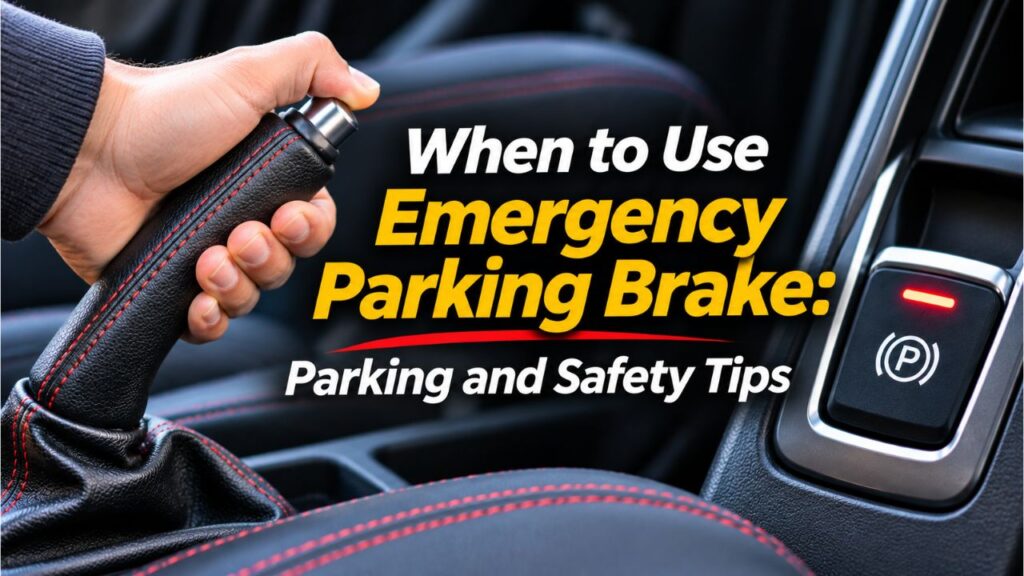
The names “emergency brake,” “parking brake,” “handbrake,” and “e-brake” often refer to the same function. Depending on the vehicle, the control may be a hand lever, a foot pedal, or an electronic switch. What matters is recognizing that it is not the same as the regular brake pedal used to slow down during everyday driving.
Using the parking brake consistently reduces the chance of an unattended vehicle moving and provides additional security alongside the transmission’s Park position or a selected gear. Misusing it at speed, however, can reduce traction or damage components. This guide explains the right times to engage it, how to secure a vehicle on hills, what to do if the service brakes fail, and when its use calls for extra caution.
When to Use Emergency Parking Brake in Everyday Driving
Set the parking brake whenever you park, even on level ground. A slight slope or accidental shifter movement can allow a vehicle to roll. The parking brake provides another safeguard.
Every Time You Leave a Parked Car
Stop fully, hold the regular brake pedal, engage the parking brake, and select Park or the recommended manual gear. Confirm it holds before exiting, even if application is automatic.
AAA Club Alliance’s guidance on using the emergency brake recommends setting it whenever you park, including on flat surfaces. The same guidance explains why a parking brake can reduce the load placed on an automatic transmission’s parking pawl.
Whenever You Park on a Hill or Sloped Driveway
On a slope, combine the parking brake with Park or a suitable gear and correctly positioned front wheels. Do not rely on one holding mechanism.
Before Loading, Unloading, or Certain Roadside Tasks
Engage the parking brake before loading, trailer hookup, or tire changes where appropriate. Add wheel chocks and approved supports as needed. Rear-brake repairs may require releasing it or placing an electronic system in maintenance mode.
When Leaving a Vehicle Stationary With the Engine Running
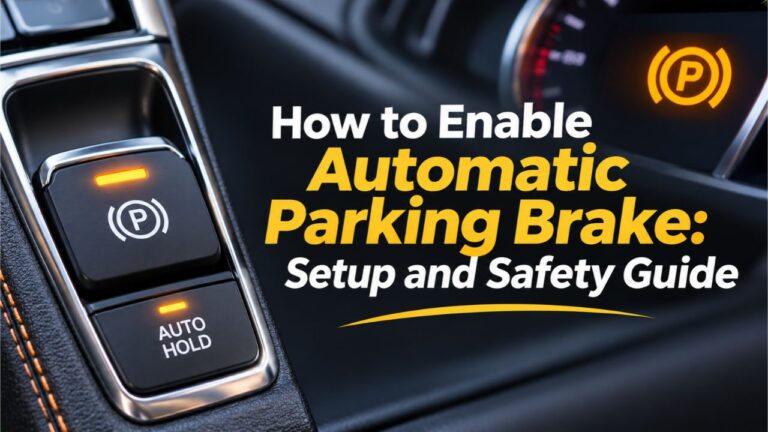
When stationary with the engine running, follow the owner’s manual for transmission position and parking-brake use. Do not leave the vehicle running unattended where unsafe or prohibited. At ordinary traffic lights, use the foot brake or approved Auto Hold feature instead.
Why Use the Parking Brake With an Automatic or Manual Transmission?
Selecting Park in an automatic transmission engages a parking pawl. Applying the parking brake while holding the foot brake reduces the chance of the car settling heavily against that mechanism on a grade.
In a manual vehicle, select the manufacturer-recommended parking gear, often first or reverse, alongside the parking brake. Drivetrain resistance alone is not a dependable substitute.
The parking brake and transmission therefore provide complementary protection. Neither should be treated as an excuse to ignore proper wheel positioning on a slope or a parking-brake warning that indicates malfunction.
How to Set the Emergency Parking Brake Correctly
These steps cover ordinary parking, not an emergency stop while moving. The exact control and sequence may differ on vehicles with automatic electric parking brakes, shift-by-wire transmissions, or special parking features.
Step 01: Stop Fully and Hold the Regular Brake Pedal
Stop fully in a safe parking space. Keep your foot on the service brake until the vehicle is secured, especially on a slope.
Step 02: Apply the Parking Brake With the Correct Control
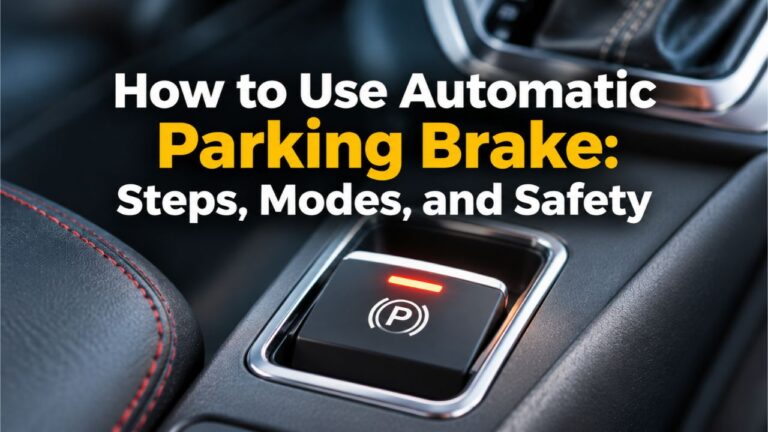
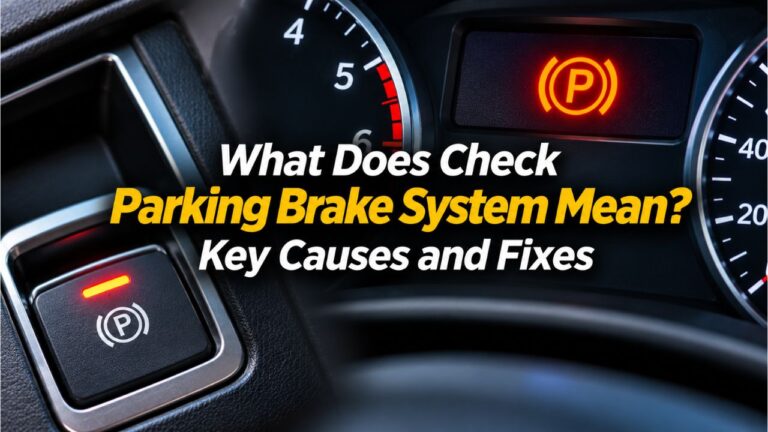
Pull the hand lever, depress the parking pedal, or operate the electronic switch as instructed. Do not force the mechanism. On an EPB, confirm the indicator shows successful application.
Step 03: Select Park or the Recommended Manual Gear
While holding the foot brake, select Park or the recommended manual gear. On a hill, position the wheels correctly. If the vehicle moves unexpectedly when you ease off the pedal, press it again and resecure the car.
Step 04: Verify the Vehicle Is Secure Before Exiting
Ease off the foot brake and confirm the car stays still. Secure the vehicle before leaving. When departing, fully release the parking brake and check its warning indicator.
When to Use the Parking Brake on Hills and Curbs
On hills, wheel positioning adds protection if the parking brake or transmission fails.
The California Driver’s Handbook section on parking on a hill advises setting the parking brake and leaving the vehicle in Park or in gear. It also distinguishes wheel positioning for uphill, downhill, and no-curb parking.
Uphill With a Curb
Turn the front wheels away from the curb. If the car rolls backward, the curb can help stop it. Never let the vehicle roll uncontrolled just to touch the curb.
Downhill With a Curb
Turn the front wheels toward the curb so the front tire can contact it if the vehicle rolls. Wheel positioning adds protection; it does not replace the brake.
Uphill or Downhill Without a Curb
Turn the front wheels toward the shoulder, away from the road center where practical. On steep driveways, add wheel chocks when needed.
When Should You Use an Emergency Brake While Driving?
Only treat the parking brake as a moving-vehicle brake when the normal service brakes cannot stop the vehicle safely. Examples include a severe hydraulic failure or a brake pedal that becomes inoperative or physically blocked. This is a last-resort action, not a routine method of slowing for a turn, descending a hill, or approaching traffic lights.
Many conventional parking brakes act mainly on the rear wheels. Sudden, heavy rear braking can cause the tires to lock and the rear of the car to slide, particularly in a turn or on a wet, icy, or loose surface. Electronic parking brakes may manage emergency braking through the vehicle’s controls, but the behavior is model-specific.
A failure of vacuum power assistance is also different from total loss of the regular brakes. If the brake pedal becomes unusually hard, the hydraulic system may still respond to much firmer, steady foot pressure. Do not switch immediately to the parking brake without attempting to control the car using the available service brakes.
How to Use the Emergency Brake if the Regular Brakes Fail
The priority is retaining steering control while reducing speed. These are general emergency principles, not a replacement for the emergency procedure in your vehicle’s owner’s manual.
Step 01: Release the Accelerator and Look for a Safe Path
Release the accelerator and look for a safe shoulder or open area. Keep steering toward a clear path, away from people and obstacles.
Step 02: Attempt Controlled Braking With the Foot Pedal
Press the regular brake pedal firmly. A pedal that feels hard because power assistance has failed may still provide braking with greater force. If the pedal goes unusually low or does not stop the vehicle, other hydraulic faults may be present. Avoid frantic, repeated pumping that could use up remaining vacuum assistance; follow the manufacturer’s emergency-braking instructions if the pedal is abnormal.
Step 03: Use Engine Braking Where Appropriate
If safe, downshift progressively to help slow down. Avoid sudden extreme downshifts, selecting Park or Reverse while moving, or switching off the ignition.
Step 04: Apply the Parking Brake According to Its Design
With a conventional hand lever, increase braking force gradually, watching for rear-wheel skid or directional instability. A foot-operated parking brake may latch and be difficult to modulate, so use its manufacturer-specified emergency procedure rather than treating it exactly like a hand lever.
Electronic parking brakes can behave differently. For example, Ford’s official instructions for emergency electric parking brake use say to pull and hold the switch on the covered vehicle to slow or stop it, and warn against using the feature while moving except in an emergency. Do not assume every car responds to the same switch action.
Step 05: Steer to Safety Without Abrupt Inputs
Steer smoothly toward a safe stopping place. If the rear tires skid during manual application, ease the parking-brake force as its controls allow. Use hazard lights only when doing so won’t distract from control.
Step 06: Secure the Vehicle and Arrange Assistance
Once stopped, keep the vehicle from rolling, warn other road users where appropriate, and contact roadside assistance. Do not resume driving after a service-brake failure even if the parking brake brought the vehicle to a stop. The braking system needs inspection and repair before the vehicle returns to traffic.
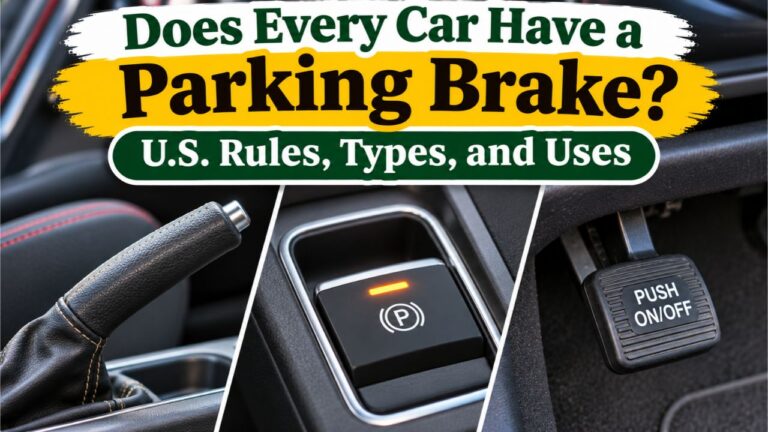
Manual Handbrake, Foot Pedal, and Electronic Parking Brake Differences
Not every parking brake is operated or released in the same way. Knowing the mechanism before an emergency avoids fumbling for a control when attention is needed on the road.
| Type | Normal Parking Control | Important Emergency Limitation |
| Hand-operated cable brake | Pull lever; use release button to disengage | Sudden application may lock rear wheels |
| Foot-operated mechanical brake | Press pedal; release by pedal or separate handle | Latching design may limit precise modulation |
| Electronic parking brake (EPB) | Use switch or automatic application feature | Moving-vehicle behavior and power requirements vary |
Some EPB systems can use anti-lock control or other vehicle electronics during emergency application; others have different capabilities. The owner’s manual is the reliable source for the exact emergency switch behavior, warning lamps, and release process.
When Not to Use the Emergency Parking Brake
Do not use it for routine slowing or stopping. The service brakes are designed for ordinary speed control and typically work with ABS and stability systems.
Never use a handbrake for skids or sharp turns. Sudden rear-wheel lockup can cause a spin, especially on wet, snowy, or icy roads. In a real brake failure, apply available braking as carefully as possible.
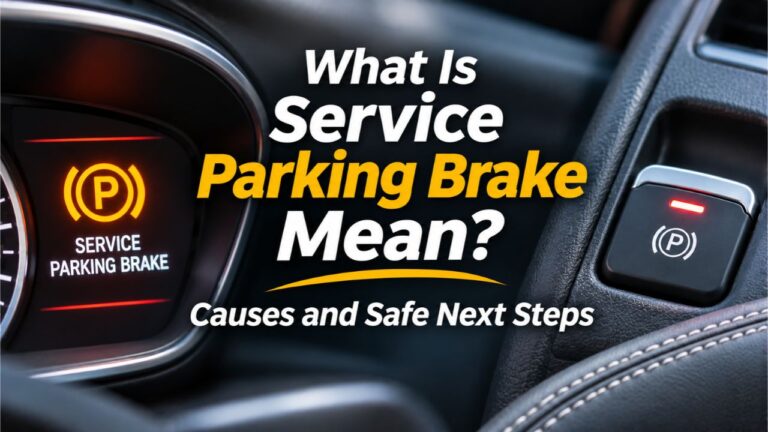
Avoid driving with the parking brake partly engaged. Continued friction can overheat pads, shoes, drums, or rotors and may damage cables or actuators. If the warning indicator stays on after releasing it, stop and investigate rather than assuming it is only an electrical glitch.
A known frozen or seized parking-brake mechanism also requires service. Freezing weather alone is not a general reason to abandon safe parking practices; follow the manufacturer’s recommendations and use alternate securing measures if the brake cannot work reliably.
What if the Parking Brake Will Not Hold or Release?
A parking brake that cannot hold may have damaged cables, worn components, poor adjustment, or an electronic fault. Secure the vehicle with the transmission and wheel chocks, and arrange repairs.
An EPB that will not release may have low 12-volt power, a control fault, or a seized mechanism. Use the manufacturer’s recovery procedure instead of forcing the actuator or dragging locked wheels.
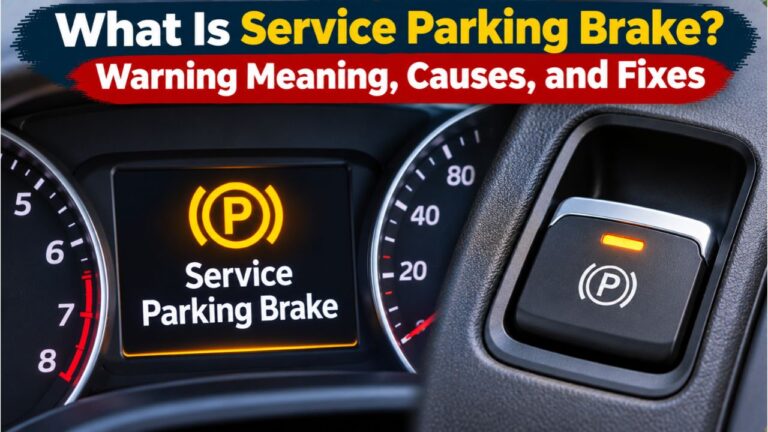
If the parking brake warning flashes, makes unusual grinding sounds, or fails repeatedly, have it inspected. A working parking brake is part of the vehicle’s normal parking safety, not an optional accessory kept only for rare emergencies.
FAQs About When to Use Emergency Parking Brake
Should You Use the Emergency Brake Every Time You Park?
Yes. Setting it whenever you park is a sound habit, including on flat ground. Use it together with Park or the recommended manual-transmission gear, rather than relying on the parking brake alone.
Is the Emergency Brake Only for Brake Failure?
No. Its primary everyday function is securing a parked vehicle. Using it to stop a moving car is reserved for a genuine emergency involving inadequate normal braking.
Should You Use the Parking Brake at a Red Light?
Usually not. For an ordinary short stop, the service brake or the vehicle’s approved Auto Hold feature is intended to keep the car stationary. A longer stationary situation may call for different procedures under the owner’s manual.
Do You Need the Parking Brake on Flat Ground?
Yes. Even a parking space that looks level can have a slight slope, and the parking brake provides additional protection against unintended movement.
Can You Use an Electronic Parking Brake While Driving?
Some vehicles support an emergency moving-vehicle function, often activated by holding the EPB switch. Only use that function in an actual braking emergency and follow the model-specific manual; behavior is not universal.
Should You Apply the Parking Brake Before Shifting Into Park?
Holding the foot brake, applying the parking brake, and then selecting Park helps avoid loading the transmission’s parking pawl on a slope. Follow any different sequence specified for your particular vehicle.
Make the Parking Brake Part of Every Safe Parking Routine
Knowing when to use emergency parking brake means setting it every time you park and relying on it to slow a moving vehicle only in a genuine service-brake emergency. On hills, combine it with Park or the recommended gear and correct wheel positioning.
If the service brakes fail, maintain steering control and follow the emergency procedure for your vehicle’s brake design. After stopping, arrange assistance rather than continuing to drive.
A reliable parking brake is worth checking during regular maintenance. Engage it before leaving the vehicle, release it fully before driving, and repair any holding or release problem promptly.