Is Parking Brake Different Than Regular Brakes? How They Work
Yes, a parking brake is different from regular brakes because it is mainly designed to hold a stopped vehicle in place, while regular brakes slow or stop a moving vehicle. Both create friction at the wheels, but they usually have separate controls and different ways of applying and maintaining braking force.
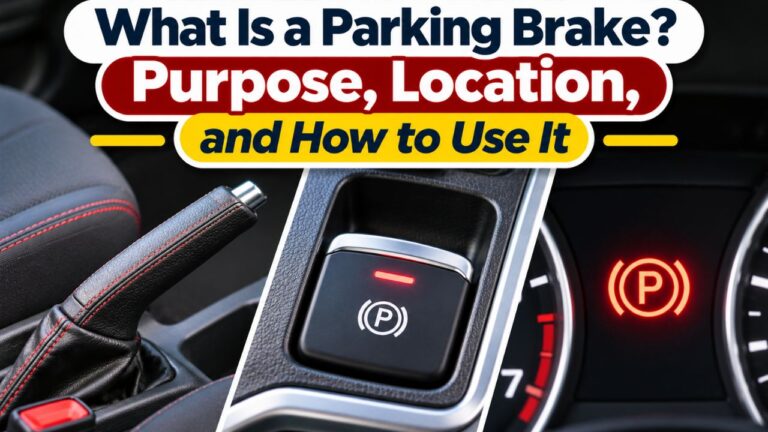
The regular brakes, also called service brakes, operate when you press the main brake pedal. A parking brake is applied with a hand lever, a separate foot pedal, or an electronic switch. Most parking brakes act on the rear wheels, although the exact arrangement varies. Some even use the same rear brake pads as the service brakes without sharing the same method of actuation.
This matters on hills, when diagnosing warning lights, and if normal braking fails. Shifting into Park is not the same as setting the parking brake.
Here is how the two systems work, what they share, when each should be used, and which symptoms require repair.
Is Parking Brake Different Than Regular Brakes? Key Differences
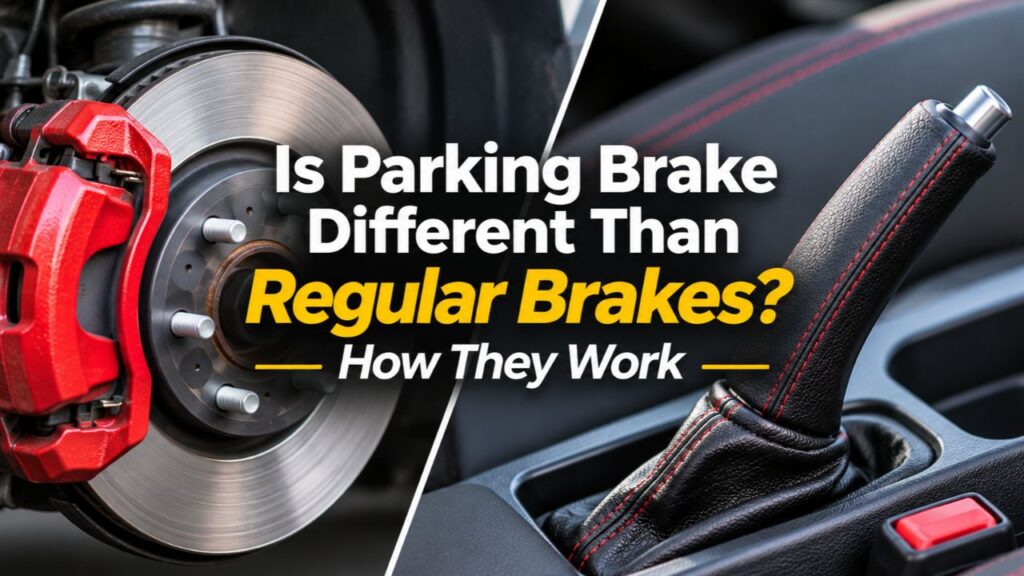
The parking brake and regular brakes do related jobs, but they are not interchangeable. Service brakes control a moving vehicle; the parking brake secures a stationary one. The service-brake pedal is for repeated stops; the parking brake keeps the vehicle from rolling.
| Feature | Regular Brakes | Parking Brake |
| Main purpose | Slow or stop the vehicle | Hold a parked vehicle still |
| Driver control | Main brake pedal | Lever, separate pedal, or switch |
| Wheel coverage | Normally all four wheels | Usually rear wheels |
| Operating force | Usually hydraulic, sometimes electronically coordinated | Mechanical cable or electric actuator on many cars |
| Holds after driver lets go | Normally no, unless assisted by a hold function | Yes, when properly applied |
| Normal use | Throughout driving | When parking |
For covered light vehicles, Federal Motor Vehicle Safety Standard No. 135 distinguishes service brakes from parking brakes. It requires independent driver controls and specifies a parking-brake mechanism that stays engaged mechanically. This doesn’t mean the systems can never share brake friction parts; it means their functions and controls are distinct.
How Regular Brakes Slow and Stop a Vehicle
Hydraulic Pressure at the Wheels
On a conventional passenger car, pressing the brake pedal moves a pushrod into the master cylinder. The master cylinder raises pressure in brake fluid, and that pressure travels through brake lines to the wheel brakes. Caliper pistons squeeze brake pads against rotors, or wheel cylinders press shoes against drums.
A brake booster reduces pedal effort. Releasing the pedal normally releases hydraulic pressure so the wheels rotate freely.
ABS and Regenerative Braking
Many vehicles also use an anti-lock braking system, or ABS, which adjusts service-brake pressure when wheel lockup threatens. Stability control may use individual service brakes to help control vehicle motion.
In an EV or hybrid, the brake pedal can also request regenerative braking, which slows the vehicle using the drive motor. Friction brakes remain part of the braking arrangement. Neither feature changes the parking brake’s basic role of holding the vehicle after it stops.
How a Parking Brake Holds the Vehicle in Place
A parking brake applies a lasting clamping or shoe-expanding force without requiring the driver to keep a foot on the regular brake pedal. It is designed to remain engaged after the ignition is switched off, subject to the vehicle’s operating instructions.
Cable-Operated Parking Brakes
In many older vehicles, pulling a hand lever or pressing a separate foot pedal tensions steel cables. Those cables move levers at the rear brakes. A ratchet or similar mechanism keeps the force applied until you intentionally release the parking brake.
The cable can operate shoes inside a drum, a small drum within a rear disc rotor, or a mechanism on a rear caliper. This arrangement typically does not need brake fluid pressure to hold the vehicle. Cable stretch, corrosion, or worn friction parts can weaken its holding ability.
Electric Parking Brakes
An electric parking brake (EPB) replaces the hand lever or separate pedal with a switch and electric actuation. Depending on the design, motors may move rear caliper mechanisms or operate a cable system. The applied force is held mechanically once the system has engaged; the motor does not need to run continuously to keep the vehicle parked.
Some EPBs automatically apply or release under certain conditions, while others require a deliberate switch command. Their behavior depends on the model, battery condition, sensors, and software logic.
Do Parking Brakes Use the Same Pads and Rotors as Regular Brakes?
Sometimes. A vehicle may share the rear disc rotor and pads between its normal brakes and parking brake while using a separate cable or electric mechanism to clamp them. Other designs have dedicated parking-brake shoes housed inside the center of a rear rotor, often called a drum-in-hat system.
A vehicle can have normal service brakes but a weak parking brake, even when both use the same rotor.
Maintenance also varies. Drum-in-hat shoes may need specific adjustment, while an EPB caliper may need an electronic service mode before its pads can be replaced. Never force an electric caliper piston backward without checking the procedure.
Do Parking Brakes Work on All Four Wheels?
In most passenger cars, the parking brake acts on the rear wheels, while normal service braking acts on all four. That matters because the front wheels handle a large share of stopping force during hard deceleration as weight shifts forward.
Rear-wheel-only parking brakes are effective for holding a stationary vehicle, but they generally provide less controlled stopping ability during motion than the complete service-brake system. Some older or specialized vehicles use different parking-brake arrangements, including transmission-mounted or driveshaft brakes. Check the design rather than assuming every vehicle is identical.
The controls are not interchangeable for ordinary stops.
When Should You Use the Parking Brake Instead of Regular Brakes?
Use the regular brake pedal to slow down and bring the vehicle to a complete stop. Then set the parking brake to keep it from rolling. The parking brake is useful on flat ground as well as on hills.
Parking on Level Ground
While keeping your foot on the regular brake pedal, apply the parking brake fully according to the owner’s manual. Put an automatic transmission in Park, or leave a manual transmission in the recommended gear, before releasing the service brake and exiting.
Some EPBs apply automatically; others do not. Confirm engagement using the indicator or owner’s manual.
Parking on a Hill
On an incline, keep the service brake applied while securing the vehicle with the parking brake and its correct transmission setting. Release the service brake only once the vehicle is secured. Follow local rules and your driver’s handbook for turning the front wheels toward or away from the curb.
The AAA Club Alliance guidance on using the emergency brake recommends using it whenever parking, not only on steep hills. It also explains that relying only on an automatic transmission’s parking pawl can place unnecessary load on the transmission when the vehicle settles against it.
Parking a Manual-Transmission Vehicle
A manual transmission typically has no Park position. Use the parking brake and select the gear recommended for the parking situation and manufacturer. Leaving the transmission in neutral with only a weak parking brake holding the car creates avoidable rollaway risk.
Never use your foot on the service brake as the sole means of keeping an unattended vehicle parked. Once you step out, that force disappears.
Is the Parking Brake the Same as the Emergency Brake?
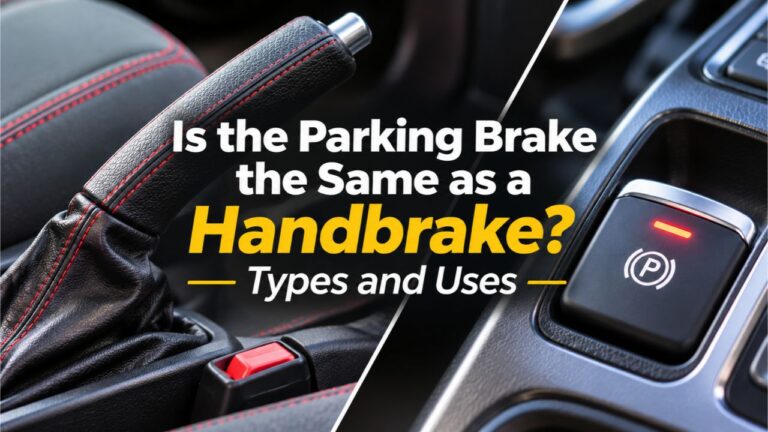
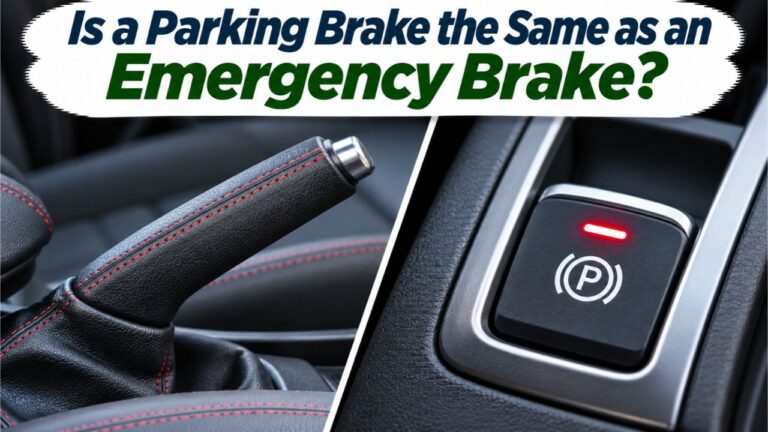
Usually, yes. Parking brake, emergency brake, e-brake, and handbrake are common names for the secondary brake control. “Handbrake” specifically describes a hand-operated arrangement, while “parking brake” names its primary job. A foot-operated parking brake is still a parking brake.
Although sometimes useful in an emergency, a parking brake cannot match regular-brake control. Abrupt cable-brake application may lock the rear wheels.
Modern electric systems complicate the picture. Some provide a controlled emergency braking function when the switch is held, potentially involving electronics and ABS. The function is vehicle-specific and should be used only as directed in a genuine emergency, never tested casually on public roads.
Can the Parking Brake Stop a Moving Car if Regular Brakes Fail?
It may help slow a vehicle, but the result is less predictable than normal service braking. Pulling a mechanical lever hard at speed can lock the rear wheels and cause a skid, especially on wet, icy, or loose surfaces. Electronic parking brakes may require holding the switch.
If the main brake pedal fails while driving, stay focused on steering and finding a safe place to stop. Ease off the accelerator, use an appropriate lower gear or engine braking where available, and follow the manufacturer’s emergency instructions for your parking-brake system. Avoid abrupt parking-brake application that could cause loss of control.
Do not drive again after a braking failure. The entire system needs inspection, even if the parking brake helped stop the vehicle.
What Happens if You Drive With the Parking Brake On?
A fully or partly applied parking brake creates drag, forcing the engine or motor to work against the rear brakes. Continued driving can overheat friction surfaces, wear out linings, and damage rotors, drums, or caliper components. You may notice poor acceleration, a burning smell, or a warning indicator.
Stop safely if the parking-brake warning remains on or the vehicle seems to be dragging. Check that the brake has released according to the manual. Do not touch hot brake components or pour water on them to cool them.
If a wheel overheated or the warning won’t clear, have the vehicle inspected before resuming normal driving. A stuck cable or electric actuator can leave the brakes engaged even after the control appears to be released.
How an Electric Parking Brake Differs From Auto Hold
Auto Hold often maintains service-brake pressure temporarily after a stop, while the parking brake secures the parked vehicle.
Some vehicles switch from Auto Hold to the parking brake after a period of time or when specific conditions occur. Others do not. For that reason, don’t leave a vehicle unattended just because the Auto Hold indicator is illuminated.
Ford’s electric parking brake owner’s manual guidance documents model-dependent switch operation, manual and automatic release, warnings during motion, and limitations when battery power is low. Its instructions apply to the covered Ford configuration, not every EPB-equipped car.
How to Recognize Parking Brake Problems Versus Regular Brake Problems
A parking brake that won’t hold on an incline may have worn shoes, stretched or seized cables, damaged rear-caliper hardware, or an EPB fault. A brake that won’t release may create heat and drag. Warning messages can also identify incomplete application or an electrical malfunction.
Regular-brake problems often present differently: a soft pedal, pulling under braking, a sinking pedal, hydraulic fluid loss, grinding, or poor stopping performance. Some symptoms overlap because both systems may share rear friction parts.
| Symptom | System to Investigate First |
| Vehicle rolls with parking brake applied | Parking-brake adjustment, actuator, or friction parts |
| Parking lever is loose or travel is excessive | Cable or mechanical linkage |
| EPB switch shows a malfunction message | Electrical parking-brake controls and actuators |
| Main brake pedal is soft or sinks | Service-brake hydraulics |
| Rear wheel drags after releasing parking brake | Parking-brake mechanism or shared rear caliper |
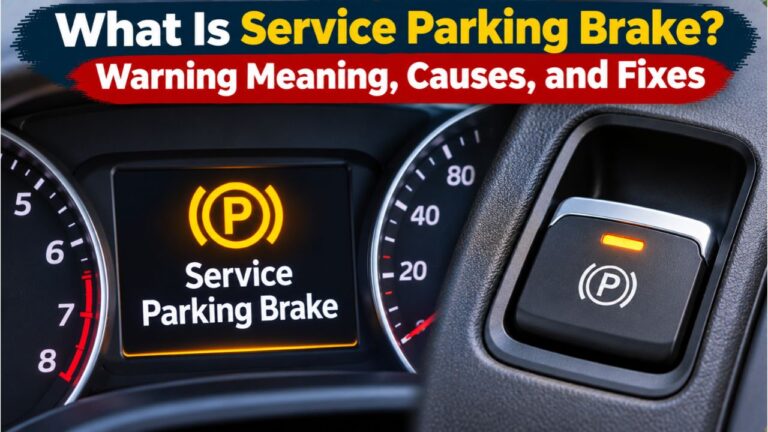
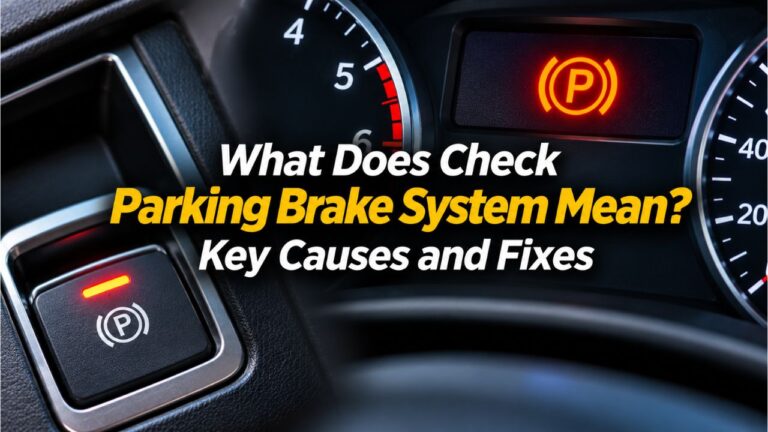
A brake warning lamp can signal an applied parking brake or a separate fault. Read the dashboard message.
Maintenance Differences Between Parking Brakes and Service Brakes
Regular brakes need periodic inspection of pads, rotors, calipers, hoses, and fluid according to the manufacturer’s schedule. Parking brakes also need periodic operation and checks for secure holding, smooth release, cable condition, and actuator function.
An unused cable brake can corrode or stick. Repair damaged or frozen mechanisms rather than forcing them.
For an EPB, rear brake service may require entering a manufacturer-specific maintenance mode using prescribed controls or a scan tool. Disconnecting the battery or pushing a piston back by force is not a universal alternative. If parking-brake repairs are needed, follow vehicle-specific service instructions and confirm safe operation before driving.
FAQs About Is Parking Brake Different Than Regular Brakes
Does the Parking Brake Use Brake Fluid?
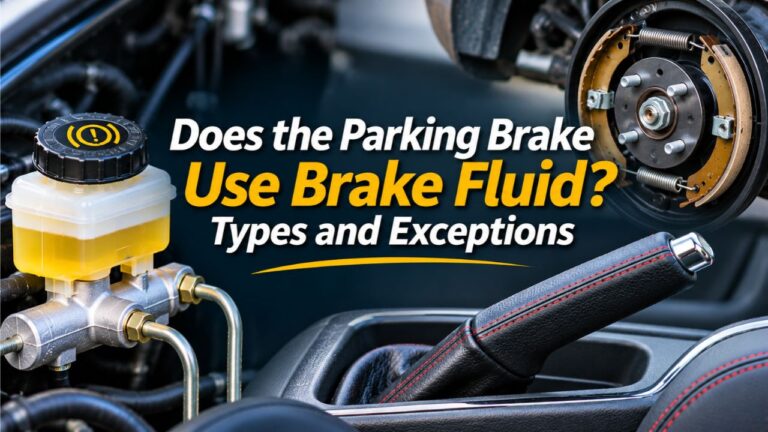
Most conventional cable-operated parking brakes do not need hydraulic brake fluid to apply or hold. Some specialized systems differ, so verify the vehicle’s design.
Is It Okay to Use the Parking Brake Every Day?
Yes, when the system is functioning properly, regular use when parking is appropriate. Apply and release it as the manufacturer’s instructions describe.
Can Regular Brakes Hold a Parked Car Without the Parking Brake?
The service brake holds the car while you keep pressure on the pedal. It is not meant to secure an unattended car. Park or a selected gear provides additional restraint, but the parking brake should also be used.
Is the Parking Brake Connected to the Rear Brakes?
Usually. It may use dedicated shoes or actuate the existing rear brake pads. Some vehicle designs use a different arrangement.
Will an Electric Parking Brake Work With a Dead Battery?
An already applied EPB may remain mechanically engaged, but some systems cannot be applied or released without electrical power. Consult the owner’s manual rather than attempting to force the actuator.
Does Setting the Parking Brake Automatically Put the Car in Park?
Not necessarily. The parking brake and automatic transmission’s Park setting are separate functions, even if a particular vehicle coordinates them electronically. Confirm both before leaving the vehicle.
Why the Parking Brake and Regular Brakes Have Separate Jobs
If you’re wondering is parking brake different than regular brakes, the answer is yes: regular service brakes are built for controlled stopping during driving, while the parking brake is meant to keep a vehicle securely stationary. They may share rear brake components, but they use different controls and often different actuation mechanisms.
Use the main brake pedal to stop, then apply the parking brake when leaving the vehicle, including on level ground. Keep the transmission in the correct parking position or gear, and don’t assume an electronic parking brake behaves the same way on every model.
If either system drags, fails to hold, shows a fault message, or changes braking performance, arrange repairs before driving. Both systems serve distinct safety purposes, and neither should be ignored simply because the other still seems to work.