What to Do After Putting in Brake Fluid: Check Before Driving
After putting brake fluid into your car, check that the reservoir level is correct, securely reinstall the cap, clean up any spills, and inspect the braking system for leaks. Before driving, check the brake pedal’s feel and make sure there are no unresolved brake-system warnings. If you only topped off the reservoir and the hydraulic system never ran dry, you generally do not need to bleed the brakes.
However, adding brake fluid doesn’t automatically mean your braking system is safe. A low reservoir can indicate worn brake pads or a hydraulic leak. If the brake pedal feels soft, sinks unusually far, or the reservoir was empty before you added fluid, the vehicle may need professional inspection and brake bleeding before it can be driven safely.
It’s also important to confirm that you added the correct DOT brake fluid. Using an incompatible or contaminated fluid can damage hydraulic components.
In this article, I explain what to do after putting in brake fluid, including checking the level, tightening the reservoir cap, inspecting for leaks, and testing the brake pedal. I also cover when bleeding is necessary, whether you should pump the brakes, what to do if the reservoir was empty, and how to determine whether the vehicle is safe to drive.
What to Do After Putting in Brake Fluid: 8 Essential Steps
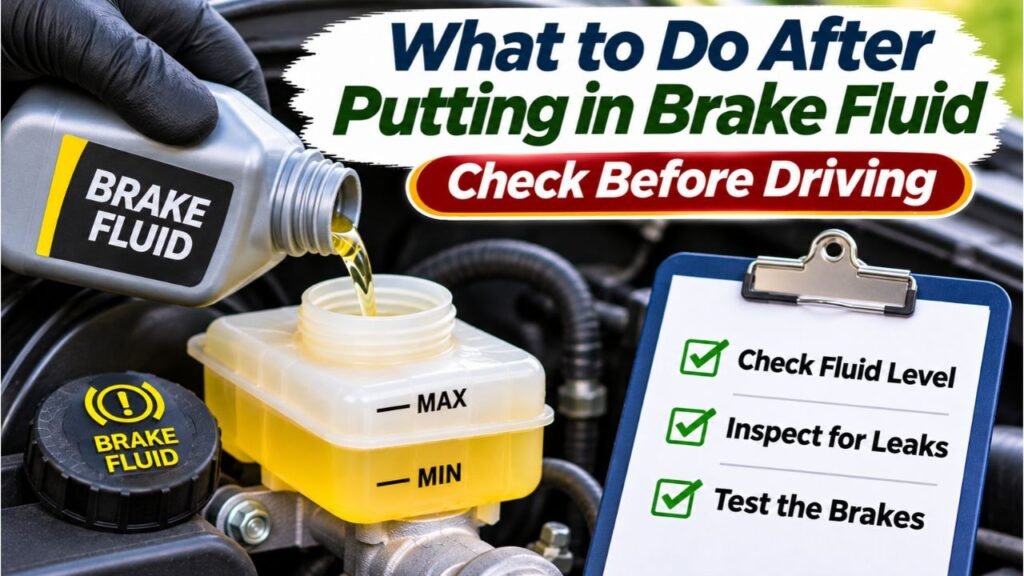
After adding brake fluid, complete the following checks before considering driving the vehicle.
Quick After-Refill Checklist
| Step | What to Do | Why It Matters |
| 1 | Check the brake fluid level | Prevents underfilling or overfilling |
| 2 | Secure the reservoir cap | Helps prevent contamination and leaks |
| 3 | Clean up any spills | Protects paint and nearby components |
| 4 | Confirm the DOT fluid specification | Reduces compatibility risks |
| 5 | Check for visible leaks | Helps identify hydraulic problems |
| 6 | Check the brake pedal while stationary | Helps identify abnormal pedal behavior |
| 7 | Check dashboard warning lights | Identifies possible brake-system faults |
| 8 | Determine whether the car is safe to drive | Prevents driving with an unresolved brake problem |
Important: If the brake fluid was added because the reservoir was empty, the pedal became soft, or braking performance deteriorated, do not assume these checks will make the vehicle safe. Professional diagnosis and bleeding or repair may be necessary.
Step 1: Check the Brake Fluid Level
Park the vehicle on level ground with the engine switched off.
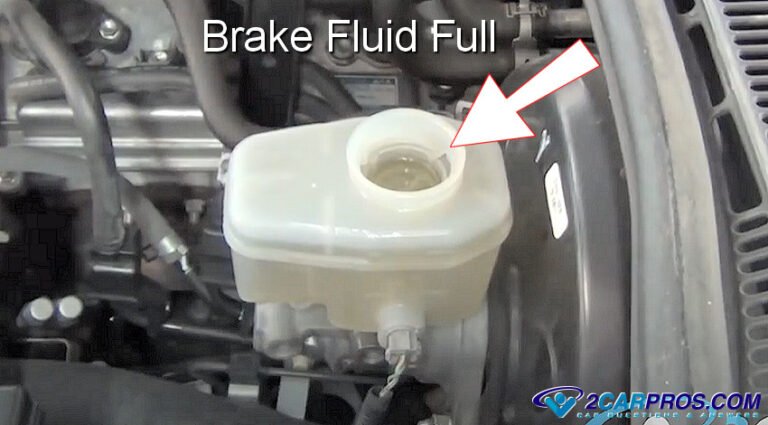
Locate the brake fluid reservoir, usually positioned near the brake master cylinder at the rear of the engine compartment.
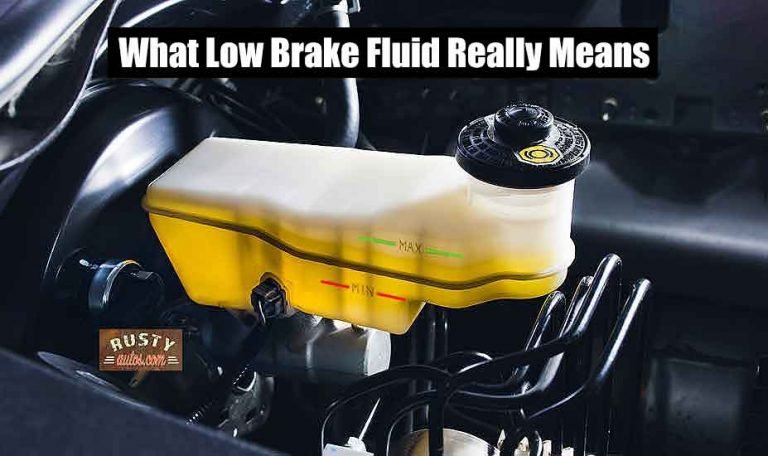
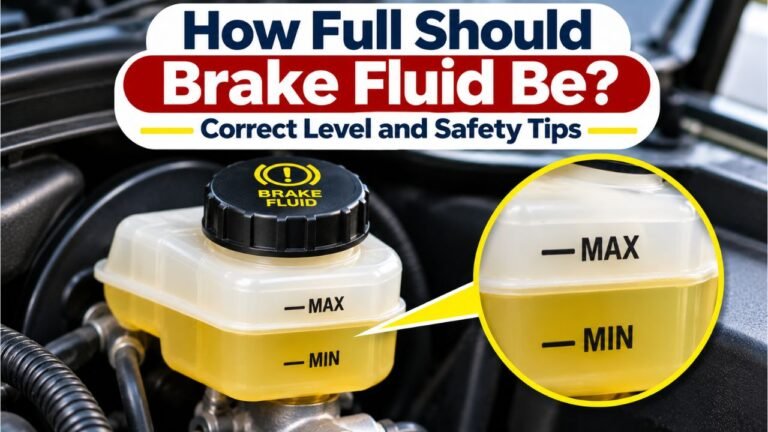
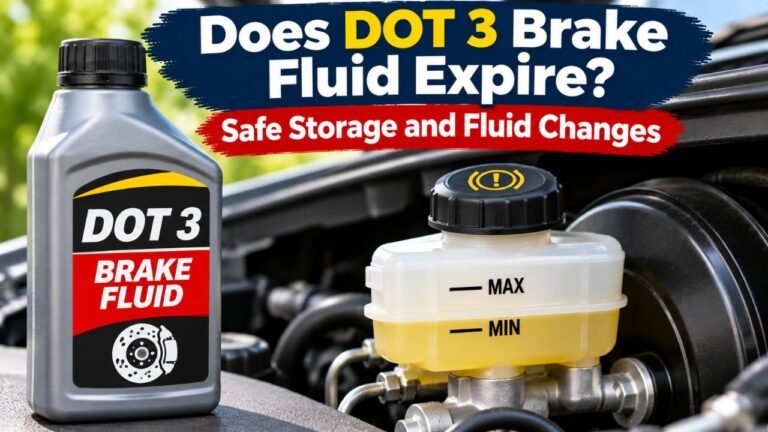
Most modern cars have a translucent reservoir with two markings:
- MIN: Minimum acceptable level.
- MAX: Maximum specified level.
The brake fluid should be within the range recommended by the manufacturer.
A level somewhere between MIN and MAX is acceptable for many vehicles. The exact requirement depends on the vehicle.
According to the Ford owner’s manual guidance on checking brake fluid, the level should be between the two markings, and the vehicle should be inspected if it falls below MIN or rises above MAX.
What if You Added Too Much?
If the level exceeds MAX, don’t ignore it.
An overfilled reservoir can create problems when hydraulic fluid returns during future brake service.
Have the excess corrected using a clean, manufacturer-approved service method.
Never return removed fluid to the original bottle.
Should You Fill It Exactly to MAX?
Not necessarily.
Some vehicles specify a particular service level, and brake fluid level changes as brake pads wear.
Avoid adding extra fluid simply to reach MAX unless the vehicle’s instructions call for it.
Key Takeaway: Correct brake fluid level matters more than how much fluid you poured into the reservoir.
Step 2: Make Sure the Reservoir Cap Is Secure
After adding brake fluid, reinstall the reservoir cap properly.
Check that it is seated and locked according to its design.
Some caps screw into place, while others have clips or other retaining mechanisms.
Why the Cap Matters
Glycol-based brake fluids such as DOT 3, DOT 4, and DOT 5.1 absorb moisture from the surrounding air.
A loose cap can increase the risk of contamination.
Dirt, dust, or other materials entering the reservoir can also cause braking-system problems.
Should You Leave the Cap Open to Release Air?
No.
The cap should not be left open to remove air from the hydraulic system.
If air has entered the brake lines, the proper solution is an approved brake bleeding procedure, not leaving the reservoir open.
Check the Seal
Inspect the cap and sealing components for obvious damage.
Don’t remove or modify internal components unnecessarily.
If the cap is cracked or cannot be secured, replace or repair it according to the manufacturer’s instructions.
Step 3: Clean Up Any Brake Fluid Spills
Brake fluid can damage certain automotive paints and finishes.
If you spilled fluid while refilling, address it promptly and safely.
Brake Fluid on Painted Surfaces
For conventional glycol-based brake fluid, flush the affected painted surface with plenty of water as soon as it is safe to do so.
Avoid spreading the fluid across surrounding paint.
Follow any vehicle-specific cleanup instructions.
Brake Fluid on Engine Components
If brake fluid spilled onto a hot engine or exhaust component, avoid touching the affected area until it has cooled.
Brake fluid on sufficiently hot surfaces can create a fire hazard.
A significant spill may require professional cleanup or inspection.
Brake Fluid on Plastic or Rubber
Some materials can be affected by brake fluid.
Clean the affected area using a method compatible with the component and fluid.
Inspect for damage if significant contact occurred.
Brake Fluid on Skin
Wash exposed skin thoroughly with water.
If fluid enters your eyes, rinse immediately with water and seek medical attention.
Step 4: Confirm You Used the Correct Brake Fluid
Check the brake fluid specification listed in the owner’s manual or on the reservoir cap.
Common specifications include:
- DOT 3.
- DOT 4.
- DOT 4 LV.
- DOT 5.
- DOT 5.1.
The correct type depends on the braking system.
Why Fluid Type Matters
Brake fluids have different chemical compositions and performance characteristics.
DOT 3, DOT 4, and DOT 5.1 are generally glycol-based.
Conventional DOT 5 is silicone-based and should not be mixed with glycol-based brake fluids.
Some vehicles require low-viscosity formulations for particular ABS or electronic braking systems.
What if You Added the Wrong Fluid?
Do not start driving or repeatedly operate the brakes to see whether they still work.
If you added an incompatible or unknown fluid, have the vehicle inspected before further operation.
Professional service may involve removing the contaminated fluid and evaluating hydraulic components.
Simply adding more correct brake fluid does not undo contamination.
Step 5: Look for Brake Fluid Leaks
A brake fluid leak is one of the most important problems to rule out.
The braking system normally should not need frequent unexplained top-ups.
Where Can Brake Fluid Leak?
Common potential leak locations include:
- Brake master cylinder.
- Metal brake lines.
- Flexible brake hoses.
- Brake calipers.
- Wheel cylinders.
- Hydraulic fittings.
- Certain ABS hydraulic components.
How to Check for Obvious Leaks
With the vehicle securely parked and the engine off, inspect accessible areas for visible wetness.
Look for fluid spots on the ground near the wheels or beneath the engine compartment.
You may also notice fluid around hydraulic connections.
However, not every leak is externally visible.
Do not crawl underneath a vehicle unless it is properly supported by equipment designed for that purpose.
What if the Fluid Level Keeps Dropping?
An unexplained falling level requires professional inspection.
Adding fluid repeatedly does not repair a leak.
If a leak is suspected, do not drive until the braking system has been evaluated and repaired.
Step 6: Check the Brake Pedal
Before driving, evaluate whether the brake pedal behaves normally.
This is a basic safety check, not a substitute for professional hydraulic-system testing.
How to Check the Pedal While Parked
- Keep the vehicle stationary and properly secured.
- Switch off the engine.
- Press the brake pedal gently.
- Observe whether it feels reasonably firm and consistent with its normal behavior.
- Watch for excessive travel or a pedal that continues to sink under steady pressure.
A brake pedal that feels unusually soft, spongy, or sinks toward the floor can indicate a serious problem.
Should the Pedal Be Hard With the Engine Off?
In many vehicles, the pedal becomes firmer after the stored vacuum assistance is depleted while the engine is off.
This can be normal.
Power-assisted braking systems may have different pedal characteristics when the engine is running.
However, abnormal softness, excessive travel, or a sinking pedal should never be dismissed as normal.
What if the Pedal Sinks?
Do not drive.
Possible causes include:
- Hydraulic fluid leakage.
- Air trapped in the brake lines.
- Master cylinder problems.
- Other hydraulic-system faults.
Have the vehicle inspected.
Step 7: Check Brake Warning Lights
After checking the reservoir and pedal, inspect the dashboard for warning indicators.
Common brake-related indicators include:
- Red brake-system warning light.
- ABS warning light.
- Electronic parking brake warning.
- Brake-system malfunction messages.
Some warning lights illuminate briefly during a normal ignition self-test.
Others may appear when the parking brake is applied.
Refer to the owner’s manual for the exact meaning.
What if the Brake Warning Light Turns Off After Adding Fluid?
That may indicate that the reservoir-level sensor no longer detects a low fluid condition.
However, it does not prove that the brake system is free from leaks or other problems.
If the level was unexpectedly low, identify the cause.
What if the Light Stays On?
Do not ignore an unresolved brake-system warning.
If the vehicle displays a hydraulic brake warning, or braking performance feels abnormal, avoid driving and arrange an appropriate inspection.
Step 8: Decide Whether the Vehicle Is Safe to Drive
Completing a refill doesn’t automatically make the vehicle roadworthy.
The reason for the low fluid must be understood.
Can You Drive After Adding Brake Fluid?
| Situation | Driving Recommendation |
| Correct fluid added during approved routine service, system verified normal | May be driven after all required service checks |
| Reservoir previously between MIN and MAX, unnecessary top-up | Check for overfilling and follow manufacturer guidance |
| Low level explained by worn brake pads | Have brake wear assessed; topping off may be inappropriate |
| Fluid level was below MIN for unknown reason | Have the system inspected before driving |
| Reservoir was completely empty | Do not drive; professional bleeding and inspection required |
| Pedal feels soft or spongy | Do not drive |
| Pedal sinks toward the floor | Do not drive |
| Visible hydraulic leak | Do not drive |
| Incorrect brake fluid added | Do not drive |
| Brake warning remains active | Diagnose before driving |
| Brake bleeding or hydraulic repair recently performed | Complete manufacturer-required post-service checks first |
If a professional repair or approved maintenance procedure has been completed and the system has been verified, a controlled low-speed brake function check in a safe area may be part of the final service process.
Never use a road test to diagnose a suspected brake failure.
Do You Need to Pump the Brakes After Adding Brake Fluid?
No. If you only added brake fluid to the reservoir and the hydraulic system remained full and closed, pumping the brakes is generally not required to distribute the fluid.
Hydraulic brake fluid is already present in the lines and brake components.
Adding a small amount to the reservoir does not automatically introduce air into the system.
Does Pumping the Brakes Move the New Fluid Through the System?
Pressing the brake pedal moves hydraulic pressure through the system, but it does not provide a proper brake fluid flushing procedure.
Repeatedly pumping the pedal will not reliably replace old fluid in the lines with fresh fluid from the reservoir.
When Is Pumping the Brake Pedal Necessary?
Pedal operation can be required during certain brake service procedures.
For example, after replacing brake pads and retracting caliper pistons, the pedal may need to be operated according to the service instructions to restore proper pad-to-rotor positioning.
That situation is different from simply adding fluid to the reservoir.
Can Pumping Remove Air From Brake Lines?
No.
If air is trapped in the hydraulic system, repeatedly pressing the brake pedal with all bleeder valves closed will not properly remove it.
Air must be removed using the correct bleeding procedure.
Should You Pump the Brakes With the Reservoir Cap Off?
There is generally no reason to leave the cap off while performing a basic post-refill pedal check.
Keep the cap securely installed unless the approved service procedure specifically requires access.
Key Takeaway: A simple top-up does not normally require pumping or bleeding. An abnormal pedal needs diagnosis rather than repeated pumping.
Do You Need to Bleed Brakes After Adding Brake Fluid?
Not always.
Brake bleeding is necessary when air has entered the hydraulic system or when a manufacturer-specified service procedure requires it.
When Bleeding Is Usually Not Necessary
Bleeding is generally unnecessary if:
- You only opened the reservoir cap.
- You added the correct fluid.
- The reservoir never ran dry.
- No brake lines or hydraulic components were opened.
- The pedal was normal before and after the refill.
- No other condition indicates trapped air.
When Bleeding May Be Necessary
Bleeding may be needed if:
- The reservoir ran completely dry.
- Air entered the hydraulic system.
- A brake line was opened.
- A caliper or wheel cylinder was replaced.
- The master cylinder was serviced.
- A brake fluid flush is being performed.
- The pedal feels spongy because of air.
According to O’Reilly Auto Parts’ brake bleeding guide, brake bleeding removes trapped air that can enter during hydraulic-system repairs. The guide also notes that some vehicles require a scan tool for the correct bleeding procedure.
What Happens During Brake Bleeding?
A technician uses an approved method to move brake fluid through the hydraulic system while removing trapped air.
Procedures may involve:
- A pressure bleeder.
- A vacuum bleeding tool.
- A manufacturer-approved manual bleeding method.
- Diagnostic equipment for certain ABS systems.
The correct method and sequence depend on the vehicle.
Can You Just Open a Bleeder Screw?
Not as an improvised way to correct a problem.
Incorrect bleeding can introduce additional air or cause fluid loss.
Some ABS and electronically controlled brake systems have special service requirements.
If you’re unsure about the procedure, professional service is the safer option.
What to Do if the Brake Fluid Reservoir Was Completely Empty
An empty brake fluid reservoir requires more attention than an ordinary top-up.
If the level fell below the master cylinder’s fluid supply ports, air may have entered the hydraulic system.
Why Is an Empty Reservoir Dangerous?
Hydraulic brakes depend on incompressible fluid to transfer pressure.
Air is compressible.
If air enters the brake lines, the pedal may feel soft or travel farther than normal.
In severe cases, braking effectiveness can be substantially reduced.
Can Adding Brake Fluid Fix an Empty Reservoir?
Adding fluid restores the reservoir’s supply, but it does not necessarily remove air already trapped in the system.
The underlying cause of the fluid loss also remains unresolved.
What Should You Do?
- Do not drive the vehicle.
- Check for obvious external leaks without placing yourself under an unsupported vehicle.
- Do not repeatedly pump the pedal to attempt a repair.
- Arrange professional inspection.
- Have the cause of fluid loss corrected.
- Have the hydraulic system bled according to the manufacturer’s procedure.
- Verify proper brake operation before returning the car to service.
Some vehicles may require special ABS bleeding procedures or scan-tool functions.
Can You Drive Slowly to a Mechanic?
Not if the reservoir was empty or braking performance is uncertain.
Arrange towing or other appropriate transportation.
Driving slowly does not eliminate the risk of hydraulic brake failure.
Why Was the Brake Fluid Low Before You Added More?
Low brake fluid can have more than one explanation.
Two important possibilities are brake pad wear and a hydraulic leak.
Normal Brake Pad Wear
As disc brake pads wear, the caliper pistons extend farther from their housings.
Additional fluid moves from the reservoir into the calipers.
The reservoir level may gradually fall even when no fluid is leaking.
This can be normal within the manufacturer’s specified range.
Hydraulic Brake Fluid Leaks
A leak allows fluid to escape from the system.
Potential causes include damaged brake hoses, corroded lines, worn seals, or faulty hydraulic components.
A leak may cause an unexplained reduction in reservoir level.
Why Adding More Fluid Can Hide the Problem
Topping off the reservoir may make the level look normal temporarily.
However, it does not correct worn pads or leaking components.
The 2018 Chevrolet Impala owner’s manual, Brake Fluid section (page 231) specifically advises against routine top-offs because the level falls with brake lining wear and can become excessive when new pads are installed.
Other manufacturers provide different refill instructions, so the correct action depends on the vehicle.
When Should You Have the Brakes Inspected?
Arrange inspection if:
- The fluid is below the minimum level.
- The reservoir needs repeated refilling.
- You notice fluid near the wheels or brake lines.
- Brake pads may be excessively worn.
- The pedal feel has changed.
- A brake warning remains active.
Key Takeaway: Brake fluid level is useful information about the system’s condition. Don’t assume the only problem was a shortage of fluid.
Can You Drive Immediately After Putting Brake Fluid In?
There is no universal waiting period required simply for fresh brake fluid to mix with the fluid in the reservoir.
However, the correct answer depends on what work was performed and why the fluid was added.
If You Only Topped Off the Reservoir
If the manufacturer permitted the top-up, the system remained closed, the correct fluid was used, and the braking system is known to be functioning normally, no special chemical waiting period is usually necessary.
However, a previously unexplained low level must still be investigated.
If You Changed the Brake Fluid
A fluid replacement generally involves a different procedure.
The hydraulic system must be serviced and checked according to the vehicle manufacturer’s instructions.
Brake bleeding and a post-service inspection may be required.
Do not drive until the procedure is complete and the brakes have been verified.
If You Replaced Brake Pads
Brake pad replacement may require restoring proper hydraulic positioning after the caliper pistons have been retracted.
Follow the manufacturer-specific post-installation procedure.
Also confirm that the reservoir has not become overfilled.
If the Brake Pedal Is Soft
Do not drive.
Even if the reservoir now shows the correct level, a soft pedal may indicate trapped air or a hydraulic problem.
If the Brake Warning Light Is On
Investigate before driving.
A warning may involve low fluid, parking brake status, ABS, or another fault.
Turning off a warning by adding fluid does not automatically establish system safety.
What if You Added Too Much Brake Fluid?
An overfilled brake fluid reservoir should be corrected.
The exact procedure depends on the vehicle.
Why Overfilling Matters
When brake pads are replaced, caliper pistons are pushed back.
This can return fluid to the reservoir.
If the reservoir is already overfilled, fluid may overflow.
Brake fluid can also damage paint and certain other materials.
How to Check for Overfilling
Park the vehicle on level ground.
Inspect the reservoir’s MAX marking.
If the fluid is above the prescribed maximum, consult the service instructions.
Can You Remove the Extra Fluid Yourself?
The system must remain free from contamination.
A clean, brake-fluid-compatible extraction tool may be used in some service procedures.
However, the appropriate method depends on the vehicle and why the level is high.
If you are uncertain, have a qualified technician correct it.
Should You Use a Household Turkey Baster?
Avoid using food-preparation equipment for brake fluid.
Brake fluid is not suitable for contact with kitchen utensils.
Also avoid reusing tools that may contain traces of oil, cleaning chemicals, or water.
Should You Drive With an Overfilled Reservoir?
Don’t ignore a level above the manufacturer’s maximum.
Have the condition corrected and verify that no fluid has spilled or leaked.
What if You Put the Wrong Brake Fluid in Your Car?
Using an incorrect brake fluid can cause serious problems.
Different fluid categories have different chemical properties.
Common Brake Fluid Types
| Fluid | General Chemistry | Important Consideration |
| DOT 3 | Glycol-based | Use where specified or approved |
| DOT 4 | Glycol-based | Not automatically suitable for every DOT 3 application |
| DOT 4 LV | Glycol-based, low-viscosity formulation | Used in certain systems requiring specific viscosity |
| DOT 5 | Silicone-based | Not interchangeable with ordinary glycol fluids |
| DOT 5.1 | Glycol-based | Different from silicone DOT 5 |
What Happens if You Mix DOT 3 and DOT 4?
These fluids are generally chemically compatible because both are glycol-based.
However, compatibility with a particular vehicle still depends on the manufacturer’s specifications.
Do not assume that any replacement fluid is acceptable.
What if You Added DOT 5 to a DOT 3 System?
Do not continue driving or attempt to correct the problem by adding more DOT 3.
The system may require professional inspection and service.
What if You Added Engine Oil or Power Steering Fluid?
This is a serious contamination problem.
Petroleum-based fluids can damage seals and other components designed for conventional glycol brake fluid.
Do not operate the vehicle.
Have the system assessed professionally.
What if You Added Water?
Water contamination can reduce brake fluid boiling performance and contribute to corrosion.
Do not drive until the braking system has been inspected and properly serviced.
What if the Brake Pedal Is Still Soft After Adding Fluid?
A soft brake pedal should not be treated as normal simply because the reservoir has been refilled.
Possible Causes
Air in the brake lines
Air compresses under pressure and can produce a spongy pedal.
Hydraulic fluid leak
A leaking connection or component can prevent the system from maintaining pressure.
Master cylinder problems
Internal hydraulic faults may cause abnormal pedal travel or sinking.
Other brake component faults
Caliper, hose, ABS, and other system problems can affect pedal behavior.
Will the Pedal Get Firm on Its Own?
Don’t assume so.
If air is present in the system, it normally requires an appropriate bleeding procedure.
If there is a leak or mechanical fault, the underlying problem must be repaired.
Can You Drive With a Soft Pedal?
No.
A soft, sinking, or unusually low pedal can indicate insufficient braking capability.
Arrange professional diagnosis and repair before driving.
What if the Brake Warning Light Stays On After Adding Fluid?
A warning light may remain active for reasons unrelated to reservoir level.
Check the Parking Brake
Some vehicles use the same red warning light for the parking brake and certain brake-system faults.
Confirm that the parking brake is fully released according to the owner’s manual.
Check the Fluid Level
Verify that the reservoir is within the specified range.
If the level has dropped again, investigate for leaks.
Consider a Sensor Problem
Certain vehicles have brake fluid level sensors that can malfunction.
However, never assume a sensor is defective without ruling out actual braking-system problems.
Check for Other Warnings
ABS and electronic brake-related warnings can indicate different faults.
Read the owner’s manual for the warning’s meaning.
Should You Reset the Light?
Do not clear a brake-system warning simply to make it disappear.
Identify and correct the cause first.
If the warning remains unresolved, have the vehicle inspected before driving.
How Long Does New Brake Fluid Take to Work?
Brake fluid begins transmitting hydraulic pressure as soon as it is properly contained within a functioning, air-free hydraulic system.
It does not need a chemical activation period.
Does New Fluid Need Time to Circulate?
No waiting period is required for fresh fluid in the reservoir to become usable.
However, topping off does not automatically circulate new fluid through every brake line.
Does New Fluid Need to Mix With Old Fluid?
Mixing occurs to some extent during normal operation, but adding a small amount does not replace all the old fluid.
If the fluid is due for replacement, follow the correct service procedure.
Does Adding Brake Fluid Improve Braking Immediately?
Only if a low-fluid condition was part of the problem and the hydraulic system is otherwise safe and functioning correctly.
If the system contains air or has a leak, adding fluid alone will not restore reliable braking.
Will New Brake Fluid Remove Air?
No.
Brake fluid does not automatically displace all trapped air from hydraulic lines.
Proper bleeding is required when air has entered the system.
How to Monitor Brake Fluid After a Refill
After the vehicle has undergone any necessary repairs and is safe to operate, monitoring the reservoir can help identify recurring problems.
Check the Reservoir Periodically
Follow the owner’s manual for inspection intervals.
The level should remain within the specified range.
Watch for Unexpected Changes
A rapid or repeated drop is not normal.
Have the system evaluated if the level continues to decrease without a clear explanation.
Inspect During Brake Maintenance
When brake pads are replaced, the reservoir level may rise as the caliper pistons are retracted.
The technician should verify the final level.
Follow the Brake Fluid Replacement Interval
Brake fluid absorbs moisture over time.
A normal refill is not the same as replacing old fluid.
Use the vehicle manufacturer’s recommended brake fluid change interval.
Don’t Judge Fluid Condition by Color Alone
Darkening may indicate aging or contamination, but color does not reliably measure moisture content or boiling performance.
Proper service decisions should use manufacturer guidance and appropriate testing.
Common Mistakes After Adding Brake Fluid
1. Forgetting to Reinstall the Cap
The reservoir must remain properly closed to protect the fluid from contamination.
2. Overfilling the Reservoir
Exceeding MAX can cause problems during subsequent brake maintenance.
3. Ignoring Why the Fluid Was Low
Worn brake pads and hydraulic leaks require different responses.
4. Assuming Pumping the Pedal Removes Air
It does not substitute for correct brake bleeding.
5. Driving With a Soft Pedal
An abnormal pedal may indicate a serious hydraulic fault.
6. Using the Wrong DOT Fluid
The specified fluid is essential for braking-system compatibility.
7. Leaving Spilled Fluid on Paint
Many brake fluids can damage automotive paint.
Clean spills promptly and safely.
8. Using Old or Contaminated Fluid
A fresh, sealed bottle is preferable for brake service.
9. Ignoring an Active Brake Warning
A warning light can indicate an unresolved system problem.
10. Assuming Topping Off Is the Same as Flushing
Adding fluid to the reservoir does not remove old or contaminated fluid from the complete system.
11. Performing an Unsafe Road Test
Never drive a vehicle with suspected brake failure to test whether adding fluid helped.
12. Repeatedly Adding Fluid to Compensate for a Leak
A leak requires repair, not repeated top-ups.
What Should You Do in Different Brake Fluid Situations?
The correct next step depends on what happened before and during the refill.
| Situation | Best Next Step |
| Added a small amount during an approved service | Check level, secure cap, complete required system checks |
| Reservoir was already within range | Check for overfilling; do not add more |
| Reservoir was below MIN | Have pad wear and leaks evaluated |
| Reservoir was completely empty | Do not drive; arrange professional inspection and bleeding |
| Wrong DOT fluid was added | Do not operate the vehicle; obtain professional advice |
| Fluid spilled on painted surfaces | Clean promptly using a compatible method |
| Fluid spilled on hot engine components | Avoid contact; allow cooling and evaluate safely |
| Brake pedal feels spongy | Do not drive; investigate trapped air or hydraulic faults |
| Brake warning remains on | Diagnose before driving |
| Recently replaced brake pads | Follow brake service instructions and check reservoir level |
| Recently replaced a caliper or brake hose | Complete the required bleeding and post-repair procedures |
| Brake fluid keeps disappearing | Inspect and repair the cause of fluid loss |
For a simple reservoir top-up, the mechanical checks are straightforward.
However, a previously empty reservoir, unexplained fluid loss, or abnormal pedal behavior changes the situation from routine maintenance to a potentially serious brake-system problem.
Conclusion
Knowing what to do after putting in brake fluid is important because adding fluid is only one part of maintaining a safe braking system.
After refilling, verify that the level is within the manufacturer’s specified range, securely reinstall the reservoir cap, clean up any spills, and confirm that the correct fluid was used.
If you only added fluid to a closed hydraulic system that never ran dry, brake bleeding is generally unnecessary. You also don’t need to repeatedly pump the brake pedal just to move the new fluid through the system.
However, if the reservoir was empty, the brake pedal feels spongy, or the fluid level keeps falling, do not drive until the problem has been diagnosed and corrected.
I recommend treating an unexplained low brake fluid level as a reason for inspection rather than assuming the refill solved everything. Brake pad wear and hydraulic leaks are important possibilities.
Before driving, the braking system must be functioning normally, with no unresolved leaks, abnormal pedal behavior, or safety warnings.
FAQs About What to Do After Putting in Brake Fluid
What Should I Do Immediately After Adding Brake Fluid?
Check the reservoir level, reinstall the cap, clean up any spills, and confirm that you used the correct brake fluid.
Then inspect for signs of leaks and check the pedal for abnormal behavior while the vehicle is stationary.
If the fluid was low for an unknown reason, have the brakes inspected before driving.
Do You Have to Pump Your Brakes After Adding Brake Fluid?
No.
If you simply topped off the reservoir and no air entered the hydraulic system, repeatedly pumping the brakes is not necessary.
However, a brake service involving caliper piston retraction or hydraulic repairs may require specific pedal checks.
Can You Drive Right After Adding Brake Fluid?
There is no universal chemical waiting period.
However, the vehicle should only be driven after the braking system has been verified as safe.
If the reservoir was empty, the pedal is abnormal, or fluid loss remains unexplained, do not drive.
Do You Need to Bleed Brakes After Adding Fluid?
Not for an ordinary top-up when the hydraulic system remained closed and full.
Bleeding may be necessary if air entered the lines, the reservoir ran dry, or hydraulic components were opened during repairs.
How Long Should You Wait After Adding Brake Fluid?
Brake fluid does not need a special activation period.
The relevant issue is whether the brake system is safe and the necessary service procedures are complete.
Never use elapsed time as proof that an unresolved brake problem has been fixed.
Why Is My Brake Pedal Soft After Adding Brake Fluid?
A soft pedal may indicate trapped air, fluid leakage, or another hydraulic fault.
Adding fluid alone does not remove trapped air or repair a leak.
Do not drive until the cause is identified and corrected.
Why Are My Brakes Still Not Working After Adding Fluid?
The hydraulic system may contain air, have a leak, or suffer from a mechanical problem.
The reservoir being full does not guarantee adequate hydraulic pressure.
Have the system inspected and repaired before driving.
Can You Add Too Much Brake Fluid?
Yes.
Overfilling can cause problems when fluid returns to the reservoir during brake service.
Keep the level within the manufacturer’s specified marks.
If it exceeds MAX, have it corrected appropriately.
What Happens if You Forget to Put the Brake Fluid Cap Back On?
The reservoir may be exposed to moisture and contamination.
Fluid could also spill under some conditions.
Stop using the vehicle until the cap is properly installed and any possible contamination has been assessed.
Can You Just Add Brake Fluid Without Bleeding?
Yes, when a manufacturer-approved top-up is appropriate and the hydraulic system has not admitted air.
However, adding fluid does not correct worn brake pads, hydraulic leaks, or trapped air.
Does New Brake Fluid Mix With Old Brake Fluid?
Some mixing can occur, but a top-up does not replace all the old fluid in the braking system.
If the fluid is due for replacement, a proper service procedure is required.
What if the Brake Fluid Reservoir Was Empty Before I Filled It?
Do not drive.
Air may have entered the hydraulic system.
Have the vehicle inspected for leaks and arrange the required bleeding or repair procedure.
Should the Brake Fluid Level Be at MAX?
Not necessarily.
Many manufacturers specify that the level should remain between MIN and MAX.
Some vehicles have different instructions, particularly during specific service procedures.
Follow the owner’s manual and avoid overfilling.
Why Is My Brake Fluid Still Low After Adding More?
Possible explanations include an insufficient initial quantity, an inaccurate level reading, or an active hydraulic leak.
If the level keeps dropping, do not continue topping it off.
Have the braking system inspected.
Will Adding Brake Fluid Turn Off the Brake Warning Light?
It may turn off a low-fluid warning when the level returns to the sensor’s acceptable range.
However, the light can also indicate other problems.
Even if it turns off, the reason for the original fluid loss may still need attention.
What Should I Do If I Added the Wrong Brake Fluid?
Do not drive or attempt to dilute the incorrect fluid with more of the specified type.
Have the system evaluated by a qualified professional.
The necessary repair depends on the type and amount of contamination.
Does Adding Brake Fluid Make Brakes Work Better?
Only when an appropriate refill is part of correcting a hydraulic-fluid problem.
A full reservoir cannot compensate for trapped air, worn components, or a leak.
Brake performance depends on the condition of the entire system.
Can I Test My Brakes by Driving Around the Block?
Not if you suspect a brake failure.
A vehicle with an empty reservoir, soft pedal, active hydraulic leak, or unresolved brake warning should not be road-tested.
Only after the braking system has been properly serviced and verified should normal post-repair function checks be performed.
What if I Spilled Brake Fluid While Filling the Reservoir?
Stop pouring and protect yourself from contact.
For conventional glycol-based fluid on painted surfaces, flush it off promptly with water when safe, following the vehicle manufacturer’s instructions.
If fluid reached hot engine components, avoid touching them until they cool.
How Often Should I Check Brake Fluid After Topping It Off?
Follow the owner’s manual’s inspection schedule.
However, an unexpectedly low reservoir should be investigated promptly rather than monitored as a substitute for repairs.
If the level falls repeatedly, have the hydraulic system inspected.