How Many Brake Pads and Rotors Do I Need: Complete Guide and Tips
Many drivers assume a brake job means replacing every pad and rotor on the vehicle. In most cases, brake parts are replaced by axle: one pair of pads and two rotors for the front axle, the rear axle, or both, depending on wear and vehicle design.
If you are asking how many brake pads and rotors do i need, the usual answer is two brake pads per wheel and one rotor per wheel where disc brakes are installed. That commonly equals four pads and two rotors for one axle, or eight pads and four rotors for a vehicle with four-wheel disc brakes.
How Many Brake Pads and Rotors Do You
A standard disc-brake setup uses the following quantities:
| Repair area | Brake pads | Rotors |
|---|---|---|
| One wheel | 2 pads | 1 rotor |
| One axle | 4 pads | 2 rotors |
| Both axles with four-wheel disc brakes | 8 pads | 4 rotors |
The key point is that brake pads are sold in axle sets, while rotors are normally purchased individually or as a pair. A front brake replacement generally requires four front pads and two front rotors. A rear brake replacement generally requires four rear pads and two rear rotors.
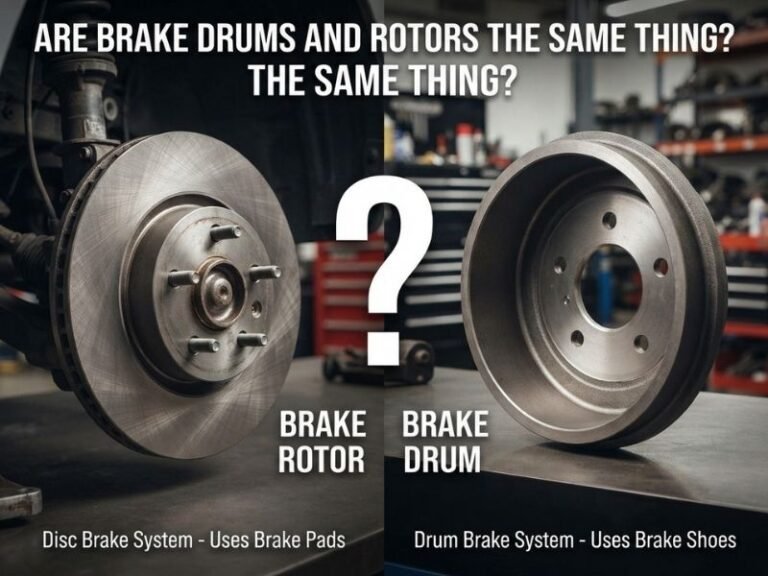
These quantities apply only to wheels equipped with disc brakes. Some vehicles use front disc brakes and rear drum brakes. A drum-brake rear axle does not use rear brake pads and rotors; it uses brake shoes and drums instead.
Why Brake Parts Are Replaced by Axle
Brake components on the same axle work together. The left and right brakes share similar operating conditions, so replacing only one side can create uneven braking, different friction levels, and inconsistent pedal response.
For that reason, brake pads should normally be replaced on both sides of the same axle. Rotors are also usually replaced or resurfaced on both sides of that axle when their condition requires it. Replacing a single pad or a single rotor is generally appropriate only in unusual repair situations, such as correcting a damaged part before a complete service, and it should not be treated as the normal plan.
Front and rear brakes do not have to be replaced at the same time. Front brakes often wear differently from rear brakes because braking force is distributed between the axles. A vehicle may need front pads and rotors while the rear brakes still have substantial service life, or the reverse may be true.
How Many Brake Pads Does Each Wheel Use?
Most disc-brake wheels use two pads: an inner pad and an outer pad. The brake caliper presses these pads against both sides of the rotor when the brake pedal is applied.
That creates a simple count:
- One disc-brake wheel: two brake pads.
- One axle with two disc-brake wheels: four brake pads.
- Four disc-brake wheels: eight brake pads.
A replacement pad kit may contain four pads for one axle, but packaging varies by manufacturer and vehicle. Some kits are labeled as a front or rear axle set. Others may list the exact number of pieces on the package. Confirm the package contents before ordering.
Brake pad shapes are not universal. Even when two vehicles use the same number of pads, the pads can differ in size, thickness, backing-plate design, wear-sensor location, and friction material. The correct count does not guarantee that a part fits.
How Many Rotors Does Each Wheel Use?
Each disc-brake wheel uses one rotor. The rotor is the round metal disc that rotates with the wheel, while the caliper and pads remain mounted around it.
- One disc-brake wheel: one rotor.
- One disc-brake axle: two rotors.
- Four-wheel disc brakes: four rotors.
Rotors should generally be replaced in axle pairs. If one rotor is badly worn, cracked, warped, or below its service limit, the rotor on the opposite side should be measured and inspected as well. Installing two matching rotors helps maintain similar braking performance on the left and right sides.
New rotors are not automatically required every time pads are replaced. A rotor may remain in service if it is smooth enough, free from damaging cracks or severe corrosion, and above the manufacturer’s minimum thickness. However, a rotor that is scored, uneven, heat-damaged, excessively corroded, or below specification may need replacement.
Do You Need Pads and Rotors at the Same Time?
Not always. Brake pads and rotors are related parts, but they do not necessarily reach the end of their service life together.
Brake pads may need replacement because their friction material is thin, while the rotors remain within specification. In that situation, new pads may be appropriate after the rotors are carefully inspected. Conversely, rotors may require replacement because of thickness variation, deep grooves, rust damage, or a measurement below the discard limit even if the pads still have material remaining.
When replacing pads on an existing rotor, the rotor’s surface must be suitable for proper pad contact. A rough or heavily grooved rotor can prevent the new pads from bedding correctly. It may also cause noise, vibration, uneven wear, or reduced braking performance.
The vehicle manufacturer’s service information provides the relevant rotor thickness limits and inspection standards. A visual check alone cannot confirm rotor thickness or thickness variation. Those conditions require measurement with appropriate tools.
Front Brakes, Rear Brakes, and Drum Brakes
Before buying parts, identify which brake type is installed at each axle. Many vehicles have front disc brakes and rear disc brakes, but some use front discs with rear drums. Certain vehicles also have different brake configurations depending on trim level, engine, towing package, or production date.
Front disc brakes
If the front axle uses disc brakes, a complete front brake job normally involves:
- Four front brake pads.
- Two front rotors, if rotor replacement is needed.
Rear disc brakes
If the rear axle uses disc brakes, a complete rear brake job normally involves:
- Four rear brake pads.
- Two rear rotors, if rotor replacement is needed.
Rear drum brakes
Rear drum brakes use brake shoes, drums, wheel cylinders, and related hardware rather than disc-brake pads and rotors. A vehicle with front discs and rear drums may therefore need four pads and two front rotors for a front service, but no rear pads or rear rotors.
The easiest ways to confirm the configuration are to check the owner’s manual, inspect the brakes through the wheel, review the vehicle’s parts catalog, or have a repair facility identify the setup. Do not order parts based only on the vehicle’s model name.
What Determines the Correct Parts?
The number of parts is only the starting point. Correct fitment depends on the vehicle’s exact brake system.
Important identification details can include:
- Model year, make, and model.
- Trim level and engine configuration.
- Front-wheel drive, rear-wheel drive, or all-wheel drive.
- Brake package or performance package.
- Rotor diameter, thickness, and vented or solid design.
- Pad shape, dimensions, and wear-sensor configuration.
- Production date or vehicle identification number.
Some vehicles were built with more than one brake system during the same model year. Two versions can use different pad shapes or rotor dimensions even though they look nearly identical in a parts catalog.
Using the vehicle identification number, often called the VIN, can reduce the risk of ordering the wrong parts. Comparing the original parts with the replacement specifications is also useful, especially when an online catalog shows multiple options.
How to Count the Parts Before Ordering
- Identify whether the repair concerns the front axle, rear axle, or both.
- Confirm whether that axle uses disc brakes or drum brakes.
- Count two pads for each disc-brake wheel.
- Count one rotor for each disc-brake wheel if rotor replacement is required.
- Verify the exact parts by VIN, trim, measurements, or a trusted fitment catalog.
- Check whether the pad set includes four pads and whether rotors are sold individually or in pairs.
For example, a front-only repair on a vehicle with front disc brakes requires four front pads. It requires two front rotors only if inspection shows that both rotors should be replaced. A complete four-wheel disc-brake replacement requires eight pads and four rotors, assuming all four rotors need replacement.
Do not confuse the number of parts with the labor procedure. A brake inspection may reveal that only one axle needs service, while a more complete inspection may identify additional wear on the other axle. The final parts list should follow the condition of each axle rather than an assumption that every component must be changed together.
Signs That a Brake Inspection Is Needed
Brake noise, vibration, pulling, a soft pedal, or a brake warning light can indicate a problem, but these symptoms do not identify the exact part count or prove that pads and rotors are the cause.
Visible pad material, rotor condition, brake fluid, caliper operation, and hardware should all be assessed during a proper inspection. Uneven pad wear may point to a sticking caliper, seized slide pin, damaged hardware, or another condition that should be corrected before installing new parts.
Driving with severely worn brakes can reduce braking performance and damage additional components. If metal-to-metal grinding, major vibration, fluid leakage, or a rapidly sinking brake pedal occurs, the vehicle should not be treated as a routine parts-ordering question. It needs prompt professional evaluation.
Frequently Asked Questions
How many brake pads do I need for one axle?
You normally need four brake pads for one axle with disc brakes: two pads for the left wheel and two for the right wheel. A rear axle with drum brakes uses brake shoes instead of disc-brake pads.
How many rotors do I need for a front brake
You need two front rotors if both front rotors require replacement. One rotor is used on each front disc-brake wheel. Front brake work commonly includes four front pads and two front rotors, but the rotors should be replaced only when inspection shows that they are needed.
Do I need four rotors for all four wheels?
You need four rotors only when all four wheels have disc brakes and all four rotors require replacement. A vehicle with rear drum brakes does not use rear rotors.
Can I replace only one brake pad?
Brake pads should normally be replaced as a set on the same axle, not one at a time. Replacing only one pad can create uneven braking and usually indicates an underlying issue that needs inspection.
Can I replace only one rotor?
Rotors are normally replaced in pairs on the same axle. If one rotor is damaged or below specification, the opposite rotor should also be inspected and measured before deciding whether it can remain in service.
Do new brake pads always require new rotors?
No. Existing rotors may be reused when they meet the manufacturer’s thickness and condition requirements. Deep grooves, cracks, severe rust, heat damage, or excessive thickness variation can make rotor replacement necessary.
How do I know whether my vehicle has rear rotors?
Look behind the rear wheel for a flat metal disc and caliper. A drum-brake assembly appears as a rounded metal drum instead. The owner’s manual, VIN-based parts lookup, or a brake inspection can confirm the design.
Conclusion
For most vehicles with disc brakes, the answer to how many brake pads and rotors do i need is four pads and two rotors for one axle, or eight pads and four rotors for both axles. Confirm whether the vehicle has rear drum brakes, inspect each rotor, and verify fitment by VIN or exact specifications before ordering. Replacing parts in axle pairs helps maintain balanced, predictable braking.