Do All Cars Have Rotors: Limits, Exceptions, and Practical Advice
No, not all cars have rotors, but nearly every modern passenger vehicle on the road today uses them for front braking.
The exceptions are older vehicles with rear drum brakes, some economy cars that still use rear drums, and certain heavy-duty trucks that rely on drum systems. This article explains the practical reasons behind these differences, how to identify what your car has, and what the distinction means for maintenance costs and stopping performance.
The practical stakes here are real. Brake work is one of the most common repair bills you will face, and rotors are usually the most expensive part of that job. If you assume your car has rotors on all four wheels when it actually has drums in the rear, you could overpay for parts or misunderstand a mechanic’s recommendation. On the flip side, if you own a vehicle with rear drums and you expect rotor-like performance, you might misjudge stopping distances or panic during a hard brake event.
Understanding the difference also protects your wallet. Replacing rear drum brakes is often cheaper than replacing rear rotors, but the labor can be more involved. Knowing what your car has helps you ask better questions, read estimates with confidence, and avoid paying for work you do not need. After reading this article, you will be able to identify whether your car uses rotors or drums, understand why manufacturers choose one over the other, and make an informed decision about maintenance and upgrades.
What Exactly Is a Brake Rotor?
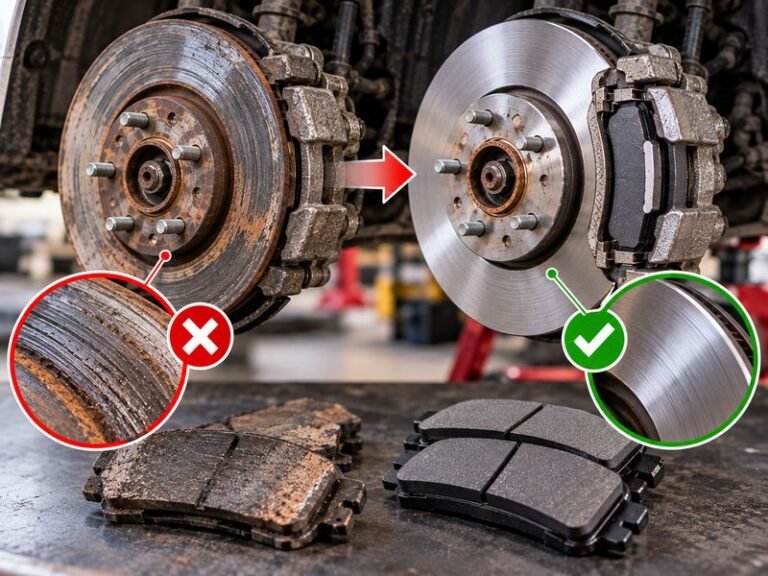
A brake rotor is a flat, circular metal disc that spins with the wheel. When you press the brake pedal, calipers squeeze brake pads against both sides of the rotor. The friction converts the car’s kinetic energy into heat, which slows the wheel. This design is called a disc brake system.
Rotors are typically made from cast iron or a composite material. They can be solid, vented, or drilled and slotted. Vented rotors have internal fins that help dissipate heat, which is why they are common on front axles where braking force is heaviest. Drilled and slotted rotors are mostly performance upgrades that improve heat and gas release, though they can wear pads faster.
Where Rotors Are Standard
Most cars built after the mid-1990s have rotors on the front axle. Front brakes handle roughly 60 to 70 percent of the stopping force because weight shifts forward during deceleration. That makes disc brakes necessary up front for consistent, fade-resistant stopping.
The rear axle is where the variation appears. Many mid-size sedans, SUVs, and trucks now have rotors on all four wheels. This is called four-wheel disc brakes. It is common on vehicles with higher horsepower, heavier curb weights, or towing capability because rear discs help manage heat and provide more predictable braking under load.
When Cars Use Drums Instead of Rotors
Drum brakes are an older design. Instead of a disc and caliper, a drum brake uses a hollow metal drum that rotates with the wheel. Inside, curved brake shoes press outward against the drum’s inner surface to create friction.
You will still find drum brakes on the rear axle of many economy cars, compact hatchbacks, and some entry-level sedans. Manufacturers use them because they are cheaper to produce and often last longer between service intervals. Rear brakes do less work than front brakes, so the heat disadvantages of drums are less critical on the back axle.
Common Vehicles with Rear Drums
Several popular models still ship with rear drum brakes, especially in base trims. These include many versions of the Honda Civic, Toyota Corolla, Nissan Versa, Kia Rio, and Hyundai Accent. Some small crossovers and budget-friendly SUVs also use rear drums in lower trims. If you drive a base model economy car from the last decade, there is a decent chance your rear brakes are drums.
Heavy-Duty Trucks and Trailers
Many heavy-duty pickup trucks and commercial trailers use drum brakes on the rear axle. The reason is holding power. Drum brakes are excellent at holding a stationary vehicle on an incline because the shoes wedge against the drum when the parking brake is engaged. This makes them ideal for trucks that carry heavy loads or park on slopes. Some full-size trucks, like certain Ford F-250 or Ram 2500 configurations, still offer rear drums for this reason.
How to Tell If Your Car Has Rotors or Drums
You do not need to be a mechanic to figure this out. There are three reliable methods.
Look Through the Wheel Spokes
If you can see a shiny metal disc behind the wheel, you have rotors. The caliper will be visible as a clamp-like component pressing against the disc. If you see a solid, bowl-shaped metal cover with no visible disc, you have drum brakes.
Check the Owner’s Manual
Your owner’s manual lists the brake specifications for your exact trim level. Look under the brakes or specifications section. It will state whether you have front and rear disc brakes or front disc with rear drum.
Ask for a Free Inspection
Most brake shops will put your car on a lift and show you the brake components at no charge. You can also ask a trusted mechanic during your next oil change. They can tell you in under a minute.
Performance Differences You Should Know
Rotors and drums behave differently under stress. Rotors shed heat faster, which means they resist brake fade during repeated hard stops. This is why performance cars, sports sedans, and vehicles used for towing almost always have four-wheel disc brakes.
Drums are more prone to brake fade when they get hot. If you drive down a long mountain grade and ride the brakes, rear drums can overheat and lose effectiveness. However, for normal city and highway driving, most drivers will never notice the difference. The rear brakes do so little work in everyday conditions that drums are perfectly adequate.
Brake Fade and Heat Management
Heat is the enemy of braking. Rotors are exposed to airflow, which helps them cool quickly. Drums are enclosed, so they trap heat. In severe conditions, like repeated emergency stops or heavy towing, drums can reach temperatures that cause the brake shoes to lose grip. This is a safety consideration if you frequently drive in mountainous terrain or carry heavy loads.
Parking Brake Function
Drums have a natural advantage for parking brakes. The mechanical linkage inside a drum brake is simple and effective. Rotors require a separate mechanism, often a small drum inside the rotor hub or an electronic caliper, to serve as a parking brake. This adds complexity and cost. Some modern cars with four-wheel disc brakes use an electronic parking brake that engages the rear calipers electrically, which can be more expensive to service.
Maintenance and Repair Costs
The cost difference between rotors and drums is significant. A single replacement rotor typically costs between $40 and $100 for a standard passenger car. Brake pads are relatively inexpensive. The labor involves removing the caliper, replacing the pads, and either resurfacing or replacing the rotor.
Drum brake shoes are often cheaper than pads, but the labor can be higher. Drum brakes have more parts, including springs, adjusters, and hardware. A mechanic must disassemble the drum, replace the shoes, and reassemble everything carefully. This can take longer than a disc brake job, which means labor costs can offset the cheaper parts.
When to Replace Rotors
Rotors do not last as long as drums. Most rotors need replacement or resurfacing every 30,000 to 70,000 miles, depending on driving habits. If you feel a pulsation in the brake pedal, it often means the rotors are warped. If you hear a grinding noise, the pads are worn down and the metal backing is contacting the rotor, which usually ruins the rotor.
When to Replace Drums
Drums can last much longer, often 100,000 miles or more. The brake shoes inside may need replacement sooner, but the drum itself is durable. If you hear a squealing noise from the rear, it may be a wear indicator on the shoes. If the parking brake does not hold on a hill, the rear drums may need adjustment or new shoes.
Can You Upgrade from Drums to Rotors?
Yes, it is possible to convert rear drum brakes to disc brakes, but it is rarely worth the cost on a daily driver. The conversion requires new backing plates, calipers, rotors, brake lines, and often a different parking brake setup. Parts alone can cost several hundred dollars, and labor can push the total well over a thousand.
For most drivers, the upgrade provides little real-world benefit. Rear drums are perfectly safe for normal driving. The only situations where a conversion makes sense are track use, heavy towing, or if you simply want the aesthetic of four-wheel disc brakes. If you are considering this, get a quote from a reputable shop first. You may find that the cost is not justified by the performance gain.
Signs Your Brakes Need Attention
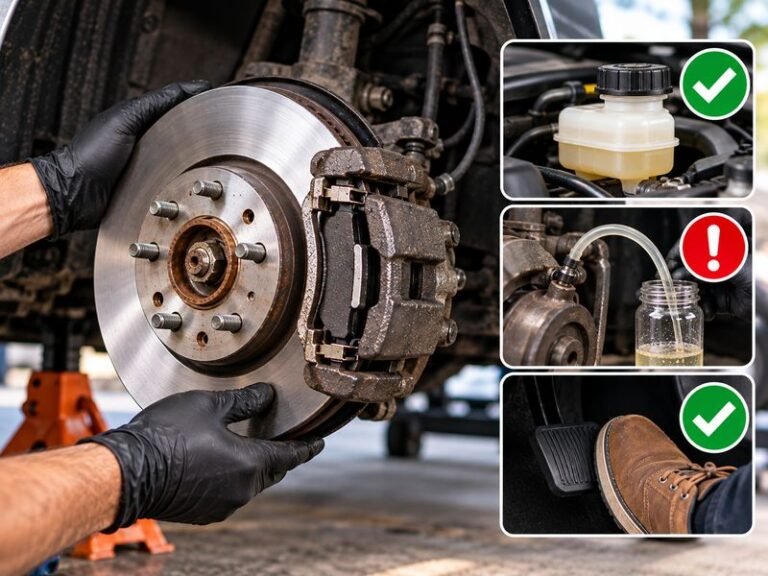
Regardless of whether you have rotors or drums, the warning signs are similar. Pay attention to these symptoms.
- Pulsation or vibration in the brake pedal when stopping
- Squealing or squeaking noises during braking
- Grinding sounds that indicate metal-on-metal contact
- A soft or spongy brake pedal
- The car pulls to one side when braking
- The parking brake does not hold the car on an incline
- A dashboard warning light for the braking system
If you notice any of these, have your brakes inspected promptly. Brake failure is a serious safety risk, and small issues can escalate quickly.
How Driving Habits Affect Rotor Life
Your driving style has a direct impact on how long rotors last. Aggressive braking generates more heat, which can warp rotors over time. Riding the brakes down long hills also builds heat. If you frequently drive in stop-and-go traffic, your rotors will wear faster than someone who drives mostly on highways.
To extend rotor life, brake smoothly and early. Anticipate stops and ease off the accelerator before applying the brakes. This reduces heat and friction, which slows rotor wear. If you drive in mountainous areas, use engine braking by downshifting instead of riding the brakes. This takes the load off the brake system and keeps rotors cooler.
What to Ask Your Mechanic
When you take your car for brake service, ask specific questions. Do not assume the shop will give you all the details. Ask whether your car has rotors or drums on the rear axle. Ask whether the rotors can be resurfaced or need replacement. Ask for the condition of the brake pads or shoes. Ask about the parking brake mechanism, especially if you have four-wheel disc brakes.
A good mechanic will explain what they found and why they recommend a particular service. If a shop tries to sell you rear rotor replacement but your car has rear drums, that is a red flag. Knowing your brake configuration protects you from unnecessary repairs.
Conclusion
Not every car has rotors on all four wheels, and that is not a flaw. Front rotors are essential, but rear drums remain a practical, cost-effective choice for many economy cars and heavy-duty trucks. The key takeaway is to know what your vehicle actually has before you authorize any brake work. Check your owner’s manual, look through the wheel spokes, or ask a mechanic during your next visit. Understanding the difference between rotors and drums helps you make informed decisions about maintenance, avoid overpaying for parts, and recognize when a repair recommendation makes sense. If you drive in normal conditions, rear drums are perfectly safe and reliable. If you tow heavy loads or drive aggressively, four-wheel disc brakes offer better heat management and more consistent performance. Either way, pay attention to warning signs and address brake issues promptly. Your safety depends on a system that stops your car reliably every time you press the pedal.