How Do Brake Calipers Release: Key Facts and Helpful Guidance
After you release the brake pedal, the pads should stop clamping the rotor almost immediately, although they may remain close enough to make light contact. In most disc-brake systems, the caliper releases because hydraulic pressure drops and the piston seal flexes back slightly, creating the small clearance needed for the wheel to turn freely.
Understanding how do brake calipers release helps distinguish normal pad proximity from a dragging brake. The release process is mostly automatic, but a damaged hose, seized piston, sticking slide pin, or parking-brake mechanism can prevent the caliper from retracting correctly.
How do brake calipers release?
A brake caliper releases through a short sequence of hydraulic and mechanical events:
- You remove your foot from the brake pedal.
- The brake master cylinder stops generating hydraulic pressure.
- Brake-fluid pressure in the caliper falls toward its resting level.
- The square-cut piston seal flexes back toward its original shape.
- The seal pulls the piston back a very small distance, allowing the pad to relax away from the rotor.
The piston does not normally retract several millimeters. It moves only enough to remove strong clamping force. The brake pads remain close to the rotor so the system can respond quickly the next time the pedal is pressed.
That limited movement explains why a released brake can sometimes produce a faint brushing sound. A light, intermittent scrape may be normal, but a wheel that becomes unusually hot, smells like overheated friction material, or resists turning indicates a possible release problem.
What happens inside the hydraulic system?
Most passenger vehicles use a hydraulic disc-brake system. Pressing the pedal moves the master-cylinder piston, which sends pressurized brake fluid through rigid lines and flexible hoses to the caliper. Pressure pushes the caliper piston outward, forcing the inner brake pad against the rotor. On a floating caliper, the caliper body then slides so the outer pad also clamps the rotor.
When the pedal is released, the master-cylinder piston moves back. The hydraulic pressure that applied the brakes falls. The caliper piston seal, commonly called a square-cut seal, is mounted in a groove around the piston bore. During braking, the piston moves outward and slightly distorts the seal. When pressure disappears, the seal’s elasticity returns it toward its original shape and pulls the piston inward slightly.
This seal action is the primary automatic release mechanism. It is not a strong spring designed to pull the piston deeply into the caliper. Instead, it provides controlled clearance while keeping the piston close to the pad.
The brake-fluid circuit also needs to let pressure return properly. As the master-cylinder piston comes back to its resting position, it uncovers the compensating port between the reservoir and the pressure chamber. That opening allows fluid pressure to equalize and gives expanding fluid a path back to the reservoir. If the port is blocked or the master cylinder fails to return fully, pressure can remain trapped and keep the brakes applied.
How floating and fixed calipers release
Floating calipers
A floating, or sliding, caliper usually has one piston on the inboard side. Hydraulic pressure pushes that piston and the inner pad toward the rotor. The caliper body slides on guide pins or another sliding mechanism, pulling the outer pad into contact from the opposite side.
When pressure drops, the piston seal retracts the piston slightly. The caliper should also be able to move freely on its guide pins. The pads then stop clamping the rotor, even though they stay near its surfaces.
A seized guide pin can interfere with release. The piston may retract normally while the caliper remains shifted, leaving one pad pressed against the rotor. Corroded pin surfaces, torn rubber boots, dried lubricant, or incorrect lubricant can contribute to this condition.
Fixed calipers
A fixed caliper does not slide across the rotor. It usually has pistons on both sides, and hydraulic pressure moves the pistons outward to press both pads against the rotor. When pressure is released, the seals provide the small amount of piston rollback needed to reduce clamping force.
Because a fixed caliper does not depend on sliding guide pins, its release problems more often involve a sticking piston, damaged seal, contamination, or uneven hydraulic pressure. The operating principle remains the same: pressure applies the brakes, and seal elasticity provides limited retraction after pressure falls.
How the parking brake affects release
The parking brake can add a mechanical release requirement. On some rear disc brakes, a cable operates a lever on the caliper. Releasing the parking-brake handle or pedal should allow a return spring to move that lever fully back to its stop. If the cable is corroded, incorrectly adjusted, or sticking inside its sheath, the lever may not return far enough, leaving the rear pad partly applied.
Other rear calipers use an internal screw mechanism that combines the service brake with the parking brake. The piston may need to rotate as it moves during pad service, and the internal mechanism must return correctly when the parking brake is released. For this type of caliper, forcing the piston straight back can damage the mechanism.
Vehicles with an electronic parking brake use an electric motor and control system to apply and release the rear brakes. The motor must receive the correct release command and complete its return movement. A fault, weak battery, wiring issue, or actuator problem can leave the parking brake engaged even when the dashboard switch appears to be off.
Do not assume a brake is hydraulically stuck when the actual problem is a parking-brake cable or actuator. The release mechanism must be inspected according to the vehicle’s design.
Why a brake caliper may not release
A caliper that stays applied usually has a mechanical restriction, trapped hydraulic pressure, or a damaged internal component. Common causes include:
- Seized caliper piston: Corrosion or contamination can prevent the piston from moving smoothly in its bore.
- Sticking slide pins: A floating caliper cannot center and relax if its guide pins are dry, bent, or corroded.
- Blocked flexible brake hose: An internally damaged hose can act like a one-way valve. Pressure reaches the caliper but does not return easily.
- Blocked master-cylinder compensating port: Trapped pressure can keep one or more brakes applied.
- Parking-brake fault: A cable, lever, screw mechanism, or electronic actuator may fail to return fully.
- Incorrect assembly: Misplaced hardware, improperly fitted pads, or a damaged dust boot can cause binding.
Brake fluid contamination is another concern. Water, dirt, or an incompatible fluid can damage seals and promote corrosion. Brake fluid should never be mixed with fluids that the vehicle manufacturer does not specify.
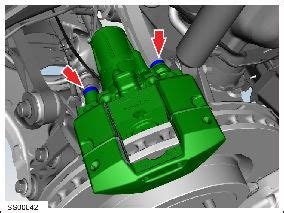
Signs that a caliper is not releasing
A dragging brake often creates symptoms at one wheel rather than throughout the vehicle. Warning signs include:
- A vehicle that pulls to one side after braking
- A wheel or rotor that becomes much hotter than the wheel on the opposite side
- A burning smell near a wheel
- Smoke from the brake area in severe cases
- Rapid or uneven brake-pad wear
- Reduced fuel economy or a feeling that the vehicle is being held back
- A brake pedal that changes as the system heats up
- Grinding, continuous scraping, or unusual squealing
Heat is especially useful as a clue, but it must be checked safely. After driving, do not touch the rotor, wheel, or caliper with bare skin. Brake components can remain dangerously hot. A noncontact infrared thermometer can help compare wheel temperatures, but temperature readings are only evidence of a problem, not a complete diagnosis.
A small amount of pad contact is expected because disc brakes do not use a dedicated return spring to pull the pads far away from the rotor. The key difference is whether the contact creates excessive heat, resistance, noise, or wear.
Basic checks for a dragging brake
If I were organizing an initial inspection, I would start with the simplest safe observations rather than immediately replacing parts.
Compare the wheels
After a short drive involving minimal braking, park safely and compare the heat from left and right wheels without touching the brake components. One noticeably hotter wheel suggests localized drag. Both front wheels being hot may point to a broader hydraulic or driving-related issue, while both rear wheels may involve the parking-brake system.
Check wheel rotation safely
With the vehicle properly supported on approved jack stands and the transmission secured as appropriate, a technician can rotate the wheel by hand. Some resistance is normal, but the wheel should not be extremely difficult to turn. Never rely on a jack alone while working underneath or beside a raised vehicle.
Look at pad wear
Uneven wear can identify the type of restriction. One pad worn much more than the other may suggest a sticking slide mechanism or piston. Similar wear on both pads with continued drag may point toward trapped hydraulic pressure or a parking-brake issue.
Check for pressure release
A qualified technician may open the bleeder screw briefly to see whether trapped hydraulic pressure is causing the drag. If the wheel frees immediately after opening the bleeder, pressure may be trapped upstream, possibly by a hose or master-cylinder problem. If the wheel remains tight, the restriction is more likely mechanical.
Opening a bleeder screw is not a casual test for an inexperienced owner. It can introduce air or contamination, and the braking system must be bled correctly afterward. Brake fluid can also damage painted surfaces.
What normal caliper release feels like
A properly functioning caliper releases quietly and quickly when the pedal is released. The pads remain close to the rotor, so a slight sound may occur as the wheel turns. The vehicle should coast normally, and the wheel should not develop excessive heat during ordinary driving.
It is also normal for the brake pedal to require a small amount of travel before the pads fully clamp the rotor. However, a pedal that feels spongy, sinks toward the floor, or changes significantly after the brakes heat up needs prompt inspection. Those symptoms can involve air, fluid problems, overheating, or other faults beyond simple caliper release.
After brake service, the pads and hardware should be installed in the correct positions, the caliper bolts tightened to the vehicle maker’s specifications, and the brake pedal pumped until it feels firm before moving the vehicle. The wheel should be checked for free movement, and the vehicle should be tested at low speed in a safe area.
When professional repair is necessary
Stop driving and arrange an inspection if a wheel is smoking, the vehicle pulls sharply, the brake pedal becomes unsafe, or a rotor turns blue from severe overheating. Continued driving with a dragging caliper can damage the rotor, pads, wheel bearing, brake hose, and surrounding components. It can also reduce braking performance because overheated friction material may lose effectiveness.
A repair may involve cleaning and lubricating guide pins, replacing a caliper, installing a flexible hose, servicing the parking-brake mechanism, or diagnosing the master cylinder. The correct repair depends on whether the wheel is being held by mechanical friction or residual hydraulic pressure. Replacing the caliper alone will not solve a blocked hose or a master-cylinder problem.
Because brakes are a safety-critical system, I would not bypass a suspected fault by removing pads, disconnecting a hose, or driving to “see if it clears.” A qualified brake technician can isolate the cause while preserving the vehicle’s hydraulic integrity.
Conclusion
Brake calipers release when pedal pressure falls, the master cylinder allows hydraulic pressure to equalize, and the piston seal pulls the piston back slightly. Floating calipers must also slide freely, while parking-brake parts must return completely. Knowing how do brake calipers release makes it easier to recognize the difference between normal light pad contact and dangerous brake drag that requires inspection.