Do You Need to Bleed Brakes When Changing Pads? Complete Guide
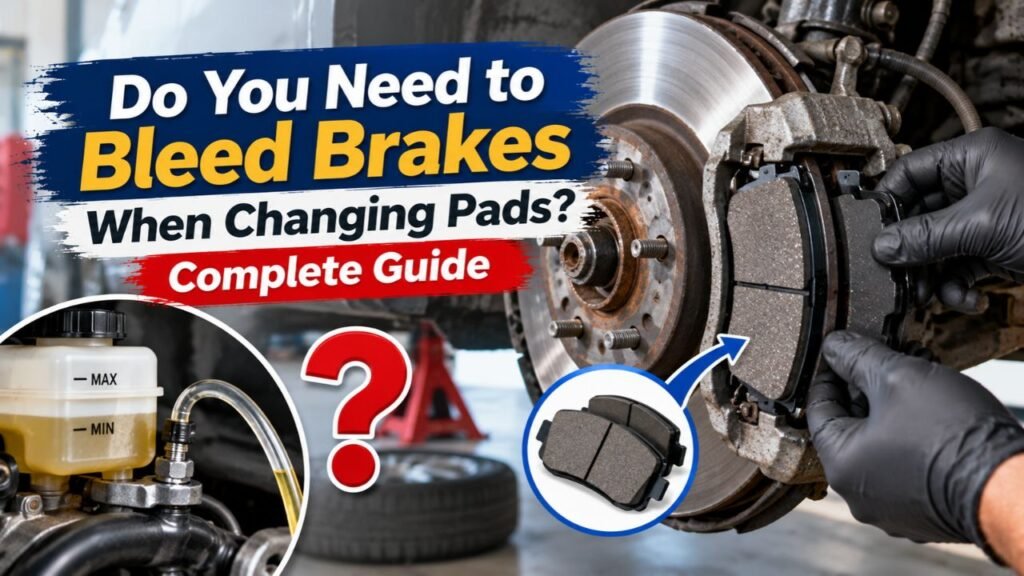
No, you normally do not have to bleed the brakes after a routine brake-pad replacement if you never opened the hydraulic system and no air entered the brake lines. Retracting the caliper pistons to make room for thicker new pads moves brake fluid through the existing closed system and, by itself, does not require bleeding.
Bleeding becomes necessary when air gets into the hydraulic circuit. That may happen if you disconnect a brake hose, replace a caliper, open a brake line, let the master-cylinder reservoir run dry, repair a hydraulic leak, or intentionally open a bleeder screw and air enters the system.
PowerStop states that bleeding is generally not required when only the pads are replaced and the brake lines remain closed. It also notes that bleeding is required when the hydraulic system has been opened or air is present.
For do you need to bleed brakes when changing pads, the key distinction is not the new pads themselves. The question is whether the sealed brake-fluid circuit was disturbed.
When the old pads are removed, the caliper piston normally has to be pushed back into its bore. That process can raise the fluid level in the master-cylinder reservoir, so the reservoir should be watched carefully to prevent overflow. Brembo specifically warns that retracting caliper pistons raises reservoir fluid level.
After installing the pads, pump the brake pedal before driving so the caliper pistons move back toward the new pads. The pedal should become firm. If it remains soft or spongy, stop and find the cause before the vehicle is driven.
Do You Normally Bleed Brakes After Changing Pads?
For a straightforward pad replacement, usually no.
If all you did was:
- Remove the wheel
- Remove or reposition the caliper
- Retract the piston
- Install new brake pads
- Reinstall the caliper
- Reassemble the brakes
and no hydraulic fitting was opened, bleeding is generally unnecessary.
Why Changing Pads Does Not Normally Add Air
Brake systems operate as sealed hydraulic circuits.
When you push the caliper piston inward, brake fluid moves backward through the brake line toward the reservoir.
You are moving existing fluid, not opening the system to outside air.
PowerStop makes the same distinction: retracting the caliper piston does not by itself introduce air into the hydraulic circuit.
New Pads Require the Piston to Move Back Out
New pads are thicker than worn pads.
After reassembly, there will initially be additional clearance between the piston, pads, and rotor.
Pressing the brake pedal moves the piston outward until the pads contact the rotor.
The first pedal press may travel farther than normal.
Pump the pedal several times while the vehicle remains stationary until it becomes firm.
Key Takeaway: A normal pad-only replacement does not require bleeding if the brake hydraulic system stays sealed and the pedal becomes firm after the pads are installed.
When Do You Need to Bleed Brakes After Changing Pads?
Bleeding is needed when air may have entered the system.
Several situations can create that condition.
You Opened a Brake Line
If you disconnected:
- A brake hose
- Steel brake line
- Banjo fitting
- Caliper fluid connection
- Master-cylinder line
the hydraulic circuit was opened.
Air can enter as fluid escapes.
Bleeding is then required according to the vehicle manufacturer’s procedure.
You Replaced a Brake Caliper
A caliper replacement normally involves disconnecting the hydraulic hose.
That introduces air into the wheel-end circuit.
Brembo’s caliper replacement procedure includes reconnecting the hydraulic supply line and then bleeding until fluid exits without air bubbles and normal pedal resistance returns.
The Brake Fluid Reservoir Ran Dry
Never allow the master-cylinder reservoir to empty while bleeding or servicing brakes.
If the reservoir runs dry, air may enter farther upstream into:
- Master cylinder
- Brake lines
- ABS hydraulic unit
That can make bleeding much more involved.
Some modern ABS systems may require a diagnostic scan tool to operate internal valves or pumps during bleeding. PowerStop notes that newer vehicles can require a scan tool when air is trapped in the ABS unit.
You Repaired a Brake Fluid Leak
A hydraulic leak can allow fluid to escape and air to enter.
After fixing the leak, the affected hydraulic system must be bled as specified by the vehicle manufacturer.
Do not assume replacing pads will correct a soft pedal caused by a leak.
The Pedal Remains Soft or Spongy
A soft, springy pedal can indicate air in the brake system.
PowerStop identifies trapped air as one possible cause of a spongy brake pedal and says a vehicle with a spongy pedal should not be driven until the fault is corrected.
Other faults can also create abnormal pedal travel, so bleeding should not be used as a substitute for diagnosis.
You Opened a Bleeder Screw
Some brake-service procedures involve opening the caliper bleeder while retracting the piston so old fluid exits at the caliper rather than being pushed backward through the ABS and master-cylinder system.
PowerStop describes this as a preferred piston-retraction practice in its pad-installation guidance.
If a bleeder is opened, follow the vehicle-specific procedure carefully. Keep the reservoir from running low and make sure no air remains before returning the vehicle to service.
Key Takeaway: Bleeding becomes necessary when a hydraulic connection or bleeder is opened, a caliper is replaced, the reservoir runs dry, a leak allows air in, or the pedal remains spongy.
Do You Need to Bleed Brakes After Compressing the Caliper Piston?
Not simply because the piston was compressed.
Retracting the piston is a normal part of pad replacement.
What Happens When You Push the Piston In?
The old pads are thin, so the piston sits farther out of the caliper.
New pads require more room.
As you retract the piston, hydraulic fluid is displaced backward.
That can raise the reservoir level.
Brembo warns technicians to check reservoir level because piston retraction can cause the fluid to rise enough to spill.
Watch the Reservoir Before Compressing the Piston
If someone previously topped off the reservoir while the pads were worn, installing new pads can push enough fluid backward to overfill it.
Brake fluid can damage painted surfaces.
Before retracting the piston:
- Locate the brake-fluid reservoir.
- Check its level.
- Protect nearby painted surfaces.
- Retract the piston slowly.
- Watch for the fluid rising.
Do not remove fluid unnecessarily if the level remains safely within the reservoir.
Do Not Force a Piston That Will Not Retract
If the piston refuses to move normally, investigate why.
Possible issues include:
- Seized caliper piston
- Corrosion
- Rear caliper screw-type mechanism
- Electronic parking-brake mechanism
- Incorrect retraction procedure
Some rear calipers must be rotated while being pushed inward.
Vehicles with electronic parking brakes may require service mode before rear pad replacement.
Forcing the wrong mechanism can damage the caliper.
Key Takeaway: Compressing a caliper piston normally does not require bleeding, but reservoir level must be monitored and the correct piston-retraction procedure must be used.
Should You Open the Bleeder Screw When Pushing the Piston Back?
There are two approaches used in brake service.
Some procedures push fluid backward through the hydraulic system with the bleeder closed.
Others open the bleeder so displaced fluid exits at the caliper.
Why Some Technicians Open the Bleeder
Opening the bleeder can prevent old fluid from being pushed backward toward:
- ABS hydraulic components
- Master cylinder
- Upstream brake circuits
PowerStop specifically describes opening the bleeder while retracting the piston as a preferred practice in its pad-installation guidance.
Follow the Vehicle Service Procedure
Do not assume one method applies to every braking system.
Brake layouts vary.
If the bleeder is opened:
- Use the correct wrench.
- Attach a suitable collection hose where appropriate.
- Prevent the reservoir from running dry.
- Keep brake fluid off painted surfaces.
- Close the bleeder correctly.
- Confirm a firm pedal before driving.
If you are not comfortable controlling an open hydraulic circuit, follow the factory procedure or have the brake service performed professionally.
Why Is the Brake Pedal Soft After Changing Pads?
A low pedal immediately after installing pads does not automatically mean the system contains air.
The cause depends on how the pedal behaves after several presses.
The Pistons Have Not Reached the Pads Yet
This is common after pad replacement.
Retracting the pistons creates space for the new pads.
The first few pedal applications move the pistons outward.
Pump the pedal while the vehicle is stationary.
It should become firm as the pads seat against the rotors.
Air Entered the Hydraulic System
If the pedal remains spongy after several pumps, air may be present.
This is especially likely if:
- A brake line was opened
- A caliper was replaced
- A bleeder was opened incorrectly
- The reservoir ran dry
There May Be a Brake Fluid Leak
Check around:
- Calipers
- Bleeder screws
- Hose connections
- Steel lines
- Master cylinder
A leak is a serious fault.
Do not drive the vehicle until it is corrected.
Caliper Installation May Be Wrong
If a replacement caliper is installed on the wrong side, the bleeder may end up below the piston cavity instead of near the top.
Air rises, so a low-mounted bleeder may make it difficult to purge trapped air.
Centric notes that caliper bleeders should be toward the top so air can be removed correctly.
Other Mechanical Issues Can Cause Extra Travel
Excessive pedal travel can also relate to:
- Rear brake adjustment
- Caliper movement
- Rotor runout
- Incorrect pad installation
- Flexible component movement
- Master-cylinder problems
Do not repeatedly bleed the brakes without identifying the actual cause.
Key Takeaway: A temporarily low pedal can result from retracted caliper pistons, but a pedal that remains soft after pumping requires inspection for air, leaks, incorrect assembly, or another brake fault.
How to Check the Brakes After Replacing Pads
Do several checks before the vehicle moves.
Pump the Brake Pedal
With the vehicle stationary, press and release the pedal several times.
The pedal should firm up.
Do not shift into gear and immediately drive after installing pads without first restoring normal pedal feel.
Check the Brake Fluid Level
Once the pistons have seated:
- Check the reservoir.
- Compare the level with the vehicle’s markings.
- Use only the brake-fluid specification required by the manufacturer if fluid needs to be added.
Do not overfill it.
Inspect for Leaks
Look at every area that was disturbed.
Check:
- Bleeder screws
- Hose connection
- Caliper
- Brake line
- Reservoir area
There should be no wet brake fluid.
Verify Caliper Hardware
Make sure:
- Caliper bolts are tightened to specification.
- Pad clips are installed correctly.
- Wear sensors are connected where fitted.
- Brake hose is not twisted.
- Nothing contacts the wheel.
Check the Parking Brake System
Rear brake jobs may involve mechanical or electronic parking-brake hardware.
Follow the vehicle’s specified reset or service-mode procedure.
Make a Controlled Low-Speed Test
Once the pedal is firm and the system has been checked for leaks, perform a low-speed functional test in a safe area.
Confirm:
- Normal pedal height
- Normal stopping response
- No severe pulling
- No fluid leaks
- No abnormal mechanical noise
New brake pads may also require a bedding procedure specified by the pad manufacturer.
Key Takeaway: Before driving, restore a firm pedal, verify brake-fluid level, inspect for leaks and correct hardware installation, then conduct a controlled low-speed brake test.
Do New Brake Pads Need a Brake Fluid Flush?
Not automatically.
Brake-pad replacement and brake-fluid replacement are separate maintenance procedures.
Brake Pads Wear Mechanically
Pads are replaced because the friction material becomes too thin, damaged, contaminated, or otherwise unserviceable.
Brake Fluid Ages Chemically
Brake fluid absorbs moisture over time and may become contaminated.
Its replacement interval depends on the vehicle manufacturer’s maintenance schedule and fluid condition.
Bosch notes that brake-fluid service is an important part of brake-system maintenance and emphasizes following vehicle-manufacturer specifications.
Combining the Services Can Be Convenient
If brake fluid is due for replacement at the same time as the pads, performing both services together can make sense.
That does not mean every pad change requires a full fluid flush.
Follow the maintenance schedule for the specific vehicle.
Do You Need to Bleed Brakes After Changing Pads and Rotors?
Not simply because the rotors were replaced.
Rotors are mechanical components and do not contain brake fluid.
If you replace:
- Pads
- Rotors
while leaving the hydraulic lines sealed, bleeding is not inherently necessary.
PowerStop does recommend bleeding during its complete pad-and-rotor installation procedure as a preventive service step.
That is a service recommendation rather than proof that air automatically enters the system when pads or rotors are changed.
The vehicle manufacturer’s procedure should take priority.
Do You Need to Bleed All Four Brakes After Changing Pads?
Not for a normal pad-only replacement with a sealed hydraulic system.
If bleeding becomes necessary, the required sequence depends on the vehicle.
Older general advice often says to begin at the wheel farthest from the master cylinder, but modern braking systems may have:
- Diagonal hydraulic circuits
- ABS modulators
- Electronic stability control
- Special manufacturer-defined sequences
Do not assume the traditional order applies.
PowerStop advises following the factory service manual because bleeding procedures vary by vehicle.
Can ABS Make Brake Bleeding More Difficult?
Yes.
Modern ABS hydraulic units contain internal valves and passages.
If air gets into certain portions of the ABS hydraulic control unit, ordinary pedal bleeding may not remove all of it.
Some Vehicles Need a Scan Tool
A diagnostic scan tool may command the ABS pump and valves through a bleed routine.
PowerStop notes that many newer vehicles require a scan tool to bleed the ABS unit fully.
Centric also explains that some ABS systems have internal passages that may require electronically cycling valves or pumps during a complete bleeding process.
Avoid Letting the Reservoir Run Dry
Keeping fluid in the reservoir during hydraulic service reduces the chance of sending air deep into the ABS system.
This is one reason careless bleeding can turn a simple brake job into a more involved repair.
Key Takeaway: ABS usually does not complicate a normal pad-only job, but air entering the hydraulic control unit may require a scan-tool bleeding routine on some vehicles.
Is It Better to Bleed Brakes Every Time You Change Pads?
There are different service approaches.
A pad change does not mechanically require bleeding if the hydraulic circuit stays closed.
PowerStop states this directly in one of its pad-installation resources.
The same manufacturer also recommends bleeding during its complete pad-and-rotor installation guide as a preventive maintenance step.
These statements are not really contradictory.
One answers:
Is bleeding technically required because new pads were installed?
Usually no.
The other addresses:
Can brake-fluid service be added to a brake job as preventive maintenance?
Yes.
The deciding factors should be:
- Vehicle service manual
- Brake-fluid service interval
- Fluid condition
- Hydraulic work performed
- Pedal feel
- Presence of air or leaks
Common Mistakes During Pad Replacement
Forgetting to Pump the Pedal
A driver can experience an alarming low pedal if the caliper pistons are still retracted.
Pump the pedal before attempting to move the vehicle.
Overfilling the Brake Fluid Reservoir
Fluid rises as the pistons are pushed inward.
Brembo warns that this can cause reservoir overflow.
Letting the Reservoir Run Empty During Bleeding
This can draw new air into the system.
Opening Hydraulic Fittings Unnecessarily
A pad-only job generally does not require disconnecting the brake hose.
Avoid turning a simple mechanical job into a hydraulic service without a reason.
Ignoring a Spongy Pedal
Do not assume the pedal will improve after driving.
PowerStop advises that a vehicle with a persistent spongy brake pedal is not safe to drive until the cause is identified and repaired.
Forgetting Vehicle-Specific Rear Caliper Procedures
Rear brakes may use:
- Screw-in pistons
- Mechanical parking-brake mechanisms
- Electronic parking brakes
Use the correct retraction or service-mode procedure.
Contaminating Pads or Rotors With Brake Fluid
Brake friction surfaces need to remain clean.
Brake fluid on friction material can reduce braking performance and may require replacement of contaminated components.
Key Takeaway: Pump the pedal before driving, monitor reservoir level, keep the hydraulic system closed unless service requires opening it, and never ignore leaks or a persistent soft pedal.
When Should You Have a Professional Bleed the Brakes?
Professional service is a sensible choice when:
- The reservoir ran completely dry.
- Air entered the ABS hydraulic unit.
- A scan-tool bleed is required.
- A bleeder screw is seized or broken.
- Brake fluid is leaking.
- The pedal remains soft after proper bleeding.
- The master cylinder may contain air.
- You are unsure of the correct bleed sequence.
- The vehicle has a specialized brake-by-wire or electronic hydraulic system.
Brakes are a primary safety system.
If normal pedal feel cannot be restored confidently before driving, the vehicle should not be put back into traffic.
Conclusion
Do you need to bleed brakes when changing pads? In most routine pad replacements, no. If the brake lines remain sealed, the reservoir never runs dry, and no air enters the system, retracting the pistons and installing new pads does not create a need for bleeding.
Bleeding becomes necessary when the hydraulic circuit is opened, a caliper or brake hose is replaced, a leak allows air in, the reservoir empties, or the pedal remains spongy. Some modern ABS systems may also require a scan-tool procedure if air reaches the hydraulic control unit.
After every pad replacement, pump the brake pedal until it is firm, check the fluid level, inspect for leaks, verify the brake hardware, and test the vehicle carefully at low speed. Never drive with a pedal that remains soft or with an unresolved brake-fluid leak.
FAQs About Bleeding Brakes When Changing Pads
Do I Have to Bleed Brakes After Changing Front Pads?
No, not normally. If you only replace the front pads, retract the pistons, and leave all hydraulic lines and bleeders closed, no air should enter the system and routine bleeding is generally unnecessary.
Does Compressing a Brake Caliper Introduce Air?
No. Compressing the piston with the hydraulic system closed pushes existing fluid back toward the reservoir. It does not normally introduce outside air.
Why Is My Brake Pedal Low After Changing Pads?
The caliper pistons may still be retracted. Pump the pedal several times while the vehicle is stationary. If the pedal does not become firm, inspect for hydraulic air, leaks, incorrect brake assembly, or another fault.
Should I Open the Bleeder When Compressing the Caliper?
Some service procedures recommend opening the bleeder so old fluid exits at the caliper rather than traveling backward through the system. PowerStop describes this as a preferred practice. Follow the vehicle-specific service procedure and prevent air from entering.
Do You Need to Bleed Brakes After Changing Rotors?
No. Replacing rotors does not open the hydraulic system. If pads and rotors are changed without disconnecting a brake line or introducing air, bleeding is not technically required solely because those parts were replaced.
Can I Drive With a Spongy Brake Pedal After Changing Pads?
No. A persistent spongy pedal can indicate air or another brake-system fault. PowerStop advises against driving until the cause is found and corrected.
Do You Need to Bleed Brakes After Replacing a Caliper?
Yes. Replacing a hydraulic caliper requires disconnecting its brake-fluid supply, so air can enter. Brembo’s caliper installation instructions include bleeding until air bubbles are eliminated and normal pedal resistance returns.
Do ABS Brakes Need a Special Bleeding Procedure?
Some do. If air reaches certain ABS hydraulic units, a scan tool may be needed to cycle the pump or internal valves. Follow the factory service manual rather than assuming a standard bleeding sequence will work for every vehicle.