Brake Caliper Covers vs Paint: Which Option Is Better?
If you want to improve the appearance of your wheels without replacing the entire braking system, changing how the brake calipers look is one of the most noticeable upgrades you can make. Two common options are installing brake caliper covers or painting the existing calipers. Both can add color and make ordinary brakes look cleaner, but they achieve that result in very different ways.
The brake caliper covers vs paint decision usually comes down to appearance, installation effort, cost, heat considerations, wheel clearance, durability, and how permanent you want the modification to be. Caliper covers are removable pieces that fit over the existing brake caliper, while caliper paint is a high-temperature coating applied directly to the caliper itself.
Paint usually gives a more natural, factory-style appearance because the original shape of the caliper remains visible. It also avoids adding another component close to the wheel. Caliper covers can be quicker to install in some cases, can hide an unattractive factory caliper, and may provide a larger visual surface behind open-spoke wheels.
Neither option improves braking performance by itself. These are mainly cosmetic modifications, and both need to be installed correctly so they do not interfere with the wheel, brake rotor, brake hose, or moving components.
This guide compares caliper covers and paint in detail, including cost, durability, installation, maintenance, heat, appearance, safety, and which option makes the most sense for different vehicles.
Brake Caliper Covers vs Paint: What Is the Difference?
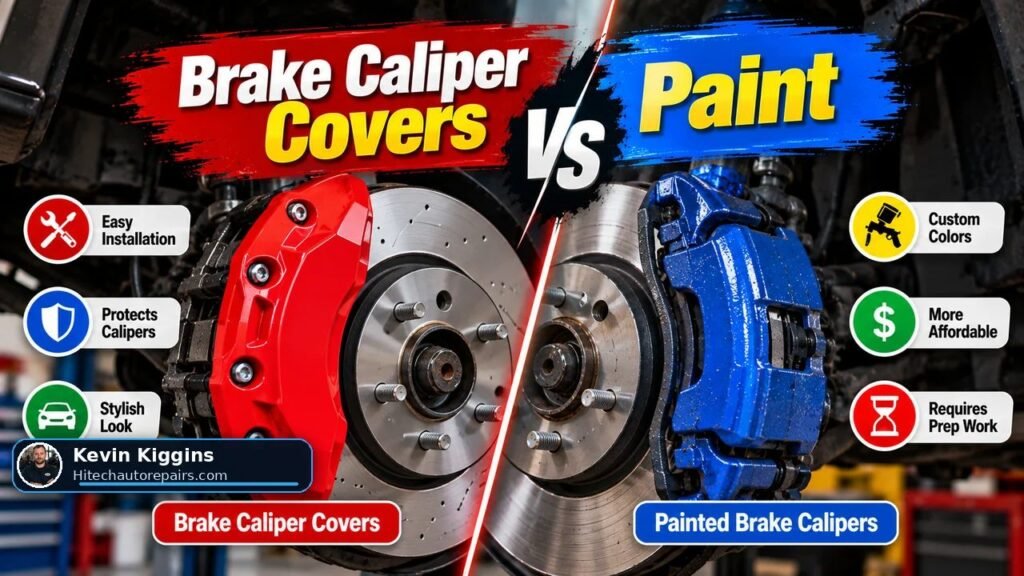
The main difference is that caliper covers are separate physical pieces mounted over the brake calipers, while caliper paint is a coating applied directly to the existing caliper surface.
Caliper covers change both the color and visible shape of the brake assembly. Paint changes only the finish.
Here is a quick comparison:
| Feature | Caliper Covers | Caliper Paint |
| Appearance | Larger, more stylized | Natural factory-style look |
| Installation | Usually bolt-on or clip-on | Requires cleaning, masking, and painting |
| Removal | Usually removable | Requires refinishing to remove |
| Wheel clearance | Must be checked carefully | Normally unchanged |
| Cost | Usually higher | Usually lower |
| Maintenance | Easy to wipe clean | May require touch-ups over time |
| Heat exposure | Must be designed for brake temperatures | Requires high-temperature paint |
| Customization | Limited to available designs | Many colors and finishes |
| Risk of interference | Possible if incorrectly fitted | Very low when properly applied |
| Best for | Quick visual transformation | Clean, integrated appearance |
For many everyday vehicles, caliper paint is the simpler and more natural-looking choice. Caliper covers can make sense when you want a bold appearance and have enough wheel clearance for a properly designed set.
What Are Brake Caliper Covers?
Brake caliper covers are decorative metal or composite pieces installed over the original brake calipers.
They are typically designed to hide the plain factory caliper and create the appearance of a larger performance brake system.
Depending on the product, they may attach using:
- Brackets
- Clips
- Bolts
- Vehicle-specific mounting hardware
Good-quality covers are normally designed around a particular vehicle or brake configuration rather than being completely universal.
What Do Caliper Covers Actually Do?
Their main purpose is cosmetic.
Caliper covers can:
- Hide rust or discoloration
- Add a brighter color behind the wheel
- Make small factory calipers appear larger
- Create a cleaner-looking wheel area
- Add logos or custom styling
Some manufacturers may also claim that covers help reduce visible brake dust on the outer wheel surface, but this should not be the main reason for choosing them.
They do not increase clamping force or improve the braking capability of the underlying caliper.
What Is Brake Caliper Paint?
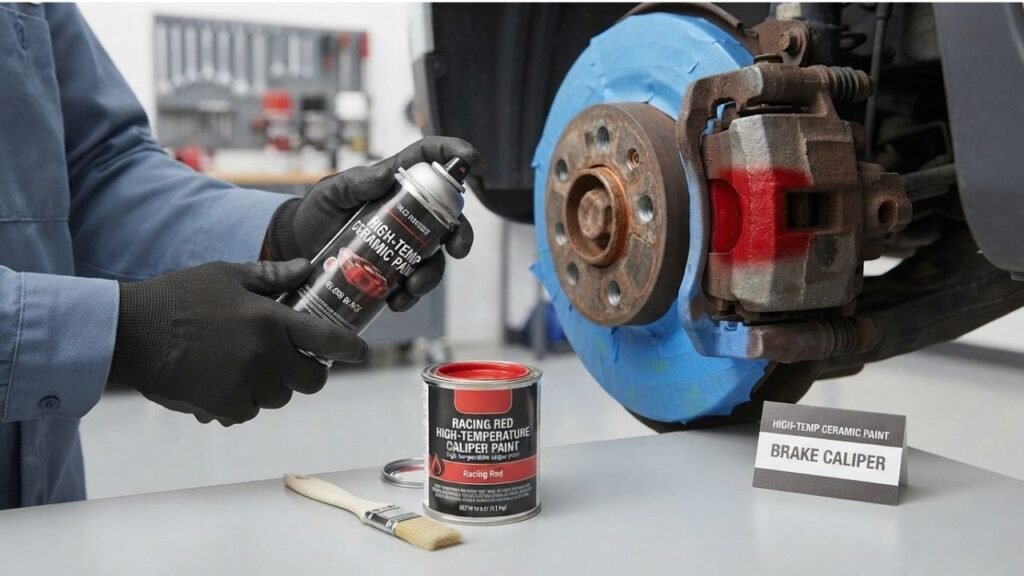
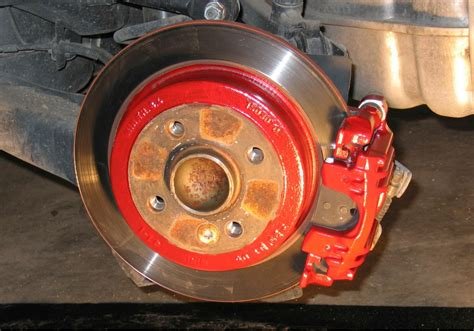
Brake caliper paint is a heat-resistant coating made for use on brake calipers and similar automotive components.
It is applied directly to the caliper after the surface has been thoroughly cleaned and prepared.
Caliper paint is available in several forms, including:
- Spray paint
- Brush-on paint
- Multi-part coating kits
- High-temperature automotive coatings
Common colors include:
- Red
- Black
- Silver
- Blue
- Yellow
- Orange
- Bronze
Some products also offer gloss, satin, or metallic finishes.
Which Looks Better: Caliper Covers or Paint?
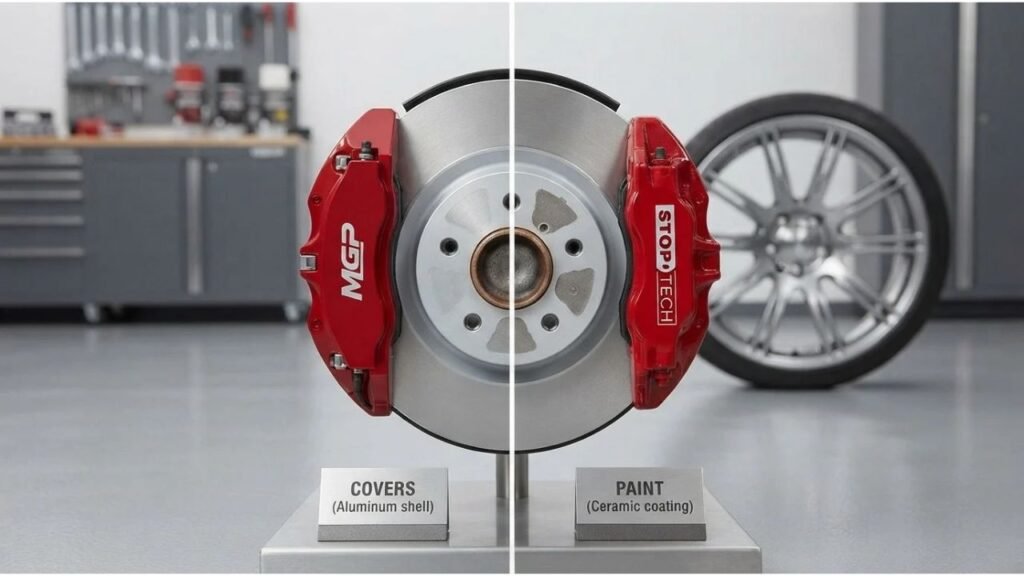
This is largely a matter of personal preference.
Caliper Paint Looks More Natural
Paint keeps the original shape and proportions of the brake caliper.
A properly prepared and painted caliper can look similar to a factory-finished performance brake system, especially when the caliper already has an attractive shape.
Paint tends to suit drivers who prefer a clean, OEM-style appearance rather than an oversized visual effect.
Caliper Covers Create a Bolder Look
Covers often make the caliper look physically larger.
Behind large, open-spoke wheels, this can create a more dramatic appearance.
Some covers include:
- Raised lettering
- Logos
- Ribbed designs
- Performance-inspired shapes
However, poorly fitted or inexpensive covers can sometimes look obviously added on rather than factory-installed.
For appearance alone, paint usually wins if your goal is realism. Covers may be more appealing if you want maximum visual impact.
Brake Caliper Covers vs Paint Cost
Paint is normally the less expensive option.
Caliper Paint Cost
A DIY caliper painting project may require:
- Caliper paint or kit
- Brake cleaner
- Wire brush
- Masking materials
- Gloves
- Small brushes
Depending on the products used, a basic DIY project may cost roughly $30 to $100 or more.
Professional caliper refinishing can cost much more because labor includes wheel removal, cleaning, preparation, masking, coating, and curing.
Caliper Cover Cost
Vehicle-specific caliper cover sets may commonly cost approximately $100 to $300 or more, depending on brand, material, vehicle, and design.
Installation may add labor charges if you do not install them yourself.
For a budget-conscious cosmetic upgrade, paint generally offers better value.
Which Is Easier to Install?
Caliper covers can sometimes be installed more quickly, but compatibility is critical.
Installing Caliper Covers
A typical installation involves:
- Raising the vehicle safely.
- Removing the wheel.
- Positioning the cover over the caliper.
- Installing the supplied brackets or clips.
- Checking rotor clearance.
- Reinstalling the wheel.
- Checking wheel-to-cover clearance.
You generally do not need to disconnect the hydraulic brake line.
However, every cover must fit securely without touching the rotor or wheel.
Painting Brake Calipers
Painting usually requires more preparation.
The process may include:
- Raise and support the vehicle.
- Remove the wheel.
- Clean the caliper thoroughly.
- Remove rust and loose material.
- Mask the rotor, pads, hoses, bleeder screw, and nearby components.
- Apply multiple coats.
- Allow proper drying or curing time.
- Reinstall the wheel.
The painting itself is not especially difficult, but surface preparation determines how good and durable the finished result will be.
Do You Have to Remove the Caliper to Paint It?
Not always.
Many DIY owners paint the caliper while it remains installed on the vehicle.
This can work well if everything around the caliper is carefully masked.
However, painting the caliper while installed makes it more difficult to coat areas hidden behind brackets or other components.
Removing the caliper can create a more complete finish, but you must support it properly and avoid placing stress on the brake hose.
There is usually no reason to disconnect the hydraulic line just for cosmetic painting.
Opening the hydraulic system creates unnecessary additional work because the brakes must then be bled correctly.
Which Option Lasts Longer?
Both can last for years when high-quality materials are used and installation is done correctly.
Caliper Cover Durability
A well-made metal caliper cover may remain visually consistent for a long time because it is not relying on paint applied to a rusty original caliper.
Potential problems include:
- Finish fading
- Hardware loosening
- Scratches
- Corrosion around mounting hardware
- Physical damage
Regular inspection is important because the cover is located near rotating and high-temperature brake components.
Caliper Paint Durability
High-quality brake caliper paint can also last for years.
Its lifespan depends heavily on preparation.
Paint may fail prematurely because of:
- Oil or grease contamination
- Remaining rust
- Poor cleaning
- Insufficient curing
- Using ordinary paint rather than heat-resistant paint
- Harsh chemicals
- Road salt
Proper cleaning and preparation are often more important than applying extra coats.
Do Caliper Covers Cause Heat Problems?
Properly engineered, correctly fitted caliper covers should be designed to tolerate normal brake operating temperatures.
However, anything installed around a braking component needs to be chosen carefully because brakes naturally generate heat.
During braking, friction between the brake pads and rotor converts vehicle motion into heat. The caliper, rotor, pads, and surrounding air all participate in heat transfer.
A cover placed over a caliper changes the airflow around part of that assembly.
For normal street driving with a reputable vehicle-specific product, this may not create a meaningful problem. However, vehicles used for:
- Track driving
- Repeated hard braking
- Heavy towing
- Mountain descents
- Performance driving
have much greater thermal demands.
For high-performance applications, adding unnecessary components around the brake system is generally less desirable.
Does Caliper Paint Hold in Heat?
A thin coating of properly formulated brake caliper paint does not normally create a meaningful heat-management problem on a street vehicle.
Brake calipers are commonly painted or coated from the factory on many vehicles.
The important factor is using a product intended to withstand brake temperatures.
Ordinary household or general-purpose spray paint may discolor, soften, peel, or produce unpleasant odors when exposed to repeated heat.
Are Brake Caliper Covers Safe?
Properly designed and correctly installed covers can be used safely, but clearance is critical.
The cover must not contact:
- Brake rotor
- Wheel
- Brake hose
- Wheel weights
- Suspension components
- Caliper’s moving parts
After installation, rotate the wheel by hand before driving whenever possible.
Listen and feel for interference.
The mounting hardware should also be inspected periodically.
If the cover shifts, loosens, bends, or touches a moving component, stop using the vehicle until the problem is corrected.
Is Painting Brake Calipers Safe?
Yes, when done correctly.
The main risks come from painting surfaces that should remain uncoated.
Do not apply paint to:
- Brake rotor friction surfaces
- Brake pad friction material
- Rubber boots
- Brake hoses
- Bleeder screw openings
- Sliding surfaces
- Caliper piston surfaces
- Mounting surfaces where paint could affect fit
Paint on the rotor or brake pad friction surface can reduce braking performance until the contamination is removed or the affected parts are replaced.
Careful masking is essential.
Wheel Clearance: One of the Biggest Differences
Wheel clearance is a major consideration with caliper covers.
A cover extends beyond the original brake caliper.
That means a wheel that clears the factory caliper may not automatically clear the cover.
Clearance depends on:
- Wheel diameter
- Wheel spoke shape
- Wheel offset
- Caliper size
- Cover thickness
Two wheels with the same diameter can have very different internal clearance.
Paint does not meaningfully increase the caliper’s external dimensions, so wheel clearance is normally unaffected.
If your wheel already sits close to the factory caliper, paint is generally the safer cosmetic option.
Which Is Better for Large Open Wheels?
Large wheels with open spokes expose much more of the brake system.
This can make plain factory calipers highly visible.
Caliper covers may have more visual impact because they fill more of the open area behind the wheel.
Paint can also look excellent, particularly if the original caliper is reasonably large and cleanly shaped.
For performance vehicles where the calipers already look substantial, painting or professional refinishing usually produces a more authentic appearance.
Which Is Better for Small Factory Calipers?
Caliper covers can visually hide a small or unattractive factory caliper.
This is one reason they are popular on some everyday sedans, SUVs, and trucks.
A small cast-iron caliper painted bright red can sometimes draw attention to its modest size rather than making it look like a performance brake.
A properly fitted cover creates a larger uniform surface.
However, appearance is subjective, and some drivers prefer an honest painted factory caliper over a cover designed to imitate a larger brake assembly.
Maintenance and Cleaning
Both options require occasional cleaning.
Cleaning Painted Calipers
Painted calipers collect:
- Brake dust
- Road grime
- Salt
- Mud
Use a cleaner compatible with the coating.
Aggressive wheel acids and harsh chemicals can damage some finishes.
Cleaning Caliper Covers
Caliper covers typically have smoother surfaces and may be relatively easy to clean.
However, grime can accumulate:
- Behind the cover
- Around mounting clips
- Between the cover and caliper
Whenever the wheels are removed for tire rotation or brake service, inspect the covers and their mounting hardware.
Can Caliper Covers Hide Rust?
Yes, visually.
A cover can hide much of an unattractive rusty caliper from normal viewing angles.
However, covering rust does not repair it.
If the caliper has only superficial surface rust, that may be largely cosmetic.
If corrosion affects:
- Piston operation
- Slide pins
- Brake hose connections
- Bleeder screw
- Caliper structure
the brake system needs mechanical inspection rather than a cosmetic cover.
Painting also requires removing loose rust before applying the finish.
Can You Paint Rusty Brake Calipers?
Yes, if the rust is only superficial and the caliper remains mechanically sound.
Preparation usually involves removing loose rust with a wire brush or suitable abrasive method, then cleaning the surface thoroughly before painting.
Do not paint over thick, loose rust and expect the coating to stop deterioration permanently.
Paint adheres best to a clean and stable surface.
Which Is Better for a Daily Driver?
For most daily-driven vehicles, caliper paint is usually the better all-around option if you want a simple cosmetic improvement.
Reasons include:
- Lower cost
- No added wheel-clearance concerns
- Fewer additional parts
- Factory-like appearance
- Wide choice of colors
- Easy inspection of the actual caliper
Caliper covers remain a reasonable choice if you prefer their appearance and have confirmed that the specific covers are compatible with your vehicle and wheels.
Which Is Better for a Performance Car?
Paint or professional caliper refinishing is generally more appropriate for a performance-oriented vehicle.
Performance braking systems need:
- Good cooling
- Easy inspection
- Reliable clearances
- Minimal unnecessary components
If the vehicle already has large multi-piston calipers, covering them usually offers little benefit.
A quality coating can highlight the actual brake hardware without disguising its design.
Which Is Better for a Leased Vehicle?
Caliper covers have one major advantage: they are usually removable.
You can potentially remove them and return the brake system to its original appearance before returning the vehicle.
Paint is more permanent.
Returning painted calipers to their original finish can require stripping or refinishing.
Always check lease terms before making cosmetic modifications.
Brake Caliper Covers vs Paint: Pros and Cons
Advantages of Caliper Covers
Caliper covers can:
- Create a larger visual appearance
- Hide plain factory calipers
- Be removable
- Require no paint curing
- Offer logos and molded designs
- Provide a uniform finish
Disadvantages of Caliper Covers
Potential drawbacks include:
- Higher cost
- Wheel-clearance issues
- Additional hardware to inspect
- Potential interference if incorrectly installed
- Less authentic appearance on some vehicles
- Limited fitment options
Advantages of Caliper Paint
Caliper paint offers:
- Lower initial cost
- Factory-style appearance
- Many color choices
- No added wheel-clearance problem
- No additional mounted component
- Easy customization
Disadvantages of Caliper Paint
Potential disadvantages include:
- Significant preparation time
- Drying or curing time
- Possible chipping or fading
- Difficult removal
- Poor results if surface preparation is inadequate
Common Mistakes With Caliper Covers
Buying Universal Covers Without Checking Fit
Brake calipers and wheels vary significantly.
A cover should provide proper clearance for your exact brake and wheel setup.
Allowing the Cover to Touch the Rotor
There must be enough clearance between the cover and rotating rotor.
Any rubbing requires immediate correction.
Ignoring Wheel Spoke Clearance
The cover may clear the rotor but still contact the inside of the wheel.
Failing to Recheck Mounting Hardware
Inspect the hardware after installation and periodically during normal maintenance.
Common Mistakes When Painting Brake Calipers
Painting Over Dirt and Brake Dust
The coating may peel quickly if the surface is contaminated.
Using Regular Spray Paint
Use a coating intended for brake or high-temperature automotive components.
Painting the Rotor
Mask the braking surfaces carefully.
Painting Rubber Components
Avoid coating dust boots, hoses, seals, and other flexible parts.
Reassembling Too Soon
Give the coating the curing time specified by its manufacturer before exposing it to normal driving and brake heat.
Should You Paint or Cover Old Calipers?
Inspect them mechanically first.
Cosmetic work should never hide a braking problem.
Before painting or covering an older caliper, look for:
- Brake-fluid leaks
- Torn piston boots
- Seized slide pins
- Uneven pad wear
- Severe corrosion
- Cracked components
- Dragging brakes
A failing caliper should be repaired or replaced before appearance becomes a priority.
Can You Paint Caliper Covers?
Some covers can technically be refinished, depending on their material and original coating.
However, you would need paint compatible with the cover’s material and operating temperature.
In most cases, it makes more sense to purchase the desired cover color from the beginning.
Do Either Improve Braking Performance?
No.
Neither caliper covers nor paint increases brake clamping force, reduces stopping distance, or creates a true performance brake upgrade.
Actual braking improvements may involve components such as:
- Quality brake pads
- Appropriate rotors
- Larger calipers
- Performance tires
- Brake fluid suitable for the application
- Complete engineered brake kits
Cosmetic appearance should not be confused with braking capability.
FAQs About Brake Caliper Covers vs Paint
Are Brake Caliper Covers Better Than Paint?
Not universally.
Caliper covers may be better if you want a removable, bold-looking modification that hides the original caliper. Paint is generally better if you want a lower-cost, more natural appearance without adding extra components near the wheel.
Do Caliper Covers Look Cheap?
Quality and fitment make a major difference.
Vehicle-specific covers with clean installation can look neat behind suitable wheels. Poorly fitted or oversized covers may look artificial.
Is It Better to Spray or Brush Paint Brake Calipers?
Both methods can work.
Spraying can produce a smooth finish but requires extensive masking. Brush-on caliper paint can be easier to control while the caliper remains installed.
Surface preparation is more important than the application method.
How Long Does Caliper Paint Last?
Quality caliper paint can last for years if the caliper is properly cleaned, prepared, coated, and maintained.
Road salt, harsh cleaners, stone impacts, and poor preparation can shorten its life.
Will Caliper Covers Damage My Wheels?
Properly fitted covers should not touch the wheel.
Incorrect fitment or loose mounting hardware can cause contact, which is why clearance needs to be checked carefully after installation.
Can Brake Caliper Covers Fall Off?
A properly installed, vehicle-specific cover should remain securely mounted.
Loose, damaged, incorrectly installed, or incompatible hardware can create a risk of movement or detachment, so periodic inspection is sensible.
Do Painted Calipers Need Clear Coat?
It depends on the paint system.
Some caliper coatings are complete finishes that do not require clear coat, while others have compatible clear coatings available.
Follow the coating manufacturer’s instructions rather than applying an unrelated clear coat.
Can I Use Regular Automotive Paint on Brake Calipers?
Regular body paint is generally not the best choice because brake components experience much higher temperatures than vehicle body panels.
Use a coating specifically rated for brake calipers or appropriate high-temperature automotive use.
Conclusion
The brake caliper covers vs paint choice depends on the look you want, your budget, available wheel clearance, and how permanent you want the modification to be.
Caliper covers can hide small or unattractive factory calipers and create a larger, more dramatic appearance. They are also usually removable. However, they cost more, require careful fitment, and introduce another component close to the wheel and brake rotor.
Caliper paint is generally less expensive, keeps the original caliper shape, avoids clearance problems, and often produces a cleaner factory-style result. The main downside is the time required for cleaning, preparation, coating, and curing.
For most daily drivers, properly applied high-temperature caliper paint is usually the simpler and more natural cosmetic upgrade. Caliper covers can still be a good alternative when you prefer their styling and use a correctly fitted, vehicle-specific product. Whichever option you choose, make sure appearance never interferes with the safe operation or inspection of the braking system.