Brake Caliper Piston Fell Out: What to Do and How to Fix It
If your brake caliper piston fell out, stop working the brake pedal and do not drive the vehicle until the brake system has been repaired and properly bled. The piston is part of the hydraulic braking system, and once it comes completely out of the caliper bore, brake fluid can escape and air can enter the system.
This often happens during a brake job when the brake pedal is pressed while the caliper is removed from the rotor, or when the piston is pushed too far outward. It can also happen when brake pads are extremely worn, the caliper is badly corroded, or internal components have been damaged.
A piston that has fallen out does not always mean the entire caliper is automatically unusable. In some cases, a rebuild may be possible if the piston, caliper bore, piston seal, and dust boot are all in serviceable condition. However, replacement is often the safer and more practical solution, especially if corrosion, scoring, seal damage, or contamination is present.
Because brakes are a safety-critical system, the caliper should not simply be pushed back together without inspection. This guide explains why the piston came out, what to check, whether the caliper can be reused, and what needs to happen before the vehicle can safely return to the road.
Brake Caliper Piston Fell Out: What Should You Do?
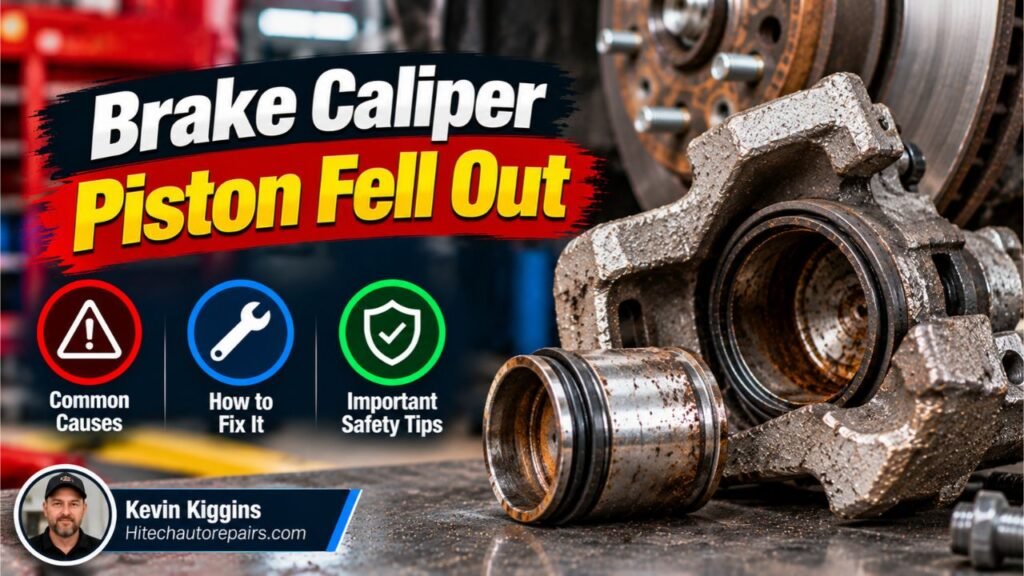
If the brake caliper piston fell out, do not press the brake pedal again. Keep dirt away from the exposed caliper bore, inspect the piston and seals for damage, and determine whether the caliper should be rebuilt or replaced.
The immediate steps are:
- Do not drive the vehicle.
- Do not press the brake pedal.
- Keep the caliper and piston clean.
- Check whether brake fluid has leaked out.
- Inspect the piston, bore, seal, and dust boot.
- Replace or properly rebuild the caliper if necessary.
- Reassemble the brake system.
- Refill and bleed the brake hydraulic system correctly.
- Verify normal braking before driving.
If you are not comfortable rebuilding hydraulic brake components, replacing the complete caliper or having a qualified technician perform the repair is usually the better choice.
Why Does a Brake Caliper Piston Fall Out?
The caliper piston normally remains inside the caliper bore while moving only a relatively short distance.
Several situations can allow it to travel too far.
Brake Pedal Was Pressed With the Caliper Removed
This is one of the most common causes.
If the caliper is removed from the rotor and brake pads, pressing the brake pedal can force the piston outward with nothing stopping it.
Repeated pedal presses can eventually push the piston completely out of the bore.
Brake Pads Were Extremely Worn
As brake pads wear, the piston gradually extends farther to keep the pads close to the rotor.
If the pads become severely worn or missing, the piston can move farther than intended.
In extreme cases, it may extend far enough to leak or come out.
Piston Was Overextended During Service
A piston can sometimes be pushed too far outward while cleaning or rebuilding a caliper.
Once it passes the internal pressure seal, brake fluid may leak and the piston may come free.
Caliper Corrosion
Heavy corrosion can damage the piston, bore, seal groove, or seal itself.
A badly deteriorated caliper may no longer retain or guide the piston properly.
Damaged Internal Seal
The caliper contains a square-cut piston seal that seals brake fluid and helps control piston movement.
If this seal is torn, improperly installed, or badly deteriorated, the piston may not operate correctly.
What Happens When the Caliper Piston Comes Out?
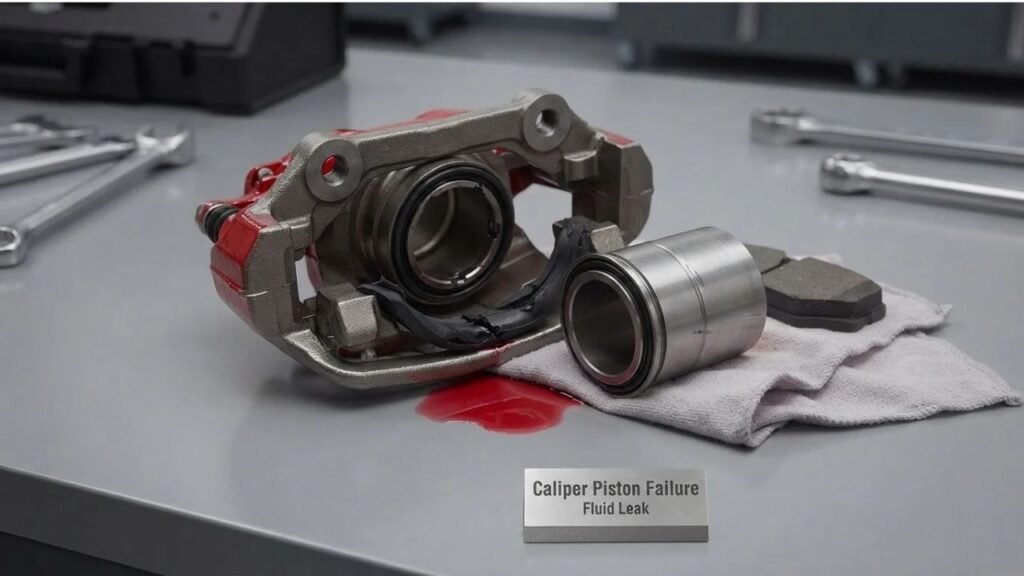
When the piston leaves the bore, the hydraulic brake system becomes open.
Brake fluid can escape through the caliper.
At the same time, air can enter the brake line.
This can cause:
- Loss of brake fluid
- Low brake-fluid reservoir level
- Soft brake pedal
- Brake pedal going toward the floor
- Reduced braking force
- Air trapped in the hydraulic system
Even if you reinstall the piston, the brake system will normally need to be bled before the vehicle is driven.
Can You Just Push the Brake Caliper Piston Back In?
You should not simply push a fallen piston back into the caliper without inspection.
The piston may have contacted dirt, concrete, tools, or other contaminated surfaces after falling out.
The seal or dust boot may also have been damaged as the piston passed through them.
Before reassembly, inspect for:
- Scratches
- Rust
- Pitting
- Dirt
- Torn rubber
- Damaged seal surfaces
- Corrosion inside the bore
Any defect that affects the hydraulic sealing surface can lead to a brake-fluid leak or piston sticking.
Can the Caliper Be Reused?
Possibly, but only if it is in good condition and rebuilt correctly.
A caliper may be rebuildable if:
- The piston is smooth and undamaged.
- The caliper bore is not severely corroded.
- The seal groove is clean.
- The correct new piston seal is installed.
- The dust boot is replaced if damaged.
- The caliper housing is structurally sound.
If there is uncertainty about the condition of the components, complete caliper replacement is usually the more reliable option.
When Should You Replace the Entire Brake Caliper?
Replacement is generally the better choice when there is visible damage or significant corrosion.
Replace the caliper if you find:
- Deep piston scoring
- Heavy piston rust
- Severe bore corrosion
- Damaged seal groove
- Cracked caliper housing
- Broken bleeder screw
- Stripped brake hose threads
- Heat damage
- Repeated piston sticking
- Brake fluid leakage after repair
Replacement calipers are widely available for many vehicles, including remanufactured calipers that have been professionally rebuilt.
What Parts Should Be Inspected?
When a piston falls out, inspect more than just the piston.
Brake Caliper Piston
The piston surface should be smooth where it passes through the seal.
Minor cosmetic marks away from the sealing area may not matter, but corrosion or scoring around the sealing surface can cause leaks.
Piston Seal
The internal hydraulic seal should be replaced during a proper rebuild.
Do not reuse a seal that has been damaged, twisted, hardened, or contaminated.
Dust Boot
The dust boot prevents dirt and moisture from reaching the piston.
A torn boot can allow corrosion to develop over time.
Caliper Bore
The inside of the caliper should be examined for corrosion, contamination, and damage.
A severely pitted bore may make rebuilding unreliable.
Brake Hose
Inspect the flexible brake hose for:
- Cracks
- Swelling
- Leaks
- Twisting
- Damaged fittings
The hose should not be stretched or allowed to support the weight of the caliper.
Brake Pads
If brake fluid leaked onto the pads, replacement may be necessary.
Brake friction material contaminated with brake fluid should not be trusted for normal service.
Brake Rotor
Inspect the rotor for:
- Heavy scoring
- Heat damage
- Cracks
- Excessive wear
If the piston came out because the pads were worn extremely thin, the rotor may also have been damaged.
Can You Rebuild a Brake Caliper After the Piston Fell Out?
Yes, some calipers can be rebuilt after the piston comes out.
A proper rebuild typically involves new sealing components and careful cleaning and inspection.
However, brake caliper rebuilding requires attention to cleanliness and correct assembly.
A small amount of dirt or damage on a sealing surface can create a leak.
For a beginner, replacing the complete caliper is often easier and less risky than rebuilding one.
What Should You Use to Lubricate the Piston?
Brake hydraulic components should only be assembled using materials compatible with the brake system.
Fresh brake fluid of the correct specification is commonly used to lubricate hydraulic seals during assembly.
Do not use general-purpose grease, petroleum oil, engine oil, or random lubricants on hydraulic piston seals.
Petroleum-based products can damage certain brake rubber components.
Always follow the vehicle or caliper manufacturer’s procedure.
Should You Clean the Piston Before Reinstalling It?
If a piston is being reused as part of a proper rebuild, it must be completely clean and free from damaging contamination.
However, simply wiping a dirty piston and pushing it back into the caliper is not a proper repair.
Dirt can damage the new seal and contaminate the brake fluid.
If the piston has substantial rust, pitting, or scoring, replacement is usually preferable.
Why Is Brake Fluid Leaking After the Piston Fell Out?
Once the piston moves beyond the hydraulic seal, there is nothing preventing brake fluid from escaping from the caliper bore.
The reservoir may drain surprisingly quickly if the brake line remains open.
If fluid continues leaking during repair, preventing the reservoir from running completely dry may reduce how much air enters the upstream hydraulic system.
However, the repaired system still needs proper bleeding.
Do You Need to Bleed the Brakes?
Yes, if the piston came completely out and brake fluid escaped, air has likely entered the hydraulic system.
The brakes need to be bled correctly after repair.
Brake bleeding removes trapped air.
Air compresses much more easily than brake fluid, so trapped air can cause:
- Spongy pedal feel
- Excessive pedal travel
- Poor braking response
The correct bleeding order and procedure vary by vehicle.
Some vehicles with ABS may require a specific procedure or scan-tool-assisted bleeding if air enters the ABS hydraulic unit.
What if the Brake Fluid Reservoir Went Empty?
If the master-cylinder reservoir became completely empty, air may have entered farther into the brake system.
This can make bleeding more complicated.
Air may enter:
- Master cylinder
- Brake lines
- ABS hydraulic control unit
Certain vehicles may require an ABS service procedure or diagnostic scan tool to fully remove trapped air.
If the brake pedal remains soft after normal bleeding, professional service may be necessary.
What if the Piston Fell Out but No Brake Fluid Leaked?
If the piston truly came completely out of the hydraulic bore, brake fluid would normally be able to escape.
If there is little visible fluid, the reservoir may already be low, the line may be blocked, or only part of the piston may have moved unusually far outward without fully leaving the seal.
Inspect the caliper carefully before assuming it is safe.
Rear Brake Caliper Pistons Are Sometimes Different
Rear brake calipers can be more complicated than front calipers.
Some rear calipers integrate the parking brake into the caliper.
Their pistons may need to be rotated while being pushed inward rather than simply compressed.
Newer vehicles may use an electronic parking brake, which can require service mode before retracting the piston.
Forcing these pistons with a standard clamp can damage the caliper or parking-brake mechanism.
Always confirm the correct procedure for your vehicle.
Can You Drive With the Piston Out?
No.
A vehicle should not be driven with a brake caliper piston out of position.
The affected brake may provide little or no braking force, and the system may lose brake fluid.
Even if other brakes appear to work, driving with an open hydraulic brake circuit is unsafe.
Repair the brake system before moving the vehicle under its own power.
What Happens if You Press the Brake Pedal Again?
Pressing the pedal with the piston out can pump additional brake fluid out of the caliper.
That can introduce more air into the system and potentially empty the master-cylinder reservoir.
Avoid pressing the pedal until the brake system has been repaired.
How to Prevent a Caliper Piston From Falling Out During Brake Work
The simplest prevention is to avoid pressing the brake pedal while a caliper is removed.
When working on brakes:
- Keep the caliper supported.
- Do not let it hang from the brake hose.
- Keep the piston inside the bore.
- Use the proper piston compression tool.
- Confirm rear-caliper procedures before retracting pistons.
- Keep helpers away from the brake pedal during service.
If you need to operate the brake pedal while the caliper is off, use an appropriate spacer or block between the piston and opposing side of the caliper to limit piston movement.
Common Mistakes After a Caliper Piston Falls Out
Reinstalling a Dirty Piston
Contamination can damage the new seal or brake fluid.
Reusing a Damaged Seal
A seal that was stretched, torn, or contaminated may leak.
Ignoring Piston Corrosion
A rusty piston may damage the seal and seize again.
Forgetting to Bleed the Brake System
Air left in the hydraulic system can severely reduce braking performance.
Contaminating the Brake Pads
Brake fluid on friction material can compromise braking.
Driving Before Checking Pedal Feel
Before the vehicle moves, the brake pedal should become firm and the hydraulic system should be checked carefully for leaks.
Brake Caliper Replacement vs. Rebuild
Choosing between rebuilding and replacing depends on the condition of the caliper and your repair experience.
| Condition | Rebuild May Be Possible | Replacement Usually Better |
| Piston clean and smooth | Yes | Optional |
| Light removable surface corrosion | Possibly | Often simpler |
| Deep piston pitting | No | Yes |
| Torn piston seal | Yes, with rebuild kit | Often |
| Cracked housing | No | Yes |
| Severe bore corrosion | No | Yes |
| Damaged bleeder threads | Usually no | Yes |
| Unknown internal condition | Possible | Often safer |
For most DIY owners, replacing a questionable caliper reduces uncertainty.
Safety Checks Before Driving After Repair
After the caliper has been properly repaired or replaced, several checks should be completed before driving.
Verify that:
- Brake fluid is at the correct level.
- No fittings are leaking.
- Bleeder screw is secure.
- Brake hose is not twisted.
- Caliper mounting bolts are properly tightened.
- Brake pads are installed correctly.
- Pedal feels firm.
- Parking brake functions properly if applicable.
- Wheel rotates normally without severe brake drag.
Start with a very low-speed brake check in a safe area before normal driving.
If the pedal feels soft, sinks, or braking feels uneven, stop and inspect the system again.
FAQs About Brake Caliper Piston Fell Out
Can I put a brake caliper piston back in after it falls out?
Possibly, but the piston and caliper should be properly inspected and rebuilt with suitable seals.
Simply pushing the piston back in without inspection is not recommended.
Does a piston falling out ruin the caliper?
Not automatically.
If the piston, bore, and caliper body are undamaged, the caliper may be rebuildable.
Severe corrosion, scoring, or structural damage usually makes replacement a better option.
Do I need a new piston seal?
If the piston came completely out, replacing the internal piston seal is the safer approach during a proper rebuild.
The existing seal may have been damaged or contaminated.
What if the piston fell onto the floor?
Do not immediately reinstall it.
Inspect it carefully for scratches, dents, dirt, or other contamination.
If the sealing surface is damaged, replace the piston or complete caliper.
Why did the piston pop out while changing brake pads?
The brake pedal may have been pressed while the caliper was removed, or the piston may have been extended too far.
Without the rotor and pads limiting piston travel, hydraulic pressure can push the piston out.
Do I have to bleed all four brakes?
That depends on how much air entered the system and the vehicle’s hydraulic layout.
At minimum, the opened circuit needs proper bleeding. If the reservoir ran dry or air reached the ABS unit, a more complete procedure may be necessary.
Can I clamp the brake hose to stop fluid loss?
Clamping a brake hose can damage its internal structure unless the hose and service procedure specifically allow it.
It is generally better to follow the vehicle manufacturer’s approved method for controlling fluid loss.
Can the piston come out because the brake pads are too thin?
Yes.
Extremely worn pads can allow the piston to extend much farther than normal.
Severe pad wear can also damage the rotor and other brake components.
Conclusion
If your brake caliper piston fell out, do not simply push it back in and continue driving. The piston, caliper bore, hydraulic seal, dust boot, brake pads, rotor, and brake hose should all be inspected before the brake system is put back into service.
A clean, undamaged caliper may sometimes be rebuilt with the correct seals, but a caliper with corrosion, scoring, leakage, or structural damage should usually be replaced.
Because the piston coming out allows brake fluid to escape and air to enter the hydraulic system, proper bleeding is required after repair. If the brake-fluid reservoir ran empty, the ABS system contains air, or you are uncertain about the caliper’s condition, professional brake service is the safest choice.