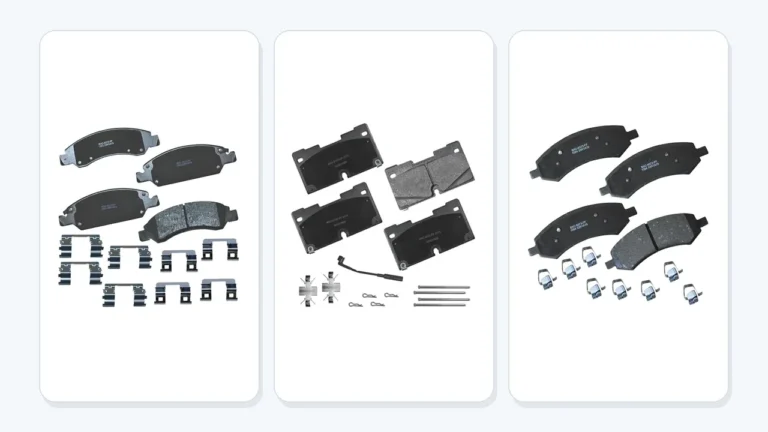
5 Best Brake Pads for Off Road Trails, Mud, Dust and Steep Grades
As an Amazon Associate, we earn from qualifying purchases made through links in this post, at no extra cost to you.
Buy the wrong brake pad and a steep trail can turn into a long, nervous descent. A poor fit may create noise, uneven braking, wasted installation time, or a return when the pad does not match your caliper.
The right choice depends first on fitment, then on how much heat and weight your vehicle creates. A Tacoma used on gravel roads has different needs from a lifted 4Runner descending a rocky grade, and both differ from an electric dirt bike.
Here is what this guide will help you sort out:
- How to confirm vehicle, axle, rotor, and caliper fit before ordering.
- Which pad materials and designs suit towing, mud, dust, and steep descents.
- How to bed new pads without creating uneven contact.
- What care habits help brake pads and rotors last longer.
Quick Picks
-
Best For Truck and SUV trails

PowerStop Z36 Truck & Tow Brake Pads
Carbon-fiber ceramic pads and included hardware support quieter, stronger braking for towing, hauling, and mountainous driving.
-
Best For Heavy loads and lifts

R1 Concepts Front Off-Road/Tow Brake Pads| Fits
Front pads designed for off-road, towing, lifted trucks, and bigger wheels suit drivers facing heat and added weight.
Top 5 Brake Pads for Off Road at a Glance
PowerStop and R1 Concepts deserve the first look from truck and SUV drivers who tow, carry loads, or run larger tires. The remaining choices are for specific passenger vehicles and electric dirt bikes, so exact fitment and riding style separate the group more than appearance does.
| Product image | Product name | Check product |
|---|---|---|
| 1 |
PowerStop Z36 Truck & Tow Brake Pads | Check Price |
| 2 |
R1 Concepts Front Off-Road/Tow Brake Pads| Fits | Check Price |
3 |
Bendix Premium SBC2019 Ceramic Front Brake Pads | Check Price |
4 |
SHIQINHA Brake Pads Front Rear for Surron | Check Price |
5 |
2 Packs Replacement Genuine Front and Rear | Check Price |
5 Best Brake Pads for Off Road: Detailed Reviews
When I chose the best brake pads for off road, I paid attention to fitment, heat control, pad material, vehicle weight, and the kind of terrain each set is meant to handle. Those details matter because a pad that fits poorly can waste an afternoon, while a pad aimed at light street use may feel out of place under towing or long downhill braking.
I kept the list broad enough to cover full-size trucks, SUVs, a small crossover, and electric dirt bikes. Reading the choices side by side helps you separate a true truck-and-tow pad from a standard replacement pad and from a compact e-bike part.
1. PowerStop Z36 Truck & Tow Brake Pads
Carbon-fiber ceramic pads and included hardware support quieter, stronger braking for towing, hauling, and mountainous driving.
- ColorStainless-Steel
- MaterialCarbon Fiber Ceramic
- Release Date2013-12-24T00:00:01Z
- Number Of Items1
PowerStop Z36 Pads are front brake pads for Toyota trucks and SUVs that need more support for towing, hauling, mountain roads, or lifted-truck use.
The main material is carbon-fiber ceramic, a friction compound that blends ceramic material with carbon fibers. That combination is intended to provide strong braking while keeping the pad quiet, which matters when a loaded truck is working hard on a rough road.
PowerStop Z36 Pads include installation hardware and are described as a direct-fit upgrade. Direct fit means the replacement is shaped for the original brake location rather than requiring a custom bracket, so the job should be more straightforward when the vehicle match is correct.
The Z36 design is aimed at reducing brake fade. Brake fade is the temporary loss of braking strength after repeated heat buildup, such as a long descent or repeated stops with a trailer behind the truck. That feature does not remove the need for safe downhill technique, but it fits drivers who regularly create more heat than ordinary commuting does.
PowerStop Z36 Pads are front pads, so they do not replace rear brake pads. Confirm the exact vehicle, axle, rotor, and caliper fit before ordering, even when the vehicle name appears in the title.
Pros:
- Carbon-fiber ceramic material, supports heavy-duty braking.
- Installation hardware included, simplifies a pad replacement.
- Designed for trucks and SUVs, suits larger vehicles.
- Built for towing and hauling, addresses added brake stress.
- Quiet operation claim, helps limit distracting brake noise.
Cons:
- Front application only, so rear pads need separate fitment.
- Vehicle confirmation remains necessary before purchase.
- A truck-and-tow compound may be more than a light commuter needs.
Buy it if: you drive a compatible Toyota truck or SUV on steep grades or while towing, because the carbon-fiber ceramic compound and included hardware suit added heat and load.
Skip it if: you need rear pads or drive a vehicle outside the listed fitments, because a correctly matched axle-specific brake pad would suit you better. For another fit, consider R1 or Bendix.
I’d pick PowerStop Z36 Pads for a compatible truck owner who wants the clearest heavy-use focus in this group. The material, hardware, and stated truck-and-tow purpose all point toward a practical upgrade path rather than a generic replacement. Double-check that your Tacoma, 4Runner, or Tundra has the exact front-brake configuration shown for the pad set.
This is the strongest starting point for towing, hauling, and mountain driving.
2. R1 Concepts Front Off-Road/Tow Brake Pads| Fits
Front pads designed for off-road, towing, lifted trucks, and bigger wheels suit drivers facing heat and added weight.
- SizeFront
- Number Of Items1
- LengthFits (verify fitment details with AmazonConfirmFit bar above): (2003-2009) Lexus GX470; (2010-2023) Lexus GX46
- WeightNot listed; check details
R1 Concepts Pads are front off-road and tow brake pads for several trucks and SUVs, including listed Toyota, Lexus, and Mitsubishi applications.
The biggest advantage here is the wide fitment range, but that also creates the biggest buying chore. The listing separates vehicles by year, trim, rotor size, wheel configuration, and caliper design, so a vehicle name alone is not enough to confirm compatibility.
R1 Concepts Pads are designed for off-road, towing, hauling, daily street driving, lifted trucks, and larger tires or wheels. A larger tire can increase the work required from the brakes, while extra cargo or a trailer adds more mass that must be slowed.
The pads are also described as supporting predictable braking under extreme heat and heavy loads. Predictable braking means the pedal response should remain easier to judge as conditions change, which is useful on loose surfaces where sudden inputs can upset traction.
This is a front set, and the listing mentions four pads. Check the vehicle year, trim, front rotor dimensions, and caliper casting details before purchase, especially for older Toyota applications.
Pros:
- Broad truck and SUV fitment list, covers many applications.
- Off-road and tow design, suits heat and added load.
- Supports lifted trucks, addresses larger tire demands.
- Front set includes four pads, covers the listed axle.
- Street and trail use, fits mixed driving schedules.
Cons:
- Long fitment list, makes checking details especially important.
- Front application only, not a complete vehicle brake job.
- Some applications depend on rotor or caliper differences.
Buy it if: you have a listed truck or SUV with larger tires, a lift, or towing duties, because the off-road and heavy-load design matches those demands.
Skip it if: you want a simple commuter replacement with no fitment research, because a narrower vehicle-specific pad listing would suit you better. Powerstop and Bendix are worth a closer look instead.
R1 Concepts Pads earn second place because they cover an unusually wide range of off-road and tow situations. I like the attention to lifted vehicles, bigger wheels, and caliper differences, since those are easy details for a beginner to miss. Check the pad length, rotor size, and casting information on the vehicle before ordering.
Pick this set when your truck or SUV lives between daily roads and real trail work.
3. Bendix Premium SBC2019 Ceramic Front Brake Pads
The catalog lists OE REPLACEMENT: Designed and engineered to OE specifications for fit, form, and function. Compare fit and care needs before choosing.
- ColorMetallic
- Number Of Items1
- DURABLE MATERIALManufactured using high-quality materials, these brake pads are resistant to wear and corrosion, extending their li
- WeightNot listed; check details
Bendix SBC2019 Pads are front ceramic replacement pads for 2018 through 2022 Buick Encore and Chevrolet Trax vehicles.
The pads are designed to original-equipment specifications for fit, form, and function. Original-equipment specifications mean the replacement is intended to follow the dimensions and operating role of the factory pad, which can make sense for a small crossover used mostly on paved roads.
The ceramic construction is described as helping reduce brake fade and provide consistent braking. Consistent braking is useful in stop-and-go traffic or on a short gravel access road, but this listing does not describe the same truck, towing, or lifted-vehicle focus as the first two choices.
Bendix SBC2019 Pads are also described as resistant to wear and corrosion. That may help with ordinary exposure to moisture and road grime, although no pad should be treated as maintenance-free after mud, salt, or water crossings.
The main limitation is application. These pads are for the listed Buick Encore and Chevrolet Trax years, and they are front pads, so they are not a broad off-road answer for a truck or dirt bike.
Pros:
- Ceramic construction, supports consistent everyday braking.
- OE-specification design, aims for factory-style fit.
- Front application for listed Encore and Trax vehicles.
- Wear and corrosion resistance claim, suits regular road exposure.
- Fade-reduction design, helps during repeated routine stops.
Cons:
- Narrow vehicle fitment, not intended for trucks or dirt bikes.
- Front pads only, does not cover the rear axle.
- Less trail-focused information than the truck-oriented choices.
Buy it if: you own a compatible Buick Encore or Chevrolet Trax and need front replacements for mixed street and light gravel use, because the OE-style ceramic design fits that role.
Skip it if: your vehicle tows, carries heavy loads, or runs large tires on steep trails, because a heavier-use truck pad would suit you better. If those trade-offs rule it out, Powerstop or R1 may suit you better.
Bendix SBC2019 Pads make sense as the focused choice for a small crossover rather than as a universal trail upgrade. The OE-style design may be reassuring for routine driving, and the application is clear when your vehicle matches. Check the model year and front-axle fit before buying, since the narrow application leaves little room for guesswork.
Choose this set when your off-road use is occasional and your Encore or Trax remains primarily a road vehicle.
4. SHIQINHA Brake Pads Front Rear for Surron
The catalog lists Fitment: This disc brake pads for dirt e-bike are compatible with Surron Light Bee X and S, Talaria Sting MX3 . Compare fit and care needs before choosing.
- ColorGold
- Size6 Pairs
- Number Of Items6
- WeightNot listed; check details
SHIQINHA E-Bike Pads are compact replacement disc brake pads for several electric dirt bikes, including Surron, Talaria, Segway, 79bike, Rawrr, and E-Ride Pro applications.
The pads use a metal construction with strong deformation resistance described in the listing. Metal pads are made for the tight caliper space found on many small disc brake systems, and resistance to bending matters because a pad must stay aligned with the rotor during braking.
Guide pins are included for quick installation, and the listing says no special tools are required. Guide pins are small locating parts that help hold the pad in the caliper, so correct pin placement can make a short replacement job less frustrating.
The package includes six pairs of pads and six cotter pins. That larger quantity may be useful for riders who maintain more than one bike or want replacements on hand, but it also means checking storage and exact fit before treating the pack as a universal supply.
SHIQINHA E-Bike Pads are not truck or SUV brake pads. Their high-friction design is aimed at electric dirt-bike braking, and a rider should confirm the bike model, caliper shape, pad outline, and retaining hardware before installation.
Pros:
- Metal construction, supports firm caliper alignment.
- Six pairs included, provides multiple replacement sets.
- Cotter pins included, helps complete the hardware change.
- Guide-pin design, supports a quick replacement process.
- Broad electric dirt-bike fitment, covers several listed brands.
Cons:
- E-bike application only, not suitable for vehicle brake calipers.
- Large pack may exceed the needs of one casual rider.
- Exact bike and caliper matching remains necessary.
Buy it if: you maintain a listed electric dirt bike and want multiple replacement sets, because the metal pads, guide pins, and included cotter pins support repeated service.
Skip it if: you need pads for a car, truck, or SUV, because an automotive brake pad with the correct caliper dimensions would suit you better.
SHIQINHA E-Bike Pads rank here because the pack is practical for riders who wear through pads on dusty or steep trails. The six-pair quantity and included cotter pins reduce the chance of running out during regular maintenance. Confirm the exact bike and compare the old pad shape before installing anything.
This set suits an e-bike owner who wants spares more than a single emergency replacement.
5. 2 Packs Replacement Genuine Front and Rear
The catalog lists Perfect Fit: These front and rear tub brake pads are specifically designed for Sur Ron Light Bee X/S, Segway X. Compare fit and care needs before choosing.
- Size2 Pack
- Number Of Items2
- WeightNot listed; check details
- DimensionsNot listed; check details
Sur Ron Replacement Pads are front and rear replacement pads for listed Sur Ron, Talaria, and Segway electric off-road bikes.
The pads use a friction-enhancing surface texture. Friction is the grip between the pad and rotor that turns moving energy into braking, so a consistent surface can help the lever produce a predictable response during a descent or sudden stop.
The construction combines copper fibers and alloy steel, according to the listing. Copper fibers are used in brake friction material to help manage heat and contact, while alloy steel forms part of the durable backing structure described for these pads.
The package includes two pieces for front and rear replacement, with metal pins for installation. The pins help hold the pads in place, but the rider still needs to remove the correct retaining parts and confirm that the new pads sit flat without touching the rotor at an angle.
These pads are specifically for electric off-road bikes, not full-size vehicles. The listing also asks buyers to verify the size and model number, which is good advice for a small part where a slightly different shape can prevent installation.
Pros:
- Front and rear coverage, supports a complete bike refresh.
- Copper fibers and alloy steel, suit heat and rough riding.
- Friction-enhancing surface, supports consistent braking response.
- Metal pins included, helps with installation.
- Listed fitment for several electric bike families.
Cons:
- Two-piece package, offers fewer spare sets than rank four.
- E-bike-specific design, cannot replace truck brake pads.
- Size and model confirmation remains essential before ordering.
Buy it if: you ride a listed Sur Ron, Talaria, or Segway bike and need front and rear replacements, because the package is designed for both ends of the bike.
Skip it if: you only need a different caliper shape or a larger stock of spare pads, because a matching pad pack with the right quantity would suit you better.
I’d choose Sur Ron Replacement Pads for a rider who wants front and rear coverage in one purchase. The copper-fiber and alloy-steel description gives the set a clear rough-trail purpose, while the metal pins keep the installation plan simple. Verify the exact bike version and pad shape before ordering, since electric-bike brake parts can vary across closely related names.
This is the sensible choice for a listed e-bike needing both ends serviced.
How to Choose the Best Brake Pads for Off Road
The best brake pads for off road match the vehicle, axle, caliper, rotor, weight, and heat level before material or marketing claims enter the decision. Start with fitment, then choose a compound suited to how often you tow, descend, ride through mud, or brake hard.
Start with exact fitment
Fitment means the pad physically matches the caliper and rotor on your vehicle. Check the year, make, model, trim, axle, rotor diameter, caliper casting, and wheel configuration instead of relying only on a familiar vehicle name.
A truck may use different front pads across trims or production years. A 4Runner application can also change with rotor size or a sport package, while an e-bike may change pad shape between two similar-looking versions.
The right sign is a confirmed match across the seller fit tool, vehicle manual, and the old pad shape. If those details disagree, pause the order and ask a qualified parts counter or mechanic to identify the pad.
Decide how much heat you create
Heat comes from repeated braking, vehicle weight, trailer weight, speed changes, and long descents. A driver who uses a truck on flat pavement creates less heat than someone towing down a mountain grade.
Truck-and-tow pads are designed around greater stress than ordinary commuter pads. A heavy-duty choice may be sensible for hauling, but an aggressive compound can be unnecessary for a small crossover used on occasional gravel roads.
Look at your actual routine. If you frequently tow, carry tools, descend steep roads, or run large tires, favor a pad with a clear heat and heavy-load purpose.
Match the pad material to the job
Brake pad material affects noise, dust, heat behavior, rotor contact, and feel. Ceramic compounds are often chosen for quiet everyday braking, while metal-containing compounds may suit high-heat or dirt-bike applications.
Material names do not replace fitment or a complete brake inspection. A carbon-fiber ceramic pad can still be wrong if the axle or caliper does not match, and a metal e-bike pad cannot be used in a truck caliper.
Look for a material description tied to your use rather than a vague promise. The useful question is whether the compound is aimed at daily driving, towing, steep grades, or electric dirt-bike service.
Consider vehicle weight and tire size
More mass requires more braking work. Larger tires can also change the demands placed on the brake system, especially on lifted trucks and SUVs.
A stock small crossover usually does not need the same pad category as a loaded pickup. A lifted truck with bigger wheels may need closer attention to rotor condition, caliper health, and the entire brake setup instead of pads alone.
If the vehicle regularly carries passengers, tools, camping gear, or a trailer, select a pad with a stated heavy-load purpose. Do not assume a thicker-looking pad solves an undersized rotor or worn caliper.
Check front and rear coverage
Front and rear pads are not automatically interchangeable. The front axle often handles a larger share of braking force, but both axles need correct parts for balanced stopping.
Read whether the package covers one axle, front and rear, one pair, four pads, or multiple replacement sets. PowerStop Z36 Pads and R1 Concepts Pads are front applications, while the Sur Ron Replacement Pads listing describes front and rear coverage.
The right package is the one that matches the repair plan. Buying a front set when the rear pads are worn only delays the second job.
Inspect the rotors and hardware
New pads work against the rotor, so the rotor must be within safe condition. Deep grooves, blue heat marks, a large outer lip, cracks, or severe rust can prevent new pads from working as intended.
Hardware includes clips, pins, shims, and retaining parts that keep the pad aligned. If the package includes hardware, confirm that the hardware matches the caliper rather than assuming every clip fits every application.
Drivers comparing truck brake pad options should also inspect trailer weight, rotor condition, and the vehicle’s complete brake system, not only the friction material. A suitable pad cannot correct a seized caliper, leaking brake hose, or badly worn rotor.
Account for larger tires and lifted vehicles
A lifted truck with larger tires may need more careful brake planning because the wheel and tire package changes the load and operating conditions. Pad fitment still comes first, but tire size and vehicle weight help determine how much heat the brakes must manage.
Drivers researching Jeep Wrangler brake pads should check axle details, wheel size, tire weight, and whether the vehicle carries trail gear. Those details can matter as much as the pad name when the vehicle spends time on steep grades.
A brake shop can check pedal feel, caliper movement, rotor thickness, and brake-fluid condition when the setup has been heavily modified. That inspection is often smarter than treating pads as an isolated upgrade.
How to Use Brake Pads for the Best Results
New brake pads need correct installation and a controlled bedding process before demanding trail work. Keep braking smooth at first, watch for warning signs, and avoid a long steep descent immediately after installation.
- Confirm the axle and pad shape before removing the old set.
- Photograph the caliper and hardware so clips and pins return to their original positions.
- Inspect the rotor for cracks, deep grooves, blue heat marks, and heavy corrosion.
- Clean the caliper contact points without forcing dirt into the piston or seal.
- Install the pads flat, with clips and pins seated correctly.
- Pump the brake pedal or lever before moving until firm pressure returns.
- Bed the pads with several moderate stops in a safe area, following the pad maker’s instructions when available.
- Let the brakes cool before a demanding trail, trailer pull, or steep descent.
Bedding transfers a controlled layer of friction material onto the rotor. Hard repeated stops from high speed can overheat new pads before the contact surfaces are even, so a gradual process is kinder to both pads and rotors.
After the first drive, check for pulling, grinding, a soft pedal, unusual vibration, or a wheel that becomes much hotter than the others. Stop using the vehicle if braking feels unsafe and have the system inspected.
For electric dirt bikes, test the front and rear levers at walking speed before riding rough terrain. Make sure the pad pins are secure, the wheel spins without severe rubbing, and the lever returns normally.
How to Make Your Brake Pads Last Longer
Brake pads last longer when the system stays clean, the vehicle is not overloaded, and braking technique avoids unnecessary heat. Regular inspection matters more than trying to stretch a worn pad past its safe limit.
Inspect pad thickness at each tire rotation, oil change, or trail-preparation session. A mechanic should check the pads sooner if you hear grinding, feel vibration, notice pulling, or see a warning light.
Wash mud and grit from the caliper area after dirty rides, using a method safe for the vehicle and brake components. Do not spray oily lubricant on the rotor, pad surface, or caliper friction area.
Use a lower gear on long descents where the vehicle allows it. Engine braking or controlled speed reduction reduces the amount of work the friction pads must do, but it does not replace careful brake use.
Avoid carrying more weight than the vehicle or trailer is rated to handle. Extra mass increases stopping distance and heat, even when the brake pads are new.
Store e-bikes in a dry area and keep the rotor away from chain lubricant, suspension grease, and cleaning products. A contaminated pad may squeal or lose braking strength, and cleaning alone may not restore the friction surface.
Replace pads as an axle set unless a qualified technician gives a specific reason to do otherwise. Matching friction material on both sides helps keep braking balanced and reduces the chance of one wheel doing more work.
Common Mistakes to Avoid When Buying and Using Brake Pads
Most brake-pad trouble starts with a fitment shortcut, a rushed installation, or too much heat too soon. These mistakes are easy to prevent with a few minutes of checking.
- Ordering by vehicle name only: Similar trims may use different rotors or calipers. Check the year, axle, rotor, and application details.
- Ignoring front or rear coverage: A front set does not replace rear pads. Confirm which axle the package serves before ordering.
- Choosing the most aggressive material automatically: More severe use does not make every heavy-duty compound right for a commuter. Match the compound to weight, heat, and terrain.
- Skipping rotor inspection: New pads cannot fix a cracked, deeply grooved, or badly heat-damaged rotor. Inspect the rotor before installation.
- Reusing damaged clips and pins: Weak hardware can let pads move or sit incorrectly. Replace worn retaining parts when the application requires them.
- Riding hard immediately after installation: Fresh pads need even contact with the rotor. Bed them gradually in a safe place before demanding trail use.
- Using lubricant near the friction surfaces: Oil or grease can contaminate the pad and rotor. Keep all slippery products away from the braking surfaces.
Heavy-load truck owners can also review heavy-duty truck pad guidance before choosing a compound. The useful comparison is not simply which pad sounds strongest, but which pad matches the truck’s weight, trailer use, rotor condition, and driving environment.
How to Set Up Brake Pads
Brake-pad setup is manageable for a prepared home mechanic, but braking is a safety system. Use the vehicle service procedure, proper support stands, eye protection, and a qualified technician if any step feels uncertain.
- Park on a level surface, set the parking brake, and secure the wheels.
- Confirm the replacement pad shape and axle before lifting the vehicle.
- Support the vehicle with stands rated for its weight, never only a jack.
- Remove the wheel and photograph the original clip, pin, and pad arrangement.
- Inspect the rotor, caliper, hose, piston, and contact surfaces for damage or leaks.
- Retract the caliper piston using the correct method for that brake design, watching the fluid reservoir for overflow.
- Install the new pads and hardware so every retaining part sits fully in place.
- Refit the wheel, tighten fasteners to the vehicle’s specified torque, and press the pedal or lever until firm.
A common stumbling point is installing the inner and outer pads in the wrong positions. Compare the new parts with the removed pads before fitting them, and stop if the pad does not sit flat or the retaining pin does not align naturally.
Another common problem is forgetting to pump the pedal after the caliper piston is pushed back. The first pedal movement may travel farther than expected, so do not drive until the brake feels firm and the wheel area has been checked.
For a dirt e-bike, support the bike securely, remove the retaining pin, slide out the old pads, clean the caliper area, and fit the new pads in the same orientation. Test both levers at low speed before entering a trail.
Common Questions About Brake Pads for Off Road
Are ceramic brake pads good for off-road driving?
Ceramic brake pads can suit off-road driving when the compound and application match the vehicle. They may offer quiet operation and consistent everyday braking, while truck-and-tow versions are aimed at greater heat and load. Confirm the pad’s vehicle fitment and stated use before choosing ceramic material.
How often should off-road brake pads be replaced?
Replace brake pads when the friction material reaches the vehicle maker’s service limit or when damage, contamination, grinding, or unsafe braking appears. Trail dust, mud, towing, steep descents, and heavy loads can speed wear. Inspect the pads regularly instead of relying on a fixed mileage number.
Do bigger tires require stronger brake pads?
Bigger tires can increase the work required from a truck or SUV, especially when the tire and wheel package adds weight. Stronger pads alone may not solve the full issue, so inspect rotors, calipers, brake hoses, and overall vehicle setup. Confirm that the chosen pad fits the original brake hardware.
Can I use truck brake pads on an electric dirt bike?
You cannot use truck brake pads on an electric dirt bike unless the exact brake system was designed for that part, which is unusual. Automotive pads and e-bike pads have different shapes, caliper dimensions, retaining hardware, and applications. Match the bike model and old pad shape instead.
Do new brake pads need to be bedded?
New brake pads should normally be bedded with controlled stops before hard trail riding. Bedding helps create even contact between pad and rotor, which supports predictable braking and reduces the risk of uneven deposits. Follow the maker’s procedure when one is supplied and allow the brakes to cool afterward.
Should I replace rotors with brake pads?
Replace rotors when they are cracked, below the service thickness, deeply grooved, badly corroded, or heat damaged. Sound rotors may remain in service after inspection, but new pads still need a clean, suitable contact surface. A brake technician can measure the rotor when its condition is unclear.
Choose the Pad That Matches Your Actual Trail Load
Start by writing down the vehicle or e-bike model, year, axle, rotor details, and the kind of riding you do. Then inspect the current pads and rotors before ordering, and choose a set whose material and heat purpose match your real load rather than the toughest-sounding label.