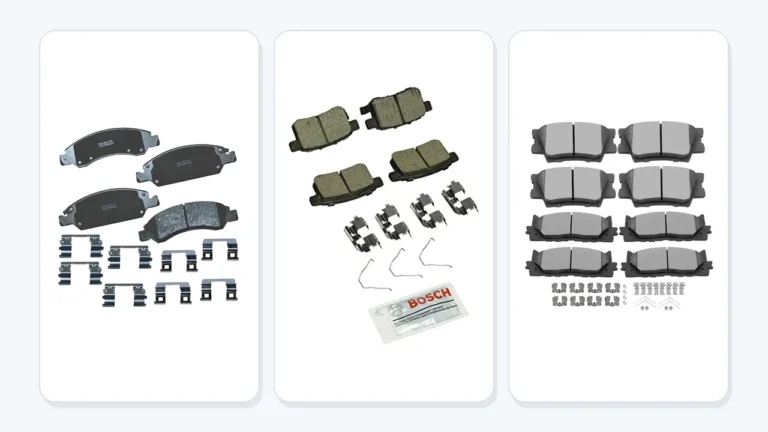
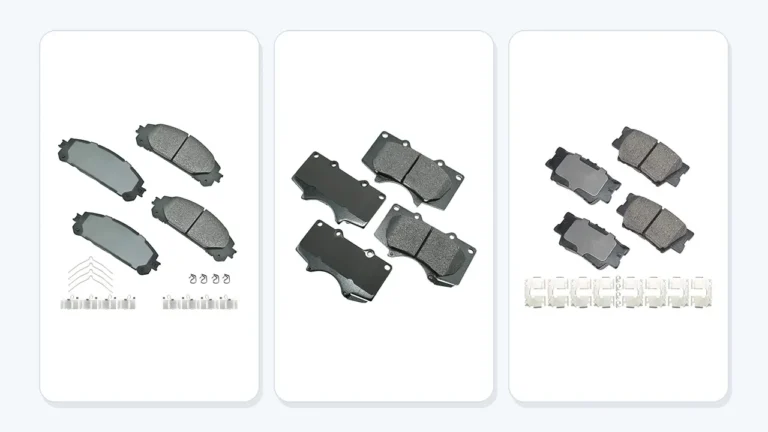
5 Best Brake Pads for Lifted Trucks Running Big Tires and Wheels
As an Amazon Associate, we earn from qualifying purchases made through links in this post, at no extra cost to you.
Buy the wrong brake pads and a lifted truck can feel nervous every time you slow down. Bigger tires, heavier wheels, towing weight, and mountain grades can make stopping feel weaker, create more heat, or force you to redo the job after the first poor fit.
A lifted truck needs more than a pad that simply fits inside the caliper. The pad material, correct front or rear position, included hardware, and exact vehicle match all affect how confidently the truck slows down and how much work the replacement creates.
Here’s what this guide helps you sort out:
- How lift height, tire size, and extra wheel weight change brake demands.
- Why carbon-fiber ceramic pads can suit towing, hauling, hills, and daily driving.
- How to confirm front or rear fitment before removing a wheel.
- What bedding, cleaning, and inspection steps help new pads work properly.
Quick Picks
-
Best For Heavy-Duty Ram Front Brakes

PowerStop Z36 Truck & Tow Brake Pads
Carbon-fiber ceramic pads and included hardware support quieter, stronger braking for lifted Ram trucks that tow or haul.
-
Best For Lifted Chevy Front Brakes
PowerStop Z36 Truck & Tow Brake Pads 896Y
Carbon-fiber ceramic construction helps manage heat and added load for lifted Silverado, Tahoe, and Yukon front brakes.
Top 5 Brake Pads for Lifted Trucks at a Glance
Start with the front or rear pad that matches your exact truck, not simply the brand or lift kit. The biggest differences here are vehicle fitment, axle position, included hardware, and whether the listing describes a front or rear application.
| Product image | Product name | Check product |
|---|---|---|
| 1 |
PowerStop Z36 Truck & Tow Brake Pads | Check Price |
| 2 |
PowerStop Z36 Truck & Tow Brake Pads 896Y | Check Price |
| 3 |
PowerStop Z36 Truck & Tow Brake Pads PH98 | Check Price |
4 |
PowerStop Evolution Truck & Tow Z36 Brake | Check Price |
| 5 |
PowerStop Z36 Truck & Tow Brake Pads 8JHM | Check Price |
5 Best Brake Pads for Lifted Trucks: Detailed Reviews
When I chose the best brake pads for lifted trucks, I paid attention to the friction material, axle position, included hardware, and stated truck use. Those details matter because added tire weight and repeated heat can expose a weak match long before a normal commuter notices a problem.
I kept the choices focused on front and rear applications for full-size trucks and SUVs, with several options for Ram and Chevy-family vehicles. Looking at the group side by side helps you avoid the classic mistake of buying a rear set for a front axle or trusting a broad vehicle name without checking the exact year, engine, trim, and brake configuration.
1. PowerStop Z36 Truck & Tow Brake Pads
Carbon-fiber ceramic pads and included hardware support quieter, stronger braking for lifted Ram trucks that tow or haul.
- ColorStainless-Steel
- Pad TypeCarbon Fiber Ceramic
- PositionFront
- Number Of Items1
PowerStop Ram Front is a front brake pad set for Dodge Ram 2500 and Ram 3500 applications, aimed at drivers who tow, haul, travel on steep roads, or run a lifted truck.
Carbon-fiber ceramic friction material
The carbon-fiber ceramic compound is the material pressed against the rotor to create friction. Carbon fiber adds a heavy-duty angle to the ceramic mixture, while ceramic material is generally chosen for controlled braking and lower noise than some harsher pad types.
For a lifted Ram, that matters because larger tires and wheels can place more demand on the braking system. The listing describes this set as built for towing, hauling, mountainous driving, and lifted trucks, so the intended use lines up with the kind of extra load that makes ordinary replacement pads feel out of their depth.
The pad material does not turn a stock brake system into a race setup. It still works within the limits of the truck’s rotors, calipers, hydraulic system, tires, and suspension, so worn or undersized parts elsewhere can limit the result.
Front position and included hardware
These pads are for the front axle, the end of the truck that usually handles much of the braking work during a stop. The set includes two carbon-fiber ceramic brake pads and installation hardware, which can reduce the need to reuse old clips or search for separate fitting pieces.
Fresh hardware can help the pads sit and move correctly in the caliper bracket. That matters for a beginner because rusty or tired clips can make a new brake job harder, create uneven wear, or leave the pads dragging instead of releasing cleanly.
PowerStop describes the design as a direct-fit upgrade, but direct fit still depends on the exact truck configuration. Use the vehicle fit checker and compare the old pad shape before ordering, especially if the Ram has factory brake variations or aftermarket changes.
Pros:
- Carbon-fiber ceramic material supports heavy truck braking.
- Front-axle design targets Ram 2500 and 3500 applications.
- Installation hardware is included with the pad set.
- Intended use includes towing, hauling, and lifted trucks.
- The listing describes reduced brake fade under added stress.
Cons:
- Front pads do not replace the rear axle set.
- Exact Dodge Ram fitment still needs confirmation.
- Results depend on rotor, caliper, tire, and hydraulic condition.
Buy it if: you drive a lifted Dodge Ram 2500 or 3500, because the carbon-fiber ceramic material and included hardware suit heavy front-brake work.
Skip it if: you need rear pads or drive a different vehicle family, because this front Ram application will not solve the axle or fitment mismatch, and a correctly matched rear or vehicle-specific pad set would suit you better. For another fit, consider PowerStop Z36 Truck & Tow Brake or PowerStop Z36 Truck & Tow Brake.
I’d pick this PowerStop Ram Front set first for a lifted Ram owner who wants a straightforward front upgrade aimed at real truck duty. The heavy-duty use description is more useful here than a vague promise about performance, since towing and steep grades are named concerns. Double-check the exact year, brake package, and front axle before buying.
This set makes the most sense for a Ram 2500 or 3500 that carries weight rather than spends its life empty on flat streets.
2. PowerStop Z36 Truck & Tow Brake Pads 896Y
Carbon-fiber ceramic construction helps manage heat and added load for lifted Silverado, Tahoe, and Yukon front brakes.
- ColorStainless-Steel
- Pad TypeCarbon Fiber Ceramic
- PositionFront
- Number Of Items1
PowerStop Chevy Front is a front pad set for listed Chevy Silverado 1500, Chevy Tahoe, and GMC Yukon applications, making it a natural fit for a lifted half-ton truck or SUV owner who wants a heavier-duty pad compound.
A pad compound for added heat
The carbon-fiber ceramic friction material is the working surface that grips the rotor when you press the brake pedal. The listing connects this compound with increased stopping power, quiet operation, long-lasting braking performance, and reduced fade during towing, hauling, mountain driving, and lifted-truck use.
Brake fade means braking force can drop after repeated hard stops or long downhill use because heat builds faster than the system can shed it. A pad intended for those conditions can be a sensible choice for a lifted Chevy, though the complete brake system still needs healthy rotors and proper hydraulic pressure.
The material is not a substitute for correct tire pressure or safe following distance. Larger tires may change the feel of the pedal and the distance needed to stop, so the driver still has to allow more room when the truck is loaded.
Front application with fitting hardware
PowerStop Chevy Front is designed for the front axle and includes two brake pads plus installation hardware. The hardware matters because the clips and related pieces help guide the pads in the bracket and keep movement controlled as the brakes release.
The direct-fit description can make the job simpler, but the vehicle list covers more than one body style. A Silverado 1500, Tahoe, and Yukon can have differences based on year and brake package, so a beginner should use the vehicle confirmation tool and compare the current pad before ordering.
This set shares the same general Z36 Truck & Tow purpose as the first choice, so the deciding factor is not a dramatic material difference. The real choice is whether the exact front application matches your Chevy or GMC, and whether the truck needs front pads rather than rear pads.
Pros:
- Carbon-fiber ceramic material suits heavy truck applications.
- Front fitment covers listed Chevy and GMC vehicles.
- Hardware is included for the installation.
- The design targets towing, hauling, hills, and lifted use.
- The listing describes quiet braking performance.
Cons:
- It is not a complete front-and-rear brake service.
- Year and brake-package confirmation remain necessary.
- Larger tires can still lengthen stopping distance.
Buy it if: you have a lifted Silverado 1500, Tahoe, or Yukon with matching front fitment, because the heavy-duty compound is aimed at added heat and load.
Skip it if: your vehicle requires rear pads or a different front shape, because the Chevy-family name alone cannot confirm the axle and brake package, and a precisely matched application would suit you better. PowerStop Z36 Truck & Tow Brake and PowerStop Z36 Truck & Tow Brake are worth a closer look instead.
What I like about PowerStop Chevy Front is the clear use case for a lifted Chevy or GMC that works harder than a stock commuter. The material, front position, and included hardware give a beginner a sensible starting point without adding unrelated parts to the job. The hesitation is fitment, since Silverado, Tahoe, and Yukon applications can vary.
Pick this set when the exact front brake match is confirmed and the truck regularly sees cargo, towing, or hills.
3. PowerStop Z36 Truck & Tow Brake Pads PH98
The catalog lists PLEASE CONFIRM YOUR FITMENT: Using the Amazon Confirmed Fit bar at the top of the page or check the Product De. Compare fit and care needs before choosing.
- Pad TypeCarbon Fiber Ceramic
- PositionRear
- Number Of Items1
- UPGRADED STOPPING POWERCarbon-fiber ceramic Truck & Tow Z36 brake pads deliver increased stopping power compared to OE replacement brake p
PowerStop Ram Rear is a rear brake pad set for listed Ram 1500, Jeep Wagoneer, and Jeep Grand Wagoneer applications, suited to a driver replacing the rear axle on a newer Ram-family vehicle.
Rear-axle coverage
Rear brake pads work inside the calipers at the back of the truck and help control the vehicle after weight shifts forward during braking. This set is specifically described as a rear application, so the most important feature is the axle match rather than the product name alone.
Buying the correct rear set prevents a common beginner error: ordering a front pad because the truck name looks familiar. Front and rear pads can have different shapes, backing plates, and contact areas, even on the same vehicle.
The listing names Ram 1500, Jeep Wagoneer, and Jeep Grand Wagoneer applications. That broad coverage makes the fit checker especially important, since model year, trim, and brake package can change the correct replacement.
Carbon-fiber ceramic material and hardware
This rear set uses carbon-fiber ceramic pads, a friction material intended to handle truck and SUV use while keeping noise controlled. The listing connects the Z36 compound with increased stopping power, long-lasting braking, and reduced fade for towing, hauling, mountainous driving, and lifted trucks.
The set includes two pads and installation hardware. New clips can help the rear pads move properly in their brackets, though the hardware supplied here does not mean every surrounding brake part is automatically ready for reuse.
Rear pads do not carry the entire stopping load by themselves. A lifted truck still needs sound front brakes, good rotors, properly adjusted components where applicable, and tires that can hold the road.
Pros:
- Rear position is clearly identified for the listed vehicles.
- Carbon-fiber ceramic material suits truck and SUV use.
- Installation hardware is included.
- The compound is intended to reduce brake fade.
- Ram 1500 and Jeep-family applications are listed.
Cons:
- This set does not cover the front axle.
- Exact year and trim fitment require confirmation.
- The warranty listing differs from the front applications.
Buy it if: you need rear pads for a matching Ram 1500, Wagoneer, or Grand Wagoneer, because the rear-specific design and included hardware fit that maintenance job.
Skip it if: your truck needs front pads or uses a different rear brake package, because rear axle coverage cannot correct a front or configuration mismatch, and a properly matched axle set would suit you better. If those trade-offs rule it out, PowerStop Z36 Truck & Tow Brake or PowerStop Z36 Truck & Tow Brake may suit you better.
I’d choose PowerStop Ram Rear when the rear axle is the part that actually needs service and the vehicle confirmation matches. The carbon-fiber ceramic compound gives the rear brakes the same general heavy-duty purpose as the front choices, while the position keeps the recommendation honest. Check the rear pad shape and exact year before placing the order.
This is the useful choice for a Ram-family owner who needs rear coverage, not a shortcut for replacing every brake pad on the truck.
4. PowerStop Evolution Truck & Tow Z36 Brake
The catalog lists PLEASE CONFIRM YOUR FITMENT: Using the Amazon Confirmed Fit bar at the top of the page or check the Product De. Compare fit and care needs before choosing.
- ColorMetallic
- SizeStock
- Pad TypeCarbon Fiber Ceramic
- Number Of Items1
PowerStop Ram Heavy Duty is a front pad set for listed Ram 3500 and Ram 2500 applications, with a Mercedes-Benz GLC43 AMG application also named in the vehicle information.
Front pads for heavy truck use
These pads sit on the front axle and press against the rotors when the brake pedal is applied. The front position matters because front brakes usually do much of the work during a stop, especially as the truck’s weight moves forward.
The carbon-fiber ceramic compound is described for trucks, SUVs, 4×4 vehicles, towing, hauling, mountain driving, and lifted trucks. That makes the set relevant to a heavy-duty Ram that carries a large load or runs larger wheels, provided the vehicle match is exact.
A pad can be appropriate for heavy use and still be wrong for a particular caliper. The listing itself warns that fitment must be confirmed, and the unusual mix of Ram and Mercedes-Benz applications makes that check especially important.
Hardware and direct-fit design
The package includes two pads and installation hardware. Hardware helps the pads sit in the bracket and can make replacement less frustrating when the old clips are worn, bent, or corroded.
The direct-fit description means the pad is intended to replace the original shape without a custom fabrication step. It does not mean the pad will fit every Ram 2500 or Ram 3500, because brake packages can change across model years and configurations.
This set is listed with a metallic color and stock size. Those details may help identify the package, but they should not replace the vehicle fit check or a comparison with the pad already installed.
Pros:
- Front position fits the listed heavy-duty applications.
- Carbon-fiber ceramic material targets truck heat and load.
- Installation hardware comes with the set.
- Stock size is listed for this package.
- The design is described as a direct-fit upgrade.
Cons:
- The vehicle list needs careful reading before purchase.
- Front pads do not complete rear brake service.
- Stock size may not describe an aftermarket brake conversion.
Buy it if: you have a matching Ram 2500 or Ram 3500 front brake application, because the stock-size carbon-fiber ceramic set is aimed at heavy truck use.
Skip it if: your truck has an aftermarket caliper or brake conversion, because the stock-size description may not match modified hardware, and a pad matched to the installed brake package would suit you better.
To me, the smartest reason to consider PowerStop Ram Heavy Duty is the combination of front coverage, included hardware, and a clearly stated truck-and-tow purpose. The stock-size detail is helpful for an unmodified brake system, but it also tells you not to guess after a brake conversion. Verify the exact front application and the parts currently on the truck.
This set belongs on a heavy-duty Ram with stock-compatible brakes and demanding work ahead.
5. PowerStop Z36 Truck & Tow Brake Pads 8JHM
The catalog lists PLEASE CONFIRM YOUR FITMENT: Using the Amazon Confirmed Fit bar at the top of the page or check the Product De. Compare fit and care needs before choosing.
- ColorStainless-Steel
- Size1 Count (Pack of 1)
- Pad TypeCarbon Fiber Ceramic
- Number Of Items1
PowerStop Chevy Rear is a rear brake pad set for listed Chevy Silverado 1500, Chevy Tahoe, and GMC Yukon applications, intended for the back axle of a matching truck or SUV.
Rear position for Chevy-family vehicles
A rear pad controls braking at the back wheels, where the load becomes lighter as weight shifts forward during a stop. Rear pads still matter for balanced braking, stable control, and predictable wear, but they must match the rear caliper and bracket rather than the front setup.
This package is aimed at the listed Silverado, Tahoe, and Yukon applications. Since several vehicle types share the same family of pad, the vehicle confirmation step is not optional for a beginner who wants to avoid returning the wrong part.
The rear position also means this set should be viewed as part of a maintenance plan. If the front pads are worn, the rear set alone will not correct a front braking problem, even if the material is suitable for heavy use.
Carbon-fiber ceramic compound
The carbon-fiber ceramic material is the pad surface that creates friction against the rear rotor. The listing describes the compound as supporting increased stopping power, quiet operation, long-lasting performance, and reduced fade in truck, SUV, 4×4, towing, hauling, mountain, and lifted applications.
That broad use description is useful for a lifted Chevy because extra wheel and tire weight can change how the brake system feels. The pad compound cannot overcome a damaged rotor, seized caliper, contaminated friction surface, or tire that does not grip the road.
The package lists two rear brake pads and installation hardware. Fresh hardware can help the pads move correctly, but the surrounding caliper and bracket still need inspection during the job.
Pros:
- Rear position is clear for listed Chevy and GMC vehicles.
- Carbon-fiber ceramic material suits heavier truck use.
- Hardware is included with the pad set.
- The design is described for lifted applications.
- Stainless-steel color is listed for identification.
Cons:
- This package does not replace front brake pads.
- Silverado, Tahoe, and Yukon fitment still varies.
- A lifted truck may need more than rear pads alone.
Buy it if: you need rear pads for a confirmed Silverado 1500, Tahoe, or Yukon application, because the rear-specific package addresses the correct axle with included hardware.
Skip it if: the brake job is for the front axle or an aftermarket rear setup, because this rear application may not match the installed caliper, and a correctly matched brake package would suit you better.
PowerStop Chevy Rear earns a place here because it gives Chevy and GMC owners a rear-specific option instead of pretending every brake position is interchangeable. The carbon-fiber ceramic material fits the stated truck-and-tow purpose, while the included hardware keeps the replacement package practical. Check the year, trim, axle, and current pad shape before ordering.
Choose this set when the rear application is confirmed and the rest of the braking system is being inspected at the same time.
How to Choose the Best Brake Pads for Lifted Trucks
The best brake pads for lifted trucks match the exact axle and vehicle while using friction material suited to added tire weight, towing, hauling, and heat. Start with fitment, then consider compound, use, hardware, and the condition of the rest of the brake system.
Confirm the vehicle before the brand
Fitment means the pad’s shape, backing plate, thickness, and contact area match the caliper and bracket on your truck. Start with year, make, model, engine, trim, axle, and brake package instead of searching only by lift height.
Use the vehicle confirmation tool on the listing and compare the old pad if possible. A truck can have more than one brake setup in the same model year, especially after factory option changes or aftermarket work.
Choose front or rear correctly
Front and rear pads are not interchangeable because the calipers, brackets, pad shapes, and braking duties differ. The front axle usually handles more of the stopping force, while the rear axle helps keep the truck stable and balanced.
Look for the words front or rear in the title and package details. If the job involves both axles, treat the front and rear purchases as separate fitment decisions rather than assuming a front set covers the whole truck.
Match the compound to your driving
The compound is the material that creates friction against the rotor. Ceramic, semi-metallic, and carbon-fiber ceramic pads can have different noise, dust, heat, and wear behavior, so the right choice depends on how the truck is driven.
A lifted truck used for towing, mountain roads, heavy cargo, or larger wheels benefits from a pad described for those demands. Daily driving on flat roads may place less heat stress on the brakes, but extra tire weight still makes correct fit and healthy rotors important.
Think about tire and wheel changes
Large tires and heavy wheels can add rotating mass, which takes more braking effort to slow. A lift also changes suspension geometry and may affect how the truck feels under braking, even if the brake pads themselves are the correct size.
Choose pads based on the installed brake hardware, not simply the tire diameter. If the truck has aftermarket calipers, rotors, or a big-brake conversion, the stock-size pad choices in this guide may not apply.
Drivers comparing general truck applications may also want to review truck brake pad options before narrowing the search to lifted vehicles. That comparison is useful because weight, heat, and hauling demands can matter even on trucks without a suspension lift.
Check hardware and the rotor condition
Brake hardware includes clips and related fitting pieces that guide the pads in the bracket. New hardware can make installation cleaner, but new pads cannot repair a deeply scored rotor, a seized caliper, or a bracket filled with corrosion.
Look for a set that includes hardware when the current clips are old or damaged. During installation, inspect the rotor surface, caliper movement, brake hose, and pad contact area before assuming the new pads are the only needed part.
Consider the whole brake system
Brake pads are only one part of stopping performance. Rotors, calipers, brake fluid, hoses, tires, wheel alignment, suspension parts, and the truck’s load all influence how quickly and steadily the vehicle stops.
If the pedal feels soft, the truck pulls, the steering wheel shakes, or a wheel becomes unusually hot, pause the pad purchase and have the braking system checked. A different pad compound will not safely correct a hydraulic or mechanical fault.
How to Use Lifted-Truck Brake Pads for the Best Results
New brake pads need correct installation and a careful bedding process before they deliver their normal feel. Work on one axle at a time, follow the vehicle service instructions, and do not drive until the pedal feels firm and the brakes respond normally.
- Confirm the pad position before removing parts. Keep front and rear pieces separate, since similar-looking packages can still use different shapes.
- Clean the mounting areas according to the vehicle service procedure. Rust and dirt where the pad rests can prevent smooth movement.
- Check the rotor before fitting the new pad. A damaged or badly worn rotor can limit contact and create noise or vibration.
- Install the supplied hardware where the brake design calls for it. Do not force a pad into a bracket that does not match.
- Pump the brake pedal slowly after the work is complete. This moves the caliper piston back into contact with the pads, but the truck should remain stationary during this step.
- Test the brakes at low speed in a safe area. Confirm that the truck stops straight and that the pedal stays firm.
- Follow the pad maker’s bedding directions if they are included with the package. Bedding uses controlled stops to create an even transfer layer between pad and rotor.
- Avoid towing, hard downhill braking, and repeated panic stops until the new pads have been properly bedded. A gentle break-in gives the friction surfaces time to settle.
For more involved towing setups, a complete truck brake kit comparison can help show why pads, rotors, calipers, and brake balance need to work together. That matters most when a lifted truck carries a trailer or has several brake components changed at once.
How to Make Your Lifted-Truck Brake Pads Last Longer
Brake pad life improves when heat, contamination, and uneven movement are controlled. The simplest routine is to inspect the brakes during tire rotations, keep the wheels clean, and address pulling, grinding, vibration, or unusual heat early.
Keep the caliper moving freely
A caliper that cannot release evenly can keep one pad rubbing the rotor. That creates heat and uneven wear, which may make a new pad set wear out long before the other side.
Have the slide areas and hardware checked during service. Do not coat friction surfaces with grease, and use only the lubricant and locations specified for the brake design.
Inspect during tire service
Tire rotations are a convenient time to look through the wheel at pad thickness and rotor condition. Check both sides of the axle because uneven pad wear can point to a caliper, bracket, hose, or alignment concern.
Look for deep grooves, blue heat marks, heavy rust, cracks, or a ridge that catches your fingernail. Exact replacement limits vary by vehicle, so use the service information for the truck rather than guessing from appearance alone.
Control downhill heat
Use a lower gear on long descents when the truck and transmission allow it. Letting the engine help control speed reduces the need to hold the brake pedal continuously, which can build heat quickly.
This matters even more with a trailer, a full bed, or large wheels and tires. Keep extra following distance so braking can be gradual instead of a series of hard stops.
Keep friction surfaces clean
Oil, grease, brake fluid, and some wheel products can contaminate a pad and reduce friction. Keep sprays away from the pad and rotor, and replace contaminated friction material rather than trying to wash it back into service.
Road salt, mud, and dust can also collect around the caliper and hardware. A proper brake inspection after off-road use can catch buildup before the pads start dragging or wearing unevenly.
Drivers who spend time on steep trails can also review off-road brake pad advice for practical concerns such as mud, dust, and repeated downhill heat. Trail use can expose brake problems faster than normal city driving, so cleaning and inspection deserve extra attention.
Common Mistakes to Avoid When Buying and Using Lifted-Truck Brake Pads
Most brake pad mistakes come from an incorrect match or from skipping the installation and break-in steps. These errors are avoidable if you slow down before ordering and inspect the full axle during the job.
- Searching by lift height only: A lift does not identify the caliper or pad shape. Use the truck’s full year, make, model, trim, axle, and brake package.
- Buying front pads for a rear job: Front and rear pads perform different duties and often use different shapes. Read the axle position twice before ordering.
- Assuming a shared vehicle family guarantees fit: A Silverado, Tahoe, and Yukon can have different brake configurations. Use the fitment confirmation tool and compare the old pad.
- Ignoring aftermarket brake conversions: Stock-size pads may not fit a larger caliper or changed rotor. Identify the parts currently installed before choosing a replacement.
- Reusing damaged hardware: Bent or corroded clips can restrict pad movement. Replace worn hardware or choose a package that includes new fitting pieces.
- Skipping the rotor inspection: New pads cannot fix a severely damaged rotor. Check for grooves, heat marks, uneven wear, and a surface that does not allow full contact.
- Driving hard immediately after installation: New friction surfaces need to settle. Perform the recommended bedding procedure and avoid towing or repeated hard stops during the break-in period.
- Treating noise as the only warning sign: A brake can have a serious issue without making a loud sound. Take pulling, vibration, a soft pedal, uneven wear, or excess wheel heat seriously.
How to Set Up Lifted-Truck Brake Pads
Brake pad replacement is a mechanical safety job, so a beginner should use the vehicle service procedure and proper support equipment. If the truck cannot be lifted and secured safely, having a qualified technician perform the installation is the better choice.
- Park on a stable, level surface and secure the truck before lifting. The likely stumbling point is relying on the jack alone, which is not a safe support method.
- Confirm the replacement axle and pad shape before disassembly. Keep the front or rear package with the matching side of the truck.
- Remove the wheel and inspect the rotor, caliper, hose, bracket, and old hardware. Stop if a part is damaged, leaking, seized, or different from the replacement instructions.
- Remove the old pads and clean the bracket contact areas as directed. The common trouble spot is rust beneath the clips, which can stop the new pad from sliding freely.
- Install the new hardware and pads in the correct orientation. Do not force a pad that does not sit naturally in the bracket.
- Reassemble the brake and wheel using the vehicle’s specified tightening procedure. Do not guess at fastener requirements or skip a required retaining part.
- Lower the truck safely, then press the brake pedal until the pedal feels firm. The first pedal presses may move the caliper piston into position, so do not drive before checking the feel.
- Perform a slow-speed test and complete the bedding procedure. Listen and feel for pulling, grinding, vibration, or a soft pedal before returning to normal driving.
Common Questions About Brake Pads for Lifted Trucks
Do lifted trucks need special brake pads?
Lifted trucks do not always need a special pad, but larger tires, heavier wheels, towing, and added cargo can increase brake demand. A pad described for truck, tow, mountain, or lifted use may suit those conditions, yet exact vehicle and axle fitment still come first. The rest of the brake system must also be healthy.
Are ceramic brake pads good for lifted trucks?
Carbon-fiber ceramic pads can suit lifted trucks because the listed compound targets truck heat, towing, hauling, and reduced fade. Ceramic does not automatically mean every pad fits every truck or lasts forever. Choose the correct axle application, inspect the rotors and calipers, and follow the proper bedding procedure after installation.
Should I replace front and rear brake pads together?
You do not always need to replace front and rear pads at the same time. Each axle should be judged by pad wear, rotor condition, caliper movement, and the vehicle service schedule. If both axles are worn or the truck is being refreshed before heavy towing, servicing both can create a more even maintenance starting point.
How do I know which brake pads fit my lifted truck?
The correct fit depends on the truck’s year, make, model, trim, engine, axle, brake package, and any aftermarket brake changes. Use the listing’s vehicle confirmation tool, read the front or rear position, and compare the old pad shape. Lift height alone cannot identify the right replacement.
Do bigger tires make a truck harder to stop?
Bigger or heavier tires can make a truck harder to slow because they add rotating mass and may change the overall gearing. Tire weight is only part of the result, since road grip, load, brake condition, and driving speed also matter. Leave more following distance and avoid assuming stronger pads erase the added stopping demand.
How long should new brake pads last on a lifted truck?
There is no single service life for lifted-truck brake pads. Towing, hills, traffic, tire weight, cargo, driving style, rotor condition, and caliper movement all change wear. Inspect the pads during tire service and respond to uneven wear, grinding, vibration, pulling, or excess heat instead of waiting for a fixed mileage number.
Make the Next Brake Job a Fitment Check First
The safest next step is to write down the truck’s year, make, model, trim, axle, and brake package before ordering. Then confirm whether the job is front or rear, inspect the existing hardware and rotors, and choose only a pad set that matches the parts actually installed on the lifted truck.