5 Best OEM Replacement Brake Pads That Feel Just Like the Originals
As an Amazon Associate, we earn from qualifying purchases made through links in this post, at no extra cost to you.
Choosing brake pads by price alone can leave you with the wrong shape, extra noise, or a repair that has to be taken apart and redone. A pad that does not match the axle, trim, or rotor can waste a weekend and leave your vehicle sitting in the driveway instead of safely back on the road.
Fitment comes first, then pad material, axle position, and the condition of the rotors. Those details decide whether the repair is straightforward or turns into a second parts order after the wheel is already off.
Here is what this guide will help you sort out:
- How to match brake pads to your exact vehicle and axle
- Which choices include rotors, shims, lubricant, or hardware
- How ceramic, carbon-fiber ceramic, and other materials differ
- How to bed new pads and spot signs that the old rotors need attention
Quick Picks
-
Best For OE-style truck fit

Bendix Premium SBC1363 Ceramic Front Brake Pads
Ceramic construction and OE-spec design support consistent stops for drivers replacing front pads on compatible trucks and SUVs.
-
Best For Complete brake overhaul

Detroit Axle – Brake Kit for Toyota
Front and rear drilled-slotted rotors, ceramic pads, and hardware cover a full brake refresh for compatible Toyota and Lexus vehicles.
Top 5 Oem Replacement Brake Pads at a Glance
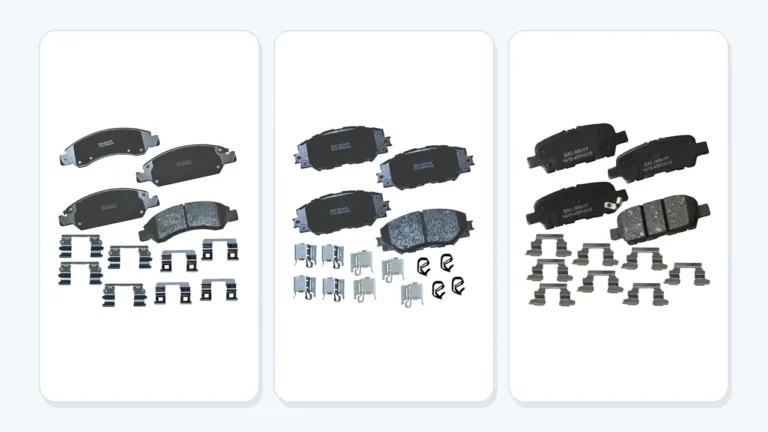
The Bendix ceramic front pads are the closest fit for a straightforward OE-style replacement on many listed GM trucks and SUVs. Detroit Axle makes more sense for a complete brake job, while PowerStop focuses on rear truck and tow use, Bosch targets newer Toyota and Lexus applications, and EBC is a narrower rear-pad option.
| Product image | Product name | Check product |
|---|---|---|
| 1 |
Bendix Premium SBC1363 Ceramic Front Brake Pads | Check Price |
| 2 |
Detroit Axle – Brake Kit for Toyota | Check Price |
3 |
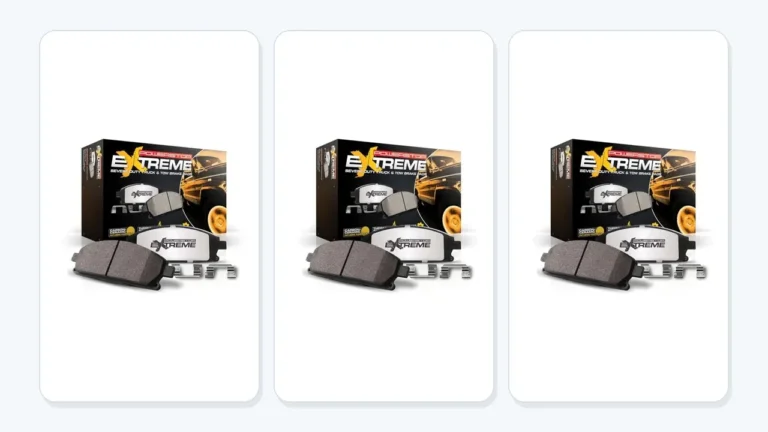
PowerStop Z36 Truck & Tow Brake Pads | Check Price |
4 |
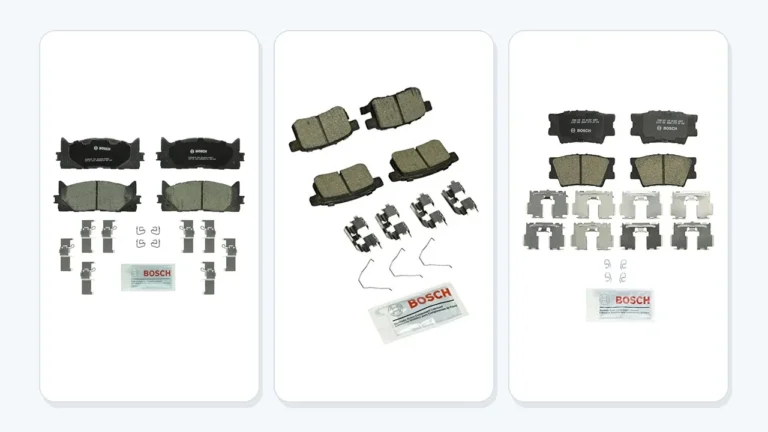
BOSCH BE2076H Blue Ceramic Disc Brake Pad | Check Price |
5 |
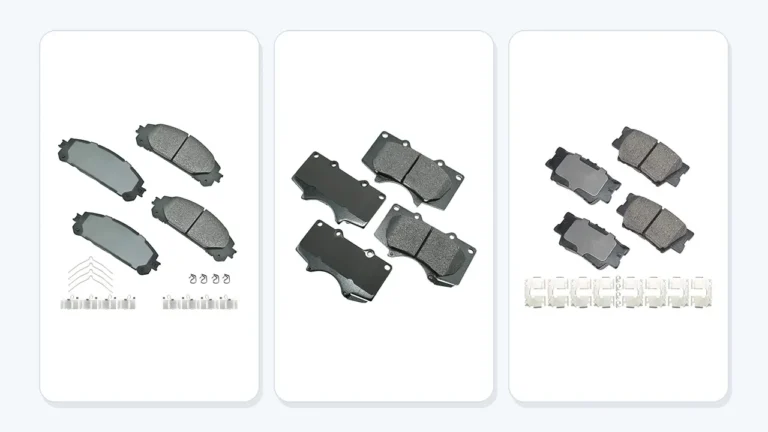
EBC Brakes FA319/2HH Disc Brake Pad Set | Check Price |
5 Best Oem Replacement Brake Pads: Detailed Reviews
When I chose the best oem replacement brake pads, I looked first at exact vehicle coverage, axle position, friction material, included hardware, and the amount of the brake system each package actually replaces. Those checks prevent the most common mistakes, such as ordering rear pads for the front axle or expecting a pad-only box to include rotors.
The five choices cover different jobs rather than pretending every driver needs the same setup. Side-by-side details make the main trade-off clear: some packages aim for factory-style replacement, while others add towing focus, a complete rotor-and-pad refresh, or coverage for newer passenger vehicles.
1. Bendix Premium SBC1363 Ceramic Front Brake Pads
Ceramic construction and OE-spec design support consistent stops for drivers replacing front pads on compatible trucks and SUVs.
- ColorMetallic
- Size1 Count (Pack of 1)
- Release Date2017-08-07T00:00:01Z
- Number Of Items1
Bendix Ceramic Pads are front brake pads for drivers who want an OE-spec replacement across a broad group of Cadillac, Chevrolet, and GMC trucks and SUVs.
The key detail is ceramic friction material, the compound that presses against the rotor to create braking force. Bendix describes these pads as ceramic and says the design is intended to reduce brake fade, which means the pads are less likely to lose consistent response as heat builds during repeated braking.
That matters if you drive a large SUV or pickup in regular traffic, where repeated stops can make a weak setup feel tiring and unpredictable. The benefit is not a promise that every vehicle will stop identically, since tires, rotors, calipers, load, and maintenance also matter, but the material choice is aimed at steady everyday braking.
Bendix also lists OE specifications for fit, form, and function, along with OEM equivalent part number 22742382. In plain English, the goal is a replacement shaped and intended to work like the original application, not a universal pad that you force into place.
The long vehicle list is useful, but it is also the main warning. The catalog covers different model years and trims, so the Amazon fit checker and the vehicle’s axle position still need to match before purchase.
Pros:
- Ceramic friction material, supports consistent everyday braking
- OE-spec design, aims for original-style fit and function
- Broad GM truck and SUV coverage, helps shoppers with older vehicles
- Wear and corrosion resistance, supports longer service use
- Front axle application, makes the intended position clear
Cons:
- Pad-only purchase, does not replace worn rotors
- Fit depends on exact vehicle trim and axle
- One-count package wording, requires careful quantity checking
Buy it if: you need front pads for a listed Cadillac, Chevrolet, or GMC vehicle, because the ceramic OE-spec design targets a direct-style replacement.
Skip it if: you need rear pads or a complete rotor-and-pad repair, because a pad-only front set will not cover that broader job. For another fit, consider Detroit or Powerstop.
I’d pick Bendix Ceramic Pads for a driver who wants a familiar replacement path without adding a performance-oriented setup. The wide GM application range and OE-spec wording earn this rank because they speak directly to ordinary replacement work. Double-check the exact year, trim, front axle, and package quantity before ordering.
This Bendix set suits a compatible truck or SUV that needs front pads while the existing rotors remain serviceable.
2. Detroit Axle – Brake Kit for Toyota
Front and rear drilled-slotted rotors, ceramic pads, and hardware cover a full brake refresh for compatible Toyota and Lexus vehicles.
- SizeBK91009906/kit
- Number Of Items6
- WeightNot listed; check details
- DimensionsNot listed; check details
Detroit Axle Brake Kit is a full front-and-rear brake package for selected Toyota, Lexus, and Land Cruiser applications, making it the broadest repair in this group.
The kit includes drilled and slotted rotors, discs with holes and grooves in their faces that change how the surface handles heat, dust, and pad contact. The listing pairs four of those rotors with front and rear ceramic pads, so the package addresses both axles instead of leaving the rear brakes for a later repair.
That coverage can simplify a larger maintenance job when the vehicle needs rotors and pads throughout. It also reduces the chance of buying front pads now and then discovering that the rear hardware or rear friction material needs replacement before the work is finished.
Detroit Axle includes installation hardware with the front and rear ceramic pads. Hardware can include the small clips or fittings that help the pads sit and move correctly, though the exact pieces should still be checked against the vehicle’s existing brake design.
The package is listed for several Toyota and Lexus vehicles across many years, including Tundra, Sequoia, Land Cruiser, and LX570 applications. That range makes fit verification especially important, because wheel, trim, lug, engine, and brake-package differences can change the required parts.
The listing calls the pads 100% ceramic with 0% metallic composition. That is a material description, not proof that the entire kit is the best choice for every driver, and the drilled-slotted rotor style may be more coverage than a person needs for a simple pad replacement.
Pros:
- Four drilled and slotted rotors, covers both vehicle axles
- Front and rear ceramic pads, completes the friction-material replacement
- Installation hardware included, reduces small-parts shopping
- Wide Toyota and Lexus application range, supports several large vehicles
- Full kit format, suits a broad brake-system refresh
Cons:
- Larger purchase than a pad-only repair
- Exact vehicle and lug configuration still require confirmation
- Rotor style may be unnecessary if existing rotors are usable
Buy it if: you need front and rear brakes for a listed Toyota or Lexus vehicle, because the kit combines rotors, ceramic pads, and hardware in one package.
Skip it if: only one axle needs new pads, because a complete six-item brake kit adds parts beyond a small repair. Bendix and Powerstop are worth a closer look instead.
Detroit Axle Brake Kit earns second place because the package is unusually complete for someone planning a larger brake job. I like the way the front and rear parts are grouped, especially for a high-mileage truck or SUV that needs more than friction material. The hesitation is fit complexity, since several listed vehicles and configurations can look similar while using different brake parts.
Choose this kit only after the exact vehicle, year, axle details, and lug setup agree with the listing.
3. PowerStop Z36 Truck & Tow Brake Pads
The catalog lists PLEASE CONFIRM YOUR FITMENT: Using the Amazon Confirmed Fit bar at the top of the page or check the Product De. Compare fit and care needs before choosing.
- ColorStainless-Steel
- SizeNo Size
- Release Date2015-06-08T00:00:01Z
- Number Of Items1
PowerStop Z36 Truck Pads are rear carbon-fiber ceramic pads for compatible Chevy Silverado, Chevy Tahoe, and GMC Yukon trucks and SUVs, especially when towing or hauling is part of the routine.
The standout feature is carbon-fiber ceramic material, a friction compound that combines ceramic content with carbon fibers for a truck-focused pad design. PowerStop says the Z36 line is built for added stress from towing, hauling, mountainous driving, and lifted trucks, so the intended buyer is dealing with more demanding conditions than a small commuter car.
In daily use, a heavy load creates more work for the braking system. A pad designed around truck and tow service can make sense for drivers who regularly carry equipment, pull a trailer, or travel through steep terrain, although the whole brake system still needs to be correctly matched and maintained.
This package is for the rear axle and includes two carbon-fiber ceramic pads with installation hardware. That simple description prevents a common ordering error: the box is not a front-and-rear kit, and it does not replace the vehicle’s rotors.
PowerStop also describes reduced brake fade and quiet operation compared with OE replacement pads. Those are product claims tied to the listed design, not a guarantee for every vehicle or driving condition. Noise and pedal feel can also be affected by rotor surface, caliper condition, installation, bedding, and wheel-end hardware.
A 30-day, 12-month, or 12,000-mile limited warranty is listed, with the applicable limit depending on the warranty terms. Read those terms before purchase so the coverage period is clear for your situation.
Pros:
- Carbon-fiber ceramic compound, targets truck and tow demands
- Rear axle set, clearly identifies the installation position
- Installation hardware included, helps with the pad change
- Designed for towing and hauling, suits heavier workloads
- Limited warranty listed, provides stated coverage terms
Cons:
- Rear pads only, does not cover the front axle
- Fitment must be confirmed for the exact vehicle
- Truck-focused design may be more than a light commuter needs
- Existing rotors remain part of the vehicle’s condition check
Buy it if: you drive a compatible truck or SUV under tow, haul, or mountain conditions, because the carbon-fiber ceramic design is aimed at added braking stress.
Skip it if: you need front pads or a simple low-demand commuter replacement, because a rear truck-and-tow pad set is not the right axle or use case. If those trade-offs rule it out, Bendix or Detroit may suit you better.
I’d choose PowerStop Z36 Truck Pads for a compatible rear axle that regularly works hard. The towing and hauling focus gives this set a clear reason to exist instead of making a vague promise for every driver. Check the exact rear application and inspect the rotors before buying, since new pads cannot correct a damaged or badly worn rotor.
This PowerStop set is best for a truck or SUV owner whose driving includes real load, trailer, or grade demands.
4. BOSCH BE2076H Blue Ceramic Disc Brake Pad
The catalog lists [PLATFORM SPECIFIC FRICTION MATERIAL} – Bosch Blue offers advanced, platform specific Ceramic friction materia. Compare fit and care needs before choosing.
- Number Of Items1
- WeightNot listed; check details
- DimensionsNot listed; check details
- MaterialNot listed; check details
Bosch Blue Ceramic Pads are front pads with hardware for selected newer Lexus and Toyota cars, crossovers, and sedans where quiet operation and application-specific fit matter.
Bosch uses platform-specific friction material, meaning the ceramic compound is formulated for a particular group of vehicle designs rather than treated as a universal recipe. That approach matters because brake feel, pad shape, noise control, and heat behavior depend on the vehicle platform and its original brake hardware.
The pads also use an original-equipment-style multilayer shim. A shim is a thin layer on the back of the pad that helps damp vibration between the pad and caliper, the part that squeezes the pad against the rotor. Less vibration can mean a quieter stop, which is helpful if squeal is the problem you are trying to avoid.
Bosch lists rust-inhibitive coating on the steel backing plates. The backing plate holds the friction material, and the coating is meant to slow rust and corrosion that can contribute to degradation or noise. It does not make the entire brake assembly immune to road salt, water, or neglected maintenance.
Slots and chamfers mirror OE-style shapes, while the package includes hardware and synthetic lubricant for sliding contact points. The set covers one axle, or two wheels, and the fit list includes selected Lexus ES and UX vehicles plus Toyota Avalon, C-HR, Camry, Corolla Cross, RAV4, and Venza applications.
The main limitation is the long, trim-sensitive fit list. Engine, trim, year, and brake package can change the correct pad, so the vehicle fit checker is not a step to skip.
Pros:
- Platform-specific ceramic material, targets selected vehicle designs
- Multilayer shim, helps damp brake vibration and noise
- Coated steel backing plates, helps resist rust and corrosion
- OE-style slots and chamfers, follows original pad shapes
- Hardware and lubricant included, supports a cleaner installation
Cons:
- Front axle set only, does not cover rear brakes
- Compatible trims and engines vary across the list
- One-axle package, may not suit a full brake refresh
Buy it if: you have a listed Toyota or Lexus front application, because the ceramic pad design includes a multilayer shim, hardware, and lubricant for a quieter-style replacement.
Skip it if: your vehicle is not an exact listed trim or engine, because a similar-looking Toyota or Lexus application may use a different pad shape.
Bosch Blue Ceramic Pads appeal to me as a careful choice for a newer Toyota or Lexus owner who values fit details and reduced brake noise. The shim, coated backing plate, slots, chamfers, and supplied lubricant show attention to the small parts that often get ignored during a pad change. Verify the exact year, engine, trim, and front axle before ordering.
Pick Bosch Blue when the application matches and the repair calls for one front axle rather than a complete system overhaul.
5. EBC Brakes FA319/2HH Disc Brake Pad Set
The catalog lists Made using high pressure die cast alluminium platforms with bonded brake linings. Compare fit and care needs before choosing.
- Colorblack
- SizeRear
- Release Date2011-12-20T00:00:01Z
- Number Of Items1
EBC FA319/2HH Pads are a rear disc brake pad set with aluminum platforms, bonded linings, edge trimming, and included original-equipment-style springs.
The backing platform uses high-pressure die-cast aluminum, a formed metal support that holds the bonded brake lining in place. Aluminum can help keep the pad assembly light, but the listing does not provide a weight, stopping-distance test, or vehicle application list, so the material alone is not a reason to assume universal fit.
EBC says the linings are bonded to the platforms rather than simply held by a loose attachment. A bonded lining is secured across its backing surface, and the connection is part of how the pad handles repeated contact with the rotor. The listing also says the shoes are radius ground and edge trimmed, which describes shaping intended to help the lining meet the rotor properly.
Lead-in and lead-out chamfers appear at the lining ends. A chamfer is a beveled edge that changes the way the pad first contacts the rotor, potentially helping with smooth engagement and noise control. The listing does not give a vehicle range or a measured noise result, so treat the feature as a design detail rather than a guarantee.
Original-equipment-style brake shoe springs are included. Springs and other small retaining pieces help keep the pad assembly positioned correctly, but the package still needs to match the vehicle’s rear brake design.
This is the narrowest choice in the group because the available details identify a rear set without naming compatible vehicles. A careful buyer needs the exact part number, axle position, and application confirmation before placing an order.
Pros:
- Die-cast aluminum platforms, support the bonded brake linings
- Bonded linings, secure friction material to the backing
- Radius-ground shoes, shape the lining for rotor contact
- Edge-trimmed design, refines the lining edges
- Springs included, helps replace related retaining hardware
Cons:
- Rear application, not a front brake pad set
- Vehicle compatibility is not listed in the available details
- Limited package information, requires extra fitment checking
- No rotors included, leaves rotor condition to the buyer
Buy it if: you have confirmed the FA319/2HH rear application, because the set includes bonded linings, shaped edges, and original-equipment-style springs.
Skip it if: you cannot verify the vehicle fit and axle position, because a rear pad set without confirmed application can create an expensive return and delay.
I’d consider EBC FA319/2HH Pads only after the part number and vehicle match are certain. The construction details are useful, especially the bonded linings, chamfers, and included springs, but the limited application information makes this a less beginner-friendly purchase. Check the exact rear brake design and package contents before committing.
This EBC set suits a buyer who already has a confirmed fitment rather than someone searching by vehicle name alone.
How to Choose the Best Oem Replacement Brake Pads
The best oem replacement brake pads are the ones that match your exact vehicle, axle, rotor condition, and driving needs. Start with fitment and position, then compare friction material and included hardware instead of choosing by brand name alone.
Match the vehicle exactly
A brake pad is shaped for a particular caliper, bracket, rotor, and vehicle application. The same model year can have different engines, trims, wheel sizes, or brake packages, so the year and model alone may not be enough.
Enter the full vehicle details in the fit checker, then read every qualifier note. Confirm the make, model, year, engine, trim, front or rear axle, and any lug or brake-package detail shown for the application.
Confirm front versus rear
Front and rear pads are not interchangeable. Front brakes often handle a larger share of the stopping work, while rear pads use a different shape and hardware arrangement.
Look for words such as front, rear, one axle, two wheels, or front and rear. A listing that says one axle usually means enough friction material for two wheels on that axle, not the entire vehicle.
Choose the friction material for your driving
Ceramic pads are common for everyday street driving because they are designed around controlled operation and can be a sensible fit for cars, crossovers, trucks, and SUVs. Carbon-fiber ceramic pads may appeal more to drivers who tow, haul, use lifted trucks, or drive steep mountain roads.
Material names do not replace a fit check. A truck-and-tow compound on the wrong axle is still the wrong part, and a performance-oriented pad does not fix worn rotors, a sticking caliper, or poor tires.
Check what the box includes
A pad-only set usually does not include rotors. A larger brake kit may include rotors, front and rear pads, shims, clips, springs, or lubricant, but the package description should be read closely rather than assumed.
Hardware is worth checking when the old clips are rusty, bent, or missing. If the listing includes lubricant, use it only on the specified sliding contact points, never on the friction surface of the pad or rotor.
Inspect the rotors before ordering
Brake rotors are the flat discs that the pads squeeze. Deep grooves, heavy corrosion, blue heat marks, a pronounced outer lip, cracks, or a surface that is below the service limit can make a pad-only change a poor repair.
A new pad cannot restore a damaged rotor. If the rotors need replacement too, a complete kit such as the OEM rotor replacement guide may be more practical, provided the parts match your vehicle.
Set a realistic budget
The cheapest package is not always the lowest-cost repair if it arrives without needed hardware or leaves you paying for a second axle later. A full kit can reduce separate shopping, while a pad-only set can save money when the existing rotors are in good shape.
For a lower-cost repair, use a fit-confirmed option rather than guessing from a generic size. A guide to budget brake pad choices can help frame the trade-off between package contents, material, and vehicle coverage.
How to Use Replacement Brake Pads for the Best Results
New brake pads need correct installation, clean contact surfaces, and a careful bedding period. The goal is to let the pad and rotor mate evenly instead of demanding hard stops immediately after the repair.
- Park on a level surface, set the parking brake as appropriate, and use wheel chocks.
- Confirm the replacement pads are for the correct axle before removing the old parts.
- Compare the new pads with the old pads, including shape, wear indicator position, and hardware.
- Clean rust and debris from the bracket contact points without contaminating the friction surfaces.
- Make sure the caliper piston is retracted using the correct method for that vehicle.
- Install clips, shims, springs, or lubricant exactly where the brake design calls for them.
- Pump the brake pedal until it feels firm before moving the vehicle.
- Test at low speed in a safe area, then follow the pad maker’s bedding directions.
Bedding usually means a series of controlled stops that gradually bring the pads and rotors to working temperature. Avoid holding the pedal firmly while stopped after repeated hard braking, since leaving a hot pad clamped against one rotor area can create uneven contact.
Listen and feel during the first drive. A brief change in pedal feel can happen after service, but a soft pedal, pulling, grinding, fluid leak, warning light, or strong burning smell calls for stopping the vehicle and finding the cause before normal driving resumes.
How to Make Your Replacement Brake Pads Last Longer
Brake pads last longer when the caliper moves freely, the rotor surface is healthy, and the vehicle is not carrying more load than the braking system can manage. Regular inspection is more useful than waiting for a loud scrape.
Check pad thickness during tire rotation or routine service, especially if the vehicle tows, carries heavy loads, drives in hills, or sees winter road salt. Have the rotor surface, caliper slides, brake hoses, and hardware checked at the same time.
Keep friction surfaces free from grease, oil, paint, and excess lubricant. Lubricant belongs only on approved sliding or contact points, because contamination on the pad or rotor can reduce braking performance.
Rinse heavy road salt and mud from wheel areas when practical, then allow the brakes to dry through normal gentle driving. Do not spray random cleaners on brake parts unless the product is intended for that purpose and the vehicle maker’s service procedure allows it.
Use lower gears on long descents when appropriate for the vehicle, and leave extra following distance with a trailer or heavy load. Repeated hard braking creates more heat, so smooth speed control is kinder to the pads, rotors, tires, and calipers.
If a brake pad wears much faster on one side, do not simply install another set and move on. Uneven wear can point to a sticking caliper, seized slide, damaged hardware, or another issue that needs correction.
Common Mistakes to Avoid When Buying and Using Replacement Brake Pads
Most brake-pad trouble starts with a fitment or installation shortcut rather than a mysterious failure. These mistakes are easy to avoid when you slow down before ordering and before the first drive.
- Ordering by vehicle name only: Trim and brake-package differences can change the pad shape. Use the full fit checker and read qualifier notes.
- Confusing front and rear: Axle position is part of the part number. Confirm the location before opening the package.
- Assuming pads include rotors: Pad-only boxes do not renew the disc surface. Inspect the rotors and buy the parts the repair actually requires.
- Reusing damaged hardware: Rusty clips can restrict pad movement and create uneven wear. Replace damaged hardware or use the supplied kit.
- Applying grease to the friction surface: Contamination can reduce braking. Lubricate only approved sliding contact points.
- Skipping the pedal-pump step: The piston may not be seated against the pad after service. Pump the pedal until firm before shifting into traffic.
- Driving hard immediately: Fresh pads and rotors need even contact. Use a careful bedding process and avoid unnecessary panic stops at first.
A low price can be useful when the application is correct, package contents are clear, and the repair does not require extra parts. A separate look at cheap brake pad options is most useful after those safety and fit checks, not before them.
How to Set Up Replacement Brake Pads
Brake pad installation is a mechanical repair that requires a stable vehicle, the right tools, and a way to support the vehicle safely. If the caliper, piston, or hardware does not move as expected, stop rather than forcing the part.
- Read the vehicle service procedure and gather the correct jack stands, socket tools, brake cleaner, piston tool, torque wrench, and safety gear.
- Confirm the new pads, hardware, and any rotors match the vehicle before lifting the vehicle.
- Loosen the wheel nuts slightly, lift the vehicle at the approved points, and support it with jack stands.
- Remove the wheel and photograph the old hardware, since the picture can help with clip and spring placement.
- Remove the caliper without hanging it by the brake hose, then secure the caliper out of the way.
- Remove the old pads and hardware, clean the bracket contact points, and check the rotor and caliper condition.
- Retract the piston with the correct tool and method, paying attention to rear systems that may use a parking-brake mechanism.
- Install the new hardware and pads, torque fasteners to the vehicle specification, refit the wheel, and lower the vehicle safely.
- Pump the pedal, check fluid level and wheel movement, perform a slow test, and bed the pads as directed.
The most common stumbling point is piston retraction. Some rear brake systems require the piston to turn while it retracts, so forcing it straight inward can damage the mechanism.
Common Questions About OEM Replacement Brake Pads
Are OEM replacement brake pads the same as genuine dealer pads?
No, OEM replacement brake pads are not automatically genuine dealer parts. “OE replacement” usually means the maker designed the part to match the original application or specifications, while a genuine dealer pad comes through the vehicle manufacturer’s parts system. Check the exact description, manufacturer, part number, and fitment before treating the two as identical.
How much do replacement brake pads cost?
Replacement brake pad cost depends on the axle, vehicle, material, brand, and whether the package includes hardware or rotors. A pad-only set is usually a smaller purchase than a front-and-rear rotor-and-pad kit. The repair total also includes tools, labor if applicable, and any caliper or rotor problem found during inspection.
How do I know if I need front or rear brake pads?
You need the axle that shows wear or has a confirmed service need, and the vehicle’s fitment information should identify the correct position. Front and rear pads have different shapes and duties. If the old pad is worn unevenly or the brake is making noise, have the full axle inspected before ordering parts.
Are ceramic brake pads safe for trucks and SUVs?
Ceramic brake pads can be suitable for trucks and SUVs when the exact application is approved and the driving demands match the design. Towing, hauling, steep grades, and lifted vehicles may call for a truck-focused compound. Ceramic material alone does not correct a bad rotor, sticking caliper, overloaded vehicle, or incorrect fit.
Do new brake pads need new rotors?
New brake pads do not always require new rotors, but the rotors must be within condition and service limits. Deep grooves, cracks, severe rust, heat damage, or uneven wear can make replacement necessary. A technician can measure and inspect the rotors, or you can follow the vehicle service procedure if doing the repair yourself.
How long do replacement brake pads last?
Brake pad life varies with traffic, vehicle weight, driving style, load, terrain, material, rotor condition, and caliper movement. City driving, towing, mountain roads, and heavy vehicles usually create more wear than steady highway travel. Inspect the pads during regular service instead of relying on a fixed mileage promise.
Make the Next Brake Repair Decision Carefully
Start with the vehicle identification, axle position, and rotor condition before choosing a pad material or package size. Once those three points match, select the smallest package that covers the repair, confirm the included hardware, and follow the bedding and safety steps before returning to normal driving.