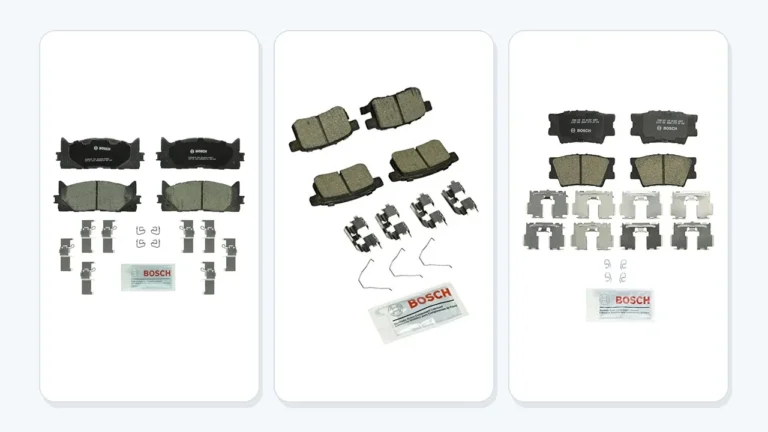
5 Best Brake Pads for Track Days That Stay Strong Lap After Lap
As an Amazon Associate, we earn from qualifying purchases made through links in this post, at no extra cost to you.
Buy the wrong brake pads for a track day and the first few laps can feel fine before the pedal gets soft or braking becomes inconsistent. A pad that cannot handle repeated heat may leave you braking earlier, missing your rhythm, or cutting a session short while the car cools down. Fitment mistakes can create a second headache before the car even reaches the circuit.
Track pads are mainly about heat control, friction behavior, and correct fitment. The right compound should stay predictable after repeated stops, while the correct front or rear position keeps the braking system working as designed instead of turning the first session into a parts puzzle.
Here is what this guide will help you sort out:
- How friction compounds affect pedal feel and fade resistance.
- Why front and rear position must match your vehicle and brake balance.
- Which listed pads suit different cars and track-day needs.
- How to bed, inspect, cool, and store pads between events.
Quick Picks
-
Best For High-Heat Track Braking

Power Stop PST-1053 Track Day Brake Pad
High thermal stability and consistent pedal feel help track drivers manage repeated braking during demanding laps.
-
Best For Miata And Fiat HPDE

PowerStop Rear Stage-1 Brake Pads for Fiat
Platform-specific carbon fiber metallic friction helps Miata and Fiat drivers resist fade during track days and HPDE events.
Top 5 Brake Pads for Track Days at a Glance
The Power Stop PST-1053 is the broadest first look for drivers who need a high-heat, model-specific track pad with consistent control. The PSA-1180 is more focused, with fitment for the Fiat 124 Spider and Mazda MX-5 Miata, while the Mustang and Land Rover options are useful only when the listed vehicle and axle position match your car.
| Product image | Product name | Check product |
|---|---|---|
| 1 |
Power Stop PST-1053 Track Day Brake Pad | Check Price |
| 2 |
PowerStop Rear Stage-1 Brake Pads for Fiat | Check Price |
| 3 |
PowerStop Rear Stage-2 Brake Pads for Ford | Check Price |
| 4 |
PowerStop Front Stage-2 Brake Pads for Ford | Check Price |
| 5 |
PowerStop Front Stage-1 Brake Pads for Land | Check Price |
5 Best Brake Pads for Track Days: Detailed Reviews
When I chose the best brake pads for track days, I paid attention to heat control, friction compound, pedal consistency, axle position, and fitment. Those details matter because fade can change your stopping distance during a session, while a wrong front or rear pad can upset the balance you expect from the car.
I kept the group varied so you can compare a general high-heat option with platform-specific choices for Miata, Fiat, Mustang, and Land Rover applications. Looking at the choices side by side makes the main decision clearer: select the pad that matches your car first, then choose the friction behavior that fits your track use.
1. Power Stop PST-1053 Track Day Brake Pad
High thermal stability and consistent pedal feel help track drivers manage repeated braking during demanding laps.
- Number Of Items1
- WeightNot listed; check details
- DimensionsNot listed; check details
- MaterialNot listed; check details
Power Stop PST-1053 Track Pads suit drivers of the listed CTS, STS, Camaro, 300, Challenger, Charger, Magnum, Genesis Coupe, Grand Cherokee, and Tesla S or X applications who want a track-focused friction compound.
High-torque friction compound
A friction compound is the material in the pad that grips the brake rotor when you press the pedal. The PST-1053 uses a high torque friction compound, which means the pad is designed to produce strong braking force as the pad meets the rotor.
In daily driving, that can make the pedal response feel more immediate. On a track, the benefit is easier control when you need to slow the car at the end of a straight without relying on a long, soft pedal stroke.
The important point is not simply that the compound sounds aggressive. The PST-1053 still needs to match the exact vehicle and brake setup listed for the pad, because friction strength alone does not guarantee the right fit or balance.
Thermal stability and pedal control
Thermal stability means the pad is intended to keep its friction behavior more consistent as temperatures rise. The PST-1053 lists high thermal stability, fade-free braking on the track, and consistent pedal feel and modulation as core features.
Modulation means how smoothly you can adjust braking force with small pedal movements. That control matters in a corner entry, where a sudden change can disturb the car and a predictable pedal lets you make smaller corrections.
The fair warning is that no pad removes every heat problem. Rotor condition, brake fluid, cooling, tire grip, driving pace, and proper bedding all affect how the braking system behaves during a track session.
Pros:
- High-torque compound, strong braking response under track use.
- High thermal stability, steadier friction as temperatures rise.
- Consistent pedal feel, easier control during corner entry.
- OE fitment, simpler installation when application details match.
- Track-focused design, better suited to repeated hard stops.
Cons:
- Vehicle fitment covers specific applications, not every car.
- A track compound still needs correct bedding and system care.
- The listing does not provide a detailed measurement set.
Buy it if: you drive one of the listed vehicles and want high thermal stability with a strong, controllable track-pedal response.
Skip it if: you cannot confirm the exact vehicle application, because a model-specific brake pad would suit you better. For another fit, consider PowerStop Rear Stage-1 Brake Pads for or PowerStop Rear Stage-2 Brake Pads for.
I’d pick the PST-1053 when the fitment matches and your main concern is predictable braking during repeated high-heat stops. The combination of high torque, thermal stability, and modulation gives beginners a clear reason to consider it without chasing a mysterious racing setup. Double-check the exact vehicle, axle position, and replacement procedure before ordering.
Power Stop PST-1053 Track Pads make the most sense for drivers who want a focused track pad for one of the listed applications.
2. PowerStop Rear Stage-1 Brake Pads for Fiat
Platform-specific carbon fiber metallic friction helps Miata and Fiat drivers resist fade during track days and HPDE events.
- SizeStock
- Release Date2016-10-07T00:00:01Z
- Number Of Items1
- WeightNot listed; check details
PowerStop PSA-1180 Rear Pads suit Fiat 124 Spider and Mazda MX-5 Miata drivers who want a rear track-day pad designed around those platforms.
Platform-specific friction
A platform-specific compound is made around the braking needs of a particular vehicle family rather than treated as a universal pad. PSA-1180 uses a platform-specific friction compound, so the fitment focus is narrower than a general-purpose replacement pad.
That focus helps you start with the correct car family instead of guessing from pad shape alone. For a Miata or Fiat 124 Spider owner, this can reduce the risk of selecting a pad that physically seems close but does not match the intended application.
The PSA-1180 is listed as a rear pad, so the buyer must keep the axle position in mind. Rear brakes work with the front brakes as part of one system, and changing only the rear friction behavior can affect how the car feels under braking.
Carbon fiber metallic compound
A carbon fiber metallic compound blends friction materials intended for track-day braking at higher temperatures. The PSA-1180 is described as resisting fade at higher temperature and as designed for track days and HPDE, or High Performance Driving Events.
For you, that means the pad is aimed at repeated braking rather than only a single hard stop. The goal is a more dependable feel across a session, though the actual result still depends on bedding, rotor condition, cooling, brake fluid, and the pace of the event.
The supplied size is Stock, which does not replace checking the exact year, trim, axle, and brake package. A Miata name alone may not identify every possible brake setup.
Pros:
- Platform-specific compound, focused fit for listed vehicles.
- Carbon fiber metallic material, suited to higher-temperature braking.
- Rear axle design, clear placement for the listed applications.
- HPDE focus, intended for repeated track-day braking.
- Stock size listing, useful when the application matches exactly.
Cons:
- Limited to listed Fiat and Mazda applications.
- Rear-only placement means it is not a complete brake set.
- Exact year, trim, and brake package still require checking.
Buy it if: you drive a listed Fiat 124 Spider or MX-5 Miata and need a rear pad aimed at repeated HPDE heat.
Skip it if: you need front pads or drive a different vehicle, because a correctly matched axle-specific pad would suit you better. Power and Powerstop are worth a closer look instead.
What I like about PSA-1180 is the clear platform and axle focus, which keeps the buying decision from becoming a generic friction-compound hunt. The carbon fiber metallic material and higher-temperature fade resistance fit the needs of a beginner attending HPDE events. Confirm the rear application, vehicle year, trim, and brake package before placing the order.
PowerStop PSA-1180 Rear Pads are the sensible choice for the listed Miata and Fiat drivers who want a track-oriented rear compound.
3. PowerStop Rear Stage-2 Brake Pads for Ford
The catalog lists World’s first Platform Specific Friction compound. Compare fit and care needs before choosing.
- Release Date2016-10-07T00:00:01Z
- Number Of Items1
- WeightNot listed; check details
- DimensionsNot listed; check details
PowerStop PST-1793 Rear Pads suit Ford Mustang drivers with a 2015-2023 application who need a rear track-day pad with platform-specific carbon fiber metallic friction.
Mustang-specific friction behavior
PST-1793 uses a platform-specific friction compound, meaning the pad is designed around the listed Mustang application instead of being presented as a universal performance part. That makes vehicle confirmation the first buying step, not an afterthought.
A platform-focused pad can make the selection process easier because you are starting with a stated vehicle range. It does not mean every Mustang brake package is identical, so the 2015-2023 range should be checked against the car’s trim and rear brake configuration.
For track driving, the compound is intended to resist fade at higher temperature. Fade is the loss of braking strength or pedal confidence as brake parts become very hot, and reducing that risk can help you keep a more repeatable braking point.
Rear placement and HPDE use
The PST-1793 is a rear pad, so it works as part of the Mustang’s full brake system rather than as a standalone answer to every heat concern. The front pads, rotors, fluid, tires, and cooling still influence how the car behaves when braking hard.
The carbon fiber metallic compound is described as track tested and designed for track days and HPDE. That wording tells you the intended use is more demanding than ordinary commuting, yet it does not provide a temperature range or a replacement schedule.
A beginner should also remember that more track-focused friction can change the way the brakes feel on the street. Follow the bedding guidance for the actual pad and inspect the brakes before and after each event.
Pros:
- Mustang-specific compound, easier application starting point.
- Carbon fiber metallic friction, designed for higher heat.
- Rear axle position, clearly identified for system planning.
- Track-day focus, intended for HPDE braking demands.
- 2015-2023 application, useful for the listed vehicle range.
Cons:
- Rear-only pad, not a full Mustang brake replacement.
- Trim and brake-package fitment still need confirmation.
- The listing does not provide a temperature range or wear limit.
Buy it if: you have the listed 2015-2023 Mustang rear application and want a platform-specific pad for HPDE heat.
Skip it if: your Mustang uses a different rear brake package, because an axle-matched Mustang pad would suit you better. If those trade-offs rule it out, Power or Powerstop may suit you better.
I’d choose PST-1793 when the Mustang fitment is confirmed and the rear axle needs a track-focused compound. Its strongest point is clarity: the vehicle range, rear position, carbon fiber metallic material, and HPDE purpose all point in the same direction. Check the exact trim and rear brake configuration because a broad year range does not guarantee every Mustang uses the same pad.
This PowerStop rear pad is best suited to Mustang owners preparing for repeated track-day braking rather than casual road use alone.
4. PowerStop Front Stage-2 Brake Pads for Ford
The catalog lists World’s first Platform Specific Friction compound. Compare fit and care needs before choosing.
- Release Date2016-10-07T00:00:01Z
- Number Of Items1
- WeightNot listed; check details
- DimensionsNot listed; check details
PowerStop PST-1792 Front Pads suit Ford Mustang drivers with a 2015-2023 application who need a front track-day pad built around a platform-specific friction compound.
Front axle priority
The front axle usually handles a large share of a car’s braking work as weight moves forward under hard deceleration. PST-1792 is listed as a front pad for the 2015-2023 Ford Mustang range, so the front position is the feature to verify before thinking about compound details.
Correct front fitment gives the pad the right physical place in the braking system. That helps prevent the common mistake of ordering a rear pad because the product title contains the same car name.
The listed carbon fiber metallic compound is intended to resist fade at higher temperature. For a track driver, that can support more consistent braking points through a session, although brake fluid, rotors, cooling, and tire grip remain part of the same equation.
Repeated track-day braking
The PST-1792 is designed for track days and HPDE, so the intended use is repeated hard braking rather than occasional emergency stops. A track pad needs to handle a cycle of heating, braking, and cooling without becoming unpredictable.
Fade resistance matters most when you are braking from speed several times per lap. If the pedal or friction response changes, a beginner may brake earlier and lose confidence, while a consistent pad can make the car easier to read.
The listing does not state a temperature range, noise level, dust level, or expected lifespan. Treat those as items to verify before buying, and do not assume a front pad alone solves a complete brake-system problem.
Pros:
- Front axle placement, clear position for Mustang fitment.
- Platform-specific compound, focused around the listed vehicle.
- Carbon fiber metallic material, aimed at high-temperature use.
- Track-day design, suited to repeated braking cycles.
- 2015-2023 application, narrows the initial fitment check.
Cons:
- Fitment may vary by Mustang trim and brake package.
- Front pads alone do not address rear or fluid needs.
- Noise, dust, temperature range, and lifespan are not listed.
Buy it if: you have the listed Mustang front application and need a track-day pad aimed at resisting higher-temperature fade.
Skip it if: your Mustang front brake package does not match, because another correctly fitted front pad type would suit you better.
To me, the strongest reason to consider PST-1792 is its front-position clarity paired with a compound aimed at repeated high-temperature braking. That combination gives a Mustang owner a sensible starting point for an HPDE brake plan. The missing temperature and lifespan details are the main hesitation, so check the product page and your car’s exact brake package before ordering.
This front pad fits drivers who already know their Mustang application and want a dedicated track-day direction.
5. PowerStop Front Stage-1 Brake Pads for Land
The catalog lists World’s first Platform Specific Friction compound. Compare fit and care needs before choosing.
- SizeStock
- Release Date2016-10-07T00:00:01Z
- Number Of Items1
- WeightNot listed; check details
PowerStop PSA-829 Front Pads suit owners of the listed Land Rover Discovery and Range Rover applications who want a front track-day pad for an older vehicle platform.
Older-platform fitment
PSA-829 is listed for Land Rover Discovery 1999-2004 and Range Rover 1995-2002 applications. That vehicle range makes fitment especially important because older SUVs can have different brake packages, prior repairs, and replacement parts that do not match a simple year search.
The pad is front-positioned, so the buyer needs to confirm the front caliper and rotor setup before ordering. A correct fit prevents wasted time during installation and avoids discovering at the track that the part cannot be used.
The supplied size is Stock, which is useful only when the vehicle application matches the listing. Stock does not tell you the exact dimensions, so use the vehicle details and brake configuration as the final check.
Track-focused compound
PSA-829 uses a platform-specific friction compound and carbon fiber metallic material. The compound is described as designed for track days and HPDE, with resistance to fade at higher temperature.
That makes the pad more focused than an ordinary road replacement. Repeated braking in a heavy SUV can create a demanding heat cycle, so the intended fade resistance is relevant, though the full brake system still controls the final result.
The fair limitation is the age and weight range of the listed vehicles. Before a track day, inspect hoses, calipers, rotors, wheel bearings, and brake fluid rather than treating a new front pad as a complete preparation plan.
Pros:
- Front axle position, clear placement for listed vehicles.
- Platform-specific compound, focused on stated Land Rover applications.
- Carbon fiber metallic material, intended for higher-temperature braking.
- Stock size listing, helpful when application details match.
- HPDE design, aimed at repeated track-day braking.
Cons:
- Limited to older Discovery and Range Rover applications.
- Stock size does not provide exact physical measurements.
- A heavy older SUV needs broader brake-system inspection before track use.
Buy it if: you have a listed Discovery or Range Rover front application and want a track-oriented pad for higher-temperature braking.
Skip it if: your Land Rover brake package differs from the listed application, because a vehicle-specific front pad would suit you better.
I’d consider PSA-829 only after confirming the older Land Rover’s exact brake setup. The useful part is the combination of front placement, platform-specific friction, and track-day fade resistance for a vehicle group that can place serious demand on brakes. My hesitation is not the compound description but the age and variation of the vehicles, so inspect the entire brake system before an event.
This pad is for a properly identified Land Rover application, not a quick universal upgrade.
How to Choose the Best Brake Pads for Track Days
The best brake pads for track days should match your car, axle position, heat level, and event type before you worry about brand or marketing language. Start with fitment, then choose a compound that gives predictable friction through repeated stops.
Confirm the vehicle and axle
Fitment means the pad physically matches the caliper, rotor, backing plate, and hardware used on your vehicle. A correct year range is helpful, but trim, performance package, axle, and brake option can still change the answer.
Look for the exact make, model, year, front or rear position, and any brake-package note. A front pad cannot replace a rear pad, and a rear pad cannot be moved to the front just because the shape looks similar.
Write down your car’s year, trim, axle, and current pad part number before shopping. If the old pad has a readable number, use that as a second check rather than relying on a vehicle name alone.
Choose the right heat range
Heat range describes how much repeated heat a pad is intended to handle before friction changes. A commuting pad may be comfortable on the street but become less consistent during a long HPDE session.
Track-day pads are usually chosen for repeated hard stops, but the correct level depends on track length, vehicle weight, speed, cooling, and driver pace. A short beginner session in a light car creates a different workload from a heavy car running long sessions.
Look for clear wording about track days, HPDE, high-temperature performance, thermal stability, or fade resistance. Do not treat a dramatic claim as a measured temperature rating when the listing does not provide one.
Understand friction compound language
The friction compound is the pad material that grips the rotor. Organic, ceramic, semi-metallic, and carbon fiber metallic are broad material terms, while the actual behavior depends on the maker’s formula and intended use.
A carbon fiber metallic compound, such as the material listed for several choices here, is aimed at high-temperature friction. The practical question is whether the compound suits your event and vehicle, not whether one material name sounds automatically superior.
If you are comparing these pads with other performance options, best performance brake pads can help frame the difference between street performance and track-focused heat control. Keep the vehicle and axle match ahead of the material label.
Check front and rear balance
Brake balance is the way braking force is shared between the front and rear axles. Too much change at one end can affect stability, pedal feel, and how the car behaves as you turn into a corner.
A front pad and rear pad do not need identical compounds, but they should make sense as a complete setup. If you replace only one axle, note the existing pad type, rotor condition, and any changes made by the car’s previous owner.
Buy front and rear pads only after confirming that the compounds are intended to work together. A staged upgrade without a plan can create more questions than speed.
Check the rest of the brake system
Brake pads are only one part of the braking system. Rotors, calipers, brake fluid, hoses, tires, wheel bearings, cooling, and pedal condition all affect stopping performance.
Inspect rotors for cracks, deep grooves, uneven wear, or excessive discoloration. Check fluid age and condition, look for leaks, and confirm that the caliper pistons and slide hardware move correctly.
Drivers who expect long or hot sessions should also review best brake fluid for track days, because fluid that overheats can create a soft pedal even when the pads are suitable. A good pad cannot fix moisture-heavy or overheated fluid.
Match the pad to street use
Some track pads are unpleasant for daily driving because they may need heat, create more dust, wear rotors faster, or feel less smooth when cold. The supplied listings focus on track days and HPDE, so do not assume the same pad is the best choice for every commute.
Think about how the car gets to the circuit. If the car drives on public roads between events, check the cold behavior, noise, dust, rotor compatibility, and bedding instructions before buying.
A dedicated track set can make sense if you have the time and safe storage to swap pads. If you do not, choose a compound whose stated use fits both your event routine and ordinary driving needs.
How to Use Brake Pads for the Best Results
The best brake pads for track days need a careful installation, bedding process, and inspection before the first timed session. Treat the first drive as preparation, not as a test of maximum stopping power.
- Confirm the pad position and vehicle application before removing the old parts. Match front and rear labels, then compare the new pad shape with the removed pad before fitting hardware.
- Inspect the rotors for cracks, deep grooves, heavy lips, or uneven coloring. Replace or service damaged rotors instead of asking a new pad to work against a poor surface.
- Clean the contact surfaces and install the pad hardware as directed. Keep grease away from the friction face and rotor, because contamination can reduce braking force.
- Follow the pad maker’s bedding procedure. Bedding transfers a controlled layer of friction material to the rotor, helping the pad and rotor work together more evenly.
- Use moderate stops first and allow the brakes to cool between them. Avoid holding the pedal hard after a hot stop, since the pad can sit against one hot area of the rotor.
- Check the pedal and inspect for leaks before reaching the circuit. A firm pedal at the garage is not a substitute for checking the system again after the first warming cycle.
- Start the track day with a gentle session. Learn how the pedal, steering, tires, and brakes feel before pushing deeper into each braking zone.
- Leave a cooling lap and avoid setting the parking brake immediately after a hot session. Let the brakes cool gradually, then inspect pad thickness, rotor color, and hardware.
Use a firm, repeatable pedal as your reference rather than chasing the shortest possible braking point. If the pedal changes, the car pulls, a warning light appears, or the brakes smell unusually harsh, slow down and inspect the system.
How to Make Your Brake Pads Last Longer
Brake pads last longer when you control heat, avoid unnecessary pedal use, and inspect wear before small problems become track-day failures. Good care also helps you plan replacements instead of discovering worn pads during a morning inspection.
Let the brakes cool after each hard session. A cool-down lap with moderate braking gives heat time to leave the pads, rotors, calipers, and fluid before the car sits still.
Avoid dragging the brake pedal between corners. Light contact can create heat without giving you much useful speed control, which wastes pad material and raises temperatures.
Store spare pads and track hardware in a dry, labeled container. Keep front and rear sets separate, and write the vehicle, axle, and installation date on the package so an old set does not get mixed into the wrong preparation plan.
Inspect the pads before every event and after every track weekend. Look for uneven wear, cracks, loose material, backing-plate damage, and a thickness level that approaches the maker’s replacement guidance.
Check the rotors at the same time. Deep grooves, cracks, heavy lips, uneven deposits, and blue or purple discoloration deserve attention before more hard driving.
Flush or replace brake fluid according to the car’s service needs and event schedule. Drivers who attend several hot events each season may need a more frequent fluid plan than someone who drives gently on the street.
Keep caliper hardware clean and moving correctly. Sticking slide pins or pistons can hold a pad against the rotor, creating extra heat on one side and uneven wear across the axle.
Do not mix unknown old pads with a fresh pair on the same axle. The friction behavior can differ, and uneven material can make the car harder to read under braking.
Common Mistakes to Avoid When Buying and Using Brake Pads for Track Days
Most track-brake problems begin before the first lap, with a fitment guess, skipped bedding step, or neglected supporting part. These mistakes are easy to avoid when you treat the pads as part of a full system.
- Ordering by car name only: Different trims can use different brakes. Check the year, trim, axle, and brake package.
- Confusing front and rear pads: The same vehicle can appear in both listings. Read the axle position twice before buying.
- Skipping rotor inspection: A new pad cannot correct cracks, deep grooves, or severe uneven wear. Inspect or service the rotor first.
- Skipping bedding: Fresh friction material may not work evenly on an old rotor surface. Follow the maker’s bedding procedure before hard laps.
- Using street assumptions at the track: A pad that feels fine on a short road trip may change after repeated high-speed stops. Plan for heat and session length.
- Ignoring brake fluid: A soft pedal can come from overheated fluid rather than the pad. Check fluid age, leaks, and the complete hydraulic system.
- Holding the pedal after a hot stop: Keeping the pad clamped to one hot rotor area can create uneven deposits. Roll to a safe cool-down area when practical.
Another common error is changing only one part of the braking plan. A track pad may help with friction, yet tires, cooling, rotors, fluid, and driver technique still decide how confidently the car slows.
How to Set Up Brake Pads for Track Days
Brake-pad setup starts with correct fitment and ends with a controlled bedding drive. Leave enough time before the event so a missing clip, damaged rotor, or soft pedal does not become a last-minute crisis.
- Record the car’s year, trim, axle, and brake package. The stumbling point is assuming a broad vehicle range covers every configuration.
- Confirm the front or rear position on the pad box and listing. The stumbling point is mixing a rear choice with a front replacement because both share the same car name.
- Remove the old pad and inspect the caliper, hardware, rotor, hose, and dust boot. The stumbling point is installing new friction material while a sticking caliper remains.
- Clean the pad contact points and fit the new hardware. The stumbling point is allowing grease, oil, or dirt onto the pad face or rotor.
- Check rotor condition and measure wear according to the service information for the vehicle. The stumbling point is treating a smooth-looking rotor as automatically healthy.
- Complete the bedding procedure with controlled stops and cooling periods. The stumbling point is making one panic stop and calling the pads ready.
- Recheck wheel torque, pedal feel, fluid level, and visible leaks. The stumbling point is skipping the second inspection because the pedal felt normal in the driveway.
- Drive the first track session at a measured pace and monitor changes. The stumbling point is pushing for maximum braking before learning how the new setup behaves.
If the setup includes fresh fluid, new rotors, or a changed front and rear compound, make one change at a time when possible. That makes a strange pedal or uneven wear easier to trace.
Common Questions About Brake Pads for Track Days
Are track-day brake pads safe for street driving?
Track-day brake pads can be used on the street only when their cold behavior, noise, dust, rotor compatibility, and legal fitment suit your driving. Some compounds work well after warming but feel less comfortable during short trips. Check the maker’s intended use and use a separate street setup when the track compound is too specialized.
How long do brake pads last on a track day?
Brake-pad life can range from a few events to much longer, depending on vehicle weight, speed, track layout, pad compound, cooling, driver technique, and starting thickness. There is no reliable single event count from the supplied details. Inspect thickness and wear after every event, then follow the maker’s replacement guidance.
Do I need front and rear track pads together?
You do not always need to replace both axles at the same time, but the front and rear compounds should work as a planned system. Front and rear friction changes can affect balance and stability. Check the current pads, rotor condition, fluid, and vehicle setup before changing only one axle.
What causes brake fade during a track day?
Brake fade usually comes from excessive heat, though the exact cause can involve the pad, rotor, fluid, caliper, or cooling. A pad may lose friction while overheated, or fluid may create a soft pedal. Reduce pace, cool the brakes, inspect the system, and correct the cause before continuing.
How do I know if brake pads fit my car?
Confirm the make, model, year, trim, front or rear position, and brake package against the listing and the old pad. Do not rely on shape or vehicle name alone. For older or modified cars, compare the current part number and inspect the caliper and rotor before ordering.
Is a carbon fiber metallic brake pad good for racing?
A carbon fiber metallic pad can suit high-temperature track use when its application and heat range match the car. The material name alone does not prove that every racing situation is covered. Review the intended event, vehicle weight, axle position, bedding procedure, and supporting brake parts before choosing it.
Make Your Track-Day Brake Plan Before Ordering
Start with the exact car, axle, trim, and brake package, then check the pad’s intended heat range and the condition of the rotors, fluid, calipers, and hoses. Once those details match, choose the listed compound that fits your event schedule and leave enough time for installation, bedding, and a full safety inspection before the next session.