How to Disable Parking Brake on Skid Steer: Safe Release Steps
To disable the parking brake on a skid steer for normal operation, sit in the operator’s seat, fasten the seat belt, lower the safety bar or armrest, start the engine, and operate the designated parking-brake release or machine-enable switch. The exact procedure depends on the manufacturer, model, and safety interlock system.
Many Bobcat, Caterpillar, John Deere, CASE, and other skid steer loaders use electrically controlled or hydraulically released parking brakes. The brake may remain engaged until the machine confirms that the operator is correctly seated and the necessary controls are activated. On some models, simply starting the engine is not enough to release it.
A parking brake that refuses to disengage may indicate an unmet safety condition, a damaged switch, low hydraulic pressure, or another mechanical or electrical problem. Bypassing the safety system is not a substitute for repairing the fault.
This guide explains the normal release procedure step by step, where to find the parking-brake controls, how different skid steer systems operate, and what to check when the brake remains locked.
How to Disable Parking Brake on Skid Steer: Step-by-Step Release
The following steps describe the general procedure for releasing a functioning parking brake on a skid steer loader. Because controls differ between machines, always follow the operator’s manual for the exact model and serial number.
Step 01: Park the Skid Steer on Stable, Level Ground
Before releasing the parking brake, make sure the skid steer is positioned on firm, level ground with enough open space around it.
Keep the attachment or bucket lowered to the ground whenever possible. The travel controls should be in neutral, and nobody should be standing near the wheels, lift arms, or attachment.
Releasing the parking brake allows the machine to move when the travel controls are operated. On a slope, that can create an unexpected movement hazard.
If the machine is disabled on a slope or cannot be secured properly, do not release the brake until an appropriate recovery procedure has been established.
Step 02: Sit Properly in the Operator’s Seat
Enter the cab using the designated steps and grab handles. Sit fully in the operator’s seat and maintain the correct operating position.
Many skid steers have an operator-presence sensor that detects whether someone is seated. If this sensor does not recognize the operator, the machine may prevent the parking brake or traction drive from releasing.
Do not try to operate the machine while standing outside the cab or leaning into the operator area.
If a seat-sensor warning remains active while you are seated correctly, the sensor or its electrical circuit may need inspection.
Step 03: Fasten the Seat Belt and Lower the Safety Bar
Fasten the seat belt securely and lower the safety restraint bar or armrest into its operating position.
The seat bar is an important part of the loader’s safety system. On many machines, lifting it automatically locks the travel controls or engages the parking brake.
Some models also use seat-belt switches or additional operator-presence requirements.
Make sure the bar moves freely into its normal position. If it is bent, jammed, or unable to latch properly, do not force it or attempt to defeat its sensor.
The machine must recognize the correct operating conditions before the brake can be released.
Step 04: Start the Engine and Check the Dashboard
With the travel controls in neutral and the necessary safety conditions satisfied, start the engine according to the manufacturer’s instructions.
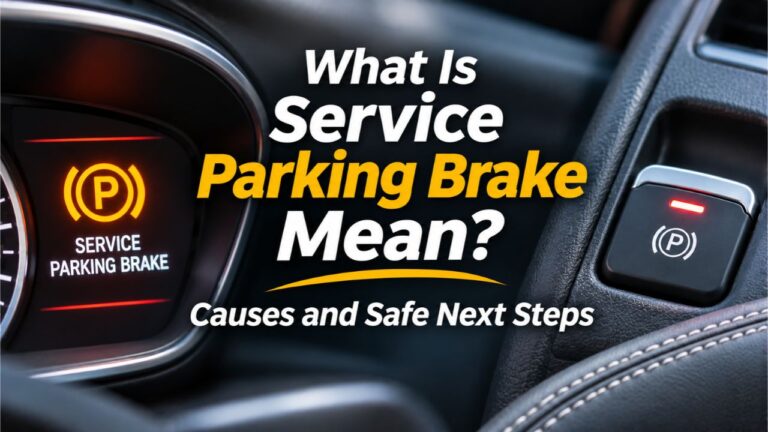
Allow the machine to complete its normal startup checks. Watch the instrument panel for warning lights or messages relating to the parking brake, seat bar, operator presence, hydraulics, or electrical system.
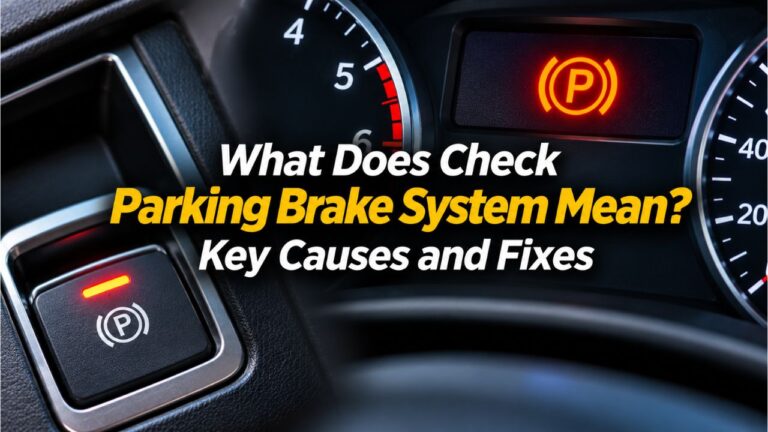
A parking-brake indicator may remain illuminated immediately after starting. On many skid steers, this is normal because the brake stays engaged until the operator enables the drive system.
Do not begin moving the machine while the parking-brake warning indicates that the brake is still applied.
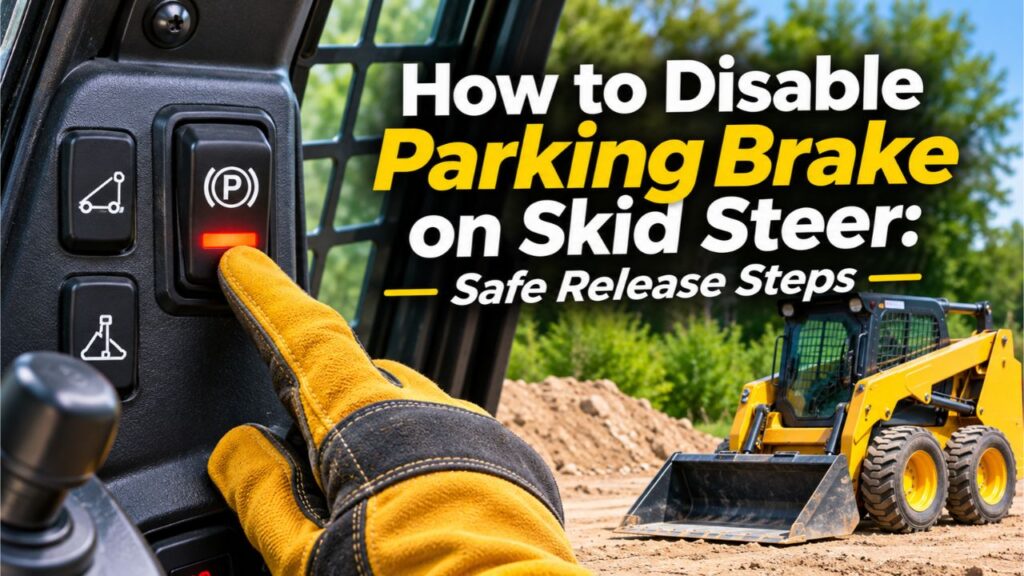
Step 05: Locate the Parking Brake Release Switch
Look for the designated parking-brake control on the dashboard, instrument panel, control console, or joystick area.
Depending on the model, it may be labeled:
- PARK BRAKE
- PARK
- BRAKE
- P with a parking-brake symbol
- RELEASE
- PRESS TO OPERATE or ENABLE, where the machine uses an additional control-activation system
A separate parking-brake switch and machine-enable button may both be present. They do not necessarily perform the same function.
For example, Bobcat’s S650 skid-steer specifications identify a mechanically acting parking brake operated through a switch on the left instrument panel.
Use the specific control described in your machine’s manual rather than assuming every switch with a similar symbol works identically.
Step 06: Operate the Parking Brake Release Control
Once the safety bar is lowered, the engine is running, and the system is ready, operate the parking-brake control in its specified release direction.
Some machines use a rocker switch. Others use a push-button or a machine-activation control that must be pressed after starting.
On certain Caterpillar loaders, the parking brake remains applied and the hydraulic system stays locked until the operator activates the machine.
Caterpillar’s skid steer loader safety guidance explains that some machines use a spring-applied, hydraulically released parking brake that automatically engages when the arm bars are raised or the engine stops.
If the brake does not respond to its normal release command, do not repeatedly operate the switch or try to force the loader forward.
Step 07: Confirm the Parking Brake Indicator Turns Off
After operating the release control, inspect the dashboard.
On many machines, the parking-brake indicator turns off when the system accepts the release command. Some models provide an additional display message or status indication showing that travel controls are enabled.
Make sure there are no active warnings indicating a failed release, raised safety bar, or disabled drive system.
A dashboard indicator changing state is an important confirmation, but it does not guarantee that a damaged mechanical brake has physically released.
If a warning persists, stop and investigate the problem before attempting movement.
Step 08: Verify Normal Travel Operation
Once the brake has been released successfully and the machine reports normal operating status, prepare to move only if the surrounding area is clear.
Follow the manufacturer’s normal travel procedure and use smooth, controlled inputs. An initial movement check should be performed only by a trained operator in an appropriate, unobstructed area.
The loader should respond normally without excessive resistance, unusual noises, or parking-brake warnings.
If the machine refuses to move, strains against resistance, or displays a brake-related fault, return the controls to neutral and stop the attempt.
Never increase engine speed or force the travel controls to overcome a parking brake that has not released.
How to Release the Parking Brake on Different Skid Steer Brands
Skid steer manufacturers use different brake controls and safety systems. The following overview explains common arrangements, but it does not replace model-specific operating instructions.
Bobcat Skid Steer Parking Brake Release
Many Bobcat skid steers use the Bobcat Interlock Control System (BICS). The system monitors operator-presence conditions and prevents certain machine functions from operating when its requirements are not satisfied.
A typical operating sequence includes sitting in the seat, lowering the seat bar, starting the engine, and pressing the designated Press to Operate Loader button where fitted.
Depending on the model, a separate parking-brake switch may also need to be operated. The machine’s controls and indicator lights should confirm when traction drive is available.
If the BICS system does not recognize the seat bar or operator presence, the loader may remain locked. Diagnose the fault rather than bypassing the sensor.
Caterpillar Skid Steer Parking Brake Release
Many Caterpillar skid steer loaders have spring-applied parking brakes that are released using hydraulic pressure.
The operator must satisfy the relevant seat and armrest conditions, start the engine, and activate the machine through the prescribed control.
The parking brake may engage automatically when the operator raises the restraint bars or shuts off the engine.
A machine that does not build sufficient hydraulic pressure or cannot satisfy an interlock condition may keep the brake applied.
John Deere Skid Steer Parking Brake Release
John Deere skid steers use model-dependent parking-brake controls and operator-presence systems.
Some machines have a dedicated parking-brake rocker switch, while others coordinate brake release with electronic controls and operator-presence requirements.
Sit correctly, secure the restraint system, start the engine, and use the specified brake-release control.
If the indicator remains illuminated, check the exact warning and operating requirements before assuming the parking-brake mechanism has failed.
CASE and New Holland Skid Steer Parking Brake Release
CASE and New Holland skid steers also use different control arrangements depending on model and production year.
Many have electronic monitoring of operator presence, restraint-bar position, and travel-control status.
The normal release procedure typically involves satisfying the operating interlocks and using the designated parking-brake control.
Switch location and activation sequence must be confirmed from the specific operator’s manual.
Kubota Skid Steer Parking Brake Release
Kubota skid steer loaders may use an electronically controlled parking brake with operator-presence and safety-lock requirements.
The driver must be seated properly with the appropriate restraint system engaged before enabling travel.
Some models require a specific parking-brake switch action, and others coordinate several controls during startup.
If the parking-brake indicator remains active, follow the model’s instructions and check for related warnings.
How Does a Skid Steer Parking Brake Work?
A skid steer parking brake is designed to keep the machine stationary when it is parked or when operating conditions require the drive system to be locked.
Many modern skid steers use a spring-applied, hydraulically released parking brake.
In this arrangement, spring force applies the brake when sufficient release pressure is unavailable. Hydraulic pressure releases the brake when the machine is operating under the correct conditions.
This design can help keep the machine from moving unexpectedly when the engine stops or the required system conditions are lost.
Other skid steers use mechanically actuated brakes controlled through electrical switches or related mechanisms.
The parking brake is not necessarily the same as the hydrostatic drive system’s normal deceleration function. Returning travel controls to neutral and engaging a dedicated parking brake serve different purposes.
Why Won’t the Parking Brake Release on a Skid Steer?
If the parking brake remains engaged after following the correct procedure, several possible faults should be considered.
| Possible Cause | What You May Notice | Appropriate Next Check |
| Safety bar not fully lowered | Restraint warning remains active | Check normal bar position |
| Operator-presence sensor fault | Seat warning or controls remain locked | Diagnose seat sensor circuit |
| Parking-brake switch failure | No response to release command | Inspect switch and electrical system |
| Low electrical power | Warning lights or unreliable controls | Test battery and charging system |
| Insufficient hydraulic pressure | Brake stays engaged despite startup | Check hydraulic system using service procedures |
| Damaged wiring or connector | Intermittent or persistent brake fault | Inspect electrical connections |
| Mechanical brake failure | Brake remains physically engaged | Professional brake inspection |
Safety Bar or Seat Sensor Problems
Safety interlocks are common reasons a skid steer will not enable travel.
A raised safety bar, damaged seat switch, or wiring fault may prevent the system from recognizing that the operator is correctly positioned.
Do not wedge the seat sensor down or bridge switch terminals to make the machine operate.
Low Hydraulic Pressure
A spring-applied parking brake may require hydraulic pressure to release.
If the engine is not running, the hydraulic system is malfunctioning, or sufficient release pressure is unavailable, the brake may remain engaged by design.
Low hydraulic fluid, damaged components, or a control fault may contribute, depending on the system.
The correct checks require the manufacturer’s hydraulic specifications and approved diagnostic procedures.
Electrical Problems
A damaged switch, blown fuse, corroded connector, or wiring fault can interrupt the brake-release command.
The dashboard may show an electrical or parking-brake warning.
A technician can inspect the appropriate circuit and use manufacturer diagnostic information to identify the fault.
Parking Brake Mechanism Is Stuck
A mechanical problem may prevent the brake from releasing even when the control system appears to function.
Possible issues include corrosion, damaged brake components, or an actuator that cannot complete its movement.
The brake should be inspected before the machine is returned to operation.
Can You Disable a Skid Steer Parking Brake Permanently?
Permanently disabling a skid steer’s parking brake or bypassing its safety interlocks is not a safe solution.
The parking brake helps prevent unwanted machine movement. Operator-presence switches and restraint systems also help prevent accidental travel and attachment movement.
The OSHA safety bulletin on skid-steer loaders and bypassed safety devices identifies serious injury and fatality hazards associated with defeated or improperly maintained safety equipment. OSHA advises against operating machines with disabled or malfunctioning safety systems.
If a parking brake is preventing normal operation, identify and repair the underlying fault.
Do not bypass switches, disconnect safety sensors, or modify brake-release components simply to make the loader move.
How to Release a Stuck Skid Steer Parking Brake for Towing
A disabled skid steer may need to be recovered when its parking brake cannot be released through the normal controls.
This is different from ordinary operation.
Some spring-applied brake systems have manufacturer-approved recovery procedures that allow trained technicians to release the brakes temporarily.
However, there is no universal emergency-release procedure for all skid steers. Depending on the model, special equipment, service access, hydraulic pressure, or mechanical procedures may be required.
Before recovery, the machine must be secured against unexpected movement. The attachment should be lowered or properly supported, and the recovery method must account for the machine’s weight and terrain.
Never disconnect hydraulic lines, loosen brake assemblies, or manually defeat spring-applied components without the correct service instructions.
If the brake cannot be released safely, use a qualified equipment recovery service and a suitable transport method.
A machine moved using an emergency service release must have its normal parking-brake function restored and verified before operating again.
How to Tell if the Skid Steer Parking Brake Is Fully Released
Several observations help identify successful release.
The parking-brake indicator should show the correct released status, and the operator-presence or interlock system should report normal operation.
When the machine is operated under proper conditions, the travel controls should respond without abnormal resistance.
The following conditions suggest the release is incomplete or another problem exists:
- Parking-brake warning remains illuminated.
- Drive controls remain locked.
- Engine or hydraulic system strains during travel input.
- The loader attempts to move unevenly.
- Unusual brake-related noises occur.
- The machine reports a hydraulic or electrical fault.
Do not perform repeated movement attempts to prove that a stuck brake is releasing.
How to Prevent Skid Steer Parking Brake Problems
Routine maintenance and correct operating habits reduce the likelihood of parking-brake trouble.
Inspect the restraint bar, seat belt, and accessible control components for damage. Keep the operator area clean so dirt or debris cannot interfere with normal movement of the controls.
Follow the manufacturer’s service schedule for the hydraulic system, electrical connections, and parking-brake components.
Pay attention to warning lights that appear intermittently. A temporary fault can indicate a developing electrical or hydraulic problem.
When leaving the machine, lower the attachment, return controls to neutral, engage the parking brake, and shut off the engine according to the operator’s manual.
Never operate a skid steer with known defective safety interlocks.
FAQs About How to Disable Parking Brake on Skid Steer
Where Is the Parking Brake Switch on a Skid Steer?
The parking-brake switch may be on the dashboard, instrument panel, or control console. Its location depends on the manufacturer and model. Some Bobcat loaders have a switch on the left instrument panel.
Why Is My Bobcat Skid Steer Parking Brake Locked?
Possible causes include an unmet BICS operating condition, a seat-bar or seat-sensor fault, an inactive drive-enable system, an electrical problem, or a mechanical brake fault. Check the indicator lights and model-specific instructions.
Does a Skid Steer Parking Brake Release Automatically?
Some skid steers release the parking brake after the required operating conditions and machine-enable commands are satisfied. Others require a separate switch. Many systems automatically apply the brake when the engine stops or a safety restraint is raised.
Can a Skid Steer Move With the Parking Brake Engaged?
A functioning parking brake should prevent normal travel. Attempting to force the machine to move while the brake is engaged can damage brake and drivetrain components. Stop the attempt and investigate the problem.
Can You Release a Skid Steer Parking Brake Without Starting the Engine?
It depends on the brake design. A spring-applied, hydraulically released system generally needs an approved source of release pressure. Some machines have specialized recovery procedures, but these should not be used as routine operating methods.
Does Press to Operate Loader Release the Bobcat Parking Brake?
On certain Bobcat models, pressing Press to Operate Loader enables traction and hydraulic functions after the safety requirements are met. Some configurations also use a separate parking-brake control. Follow the exact operating sequence for the machine.
What Should I Do if the Parking Brake Warning Stays On?
Stop operating the machine and check the required seat, restraint-bar, and control conditions. If the warning remains after the correct procedure, have the electrical, hydraulic, and brake systems inspected before continuing work.
Release the Skid Steer Parking Brake Without Compromising Safety
Understanding how to disable parking brake on skid steer equipment starts with identifying the correct release control and satisfying the machine’s operator-presence requirements. On many loaders, the process involves sitting properly, fastening the seat belt, lowering the restraint bar, starting the engine, and using the designated brake-release or machine-enable switch.
The exact procedure differs between Bobcat, Caterpillar, John Deere, CASE, New Holland, Kubota, and other manufacturers. A parking brake that remains engaged may be responding correctly to a safety condition or indicating a mechanical, hydraulic, or electrical fault.
Use the operator’s manual for the specific model and serial number, and confirm successful release before traveling. If the parking brake will not disengage normally, repair the underlying problem rather than bypassing the system. Maintaining a working parking brake and functioning safety interlocks is essential for dependable skid steer operation.