Can a Bad Brake Booster Cause a Spongy Pedal? Symptoms and Fixes
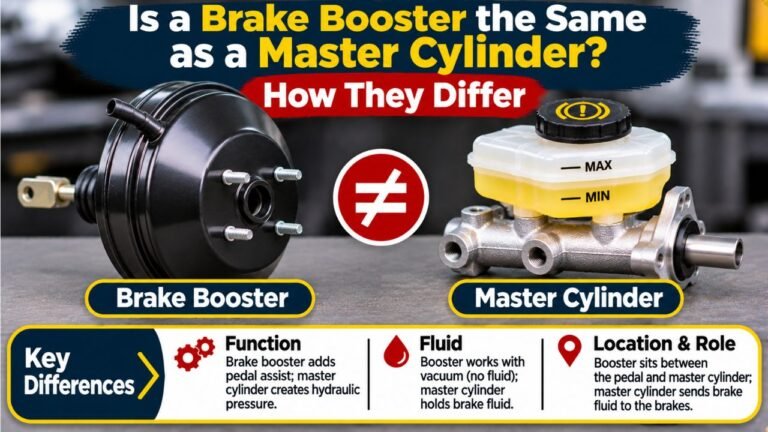
Usually, no. A bad vacuum brake booster typically causes a hard brake pedal that requires extra force, not a soft or spongy one. A spongy pedal more often points to air in the hydraulic lines, a fluid leak, or a problem with the master cylinder or wheel brakes. Both problems can affect stopping performance, but they involve different parts of the braking system.
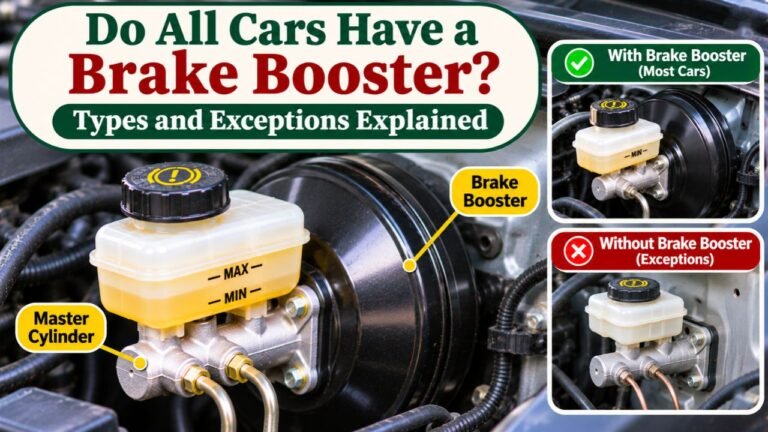
The confusion makes sense because the brake booster and master cylinder sit together near the firewall. A pedal can also move farther after the engine starts as vacuum assistance returns. That normal movement should not be mistaken for a pedal that feels springy, travels too far, or sinks under steady pressure.
If the pedal suddenly changes, do not assume the booster needs replacing. First determine whether the complaint is excessive effort, excessive travel, or a pedal that gradually sinks. This guide explains how those symptoms differ, which faults can occur together, how to make basic stationary checks, and when the vehicle needs immediate professional brake repair.
Can a Bad Brake Booster Cause a Spongy Pedal?
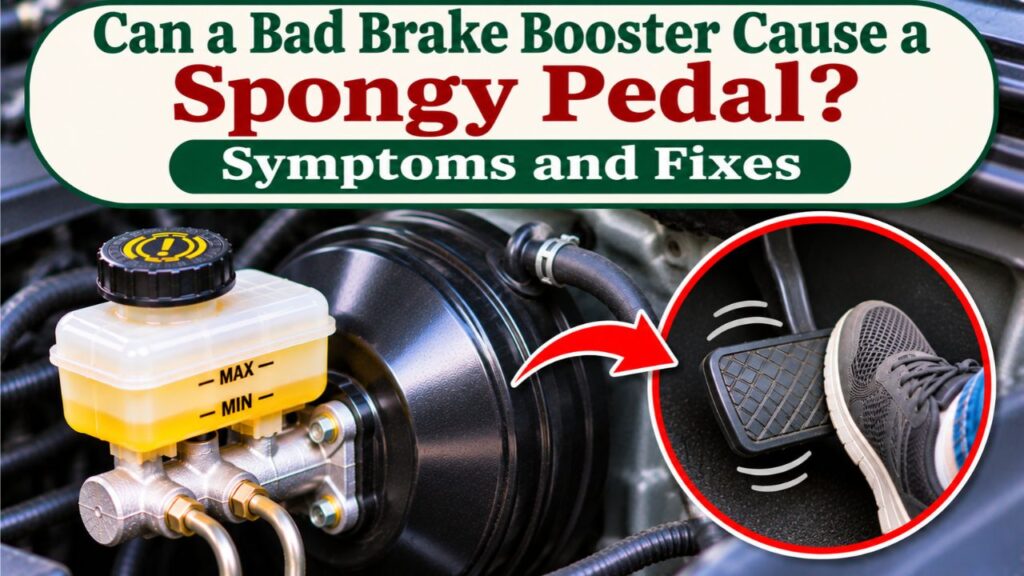
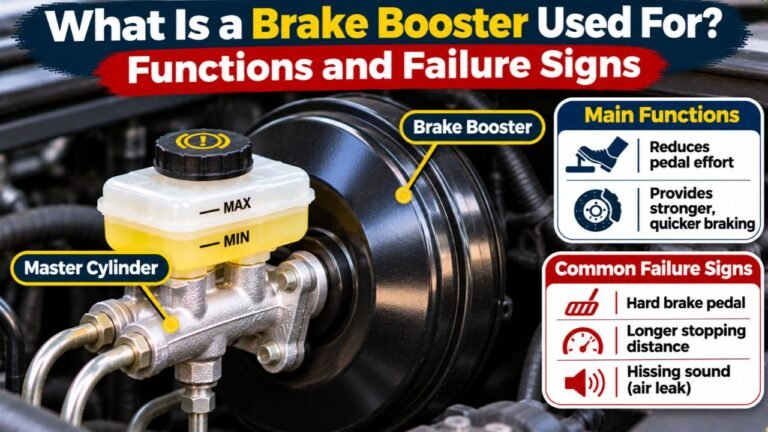
A vacuum brake booster helps the driver push the master cylinder piston with less leg effort. It does not normally contain the hydraulic pressure used to apply the wheel brakes. That pressure is produced by the master cylinder and transmitted through brake fluid.
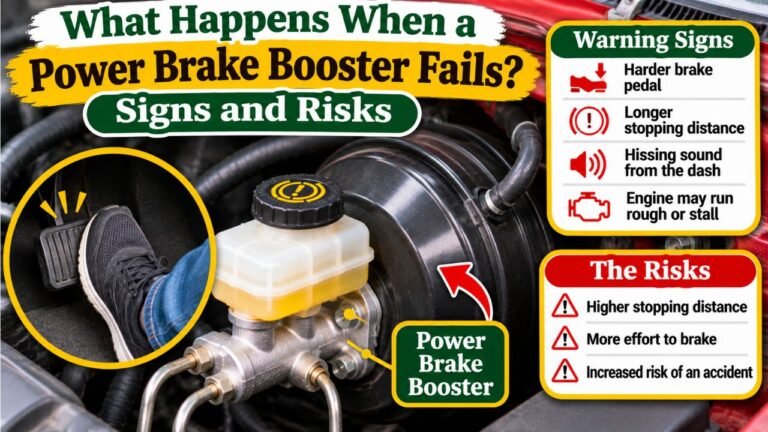
When a booster’s diaphragm, check valve, hose, or vacuum supply fails, assistance decreases. The driver usually notices a stiff pedal and greater effort to stop rather than a cushion-like feeling. O’Reilly Auto Parts’ brake pedal troubleshooting guide distinguishes hard pedals associated with booster problems from soft pedals commonly linked to air or leaks in the hydraulic system.
Why Brake Booster Failure Usually Makes the Pedal Hard
In a conventional vacuum system, the booster uses a pressure difference to increase the force applied to the master cylinder. If that assistance disappears, the mechanical connection can still operate the master cylinder on many vehicles, but the driver must press substantially harder. The pedal may feel high and resistant, and stopping distance can increase because the necessary braking force is harder to achieve.
Why a Soft Pedal Points Elsewhere
Brake fluid transmits force effectively because it compresses very little under normal operating conditions. Air bubbles compress much more readily. When air occupies part of the hydraulic circuit, the pedal travels farther as that air is compressed. Internal fluid bypassing, a leak, or excessive movement at a wheel brake can also produce abnormal pedal travel. Those faults require hydraulic or mechanical diagnosis, even if a booster symptom is present too.
Hard vs. Spongy vs. Sinking Brake Pedal Symptoms
The words soft, spongy, low, and sinking are sometimes used interchangeably, but each describes a useful diagnostic clue.
| Pedal Feel | What You Notice | Common Areas to Investigate |
| Hard or stiff | Extra force required; pedal may move very little | Booster, vacuum hose, check valve, vacuum source |
| Spongy or springy | Pedal compresses with an elastic feeling | Trapped air, fluid condition, flexible hoses |
| Low or long-travel | Brakes engage unusually far down | Air, leaks, drum adjustment, caliper movement |
| Slowly sinking | Pedal keeps moving under steady pressure | Hydraulic leak or master cylinder internal bypass |
These are patterns, not definitive tests. A vehicle can have more than one fault. A soft pedal that becomes firmer after several applications may suggest trapped air, but it does not prove air is the only cause. Likewise, a hard pedal can result from a vacuum supply issue rather than a defective booster housing.
Common Reasons a Brake Pedal Feels Spongy
Before replacing a brake booster, inspect the faults more directly connected with excessive hydraulic pedal travel.
Air Trapped in Brake Lines or the ABS Hydraulic Unit
Air is a leading cause of a springy brake pedal, particularly after a caliper, hose, master cylinder, or brake line has been replaced. It can enter when a hydraulic connection is opened or when the reservoir runs low enough to expose a feed port. Some vehicles also need special ABS bleeding procedures to remove air from internal passages.
NAPA’s guide to soft brake pedals identifies air in the brake hydraulics as a frequent cause of soft pedal feel and explains why bleeding can restore firmness when trapped air is the underlying fault. Bleeding must follow the vehicle’s prescribed order and procedure; repeating it without addressing a leak will not provide a lasting repair.
Brake Fluid Leaks and Low Reservoir Level
Inspect the brake fluid reservoir and the visible areas around the master cylinder, brake lines, flexible hoses, calipers, and wheel cylinders. Wet fittings, fresh drips, or a falling reservoir level can indicate fluid loss. Some leaks are concealed behind wheels, inside drum brakes, or at the rear of the master cylinder.
Normal pad wear can cause the reservoir level to fall gradually, so a modestly lower level does not by itself prove a leak. An unexpectedly low level, repeated need for topping up, or a new soft pedal needs prompt inspection. Adding fluid alone does not fix a leaking system.
Internal Master Cylinder Seal Failure
The master cylinder uses seals to produce and maintain hydraulic pressure. When fluid bypasses a damaged internal seal, the pedal may sink gradually despite constant foot pressure. The reservoir can remain full, and there may be no visible leak on the ground.
An external leak from the rear of the master cylinder can sometimes send brake fluid into the booster housing. This creates a confusing combination: the master cylinder may cause a low or spongy pedal while the contaminated booster may eventually develop its own fault. The brake fluid comes from the master cylinder, not from the booster’s vacuum chambers.
Swollen Hoses or Excessive Wheel-Brake Movement
A weakened flexible brake hose may expand when hydraulic pressure rises, contributing to a soft feel. At the wheels, poorly adjusted drum brakes, caliper movement, or pad knock-back can increase the distance the pedal must travel before braking becomes effective.
These issues do not always produce the same elastic sensation as trapped air. A technician may need to inspect wheel components, bearings, hose condition, and hydraulic pressure to distinguish them. Avoid assuming that every long pedal simply needs another bleed.
When a Brake Booster Problem Can Be Confused With Spongy Brakes
Although a failed vacuum booster is not the usual cause, several situations make the symptoms overlap.
Normal Pedal Drop When the Engine Starts
After stored vacuum has been used up with the engine off, a functioning booster should provide more assistance when the engine starts. Holding steady foot pressure can produce a small downward pedal movement. That brief change is normal on many vacuum-assisted vehicles, not evidence of hydraulic air.
The concerning behavior is a pedal that remains unusually springy, continues sinking, or moves much farther than normal. Comparing engine-off and engine-running feel can help describe the problem, but the vehicle’s specified test still matters.
A Leaking Master Cylinder Behind the Booster
Because the master cylinder mounts directly to the booster, fluid found near their joint may lead someone to blame the wrong component. A failed master cylinder rear seal can leak toward or into the booster. The resulting hydraulic issue may cause the pedal to sink, while fluid contamination can damage booster components.
Replacing only the booster would leave the source of fluid loss unresolved. Both components need inspection before a repair decision.
Incorrect Booster Pushrod Setup After Replacement
A replacement booster or master cylinder must have the correct mechanical relationship between its pushrod and the master cylinder piston. Excessive clearance can create unwanted free travel; insufficient clearance can prevent full piston return and cause brake drag or other faults. Neither condition should be casually adjusted to cure a spongy pedal.
If the pedal changed immediately after booster installation, verify the part number, mounting, and specified pushrod clearance. Incorrect adjustment can make a brake problem worse.
How to Tell Whether the Booster or Hydraulic Brakes Are at Fault
These checks are intended to identify symptoms while the vehicle remains parked. They do not certify that a braking system is safe for road use. If the pedal approaches the floor, braking is unpredictable, or brake fluid is leaking, stop and arrange professional inspection or towing.
Step 01: Secure the Vehicle and Observe the Initial Pedal Feel
Park on level ground, set the parking brake, choose Park or the appropriate gear, and chock the wheels. With the engine off, press the brake pedal gently and note whether it feels unusually soft, sinks steadily, or becomes firm. Do not force it repeatedly to the floor.
On vehicles with electric brake assistance, electric vacuum pumps, or electronically controlled hydraulic units, follow the service manual instead of assuming that switching off the engine removes assistance or pressure.
Step 02: Inspect the Brake Fluid Level and Visible Leak Points
Read the reservoir level through its translucent wall if possible. Check for obvious wetness around the master cylinder, hydraulic fittings, accessible hoses, and beneath the vehicle. Avoid opening or disconnecting brake lines for this preliminary inspection.
If the reservoir is empty or a leak is visible, do not proceed with booster testing as though the hydraulic system were sound. The leak and any introduced air must be corrected first.
Step 03: Check the Vacuum Booster’s Engine-Start Response
For a conventional vacuum booster, pump the pedal several times with the engine off to use stored assistance. Hold moderate, consistent pressure, then start the engine in a well-ventilated location. A slight pedal drop generally indicates that vacuum assistance is returning.
Mitsubishi’s brake booster operation check describes this response and additional vacuum-reserve checks for the vehicles covered by that procedure. It also identifies the check valve, vacuum hose, and booster as possible causes when testing fails. Use the applicable service manual rather than assuming the same test is valid for every brake design.
Step 04: Check the Vacuum Hose and Listen for Abnormal Hissing
With the engine off, look for detached fittings, cracked hose sections, damaged grommets, or collapsed tubing between the vacuum source and booster. A persistent hiss near the booster while braking may point toward an air leak, especially when accompanied by an unusually hard pedal.
A brief airflow sound during normal operation is not proof of failure. Do not spray flammable cleaners around a running engine or disconnect vacuum fittings without the vehicle-specific procedure.
Step 05: Compare the Findings Without Guessing at Parts
A hard pedal with poor booster response directs attention toward vacuum supply and assist components. A soft pedal with long travel or sinking under pressure directs attention toward hydraulics, even if the booster responds normally. A combination of symptoms requires checking both systems.
If the result remains unclear, a qualified technician can perform controlled hydraulic pressure, vacuum-retention, and master cylinder tests using the proper equipment. Do not use improvised master cylinder plugs or clamp brake hoses as a home diagnostic shortcut.
What if the Pedal Became Spongy After Brake Booster Replacement?
A new soft pedal after booster replacement does not automatically mean the new booster is defective. First establish exactly what was disturbed during the repair.
If the master cylinder’s hydraulic lines were disconnected or the reservoir ran dry, air may have entered. The brakes then need the manufacturer-approved bleeding procedure, possibly including an ABS service routine. If the master cylinder was moved aside without opening the lines, check for stressed tubing, leaks, incorrect mounting, or a pushrod mismatch.
A pedal that only moves slightly lower when the engine starts may reflect restored assistance. Persistent softness or continued sinking is different and must be investigated before the vehicle is driven. The proper remedy depends on what inspection reveals, not on how recently the booster was installed.
Can You Drive With a Spongy Brake Pedal?
Do not continue driving with a newly spongy, sinking, or unpredictable brake pedal. The underlying problem could involve air, an active hydraulic leak, or failing seals, and the vehicle may not stop as expected. A booster problem that causes unusually high pedal effort also deserves immediate attention.
Park safely if the symptom is discovered before a trip. If it occurs while driving, reduce speed as safely as possible, create distance from traffic, and bring the vehicle to a safe stop. Arrange towing and an appropriate brake inspection rather than testing the pedal further on public roads.
FAQs About Can a Bad Brake Booster Cause a Spongy Pedal
Does a Bad Brake Booster Make the Pedal Soft or Hard?
A failing vacuum booster most often makes the pedal hard because it provides less assistance. A soft, springy pedal more commonly suggests a hydraulic problem such as trapped air or a leak.
Can a Bad Master Cylinder Feel Like a Bad Brake Booster?
Yes, both can change pedal behavior, but the usual patterns differ. A leaking or internally bypassing master cylinder can cause a sinking pedal, while a vacuum booster failure commonly increases pedal effort.
Why Is My Brake Pedal Spongy Only With the Engine Running?
Vacuum assistance makes pedal travel easier, which can reveal existing hydraulic softness more clearly. A slight drop when the engine starts is normal on many vacuum systems, but continuous sinking or excessive travel is not.
Will Bleeding the Brakes Fix a Bad Brake Booster?
No. Bleeding removes air from hydraulic circuits; it does not repair a leaking booster diaphragm, damaged check valve, or vacuum supply fault. It helps only when trapped hydraulic air is contributing to the pedal problem.
Can Brake Fluid Leak Into the Brake Booster?
Yes. A failing rear seal in the master cylinder can allow brake fluid to enter the booster housing. That is a master cylinder leak and may also damage the booster, so both parts need inspection.
A Spongy Brake Pedal Needs the Right Diagnosis Before Any Booster Replacement
If you’re wondering can a bad brake booster cause a spongy pedal, the important distinction is that vacuum-booster failure generally creates a hard pedal, while sponginess usually indicates a problem with hydraulic pressure or wheel-brake movement. The parts are connected mechanically, so two faults can exist together, but the symptoms should not be treated as interchangeable.
Start with a stationary fluid-level and leak check, then compare pedal feel and the booster response only when the hydraulic system appears intact. If the pedal sinks, feels abnormally soft, or braking performance is uncertain, keep the vehicle off the road until the actual fault has been repaired and verified.