Can a Bad Brake Booster Affect Engine Performance? Warning Signs
Yes, a bad brake booster can affect engine performance if it allows unwanted air into an engine’s intake vacuum system. A leaking vacuum booster, cracked hose, or faulty connection can cause rough idling, fluctuating RPM, hesitation, and sometimes stalling, especially when the brake pedal is pressed. However, a booster that simply stops providing assistance without creating an intake vacuum leak may not change how the engine runs.
That difference matters because a hard brake pedal and a rough-running engine can appear together, yet they don’t always share the same cause. An engine with poor vacuum can also make an otherwise healthy booster feel weak. Replacing the booster without checking its supply hose and vacuum source may therefore leave the original problem unresolved.
Understanding what happens inside the vacuum system helps separate engine symptoms from brake symptoms. The sections below explain how a booster leak changes engine operation, which warning signs deserve attention, how to narrow down the fault safely, and when another brake-assist design behaves differently.
Can a Bad Brake Booster Affect Engine Performance at Idle?
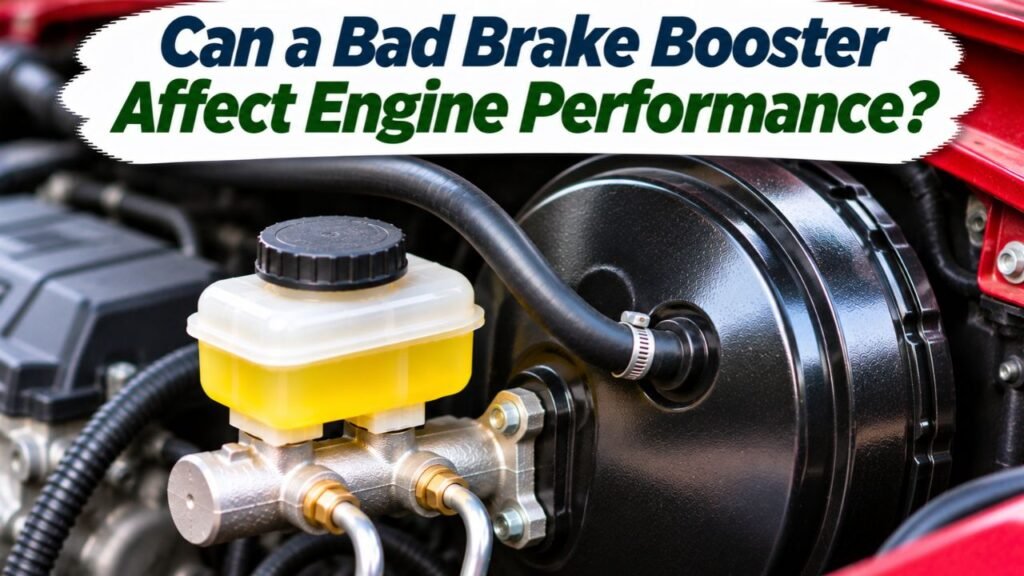
A conventional vacuum brake booster uses low pressure from the intake manifold to help push the brake master cylinder. Its diaphragm and internal valves create a pressure difference that reduces the driver’s pedal effort. A one-way check valve helps preserve some assistance when manifold vacuum falls or the engine stops.
Under normal conditions, the vacuum circuit is sealed. When the booster diaphragm, control valve, hose, or fitting leaks, extra air may enter the intake manifold through that circuit. The engine then has to deal with air entering by a path it wasn’t meant to use. Depending on the fuel-control system, this can create an overly lean air-fuel mixture or disturb idle-speed control.
Automotive specialist Mia Bevacqua explains in CarParts.com’s vacuum leak guide that unmetered intake air can lead to rough running, incorrect idle speed, and stalling. A booster connection is one possible entry point, not the only one.
The effect is often strongest at idle because total airflow is relatively low. A small leak represents a greater share of the air entering the engine at idle than it would under heavy acceleration. The engine computer can correct some mixture errors, but a larger or changing leak may exceed its ability to maintain smooth operation.
Engine Performance Symptoms of a Leaking Brake Booster
Rough Idle or Shaking When the Engine Is Running
A leak in the booster vacuum circuit can make the engine shake or run unevenly at idle. You might notice the steering wheel or seat vibrating at a stoplight, even though the engine seems smoother once RPM rises.
This happens because additional intake air can upset the mixture and cause uneven combustion. Rough idle alone is not proof of booster failure; faulty ignition components, intake gaskets, and other air leaks can produce the same effect.
RPM Drops or Engine Stalls When Braking
If the engine stumbles specifically as the brake pedal is depressed, pay close attention to the booster circuit. Operating a leaking internal valve may change the amount of air entering the manifold. At low engine speed, that sudden change can make RPM fall sharply or cause a stall.
AutoZone’s guide to bad brake booster signs lists engine stumbling or stalling, hissing noises, and a hard pedal among possible symptoms. A stall while stopping is particularly dangerous because it may reduce both available propulsion and vacuum assistance.
Surging, High Idle, or Hesitation
Not every vacuum leak makes RPM fall. Depending on the throttle and engine control strategy, unwanted air can raise idle speed or make it hunt up and down as the computer tries to compensate. Some vehicles may also hesitate when pulling away from a stop.
These symptoms are generally more suggestive of an intake air problem when they occur alongside a hissing booster hose or unusually firm brake pedal. Hesitation during hard acceleration, on its own, points to many possible engine faults and does not specifically identify the booster.
Hissing Sound With a Hard Brake Pedal
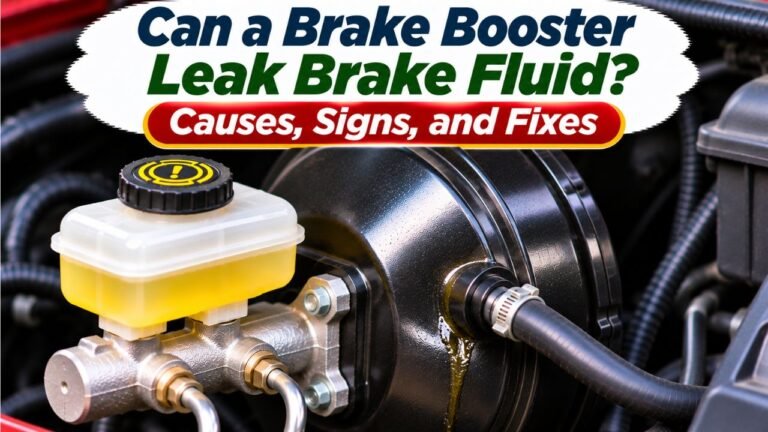
A steady hiss near the firewall or above the brake pedal can indicate air passing through a leaking booster diaphragm, internal valve, grommet, or hose. A brief airflow sound during normal pedal operation is not necessarily abnormal. Persistent hissing, especially with reduced assistance, deserves inspection.
A hard pedal means greater force is required to operate the brakes. If the engine also idles poorly, an intake-connected vacuum leak becomes a stronger possibility. If the pedal is soft or sinks toward the floor, a separate hydraulic problem must be considered.
Can a Bad Brake Booster Trigger a Check Engine Light?
Yes, a substantial vacuum leak in a manifold-connected booster system can contribute to a check engine light. A scan tool may show lean-mixture codes such as P0171 or P0174, or misfire-related faults, depending on the engine and how it monitors airflow.
These codes describe conditions detected by the engine computer; they do not identify a booster as the failed part. A cracked intake boot, leaking PCV line, fuel-delivery problem, or other component may produce similar results. Some vehicles also monitor booster vacuum through a dedicated sensor and can record a brake-assist-related fault.
Live short-term and long-term fuel trim readings can help a technician investigate. Strong positive corrections at idle that decrease as engine speed rises are consistent with some vacuum leaks, but the pattern needs to be interpreted alongside the vehicle’s specifications and other test results.
How to Tell Whether the Booster or Engine Is Responsible
The direction of the problem can go either way. A failed booster may introduce unwanted air into the engine, or an engine that makes too little vacuum may leave a healthy booster with inadequate assistance.
| What You Notice | Possible Explanation |
| Hard pedal plus hissing and rough idle | Booster, hose, or check-valve connection leaking |
| Hard pedal but engine runs normally | Loss of assistance without an intake leak, or another vacuum-supply fault |
| Rough idle but pedal assistance feels normal | Vacuum leak elsewhere or an unrelated engine problem |
| Poor engine vacuum and weak brake assist | Engine or vacuum-pump problem may be affecting the booster |
| Soft or sinking brake pedal | Possible hydraulic fault rather than a typical booster vacuum failure |
A damaged one-way check valve may let stored booster vacuum escape without causing the same continuous intake leak as a ruptured diaphragm. A restricted vacuum hose can also limit assistance while leaving engine idle largely unchanged.
Before buying a booster, identify which design the vehicle uses and verify whether the actual fault lies in the booster housing, supply hose, check valve, vacuum pump, or engine.
Practical Checks for Booster-Related Engine Problems
Inspect the Vacuum Hose and Booster Connections
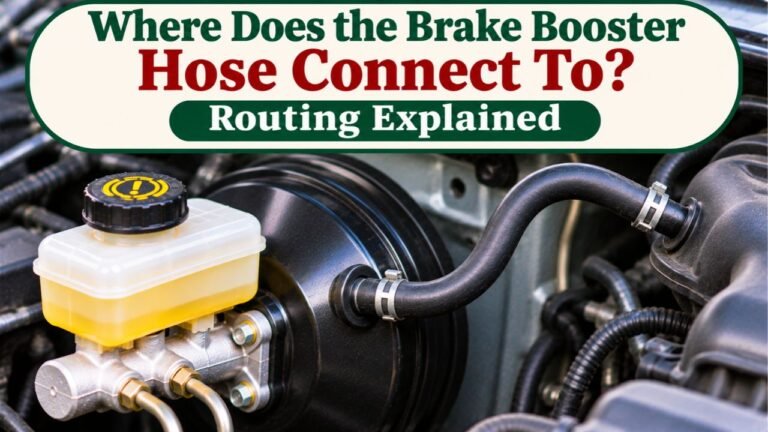
With the engine off, look behind the master cylinder for the round booster housing and the larger vacuum line entering it. Trace the line toward the intake manifold or dedicated vacuum pump. Look for disconnected fittings, brittle elbows, splits, and a damaged rubber grommet at the booster.
Do not pull on aging plastic connectors or substitute ordinary coolant hose for a specified vacuum line. The replacement must fit securely and resist collapse under vacuum. An obvious disconnection is a reason to keep the vehicle parked until it is correctly repaired.
Compare Pedal Feel Before and After Starting the Engine
For a conventional engine-vacuum booster, press the brake pedal several times with the engine off to use up stored vacuum. Hold moderate pressure on the pedal, then start the engine normally. A small downward pedal movement generally indicates that assistance is developing.
No movement or an unusually hard pedal means the system needs more testing, not automatically a new booster. Insufficient engine vacuum, a blocked hose, or a faulty check valve can cause the same result. This test does not apply unchanged to all electric or hydraulic brake-assist systems.
Check Whether Engine Idle Changes During Brake Application
With the vehicle secured and stationary, listen to the engine at idle and observe whether applying and releasing the brake pedal produces a repeatable stumble or hiss. A small, brief idle correction may occur normally. A pronounced drop, sustained roughness, or near-stall is more concerning.
Do not keep repeatedly pumping the pedal if braking assistance seems lost. Avoid spraying flammable chemicals around a running engine to search for leaks. A trained technician can use appropriate smoke-testing equipment to locate an air leak without guesswork.
Verify Vacuum Supply and Scan Data
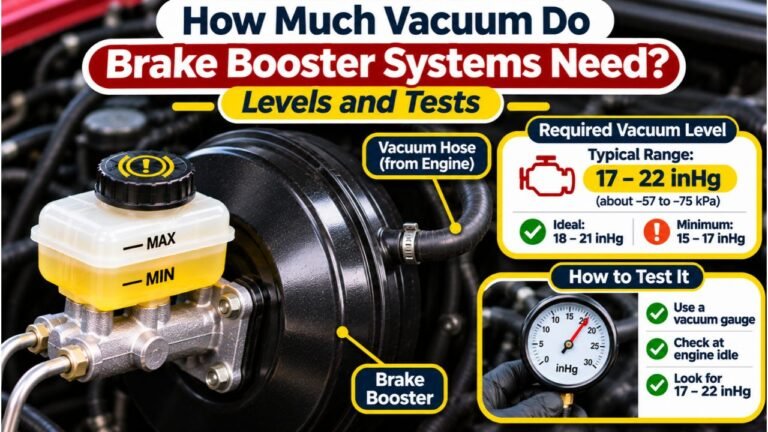
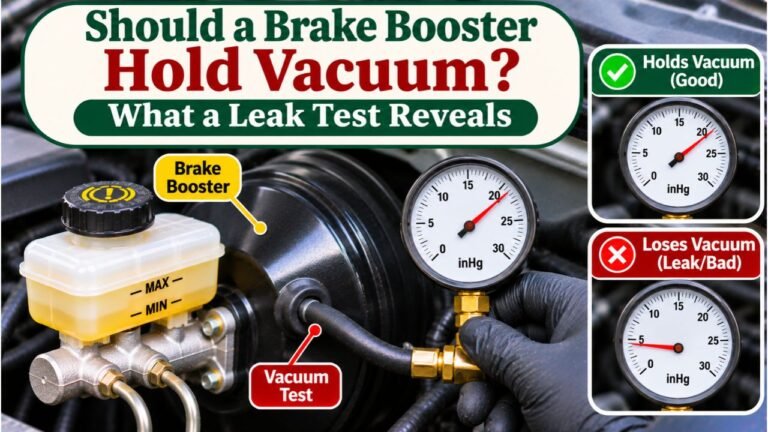
A technician can measure vacuum at the manufacturer’s test point, check the one-way valve, and assess whether the booster retains vacuum. The correct values and procedure depend on the engine, altitude, and whether an auxiliary pump supplies the system.
Engine diagnostic codes and fuel trims may support the findings, but they cannot pinpoint a booster leak by themselves. A controlled diagnostic process should establish adequate vacuum supply before treating the booster assembly as defective.
Will Every Bad Brake Booster Cause Engine Problems?
No. Loss of braking assistance and an engine vacuum leak are related but different failures. A damaged diaphragm or leaking internal valve in a manifold-connected booster can affect engine operation. A stuck or restricted check valve may instead produce a hard pedal without admitting enough additional air to disturb idle.
Some vehicles use a separate vacuum pump. A fault confined to a sealed pump-assisted circuit may reduce brake assistance without directly changing the engine’s intake mixture. A mechanically driven pump can have its own faults, but they should not be confused with an intake-manifold vacuum leak.
HELLA’s electric vacuum pump testing guide explains that supplementary pumps supply brake-booster vacuum when engines cannot provide enough under all conditions. Hydro-Boost systems use hydraulic pressure, often from the power steering pump, instead of manifold vacuum. Integrated electronic brake boosters work differently again.
The vehicle’s brake-assist design determines which engine symptoms are physically possible and which tests are appropriate.
What Repairs Can Restore Smooth Engine Operation?
If inspection confirms a cracked hose, leaking grommet, or defective check valve, replacing that component may restore both idle quality and brake assistance. Use the correct parts and verify hose routing and valve orientation rather than connecting the line to any convenient intake port.
If the booster diaphragm or internal air-control valve is leaking, the assembly usually needs replacement according to the manufacturer’s repair procedure. Booster replacement can involve pedal linkage adjustment, pushrod clearance, and master-cylinder handling. Incorrect installation can create brake drag or insufficient braking, so specialized service may be appropriate.
If the engine cannot create the required vacuum, repairing the booster will not solve the underlying issue. Engine intake leaks, an inadequate vacuum supply, or a failing auxiliary pump must be diagnosed separately. After any repair, confirm leak-free connections, correct brake-pedal operation, and stable engine idle before the vehicle returns to service.
Is It Safe to Drive With Booster-Related Engine Symptoms?
No, not when brake assistance is reduced, the pedal becomes unexpectedly hard, or the engine stalls during braking. A vacuum-assisted hydraulic system may still operate without boost, but stopping can require substantially more pedal force than the driver expects. Engine stalling adds another unpredictable hazard.
If the symptoms appear while driving, maintain control, apply steady braking force, and stop in a safe place. Do not repeatedly pump away any remaining vacuum assistance. Arrange a qualified inspection or tow rather than testing the vehicle on public roads. Rough idle without obvious pedal changes still warrants prompt diagnosis when a booster leak is suspected.
FAQs About Can a Bad Brake Booster Affect Engine Performance
Can a Bad Brake Booster Make the Engine Stall at a Stoplight?
Yes. A substantial vacuum leak through a manifold-connected booster can disturb the engine’s air-fuel mixture enough to cause stalling at idle. It is not the only possible cause of stalling, so the vacuum circuit should be tested.
Can a Brake Booster Cause High RPM at Idle?
It can. Extra air entering through a leaking booster circuit may raise idle speed or cause surging, depending on how the engine computer responds. Some leaks instead create a rough or low idle.
Will a Bad Brake Booster Reduce Engine Horsepower?
Not necessarily. A booster that loses assist without an intake leak may have no direct effect on engine output. A significant vacuum leak can cause misfires or hesitation that make the engine feel weak, particularly at idle or low speeds.
Can a Bad Brake Booster Cause a P0171 or P0174 Code?
Yes, if its vacuum circuit introduces enough unmetered air to create a lean condition. Those codes do not prove booster failure; other intake leaks and fuel-system problems can trigger them.
Why Does My Engine Run Rough Only When I Press the Brake Pedal?
Brake-pedal movement changes the booster’s internal valve operation. If the booster leaks, that movement can change the amount of unwanted air reaching the intake. A persistent hiss or hard pedal makes the booster circuit worth inspecting.
What Engine Symptoms Tell You About Brake Booster Health
So, can a bad brake booster affect engine performance? Yes, particularly when a vacuum leak allows extra air into a gasoline engine’s intake system. Rough idle, fluctuating RPM, hesitation, stalling, or a check engine light can appear alongside hissing and unusually heavy brake-pedal effort. But a booster can fail without disturbing engine operation, and poor engine vacuum can also weaken an otherwise functional booster.
The most useful next step is to identify the brake-assist design and check the hose, connections, vacuum supply, and booster before replacing parts. If the pedal is hard or the engine stalls during braking, leave the vehicle parked until the cause has been diagnosed and repaired.