Is Clutch and Brake Master Cylinder the Same? Key Differences
No. A clutch master cylinder and a brake master cylinder are different parts that use a similar hydraulic principle but operate different systems. The clutch master cylinder helps disengage the clutch so a driver can change gears. The brake master cylinder generates hydraulic pressure to operate the wheel brakes and slow the vehicle.
Both components can contain pistons, seals, a pushrod, and hydraulic fluid. On some manual-transmission cars, they even draw fluid from the same reservoir. That similarity makes it easy to mistake one part for the other, especially when looking under the hood or ordering a replacement.
The differences affect much more than their names. Each cylinder has its own purpose, connections, operating requirements, and potential failure symptoms. Using the wrong part can cause improper clutch release or unsafe braking. This article explains how the cylinders work, where to find them, why shared fluid does not make them interchangeable, how to recognize faults, and what to verify before replacing either component.
Is Clutch and Brake Master Cylinder the Same? Key Differences
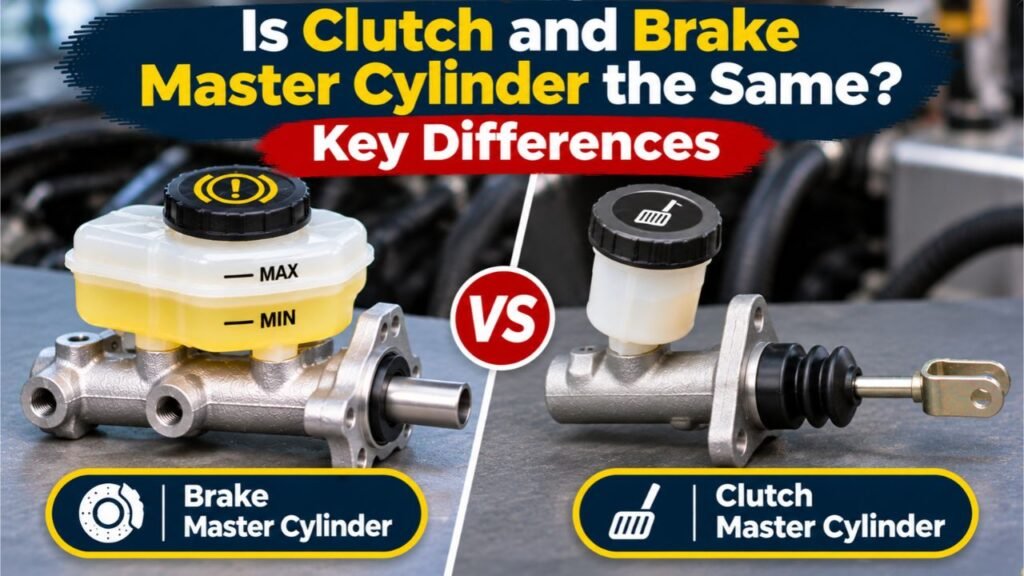
The two cylinders perform the same basic task: they convert pedal movement into hydraulic pressure or fluid movement. What happens to that pressure is different. One releases the engine-to-transmission clutch; the other applies the vehicle’s brakes.
| Feature | Clutch Master Cylinder | Brake Master Cylinder |
| Primary job | Operates a hydraulic clutch release system | Applies hydraulic pressure to the wheel brakes |
| Driver input | Clutch pedal | Brake pedal |
| Connected components | Clutch line and slave or release cylinder | Brake lines, ABS unit where fitted, calipers, and wheel cylinders |
| Typical internal layout | One hydraulic actuation circuit | Tandem design with two hydraulic brake circuits on many passenger vehicles |
| Fluid supply | Separate reservoir or shared brake reservoir | Brake fluid reservoir, often mounted on the cylinder |
| Typical location | Near the clutch pedal, sometimes inside the cabin | Engine compartment, commonly mounted to the brake booster |
| Common failure clue | Clutch pedal sinks or gears become hard to select | Brake pedal sinks or stopping performance changes |
| Interchangeable? | Not a substitute for a brake cylinder | Not a substitute for a clutch cylinder |
Their external shapes may look alike because both need a piston moving inside a sealed bore. However, dimensions, mounting points, piston travel, fluid fittings, and intended service loads are not automatically equal. The vehicle’s parts catalog, not appearance, determines the correct cylinder.
What Does a Brake Master Cylinder Do?
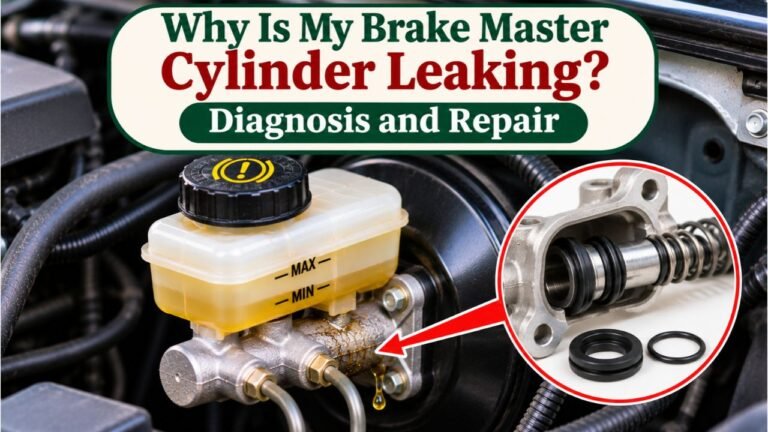
A brake master cylinder is the hydraulic pressure source in a conventional vehicle braking system. Pressing the brake pedal moves a pushrod and internal pistons, which pressurize brake fluid inside the cylinder. That pressure travels through hydraulic lines to the braking components at the wheels.
From the Brake Pedal to the Wheel Brakes
At a disc brake, hydraulic pressure moves the caliper pistons so the pads press against the spinning rotor. At a drum brake, a wheel cylinder pushes the brake shoes outward against the drum. Friction then slows the wheel.
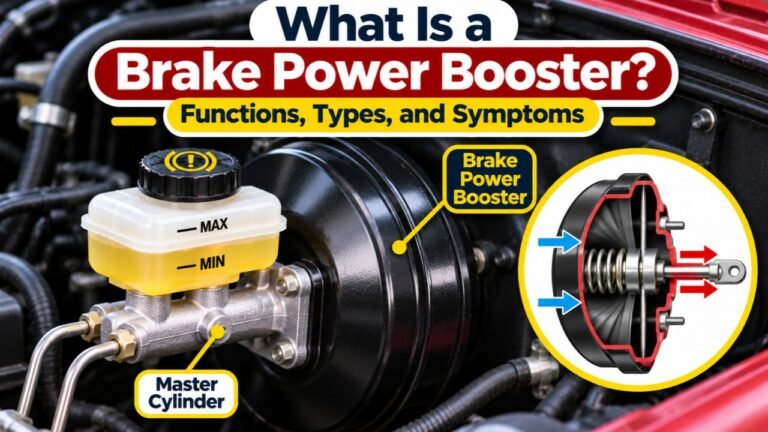
Many vehicles use a brake booster to reduce the effort the driver needs at the pedal. A faulty booster can make the pedal unusually hard; a hydraulic leak may allow excessive travel.
Why the Brake Master Cylinder Usually Has Two Circuits
Most modern conventional passenger-car brake master cylinders use a tandem arrangement, with two pistons serving separate hydraulic circuits. This design helps preserve some braking ability if one circuit loses pressure, although braking performance can be severely reduced and the vehicle remains unsafe to drive.
NAPA Auto Parts’ explanation of brake master cylinder operation describes how the primary and secondary pistons generate pressure for separate portions of the brake system. The exact wheel arrangement can differ by vehicle.
A clutch master cylinder, by contrast, typically serves one release circuit.
How Does a Clutch Master Cylinder Work?
On a vehicle with a hydraulic clutch, the clutch master cylinder turns clutch-pedal travel into hydraulic movement. Pressing the pedal pushes the master-cylinder piston, sending fluid through a line to a clutch slave cylinder or concentric release unit.
From the Clutch Pedal to the Release Mechanism
The slave cylinder converts the hydraulic movement back into mechanical motion. Depending on the design, it moves a clutch fork or operates a release bearing directly. That action reduces the pressure holding the clutch disc against the flywheel, allowing the engine and transmission to separate for gear changes.
When the driver releases the pedal, the clutch mechanism returns toward its engaged position. Hydraulic fluid moves back as the master and slave components return. The system must have the correct pedal travel, hydraulic volume, and component alignment to work smoothly.
The cylinder releases the clutch; the transmission shifter selects gears.
Clutch Master Cylinder Versus Clutch Slave Cylinder
These parts work together but are not the same. The master cylinder receives movement from the clutch pedal and creates hydraulic action. The slave cylinder receives that action at the transmission end and moves the release mechanism.
Some vehicles have an external slave cylinder that moves a visible clutch fork. Others use a concentric slave cylinder inside the bellhousing, surrounding the transmission input shaft. Reaching that internal unit may require transmission removal.
Not every manual-transmission car has a clutch master cylinder. Older and some specialized vehicles use a mechanical clutch cable or linkage instead. In those systems, there is no hydraulic clutch master and slave pair to inspect.
Can the Clutch and Brake Master Cylinders Share Fluid?
Yes. Some vehicles use one brake fluid reservoir to supply both the brake master cylinder and the hydraulic clutch master cylinder. Others have a separate reservoir for each system. A shared reservoir does not mean there is one shared master cylinder.
Shared Reservoirs Still Feed Different Hydraulic Circuits
A shared tank supplies fluid through separate passages or hoses. The brake master cylinder pressurizes the wheel-brake circuits, while the clutch master cylinder pressurizes its own release line. Pressing the clutch pedal does not normally apply the brakes, and pressing the brake pedal does not release the clutch.
Valeo’s clutch hydraulics overview specifically explains that the clutch and brake systems may have either a common fluid reservoir or separate reservoirs. It also identifies the clutch master cylinder and release cylinder as different parts of the clutch hydraulic path.
On some vehicles, the clutch supply port sits higher in the shared reservoir to help retain fluid for braking if a clutch leak develops. Do not assume every design has this protection. A low shared reservoir can indicate a leak in either system and calls for immediate inspection.
Do Both Master Cylinders Use the Same Brake Fluid?
Many hydraulic clutches use the same DOT 3 or DOT 4 glycol-based brake fluid specified for the vehicle’s braking system. The actual requirement depends on the manufacturer and model. Some specialized hydraulic clutch systems require a different fluid.
Check the owner’s manual and reservoir label rather than relying on appearance or the fact that the reservoirs are connected. Do not substitute transmission fluid, engine oil, or power steering fluid. DOT 5 silicone brake fluid must not be used in a system that does not specify it.
Using the wrong fluid may damage seals and require professional evaluation beyond a fluid top-up.
Where Are the Brake and Clutch Master Cylinders Located?
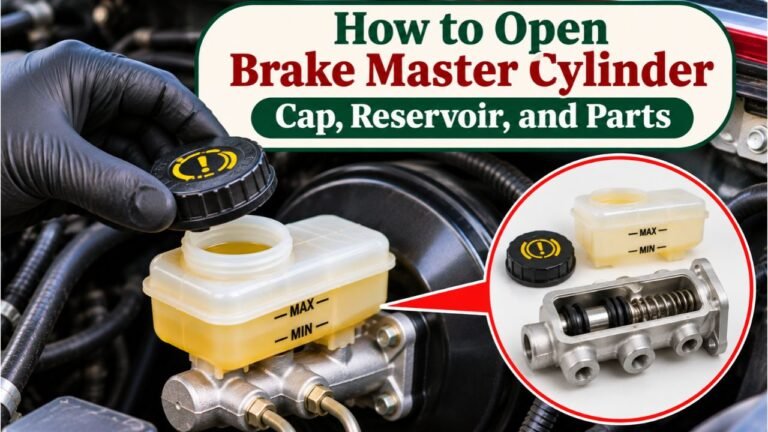
The brake master cylinder is commonly found near the driver’s side of the engine compartment. On many conventional cars, its body is bolted to the round brake booster at the firewall, with a fluid reservoir above it and rigid hydraulic lines extending toward the brake system.
A clutch master cylinder is usually closer to the clutch pedal’s linkage. It may extend through the firewall or sit partly inside the cabin beneath the dashboard. Its hydraulic outlet leads toward the transmission rather than toward the wheel brakes.
To identify the correct unit, trace the pedal linkage and hydraulic line using the service diagram for the specific vehicle. Avoid opening a fitting merely to see which line contains fluid. Doing so can introduce air and create a serious braking or clutch-release problem.
Can You Replace a Clutch Master Cylinder With a Brake Master Cylinder?
No, not as an ordinary replacement. Although both produce hydraulic action, they are engineered for different jobs. A brake master cylinder that appears to fit near a clutch pedal may still be unsuitable, and a clutch cylinder cannot simply replace a car’s tandem brake master cylinder.
Why Bore Size, Travel, and Fittings Matter
The cylinder bore affects how much fluid the piston moves and how pedal force relates to hydraulic pressure. The stroke determines the available fluid displacement. An incorrect clutch master cylinder may fail to move the slave cylinder far enough or may overtravel the release mechanism.
An unsuitable brake cylinder can alter pedal travel, pressure behavior, or dual-circuit operation. Ports, pushrods, and ABS compatibility also matter.
Specialized custom systems are engineered differently; that does not make stock parts interchangeable.
How to Choose the Correct Replacement Part
Use the vehicle identification number, model year, engine, transmission, and brake configuration when looking up a replacement. Check the manufacturer’s part number or a reputable catalog that explicitly lists the correct fitment.
Matching mounting bolts or a similar photo is not enough. Confirm the pushrod, fluid fittings, and approved application.
Signs of a Bad Clutch Master Cylinder Versus a Bad Brake Master Cylinder
Symptoms help identify the affected system, but hoses, seals, and connected components can cause similar faults.
Symptoms of Clutch Master Cylinder Problems
Possible signs include a clutch pedal that remains near the floor, fails to return normally, or feels inconsistent; difficulty selecting first gear or reverse; grinding during shifts; and fluid near the clutch pedal or master-cylinder connection.
A worn internal seal may let fluid bypass without an obvious external leak. However, a leaking slave cylinder can cause the same low-fluid or poor-release symptoms. If the clutch seems to slip under acceleration with the pedal fully released, friction components or an incorrect release adjustment may be the more relevant issue.
Air trapped in clutch hydraulics also changes pedal feel and makes disengagement difficult. ZF Aftermarket’s hydraulic clutch bleeding guidance identifies altered pedal travel and release difficulties as possible results of trapped air and calls for model-appropriate bleeding procedures.
Symptoms of Brake Master Cylinder Problems
A brake pedal that gradually sinks under steady pressure, brake fluid leaking behind the cylinder, or reduced hydraulic pressure can point to a failing brake master cylinder. Warning lights or unusually long pedal travel also require attention.
These clues have other possible causes. Air in the lines, a leaking wheel cylinder, worn brake components, a failing hose, or an ABS hydraulic problem can affect pedal feel. An unusually hard pedal may indicate a booster or assist-system fault rather than an internal master-cylinder leak.
If the brake pedal sinks, feels unsafe, or cannot stop the vehicle normally, do not drive. Arrange professional inspection or towing instead of attempting to confirm the fault on the road.
How to Tell Which Master Cylinder Needs Attention
Begin with the affected pedal and the symptom rather than replacing whichever cylinder is easiest to reach. The following checks can narrow the possibilities without disconnecting hydraulic lines:
- Identify the affected function. Difficulty disengaging the clutch points toward the clutch-release system. Weak braking points toward the brake hydraulic or assist system.
- Inspect visible fluid levels. A low shared reservoir could relate to either circuit. A normal fluid level does not rule out internal seal leakage.
- Look for wet areas. Fluid around the clutch pedal or slave cylinder suggests a clutch-side leak. Fluid at brake lines, wheels, or the brake booster suggests a brake-side problem.
- Observe pedal behavior while parked. A clutch pedal that stays down differs from a brake pedal that creeps toward the floor under steady pressure. Neither symptom identifies a single failed part with certainty.
A technician can test hydraulic pressure and isolate circuits properly. Do not pinch hoses or loosen brake fittings for improvised tests.
Are Clutch and Brake Master Cylinder Repairs the Same?
Both repairs demand clean connections, correct fluid, and leak checks, but their procedures differ.
Brake master cylinder replacement may require bench bleeding, bleeding the affected brake circuits, and using a scan tool for certain ABS procedures. The brake pedal and hydraulic pressure must be verified before the vehicle returns to service. Electronic or integrated braking systems may require additional model-specific instructions.
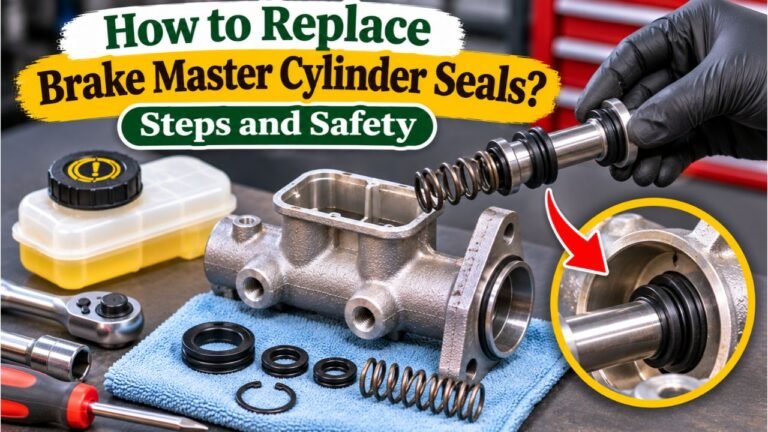
Clutch master cylinder replacement may require disconnecting its pedal pushrod, attaching the clutch line, and bleeding the release circuit. Some concentric slave cylinder designs have special bleeding requirements. Installing a replacement without removing all trapped air may leave the clutch unable to release properly.
Replacing one master cylinder does not automatically require replacing the other, even when they share a reservoir. Diagnose each system independently, inspect connected components, and use the vehicle manufacturer’s repair procedures. Brake repairs in particular demand a complete safety check by someone equipped to verify proper operation.
FAQs About Is Clutch and Brake Master Cylinder the Same
Can a Car Have Two Master Cylinders?
Yes. A manual-transmission vehicle with a hydraulic clutch can have a brake master cylinder and a separate clutch master cylinder. They serve different functions even if they use one fluid reservoir.
Does Every Manual-Transmission Car Have a Clutch Master Cylinder?
No. Some vehicles use a clutch cable or mechanical linkage instead of hydraulics. Those vehicles do not have a conventional hydraulic clutch master cylinder.
Does the Clutch Master Cylinder Control the Brakes?
No. It controls clutch release, not wheel braking. A common fluid reservoir does not make the clutch master cylinder part of the brake pressure circuit.
Can a Bad Clutch Master Cylinder Affect the Brake Fluid Level?
Yes. If both systems draw fluid from one reservoir, an external clutch hydraulic leak can lower the shared fluid level. The vehicle should be inspected promptly because a sufficiently low reservoir could threaten braking safety.
Can You Use DOT 4 Brake Fluid in Both Cylinders?
Only if the vehicle manufacturer specifies DOT 4 for both systems. Many hydraulic clutches use brake fluid, but the exact specification varies, and some systems require another fluid.
Why the Clutch and Brake Master Cylinders Must Remain Separate
For anyone asking is clutch and brake master cylinder the same, the answer is no. One releases the clutch; the other operates the wheel brakes. Sharing a reservoir does not make them one component.
The practical distinction matters when diagnosing a low pedal, locating a leak, or ordering parts. Identify which pedal and hydraulic circuit are affected, confirm the specified fluid, and match any replacement to the exact vehicle. Never substitute one type of master cylinder for the other based on appearance alone.
If braking is uncertain, keep the vehicle parked until it has been repaired and checked.