Which Brake Subsystem Contains the Master Cylinder? How It Works
The brake master cylinder belongs to the hydraulic brake actuation subsystem, which is part of a vehicle’s service braking system. Its main function is to convert force applied to the brake pedal into hydraulic pressure, allowing the brake calipers or wheel cylinders to apply the brakes.
The hydraulic subsystem includes the master cylinder, brake fluid reservoir, brake lines, flexible hoses, and other components that distribute hydraulic pressure. It works with the mechanical braking components, such as brake pads, rotors, shoes, and drums, to slow or stop the vehicle.
Although the master cylinder is connected to the brake booster and may work with the anti-lock braking system (ABS), it is not primarily an ABS component or part of the parking brake subsystem.
Most conventional passenger vehicles use a tandem master cylinder with two hydraulic circuits. This arrangement provides a degree of braking redundancy if one circuit develops a leak or another pressure-related failure.
In this article, I explain which brake subsystem contains the master cylinder, how it works, and the components connected to it. I also cover the differences between hydraulic, mechanical, power-assist, ABS, and parking brake systems, along with common master cylinder problems, symptoms, maintenance, and replacement considerations.
Which Brake Subsystem Contains the Master Cylinder? Direct Answer
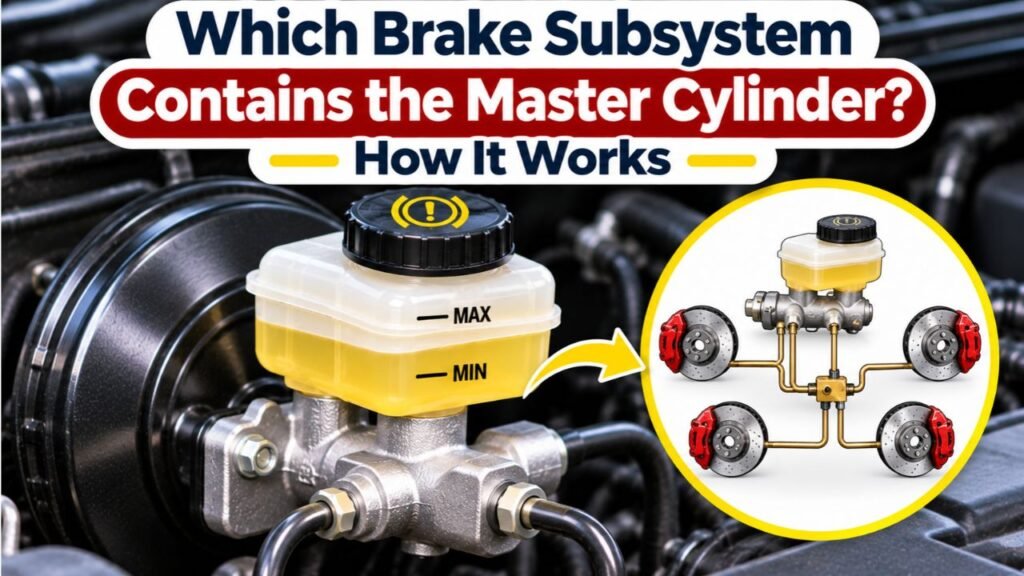
The hydraulic brake subsystem, more specifically the hydraulic brake actuation system, contains the brake master cylinder.
This system generates and transmits hydraulic pressure when the driver operates the brake pedal.
The master cylinder is one of its central components because it converts the pedal’s mechanical input into hydraulic pressure.
According to Bosch Mobility’s technical explanation of tandem master cylinders, master cylinders convert force from the driver’s foot, often amplified by a brake booster, into hydraulic pressure supplied to the braking circuits.
Brake Subsystem Classification
| Brake Subsystem | Main Function | Contains the Master Cylinder? |
| Hydraulic brake actuation | Generates and transmits hydraulic pressure | Yes |
| Mechanical friction braking | Creates friction at the wheels to slow the vehicle | No, but operates using hydraulic force |
| Brake power-assist | Reduces driver effort needed for braking | No, although the booster often connects directly to it |
| Anti-lock Braking System (ABS) | Modulates hydraulic pressure to help prevent wheel lockup | No, but works with the hydraulic system |
| Parking brake | Holds the vehicle stationary when parked | Generally no |
| Electronic stability control | Adjusts braking at selected wheels to help control stability | No, but uses related hydraulic or integrated equipment |
| Regenerative braking | Uses an electric drive motor to recover energy during deceleration | No, but may operate alongside hydraulic brakes |
These classifications describe functions rather than completely independent assemblies.
Some components and control systems overlap, particularly in modern electronically controlled braking systems.
What Is Another Name for the Hydraulic Brake Subsystem?
Depending on the textbook or service manual, it may be called:
- Hydraulic braking system.
- Hydraulic brake actuation system.
- Brake hydraulic system.
- Hydraulic service brake system.
- Hydraulic pressure-generation and distribution system.
These terms are closely related, although exact subsystem definitions vary between manufacturers.
Key Takeaway: The brake master cylinder is a hydraulic brake actuation component within the vehicle’s service braking system.
What Does the Brake Master Cylinder Do?
The brake master cylinder generates hydraulic pressure that activates the wheel brakes.
It contains pistons, seals, ports, and internal passages that control pressure in the hydraulic circuits.
Main Functions of the Master Cylinder
The master cylinder performs several important functions:
- Converts brake pedal force into hydraulic pressure.
- Supplies pressurized brake fluid to the braking circuits.
- Controls hydraulic pressure in response to pedal input.
- Allows pressure to decrease when the brake pedal is released.
- Works with the brake fluid reservoir to maintain the hydraulic system.
- Provides separate circuit operation in conventional tandem designs.
The master cylinder does not physically clamp the brake pads against the rotors.
Instead, it generates the hydraulic pressure that moves the caliper pistons or wheel cylinders.
How Does It Convert Force Into Hydraulic Pressure?
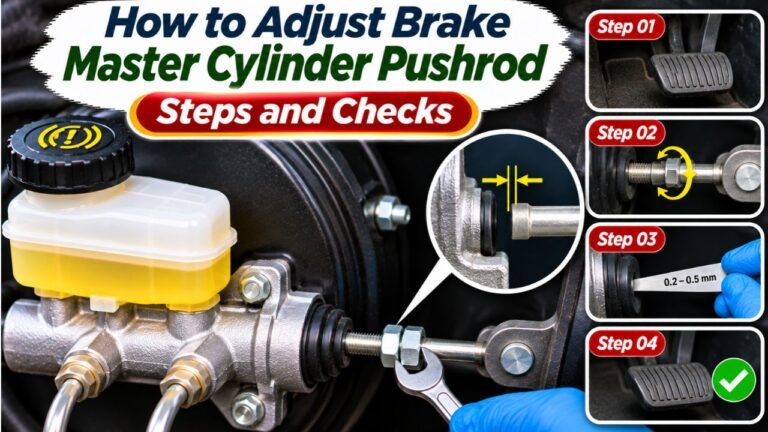
When the driver presses the brake pedal, the pedal mechanism moves a pushrod.
On many vehicles, the pushrod operates through a power brake booster.
The pushrod then moves one or more pistons inside the master cylinder.
As the pistons move, they close the appropriate compensating ports and generate pressure in the hydraulic chambers.
This pressure is transmitted through brake fluid toward the wheel brakes.
The basic hydraulic relationship is described by:
Pressure = Force ÷ Area
Or:
[
P=\frac{F}{A}
]
Where:
- P = Hydraulic pressure.
- F = Applied force.
- A = Effective piston area.
The actual pressure developed depends on pedal leverage, brake booster assistance, master cylinder dimensions, and operating conditions.
Why Is Hydraulic Pressure Important?
Hydraulic pressure transfers braking force through the hydraulic circuit.
The pressure acts on pistons at the wheels.
These pistons move brake friction components into contact with the rotating brake surfaces.
The resulting friction slows the vehicle.
Key Takeaway: The master cylinder creates hydraulic pressure, while the brakes at the wheels convert that pressure into frictional stopping force.
How the Hydraulic Brake Subsystem Works Step by Step
The hydraulic brake system connects the driver’s pedal input to the brakes at the wheels.
Its operation can be understood as a sequence.
Basic Brake System Flow
Brake Pedal → Brake Booster (if equipped) → Master Cylinder → Brake Lines → ABS Hydraulic Unit (if equipped) → Brake Hoses → Calipers or Wheel Cylinders → Brake Pads or Shoes
The precise hydraulic routing depends on the vehicle.
Some systems also include proportioning valves, pressure-control devices, and additional electronically controlled components.
Step 1: The Driver Presses the Brake Pedal
Pressing the pedal creates mechanical force.
The pedal assembly and pushrod transfer that force toward the master cylinder.
Step 2: Brake Assistance May Increase the Force
Many vehicles use vacuum, hydraulic, or electromechanical brake assistance.
The booster reduces the pedal effort required to generate sufficient hydraulic pressure.
However, not every vehicle uses the same type of brake assistance.
Step 3: The Master Cylinder Generates Pressure
The master cylinder’s internal pistons move.
Brake fluid in the hydraulic circuits becomes pressurized.
This pressure is transmitted toward the wheel brakes.
Step 4: Brake Fluid Transmits the Pressure
Brake fluid carries pressure through rigid brake pipes and flexible hoses.
Because brake fluid is relatively incompressible under normal operating conditions, hydraulic pressure can be transmitted efficiently.
Step 5: ABS Controls Pressure When Necessary
If the vehicle has ABS, hydraulic pressure may pass through an ABS hydraulic control unit.
During normal braking, the system generally permits ordinary pressure transmission.
When ABS activates, valves and pumps can modulate pressure to help prevent wheel lockup.
Step 6: The Wheel Brakes Apply Friction
In a disc brake system, hydraulic pressure moves caliper pistons.
These pistons cause the brake pads to press against the rotor.
In a drum brake system, hydraulic pressure moves wheel cylinder pistons.
These pistons force brake shoes against the inner surface of the brake drum.
Step 7: The Vehicle Slows Down
The brake friction components resist wheel rotation.
Kinetic energy is primarily converted into heat through friction.
This reduces the vehicle’s speed.
Step 8: The Driver Releases the Pedal
When pedal force is removed, master cylinder pressure decreases.
The wheel brake components release their clamping or outward force as designed.
The wheels can rotate freely again.
Key Takeaway: The master cylinder begins the hydraulic pressure-generating process that allows the wheel brakes to operate.
Main Components of the Hydraulic Brake Subsystem
The master cylinder works with several other hydraulic components.
Understanding their functions helps distinguish the hydraulic subsystem from the mechanical and electronic systems.
1. Brake Master Cylinder
The master cylinder generates hydraulic pressure when the brake pedal is operated.
It is the primary pressure-generating component in many conventional hydraulic brake systems.
2. Brake Fluid Reservoir
The reservoir stores a reserve supply of brake fluid.
It is commonly mounted on or connected to the master cylinder.
The reservoir helps accommodate changes in fluid distribution as brake components wear.
It also supports the proper operation of the hydraulic circuits.
3. Brake Lines
Brake lines are rigid pipes that carry hydraulic pressure from the master cylinder toward the wheel brakes.
They are commonly manufactured from suitable corrosion-resistant metals or coated steel.
Brake lines must withstand the pressures generated during braking.
According to HELLA Tech World’s brake hoses and brake lines technical guide, brake lines connect the brake actuation device, such as the master cylinder, to the hydraulic components at the wheels.
4. Flexible Brake Hoses
Flexible hoses connect hydraulic components where movement occurs.
For example, the front wheels turn during steering and move with the suspension.
Rigid brake pipes alone cannot accommodate this movement.
Flexible hoses allow hydraulic pressure to reach the brakes while permitting controlled movement.
5. Brake Calipers
Disc brake calipers contain one or more hydraulic pistons.
When pressure reaches the caliper, the piston arrangement applies the brake pads against the rotor.
Calipers are also mechanical assemblies because they physically support and position the brake pads.
Therefore, they form part of the interface between hydraulic actuation and friction braking.
6. Wheel Cylinders
Drum brakes commonly use hydraulic wheel cylinders.
These contain pistons that push the brake shoes outward when hydraulic pressure is applied.
7. Hydraulic Control Unit
Vehicles equipped with ABS typically include a hydraulic control unit.
This unit can contain valves, pumps, and related components that control hydraulic pressure.
It forms part of the hydraulic braking architecture while working under electronic control.
8. Pressure-Control Components
Some brake systems include proportioning valves, combination valves, or other pressure-control devices.
Their function depends on vehicle design.
Modern ABS and electronic brake distribution systems may integrate functions previously performed by separate valves.
Component Reference Chart
| Component | Main Function |
| Master cylinder | Creates hydraulic pressure |
| Fluid reservoir | Stores brake fluid |
| Rigid brake lines | Transfer pressure through fixed parts of the vehicle |
| Flexible hoses | Transfer pressure where movement occurs |
| Caliper pistons | Convert hydraulic pressure into mechanical force |
| Wheel cylinders | Apply drum brake shoes |
| ABS hydraulic control unit | Modulates hydraulic pressure when commanded |
| Pressure-control valves | Manage pressure distribution where equipped |
Key Takeaway: The hydraulic subsystem contains pressure-generation, transmission, and actuation components. The master cylinder is central to this process.
Where Is the Master Cylinder Located in a Car?
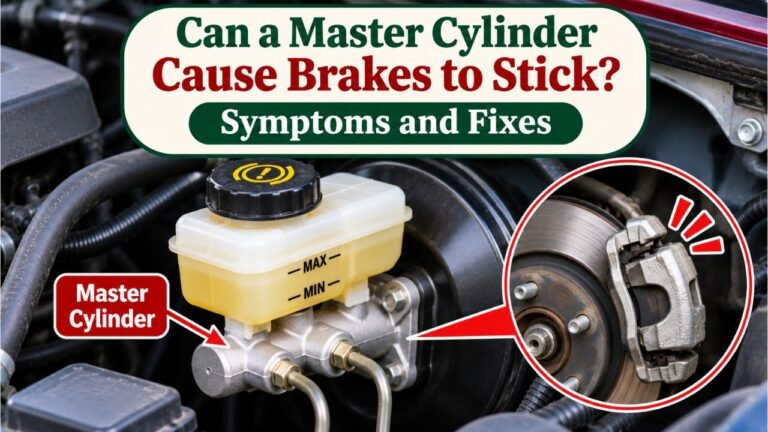
On many conventional passenger vehicles, the brake master cylinder is mounted in the engine compartment near the firewall.
It is commonly attached to the front of the brake booster.
The exact location varies by vehicle design.
Typical Master Cylinder Location
For many left-hand-drive vehicles:
- Open the hood.
- Look toward the rear of the engine compartment on the driver’s side.
- Find the brake fluid reservoir.
- Locate the master cylinder directly beneath or beside the reservoir.
- Look for the brake lines connected to the cylinder body.
The brake booster is often positioned between the master cylinder and the firewall.
However, modern brake-by-wire and integrated braking systems may have different arrangements.
What Does a Master Cylinder Look Like?
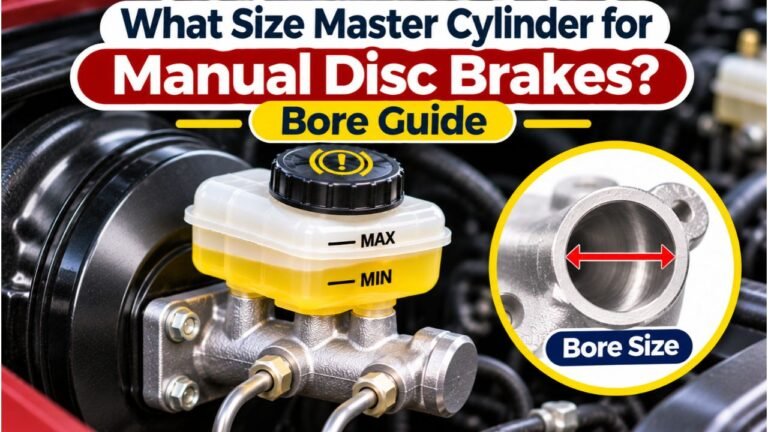
A conventional master cylinder usually has:
- An elongated metal body.
- One or more hydraulic outlet ports.
- A brake fluid reservoir mounted above it.
- A mounting flange.
- Internal pistons and seals.
- Connections to the hydraulic brake lines.
Some versions use a separate remote reservoir.
Is the Master Cylinder Inside the Brake Booster?
No.
In many conventional systems, the master cylinder is bolted to the brake booster.
They are separate components that work together.
The booster assists the driver’s pedal force.
The master cylinder generates hydraulic pressure.
Is the Master Cylinder Connected to the Brake Pedal?
Yes.
The connection is generally through a mechanical pushrod arrangement and, where fitted, the brake booster.
Pressing the pedal causes the master cylinder pistons to move.
Key Takeaway: The master cylinder is usually near the brake booster and fluid reservoir in the engine compartment, but the exact location depends on the vehicle.
What Is a Tandem Brake Master Cylinder?
Most conventional modern passenger vehicles use a tandem master cylinder.
A tandem master cylinder contains two piston arrangements that operate separate hydraulic brake circuits.
This provides a degree of redundancy.
Why Are Two Hydraulic Circuits Used?
A dual-circuit design helps preserve some braking capability if a failure affects one circuit.
For example, a leak in one hydraulic circuit may allow the other circuit to continue producing some braking force.
However, remaining braking performance may be significantly reduced.
What Are the Primary and Secondary Hydraulic Circuits?
The terms primary circuit and secondary circuit identify the two hydraulic circuits.
The master cylinder supplies pressure to both.
The circuits are commonly arranged in one of two general configurations.
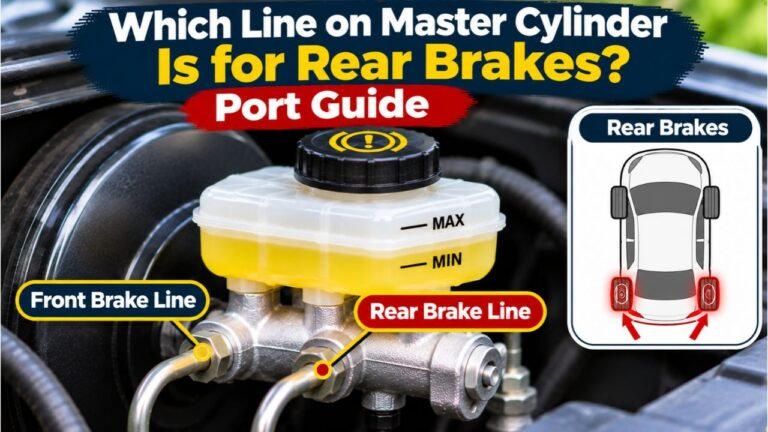
Front/Rear Split
One circuit operates the front brakes.
The other operates the rear brakes.
Diagonal Split
One circuit operates the left-front and right-rear brakes.
The other operates the right-front and left-rear brakes.
The exact arrangement varies by vehicle.
Does the Master Cylinder Belong to the Primary or Secondary Circuit?
The tandem master cylinder serves both hydraulic circuits; it is not exclusively part of either circuit.
This is an important clarification when discussing brake subsystems.
The master cylinder contains separate pressure-generating chambers associated with the two circuits.
The National Highway Traffic Safety Administration’s explanation of split service brake systems discusses primary and secondary hydraulic circuits and explains how a properly designed split system preserves operation in one subsystem after certain failures in the other.
Can One Circuit Still Work if the Other Fails?
Some braking capability may remain.
However, the driver may experience:
- Longer brake pedal travel.
- Reduced braking force.
- Longer stopping distances.
- Unbalanced braking.
- A brake warning indicator.
The exact result depends on the vehicle and nature of the failure.
A split hydraulic circuit is not permission to continue driving after brake failure.
Key Takeaway: A conventional tandem master cylinder supplies both the primary and secondary hydraulic brake circuits.
Hydraulic Brake Subsystem vs. Mechanical Brake Subsystem
The hydraulic and mechanical parts of the braking system work together but have different functions.
Hydraulic Braking Components
These components create and transmit pressure.
Examples include:
- Master cylinder.
- Hydraulic brake lines.
- Flexible hoses.
- Brake fluid.
- Caliper hydraulic pistons.
- Wheel cylinders.
Mechanical Friction Components
These components create the friction required to stop the wheels.
Examples include:
- Brake pads.
- Brake rotors.
- Brake shoes.
- Brake drums.
- Caliper brackets and related hardware.
Comparison Chart
| Feature | Hydraulic Subsystem | Mechanical Friction Components |
| Primary role | Pressure generation and transmission | Wheel deceleration through friction |
| Main working medium | Brake fluid | Physical friction |
| Example components | Master cylinder, hoses, hydraulic pistons | Pads, rotors, shoes, drums |
| Common failure | Leak or inability to maintain pressure | Wear, damage, dragging, overheating |
| Typical symptom | Soft or sinking pedal | Grinding, vibration, friction-related noise |
| Master cylinder included? | Yes | No |
Can Hydraulic Problems Cause Mechanical Brake Problems?
Yes.
A hydraulic fault can cause improper brake application or release.
For example, a hydraulic restriction may contribute to a dragging caliper.
However, many mechanical problems occur independently.
Worn brake pads can create grinding noises even when the master cylinder functions properly.
Key Takeaway: The hydraulic subsystem transmits pressure, while the friction components use that pressure to slow the wheels.
Is the Master Cylinder Part of the ABS Subsystem?
The master cylinder works with ABS-equipped braking systems, but it is not primarily an ABS electronic control component.
What Does ABS Do?
ABS stands for Anti-lock Braking System.
Its main function is to help prevent wheel lockup during hard braking.
The system typically uses:
- Wheel speed sensors.
- An electronic control module.
- Hydraulic valves.
- A pump or pressure-control mechanism.
- Related wiring and control components.
How Does ABS Work With the Master Cylinder?
During ordinary braking, the master cylinder generates hydraulic pressure.
That pressure reaches the wheel brakes through the hydraulic system, which may include the ABS hydraulic control unit.
When ABS detects conditions suggesting wheel lockup, it modulates pressure at the affected wheels.
This can involve holding, reducing, and increasing pressure.
Does ABS Generate Pressure Independently?
Some ABS hydraulic control units can actively manage or generate pressure as part of their operation.
The exact arrangement depends on system design.
Modern integrated braking systems may combine several hydraulic and electronic functions.
Can ABS Replace a Failed Master Cylinder?
No.
ABS does not make a failed hydraulic braking system safe.
A serious master cylinder or hydraulic circuit failure requires repair.
The system’s electronic controls cannot be relied upon to compensate for all hydraulic failures.
Why Is This Distinction Important?
A malfunctioning ABS sensor may disable anti-lock control while ordinary hydraulic braking remains available, depending on the fault.
A master cylinder failure can directly affect service braking pressure.
These are different categories of problems.
Key Takeaway: The master cylinder is part of hydraulic brake actuation, while ABS controls hydraulic pressure under specific driving conditions.
Is the Master Cylinder Part of the Parking Brake System?
Generally, no.
The master cylinder is associated with the service braking system operated by the normal brake pedal.
The parking brake serves a different purpose.
What Is the Service Brake System?
The service brake system is the primary braking system used while driving.
It allows the driver to reduce speed and stop.
In a conventional passenger car, the master cylinder generates hydraulic pressure for this system.
What Is the Parking Brake System?
The parking brake is primarily designed to help hold the vehicle stationary when parked.
Depending on the vehicle, it may use:
- Mechanical cables.
- A hand-operated lever.
- A foot-operated pedal.
- Electric motors.
- Electronic control systems.
Does a Parking Brake Use Brake Fluid?
Many conventional parking brakes operate mechanically and do not depend on the service brake master cylinder.
Some modern electronically controlled systems are integrated with the broader braking architecture.
However, their design and emergency operation vary.
Can the Parking Brake Replace a Failed Master Cylinder?
No.
The parking brake is not a reliable replacement for normal service braking.
Even where a vehicle provides an emergency parking-brake function, it should not be used to justify driving with a defective hydraulic system.
Key Takeaway: The master cylinder belongs to the service brake hydraulic subsystem, not the conventional parking brake subsystem.
Master Cylinder vs. Brake Booster: What’s the Difference?
The master cylinder and brake booster are closely connected in many vehicles.
However, they perform separate functions.
Brake Master Cylinder
The master cylinder:
- Contains hydraulic pistons and seals.
- Generates brake fluid pressure.
- Supplies the hydraulic circuits.
- Connects to the brake lines.
Brake Booster
The brake booster:
- Assists driver pedal effort.
- Makes normal braking easier.
- May use vacuum, hydraulic pressure, or electromechanical assistance.
- Commonly connects between the pedal assembly and master cylinder.
Side-by-Side Comparison
| Feature | Master Cylinder | Brake Booster |
| Main function | Generates hydraulic pressure | Reduces pedal effort |
| Main subsystem | Hydraulic brake actuation | Brake power assistance |
| Uses brake fluid internally | Yes | Depends on booster design; conventional vacuum boosters do not use brake fluid |
| Connected to brake pedal | Through pushrod or integrated mechanism | Often directly through pedal linkage |
| Connected to brake lines | Yes | Usually no, except integrated system architectures |
| Typical failure symptom | Soft or sinking pedal, pressure loss | Hard pedal or excessive effort |
Can a Bad Booster Feel Like a Bad Master Cylinder?
Sometimes, because both affect brake pedal response.
However, a failed vacuum booster commonly produces a hard pedal that requires excessive effort.
A master cylinder with internal leakage may produce a pedal that slowly sinks under sustained pressure.
These are only diagnostic clues, not definitive tests.
Some vehicles use integrated brake-assist systems where the distinction is less straightforward.
Key Takeaway: The booster helps the driver apply force; the master cylinder converts that force into hydraulic pressure.
Does the Master Cylinder Work With Disc and Drum Brakes?
Yes.
The master cylinder supplies hydraulic pressure to disc or drum brakes, depending on the vehicle.
Master Cylinder With Disc Brakes
In a disc brake system:
- The master cylinder generates hydraulic pressure.
- Fluid pressure reaches the caliper pistons.
- Caliper pistons apply the brake pads.
- The pads press against the rotors.
- Friction slows the wheels.
Master Cylinder With Drum Brakes
In a drum brake system:
- The master cylinder generates hydraulic pressure.
- Pressure reaches the wheel cylinders.
- Wheel cylinder pistons move outward.
- Brake shoes contact the drums.
- Friction slows the wheels.
What About Cars With Both Disc and Drum Brakes?
Some vehicles have front disc brakes and rear drum brakes.
The master cylinder can supply both through the appropriate hydraulic circuits.
However, the system may use specialized valves or electronically managed pressure distribution.
Are All Master Cylinders Interchangeable?
No.
Master cylinder specifications can vary according to:
- Piston diameter.
- Hydraulic circuit design.
- Vehicle braking requirements.
- Brake booster configuration.
- Mounting arrangement.
- Port locations.
- Electronic brake system integration.
Use a replacement specifically approved for the vehicle.
How to Identify a Bad Brake Master Cylinder
The master cylinder can develop internal or external problems.
These failures may affect hydraulic pressure and braking performance.
1. Brake Pedal Slowly Sinks
A pedal that gradually sinks under steady pressure may indicate an internal hydraulic pressure bypass.
However, other brake faults can cause similar symptoms.
2. Soft or Spongy Brake Pedal
A soft pedal may indicate air in the hydraulic system.
It can occur because of leaks, improper brake bleeding, or other hydraulic problems.
It does not automatically mean the master cylinder is defective.
3. Brake Fluid Leakage
External master cylinder leaks may appear around:
- Hydraulic line fittings.
- Reservoir connections.
- The rear master cylinder seal.
- The master cylinder housing.
Some rear seal leaks may allow fluid to enter the brake booster area.
4. Brake Warning Light
A red brake warning light may indicate low fluid or another hydraulic-system issue.
Check the vehicle’s owner’s manual for its exact meaning.
5. Reduced Braking Performance
A master cylinder that cannot maintain hydraulic pressure may cause excessive pedal travel or reduced braking effectiveness.
However, worn pads, air in the lines, and other problems can produce similar symptoms.
Master Cylinder Failure Symptoms
| Symptom | Possible Explanation |
| Pedal sinks while held | Internal master cylinder bypass or another hydraulic fault |
| Fluid around master cylinder | External leak |
| Fluid level repeatedly decreases | Hydraulic leak or another problem |
| Soft pedal | Air or hydraulic issue |
| Hard pedal | Often brake-assist problem; not necessarily master cylinder |
| Brake warning light | Low fluid or system fault |
| Reduced braking power | Hydraulic pressure problem or other brake failure |
| Grinding during braking | Usually friction component damage, not master cylinder itself |
Important: If the brake pedal sinks, the reservoir is below the specified minimum, or braking performance is abnormal, do not continue driving. Arrange professional inspection and towing.
What Causes a Master Cylinder to Fail?
A master cylinder can fail through age, wear, corrosion, contamination, or damage.
Internal Seal Wear
The piston seals are designed to maintain pressure within the hydraulic chambers.
As seals deteriorate, fluid may bypass them internally.
This can produce a sinking pedal without an obvious external fluid leak.
Corrosion
Moisture-contaminated brake fluid can contribute to internal corrosion.
Corrosion may damage the sealing surfaces and interfere with piston movement.
Contaminated Brake Fluid
Incorrect or contaminated fluid can damage hydraulic components.
Petroleum-based contamination is especially dangerous in systems designed for conventional glycol-based DOT brake fluid.
External Seal Failure
Damaged seals may allow fluid to escape.
This can lower the reservoir level and reduce hydraulic pressure.
Improper Brake Service
Incorrect repair procedures can damage seals or introduce air into the system.
For example, certain service conditions may move pistons through areas of the cylinder bore they do not normally travel through, potentially exposing damaged surfaces.
The correct service method depends on the vehicle.
Normal Wear
Master cylinders can wear over time.
However, there is no universal mileage at which every master cylinder must be replaced.
The component is generally repaired or replaced when inspection confirms a defect.
How Do Mechanics Diagnose Master Cylinder Problems?
A qualified technician should inspect the complete hydraulic system before replacing the master cylinder.
Step 1: Check Brake Fluid Level
The technician checks the reservoir level and condition.
A low level may indicate normal brake pad wear, a leak, or another issue.
Step 2: Inspect for Leaks
The hydraulic system is checked for leakage at:
- The master cylinder.
- Reservoir connections.
- Brake lines.
- Brake hoses.
- Calipers.
- Wheel cylinders.
- ABS hydraulic components.
Step 3: Evaluate Pedal Response
A soft, sinking, or unusually low pedal may indicate hydraulic pressure loss.
The technician uses appropriate diagnostic procedures to determine the cause.
Step 4: Check Related Components
Other brake components are inspected because similar symptoms can result from several faults.
A sinking pedal does not automatically prove a master cylinder is defective.
Step 5: Confirm the Failed Component
The technician verifies whether the problem involves an internal master cylinder fault, external leak, air in the system, or another hydraulic issue.
Step 6: Repair or Replace as Needed
If the master cylinder is defective, the repair may require replacing the component.
The correct replacement must match the vehicle’s brake system.
Step 7: Bleed the Hydraulic System
After appropriate hydraulic repairs, air must be removed according to the manufacturer’s bleeding procedure.
Certain ABS or electronically controlled systems require specialized equipment.
Step 8: Verify Safe Brake Operation
The technician checks hydraulic operation, pedal response, and the system’s ability to maintain pressure.
The vehicle should not return to service until the brakes operate correctly.
Key Takeaway: Master cylinder diagnosis requires checking the entire hydraulic braking system, not simply replacing the cylinder based on one symptom.
Can a Car Brake Without a Master Cylinder?
In a conventional hydraulic braking system, the master cylinder is necessary for normal service brake operation.
Without it, the system cannot generate hydraulic pressure through its intended mechanism.
However, modern braking systems can use different actuation architectures.
Conventional Hydraulic Brakes
In conventional hydraulic braking:
- The driver presses the pedal.
- The master cylinder generates hydraulic pressure.
- The hydraulic circuits transfer pressure.
- The wheel brakes apply friction.
A missing or nonfunctional master cylinder can prevent normal service braking.
Brake-by-Wire Systems
Some hybrid and electric vehicles use electronically controlled braking systems.
These may include:
- Electronic pedal sensors.
- Integrated pressure-generation units.
- Hydraulic backup arrangements.
- Regenerative braking controls.
- Electronic brake distribution.
In such vehicles, the master cylinder’s role may differ from that in a conventional system.
Some architectures retain a master cylinder for mechanical backup or particular operating modes.
Others use integrated electrohydraulic components to provide normal pressure generation.
Does Regenerative Braking Eliminate the Master Cylinder?
Not necessarily.
Regenerative braking uses the electric drive motor to recover energy while slowing the vehicle.
However, friction braking remains necessary for many operating conditions.
The hydraulic brake architecture depends on the vehicle.
Key Takeaway: A conventional hydraulic brake system depends on its master cylinder, while modern electronically controlled systems may use different pressure-generation arrangements.
How to Maintain the Hydraulic Brake Subsystem
Routine maintenance helps keep the master cylinder and related hydraulic components functioning properly.
Check Brake Fluid Level
Check the reservoir according to the owner’s manual.
Brake fluid should remain within the specified range.
A gradual decrease may occur as brake pads wear.
However, a sudden drop or repeated need for refilling may indicate a leak.
Use the Correct Brake Fluid
Use only the manufacturer’s specified brake fluid.
Conventional passenger vehicles commonly use glycol-based DOT 3, DOT 4, or DOT 5.1 fluids, depending on the vehicle.
Silicone-based DOT 5 is not interchangeable with these fluids.
Some specialized hydraulic systems have different requirements.
Follow Fluid Replacement Intervals
Brake fluid can absorb moisture over time.
Replace it according to the manufacturer’s maintenance schedule or relevant inspection findings.
Inspect Brake Lines and Hoses
Look for signs of:
- Corrosion.
- Cracking.
- Abrasion.
- Fluid leakage.
- Damaged fittings.
- Incorrect hose routing.
A qualified technician should assess questionable components.
Inspect Brake Pads and Rotors
Mechanical brake wear can affect the position of hydraulic caliper pistons and the reservoir fluid level.
Proper brake maintenance helps ensure the system functions as designed.
Address Brake Warning Lights
Do not ignore a red brake warning indicator or an unexplained change in pedal response.
Avoid Unnecessary Reservoir Opening
Brake fluid may absorb moisture from the atmosphere.
Opening the reservoir unnecessarily can increase contamination risk.
Follow the manufacturer’s service procedures.
Key Takeaway: Maintain the hydraulic system through correct fluid selection, routine inspection, and prompt attention to leaks or abnormal braking behavior.
Common Mistakes When Identifying the Master Cylinder Subsystem
1. Calling the Master Cylinder an ABS Component
The master cylinder works with ABS but primarily belongs to the hydraulic brake actuation system.
2. Confusing the Master Cylinder With the Brake Booster
The booster assists pedal force.
The master cylinder converts force into hydraulic pressure.
3. Placing the Master Cylinder in the Mechanical Friction Subsystem
Brake pads and rotors create friction.
The master cylinder generates hydraulic pressure.
4. Assuming It Belongs Only to the Primary Circuit
A conventional tandem master cylinder serves both primary and secondary hydraulic circuits.
5. Confusing Service Brakes With Parking Brakes
The master cylinder is normally part of the service brake system operated by the brake pedal.
The parking brake has a different primary purpose.
6. Assuming Every Vehicle Has the Same Hydraulic Design
Brake systems vary.
Some use conventional tandem master cylinders, while others have electronically controlled or integrated designs.
7. Confusing the Clutch Master Cylinder With the Brake Master Cylinder
A hydraulic clutch master cylinder operates the clutch system.
A brake master cylinder operates the braking system.
They are separate components, even though some vehicles may share a fluid reservoir.
8. Assuming Low Brake Fluid Always Means a Bad Master Cylinder
Fluid loss can occur through hoses, brake lines, calipers, wheel cylinders, and other components.
Gradual pad wear may also lower the reservoir level without leakage.
9. Ignoring Internal Master Cylinder Failure
An internal pressure bypass can occur without an obvious external leak.
A sinking brake pedal should be professionally diagnosed.
10. Assuming a Working ABS Means the Hydraulic System Is Safe
ABS cannot compensate for every hydraulic failure.
A serious master cylinder or brake line problem can remain dangerous even when no ABS warning is displayed.
Conclusion
The master cylinder belongs to the hydraulic brake actuation subsystem of the vehicle’s service braking system. It converts brake pedal force into hydraulic pressure that travels through brake lines and hoses to activate the wheel brakes.
The hydraulic subsystem includes the master cylinder, brake fluid reservoir, hydraulic lines, flexible hoses, and related pressure-control and actuation components.
The master cylinder works alongside the brake booster, ABS, and mechanical friction components, but these systems perform different functions.
In most conventional modern vehicles, a tandem master cylinder supplies two separate hydraulic circuits to provide partial braking redundancy in certain failure conditions.
Understanding this arrangement makes it easier to distinguish master cylinder problems from worn brake pads, brake booster failures, or ABS faults.
If the master cylinder cannot maintain pressure, braking performance may become severely reduced. A soft or sinking pedal, unexplained fluid loss, or reduced stopping ability requires prompt professional diagnosis.
For an automotive exam or a quick technical answer, the correct response is: The master cylinder is part of the hydraulic brake subsystem, specifically the hydraulic service brake actuation system.
FAQs About Which Brake Subsystem Contains the Master Cylinder
Which Brake Subsystem Contains the Master Cylinder?
The hydraulic brake actuation subsystem contains the master cylinder.
It is part of the service braking system and generates hydraulic pressure when the brake pedal is pressed.
Is the Master Cylinder a Hydraulic Component?
Yes.
The master cylinder is a hydraulic pressure-generating component.
It uses internal pistons to create pressure in brake fluid, which is transmitted to the brakes at the wheels.
Is the Master Cylinder Part of the Service Brake System?
Yes.
The master cylinder is a central component in the conventional hydraulic service braking system.
It operates when the driver presses the normal brake pedal.
Is the Master Cylinder Part of the ABS System?
Not primarily.
The master cylinder belongs to the hydraulic brake actuation system.
ABS works with hydraulic pressure through electronically controlled valves and related equipment.
Is the Master Cylinder Part of the Mechanical Brake System?
The master cylinder is mechanically actuated, but its primary classification is hydraulic.
Mechanical friction components include brake pads, rotors, shoes, and drums.
Is the Master Cylinder Part of the Primary or Secondary Brake Circuit?
A conventional tandem master cylinder serves both circuits.
It contains separate pressure-generating chambers for the primary and secondary hydraulic circuits.
What Is the Main Purpose of a Brake Master Cylinder?
Its main purpose is to convert force from the brake pedal into hydraulic pressure.
This pressure activates brake calipers or wheel cylinders to apply braking force.
Where Is the Master Cylinder Located?
On many conventional vehicles, the master cylinder is mounted near the firewall in the engine compartment.
It is commonly attached to the brake booster, with the fluid reservoir mounted above it.
What Components Are Connected to the Brake Master Cylinder?
Common related components include the brake pedal linkage, brake booster, fluid reservoir, brake lines, hoses, ABS hydraulic unit, and wheel brake hydraulic components.
The precise arrangement depends on the vehicle.
Is the Brake Booster the Same as the Master Cylinder?
No.
The brake booster assists the driver’s pedal force.
The master cylinder generates hydraulic pressure.
They are separate components in many conventional braking systems.
Does the Master Cylinder Control Front and Rear Brakes?
Yes.
The master cylinder supplies pressure to the vehicle’s hydraulic braking circuits.
These circuits may use front/rear or diagonal arrangements.
The exact distribution depends on the brake system design.
Can a Bad Master Cylinder Cause Brake Failure?
Yes.
If the master cylinder cannot generate or maintain adequate hydraulic pressure, braking effectiveness may be reduced or lost.
A defective master cylinder requires professional repair.
Can a Master Cylinder Fail Without Leaking Brake Fluid?
Yes.
Internal seals can allow hydraulic pressure to bypass within the cylinder without an obvious external leak.
A pedal that slowly sinks under steady pressure may indicate this or another hydraulic fault.
Does the Master Cylinder Use Brake Fluid?
Yes.
The master cylinder uses the manufacturer’s specified hydraulic brake fluid to generate and transmit pressure.
Use only the fluid approved for the particular vehicle.
Is the Master Cylinder Used in Both Disc and Drum Brakes?
Yes.
It supplies hydraulic pressure to disc brake calipers or drum brake wheel cylinders, depending on the vehicle’s braking configuration.
Can a Car Have Two Master Cylinders?
Some specialized vehicles and motorsport braking systems use dual master cylinders with balance-bar arrangements.
However, most conventional passenger cars use one tandem brake master cylinder containing two hydraulic pressure circuits.
Does a Car With Electronic Brakes Still Have a Master Cylinder?
It depends on the design.
Some brake-by-wire systems retain a conventional or backup master cylinder.
Other systems use integrated electrohydraulic pressure-generation components.
The exact arrangement is manufacturer-specific.
What Happens if the Master Cylinder Stops Working?
The braking system may lose hydraulic pressure.
Symptoms can include excessive pedal travel, a sinking pedal, or reduced stopping performance.
Do not drive a vehicle with suspected master cylinder failure.
Is the Parking Brake Connected to the Master Cylinder?
A conventional mechanically operated parking brake does not depend on the service brake master cylinder.
Some modern systems are more integrated, but the master cylinder remains primarily associated with hydraulic service braking.
What Is the Difference Between a Brake Master Cylinder and a Clutch Master Cylinder?
A brake master cylinder operates the hydraulic braking system.
A clutch master cylinder operates a hydraulic clutch release system.
Both use hydraulic principles, but their functions and applications are different.