Does Brake Fluid Go Bad in the Bottle? Shelf Life and Safety
Yes, brake fluid can go bad in the bottle, even if it has never been used. An unopened bottle of conventional brake fluid typically has a manufacturer-recommended shelf life of around 18–24 months under suitable storage conditions, while an opened bottle should generally be used within a few months. The actual shelf life depends on the brake fluid formulation, container seal, temperature, humidity, and manufacturer’s instructions.
Most automotive brake fluids, including DOT 3, DOT 4, and DOT 5.1, are hygroscopic. This means they absorb moisture from the surrounding atmosphere. Once moisture enters the fluid, its boiling point can decrease, making it less suitable for the high temperatures experienced during braking.
Although factory-sealed bottles provide protection, they don’t necessarily preserve brake fluid indefinitely. Plastic containers, damaged seals, and poor storage conditions can affect the fluid’s long-term performance.
In this article, I explain why brake fluid goes bad in the bottle, how long opened and unopened containers usually last, and how storage conditions affect shelf life. I also cover differences between DOT fluid types, manufacturing dates, warning signs, moisture testing, and when replacing an old bottle is safer than using its contents.
Does Brake Fluid Go Bad in the Bottle?
Yes. Brake fluid can gradually deteriorate while sitting in its original container.
The main concern with conventional glycol-based brake fluid is moisture contamination.
Even when a bottle appears perfectly sealed, its storage life isn’t necessarily unlimited. Packaging materials and seals may allow small amounts of moisture to enter over an extended period.
An opened bottle generally presents a greater risk because its original protective seal has been broken.
Brake Fluid Shelf Life: Opened vs. Unopened
| Bottle Condition | General Shelf Life Guidance | Recommended Action |
| Unopened, factory-sealed bottle | Commonly around 18–24 months | Follow manufacturer and storage instructions |
| Unopened bottle stored in extreme heat or humidity | May have a shorter recommended life | Verify product-specific guidance |
| Opened and immediately resealed | Best used within a few months | Prefer fresh fluid for important brake service |
| Opened for approximately 3 months | May be acceptable under some manufacturer guidance | Check storage history and product instructions |
| Opened for approximately 6 months | Increasing uncertainty about fluid condition | Fresh fluid strongly recommended |
| Opened for 12 months or longer | Not recommended for routine brake service | Replace the bottle |
| Bottle with damaged or missing seal | Unknown contamination risk | Do not use |
| Bottle with unknown age or storage history | Condition cannot be established reliably | Buy fresh fluid |
These are general guidelines, not universal expiration limits.
The NAPA Brake Fluid FAQs explain that conventional brake fluid has a typical shelf life of approximately 18–24 months in a moderate climate, while conditions in hot, humid climates can shorten that period.
NAPA also advises that an opened bottle less than three months old may still be usable if tightly resealed, but purchasing fresh fluid is generally preferable.
Key Takeaway: Brake fluid doesn’t last indefinitely simply because it remains inside a bottle. Both the condition of the seal and the storage environment affect whether it can still meet its original specifications.
Why Does Brake Fluid Go Bad While Sitting in a Bottle?
Brake fluid is formulated to transmit hydraulic pressure while resisting high operating temperatures.
To perform correctly, it must maintain appropriate chemical and physical properties.
Several factors can affect these properties during storage.
1. Moisture Absorption
Most conventional brake fluids contain glycol-based compounds.
These fluids are hygroscopic, meaning they attract and absorb moisture.
When water enters the bottle, it can become distributed throughout the fluid.
Over time, this reduces the fluid’s resistance to boiling.
2. A Lower Boiling Point
Braking generates heat through friction between brake pads and rotors or brake shoes and drums.
Some of that heat reaches the hydraulic components.
Brake fluid must remain effective at elevated temperatures.
Moisture-contaminated fluid can boil at a lower temperature than fresh fluid.
If vapor forms inside the braking system, the pedal may feel soft because vapor compresses more readily than liquid.
In severe conditions, braking effectiveness can decrease substantially.
3. Changes in Fluid Performance
Brake fluid contains additives that support properties such as corrosion protection, lubrication, and chemical stability.
Long storage periods or contamination may affect whether the fluid continues to meet the manufacturer’s original performance requirements.
However, shelf-life expiration doesn’t necessarily mean every fluid property suddenly becomes unacceptable.
4. Packaging Limitations
A container may look completely sealed but still have a finite ability to protect its contents from moisture.
Plastic packaging can allow very slow moisture-vapor transmission over time.
The amount depends on the material, thickness, cap, seal, humidity, and temperature.
5. Contamination During Handling
An opened bottle can be contaminated by materials other than moisture.
Examples include dirt, oil, cleaning chemicals, and previously used brake fluid.
Even a small amount of an incompatible liquid can make brake fluid unsuitable for a vehicle’s hydraulic system.
How Long Does Unopened Brake Fluid Last?
Unopened brake fluid generally lasts significantly longer than fluid in a bottle whose original seal has been broken.
However, there is no single shelf-life figure that applies to every brand and formulation.
Typical Unopened Shelf Life
Many manufacturers recommend a storage period of approximately two years for conventional brake fluid in properly sealed retail containers.
For example, the TotalEnergies brake fluid handling guidelines specify a two-year shelf life for unopened small containers stored under appropriate conditions with their original foil seals intact.
The same manufacturer provides different storage periods for drums and certain bulk storage arrangements.
Does Brake Fluid Last Five Years Unopened?
Some products and packaging designs may have longer stated shelf lives.
However, five years is not a universal recommendation.
A bottle that’s been sitting in a garage for five years should not automatically be considered safe just because its cap has never been removed.
Check the manufacturer’s shelf-life specification and the product’s production date.
Can Unopened Brake Fluid Last Ten Years?
It is possible for old, sealed brake fluid to retain some usable characteristics after many years.
However, retaining some functionality is different from meeting the original DOT performance specification.
If the manufacturer no longer guarantees the fluid’s performance, using a fresh bottle is the more sensible decision.
Does an Unopened Bottle Expire Exactly After Two Years?
Not necessarily.
Shelf life is generally a period during which the manufacturer expects the product to meet its stated specifications under defined storage conditions.
It isn’t a prediction that the fluid instantly fails at the end of that period.
However, for a safety-critical product, the lack of guaranteed performance is a good reason not to use it.
How Long Does Brake Fluid Last After Opening the Bottle?
An opened bottle has a shorter practical storage life because the original factory seal no longer protects the contents.
Even if the cap is immediately replaced, humid air may already have entered.
Best Practice for Opened Brake Fluid
Use the fluid as soon as practical.
Some manufacturers recommend consuming an opened bottle within a few months.
A conservative approach is to use fresh fluid for important brake maintenance rather than relying on leftovers that have been stored for an extended period.
Can You Use Brake Fluid After One Month?
Possibly.
A bottle opened once, immediately resealed, and stored according to the manufacturer may remain suitable.
However, it isn’t possible to guarantee fluid condition from the opening date alone.
Is Brake Fluid Good After Three Months?
Some manufacturer and supplier guidance allows the possibility of using a tightly resealed bottle within approximately three months.
However, the product must have been properly stored.
If the bottle has been opened repeatedly or exposed to humid conditions, using fresh fluid is preferable.
Does Brake Fluid Go Bad After Six Months?
It may.
According to Motul’s official brake fluid shelf-life guidance, fluid with a broken foil seal may become compromised after approximately six months, depending on humidity and temperature.
That isn’t a universal six-month expiration rule for every brake fluid.
It illustrates why opened-bottle storage conditions matter.
Can You Use Brake Fluid After One Year?
For routine brake service, I recommend replacing a bottle that was opened a year ago.
Even if the fluid looks normal, its moisture content and boiling performance may be uncertain.
A new bottle costs relatively little compared with the risks associated with unreliable hydraulic braking.
Key Takeaway: For an opened bottle, use the manufacturer’s storage guidance rather than assuming that a tightly closed cap guarantees one or two years of safe storage.
Does Brake Fluid Go Bad in a Sealed Plastic Bottle?
Yes, it can.
A sealed plastic bottle protects the fluid, but it may not provide an absolutely impermeable barrier to moisture vapor.
Can Moisture Pass Through Plastic?
Certain plastic packaging materials allow very small amounts of water vapor to pass through over extended periods.
This process is called permeation.
It can occur even when the container appears undamaged.
However, the rate depends on the packaging design.
Does Bottle Thickness Matter?
Yes.
A thicker container wall may provide a different moisture barrier than a thinner wall made from the same material.
The actual performance also depends on the plastic formulation and manufacturing process.
Does the Bottle Cap Matter?
Yes.
A poorly fitted or damaged cap increases the risk of contamination.
However, the cap is only one part of the container’s protective design.
Some brake fluid bottles also use a foil seal beneath the cap.
Is a Metal Can Better Than a Plastic Bottle?
Not automatically.
Metal containers can provide an effective moisture barrier, but packaging quality and condition still matter.
Damaged metal packaging or corrosion can create other problems.
Choose brake fluid from a reputable manufacturer and follow its stated shelf-life recommendations rather than assuming one container material is always superior.
Is Brake Fluid Still Good if the Cap Was Removed but the Foil Seal Is Intact?
Possibly.
Some brake fluid bottles have two separate closures:
- An external screw cap.
- An internal foil or induction seal.
If the cap was removed but the internal seal remains fully intact, the fluid may still have its original protective barrier.
Does Removing Only the Cap Count as Opening the Bottle?
That depends on the manufacturer’s definition of a sealed container.
The important question is whether the protective inner seal has been broken or compromised.
Motul explains that the cap provides protection, but the intact metallic foil seal is also important to preserving the contents.
What if the Foil Is Partially Torn?
Treat the bottle as opened.
A damaged inner seal should not be considered equivalent to an intact factory seal.
Can You Reseal a Broken Foil?
Not to the original factory-sealed condition.
Tightening the screw cap helps limit further exposure, but it does not restore the protective properties of an unopened bottle.
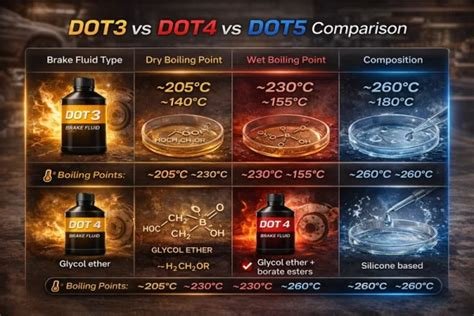
DOT 3 vs DOT 4 vs DOT 5.1: Which Goes Bad Faster in the Bottle?
DOT 3, DOT 4, and DOT 5.1 are conventional glycol-based brake fluids.
All three can absorb atmospheric moisture.
However, they do not necessarily absorb moisture or lose boiling-point performance at identical rates.
DOT Brake Fluid Comparison
| Brake Fluid | Base Chemistry | Moisture Absorption | Storage Consideration |
| DOT 3 | Glycol-based | Hygroscopic | Follow product shelf-life instructions |
| DOT 4 | Glycol-based | Hygroscopic | Higher performance grade does not guarantee longer storage |
| DOT 4 LV | Glycol-based | Hygroscopic | Product-specific low-viscosity formulation |
| DOT 5 | Silicone-based | Not hygroscopic in the same way | Still requires clean, sealed storage |
| DOT 5.1 | Glycol-based | Hygroscopic | Follow manufacturer-specific shelf life |
Does DOT 3 Go Bad in the Bottle?
Yes.
DOT 3 absorbs moisture if exposed to humid air.
An unopened bottle has a finite manufacturer-recommended storage life, while an opened bottle should be used promptly.
Does DOT 4 Go Bad in the Bottle?
Yes.
DOT 4 is also hygroscopic.
It may have a higher minimum boiling-point requirement than DOT 3, but that doesn’t mean it can be stored indefinitely.
Does DOT 5.1 Last Longer in the Bottle?
Not necessarily.
DOT 5.1 is glycol-based, despite its similar name to DOT 5.
It remains subject to moisture-related storage concerns.
The exact shelf life depends on the manufacturer and formulation.
What About DOT 5?
Conventional DOT 5 is silicone-based.
It does not absorb atmospheric moisture in the same way as glycol-based fluids.
However, water can still enter the container and remain as separate droplets.
Contamination, packaging condition, and manufacturer storage limits remain important.
Important: Silicone DOT 5 should not be mixed with conventional glycol-based DOT 3, DOT 4, or DOT 5.1 brake fluid.
Does High Temperature Make Bottled Brake Fluid Go Bad Faster?
High storage temperatures can shorten the period during which manufacturers guarantee brake-fluid performance.
Temperature can also affect packaging and the movement of moisture through certain materials.
Storing Brake Fluid in a Hot Garage
A garage may experience substantial temperature changes throughout the year.
In hot climates, temperatures inside an unventilated garage can become much higher than the outside air temperature.
This may create less favorable storage conditions.
Storing Brake Fluid in a Car Trunk
A vehicle trunk can become hot when the vehicle is parked in direct sunlight.
It is not an ideal long-term location for brake fluid.
Keep brake fluid in an appropriate storage area instead.
Storing Brake Fluid in Direct Sunlight
Avoid direct sunlight.
Follow the manufacturer’s instructions for protecting the container from excessive heat and environmental exposure.
Does Cold Weather Make Brake Fluid Expire?
Normal cool storage conditions do not cause the same moisture-related problems as prolonged humid exposure.
However, manufacturers specify suitable storage conditions for their products.
Avoid extreme temperatures unless the product’s instructions permit them.
Does Humidity Matter More Than Temperature?
Both matter.
High humidity increases moisture exposure, while temperature can influence storage and packaging conditions.
The combined effect can be especially important in hot, humid environments.
Does Brake Fluid Have an Expiration Date on the Bottle?
Sometimes.
However, many brake fluid products use batch codes or manufacturing dates rather than a plainly printed expiration date.
Where Is the Manufacturing Date?
Depending on the manufacturer, you may find a code:
- On the bottle neck.
- Near the bottom.
- On the rear label.
- On the cap or shoulder.
- Printed directly onto the container.
The code may identify the production date, batch, or both.
Is the Batch Code the Expiration Date?
No.
A production code is not automatically an expiration date.
Some codes use numbers and letters that must be interpreted according to the manufacturer’s system.
Don’t assume every brake fluid brand follows the same date format.
How to Determine the Age of Brake Fluid
- Identify the manufacturer and exact product.
- Look for an expiration date or production code.
- Check the product’s official documentation.
- Contact the manufacturer if the code is unclear.
- Compare the manufacturing date with the stated shelf life.
- Consider whether the storage conditions matched the manufacturer’s recommendations.
What if You Cannot Find the Date?
If the bottle is old and its age cannot be established, purchase fresh brake fluid.
Don’t rely on guesses about how long it has been stored.
How Can You Tell if Brake Fluid Has Gone Bad in the Bottle?
Some visible conditions indicate that a bottle should not be used.
However, brake fluid can lose performance without showing an obvious change in appearance.
Warning Signs of Possible Contamination
| Observation | What It May Mean | Recommended Action |
| Water droplets inside the bottle | Moisture contamination | Discard |
| Visible dirt or debris | Foreign material contamination | Discard |
| Bottle left uncapped | Increased moisture exposure | Use fresh fluid |
| Broken or damaged seal | Uncertain storage protection | Check guidance; replace if uncertain |
| Unknown fluid type | Compatibility risk | Do not use |
| Unknown manufacturing date | Uncertain age | Buy fresh |
| Severe heat or sunlight exposure | Reduced confidence in performance | Replace if outside storage limits |
| Unusual separation or foreign material | Possible contamination | Do not use |
| Fluid looks clear | Does not prove condition | Check age and storage history |
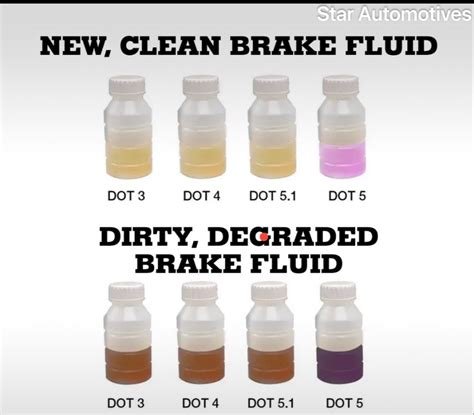
Does Brake Fluid Turn Dark When It Goes Bad?
It can darken, but color alone is not a reliable test.
Different manufacturers use slightly different formulations and additives.
Fresh conventional fluid may appear nearly colorless or amber.
A bottle can contain moisture without developing a visible color change.
Can Clear Brake Fluid Be Bad?
Yes.
Moisture contamination may be invisible.
A clear appearance does not establish that the fluid still meets its original boiling-point specification.
Does Brake Fluid Smell Different When It Expires?
Odor is not a reliable way to determine suitability.
Do not intentionally inhale brake fluid vapors or use smell as a maintenance test.
Does Brake Fluid Get Thicker Over Time?
Changes in viscosity can occur under some conditions, but you cannot reliably evaluate the fluid’s performance by shaking the bottle or observing how quickly it pours.
Proper testing or manufacturer guidance is needed.
Key Takeaway: There is no dependable visual test that proves an old bottle of brake fluid is safe.
Can You Test Brake Fluid From an Old Bottle?
Certain tests can evaluate whether brake fluid still meets particular performance requirements.
However, not every inexpensive test device is reliable.
Brake Fluid Moisture Tester Pens
Many inexpensive brake fluid testers estimate water content using electrical conductivity.
Some display colored lights or percentage readings.
However, different brake fluid formulations naturally have different electrical properties.
A conductivity reading can therefore be misleading.
Boiling Point Testers
A direct boiling-point tester heats a sample and measures its boiling behavior.
This is more directly related to a key safety requirement of brake fluid.
Professional service facilities may use this method to assess fluid condition.
Is a Boiling Point Test Completely Reliable?
It can provide useful information about boiling-point performance.
However, it does not necessarily verify every property of the fluid.
It may not identify all forms of chemical contamination or guarantee compatibility with a particular braking system.
Should You Test an Old Unopened Bottle?
For most home mechanics, buying a new bottle is simpler and more economical than arranging professional laboratory or boiling-point testing.
Testing is more useful in professional maintenance environments where suitable equipment and procedures are available.
Can You Use a Moisture Test Strip?
Certain tests estimate fluid condition through chemical reactions or other indicators.
However, results depend on the product and test method.
Do not treat a general-purpose test strip as a complete guarantee that old brake fluid remains safe.
How to Store Brake Fluid in the Bottle Properly
Correct storage helps preserve the fluid’s intended performance.
However, storage precautions do not make shelf life unlimited.
Step 1: Keep It in the Original Container
Do not transfer brake fluid into a beverage bottle, jar, or unmarked container.
The original packaging is selected for compatibility and protection.
It also identifies the fluid type and safety information.
Step 2: Protect the Factory Seal
For an unopened bottle, leave the original inner seal intact until you’re ready to use the fluid.
Do not puncture it merely to check the contents.
Step 3: Close Opened Bottles Immediately
If you have already opened the bottle, reinstall the cap as soon as you finish pouring.
Avoid leaving the bottle open while performing unrelated maintenance.
Step 4: Store in a Cool, Dry Place
Choose a location protected from direct sunlight, excessive heat, and moisture.
Follow the manufacturer’s recommended temperature range.
Step 5: Avoid Repeated Opening
Every opening increases the opportunity for moisture or foreign material to enter.
Don’t repeatedly open the bottle to inspect or smell the fluid.
Step 6: Write Down the Opening Date
If the manufacturer permits storage after opening, record the date.
For example:
Opened: November 9, 2026
This makes future decisions easier.
However, an opening-date label does not guarantee that the fluid remains suitable.
Step 7: Keep It Away From Other Automotive Fluids
Store brake fluid separately from:
- Engine oil.
- Transmission fluid.
- Power steering fluid.
- Gasoline.
- Coolant.
- Cleaning chemicals.
Avoid accidental mixing or container confusion.
Step 8: Keep the Bottle Upright
Store it where the container cannot easily fall over or become damaged.
Make sure the cap remains secure.
Step 9: Follow the Manufacturer’s Shelf Life
Do not extend the storage period based solely on appearance.
If the bottle has exceeded the manufacturer’s specified shelf life, replace it.
Can You Use Brake Fluid That Has Been Sitting for Five Years?
It depends on whether it was opened, the manufacturer, and the storage conditions.
However, for ordinary automotive brake service, I recommend buying fresh fluid rather than using a five-year-old bottle with an unverified remaining shelf life.
Five-Year-Old Unopened Bottle
Some products may have longer storage ratings, but many conventional brake fluids have manufacturer-recommended shelf lives of around two years.
If a five-year-old bottle exceeds the manufacturer’s stated limit, its original performance is no longer guaranteed.
Five-Year-Old Opened Bottle
Do not use it for routine brake maintenance.
The original protective seal has been broken, and its moisture exposure may be unknown.
What if the Fluid Looks Perfectly Clear?
That does not establish its condition.
The boiling point may have changed without visible discoloration.
Is It Worth Taking the Risk?
A fresh bottle is usually inexpensive compared with the cost of repairing hydraulic components or dealing with degraded braking performance.
For an old bottle of uncertain condition, replacement is the sensible choice.
Can You Use Brake Fluid From a Bottle Opened Last Year?
For important brake service, I recommend using a new bottle.
An opened bottle from the previous year may have experienced moisture exposure even if it remained capped.
Does Tightening the Cap Preserve It?
Tightening the cap reduces further exposure but does not recreate the original factory seal.
It also does not remove moisture already absorbed.
What if It Was Stored Indoors?
Good indoor storage may help preserve the contents.
However, a storage environment alone cannot establish that the fluid still meets specifications.
Follow the product-specific storage limits.
Can You Mix the Old Fluid With Fresh Fluid?
Do not attempt to restore questionable brake fluid by mixing it with new fluid.
If the old fluid has absorbed moisture or become contaminated, mixing can carry that contamination into the braking system.
Use fresh, correctly specified fluid instead.
Does Brake Fluid Last Longer in the Car Than in the Bottle?
The storage life of unused brake fluid is different from the replacement interval for brake fluid already inside a vehicle.
Brake Fluid Inside a Vehicle
Automotive braking systems are designed to contain hydraulic fluid during normal operation.
However, moisture can gradually enter through certain seals and hoses.
Manufacturers therefore specify inspection or replacement intervals.
Many vehicles require brake fluid replacement approximately every two years, although schedules vary.
Brake Fluid in an Opened Bottle
An opened bottle is exposed to air when the factory seal is broken.
Each additional opening may introduce more moisture.
The manufacturer may therefore recommend a much shorter storage period.
Brake Fluid in an Unopened Bottle
A factory-sealed bottle provides better protection.
Its shelf life is generally longer, but it still depends on the product and storage conditions.
Why the Intervals Are Different
A vehicle’s maintenance schedule accounts for the operation of its hydraulic system.
A bottle’s shelf life concerns storage and the manufacturer’s ability to guarantee the fluid’s original properties.
These are different conditions and should not be treated as interchangeable.
Can Old Bottled Brake Fluid Damage a Car?
Potentially, yes.
If old brake fluid has absorbed moisture or become contaminated, it may no longer perform as intended.
Reduced Boiling Resistance
Moisture can lower boiling-point performance.
Under severe braking conditions, this may increase the risk of vapor formation and reduced hydraulic effectiveness.
Corrosion Risks
Moisture and degraded protective properties may contribute to corrosion.
Potentially affected components include:
- Brake lines.
- Master cylinder.
- Brake calipers.
- Wheel cylinders.
- ABS hydraulic components.
Contamination of Seals
Incompatible fluids such as petroleum-based oils can damage seals and other hydraulic components.
A bottle that has been contaminated should not be used.
Does Old Fluid Automatically Cause Immediate Brake Failure?
No.
Using old fluid does not mean the brakes will instantly fail.
However, the uncertainty about its performance makes it an unnecessary risk.
Braking-system maintenance should use fluid that meets the vehicle’s specifications.
Should You Keep Leftover Brake Fluid After a Brake Flush?
Only if the manufacturer permits short-term storage and you can protect the contents appropriately.
For many home mechanics, discarding leftovers responsibly and buying fresh fluid next time is more practical.
When Leftover Fluid Might Be Usable
It may be reasonable to retain the remainder if:
- The manufacturer permits storage after opening.
- You opened the bottle recently.
- It was immediately resealed.
- The container has not been contaminated.
- It has been stored correctly.
- You intend to use it within the permitted period.
When to Discard It
Discard the fluid if:
- You don’t know when it was opened.
- The cap was left off for an extended period.
- The inner seal was broken long ago.
- Water or dirt may have entered.
- The contents were exposed to incompatible liquids.
- The manufacturer’s shelf life has expired.
Can You Pour Used Brake Fluid Back Into the Bottle?
No.
Never return drained or bled brake fluid to a container holding unused fluid.
Used fluid may contain moisture, particles, and other contaminants.
Should You Buy Smaller Bottles?
Often, yes.
Buying a bottle size that closely matches the maintenance task can reduce leftovers.
However, a full brake flush requires enough fluid to complete the manufacturer’s procedure without allowing the reservoir to run dry.
Check the vehicle’s required quantity before purchasing.
How to Dispose of Expired Brake Fluid
Old brake fluid should be handled as automotive chemical waste.
Do not pour it into drains, onto the ground, or into waterways.
Keep the Waste Contained
Use a secure, compatible, clearly labeled container.
Avoid leaving old fluid in unmarked bottles.
Do Not Mix It With Used Motor Oil
Brake fluid and used motor oil often require different handling.
Mixing them may prevent waste collectors from accepting either material.
Use an Appropriate Collection Facility
Contact your local household hazardous waste collection program or an authorized automotive waste facility.
Ask whether it accepts brake fluid.
Acceptance rules vary by location.
Avoid Skin and Eye Contact
Follow the product safety data sheet.
Wear suitable protection when handling waste fluid.
Keep containers away from children and pets.
Common Mistakes When Storing Brake Fluid Bottles
Assuming an Unopened Bottle Lasts Forever
Even factory-sealed brake fluid may have a limited manufacturer-recommended shelf life.
Keeping an Opened Bottle for Several Years
An opened bottle can absorb moisture and lose guaranteed performance.
Judging Condition Only by Color
Clear fluid may still contain moisture.
Color is not a reliable indicator of boiling-point performance.
Ignoring the Manufacturing Date
A bottle’s shelf life generally begins from its manufacturing or packaging date, not the date you purchased it.
Confusing the Batch Code With an Expiration Date
A manufacturing code may require interpretation.
Use the manufacturer’s date-coding system.
Leaving the Cap Loose
A poorly sealed cap increases contamination risk.
Storing Fluid in Direct Sunlight
Excessive heat and sunlight can create unfavorable storage conditions.
Using Dirty Funnels
Contaminated equipment can introduce particles, water, or incompatible liquids.
Reusing Fluid From a Bleeding Container
Used brake fluid should never be poured back into the original bottle.
Mixing DOT 5 With DOT 3 or DOT 4
Silicone DOT 5 is not interchangeable with conventional glycol-based brake fluids.
Assuming Racing Brake Fluid Lasts Longer
A high dry boiling point does not automatically mean a longer storage life.
Follow the racing fluid manufacturer’s instructions.
Assuming a Moisture Test Pen Proves the Fluid Is Safe
Some conductivity-based testers can be misleading.
Testing should be appropriate to the product and the property being evaluated.
Should You Use Old Brake Fluid or Buy a New Bottle?
The decision depends on the bottle’s age, condition, and storage history.
Quick Decision Guide
| Situation | Practical Recommendation |
| New, factory-sealed bottle within stated shelf life | Use if the fluid meets vehicle requirements |
| Unopened bottle around 1 year old | Check manufacturer’s instructions and storage history |
| Unopened bottle around 2 years old | Check the stated shelf-life limit |
| Unopened bottle 5 years old | Buy fresh unless product-specific guidance clearly supports it |
| Opened yesterday and immediately resealed | May be usable under manufacturer guidance |
| Opened 1–3 months ago | Verify storage and product instructions; fresh preferred |
| Opened 6 months ago | Fresh fluid strongly recommended |
| Opened 12 months ago | Replace |
| Seal damaged or bottle contaminated | Do not use |
| Age or fluid type unknown | Buy fresh |
| Critical brake-fluid flush planned | Prefer a newly opened, correctly specified bottle |
If you’re uncertain about the fluid’s condition, there is little reason to take the risk.
Fresh brake fluid is generally inexpensive compared with the importance of reliable braking.
Conclusion
So, does brake fluid go bad in the bottle? Yes. Both opened and unopened brake fluid can gradually lose guaranteed performance, especially when exposed to moisture, excessive heat, or poor storage conditions.
For many conventional DOT 3, DOT 4, and DOT 5.1 brake fluids, manufacturers recommend approximately 18–24 months of shelf life in properly sealed containers. However, the exact period varies by brand, formulation, and packaging.
Once the bottle is opened, the usable storage period generally becomes much shorter. Some manufacturers recommend using the contents within a few months, while others warn that the fluid may become compromised after approximately six months.
I recommend keeping brake fluid in its original container, protecting the factory seal, avoiding excessive heat and humidity, and following the manufacturer’s expiration or shelf-life instructions.
For a bottle that’s been opened for an unknown period or stored beyond its recommended life, purchasing fresh fluid is the safer choice.
The best way to protect your braking system is to use clean, correctly specified brake fluid from a bottle whose age and storage condition you can trust.
FAQs About Does Brake Fluid Go Bad in the Bottle
Does Brake Fluid Go Bad in an Unopened Bottle?
Yes, it can.
An unopened bottle provides better moisture protection than an opened one, but its shelf life is not necessarily unlimited.
Many conventional brake fluids have manufacturer-recommended storage periods of approximately 18–24 months.
How Long Does Brake Fluid Last in a Sealed Bottle?
Common recommendations are around two years under suitable storage conditions.
However, some products may have different shelf lives.
Follow the manufacturer’s stated limit and inspect the packaging.
Does Brake Fluid Go Bad After Opening?
Yes.
Once the factory seal is broken, moisture and other contaminants can enter.
Many manufacturers recommend using opened brake fluid within a few months.
The exact period depends on the product and storage conditions.
Can I Use Brake Fluid That Is Five Years Old?
I recommend purchasing fresh fluid unless the manufacturer explicitly supports that storage period and the bottle’s condition can be verified.
A five-year-old bottle may exceed the manufacturer’s guaranteed shelf life.
Does DOT 3 Brake Fluid Expire in the Bottle?
Yes, DOT 3 has a finite manufacturer-recommended storage life.
It is hygroscopic and can absorb moisture.
Use a properly stored bottle within the manufacturer’s stated shelf life.
Does DOT 4 Brake Fluid Go Bad in the Bottle?
Yes.
DOT 4 is glycol-based and absorbs moisture.
Its higher minimum boiling-point specification compared with DOT 3 does not make its bottle shelf life unlimited.
How Long Does DOT 5.1 Brake Fluid Last Unopened?
The shelf life depends on the specific manufacturer.
Many glycol-based brake fluids have recommended unopened storage periods around two years.
Check the exact DOT 5.1 product documentation.
Does Silicone DOT 5 Go Bad in the Bottle?
Silicone DOT 5 is not hygroscopic in the same way as glycol-based brake fluid.
However, contamination, packaging condition, and manufacturer shelf-life requirements still matter.
Do not assume it can be stored indefinitely.
Can Moisture Get Into a Sealed Brake Fluid Bottle?
Yes, small amounts of moisture vapor may enter over time through certain packaging materials or closures.
The rate depends on the bottle design, temperature, humidity, and storage duration.
Does Brake Fluid Expire If You Never Open It?
It can exceed its manufacturer’s guaranteed shelf life even if unopened.
An intact factory seal helps preserve the fluid, but it doesn’t necessarily guarantee unlimited storage.
Can You Tell if Brake Fluid Is Bad by Its Color?
No.
Brake fluid can absorb moisture without visibly changing color.
A clear appearance doesn’t establish that the fluid meets its required boiling-point specification.
Does Brake Fluid Have an Expiration Date?
Some products have an expiration or best-before date.
Others use production or batch codes.
If you can’t interpret the code, contact the manufacturer rather than guessing.
Can You Use Brake Fluid Opened Six Months Ago?
It is safer to use a fresh bottle.
Some manufacturers warn that fluid may become compromised after approximately six months, depending on storage conditions.
Follow the product’s specific guidance.
Will Old Brake Fluid Damage My Brakes?
Potentially.
Moisture-contaminated or otherwise unsuitable fluid may have reduced boiling resistance and can contribute to corrosion.
Never use a product with known contamination or an unknown fluid specification.
Is Brake Fluid Still Good if the Cap Was Off but the Foil Was Sealed?
It may still retain its original protective seal if the foil remained completely intact.
However, the manufacturer and packaging design determine whether that qualifies as unopened.
Check for any damage to the inner seal.
Can You Test Brake Fluid From an Old Bottle?
Yes.
Professional boiling-point testing can evaluate one important performance property.
However, it doesn’t guarantee every other characteristic of the fluid.
For ordinary home maintenance, buying fresh fluid is often more practical.
Can You Store Brake Fluid in a Garage?
Yes, if the garage meets the manufacturer’s storage conditions.
Avoid extreme temperatures, direct sunlight, excess humidity, and damaged containers.
A hot, humid garage may shorten the recommended storage life.
Does Brake Fluid Last Longer in Metal Cans?
Some metal containers provide an effective moisture barrier.
However, packaging quality, corrosion, seals, and storage conditions also matter.
Metal packaging does not automatically guarantee a longer shelf life.
Can You Use Old Brake Fluid for Topping Off?
Only if the fluid still meets the manufacturer’s storage requirements and is the correct specification.
However, a low brake fluid level may indicate brake pad wear or a hydraulic leak.
Investigate the reason before adding fluid.
Should You Throw Away Leftover Brake Fluid?
If the bottle has exceeded the manufacturer’s allowed storage period, its history is uncertain, or it may be contaminated, dispose of it responsibly.
Do not pour brake fluid down a drain or mix it with used motor oil.
Use an appropriate automotive or household hazardous waste collection service.