Can No Brake Fluid Cause Grinding Noise? Causes and Safety Tips
No, having little or no brake fluid does not directly cause a grinding noise. Grinding usually comes from mechanical contact between worn brake pads, damaged rotors, sticking calipers, or other brake components. However, low brake fluid and grinding noises can occur together, especially when severely worn brake pads cause the fluid level in the reservoir to drop.
Brake fluid transfers hydraulic pressure from the brake pedal to the calipers or wheel cylinders. When the fluid level becomes dangerously low, the system may lose hydraulic pressure, resulting in a soft pedal, reduced braking power, or brake failure.
A grinding noise, on the other hand, usually indicates that something is rubbing, dragging, or making unwanted metal-to-metal contact.
Understanding the difference matters because adding brake fluid will not repair worn brake pads or damaged rotors. Likewise, replacing brake pads will not fix a hydraulic leak.
In this article, I explain whether no brake fluid can cause grinding noise, why low fluid and grinding sometimes happen together, and what common brake problems produce these sounds. I also cover warning signs, safe inspection methods, repair options, and when you should stop driving immediately.
Can No Brake Fluid Cause Grinding Noise? Quick Answer
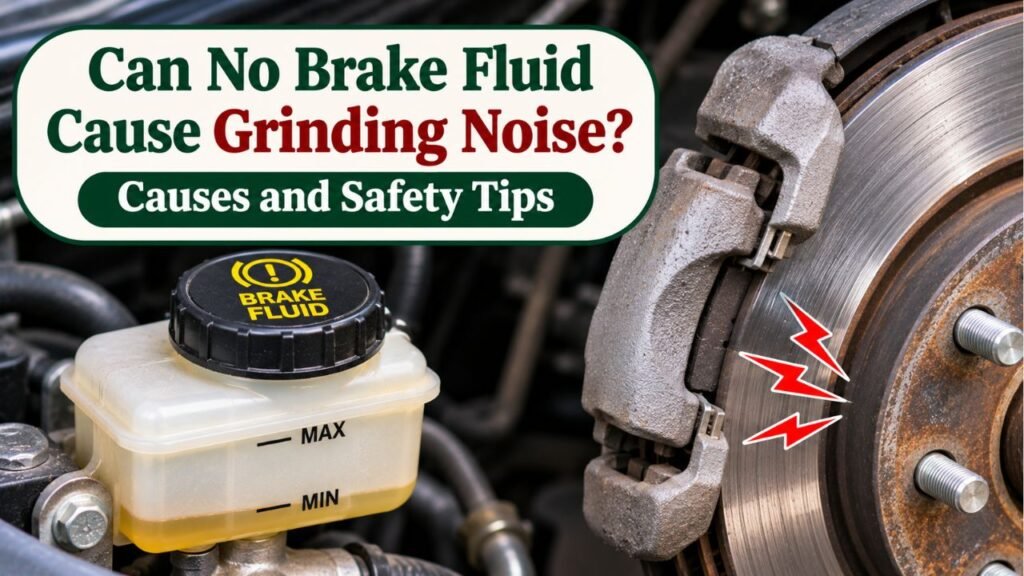
Low brake fluid does not normally create grinding noise because hydraulic fluid does not produce the metal-to-metal contact responsible for most brake grinding sounds.
Instead, the two conditions affect different parts of the braking system.
Brake fluid is part of the hydraulic system.
Grinding usually originates from the mechanical braking components.
Low Brake Fluid vs. Grinding Brakes
| Problem | Main Cause | Common Symptoms |
| Low brake fluid | Brake pad wear, hydraulic leak, or service-related issue | Low reservoir level, warning light |
| No brake fluid | Severe fluid loss or an empty hydraulic reservoir | Major hydraulic failure, very low or ineffective brake pedal |
| Grinding brakes | Worn pads, damaged rotors, dragging components, or debris | Metallic grinding or scraping noise |
| Low fluid and grinding together | Severely worn pads, or separate hydraulic and mechanical faults | Low fluid level plus grinding during braking |
| Sticking brake caliper | Corrosion, damaged hardware, or hydraulic restriction | Grinding, dragging, heat, uneven wear |
| Damaged brake rotor | Excessive wear, scoring, corrosion, or other damage | Grinding, vibration, rough braking |
According to Haynes Manuals’ guide to common brake problems, low brake fluid is associated with poor hydraulic braking and soft pedal symptoms, while grinding is commonly associated with excessively worn brake friction components.
Why Do People Connect Low Brake Fluid With Grinding?
The confusion usually comes from brake pad wear.
As brake pads become thinner, the caliper pistons extend farther outward.
More brake fluid moves from the reservoir into the calipers.
This lowers the fluid level in the reservoir, even though the fluid has not left the hydraulic system.
If the pads continue wearing until the friction material is exhausted, the metal backing plates may contact the rotors and produce a grinding noise.
Therefore, low fluid and grinding may appear together because they share an underlying cause: severe brake pad wear.
Key Takeaway: Low brake fluid and grinding noise can be related, but low fluid itself is not normally the source of the sound.
How Brake Fluid Works in a Car
To understand the relationship between low fluid and brake noise, it helps to know how hydraulic brakes operate.
When you press the brake pedal, force is transmitted through the master cylinder.
The master cylinder pressurizes the brake fluid.
That pressure travels through brake lines and hoses to the hydraulic components at the wheels.
In a disc brake system, the pressure moves caliper pistons that press brake pads against the rotating brake rotor.
In a drum brake system, wheel cylinders push brake shoes against the brake drum.
The friction slows the wheels.
What Happens When Brake Fluid Gets Too Low?
A properly functioning hydraulic brake system needs sufficient fluid and must remain free of air.
If fluid escapes through a leak, the system may lose its ability to maintain hydraulic pressure.
Air may also enter the hydraulic circuit.
Because air compresses much more easily than brake fluid, the brake pedal may feel soft or travel farther than normal.
Potential symptoms include:
- A spongy brake pedal.
- Excessive pedal travel.
- A pedal that sinks toward the floor.
- Reduced braking response.
- A red brake warning light.
- Significantly longer stopping distances.
- Partial or severe braking failure.
However, none of these hydraulic effects directly creates the typical metallic grinding sound.
What Happens if There Is No Brake Fluid?
An empty reservoir indicates a potentially serious hydraulic problem.
If air has entered the braking circuits or fluid pressure cannot be maintained, the vehicle may have severely reduced or ineffective service brakes.
Many modern vehicles have divided hydraulic circuits that provide some redundancy.
However, that does not guarantee the vehicle can stop safely after substantial fluid loss.
Never drive a car with an empty brake fluid reservoir or suspected hydraulic brake failure.
Why Low Brake Fluid and Grinding Noise Happen Together
The most common shared explanation is severely worn brake pads.
This process develops gradually.
Stage 1: Brake Pads Begin Wearing
New brake pads contain a substantial layer of friction material.
When the brake pedal is pressed, the pads contact the rotors and slow the wheels.
The friction material gradually wears during normal driving.
Stage 2: Caliper Pistons Extend
As the pads become thinner, the caliper pistons remain farther outward.
Brake fluid moves from the master cylinder reservoir into the calipers to occupy the additional space.
The reservoir level decreases gradually.
This movement is normal and does not necessarily mean the system has a leak.
Stage 3: Brake Pads Become Excessively Thin
If brake pads are not replaced when necessary, the friction material can become severely worn.
Some pads have metal wear indicators that make a squealing sound before the friction material is exhausted.
However, not every brake pad produces an audible warning.
Stage 4: Metal Contacts the Rotor
When the friction material wears away completely, the metal backing plate can contact the rotating rotor.
This creates harsh metal-on-metal friction.
The result is often a loud grinding or scraping noise.
At this stage, rotor damage may already be occurring.
Stage 5: The Reservoir May Also Be Low
Because the caliper pistons have extended significantly, more fluid may remain in the calipers.
The reservoir may be near its minimum mark.
Consequently, the driver notices both:
- Grinding during braking.
- A low brake fluid level.
The grinding comes from the worn brake components, not from the brake fluid.
Does This Always Happen?
No.
A car can have worn pads and grinding noise while the reservoir level remains normal.
A car can also have dangerously low fluid because of a leak without producing any grinding noise.
The two symptoms should be investigated independently.
Key Takeaway: Severely worn brake pads can explain both a low reservoir level and grinding brakes, but a hydraulic leak must still be ruled out.
1. Completely Worn Brake Pads
Worn brake pads are among the most common causes of grinding when the brake pedal is pressed.
Brake pads contain friction material attached to a metal backing plate.
When the friction material is exhausted, the backing plate may rub directly against the rotor.
What Does Worn Brake Pad Grinding Sound Like?
The sound may be described as:
- Harsh metallic grinding.
- Rough scraping.
- A grinding or growling noise.
- Metal rubbing against metal.
It often becomes more noticeable when braking.
However, sound alone cannot confirm how much friction material remains.
Why Is This Dangerous?
Metal-on-metal contact can damage the rotor.
It may also reduce braking performance and contribute to excessive heat.
A damaged rotor can require replacement rather than a simple brake pad service.
According to O’Reilly Auto Parts’ guide to grinding brakes, severely worn brake pads can allow their metal backing plates to contact the rotors, producing grinding noise and potentially damaging other brake components.
Can New Brake Fluid Fix Worn Pads?
No.
Adding brake fluid cannot restore missing friction material.
The pads must be inspected and replaced as necessary.
The rotors, calipers, and related hardware also need to be checked.
Key Takeaway: If the brakes grind because the pads have worn down to metal, adding brake fluid will not stop the noise.
2. Damaged or Severely Worn Brake Rotors
Brake rotors are the rotating discs contacted by the brake pads.
Their friction surfaces should be suitable for smooth, consistent braking.
However, rotors can develop damage.
What Causes Rotor Grinding?
Possible causes include:
- Deep scoring.
- Contact with worn brake pad backing plates.
- Severe corrosion.
- Uneven wear.
- Damaged braking hardware.
- Excessive mechanical contact.
A badly damaged rotor may cause grinding, roughness, or vibration.
Can Low Brake Fluid Damage Rotors?
Low brake fluid does not normally damage a rotor directly.
However, the conditions causing low fluid may also involve damaged brake components.
For example, severely worn pads may reduce the reservoir level while simultaneously damaging the rotors.
How Are Damaged Rotors Repaired?
A mechanic should inspect rotor thickness and surface condition.
Depending on the damage and manufacturer specifications, the rotor may require replacement.
Resurfacing is possible only when the rotor remains suitable for that procedure and meets the required thickness and condition limits.
Key Takeaway: Rotor damage is a mechanical issue. Restoring the brake fluid level does not repair a damaged rotor.
3. Sticking or Seized Brake Calipers
A brake caliper is responsible for applying and releasing the brake pads against the rotor.
If the caliper sticks, the brake pads may continue rubbing the rotor even when the brake pedal is released.
This can produce grinding or scraping noises.
Why Do Brake Calipers Stick?
Possible causes include:
- Corroded caliper pistons.
- Seized guide pins.
- Damaged seals.
- Improperly installed components.
- Corroded hardware.
- Restricted brake hoses.
- Other hydraulic or mechanical problems.
Symptoms of a Sticking Caliper
Possible warning signs include:
- Grinding while driving.
- A burning smell near a wheel.
- Unusual heat from one wheel.
- The vehicle pulling to one side.
- Uneven brake pad wear.
- Reduced fuel efficiency due to brake drag.
Can Low Brake Fluid Cause a Caliper to Stick?
Low fluid alone is not a typical cause of a mechanically seized caliper.
However, hydraulic faults can affect caliper operation.
For example, a deteriorated brake hose can restrict fluid return, leaving pressure trapped in a caliper.
In this situation, the wheel may continue dragging.
That is different from simply having a low reservoir level.
What Is the Correct Repair?
A technician needs to determine whether the problem involves:
- The caliper.
- Guide pins.
- Brake hose.
- Pads and hardware.
- Another hydraulic component.
The failed parts should be repaired or replaced as appropriate.
4. Debris Trapped Between Brake Components
A small stone or other road debris can sometimes become trapped between the brake rotor and a nearby component.
This may create a scraping or grinding sound.
Common Sources of Debris-Related Noise
Possible causes include:
- A small stone between a rotor and dust shield.
- Road debris near the brake pads.
- A bent backing plate touching the rotor.
- Foreign material trapped around the braking assembly.
How Does It Sound?
The noise may:
- Occur while the car is moving.
- Continue without pressing the brakes.
- Change with wheel speed.
- Come from one wheel.
- Begin suddenly after driving on gravel.
Does Brake Fluid Have Any Connection?
Usually not.
Debris-related grinding is mechanical and typically unrelated to the brake fluid reservoir.
Can You Keep Driving?
Don’t assume an unfamiliar grinding noise is harmless debris.
The same sound can come from severely worn pads, a damaged rotor, or a wheel-bearing problem.
Have the source identified before continuing to drive.
5. Rust on Brake Rotors
Most conventional brake rotors contain iron and can develop surface rust.
This may happen when the vehicle is parked in damp conditions.
Can Rust Cause Grinding?
Yes.
Light surface corrosion can produce temporary scraping or grinding during initial braking.
However, more substantial corrosion can cause roughness, noise, and uneven contact.
When Is Rust More Serious?
Potentially serious signs include:
- Persistent grinding.
- Deep corrosion or pitting.
- Vibration during braking.
- Reduced braking performance.
- Visible severe rotor damage.
A persistent noise should not be dismissed as normal surface rust.
Is Rust Related to Low Brake Fluid?
Not directly.
Surface rust on the rotor and low hydraulic fluid are separate conditions.
However, long-term moisture contamination in brake fluid can contribute to corrosion inside certain hydraulic components.
That internal corrosion is different from ordinary rust on the exposed rotor surface.
6. Worn Brake Shoes or Drum Brake Components
Some vehicles have drum brakes, particularly at the rear wheels.
Drum brakes use shoes that press outward against the inside of a rotating drum.
As the shoe linings wear, the metal portions of the brake assembly may eventually contact the drum.
Can Drum Brakes Grind?
Yes.
Potential causes include:
- Worn brake shoe linings.
- Damaged drums.
- Loose hardware.
- Broken return springs.
- Contamination.
- Other mechanical failures.
Can a Drum Brake Leak Lower Fluid?
Yes.
A leaking wheel cylinder can allow brake fluid to escape into the drum assembly.
This may lower the reservoir level without leaving a visible puddle.
However, the fluid leak itself does not normally generate grinding noise.
A vehicle may have both a wheel cylinder leak and mechanical drum brake damage.
Those problems require inspection and repair.
7. Wheel Bearing Problems
Not every grinding noise near a wheel comes from the brakes.
A failing wheel bearing can produce grinding, growling, or rumbling sounds.
How Is Wheel Bearing Noise Different?
Bearing-related noise may:
- Increase with vehicle speed.
- Continue when the brake pedal is released.
- Change when the vehicle turns.
- Sound like a growl or rumble near one wheel.
However, these patterns are not enough for a definite diagnosis.
Does Low Brake Fluid Cause Wheel Bearing Grinding?
No.
Wheel bearings and hydraulic brake fluid perform different functions.
A wheel-bearing problem is not caused by an empty brake fluid reservoir.
However, both conditions can exist at the same time.
A failing wheel bearing can also affect wheel and brake alignment, creating additional symptoms.
If bearing failure is suspected, professional inspection is necessary.
Grinding Noise vs. Low Brake Fluid Symptoms
The timing of the sound and the condition of the brake pedal may provide clues.
However, symptoms alone cannot reliably identify every brake problem.
Symptom Comparison Chart
| Symptom | Possible Cause |
| Grinding only when braking | Worn pads, rotor damage, or brake hardware |
| Grinding while driving without braking | Dragging brake, debris, dust shield, or wheel bearing |
| Soft brake pedal | Air in the hydraulic system, leak, or other hydraulic fault |
| Brake pedal sinks toward floor | Potential hydraulic failure |
| Grinding with low fluid | Worn pads and/or separate hydraulic problem |
| Low fluid without noise | Pad wear, hydraulic leak, or service-related issue |
| Burning smell near wheel | Possible dragging brake |
| Vibration when braking | Rotor condition, brake deposits, or another component issue |
| Brake warning light | Low fluid or another brake-system condition |
| Grinding after long storage | Possible rotor corrosion or other mechanical problem |
The important distinction is that grinding points toward physical contact or mechanical wear, while low brake fluid points toward a hydraulic-system concern or fluid displacement due to wear.
Either problem may require professional attention.
Can Low Brake Fluid Cause Squeaking Instead of Grinding?
Low brake fluid does not normally cause squeaking directly either.
Brake squeaking generally comes from vibration or contact between brake components.
Possible causes include:
- Brake pad wear indicators.
- Pad vibration.
- Dust or debris.
- Moisture.
- Glazed friction surfaces.
- Caliper hardware problems.
- Improperly installed brake parts.
A squealing wear indicator can warn that brake pads are nearing replacement.
If the pads continue wearing, more severe grinding may develop.
However, not every squeak progresses to grinding, and not every grinding noise begins with squeaking.
What About ABS Grinding Noise?
During ABS activation, some vehicles produce a rapid buzzing, grinding-like, or pulsing sensation.
This can occur when the system rapidly adjusts brake pressure during a hard stop on a slippery surface.
That brief ABS sensation differs from persistent metal-on-metal grinding.
However, do not assume grinding is normal ABS operation if the brake fluid is low, the brake warning light is illuminated, or the pedal feels abnormal.
Those symptoms require investigation.
How to Check Brake Fluid When Your Brakes Are Grinding
If you notice grinding, checking the reservoir may provide useful information.
However, the fluid level alone cannot establish whether the brakes are safe.
Step 1: Stop the Vehicle Safely
If grinding begins while driving, reduce speed carefully and stop in a safe location.
If braking performance is reduced, the pedal feels abnormal, or a brake warning is present, do not continue driving.
Arrange roadside assistance.
Step 2: Turn Off the Engine
Park on level ground when possible.
Secure the vehicle before opening the hood.
Step 3: Locate the Brake Fluid Reservoir
On many vehicles, the reservoir is located near the brake master cylinder at the rear of the engine compartment.
It is often a translucent plastic container.
Use the owner’s manual to confirm its location.
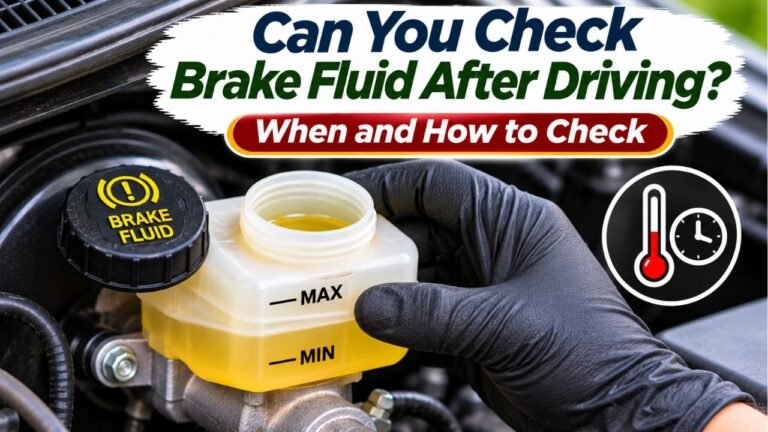
Step 4: Inspect the Fluid Level
Look for the MIN and MAX markings.
Check the level through the container without opening it unnecessarily.
A gradual decrease within the specified range may reflect brake pad wear.
However, an empty reservoir or a level below MIN is a serious warning that requires inspection.
Step 5: Look for Visible Leakage
Without crawling beneath the vehicle or dismantling brake components, look for obvious signs of fluid around:
- The reservoir.
- The master cylinder.
- Accessible hydraulic connections.
- Brake lines.
- Brake hoses.
- Wheel areas.
Not every hydraulic leak produces an obvious puddle.
Step 6: Consider Other Symptoms
Check whether the vehicle has:
- A brake warning light.
- Unusually long pedal travel.
- A soft or sinking pedal.
- A persistent metallic grinding noise.
- Pulling to one side.
- Visible fluid leakage.
Do not perform repeated driving tests to determine whether the brakes are still functioning.
Step 7: Arrange a Brake Inspection
A qualified technician can assess both the hydraulic and mechanical systems.
If low fluid and grinding occur together, both problems need to be investigated.
Important: Do not attempt to fix a grinding brake problem by simply adding fluid and continuing to drive.
Will Adding Brake Fluid Stop Grinding Noise?
No. Adding brake fluid will not normally stop grinding because the sound usually comes from mechanical brake components.
Brake fluid cannot restore worn brake pads, repair a damaged rotor, or remove debris trapped in the braking assembly.
What Happens if You Add Brake Fluid?
If the system is low because of a leak, adding fluid may temporarily raise the reservoir level.
However, the leak remains.
Hydraulic pressure may still be lost, and air may already be present in the system.
If the level is low because of worn brake pads, adding fluid without considering pad thickness may cause overfilling when the caliper pistons are later retracted.
Can You Drive After Refilling?
Not when a leak, empty reservoir, abnormal brake pedal, or serious grinding problem remains unresolved.
Refilling does not prove that the braking system is safe.
A professional inspection is necessary.
What if the Grinding Stops After Adding Fluid?
A change in noise does not prove that fluid corrected the cause.
Grinding can vary with speed, temperature, braking pressure, and the position of mechanical components.
The underlying problem may still exist.
Key Takeaway: Brake fluid is not a treatment for grinding brakes. Find and repair the mechanical and hydraulic problems separately.
Is It Safe to Drive With Grinding Brakes and Low Fluid?
No. Grinding brakes accompanied by low or empty brake fluid should be treated as a potentially serious safety problem.
The vehicle may have both worn friction components and a hydraulic fault.
This can reduce braking reliability.
Why This Combination Is Dangerous
Potential problems include:
- Severely worn brake pads.
- Damaged brake rotors.
- Fluid leakage.
- Air entering the hydraulic system.
- Reduced braking pressure.
- Excessive pedal travel.
- Unpredictable stopping performance.
According to AAA’s guide to warning signs of brake failure, grinding noises, low or spongy brake pedal response, and increased stopping distance are warning signs that the braking system needs prompt professional attention.
When Should You Stop Driving Immediately?
Do not continue driving if:
- The brake fluid reservoir is empty.
- The level is below the specified minimum.
- The brake pedal sinks toward the floor.
- Braking response is reduced.
- A serious brake warning appears.
- A hydraulic leak is suspected.
- Harsh, persistent grinding suggests severe mechanical damage.
Arrange professional inspection and towing.
What if the Brakes Still Work?
A car may appear to brake even when serious damage is developing.
This does not establish that continued driving is safe.
A hydraulic leak may become worse under pressure.
Likewise, worn pads can continue damaging the rotors.
Do not wait for complete brake failure.
How Mechanics Diagnose Grinding Brakes With Low Fluid
When both symptoms occur, an inspection should address the mechanical brakes and the hydraulic system.
Brake Pad Inspection
The technician checks:
- Remaining friction material.
- Uneven wear.
- Backing-plate contact.
- Pad condition.
- Proper installation.
- Related hardware.
Worn pads may require replacement.
Brake Rotor Inspection
The technician checks for:
- Deep grooves.
- Severe scoring.
- Excessive corrosion.
- Damage from metal contact.
- Thickness below specifications.
- Other surface problems.
A damaged rotor may require replacement.
Brake Caliper Inspection
The technician evaluates:
- Caliper piston movement.
- Guide pin operation.
- Signs of sticking.
- Damaged seals.
- Fluid leakage.
- Uneven pad wear.
A sticking or leaking caliper may require repair or replacement.
Hydraulic System Inspection
The technician checks:
- Brake fluid reservoir.
- Master cylinder.
- Brake lines.
- Flexible hoses.
- Caliper connections.
- Wheel cylinders where applicable.
- ABS hydraulic components.
- Signs of trapped air or fluid leakage.
Brake System Repair and Bleeding
If hydraulic components have leaked or been opened, the system may require bleeding using the manufacturer’s procedure.
Some vehicles require specific diagnostic equipment for certain ABS hydraulic bleeding operations.
A repair is not complete simply because the fluid level has been restored.
Final Brake Safety Checks
The repaired system should be checked for correct pedal feel, leaks, component installation, and braking operation.
Only return the vehicle to service after the brake system is verified to operate properly.
How to Prevent Low Brake Fluid and Grinding Brakes
Routine maintenance can help identify brake wear before it develops into an expensive or dangerous problem.
Inspect Brake Pads Regularly
Brake pads wear gradually.
Inspect them according to the vehicle manufacturer’s maintenance recommendations.
Replace them before the friction material becomes dangerously thin.
Check Brake Fluid Levels
Look at the reservoir periodically, following the owner’s manual.
A gradual level change may reflect pad wear.
A sudden or unexplained decrease requires inspection.
Replace Brake Fluid When Required
Brake fluid can absorb moisture and become contaminated over time.
Follow the manufacturer’s replacement schedule.
Fresh fluid alone does not prevent mechanical brake wear, but proper hydraulic maintenance can reduce certain problems.
Inspect Brake Hoses and Lines
Look for deterioration, corrosion, and other warning signs during routine service.
A qualified technician should inspect any questionable hydraulic component.
Address Early Brake Noises
Persistent squeaking, grinding, scraping, or other abnormal sounds deserve attention.
Do not wait until braking performance becomes noticeably worse.
Avoid Driving With Dragging Brakes
A sticking caliper or other dragging component can produce excessive heat and accelerated wear.
Have the cause corrected promptly.
Use Correct Replacement Parts
Brake pads, rotors, and hydraulic components must match the vehicle’s specifications.
Incorrect parts or installation can create performance and safety problems.
Follow the Brake Service Schedule
Vehicle manufacturers specify inspection and maintenance procedures based on the braking system.
Use the owner’s manual as the primary reference for model-specific service requirements.
Common Mistakes When Diagnosing Grinding Brakes
Assuming Low Fluid Is Making the Noise
Low fluid affects hydraulic operation.
Grinding generally comes from mechanical contact.
Both conditions need their own diagnosis.
Adding Fluid Instead of Replacing Worn Pads
Brake fluid does not replace missing friction material.
If the pads are worn out, they must be replaced.
Ignoring Rotor Damage
Severely worn pads may damage the rotor.
Replacing pads alone may not correct the problem if the rotor is no longer serviceable.
Assuming No Leak Is Present Because the Ground Is Dry
Some leaks are hidden within drum brakes or behind other components.
A dry parking spot does not rule out a hydraulic problem.
Continuing to Drive With a Soft Brake Pedal
A soft, sinking, or unusually low pedal may indicate a serious hydraulic fault.
The vehicle should not be driven until the problem is resolved.
Mistaking Every Grinding Noise for Worn Pads
Sticking calipers, debris, damaged shields, and wheel bearings can produce similar sounds.
A proper inspection is necessary.
Overfilling the Brake Fluid Reservoir
Brake pad wear can lower the reservoir level normally.
Adding fluid to MAX without considering pad thickness may cause overflow during brake service.
Using the Wrong Brake Fluid
Different brake fluid specifications are not universally interchangeable.
Use only the fluid required by the vehicle manufacturer.
Do not substitute engine oil, power steering fluid, or other liquids.
Relying on Noise Alone
The absence of grinding does not mean the braking system is healthy.
A vehicle can lose hydraulic pressure without making an unusual sound.
Trying to Fix Hydraulic Problems Without Proper Equipment
Brake system repairs require correct parts, procedures, and verification.
Improper repairs can leave the vehicle unsafe even when the pedal initially feels normal.
Conclusion
So, can no brake fluid cause grinding noise? No, an empty or low brake fluid reservoir does not normally cause grinding directly. Grinding usually results from worn brake pads, damaged rotors, sticking calipers, debris, or other mechanical components making unwanted contact.
However, grinding and low brake fluid may occur together.
The most common connection is severe brake pad wear. As pads wear thinner, caliper pistons extend and more fluid moves from the reservoir into the calipers. If the pads wear down to metal, grinding can begin while the reservoir level is also low.
A hydraulic leak is another possibility, but it must be investigated separately.
Adding brake fluid will not repair worn pads or damaged rotors. Likewise, replacing mechanical brake components will not fix an unresolved hydraulic leak.
If the reservoir is empty, the brake pedal feels abnormal, or grinding is severe, stop driving and arrange professional inspection.
The safest solution is to identify both the source of the grinding noise and the reason for the low brake fluid before returning the vehicle to the road.
FAQs About Can No Brake Fluid Cause Grinding Noise
Can Low Brake Fluid Make Brakes Grind?
Not directly.
Low brake fluid affects hydraulic pressure, while grinding usually comes from mechanical contact between brake components.
However, severely worn brake pads can cause both a lower reservoir level and metal-on-metal grinding.
What Noise Does a Car Make When Brake Fluid Is Low?
Low brake fluid does not have a specific sound.
The more typical symptoms are a soft brake pedal, excessive pedal travel, a brake warning light, or reduced braking performance.
A grinding sound suggests a separate mechanical problem.
Can No Brake Fluid Cause Brakes to Stop Working?
Yes.
Severe brake fluid loss can prevent the hydraulic system from maintaining adequate pressure.
This may result in partial or severe loss of service braking.
An empty reservoir is a serious warning. Do not drive the vehicle.
Why Are My Brakes Grinding and My Brake Fluid Low?
Severely worn brake pads are one possible explanation.
As the pads wear, fluid moves into the calipers and the reservoir level drops.
If the friction material wears away, metal-to-metal contact can create grinding.
A hydraulic leak may also be present, so both conditions require inspection.
Will Adding Brake Fluid Stop My Brakes From Grinding?
No.
Adding brake fluid cannot restore worn pads, repair damaged rotors, or correct a sticking caliper.
The mechanical cause of the grinding must be identified and repaired.
If fluid is low because of a leak, that problem also requires repair.
Can Worn Brake Pads Cause Low Brake Fluid?
Yes.
As brake pads wear thinner, the caliper pistons extend farther.
Additional fluid moves into the calipers, lowering the reservoir level.
This does not necessarily mean fluid is leaking out of the car.
Can Brake Rotors Grind Without Pressing the Pedal?
Yes.
A sticking caliper, damaged dust shield, trapped debris, or another mechanical issue may cause scraping or grinding while the vehicle moves.
A wheel-bearing problem can also produce a similar sound.
The cause should be identified before continuing to drive.
Can a Brake Fluid Leak Cause Grinding?
A fluid leak does not normally produce grinding by itself.
However, a leaking hydraulic component may exist alongside worn or damaged mechanical brakes.
Both issues can affect braking safety and require inspection.
Can Air in Brake Lines Cause Grinding Noise?
Air in the hydraulic system typically causes a soft or spongy pedal rather than metallic grinding.
A separate mechanical problem is more likely to explain the noise.
The presence of air can still be dangerous because it reduces reliable hydraulic pressure transmission.
Can Dirty Brake Fluid Cause Grinding Noise?
Dirty or degraded brake fluid does not normally create a grinding sound directly.
However, contaminated fluid may contribute to corrosion and hydraulic component problems over time.
Grinding generally requires a mechanical source, such as worn friction components or dragging brakes.
How Do I Know if My Brake Pads Are Completely Worn Out?
Possible signs include persistent grinding during braking, severe rotor scoring, or visibly depleted friction material.
However, sound alone cannot confirm remaining pad thickness.
A qualified technician should inspect the pads, rotors, and related components.
Is It Safe to Drive With Grinding Brakes if Fluid Is Full?
No, a full reservoir does not guarantee safe braking.
Severely worn pads, damaged rotors, or sticking components can cause serious problems even when the hydraulic fluid level is normal.
Persistent harsh grinding requires prompt inspection.
Can ABS Make a Grinding Noise?
ABS activation can create brief buzzing, rattling, pulsing, or grinding-like sensations during hard braking on slippery surfaces.
However, persistent metallic grinding is not normal ABS operation.
A low brake fluid level or abnormal pedal response must not be dismissed as ordinary ABS activity.
What Should I Do if My Brake Fluid Is Empty and My Brakes Grind?
Stop driving and arrange towing to a qualified repair facility.
The vehicle may have both a hydraulic problem and severe mechanical brake damage.
Do not simply refill the reservoir and attempt to drive.
Both problems must be diagnosed, repaired, and checked for safe operation before the vehicle returns to service.