What Happens If You Have No Brake Fluid? Risks and Safety Tips
If your car has no brake fluid, the hydraulic braking system can lose the pressure needed to operate the brakes, potentially causing partial or complete brake failure. The brake pedal may feel soft, sink toward the floor, or fail to slow the vehicle effectively. Driving with an empty brake fluid reservoir is extremely dangerous and should be avoided.
Brake fluid transfers the force from your brake pedal to the components responsible for stopping the wheels. Without adequate hydraulic pressure, the brake calipers or wheel cylinders may not apply enough force to produce normal braking.
An empty reservoir usually indicates a serious problem, such as a leaking brake line, damaged hose, failed master cylinder seal, or another hydraulic component failure. Although worn brake pads can gradually lower the reservoir level, they do not normally cause the entire system to run dry.
Some modern vehicles have split hydraulic circuits that can preserve limited braking after certain failures. However, this protection does not guarantee that the car can stop safely.
In this article, I explain what happens if you have no brake fluid, why the brake pedal may stop working, and the warning signs of severe fluid loss. I also cover common causes, emergency stopping procedures, whether adding fluid restores braking, and how a mechanic repairs the problem.
What Happens If You Have No Brake Fluid? Immediate Effects
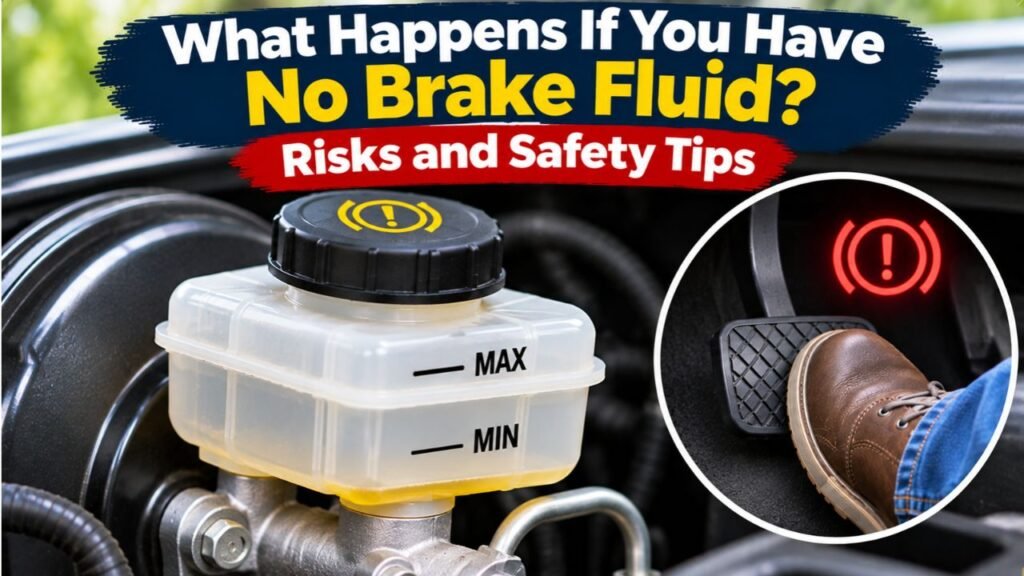
The main consequence of having no brake fluid is the potential loss of hydraulic braking pressure.
Your vehicle may experience several symptoms depending on how much fluid remains inside the braking circuits and which components have failed.
What Happens to Your Brakes?
| Condition | Possible Effect |
| Brake fluid slightly below normal | May reflect brake pad wear or a leak |
| Brake fluid below MIN | Potentially unsafe; requires inspection |
| Brake fluid reservoir completely empty | High risk of air entering the hydraulic system |
| Air inside brake lines | Soft or spongy pedal and reduced pressure transmission |
| Significant hydraulic leak | Brake pedal may travel farther or sink to the floor |
| One hydraulic circuit fails | Some braking may remain, but performance can be severely reduced |
| Multiple hydraulic circuits lose pressure | Potential complete loss of normal service braking |
| Brake warning light illuminated | May indicate low fluid or another brake system fault |
| ABS or stability-control warning | Electronic brake functions may be affected, depending on the fault |
The Firestone Complete Auto Care guide to running out of brake fluid explains that insufficient hydraulic fluid can interfere with normal braking and that severe fluid loss can lead to brake failure.
An important distinction is that an empty reservoir does not always mean every brake line and caliper is already completely empty.
Some fluid may remain in the hydraulic circuits.
However, the system is no longer in a condition that can be considered safe without inspection.
Never attempt to drive a car with an empty brake fluid reservoir to determine whether the brakes still work.
Why Brake Fluid Is Necessary for Stopping a Car
Most passenger vehicles use hydraulic brakes.
Hydraulic systems depend on the movement of nearly incompressible liquid to transmit force.
How Hydraulic Brakes Work
In a conventional hydraulic braking system:
- The driver presses the brake pedal.
- Pedal force operates the master cylinder.
- The master cylinder creates hydraulic pressure.
- Brake fluid transmits that pressure through the brake lines.
- Caliper pistons or wheel cylinders respond to the pressure.
- Brake pads or shoes press against the rotors or drums.
- Friction slows the wheels and stops the vehicle.
The system relies on sufficient fluid and properly functioning hydraulic components.
What Happens Without Brake Fluid?
If the hydraulic system loses most or all of its fluid, the master cylinder may no longer be able to develop and transmit the required pressure.
Instead of pressing firmly against the brake pads or shoes, the brake pedal may move excessively without producing enough braking force.
The exact behavior depends on the vehicle’s braking design and where the fluid was lost.
Why Does Air Make the Problem Worse?
Brake fluid is designed to transmit hydraulic pressure efficiently.
Air is much more compressible.
When air enters the braking system, some of the force from the brake pedal compresses the trapped air instead of applying the brakes effectively.
This may create:
- A soft brake pedal.
- A spongy pedal sensation.
- Excessive pedal travel.
- Delayed brake response.
- Reduced braking pressure.
A large hydraulic leak can also prevent the system from retaining pressure even when some fluid remains.
Does the Brake Booster Still Work?
The brake booster reduces the amount of pedal effort required to apply the brakes.
However, it does not replace the hydraulic fluid needed to transmit pressure.
Even with a functioning booster, a severely depleted hydraulic system may not produce effective braking.
Key Point: Brake fluid is essential because it transmits the force required to apply the brakes. Without sufficient fluid and hydraulic pressure, normal braking may become impossible.
1. Your Brake Pedal May Go to the Floor
One of the most serious symptoms of severe brake fluid loss is a pedal that moves unusually far downward.
Normally, the brake pedal develops firm resistance as hydraulic pressure increases.
When pressure cannot be maintained, the pedal may travel farther than expected.
What Does It Feel Like?
Possible symptoms include:
- The pedal feels unusually soft.
- Resistance develops later than normal.
- The pedal moves almost to the floor.
- The pedal slowly sinks while pressure is applied.
- The vehicle does not slow as expected.
However, these symptoms do not prove that the reservoir is empty.
A failing master cylinder, air in the system, or another hydraulic defect can produce similar behavior.
Does the Pedal Always Go Completely to the Floor?
No.
If only one hydraulic circuit has failed, the remaining circuit may still generate some braking force.
In other cases, brake pedal travel may increase dramatically.
Do not use pedal feel alone to estimate how much fluid remains.
Is a Sinking Brake Pedal Dangerous?
Yes.
A sinking pedal can indicate that hydraulic pressure is being lost.
Do not continue driving if the brake pedal behaves abnormally.
Arrange professional diagnosis and towing.
2. You May Lose Most or All of Your Braking Power
A severe brake fluid loss can make it difficult or impossible to stop normally.
This is the most important safety concern.
Can a Car Stop Without Brake Fluid?
A vehicle without effective hydraulic service brakes may still experience some slowing from engine braking, rolling resistance, or a separate parking-brake system.
However, these do not provide a reliable substitute for normal service brakes.
The vehicle may require substantially more distance to slow down.
Can Brake Failure Cause an Accident?
Yes.
If the brakes cannot produce enough stopping force, the driver may be unable to stop before:
- An intersection.
- Another vehicle.
- A pedestrian crossing.
- A traffic signal.
- An obstacle.
- A downhill curve.
Brake failure can be especially dangerous at highway speeds or on steep roads.
Does Brake Failure Happen Suddenly?
Sometimes.
A major brake line rupture or hydraulic connection failure can cause a rapid loss of pressure.
Other leaks develop gradually.
For example, a small leak may slowly lower the reservoir level before eventually allowing air into a braking circuit.
A gradual leak can become a sudden failure.
Key Point: Severe brake fluid loss can cause unpredictable stopping performance. The absence of an accident or obvious symptoms does not mean the system is safe.
3. The Brake Warning Light May Turn On
Many vehicles have a dashboard warning indicator that monitors certain brake system conditions.
A low fluid level may activate the warning light.
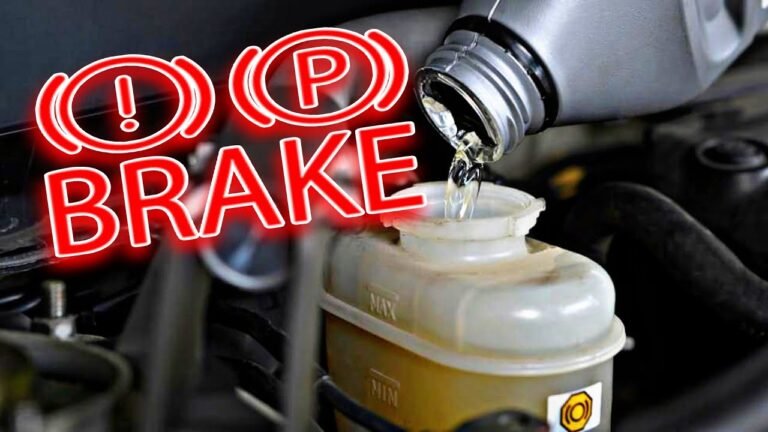
What Does the Brake Warning Light Look Like?
Depending on the vehicle, it may display:
- BRAKE.
- A red exclamation mark inside a circle.
- A circle between two curved brackets.
- Another manufacturer-specific brake symbol.
Some vehicles use the same warning indicator for the parking brake and certain hydraulic braking problems.
Does the Light Always Come On When Fluid Is Low?
Not necessarily.
The warning system varies by vehicle.
A malfunctioning sensor or a rapidly developing hydraulic failure may not provide the warning you expect.
Therefore, a warning light that remains off does not prove the brakes are safe.
What Should You Do if the Brake Warning Light Appears?
If the indicator comes on while driving:
- Check whether the parking brake is engaged, when safe to do so.
- Pay attention to any change in brake pedal response.
- Stop safely as soon as possible if a brake fault is suspected.
- Do not continue driving with suspected fluid loss or abnormal braking.
- Arrange inspection and towing where appropriate.
Consult the owner’s manual for the exact meaning of the indicator.
4. Air May Enter the Brake Lines
An empty brake fluid reservoir creates a serious risk that air has entered the hydraulic system.
Air may also enter through an active hydraulic leak.
Why Is Air in the Brake Lines Dangerous?
Hydraulic braking depends on reliable pressure transmission.
Because air compresses more easily than fluid, trapped air can reduce the force delivered to the brakes.
Common Symptoms of Air in the System
Possible signs include:
- Soft pedal feel.
- Spongy pedal response.
- Excessive pedal travel.
- Inconsistent braking.
- Reduced braking effectiveness.
Will Air Go Away on Its Own?
No.
Air trapped in a hydraulic brake circuit does not reliably disappear simply because the reservoir has been refilled.
The system generally requires an appropriate bleeding procedure.
Some vehicles also require specialized procedures involving the ABS hydraulic control unit.
Can You Fix It by Pumping the Brake Pedal?
Pumping the pedal does not permanently remove air or repair a hydraulic leak.
It may temporarily affect pedal response in certain conditions, but it does not make a defective braking system safe.
Professional repair and bleeding are necessary.
5. ABS and Stability Control May Be Affected
Modern vehicles often use hydraulic pressure as part of electronic braking functions.
These systems may include:
- Anti-lock Braking System (ABS).
- Electronic Stability Control (ESC).
- Traction control.
- Electronic brake-force distribution.
- Other integrated braking functions.
Can ABS Work Without Brake Fluid?
An ABS system normally depends on a functioning hydraulic braking system.
If hydraulic pressure cannot be established or maintained, the ABS system cannot restore normal braking simply by controlling its valves.
Will the ABS Light Come On?
It may.
However, an ABS warning light does not always mean brake fluid is low.
Likewise, low brake fluid does not always produce a separate ABS warning.
What About Regenerative Braking?
Some hybrid and electric vehicles use regenerative braking to slow the vehicle and recover energy.
However, regenerative braking is not a dependable emergency replacement for a failed hydraulic service braking system.
The vehicle may limit or disable regenerative braking under certain conditions.
Braking architecture differs substantially between models.
Do not rely on regenerative braking to make an empty brake fluid reservoir safe.
Does an Empty Brake Fluid Reservoir Mean You Have No Brakes?
Not always immediately, but it means there is a serious risk of hydraulic failure.
The reservoir and the hydraulic circuits are related but separate parts of the braking system.
Reservoir Empty vs. Entire System Empty
| Situation | What It Means |
| Reservoir is at the MIN mark | The system needs assessment; pad wear or leakage may explain the level |
| Reservoir is below MIN | Brake wear or an abnormal fluid condition must be investigated |
| Reservoir is empty | Air may have entered one or more circuits; vehicle is unsafe to drive |
| One circuit contains air or has lost pressure | Some braking may remain through another circuit |
| Both hydraulic circuits cannot maintain pressure | Normal hydraulic service braking may be largely or completely lost |
Why Do Cars Have Dual Hydraulic Circuits?
Many passenger vehicles use split hydraulic braking circuits.
This design is intended to preserve some braking capability if one portion of the hydraulic system fails.
However, the remaining braking force may be significantly reduced.
The driver may experience unusually long pedal travel and much longer stopping distances.
Does a Dual-Circuit System Guarantee Safety?
No.
The system provides redundancy for certain failures, not permission to drive with a hydraulic defect.
If the reservoir is empty, the condition of both circuits may be uncertain.
The vehicle should be inspected before being driven.
What Causes a Car to Have No Brake Fluid?
Brake fluid is not normally consumed during braking.
If a reservoir becomes empty, a significant leak, improper servicing, or another abnormal condition should be suspected.
1. Corroded Brake Lines
Metal brake lines can corrode over time.
Road salt, moisture, and physical damage may weaken the pipes.
A small leak can eventually become severe.
2. Damaged Flexible Brake Hoses
Flexible hoses connect rigid hydraulic lines to moving brake components.
A cracked hose or damaged fitting may allow pressurized brake fluid to escape.
3. Leaking Brake Calipers
Disc brake calipers contain hydraulic pistons and seals.
Damaged seals, corroded components, or faulty connections can allow fluid to leak.
4. Leaking Wheel Cylinders
Vehicles with drum brakes use wheel cylinders.
These components can leak internally into the drum assembly, sometimes without leaving a visible puddle.
5. Failed Master Cylinder Seals
The master cylinder may develop external leaks.
In some vehicles, fluid can leak into the brake booster area, making the problem difficult to see from outside.
An internal master cylinder pressure bypass may also reduce braking, even without external fluid loss.
6. Reservoir or Connection Damage
A cracked reservoir or damaged seal may allow fluid to escape.
However, an empty reservoir from this type of failure still requires inspection of the entire hydraulic system.
7. ABS Hydraulic Unit Leakage
Certain hydraulic connections or seals around the ABS unit can develop leaks.
These may be difficult to locate without professional inspection.
8. Incorrect Brake Servicing
Recent brake repairs may leave the system with inadequate fluid if the procedure was not completed correctly.
Possible issues include:
- Loose hydraulic fittings.
- Improperly tightened bleeder screws.
- Damaged replacement components.
- Incorrect filling.
- Unresolved leaks.
9. Shared Brake and Clutch Reservoir Leakage
Some manual-transmission cars use a common reservoir for the brakes and hydraulic clutch.
A clutch hydraulic leak may lower the shared reservoir level.
This is vehicle-dependent and should not be assumed without checking the design.
Can Worn Brake Pads Empty the Reservoir?
Worn brake pads can lower the reservoir level because caliper pistons extend as friction material becomes thinner.
However, normal pad wear alone should not be treated as a satisfactory explanation for a completely empty reservoir.
The AAA guide to car fluids and brake maintenance explains the importance of maintaining proper brake fluid levels and having low-fluid conditions professionally inspected.
An empty reservoir requires investigation of the complete brake system.
Warning Signs Before a Car Runs Out of Brake Fluid
Brake fluid loss may produce warning symptoms before a major hydraulic failure.
However, some leaks develop suddenly.
Early Warning Signs
Potential signs include:
- Brake fluid approaching the MIN mark.
- A reservoir level that continues falling.
- Fluid stains near wheels.
- Wet hydraulic fittings.
- Brake line corrosion.
- Dashboard brake warnings.
- Changes in pedal feel.
Serious Warning Signs
More urgent symptoms include:
- An empty reservoir.
- A pedal that sinks toward the floor.
- A soft or spongy pedal.
- Reduced braking performance.
- An active fluid leak.
- A sudden loss of pedal resistance.
- Major changes in stopping distance.
Symptom and Risk Comparison
| Symptom | Possible Explanation | Recommended Response |
| Gradual level decrease | Pad wear or slow leak | Arrange brake inspection |
| Fluid below MIN | Excessive wear or hydraulic problem | Do not drive until assessed |
| Empty reservoir | Severe fluid loss or incorrect servicing | Tow vehicle for repair |
| Soft brake pedal | Air or hydraulic fault | Do not drive |
| Pedal sinks to floor | Serious pressure failure | Stop safely and arrange towing |
| Fluid puddle near wheel | Brake hose, caliper, or wheel cylinder leak | Do not drive |
| Brake warning with abnormal pedal | Potential hydraulic brake fault | Stop safely |
| No warning light but visible leak | Possible hydraulic failure | Do not drive |
Important: A vehicle does not have to display every symptom before its brakes become unsafe.
What Should You Do if You Lose Brakes While Driving?
If your brakes fail while the vehicle is moving, your immediate goal is to reduce speed while maintaining control and avoiding other traffic.
The exact procedure depends on the vehicle and the type of braking failure.
The California Department of Motor Vehicles’ brake-failure guidance provides emergency steps for drivers who experience brake failure.
Step 1: Release the Accelerator
Take your foot off the accelerator.
Allow the vehicle to begin slowing naturally.
Stay focused on steering and the surrounding traffic.
Step 2: Try the Service Brake
Apply the brake pedal.
If the vehicle has four-wheel ABS and some braking remains, firm, steady pressure may be appropriate.
If hydraulic pressure has been lost and the pedal sinks to the floor, pumping the pedal may sometimes produce temporary pressure.
However, do not rely on pumping to restore a failed system.
Step 3: Shift to a Lower Gear When Appropriate
Downshifting can help slow the vehicle through engine braking.
Use a lower gear or transmission mode according to the vehicle manufacturer’s instructions.
Avoid abrupt shifting that could destabilize the vehicle.
Step 4: Use the Parking Brake Carefully if Necessary
When the normal service brakes fail, the parking brake may provide an additional way to slow the vehicle.
However, its operation varies by vehicle.
A traditional mechanical parking brake can sometimes be applied gradually.
Electronic parking brake systems may require a specific emergency procedure.
Follow the vehicle’s instructions and avoid abrupt actions that could cause wheel lockup or loss of control.
Step 5: Warn Other Drivers
Activate the hazard warning lights when appropriate.
Use the horn if necessary to alert nearby traffic.
Maintain as much space as possible from other vehicles and obstacles.
Step 6: Steer Toward a Safe Stopping Area
Look for a safe place to stop.
Avoid sharp steering movements.
If you are traveling downhill, reducing speed before the slope becomes steeper is particularly important.
Step 7: Do Not Turn Off the Ignition While Moving
On many vehicles, switching off the ignition while moving can remove power assistance or create steering-related hazards.
Do not turn off the ignition until the vehicle has stopped unless the manufacturer’s emergency procedure specifically directs otherwise.
Step 8: Stop Driving and Arrange Towing
Once the vehicle stops, do not continue driving.
Arrange roadside assistance and professional brake-system repair.
Emergency Reminder: These steps are for an unexpected braking failure while already moving. They do not make it acceptable to begin driving with no brake fluid.
Is It Safe to Drive Without Brake Fluid?
No. Driving with no brake fluid is unsafe because normal hydraulic braking may fail without warning.
Even if the brake pedal initially provides some resistance, the system may be unable to maintain pressure.
Can You Drive a Short Distance Without Brake Fluid?
Do not attempt to drive even a short distance with an empty reservoir.
A trip of one mile or less can still require an emergency stop.
The risk depends on traffic, speed, road conditions, and how the hydraulic system fails.
There is no safe distance that can be recommended.
Can You Drive Slowly Without Brake Fluid?
Driving slowly reduces some risks but does not eliminate the need for dependable brakes.
An empty reservoir can cause unpredictable braking response.
The vehicle should be towed rather than driven.
Can the Parking Brake Replace the Regular Brakes?
No.
A parking brake is not designed to provide the same normal stopping performance as the primary service braking system.
Its effectiveness and operation vary by vehicle.
Do not use it as a routine substitute for hydraulic brakes.
What if the Car Still Stops Normally?
If the reservoir is empty, apparently normal braking does not prove the system is safe.
Air may not yet have reached all hydraulic components, or one circuit may still be functioning.
Continued driving can quickly change the situation.
Key Point: An empty brake fluid reservoir should be treated as a no-drive condition until the vehicle is professionally inspected and repaired.
Will Adding Brake Fluid Fix the Brakes?
Not necessarily. Simply adding brake fluid to an empty reservoir does not repair a leak, remove trapped air, or prove the brakes are safe.
This is one of the most dangerous assumptions drivers can make.
What Happens When You Refill an Empty Reservoir?
Adding fluid may restore the liquid level inside the reservoir.
However, several problems may remain:
- The original hydraulic leak.
- Air inside brake lines.
- Damaged seals.
- Faulty hydraulic components.
- Loss of brake pressure.
- Improperly bled ABS circuits.
The system may require repairs and a complete bleeding procedure.
Why Brake Bleeding Matters
Brake bleeding removes trapped air from the hydraulic circuits.
It is typically required when the system has been opened or air has entered.
Some vehicles have special manufacturer-specific ABS bleeding procedures.
These may require diagnostic equipment.
A reservoir that looks full after refilling does not prove the hydraulic system is free of air.
What If There Is Still a Leak?
Brake fluid will continue escaping until the damaged component is repaired.
If the leak is severe, the system may lose pressure again almost immediately.
Can You Add Fluid and Drive to a Mechanic?
Not when the reservoir was empty, a leak is suspected, or brake pedal operation is abnormal.
Arrange towing.
What Brake Fluid Should You Use?
Use only the manufacturer’s specified fluid.
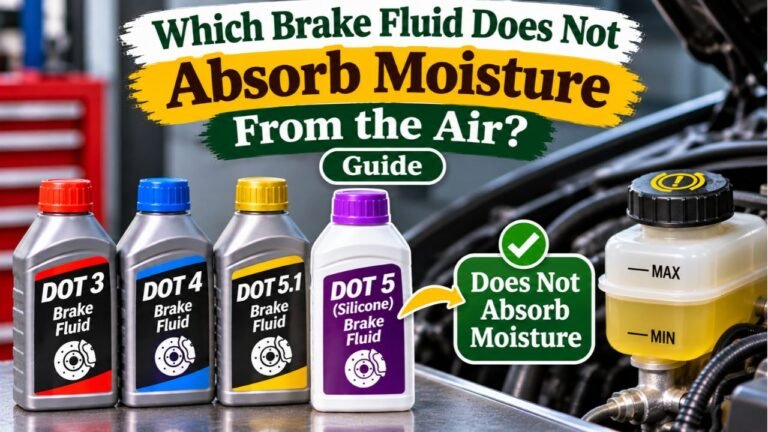
Common brake fluid grades include:
- DOT 3.
- DOT 4.
- DOT 5.
- DOT 5.1.
DOT 3, DOT 4, and DOT 5.1 are generally glycol-based brake fluids, while DOT 5 is silicone-based.
These fluids are not automatically interchangeable for every vehicle.
Always follow the owner’s manual.
Never substitute power steering fluid, engine oil, transmission fluid, or water for brake fluid.
Incorrect fluids can damage seals and cause serious brake system failure.
What Happens if You Put the Wrong Fluid in the Brake Reservoir?
Using an incompatible fluid can cause additional problems beyond low fluid level.
The brake system contains seals and other materials designed for specific fluid types.
Possible Consequences
Depending on the fluid and vehicle, contamination may cause:
- Swollen or damaged seals.
- Hydraulic leaks.
- Master cylinder damage.
- Caliper or wheel cylinder problems.
- ABS hydraulic system problems.
- Reduced braking pressure.
- Expensive component replacement.
Can DOT 3 and DOT 4 Be Mixed?
Glycol-based DOT 3 and DOT 4 fluids are chemically compatible in many applications.
However, that does not mean mixing them always meets the vehicle’s required performance specification.
Use the exact fluid grade specified by the manufacturer.
What About DOT 5?
Silicone-based DOT 5 brake fluid should not be mixed with conventional glycol-based DOT 3, DOT 4, or DOT 5.1 fluids.
If the wrong fluid has entered the system, do not attempt to correct the problem by simply adding another type.
Have the vehicle professionally inspected.
Can Water Replace Brake Fluid Temporarily?
No.
Water does not provide the required hydraulic-fluid properties, corrosion protection, and boiling performance.
It can contribute to dangerous braking problems.
Never use it as an emergency substitute.
How to Check if Your Brake Fluid Reservoir Is Empty
A basic visual check can help you recognize a dangerously low fluid level.
However, it does not replace a professional brake-system inspection.
Step 1: Park the Car Safely
Park on level ground and turn off the vehicle.
If you suspect brake failure, do not move the car merely to perform this inspection.
Step 2: Open the Hood
Locate the brake fluid reservoir.
On many cars, it is attached to the master cylinder near the rear of the engine compartment.
The exact location varies.
Step 3: Identify the Reservoir
Most modern passenger vehicles use a translucent plastic reservoir.
Look for:
- MIN.
- MAX.
- The manufacturer’s brake fluid specification.
- A warning symbol or brake-related label.
Use the owner’s manual to verify that you have identified the correct reservoir.
Step 4: Inspect the Level
Check the fluid level through the reservoir wall when possible.
Do not open the cap unnecessarily.
If fluid is below the specified minimum or not visible in a reservoir where it should be, treat the condition seriously.
Step 5: Look for Obvious Leaks
From a safe position, inspect accessible areas for:
- Wet brake line connections.
- Fluid around the master cylinder.
- Moisture near the reservoir.
- Fluid around the wheels.
- Visible signs of damaged hydraulic hoses.
Do not crawl beneath a vehicle supported only by a jack.
Step 6: Arrange Professional Inspection
If the reservoir is empty, stop the inspection there.
Do not conduct a road test.
Arrange towing to a qualified mechanic.
Does No Visible Leak Mean the System Is Fine?
No.
Fluid may leak into concealed areas.
For example, some master cylinder failures allow fluid to enter the brake booster.
Wheel cylinder leaks can also remain hidden inside drum brakes.
A mechanic may need to inspect components that are not visible from outside the car.
How Mechanics Repair a Car That Has No Brake Fluid
Repairing a vehicle with an empty reservoir requires more than adding new fluid.
The technician must identify the cause and restore reliable hydraulic operation.
1. Inspect the Brake Hydraulic System
A qualified mechanic may inspect:
- Brake reservoir.
- Master cylinder.
- Rigid brake lines.
- Flexible brake hoses.
- Brake calipers.
- Wheel cylinders.
- Hydraulic fittings.
- ABS hydraulic unit.
- Relevant brake components.
The goal is to identify leaks and damaged parts.
2. Find the Source of Fluid Loss
The technician determines whether fluid escaped through a damaged component or whether the system was improperly serviced.
A continuing leak must be repaired before the brakes can return to service.
3. Replace Failed Components
Depending on the problem, repairs may include:
- Brake line replacement.
- Brake hose replacement.
- Caliper repair or replacement.
- Wheel cylinder replacement.
- Master cylinder replacement.
- Reservoir seal or connection repair.
- ABS hydraulic component repair.
The correct repair depends on the vehicle’s design and the nature of the failure.
4. Refill With the Correct Brake Fluid
The technician uses fluid meeting the manufacturer’s required specification.
The reservoir is filled to the correct level as part of the repair procedure.
5. Bleed the Brake System
Air is removed using the manufacturer’s procedure.
If air has entered the ABS hydraulic unit, additional service steps may be necessary.
6. Verify Hydraulic Pressure and Pedal Operation
The technician checks that the system can develop and maintain proper pressure.
Brake pedal travel and feel are assessed.
The system is also checked for continuing leaks.
7. Inspect the Mechanical Brakes
Brake pads, rotors, shoes, drums, and calipers may be inspected for wear or damage.
A hydraulic leak and a mechanical brake problem can exist at the same time.
8. Confirm Safe Operation
The repair must be verified according to proper service procedures.
Only return the vehicle to normal driving after the complete braking system has been confirmed to function correctly.
How Much Does It Cost to Fix a Car With No Brake Fluid?
The repair cost depends on why the fluid disappeared.
An empty reservoir is a symptom rather than a complete diagnosis.
Possible Repairs and Cost Factors
| Problem | Typical Repair | Main Cost Factors |
| Leaking brake line | Replace damaged line | Routing, corrosion, labor |
| Damaged brake hose | Replace hose | Vehicle design and accessibility |
| Leaking caliper | Repair or replace caliper | Parts, labor, related damage |
| Leaking wheel cylinder | Replace wheel cylinder | Drum brake condition and labor |
| Master cylinder failure | Replace or repair master cylinder | Component design and labor |
| Reservoir or seal leak | Replace damaged parts | Parts availability and access |
| ABS hydraulic unit leak | Repair or replace affected components | Vehicle design and diagnostic requirements |
| Air in hydraulic system | Proper system bleeding | Complexity and special equipment |
Brake fluid itself is usually much less expensive than the labor and parts required to repair a serious hydraulic failure.
For example, a leaking master cylinder or corroded brake line can require significant work.
However, no reliable repair price can be estimated from an empty reservoir alone.
The correct approach is to identify the failure before comparing repair costs.
Can Old Brake Fluid Cause Brake Failure?
Yes, degraded or contaminated brake fluid can contribute to braking problems.
However, this is different from having no brake fluid.
Brake Fluid Absorbs Moisture
Most conventional glycol-based brake fluids are hygroscopic.
This means they absorb moisture over time.
Moisture contamination can lower the fluid’s boiling point and contribute to corrosion.
What Happens When Brake Fluid Boils?
Under severe heat, moisture-contaminated brake fluid may produce vapor.
Unlike liquid brake fluid, vapor compresses relatively easily.
This can create a soft pedal and reduced braking response.
Can Old Brake Fluid Make the Reservoir Empty?
Not through normal evaporation or consumption.
However, corrosion associated with moisture contamination may contribute to hydraulic component damage over time.
A damaged component may eventually leak.
How Often Should You Replace Brake Fluid?
Follow the vehicle manufacturer’s maintenance schedule.
Some manufacturers specify time-based replacement intervals, while others recommend inspection or condition-based servicing.
Do not assume every vehicle follows the same schedule.
How to Prevent Your Car From Running Out of Brake Fluid
Regular inspections and proper maintenance help reduce the risk of serious hydraulic failures.
Check Brake Fluid Levels Periodically
Inspect the reservoir according to the owner’s manual.
Pay attention to unexpected changes rather than simply topping it up.
Inspect Brake Pads
Brake pad wear can gradually lower the reservoir level.
Replacing excessively worn pads helps maintain proper brake operation.
However, it is important to distinguish normal fluid displacement from leakage.
Have Brake Lines and Hoses Inspected
Brake hoses and metal lines can deteriorate.
Road salt and corrosion are particularly important concerns in some regions.
Damaged hydraulic components should be repaired promptly.
Follow Brake Fluid Maintenance Requirements
Replace or test brake fluid according to the manufacturer’s instructions.
Use the specified fluid grade.
Address Brake Warning Lights
A red brake warning light may indicate a serious hydraulic problem.
Do not ignore it.
Watch for Changes in Pedal Feel
A soft, sinking, or unusually low brake pedal requires prompt attention.
Do not continue driving to see whether the problem disappears.
Avoid Repeated Topping Up
A properly maintained braking system should not require frequent additions of fluid.
If the reservoir repeatedly becomes low, investigate the cause.
Check Brakes After Repairs
Any unusual pedal behavior, fluid loss, or warning light after brake service should be investigated before driving.
Common Mistakes When Brake Fluid Is Empty
Assuming the Brakes Will Work Normally
An empty reservoir can indicate a serious loss of hydraulic pressure.
Never assume normal braking is still available.
Adding Fluid Without Finding the Leak
Refilling does not repair a damaged brake line, hose, seal, or cylinder.
The leak may continue.
Driving Slowly to the Repair Shop
Even a short journey can require sudden braking.
Arrange towing rather than attempting to drive.
Assuming the Parking Brake Is a Safe Substitute
Parking brakes are not designed to replace normal service brakes during everyday driving.
Their operation varies by vehicle.
Ignoring a Soft Brake Pedal
A soft or sinking pedal can indicate air or pressure loss.
Do not dismiss it simply because the vehicle still slows down.
Using the Wrong Brake Fluid
Incompatible fluid may damage seals and other hydraulic components.
Follow the manufacturer’s specification.
Overfilling the Reservoir
Brake pad wear can lower the reservoir level without a leak.
Overfilling may cause fluid to overflow when caliper pistons are retracted during brake servicing.
Assuming No Puddle Means No Leak
Some leaks are concealed.
A dry parking space does not prove that the hydraulic system is intact.
Trying to Remove Air by Repeatedly Pumping the Pedal
Pumping the pedal does not replace a proper brake bleeding procedure.
Trapped air must be removed appropriately.
Ignoring the Cause of an Empty Reservoir
The most important step is identifying why the fluid level became empty.
Treating the symptom without correcting the underlying problem can lead to another failure.
Conclusion
So, what happens if you have no brake fluid? Your vehicle can lose the hydraulic pressure required to operate its normal brakes, potentially resulting in a soft pedal, excessive pedal travel, greatly reduced braking power, or complete brake failure.
An empty brake fluid reservoir is a serious warning.
Although some vehicles have split hydraulic circuits that may preserve limited braking after certain failures, this protection does not guarantee a safe stopping distance.
Common causes include leaking brake lines, damaged hoses, failed caliper seals, wheel cylinders, master cylinder problems, and improper brake servicing.
Simply adding fluid is not enough when a leak or trapped air is present.
The braking system must be inspected, repaired, refilled with the correct fluid, properly bled, and checked for safe operation.
If the reservoir is already empty, do not start driving to test the brakes. Arrange towing and professional repair.
The safest response to an empty brake fluid reservoir is to treat the vehicle as unsafe until its complete hydraulic braking system has been properly repaired and verified.
FAQs About What Happens If You Have No Brake Fluid
Can a Car Stop With No Brake Fluid?
A vehicle may retain limited braking from an unaffected hydraulic circuit or other slowing mechanisms.
However, without effective hydraulic pressure, normal service braking can fail.
You should never rely on remaining braking capability to drive with an empty reservoir.
Will My Brakes Stop Working if Brake Fluid Is Empty?
They can.
If air enters the hydraulic system or pressure cannot be maintained, braking may become severely reduced or ineffective.
An empty reservoir does not always mean immediate complete failure, but it is an unsafe condition.
Will the Brake Pedal Go to the Floor Without Brake Fluid?
It may.
Severe hydraulic pressure loss can cause excessive pedal travel or a pedal that sinks toward the floor.
However, the exact symptom depends on the vehicle’s braking system and the location of the failure.
Can I Drive One Mile Without Brake Fluid?
No.
There is no safe distance for driving with an empty brake fluid reservoir.
Even a short journey can involve an unexpected emergency stop.
Have the vehicle towed.
What Happens if I Add Brake Fluid to an Empty Reservoir?
The reservoir level rises, but the underlying problem may remain.
If the system has a leak or trapped air, braking may still be unsafe.
The vehicle requires inspection, repair, and appropriate bleeding before driving.
Does an Empty Brake Fluid Reservoir Mean There Is a Leak?
A significant hydraulic leak is one likely cause.
However, improper servicing or another abnormal condition may also explain an empty reservoir.
Normal brake pad wear can lower the level but should not be assumed to explain a completely empty reservoir.
Can Worn Brake Pads Cause No Brake Fluid?
Worn brake pads cause more fluid to move from the reservoir into the calipers.
This can lower the level.
However, a completely empty reservoir requires investigation for a leak or another serious problem.
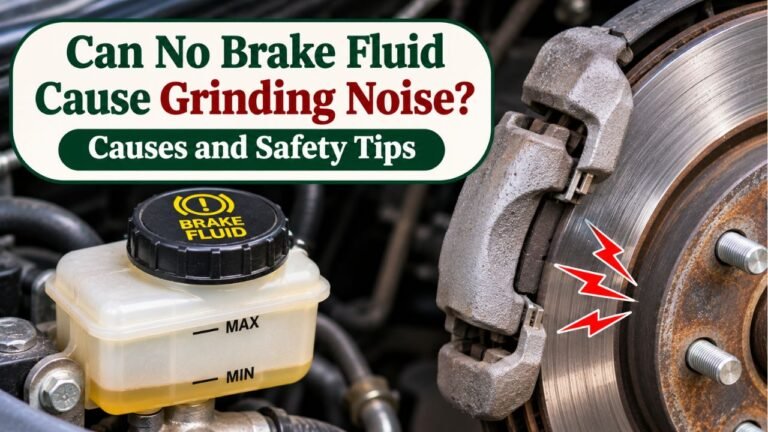
Can No Brake Fluid Cause Grinding Noise?
Not directly.
Grinding usually results from worn brake pads, damaged rotors, stuck components, or other mechanical contact.
Low reservoir levels and grinding may occur together when brake pads are severely worn.
Can No Brake Fluid Cause ABS Problems?
Yes.
ABS depends on a functioning braking system.
If hydraulic pressure cannot be maintained, ABS cannot restore normal braking.
The exact warning lights and system response depend on the vehicle.
Can I Use Water Instead of Brake Fluid?
No.
Water lacks the necessary properties for hydraulic braking and can cause serious corrosion, vapor formation, and brake failure.
Never use water or another substitute.
Does the Parking Brake Work Without Brake Fluid?
Some vehicles have mechanically operated parking brakes that are separate from the hydraulic service brakes.
However, electronic parking brake systems vary in design.
Do not assume every vehicle’s parking brake will operate the same way during a hydraulic failure.
The parking brake is not a substitute for normal service braking.
Can Brake Fluid Run Out Naturally?
No.
Brake fluid is not normally consumed during vehicle operation.
A gradual level decrease may reflect brake pad wear, while an unusually low or empty reservoir may indicate a leak or other problem.
How Long Can a Car Run Without Brake Fluid?
The engine may continue running, but that is not the relevant safety issue.
The car may be unable to stop properly.
Do not operate or drive a vehicle with an empty brake fluid reservoir.
How Do I Know if My Brake Fluid Is Completely Empty?
Check the reservoir according to the owner’s manual.
If no fluid is visible where it should be, or the reservoir appears empty, treat the vehicle as unsafe.
Do not open hydraulic components or perform road tests to confirm the condition.
How Do Mechanics Fix a Car With No Brake Fluid?
A mechanic identifies the source of fluid loss, repairs or replaces damaged components, refills the system with the specified brake fluid, and bleeds trapped air.
The technician then verifies hydraulic operation and checks for leaks before returning the vehicle to service.