Brake Caliper Replacement Cost: Average Parts and Labor Prices
A failing brake caliper can turn a routine brake repair into a considerably more expensive job. The caliper is the hydraulic component that pushes the brake pads against the rotor, so problems such as a seized piston, leaking seal, or sticking slide mechanism can affect braking performance and damage other brake components.
For most U.S. drivers researching brake caliper replacement cost, a realistic shop bill can range from several hundred dollars for one conventional caliper to well over $1,000 on certain luxury, performance, or specialty vehicles. Current repair estimates vary substantially by vehicle: some mainstream models fall around the 500–700 range, while more expensive applications can exceed $1,000 for a single-caliper repair.
The price is not determined by the caliper alone. Labor rates, front versus rear location, the type of caliper, whether an electronic parking brake is involved, and the condition of the pads and rotors can all affect the final invoice. Opening the hydraulic system also means the brakes must be properly bled after the new caliper is installed.
This guide explains typical brake caliper replacement prices, parts and labor costs, why estimates vary so much, whether you need to replace calipers in pairs, and what additional brake work might be needed at the same time.
What Is the Average Brake Caliper Replacement Cost?
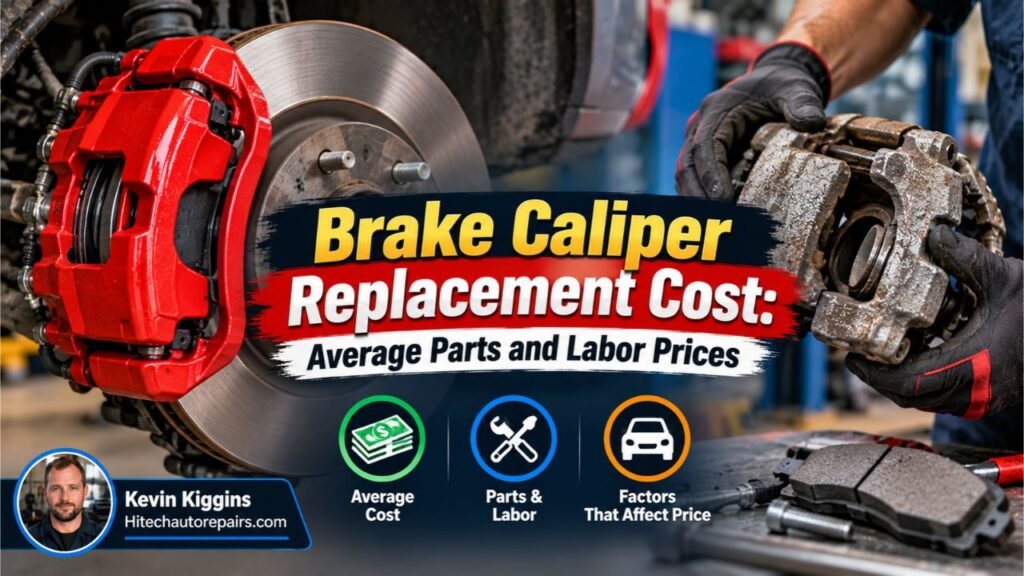
The brake caliper replacement cost for one caliper commonly falls somewhere around $300 to $800 for many passenger vehicles, although some repairs cost less and others can exceed $1,000.
There is no single national price that applies to every car. RepairPal’s estimate, updated September 2026, lists an overall average of approximately $898 to $968, including about 150–219 in labor and roughly $749 in parts. Its vehicle-specific estimates, however, show how widely the price varies—for example, approximately 521–589 for a Toyota Camry and 663–734 for a Honda Accord, while some vehicles cost considerably more.
For comparison, AutoZone notes that many individual replacement calipers are roughly $75 to $100, with some performance and heavy-duty units costing substantially more, and estimates around one to two hours of labor for typical replacement work.
A simple way to think about the price is:
| Expense | Typical Situation |
| Replacement caliper | About 75–300+ for many vehicles |
| Premium/OEM or specialty caliper | Several hundred dollars or more |
| Labor | Usually 1–2 hours per side |
| Brake fluid/bleeding | Often included or added separately |
| Pads or rotors if damaged | Additional cost |
| Total for one conventional caliper | Often several hundred dollars |
| Luxury/performance applications | Can exceed $1,000 |
These are broad planning ranges rather than guaranteed quotes. Your exact vehicle, ZIP code, shop labor rate, and parts choice matter.
What Does a Brake Caliper Do?
A brake caliper is a major part of a disc brake system.
When you press the brake pedal, the master cylinder sends pressurized brake fluid through the brake lines. That hydraulic pressure moves one or more pistons inside the caliper.
The piston pushes the brake pads against the brake rotor. Friction between the pads and rotor slows the wheel.
The basic braking sequence is:
- You press the brake pedal.
- Brake fluid pressure increases.
- The caliper piston moves outward.
- The pads clamp the rotor.
- Friction slows or stops the vehicle.
- The piston releases slightly when you release the pedal.
A caliper that sticks, leaks, or fails to apply pressure correctly can interfere with this process.
Brake Caliper Parts Cost
The price of the replacement caliper itself varies enormously.
A basic remanufactured caliper for an older mainstream car may be relatively inexpensive. A new OEM caliper, multi-piston performance caliper, truck caliper, or rear caliper with an integrated parking-brake mechanism may cost several times more.
Remanufactured Calipers
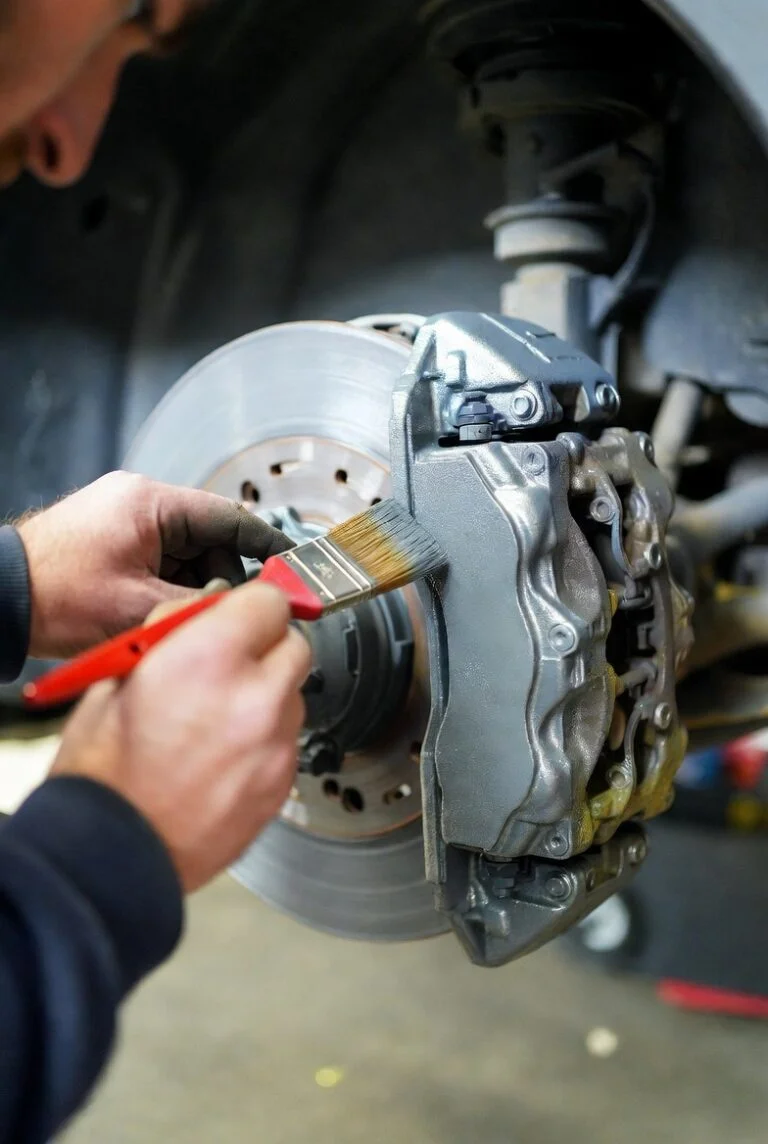
A remanufactured caliper is a used caliper housing that has been cleaned, inspected, and rebuilt with replacement components as necessary.
Remanufactured calipers can offer a lower-cost alternative to new units.
Some also require a core charge. You pay an additional deposit when purchasing the new caliper, then receive the deposit back after returning your old caliper.
New Aftermarket Calipers
New aftermarket calipers are manufactured as replacement parts rather than rebuilt from an existing unit.
Their price and quality vary by manufacturer.
They often cost more than inexpensive remanufactured units but can still be less expensive than original-equipment parts.
OEM Calipers
OEM, or original equipment manufacturer, parts are designed to match the vehicle manufacturer’s original specifications.
OEM calipers can be significantly more expensive, particularly on European luxury vehicles, performance cars, trucks, and vehicles using complex rear brake systems.
Brake Caliper Labor Cost
Labor is the second major part of the bill.
A relatively straightforward brake caliper replacement may require roughly one to two hours per side, although actual book time depends on the vehicle and repair procedure.
The mechanic typically needs to:
- Raise and support the vehicle
- Remove the wheel
- Disconnect the brake hose or line connection
- Remove the old caliper
- Transfer or install appropriate brake hardware
- Install the replacement caliper
- Reconnect the hydraulic line
- Reassemble the brakes
- Bleed air from the hydraulic system
- Check for leaks
- Verify proper brake operation
Labor rates vary considerably across the United States.
An independent repair shop in a lower-cost area may charge much less per hour than a dealership or specialty shop in a major metropolitan area.
Why Brake Caliper Replacement Prices Vary So Much
Two vehicles can require essentially the same repair and still produce very different estimates.
Several factors explain the difference.
Vehicle Make and Model
The design of the braking system determines the required caliper and labor procedure.
Calipers for common domestic or Japanese vehicles may be relatively inexpensive.
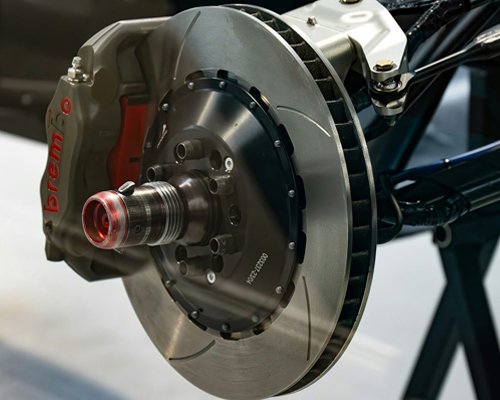
Luxury, performance, and specialty vehicles may use expensive multi-piston calipers, unique mounting hardware, or electronically controlled components.
Front vs. Rear Caliper
Front and rear calipers may have different designs.
Rear calipers sometimes incorporate part of the parking brake mechanism, which can make the component more complex and expensive.
Some newer vehicles also use an electronic parking brake, which may require specific service procedures or diagnostic equipment.
New vs. Remanufactured Parts
A remanufactured caliper can reduce the parts bill.
A brand-new OEM caliper can increase it substantially.
Ask whether your estimate uses:
- Remanufactured
- New aftermarket
- OEM
That makes different shop quotes easier to compare.
Number of Pistons
Some basic calipers use a single piston.
Larger vehicles and performance braking systems may use two, four, six, or more pistons.
More complex calipers generally cost more.
Rust and Corrosion
Vehicles driven in areas that use road salt can develop heavy brake-system corrosion.
Rust can make bolts, brake hoses, bleeder screws, and mounting components harder to remove.
That can increase labor time and may reveal additional components that need replacement.
Local Labor Rates
Repair prices in Los Angeles, New York City, Seattle, or other high-cost regions may differ substantially from prices in smaller cities and rural areas.
Dealership labor rates also tend to differ from independent shops.
Do Brake Calipers Need to Be Replaced in Pairs?
Not always.
Unlike brake pads, brake calipers are not normally considered routine wear items that must automatically be replaced in axle pairs. If one caliper has failed and the opposite caliper is operating correctly, replacing only the failed unit may be acceptable.
AutoZone specifically notes that one failed caliper can be replaced by itself when an appropriate replacement is used, although replacing both can provide peace of mind in some situations.
Some repair professionals prefer replacing both calipers on the same axle when:
- Both calipers are very old.
- Corrosion is severe.
- Both show similar wear.
- One side has seized and the other is beginning to stick.
- Matching braking behavior is a concern.
- The parts are being replaced as part of a larger brake overhaul.
Your mechanic should inspect the opposite caliper rather than automatically assuming it needs replacement.
Will You Need New Brake Pads Too?
Possibly.
A stuck caliper can hold a brake pad against the rotor continuously.
That creates excessive friction and may cause one pad to wear much faster than the others.
If the pads have been overheated, contaminated with brake fluid, or worn unevenly, replacement is usually appropriate.
Brake pads are normally replaced in axle sets, meaning both left and right sides receive new pads even if damage started on only one side.
That helps maintain balanced braking.
Will You Need New Rotors?
A failed caliper can also damage the rotor.
Continuous contact between the pad and rotor may create extreme heat.
The rotor may develop:
- Deep scoring
- Heat spots
- Uneven wear
- Excessive thickness variation
- Surface damage
- Bluish heat discoloration
Whether a rotor must be replaced depends on its physical condition and measurements.
Adding pads and rotors to a caliper repair can increase the total bill significantly.
Does the Brake System Need to Be Bled?
Yes, when replacing a hydraulic brake caliper, the brake line is normally opened.
That can introduce air into the hydraulic system.
The affected brake circuit must therefore be properly bled so the system contains brake fluid rather than compressible air. Repair procedures described by both RepairPal and AutoZone include brake bleeding after caliper replacement.
Air in the brake system can result in:
- Soft brake pedal
- Spongy pedal feel
- Increased pedal travel
- Reduced braking response
The system should also be checked carefully for leaks after installation.
Signs You May Need a New Brake Caliper
A caliper does not necessarily need replacement just because the brakes make noise.
Several different brake problems can produce similar symptoms.
Signs associated with a failing caliper can include:
- Vehicle pulling while braking
- One wheel becoming unusually hot
- Uneven brake-pad wear
- Burning smell near a wheel
- Brake fluid leaking near the caliper
- Brake drag
- Reduced braking performance
- Caliper piston that will not retract
- Wheel that remains difficult to rotate
- Smoke from an overheated brake assembly
Some of these symptoms can also be caused by brake hoses, pads, rotors, wheel bearings, or other components.
A proper inspection is important before purchasing a caliper.
Stuck Slide Pins vs. a Bad Brake Caliper
A sticking brake does not always mean the entire caliper has failed.
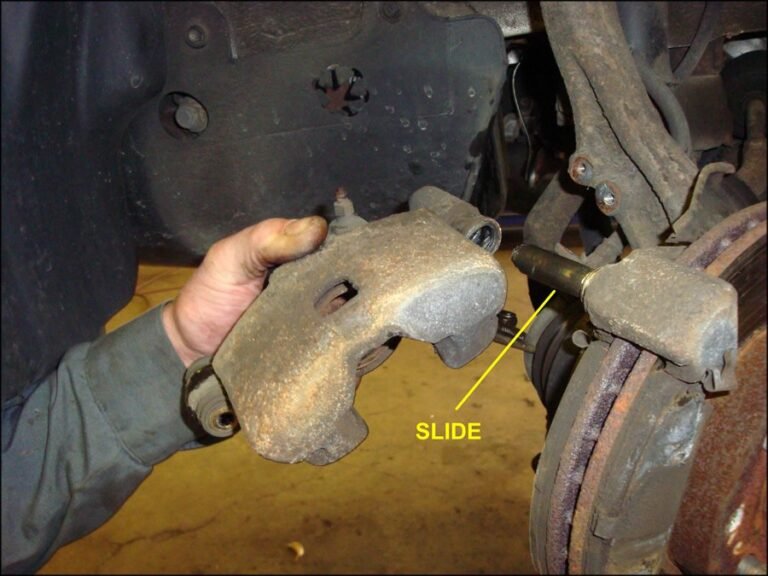
Many floating calipers move on caliper slide pins.
If those pins become dry, rusted, or seized, the caliper may not move properly.
Possible symptoms include:
- Uneven inner and outer pad wear
- Brake dragging
- Pulling
- Abnormal heat
- Reduced pad life
If the caliper body and piston are still good, cleaning, servicing, or replacing the slide pins may solve the problem for much less money.
However, severe corrosion or a seized piston may justify replacing the complete caliper.
Can a Brake Hose Make the Caliper Look Bad?
Yes.
An internally damaged flexible brake hose can sometimes trap hydraulic pressure at the wheel.
Pressure can reach the caliper when the brake pedal is pressed but fail to release normally afterward.
The result can look very similar to a seized caliper.
This is why diagnosis matters.
Replacing a perfectly good caliper will not solve the problem if a collapsed brake hose is actually causing the brake to drag.
Is It Safe to Drive With a Bad Brake Caliper?
Driving with a confirmed failed brake caliper is not recommended.
The braking system is safety-critical, and caliper failures can cause several different problems.
A seized caliper can overheat the brakes.
A leaking caliper can reduce brake-fluid level and hydraulic pressure.
A caliper that does not apply properly may reduce stopping force at that wheel.
AutoZone advises against driving with a broken caliper because braking performance cannot be relied upon.
If you have substantial brake-fluid leakage, smoke, extreme wheel heat, a very soft brake pedal, or significantly reduced braking ability, the vehicle should not be driven.
Towing it to a repair facility is the safer option.
How Long Does Brake Caliper Replacement Take?
A straightforward single-caliper replacement can often be completed in roughly one to two labor hours.
The actual time may increase if:
- Bolts are heavily rusted.
- The bleeder screw is seized.
- Brake hoses also need replacement.
- Pads and rotors are being replaced.
- Electronic parking-brake procedures are required.
- Additional brake bleeding is necessary.
- Other damage is found.
Shop workload also affects how long the vehicle remains at the repair facility, even if the mechanical job itself is relatively short.
Can You Replace a Brake Caliper Yourself?
An experienced DIY mechanic can replace many conventional brake calipers.
However, it is not an ideal first automotive repair.
The job involves the hydraulic braking system, and mistakes can reduce or eliminate braking ability.
You need to understand:
- Proper vehicle lifting and jack-stand placement
- Brake-hose handling
- Correct fastener torque
- Brake bleeding
- Brake fluid handling
- Leak inspection
- Caliper orientation
- Pad and hardware installation
One particularly important detail is the bleeder position. The bleeder screw generally needs to be positioned at the appropriate high point of the caliper so trapped air can be expelled.
If you are not confident working on hydraulic brakes, professional installation is worth the labor cost.
How to Reduce Brake Caliper Replacement Cost
Price-shopping can help, but the lowest estimate is not automatically the best repair.
Ask each shop what is included.
A useful quote should clarify:
- Caliper brand
- New vs. remanufactured caliper
- Labor
- Brake fluid
- Brake bleeding
- Hardware
- Pads, if required
- Rotors, if required
- Warranty
- Taxes and shop fees
Comparing identical scopes of work is much more useful than comparing only the final dollar amounts.
A $400 quote for a remanufactured caliper alone is not necessarily cheaper than a $650 quote that includes new pads, fluid service, hardware, and additional brake work.
Dealership vs. Independent Shop Cost
A dealership may use OEM parts and higher labor rates.
An independent repair shop may offer:
- Aftermarket parts
- Remanufactured calipers
- Lower hourly labor rates
- More flexibility in parts selection
Neither option is automatically better.
For a straightforward brake repair on an older mainstream vehicle, a reputable independent shop can often provide good value.
For a newer vehicle with complex electronic braking systems, specialized equipment or manufacturer-specific procedures may make dealership or specialist service worthwhile.
Questions to Ask Before Approving the Repair
Before authorizing a caliper replacement, ask the shop:
- Which caliper has failed?
- What caused it to fail?
- Is the piston seized or leaking?
- Are the slide pins functioning?
- Has the brake hose been checked?
- Do the pads need replacement?
- Are the rotors still usable?
- Is the quoted caliper new or remanufactured?
- Is brake bleeding included?
- Is there a core charge?
- What warranty comes with the repair?
Clear answers can help you understand exactly what you are paying for.
FAQs About Brake Caliper Replacement Cost
How much should it cost to replace one brake caliper?
For many vehicles, replacing one caliper at a professional shop costs several hundred dollars. A practical planning range is often around $300 to $800, but some luxury, performance, truck, and specialty applications can exceed $1,000.
Vehicle-specific pricing matters more than a broad national average.
How much does a brake caliper cost without labor?
A conventional replacement caliper can start under $100 in some applications, while premium, OEM, multi-piston, or specialty calipers can cost several hundred dollars or more.
AutoZone reports that many calipers are around 75–100, although heavier-duty and performance units can cost considerably more.
How much does it cost to replace all four brake calipers?
Replacing all four can easily cost well over $1,000, and some vehicles can cost several thousand dollars once labor, pads, rotors, brake fluid, and expensive calipers are included.
Replacing all four is not normally necessary unless inspection shows problems at multiple wheels or the vehicle is undergoing a complete brake-system restoration.
Can I replace only one bad brake caliper?
Yes, in many cases.
Calipers do not automatically have to be replaced in pairs like brake pads. The opposite caliper should still be inspected for sticking, leakage, corrosion, or uneven operation.
Is it cheaper to rebuild a brake caliper?
Sometimes.
Rebuilding involves replacing seals and other serviceable parts while reusing the caliper body.
However, labor costs and corrosion can make a professionally remanufactured replacement caliper more practical than rebuilding the original unit.
Why is my brake caliper replacement quote so expensive?
The estimate may include more than the caliper.
A seized caliper can damage brake pads and rotors, and the system must generally be bled after the hydraulic line is disconnected.
Expensive OEM components, high shop labor rates, electronic parking brakes, multi-piston calipers, and severe corrosion can also raise the cost.
How often do brake calipers need replacement?
Brake calipers do not have a universal scheduled replacement interval.
They are typically replaced when they leak, seize, suffer physical damage, develop serious corrosion, or no longer operate correctly.
Routine brake inspections can identify problems before they damage pads and rotors.
Is replacing a brake caliper worth it on an older car?
Usually, if the rest of the vehicle is mechanically sound.
Compare the repair cost with the vehicle’s overall condition, upcoming repairs, reliability, and market value rather than judging the caliper repair alone.
A few-hundred-dollar brake repair can still make financial sense on an older vehicle that otherwise remains dependable.
Conclusion
The brake caliper replacement cost can vary from a few hundred dollars for a straightforward repair on a common vehicle to more than $1,000 for certain luxury, performance, truck, or specialty applications. The caliper itself is only part of the expense; labor, brake bleeding, pads, rotors, hardware, corrosion, and the type of replacement part can all change the final price.
Before approving the repair, ask exactly what the quote includes and whether the mechanic has confirmed that the caliper—not the slide pins, brake hose, or another component—is actually responsible for the problem.
Because the caliper directly affects braking, do not delay repairs if the vehicle has a seized or leaking caliper, significant brake drag, unusual wheel heat, or reduced stopping performance.