Brake Pads Rotors and Calipers Replacement Cost : Complete Guide
If your mechanic says you need brake pads, rotors, and possibly calipers, the repair estimate can become expensive surprisingly quickly. Brake pads are normal wear items, rotors eventually become too thin or damaged to reuse, while calipers generally last much longer and are usually replaced only when they leak, seize, or otherwise fail.
For most vehicles in the United States, brake pads rotors and calipers replacement cost can range from several hundred dollars to well over $1,000, depending on whether the work is being done on one axle or all four wheels, how many calipers actually need replacement, the vehicle, parts quality, and local labor rates. Current industry estimates show that a professional brake job involving pads, rotors, and calipers can commonly cost about $300 to $800 or more, while expensive vehicles or more extensive repairs can exceed $1,000.
The important point is that you should not automatically assume every caliper needs replacement simply because the pads and rotors are worn. Pads and rotors are commonly replaced together, but calipers are normally replaced only when inspection shows a problem.
This guide explains typical replacement costs, parts and labor expenses, front versus rear pricing, whether calipers should be replaced in pairs, and how to tell if a brake repair estimate is reasonable.
Brake Pads Rotors and Calipers Replacement Cost: What to Expect
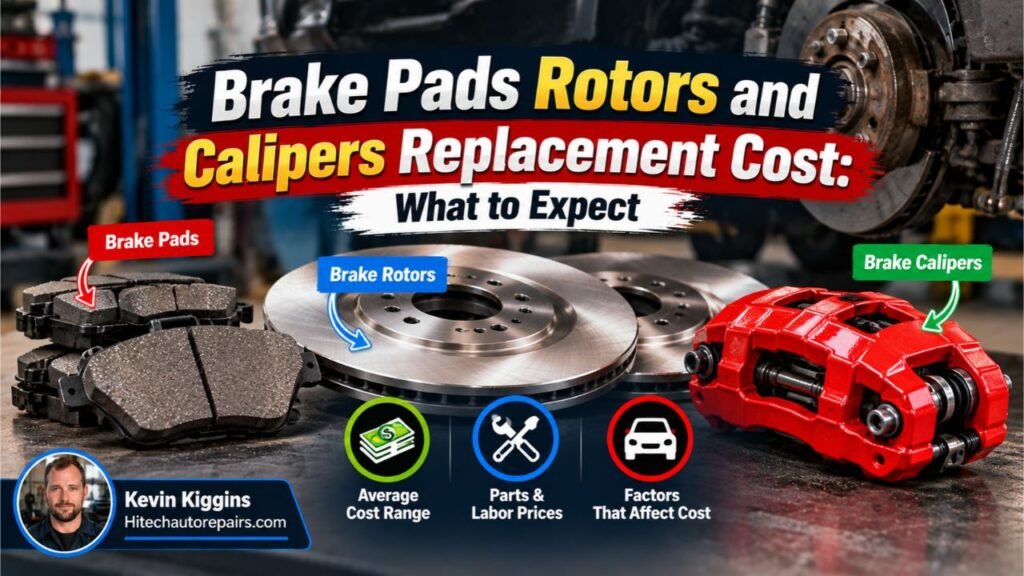
For a typical passenger car, crossover, SUV, or light truck, expect the brake pads rotors and calipers replacement cost to vary roughly from $500 to $1,300 per axle at a professional repair shop when substantial brake work is actually required.
Some straightforward vehicles using inexpensive aftermarket parts may cost less. Luxury cars, performance vehicles, large trucks, electronically controlled rear brakes, and vehicles using expensive calipers or rotors can cost considerably more.
A useful general cost breakdown is:
| Brake Repair | Typical Cost Range |
| Brake pads only, per axle | 115–400+ |
| Pads and rotors, per axle | 250–700+ |
| One brake caliper installed | 300–1,000+ |
| Pads, rotors, and caliper work, one axle | 500–1,300+ |
| Pads and rotors, all four wheels | 500–1,400+ |
| Major four-wheel brake job with multiple calipers | 1,000–2,500+ |
These numbers are broad estimates rather than fixed prices.
For comparison, RepairPal’s September 2026 national estimates put average brake pad replacement at about 335–394, while brake rotor replacement averages about 574–698. Brake caliper replacement has an estimated national average of roughly 898–968, although vehicle-specific caliper costs vary dramatically.
You should not simply add these three national averages together. When pads, rotors, and calipers are replaced during the same repair, much of the wheel-removal and brake-disassembly labor overlaps.
How Much Does Brake Pad Replacement Cost?
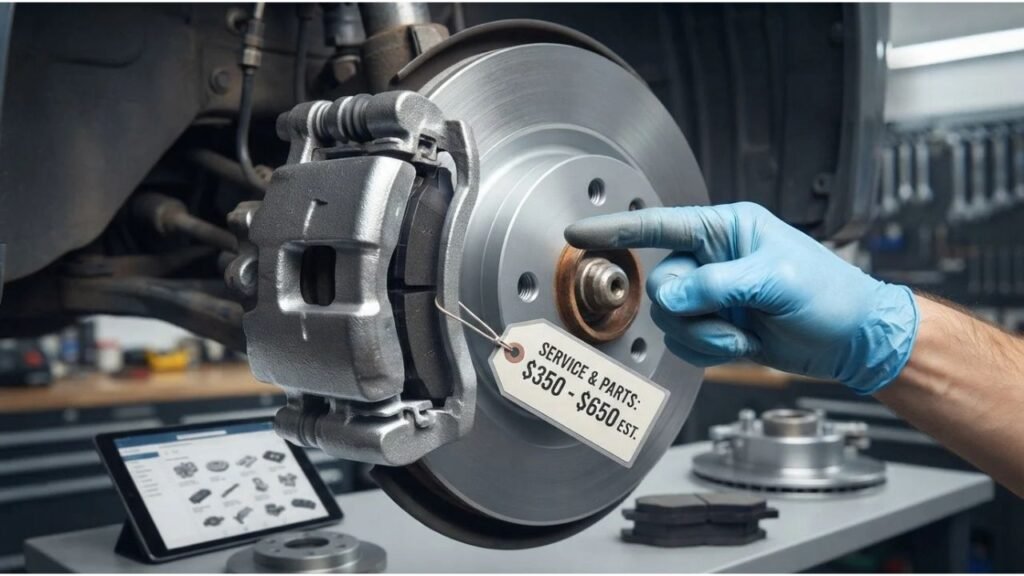
Brake pads are usually the least expensive major component of a disc brake job.
A professional brake pad replacement typically costs around $115 to $400 per axle, although premium vehicles can cost more.
An axle means either:
- Both front wheels, or
- Both rear wheels
Brake pads should normally be replaced as an axle set rather than replacing the pads on only one wheel.
Brake Pad Parts Cost
Replacement brake pads can generally range from around:
- 25–100 per axle for many DIY aftermarket sets
- Higher for premium ceramic, heavy-duty, performance, or OEM pads
Current retail guidance places typical DIY brake pad parts at about 25–100 per axle, depending on vehicle and quality.
Brake Pad Labor Cost
Labor depends on shop rates and the vehicle.
The mechanic generally must:
- Raise the vehicle.
- Remove the wheels.
- Remove or reposition the calipers.
- Remove the old pads.
- Inspect the rotors and calipers.
- Install the new pads.
- Reassemble and test the brakes.
A brake job becomes more expensive if bolts are seized, corrosion is severe, or additional brake components are damaged.
How Much Do Brake Rotors Cost to Replace?
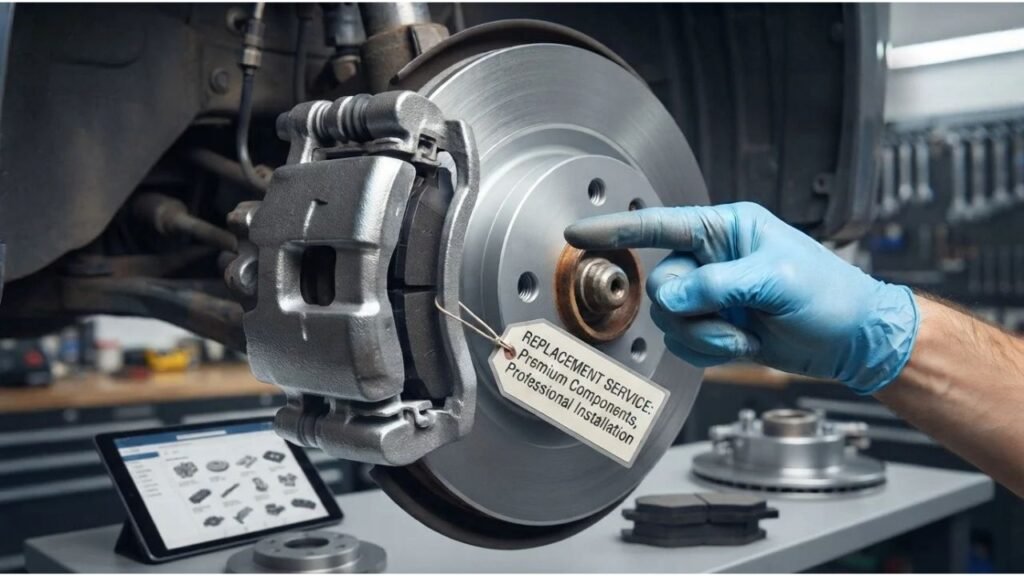
Rotors are more expensive than brake pads because there are normally two rotors per axle and each rotor is a substantial machined metal component.
A professional pads and rotors replacement commonly costs approximately $250 to $700 per axle, depending on the vehicle.
Some current estimates put professional pad-and-rotor replacement around 250–500 per axle for many common vehicles, while individual vehicle estimates can run higher.
Brake Rotor Parts Cost
Typical aftermarket brake rotors may cost approximately 50–180 each, depending on:
- Vehicle
- Rotor size
- Brand
- Material
- Coating
- Performance rating
A vehicle needs two rotors for one axle.
That means rotor parts alone might cost approximately 100–360 per axle before adding pads or labor.
Do Rotors Always Need Replacement With Brake Pads?
No.
Brake rotors should be inspected whenever brake pads are changed, but they do not automatically need replacement every time.
A mechanic may recommend new rotors when the existing rotors are:
- Below minimum thickness
- Deeply grooved
- Cracked
- Heat damaged
- Severely rusted
- Producing vibration because of thickness variation or other damage
- Unable to provide an acceptable surface for the new pads
Some rotors can be resurfaced if sufficient material remains, but replacement has become common because many modern rotors have limited allowable machining thickness and replacement parts can be relatively affordable.
How Much Does a Brake Caliper Replacement Cost?
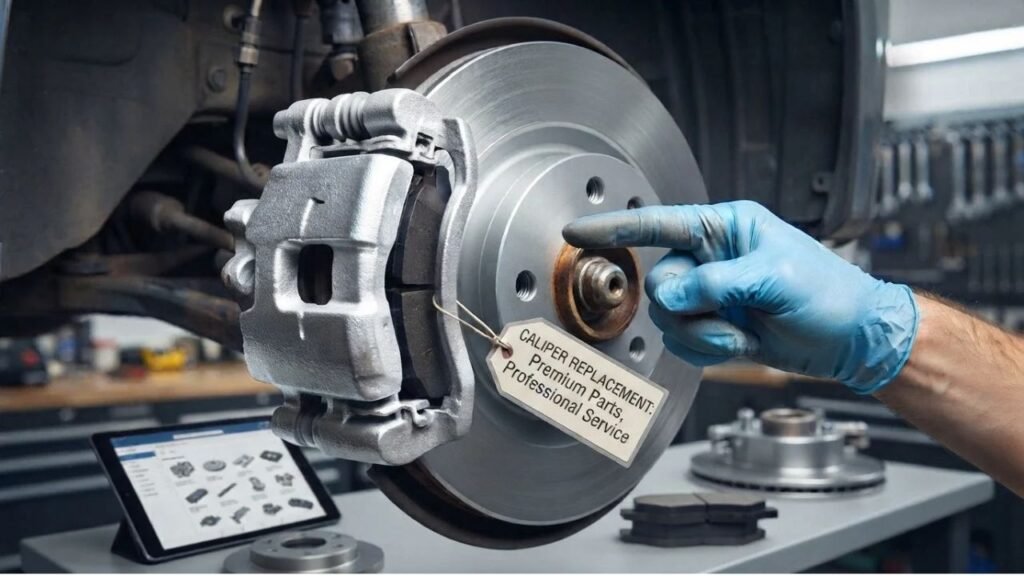
Brake calipers can make a brake job significantly more expensive.
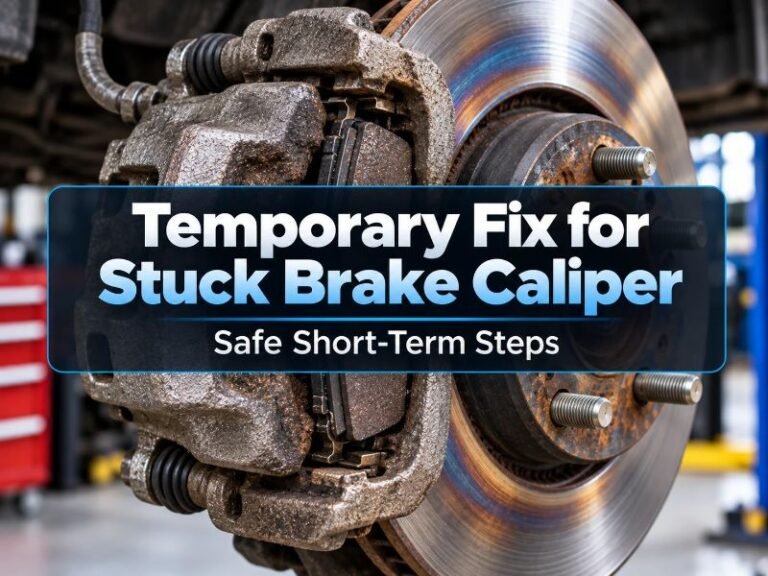
Unlike brake pads, brake calipers are not routine wear items. A functioning caliper generally does not need to be replaced simply because the pads have worn out.
A caliper may require replacement if it:
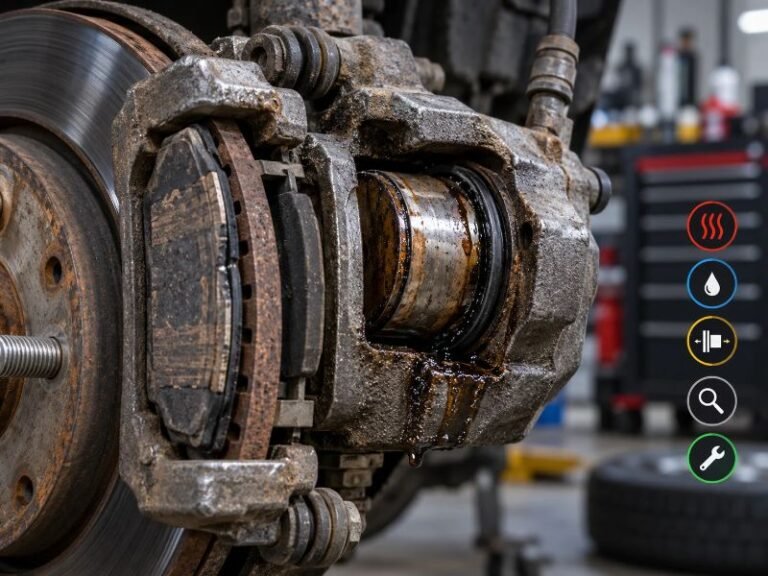
- Seizes
- Leaks brake fluid
- Has a damaged piston
- Has severe corrosion
- Cannot release properly
- Applies uneven braking pressure
- Has damage that cannot be serviced separately
Professional caliper replacement can range from a few hundred dollars to well over $1,000 depending on the vehicle.
RepairPal’s current nationwide estimate averages about 898–968 for brake caliper replacement, but individual vehicle estimates vary substantially.
Brake Caliper Parts Cost
Aftermarket replacement calipers can range widely.
Typical parts might cost roughly:
- 50–150 for an inexpensive remanufactured caliper
- 100–350 for many new or premium calipers
- $500 or considerably more for specialized, electronic, luxury, or performance calipers
Some remanufactured calipers also require a core charge, which is refunded when you return the old caliper.
Why Caliper Replacement Costs More
Replacing a caliper involves more than unbolting a component.
The technician must disconnect the brake hydraulic line. Once the hydraulic system has been opened, air must be removed through brake bleeding.
Depending on the repair, the technician may also replace brake fluid, inspect hoses, clean the rotor, and install new pads.
Do You Need to Replace Pads and Rotors When Replacing a Caliper?
Often, yes—particularly if the failed caliper damaged them.
A seized caliper can continuously press a brake pad against the rotor.
That can create excessive heat and cause:
- Uneven pad wear
- Glazing
- Rotor discoloration
- Deep scoring
- Reduced braking performance
- Premature rotor wear
If one pad is severely damaged or contaminated with brake fluid, the brake pads on that axle normally need replacement as a set.
The rotors should also be inspected carefully.
RepairPal recommends replacing the pads and, when required, rotors when a caliper is replaced so braking remains even from side to side.
Do Brake Calipers Need to Be Replaced in Pairs?
Not necessarily.
Brake pads are normally replaced in axle pairs, and rotors are generally replaced in pairs when replacement is required.
Calipers are different.
If one caliper fails and the caliper on the opposite side is working correctly, replacing only the failed caliper can sometimes be appropriate.
However, a shop may recommend replacing both when:
- Both calipers are heavily corroded.
- Both are approximately the same age.
- The second caliper shows signs of sticking.
- Matching caliper performance is a concern.
- The replacement caliper differs significantly from the existing unit.
Replacing both obviously increases the total repair bill.
Front Brake Pads Rotors and Calipers Replacement Cost
Front brakes usually handle a large share of a vehicle’s braking load.
For many vehicles, a complete front brake repair involving pads, both rotors, and one or two calipers can cost approximately:
500–1,300+
The price depends heavily on the calipers.
If the calipers are still good and only pads and rotors are needed, the bill may be closer to:
250–700+
Heavy trucks, performance cars, European luxury vehicles, and vehicles with large multi-piston calipers can be significantly more expensive.
Rear Brake Pads Rotors and Calipers Replacement Cost
Rear brake repair often falls within a similar general range:
450–1,300+ for pads, rotors, and substantial caliper work
However, rear brakes can sometimes involve additional complications.
Modern vehicles may use an electronic parking brake, with an electric actuator connected to the rear caliper.
Servicing these brakes may require:
- A scan tool
- Electronic service mode
- Special piston retraction procedures
- More expensive replacement calipers
Those features can increase both parts and labor costs.
How Much to Replace Pads, Rotors, and Calipers on All Four Wheels?
A major four-wheel brake overhaul can easily cost 1,000–2,500 or more.
That could include:
- Front brake pads
- Rear brake pads
- Four rotors
- Multiple calipers
- Brake fluid
- Hardware
- Labor
- Brake bleeding
Luxury and performance cars can cost substantially more.
However, having to replace all four calipers at the same time is unusual unless the vehicle has serious corrosion, long-term neglect, hydraulic contamination, or another system-wide problem.
If a shop recommends four new calipers, ask what specifically failed on each one.
Why Brake Replacement Costs Vary So Much
There is no universal price because several variables affect the final bill.
Vehicle Make and Model
Brake components for a common compact sedan are generally less expensive than parts for:
- Full-size trucks
- Luxury vehicles
- Performance cars
- Large SUVs
- European vehicles
OEM vs. Aftermarket Parts
OEM parts are supplied by or for the vehicle manufacturer.
Aftermarket parts come from independent manufacturers.
Aftermarket components are available at several quality levels, so the cheapest option is not necessarily equivalent to the original equipment.
Rotor Type and Size
Large rotors cost more.
Performance vehicles may use:
- Two-piece rotors
- Slotted rotors
- Drilled rotors
- High-carbon rotors
- Large-diameter brake discs
These can dramatically increase replacement costs.
Caliper Design
A basic single-piston floating caliper may be relatively inexpensive.
A large fixed multi-piston performance caliper can cost several times as much.
Labor Rates
Labor costs vary by geographic area and repair facility.
Dealership labor rates are often higher than independent shops, although the exact difference depends on the location.
Rust and Corrosion
Vehicles driven in areas that use road salt may have:
- Rusted caliper bolts
- Seized slide pins
- Corroded brake lines
- Stuck rotors
Extra disassembly time can increase labor charges.
Signs You May Need Brake Pads
Common worn-pad symptoms include:
- Brake wear warning light
- Squealing
- Grinding
- Reduced pad thickness
- Longer stopping distance
- Metal wear indicator contacting the rotor
Grinding can indicate that the friction material is gone and metal is contacting the rotor.
At that point, rotor damage becomes much more likely.
Signs You May Need Brake Rotors
Possible rotor problems include:
- Steering wheel vibration while braking
- Brake pedal pulsation
- Deep grooves
- Cracks
- Severe corrosion
- Blue heat spots
- Rotor thickness below specification
A visual inspection alone cannot always determine whether a rotor is reusable. Rotor thickness should be measured and compared with the manufacturer’s minimum specification.
Signs You May Need a Brake Caliper
Caliper problems may cause:
- Vehicle pulling while braking
- One wheel becoming unusually hot
- Burning smell near a wheel
- Uneven brake pad wear
- Brake fluid leaking near a wheel
- One brake dragging
- Reduced braking on one side
A dragging caliper can become extremely hot.
If you notice smoke, severe pulling, a soft brake pedal, or significant brake-fluid loss, avoid continuing to drive the vehicle until the brake system has been inspected.
Can You Save Money by Replacing Brakes Yourself?
DIY brake work can substantially reduce labor costs.
For example, retail parts estimates put brake pads at roughly 25–100 per axle, rotors at approximately 50–180 each, and calipers at approximately 50–350 each, depending on the vehicle and component quality.
However, replacing a caliper is more involved than a basic pad replacement because the hydraulic system must be opened and properly bled afterward.
Brake work requires:
- Correct lifting equipment
- Jack stands
- Torque wrench
- Proper tools
- Knowledge of brake hydraulics
- Correct bolt torque
- Proper brake bleeding
Since the braking system directly affects vehicle safety, have the work performed professionally if you are not completely comfortable with the procedure.
How to Tell Whether a Brake Repair Quote Is Reasonable
Ask the shop for an itemized estimate.
It should identify:
- Brake pads
- Number of rotors
- Number of calipers
- Brake hardware
- Brake fluid
- Labor hours
- Shop supplies
- Taxes and fees
If calipers are included, ask why they need replacement.
For example:
“Is the caliper leaking, seized, or failing to release?”
A clear diagnosis is much more useful than simply being told that the brakes are “bad.”
You can also ask whether the price uses:
- OEM parts
- Premium aftermarket parts
- Economy aftermarket parts
- New calipers
- Remanufactured calipers
These differences can explain large variations between estimates.
Should You Replace Everything at Once?
Not automatically.
The correct repair depends on inspection.
A common situation is:
Worn pads + worn rotors + good calipers
In that case, replace the pads and rotors while keeping the functioning calipers.
Another situation might be:
Worn pads + damaged rotor + seized caliper
In that case, the caliper problem may have caused the abnormal pad and rotor wear, so replacing all affected components makes sense.
Replacing good parts simply because nearby components are worn adds unnecessary cost.
FAQs About Brake Pads Rotors and Calipers Replacement Cost
How Much Does It Cost to Replace Brake Pads, Rotors, and Calipers Together?
A complete repair on one axle commonly costs around 500–1,300 or more.
The final price depends particularly on whether one or both calipers need replacement.
How Much Is a Full Brake Job on All Four Wheels?
A four-wheel pad-and-rotor job may cost roughly 500–1,400+, while replacing multiple calipers can push a major brake overhaul to approximately 1,000–2,500 or more.
Vehicle type and parts selection can move the price well outside these ranges.
Is $1,000 Too Much for Brakes?
Not necessarily.
If $1,000 includes pads, rotors, one or more calipers, brake bleeding, and labor, the estimate can be reasonable.
If the quote covers only basic pads on one axle of an ordinary vehicle, $1,000 would generally deserve a closer look.
Do I Need New Calipers Every Time I Replace Brake Pads?
No.
Brake calipers are not normally replaced with every brake pad change.
A caliper should generally remain in service unless it is leaking, seized, damaged, badly corroded, or otherwise malfunctioning.
Is It Cheaper to Replace Pads and Rotors at the Same Time?
Having pads and rotors replaced during the same service avoids duplicating some labor compared with replacing them during separate visits.
If the rotors are already worn beyond specification, replacing both during one repair usually makes practical sense.
Can I Replace Just One Brake Caliper?
Yes, in some cases.
If only one caliper has failed and the opposite caliper is in good condition, replacing the failed unit can be acceptable. The technician should still inspect both sides carefully.
Why Are Brake Calipers So Expensive?
Calipers vary greatly in design and price. In addition to the part itself, replacement requires opening the hydraulic brake system and bleeding air from it afterward.
Electronic parking-brake calipers and performance multi-piston calipers can be especially expensive.
Does a Bad Caliper Ruin the Rotor?
It can.
A seized caliper may keep the pad pressed against the rotor continuously, generating enough heat and friction to damage both the pad and rotor.
Conclusion
The brake pads rotors and calipers replacement cost depends primarily on the vehicle, how many wheels need repair, parts quality, labor rates, and whether the calipers actually need replacement. A substantial one-axle repair involving pads, rotors, and caliper work may cost roughly 500–1,300 or more, while major four-wheel brake repairs can exceed $2,000.
Remember that brake pads and rotors are normal wear components, but calipers are usually replaced only when they have a confirmed problem such as leaking, sticking, or seizing.
If you receive an expensive brake estimate, ask for an itemized breakdown and the specific reason each caliper or rotor needs replacement. That makes it much easier to understand whether you are paying for necessary safety repairs or replacing components that are still serviceable.