Symptoms of Bad Caliper Slide Pins: Signs, Causes, and Fixes
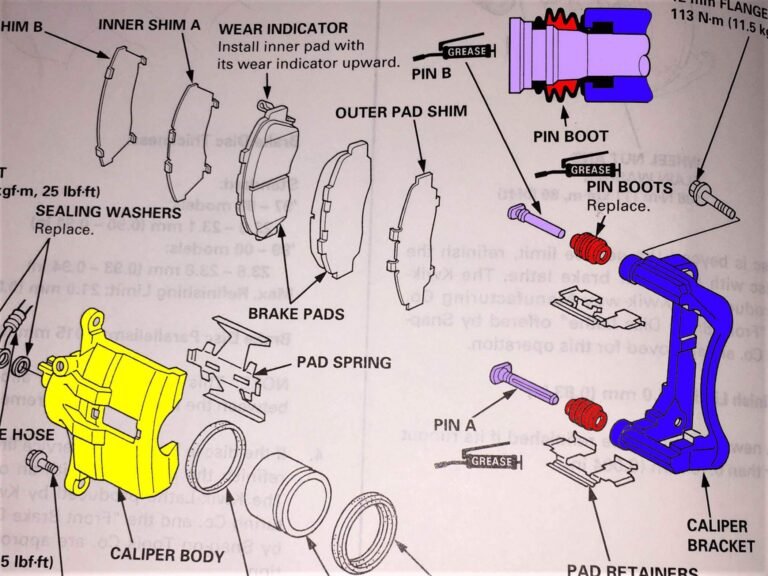
Brake caliper slide pins are small parts, but they play a major role in how smoothly a vehicle’s disc brakes operate. On a typical floating brake caliper, the pins allow the caliper body to move sideways as you press and release the brake pedal. This movement lets both brake pads apply pressure to the rotor evenly and then release properly when braking ends.
When the pins become dry, rusty, bent, corroded, or completely seized, the caliper may no longer move as intended. One brake pad can remain pressed against the rotor while the other barely moves. In more severe cases, the brake can drag continuously even when your foot is off the pedal.
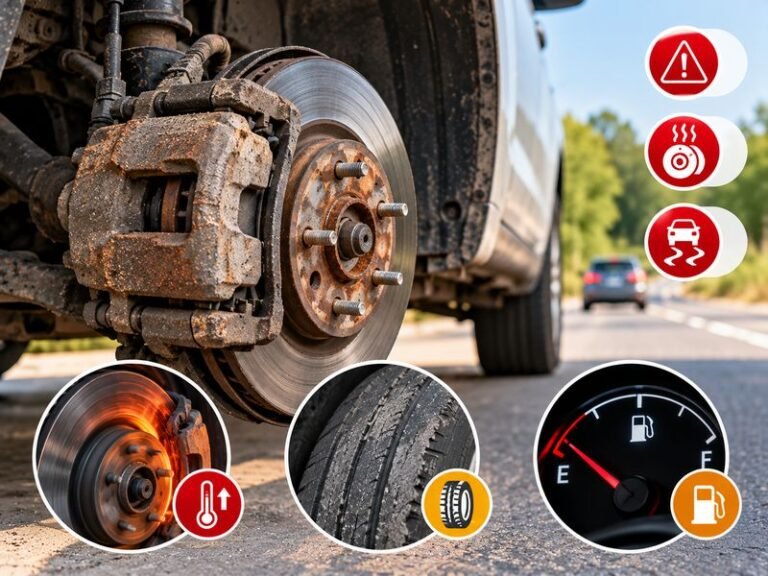
Some of the most common symptoms of bad caliper slide pins include uneven brake pad wear, a vehicle pulling while braking, one wheel becoming unusually hot, reduced fuel economy, burning smells, brake drag, abnormal noises, and a brake pad that wears out much faster than the pad on the opposite side.
The tricky part is that these symptoms can also be caused by a seized caliper piston, collapsed brake hose, damaged pads, wheel bearing problems, or other brake-system faults. That is why recognizing the pattern of symptoms is important before replacing parts.
Below, you will learn what stuck caliper pins feel like, what causes them to fail, how they affect brake pad wear, how to inspect them, and when the vehicle should stop being driven until the brake is repaired.
What Are the Symptoms of Bad Caliper Slide Pins?
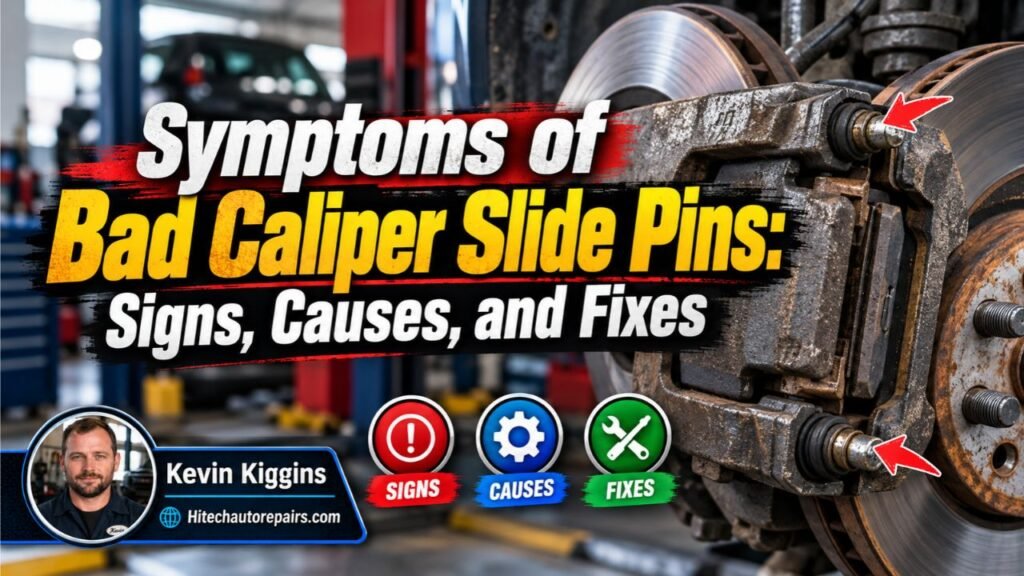
The most common symptoms of bad caliper slide pins are uneven brake pad wear, dragging brakes, pulling to one side, excessive heat at one wheel, reduced braking consistency, clunking or squeaking noises, and a burning smell from an overheated brake.
A mildly sticky slide pin may initially cause only uneven pad wear. As corrosion or lack of lubrication gets worse, the caliper may eventually stop sliding altogether.
Typical warning signs include:
- One brake pad wearing significantly faster than the other
- Inner and outer pads on the same wheel having very different thicknesses
- Vehicle pulling left or right during braking
- One wheel feeling noticeably hotter than the others
- Brake drag after releasing the pedal
- Burning or overheated-brake smell
- Reduced fuel economy from constant friction
- Squealing, grinding, clicking, or clunking around the brake
- Excess brake dust on one wheel
- Rotor discoloration from overheating
- Poor or inconsistent braking performance
You may experience only one or two symptoms at first.
What Do Brake Caliper Slide Pins Do?
Most passenger vehicles with floating disc brake calipers use one or more guide pins, also called slide pins, slider pins, or caliper pins.
When you press the brake pedal, hydraulic pressure pushes the caliper piston outward. The piston presses the inner brake pad against the rotor.
At the same time, the caliper body slides along its pins. This motion pulls the outer pad against the opposite side of the rotor.
Both pads then squeeze the rotor to slow the wheel.
After you release the brake pedal, pressure falls and the pads should stop applying significant force to the rotor.
If a caliper cannot slide freely on its guide pins, that balanced movement is disrupted.
Uneven Brake Pad Wear Is One of the Biggest Signs
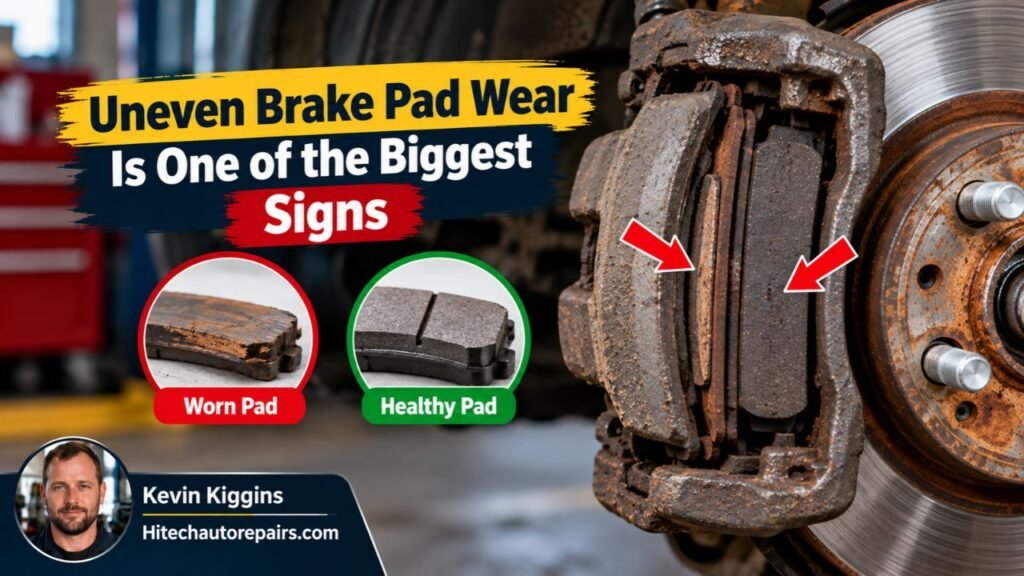
Uneven brake pad wear is one of the strongest clues that a caliper slide pin is not moving properly.
When both pins move freely, the inner and outer brake pads should generally wear at reasonably similar rates.
A seized or partially seized pin may cause one pad to remain in contact with the rotor longer than the other.
You might find:
- The inner pad almost worn out while the outer pad still has substantial material
- The outer pad heavily worn while the inner pad looks relatively normal
- One end of a pad thinner than the other
- Brake pads on one wheel wearing much faster than those on the opposite wheel
Uneven wear does not automatically prove that a slide pin is bad. A seized piston, damaged hardware, poorly fitted pads, or rotor problems can create similar patterns.
However, slide pins should always be inspected when unusual pad wear is discovered.
Stuck Caliper Pin Symptoms Can Include Brake Drag
A sticking pin can prevent the caliper from releasing properly after braking.
This creates brake drag, meaning the pads continue rubbing the rotor while the vehicle is moving.
Light contact between brake pads and rotors can be normal in some systems, but a dragging brake creates significantly more friction.
Possible signs include:
- Vehicle feels slightly harder to accelerate
- Car slows unusually quickly when you lift off the accelerator
- One wheel produces much more heat
- Fuel economy decreases
- Brake rotor becomes discolored
- Burning smell develops after driving
Severe brake drag can overheat pads, rotors, wheel bearings, seals, and nearby components.
One Wheel May Become Much Hotter
A stuck caliper slide pin can cause continuous friction at one wheel.
That friction turns into heat.
After driving, one wheel may therefore be considerably hotter than the others.
You might notice heat coming from the wheel area without touching anything.
Do not immediately touch a wheel, rotor, or caliper if you suspect brake overheating. Brake components can become hot enough to cause serious burns.
Excessive heat can also damage the brake pads and rotor.
Vehicle Pulls to One Side While Braking
A vehicle that pulls left or right during braking may have uneven braking force between the two sides of an axle.
A stuck slide pin can contribute to this problem.
For example, if a front caliper cannot move correctly, that wheel may apply less braking force than the wheel on the opposite side.
The vehicle can then pull toward the side producing greater braking force.
However, pulling can also result from:
- Seized caliper piston
- Contaminated brake pad
- Brake hose problem
- Uneven tire pressure
- Suspension or alignment problems
- Different tire traction
- Worn suspension components
Brake pulling should therefore be diagnosed rather than automatically blamed on slide pins.
A Stuck Caliper Pin Can Cause Constant Pulling
Sometimes the vehicle pulls even when you are not pressing the brake pedal.
This can happen when the stuck caliper keeps one brake partially applied.
The vehicle may drift or feel as though one wheel is resisting forward movement.
If severe, you may also notice:
- Steering wheel pulling
- Reduced acceleration
- Increased engine load
- Hot wheel
- Burning odor
A brake that remains partially applied should be inspected promptly.
Burning Smell Near One Wheel
An overheated brake can produce a sharp, unpleasant smell.
The odor may resemble:
- Burning chemicals
- Hot metal
- Burned friction material
- Hot rubber
If you notice a strong burning smell from one wheel after normal driving, stop somewhere safe and allow the brake system to cool.
Continuing to drive with a severely dragging brake can damage the brake rotor and pads and may reduce braking reliability.
Smoke coming from the wheel area is a more serious warning and should not be ignored.
Excess Brake Dust on One Wheel
Brake pads naturally produce dust as they wear.
If one wheel suddenly becomes much dirtier than the others, an excessively dragging brake may be wearing the pad at an accelerated rate.
You may see dark brake dust coating:
- Wheel spokes
- Rim
- Caliper area
- Nearby suspension components
This symptom is especially useful when combined with excessive wheel heat or uneven pad wear.
Brake dust alone does not confirm a bad slide pin because pad compound and driving conditions also affect dust production.
Squeaking, Grinding, or Scraping Noises
A sticky caliper can cause brake pads to contact the rotor incorrectly.
You may hear:
- Squealing
- Scraping
- Grinding
- Clicking
- Rubbing sounds
A worn brake pad can also produce grinding if its friction material has been completely used up.
Grinding should be inspected quickly because metal-to-metal contact can damage the rotor.
A slide pin problem may be responsible for the uneven wear that caused one pad to reach its wear limit much earlier than expected.
Clunking From the Brake Caliper
Not every bad slide pin is seized.
A pin or its mounting hardware can sometimes become excessively worn or loose.
This may allow the caliper to move more than intended and produce:
- Clicking
- Knocking
- Rattling
- Clunking
Noise may be especially noticeable:
- When braking
- When releasing the brake
- When changing direction
- When driving over bumps
Loose caliper hardware is a safety issue and should be inspected immediately.
Brake Pedal Feel May Change
Bad slide pins do not always create an obvious change in brake pedal feel.
However, severe uneven braking or overheated components may eventually make braking feel inconsistent.
Possible complaints include:
- Brakes feel less responsive
- Braking force seems uneven
- Pedal feel changes after brakes become hot
A soft or sinking brake pedal more commonly points toward hydraulic problems rather than slide pins alone, so do not assume slide pins are responsible for every pedal issue.
How Stuck Caliper Pins Affect Brake Pad Wear
Brake pad wear patterns can provide useful diagnostic clues.
One Slide Pin Is Stuck
If one pin moves freely while the other is seized, the caliper may twist slightly rather than sliding evenly.
This can create tapered pad wear, where one edge of the pad becomes thinner than the other.
Both Slide Pins Are Stuck
If both pins are seized, the floating caliper may lose much of its ability to move sideways.
The inner and outer pads can then wear at very different rates.
Slide Pins Move but Are Very Dry
Pins do not need to be completely seized to cause problems.
Dry or lightly corroded pins can create enough resistance to prevent smooth caliper movement.
The resulting symptoms may develop slowly over thousands of miles.
Brake Caliper Slide Pin Stuck Symptoms vs. Seized Caliper Piston
A stuck slide pin and seized caliper piston can cause very similar symptoms.
Both can create:
- Brake drag
- Uneven pad wear
- Excessive wheel heat
- Pulling
- Burning smell
- Rotor damage
The difference is where the movement problem occurs.
A stuck slide pin prevents the caliper body from moving properly along its guide pins.
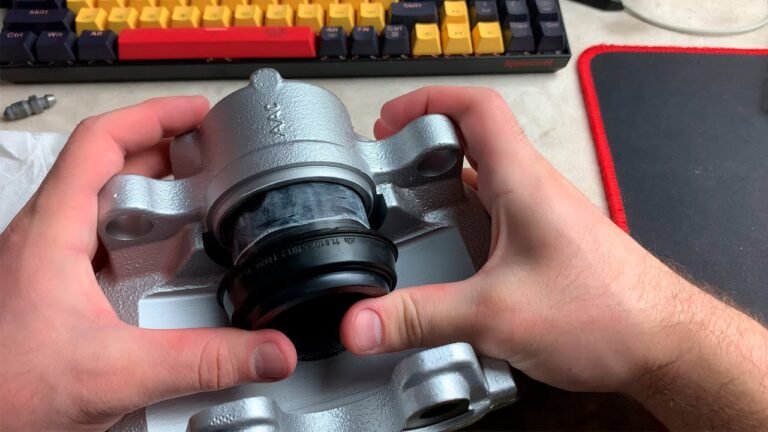
A seized caliper piston prevents the piston from moving in or out correctly.
During inspection, a mechanic may remove the caliper and verify whether the pins slide smoothly by hand while separately checking piston operation.
Sometimes both problems occur on an older or heavily corroded brake assembly.
What Causes Caliper Slide Pins to Stick?
Several problems can prevent slide pins from moving freely.
Old or Missing Lubricant
Slide pins require the correct brake-compatible lubricant.
Over time, lubricant can:
- Dry out
- Wash away
- Become contaminated
- Harden
- Lose effectiveness
Without adequate lubrication, friction and corrosion increase.
Torn Slide Pin Boots
Rubber boots protect the pins from:
- Water
- Road salt
- Dirt
- Brake dust
- Debris
If a boot tears or becomes improperly seated, moisture can reach the pin and bore.
Rust may eventually cause the pin to seize.
Corrosion
Vehicles driven in areas that use road salt can be particularly susceptible to brake hardware corrosion.
A heavily corroded pin may become rough, pitted, or permanently seized.
Wrong Grease
Not every grease is suitable for brake slide pins.
Some petroleum-based lubricants can damage certain rubber components and cause boots or bushings to swell.
Use a lubricant specifically compatible with the caliper design and rubber components.
Bent Slide Pin
A bent pin may bind inside its bore even when it is lubricated.
If a pin is visibly damaged, replacement is generally more appropriate than trying to force it to work.
Corrosion Inside the Caliper Bracket
Sometimes the pin itself looks acceptable, but rust or debris inside the guide bore prevents smooth movement.
Both the pin and bore need to be inspected.
How to Check for a Stuck Caliper Slide Pin
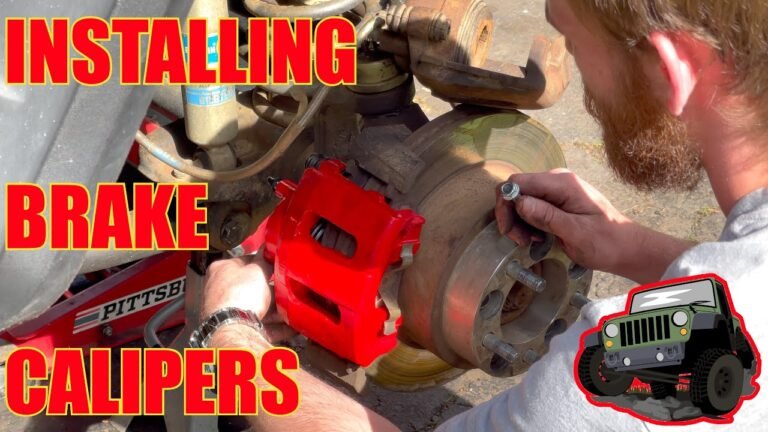
If you are experienced with brake service, slide pins can usually be inspected when the caliper is removed during a brake job.
The vehicle must first be safely supported using proper lifting procedures.
Never rely only on a hydraulic jack while working around a wheel.
After the caliper is removed, each slide pin should generally move smoothly through its normal range without excessive force.
Look for:
- Rust
- Pitting
- Dry surfaces
- Contaminated grease
- Torn boots
- Bent pins
- Binding
- Excessive looseness
A pin that requires significant force to move or cannot be removed normally may be seized.
Brake-system designs differ, so service information for the specific vehicle should be followed.
Can You Drive With a Stuck Caliper Slide Pin?
Driving with a severely stuck caliper pin is not recommended.
A mildly sticky pin may initially produce only uneven pad wear, but the condition can become worse.
Continued driving can lead to:
- Overheated brakes
- Premature pad wear
- Rotor damage
- Reduced braking effectiveness
- Vehicle pulling
- Excessive heat around the wheel
- Increased stopping distance in some situations
If the wheel is extremely hot, the vehicle pulls strongly, you smell burning material, or smoke appears from the brake area, stop driving and have the vehicle inspected.
Can Bad Slide Pins Damage the Rotor?
Yes.
If a stuck slide pin keeps one pad rubbing against the rotor, the rotor can overheat.
Possible consequences include:
- Grooves
- Scoring
- Heat spots
- Surface discoloration
- Excessive wear
- Thickness variation
A severely damaged rotor may need replacement along with the pads and repaired caliper hardware.
Installing new pads without correcting the slide pin problem can cause the new pads to wear unevenly again.
How Are Stuck Caliper Slide Pins Fixed?
The correct repair depends on the condition of the parts.
A serviceable pin may only require:
- Removal
- Cleaning
- Inspection
- Cleaning of the pin bore
- Application of proper brake lubricant
- Replacement of damaged rubber boots
- Reassembly according to vehicle specifications
A badly rusted, pitted, bent, or damaged pin should generally be replaced.
If the caliper bracket bore is severely damaged or corroded, the bracket or complete caliper assembly may need replacement.
Never grind away significant material simply to make a brake pin fit loosely.
What Grease Should Be Used on Caliper Slide Pins?
Use a lubricant specifically identified as suitable for brake caliper guide pins and compatible with the rubber boots and bushings used in the brake system.
Do not automatically use:
- Wheel-bearing grease
- General-purpose petroleum grease
- Anti-seize compound
- Engine oil
Some brake systems use special bushings or pin designs with specific lubrication requirements.
Following the vehicle manufacturer’s service information is the safest approach.
How Often Should Caliper Slide Pins Be Serviced?
There is no single mileage interval that applies to every vehicle.
Slide pins are commonly inspected during brake-pad replacement or other brake service.
More frequent inspection can be useful for vehicles exposed to:
- Road salt
- Water
- Mud
- Coastal environments
- Long periods of storage
If the brake pads show abnormal wear, check the slide pins even if they were serviced relatively recently.
Common Mistakes When Servicing Slide Pins
Several mistakes can cause the problem to return.
Reusing a Damaged Rubber Boot
A torn boot allows contamination back into the pin area.
Replace damaged boots.
Applying Too Much Grease
More grease is not necessarily better.
Excess lubricant can interfere with boot seating or collect contamination.
Use an appropriate amount according to the service procedure.
Using the Wrong Lubricant
Incorrect grease may damage rubber or fail at brake-system temperatures.
Ignoring Corrosion Inside the Bore
Cleaning only the visible part of the pin may not solve a binding problem deeper in the bracket.
Installing New Pads Without Fixing the Cause
If the old pads wore unevenly because a pin was stuck, new pads can develop the same problem unless the pin issue is corrected.
Other Problems That Can Mimic Stuck Caliper Pin Symptoms
Do not replace slide pins solely because one wheel is hot or the car pulls.
Similar symptoms may come from:
- Seized caliper piston
- Internally collapsed brake hose
- Parking brake mechanism stuck
- Pads binding in the bracket
- Incorrectly installed brake hardware
- Wheel bearing problems
- Rotor problems
- Hydraulic brake issues
A complete brake inspection is the best way to identify the actual cause.
FAQs About symptoms of bad caliper slide pins
What are the most common stuck caliper pin symptoms?
The most common stuck caliper pin symptoms are uneven brake pad wear, one hot wheel, brake drag, vehicle pulling, excessive brake dust, and abnormal brake noise.
A seized pin may also cause one pad to wear much faster than the other.
What are brake caliper slide pin stuck symptoms?
Common brake caliper slide pin stuck symptoms include uneven braking, excessive heat, inner-to-outer brake pad wear differences, dragging brakes, burning smells, pulling, and premature rotor wear.
The severity depends on how restricted the caliper movement has become.
Can a stuck caliper slide pin cause uneven pad wear?
Yes.
Uneven pad wear is one of the most characteristic signs of restricted caliper movement.
The pads may wear differently from each other or develop tapered wear across their surfaces.
Can a bad slide pin cause the brake to drag?
Yes.
If the caliper cannot move back freely after braking, a pad may remain pressed against the rotor and create continuous friction.
Can bad caliper pins make the car pull?
Yes.
Unequal braking force between the left and right wheels can cause the vehicle to pull during braking.
A dragging brake may also create pulling while driving normally.
How do I know whether the slide pin or caliper piston is stuck?
The components must usually be inspected separately.
A slide pin should move smoothly through its guide, while the caliper piston must retract and extend correctly.
Because both faults can produce similar symptoms, physical inspection is often necessary.
Will a stuck caliper slide pin make the wheel hot?
Yes.
If the stuck pin causes a brake pad to remain against the rotor, friction can create substantial heat.
A wheel that is much hotter than the others after normal driving should be investigated.
Can you lubricate a stuck caliper pin instead of replacing it?
Sometimes.
A dry but otherwise undamaged pin may be cleaned and lubricated with the correct brake lubricant.
A heavily rusted, pitted, bent, or damaged pin should generally be replaced.
Conclusion
The most recognizable symptoms of bad caliper slide pins are uneven brake pad wear, brake drag, excessive heat at one wheel, vehicle pulling, increased brake dust, abnormal noises, and a burning smell caused by overheating.
These same symptoms can also come from a seized piston, damaged brake hose, binding pads, or other brake problems, so inspecting the entire caliper assembly is important.
If you notice severe pulling, smoke, a strong burning smell, or an extremely hot wheel, avoid continuing to drive until the brake system has been inspected. Catching a sticking slide pin early can often prevent unnecessary damage to the brake pads, rotor, caliper, and surrounding components.