Can You Use Normal Spray Paint on Brake Calipers?
Painting brake calipers is a popular way to improve the appearance of wheels, especially when old calipers have become rusty, stained, or dull. The paint you choose matters because brake components are exposed to heat, road grime, brake dust, moisture, and cleaning chemicals.
Yes, you can physically use normal spray paint on brake calipers, but it is generally not the best choice. Regular spray paint may discolor, soften, blister, peel, or lose adhesion when exposed to brake heat. High-temperature caliper paint or another coating specifically rated for automotive brake components is a better option.
If you are wondering can you use normal spray paint on brake calipers, the answer also depends on what you mean by “normal.” Some general-purpose automotive spray paints tolerate more heat than basic household paint, but that still does not make them ideal for calipers. A dedicated high-heat brake caliper paint is formulated to survive the temperature changes, dirt, chemicals, and harsh environment around the wheel.
This guide explains why normal spray paint can fail on brake calipers, which paint is better, how hot calipers can become, how to prepare the surface, what parts must never be painted, and how to get a finish that lasts.
Can You Use Normal Spray Paint on Brake Calipers Safely?
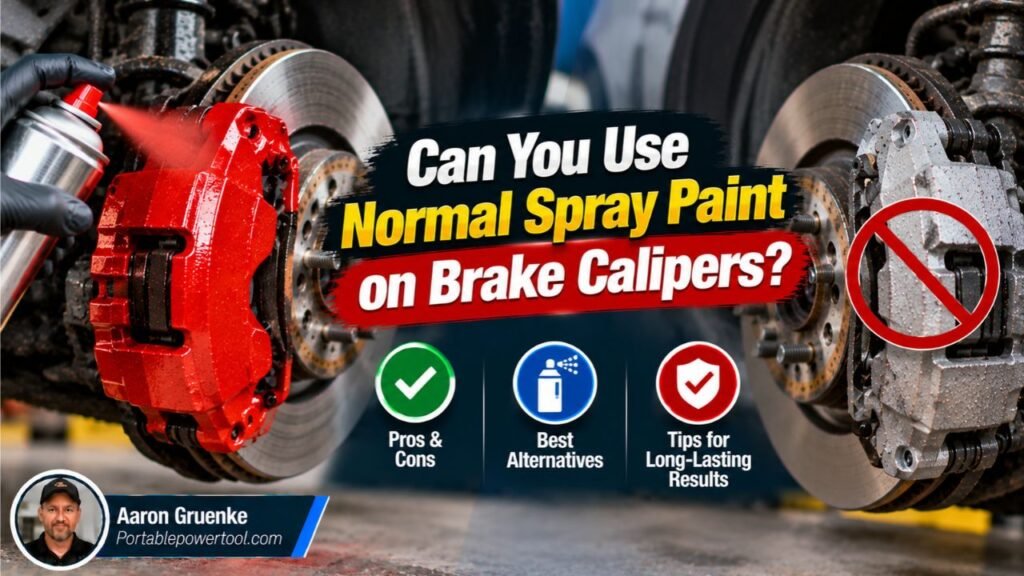
You can apply normal spray paint to the outside of a brake caliper, but regular general-purpose spray paint is not recommended for a durable brake-caliper finish.
The main problem is not that the paint immediately makes the brake stop working. The problem is that ordinary paint may not be designed for:
- Repeated heat cycles
- Brake dust
- Road salt
- Water
- Automotive cleaners
- Oil and grease exposure
- Rapid temperature changes
As a result, ordinary paint may look good initially but deteriorate much faster.
A proper caliper paint, high-temperature engine enamel approved for the application, or another suitable automotive high-heat coating generally provides better durability.
Why Brake Calipers Need Special Paint
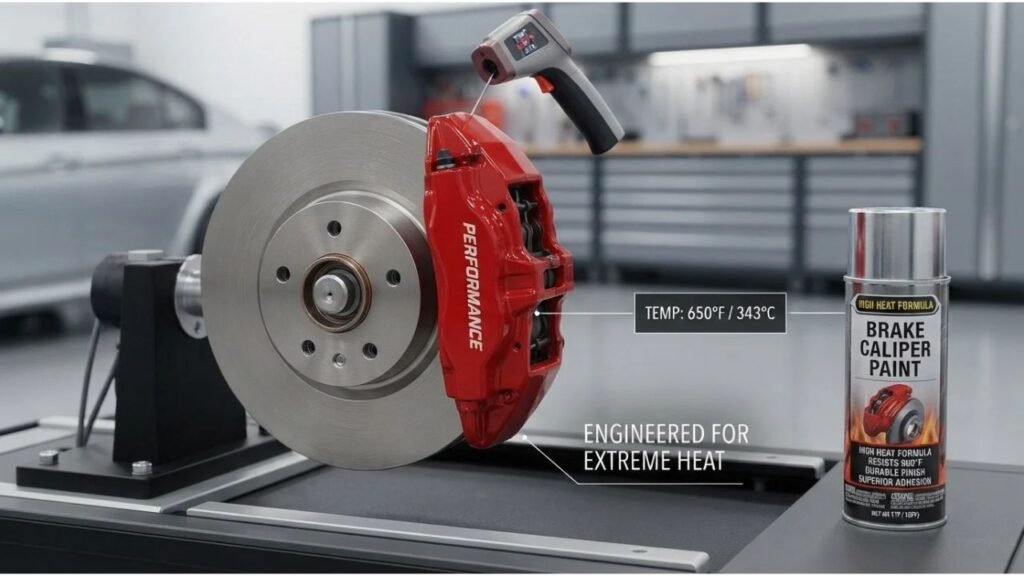
A brake caliper operates in a much harsher environment than a painted body panel.
Every time you brake, friction between the brake pads and rotors generates heat.
A portion of that heat transfers into the:
- Brake pads
- Rotors
- Caliper
- Brake fluid
- Nearby wheel components
Calipers also experience constant contamination from road debris and brake dust.
A coating that works perfectly on a toolbox, chair, or body panel may not withstand those conditions.
Heat Resistance
Normal spray paint may not be formulated for sustained high temperatures.
Repeated heating and cooling can cause ordinary paint to:
- Fade
- Yellow
- Bubble
- Crack
- Become soft
- Peel away
High-temperature caliper paints are specifically designed for more severe thermal cycling.
Chemical Resistance
Brake calipers can encounter:
- Brake cleaner
- Road chemicals
- Degreasers
- Brake dust
- Wheel cleaners
- Salt
- Grease
Some ordinary paints soften or stain when exposed to strong automotive chemicals.
Corrosion Protection
A properly prepared and coated caliper can also gain some protection against surface corrosion.
However, paint is not a repair for severe rust or structural damage.
How Hot Do Brake Calipers Get?
Brake temperatures vary enormously depending on the vehicle and driving conditions.
Calipers on a lightly driven commuter car may experience relatively moderate temperatures during normal driving.
Temperatures can become much higher during:
- Hard repeated braking
- Mountain driving
- Towing
- Track use
- Heavy vehicles
- Stop-and-go driving
- A dragging brake
The brake rotor often becomes significantly hotter than the caliper itself, but enough heat transfers into the caliper to make temperature resistance important.
This is why you should select paint based on the manufacturer’s temperature rating rather than assuming ordinary paint can handle the job.
What Kind of Paint Should You Use on Brake Calipers?
The best choice is generally a coating specifically labeled for brake calipers.
Common options include:
- High-temperature caliper spray paint
- Brush-on caliper paint
- Suitable high-temperature automotive enamel
- Professional powder coating designed for calipers
Each option has advantages.
High-Temperature Caliper Spray Paint
Caliper spray paint is convenient for DIY work.
It is designed for automotive brake components and generally offers better:
- Heat resistance
- Chemical resistance
- Chip resistance
- Color retention
Spray paint can also create a smoother finish than a brush when applied correctly.
The main challenge is controlling overspray.
If the caliper remains on the vehicle, careful masking is essential.
Brush-On Caliper Paint
Brush-on caliper paint can be easier when painting calipers without fully removing them.
Because the coating is brushed directly onto the caliper, there is less risk of overspray reaching the:
- Rotor
- Brake pads
- Suspension
- Wheel well
- Brake hose
Brush marks may be more visible, although good-quality paint can level out as it cures.
Can You Use Engine Enamel on Brake Calipers?
Some high-temperature engine enamels may be suitable for brake calipers if their temperature and chemical-resistance specifications are appropriate.
However, an engine enamel is not automatically equivalent to dedicated caliper paint.
Check the product instructions.
Make sure the coating is suitable for:
- Metal surfaces
- High temperatures
- Automotive environments
- The expected brake temperatures
If the manufacturer does not recommend the product for brake components or similar applications, dedicated caliper paint is the safer choice.
Can You Use Rust-Oleum or Similar Regular Spray Paint?
A brand name alone does not tell you whether a paint is suitable.
Manufacturers sell many different formulations, including:
- General-purpose paint
- Automotive paint
- High-heat paint
- Engine enamel
- Specialty coatings
A standard household or multipurpose spray paint may not have adequate heat resistance.
A high-temperature product from the same manufacturer may be much more appropriate.
Always check the specific product label rather than assuming every spray can from one brand performs the same way.
Can Normal Spray Paint Catch Fire on a Brake Caliper?
Under ordinary street-driving conditions, paint failure is more likely to show up as discoloration, blistering, cracking, or peeling than as the caliper suddenly catching fire.
However, applying a coating outside its intended temperature range is still a poor idea.
Paint products contain different resins, solvents, and additives, and their performance depends on proper curing.
Never use a paint around a brake system unless its manufacturer states that it is appropriate for the expected temperature and surface.
What Happens If You Use Regular Spray Paint?
The paint may initially look perfectly fine.
Problems often appear after repeated heat cycles.
Possible results include:
- Dull color
- Fading
- Brown or yellow discoloration
- Cracking
- Peeling
- Bubbling
- Softening
- Chipping
- Reduced chemical resistance
Poor surface preparation can cause many of the same problems even with proper caliper paint.
Paint choice and preparation both matter.
Preparing Brake Calipers for Paint
Good preparation is one of the biggest factors in whether caliper paint lasts.
Painting directly over dirt, rust, and brake dust usually produces poor results.
Let the Brakes Cool Completely
Never paint hot brake components.
Allow the brakes and vehicle to cool completely before starting.
A hot caliper can cause cleaners or paint solvents to evaporate rapidly and may create unsafe working conditions.
Raise the Vehicle Safely
If removing a wheel, support the vehicle correctly.
Use:
- A stable level surface
- Proper jack points
- Quality jack stands
- Wheel chocks
Never work around the brakes while relying only on a hydraulic floor jack.
Remove the Wheel
Removing the wheel gives much better access to the caliper.
It also prevents paint from getting on the wheel.
Clean the Caliper Thoroughly
Brake calipers accumulate substantial contamination.
Remove:
- Brake dust
- Grease
- Oil
- Dirt
- Loose rust
- Flaking old paint
A suitable brake cleaner and mechanical cleaning may be needed.
Follow the paint manufacturer’s surface-preparation instructions.
Remove Loose Rust
Light surface rust can often be removed using:
- Wire brush
- Abrasive pad
- Suitable sandpaper
- Small detailing brush
Do not aggressively grind or damage machined surfaces, seals, brake lines, or rubber components.
A heavily corroded caliper should be inspected before cosmetic painting.
What Parts of a Brake Caliper Should You Not Paint?
This is one of the most important parts of the job.
Paint should generally stay off functional surfaces and rubber components.
Do not paint:
- Brake rotor friction surfaces
- Brake pad friction material
- Caliper piston
- Piston seals
- Rubber dust boots
- Slide pins
- Slide-pin bores
- Bleeder screw opening
- Brake hose connections
- Brake hose
- Pad contact surfaces where paint would interfere with movement
- Electrical connectors
- Electronic parking-brake components unless specifically allowed
Mask carefully before spraying.
Never Get Paint on the Brake Rotor
The brake rotor’s friction surface needs direct contact with the brake pads.
Paint on that surface can interfere with braking and contaminate the pads.
If you are painting the caliper while it remains mounted, completely cover the rotor before spraying.
Cardboard, plastic, paper, masking tape, and purpose-made masking materials can help isolate the caliper.
Make sure masking material itself cannot become trapped in the braking system.
Do Not Paint the Brake Pads
Brake pad friction material should never be painted.
Paint contamination can affect the way the pad interacts with the rotor.
If you want a clean finish, masking the pads is much safer than spraying around them carelessly.
For the cleanest job, some people remove the caliper and pads before painting, but disconnecting the brake hose creates additional work because the hydraulic system may then require bleeding.
Do You Need to Remove the Calipers Before Painting?
No, not always.
Brake calipers can be painted while still mounted to the vehicle.
This is common for DIY cosmetic jobs.
Leaving the caliper connected avoids opening the brake hydraulic system.
However, the surrounding components must be masked carefully.
Removing the caliper can provide:
- Better surface access
- Easier cleaning
- More even paint coverage
- Less overspray risk
But if the brake hose is disconnected, the brake system must be properly bled afterward.
For many beginners, painting the caliper while leaving the hydraulic connection intact is simpler.
How to Spray Paint Brake Calipers
Once the caliper is clean, dry, and correctly masked, apply the coating according to its instructions.
A typical process may look like this:
- Shake the paint can thoroughly.
- Apply a light first coat.
- Allow the specified flash time.
- Apply additional light coats.
- Avoid heavy runs.
- Let the coating cure for the specified period.
- Remove masking carefully.
- Reinstall the wheel.
- Torque the wheel fasteners to specification.
The exact number of coats, drying time, and curing process depend on the paint.
Always follow the instructions on the specific product.
Why Light Coats Are Better
Heavy coats can look attractive while wet but often create problems.
Too much paint at once can cause:
- Runs
- Sagging
- Uneven drying
- Solvent trapping
- Longer curing times
- Soft coating
- Poor finish
Several light coats generally provide more consistent coverage.
Does Caliper Paint Need Primer?
It depends on the coating system.
Some caliper paints are designed to be applied directly to clean metal.
Others may recommend or allow a compatible high-temperature primer.
Do not automatically use ordinary body primer under high-temperature caliper paint.
The final coating is only as heat-resistant as the weakest layer underneath it.
Follow the manufacturer’s complete coating system.
Does Caliper Paint Need Clear Coat?
Not always.
Some caliper paints are formulated as complete finishes and do not require clear coat.
A compatible high-temperature clear coat may add gloss or protection with some systems.
An ordinary automotive clear coat that is not rated for the necessary heat may fail even if the underlying caliper paint survives.
If you want a clear coat, use one specifically compatible with the base paint and application.
How Long Should Caliper Paint Dry?
Drying and full curing are not the same thing.
Paint may become dry to the touch relatively quickly while remaining chemically soft underneath.
Depending on the product, full cure may require:
- Several hours
- A day or longer
- Specific heat cycles
Follow the paint manufacturer’s curing instructions.
Avoid hard braking immediately after painting if the coating has not completed its required curing process.
Spray Paint vs. Brush-On Caliper Paint
Both methods can work well.
| Feature | Spray Caliper Paint | Brush-On Caliper Paint |
| Finish | Usually smoother | May show brush texture |
| Overspray | Higher risk | Very little |
| Masking required | Extensive | Less |
| Application speed | Fast | Slower |
| Good with caliper installed | Yes, with careful masking | Very good |
| Tight-area access | Moderate | Good |
For beginners painting calipers without removing them, brush-on paint can be easier to control.
For a smooth cosmetic finish, spray paint may be preferable.
Common Mistakes When Painting Brake Calipers
Using Ordinary Household Spray Paint
General-purpose paint may not tolerate brake heat or automotive chemicals.
Use a proper high-temperature coating.
Painting Over Brake Dust
Paint cannot bond reliably to a dirty surface.
Cleaning is essential.
Painting Over Loose Rust
Loose rust will eventually separate from the metal, taking the new paint with it.
Remove unstable corrosion first.
Spraying the Rotor
This can contaminate the friction surface.
Mask the rotor carefully.
Spraying Rubber Boots
Solvents and paint can damage rubber components or interfere with their movement.
Keep coatings off seals and boots.
Using Too Much Paint
Heavy coats increase the risk of runs and poor curing.
Use thin, controlled layers.
Driving Before the Paint Cures
The heat generated during braking can damage an uncured coating.
Follow the curing instructions before normal use.
Is Painting Brake Calipers Safe?
Yes, painting the exterior of a brake caliper can be safe when done correctly.
The cosmetic coating should not interfere with any moving, hydraulic, friction, or sealing components.
Safety depends largely on preparation and masking.
If you are uncomfortable working around brake components or lifting the vehicle safely, professional painting may be a better option.
Can Painting Calipers Cause Brake Problems?
The paint itself should not affect braking when restricted to appropriate exterior surfaces.
Problems can occur if paint reaches:
- Rotor faces
- Pads
- Slide pins
- Piston seals
- Pad hardware
- Brake hose fittings
- Bleeder components
Paint buildup in the wrong location can restrict movement or contaminate friction surfaces.
That is why precise masking is more important than simply making the caliper look good.
How Long Does Brake Caliper Paint Last?
A properly applied high-quality caliper coating can remain presentable for years, but lifespan varies.
Durability depends on:
- Surface preparation
- Paint quality
- Curing
- Climate
- Road salt
- Brake temperature
- Cleaning chemicals
- Driving conditions
- Wheel design
- Brake dust exposure
Poor preparation can cause even expensive paint to peel quickly.
Is Powder Coating Better Than Spray Paint?
Professional powder coating can produce a durable, attractive finish.
However, it requires more disassembly because caliper seals and other heat-sensitive components generally should not be exposed to the powder-coating curing process unless the caliper is properly stripped and rebuilt.
For an ordinary DIY cosmetic upgrade, dedicated caliper paint is much easier.
Powder coating makes more sense when the calipers are already being professionally rebuilt or refinished.
FAQs About Can You Use Normal Spray Paint on Brake Calipers
Can you use regular spray paint on brake calipers?
You can apply it, but regular spray paint is generally not recommended.
A dedicated high-temperature caliper paint is more resistant to heat, chemicals, brake dust, and repeated thermal cycling.
What happens if normal spray paint gets too hot?
Paint that exceeds its intended temperature range can discolor, soften, bubble, crack, or peel.
The exact behavior depends on the paint formulation and temperature.
Do brake calipers need high-temperature paint?
Using a high-temperature coating designed for calipers or comparable automotive applications is the safest choice for long-term durability.
Regular decorative paint may not survive repeated brake heat.
Can I paint brake calipers without taking them off?
Yes.
Many DIYers leave the calipers mounted and carefully mask the rotor, pads, hoses, boots, and surrounding components.
Do not disconnect the brake hose simply for cosmetic painting unless you are prepared to bleed the hydraulic system correctly.
Can I use high-heat engine paint on brake calipers?
Some high-heat engine enamels may be suitable if the manufacturer allows that use and the coating provides adequate temperature and chemical resistance.
Dedicated caliper paint is still the easiest choice because it is specifically formulated for the application.
Do I need to sand brake calipers before painting?
You generally need to remove loose rust, old flaking paint, and contamination.
The exact surface preparation depends on the paint system.
Some products may require sanding or abrasion for proper adhesion.
Can you spray paint over rusty brake calipers?
Do not paint directly over loose or flaky rust.
Clean away unstable corrosion and properly prepare the metal first.
Painting over poorly prepared rust usually produces a short-lived finish.
Should I use clear coat over caliper paint?
Only if the paint manufacturer recommends a compatible high-temperature clear coat.
An unsuitable clear coat may discolor or peel even when the underlying caliper paint remains intact.
Conclusion
So, can you use normal spray paint on brake calipers? You can physically spray ordinary paint on a caliper, but it is usually a poor choice for a lasting finish. Regular paint is not necessarily designed to tolerate the heat, brake dust, road chemicals, cleaners, and repeated temperature cycles found around a braking system.
A dedicated high-temperature brake caliper paint is the better option. Clean the caliper thoroughly, remove loose corrosion, mask every functional brake component, apply light coats, and allow the coating to cure fully.
Most importantly, keep all paint away from the brake rotor, pads, slide pins, rubber seals, piston, hydraulic fittings, and other working surfaces. Done correctly, painting the exterior of a caliper can improve its appearance without affecting brake operation.