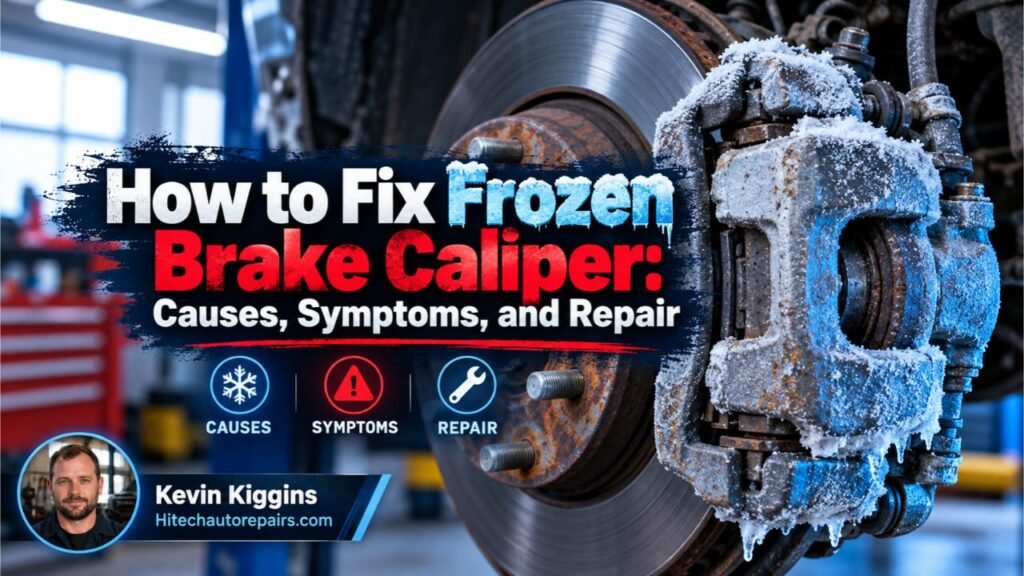
How to Fix Frozen Brake Caliper: Causes, Symptoms, and Repair
A frozen brake caliper can make one wheel drag constantly, overheat the brake rotor, wear out the pads quickly, and even cause the vehicle to pull to one side. In many cases, the problem comes from a seized caliper piston, stuck slide pins, a collapsed brake hose, corrosion, or damaged caliper hardware.
To fix frozen brake caliper problems correctly, you first need to identify which part is actually stuck. A seized slide pin may only require cleaning, lubrication, or replacement. A corroded piston that will not retract usually means the caliper should be rebuilt or replaced. If hydraulic pressure remains trapped because of a damaged brake hose, replacing the caliper alone will not solve the problem.
Because the brake system directly affects vehicle safety, do not keep driving if the wheel becomes extremely hot, the vehicle pulls strongly while braking, or the brake does not release properly.
This guide explains how to diagnose a frozen brake caliper, how to fix the most common causes, when replacement is better than repair, and how to prevent the problem from returning.
How to Fix Frozen Brake Caliper
To fix frozen brake caliper problems, safely raise the vehicle, remove the wheel, inspect the caliper piston and slide pins, determine whether the problem is mechanical or hydraulic, and repair or replace the faulty part.
The basic process is:
- Park on a level surface and secure the vehicle.
- Raise the affected wheel and support the vehicle with jack stands.
- Remove the wheel.
- Inspect the brake pads, rotor, caliper, and brake hose.
- Check whether the caliper slide pins move freely.
- Test whether the caliper piston can retract.
- Determine whether trapped hydraulic pressure is keeping the brake applied.
- Clean and lubricate reusable slide hardware.
- Replace a seized caliper, damaged hose, worn pads, or overheated rotor as needed.
- Bleed the brake system if hydraulic components were opened.
- Reassemble and test the brakes carefully.
Do not simply hammer or pry a frozen caliper until it moves. A temporary release does not necessarily mean the underlying problem has been repaired.
What Does a Frozen Brake Caliper Mean?
A frozen brake caliper is a caliper that cannot move or release normally.
Depending on the design, one or more components may be stuck:
- Caliper piston
- Slide pins
- Caliper bracket
- Brake pads in the bracket
- Parking brake mechanism on some rear calipers
- Hydraulic pressure inside the caliper
When you press the brake pedal, hydraulic pressure pushes the caliper piston outward.
That squeezes the brake pads against the rotor.
When you release the pedal, pressure drops and the piston should relax slightly, allowing the pads to stop clamping the rotor.
If something prevents that release, the brake remains partially or fully applied.
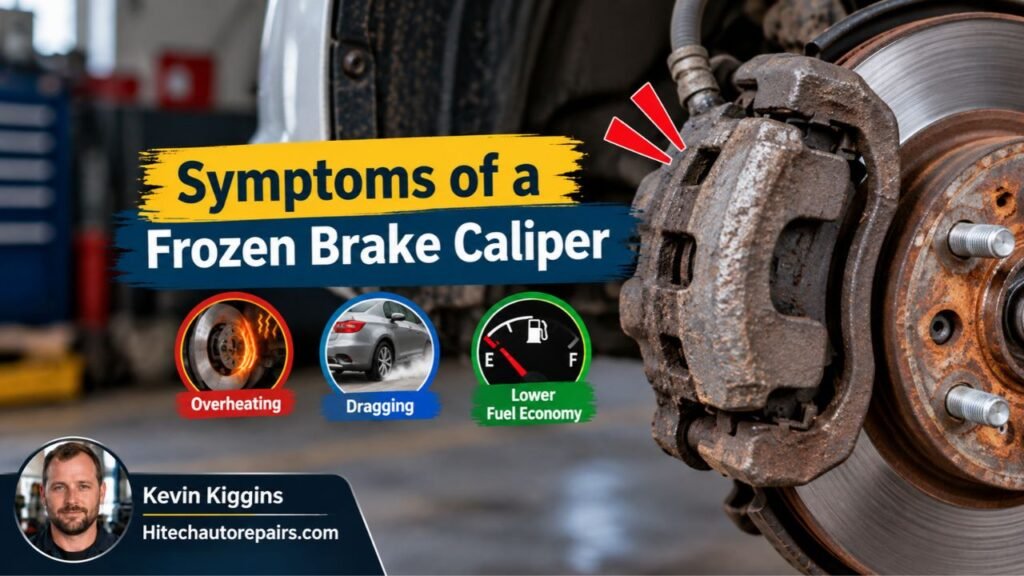
Symptoms of a Frozen Brake Caliper
A frozen caliper can cause several noticeable symptoms.
Vehicle Pulls to One Side
If one front caliper is dragging or not applying correctly, the vehicle may pull left or right during braking.
A caliper that remains clamped can also create a pull while driving.
One Wheel Gets Very Hot
A dragging brake creates constant friction.
After driving, one wheel may be noticeably hotter than the others.
You may also smell hot brakes or burning friction material.
Do not touch the rotor or caliper immediately after driving. Brake components can become hot enough to cause serious burns.
Uneven Brake Pad Wear
A frozen piston or slide pin can cause one pad to wear much faster than the other.
For example, a seized slide pin may cause excessive wear on the inner or outer pad depending on the caliper design.
Reduced Fuel Economy
A dragging brake adds resistance.
The engine must work harder to move the vehicle, which can reduce fuel economy.
Brake Dust on One Wheel
An overheating or dragging brake may create noticeably more brake dust around the affected wheel.
Burning Smell
Continuous friction can overheat the brake pads.
A strong burning smell near one wheel should be investigated quickly.
Vehicle Feels Sluggish
A severely frozen caliper can make the vehicle feel as if the parking brake is partly applied.
What Causes a Brake Caliper to Freeze?
Several problems can cause a caliper to stop moving freely.
Seized Caliper Piston
The caliper piston is one of the most common causes.
The piston moves through a rubber seal inside the caliper bore.
A protective dust boot helps keep water and dirt away from the piston.
If that boot tears, moisture can reach the piston.
Corrosion develops, and eventually the piston may no longer move smoothly.
A badly corroded piston can remain extended and keep the brake pads pressed against the rotor.
Stuck Caliper Slide Pins
Floating calipers use slide pins, also called guide pins, so the caliper can move sideways.
When the piston pushes one pad against the rotor, the entire caliper slides and pulls the opposite pad inward.
If a slide pin becomes rusted or dry, the caliper cannot center itself correctly.
This can cause:
- Uneven braking
- Uneven pad wear
- Dragging
- Reduced braking force
- Overheating
Slide pins are often repairable if corrosion has not severely damaged them.
Corroded Brake Pad Hardware
Brake pads must be able to move slightly inside the caliper bracket.
Rust can build up beneath the stainless hardware clips and squeeze the pads tightly.
The piston may release, but the pad remains pressed against the rotor because it cannot slide back.
This problem is especially common in areas where roads are heavily salted during winter.
Collapsed Brake Hose
A flexible brake hose can fail internally.
The outside may look completely normal while the inside lining separates or collapses.
Hydraulic pressure from the master cylinder may still push brake fluid toward the caliper when you press the pedal.
However, the damaged hose can restrict fluid from returning after you release the pedal.
The result is trapped pressure that keeps the brake applied.
This condition is often mistaken for a seized caliper.
Contaminated or Old Brake Fluid
Brake fluid absorbs moisture over time.
Excessive moisture can contribute to internal corrosion in brake system components.
Contaminated fluid can also damage seals.
Following the vehicle manufacturer’s brake-fluid service recommendations can help reduce corrosion-related problems.
Damaged Piston Boot
A torn dust boot is often the beginning of a piston-seizure problem.
Once road salt, dirt, and water enter the area around the piston, rust can develop.
Replacing a boot before severe corrosion forms may save the caliper.
Rear Parking Brake Mechanism Sticking
Some rear brake calipers incorporate the parking brake into the caliper assembly.
A cable, lever, screw mechanism, or internal adjuster may seize.
This can leave the rear brake partially applied even after the parking brake is released.
Frozen Caliper Piston vs. Frozen Slide Pins
Knowing which component is stuck helps determine the correct repair.
| Problem | Typical Symptoms | Common Repair |
| Seized piston | Brake stays applied, hard to retract piston | Rebuild or replace caliper |
| Seized slide pin | Uneven pad wear, caliper cannot slide | Clean, lubricate, or replace pins |
| Stuck brake pads | Pads bind in bracket | Remove corrosion and replace hardware |
| Collapsed hose | Brake releases when bleeder is opened | Replace brake hose |
| Parking brake mechanism | Rear brake stays applied | Repair or replace mechanism/caliper |
A complete inspection is better than assuming every dragging brake needs a new caliper.
How to Diagnose a Frozen Brake Caliper
Start with the safest and simplest checks.
Compare Wheel Temperature
After a short drive using normal braking, one wheel that is dramatically hotter than the others can indicate a dragging brake.
An infrared thermometer can help compare wheel or rotor temperatures without touching hot components.
A hot wheel does not prove the caliper itself is bad, but it confirms excessive friction at that corner.
Raise the Vehicle and Spin the Wheel
Securely lift the vehicle and support it with proper jack stands.
Never rely on the hydraulic jack alone.
With the transmission and parking brake positioned appropriately for the vehicle and test, rotate the wheel by hand.
Some light pad contact can be normal.
A wheel that is extremely difficult to turn may have a dragging brake.
Check the Slide Pins
Remove the caliper as required and test each slide pin.
They should move smoothly.
A pin that is completely stuck, rusty, dry, or difficult to move needs attention.
Check the Caliper Piston
Try to retract the piston using the correct caliper tool.
Many front caliper pistons push straight inward.
Some rear caliper pistons must be rotated while being pushed inward because of the parking brake mechanism.
Do not force a twist-in rear piston straight inward without confirming the correct procedure.
If the piston will not retract with reasonable force, either the piston is seized or hydraulic pressure may still be trapped.
How to Tell If the Brake Hose Is Causing the Caliper to Stick
A simple diagnostic distinction can be very useful.
If the brake is locked or heavily dragging, a technician may carefully open the caliper bleeder screw.
If the wheel suddenly becomes free after pressure is released, hydraulic pressure was trapped inside the caliper.
Possible upstream causes include:
- Collapsed brake hose
- ABS hydraulic problem
- Master cylinder issue
If opening the bleeder does not allow the piston or wheel to release, the caliper itself or mechanical hardware is more likely seized.
Because opening the hydraulic system introduces air and releases brake fluid, this test should only be performed by someone comfortable servicing and bleeding brakes.
How to Fix Frozen Caliper Slide Pins
Stuck slide pins are often one of the easier caliper problems to repair.
First, remove the caliper and pull the slide pins from the bracket.
Inspect them for:
- Rust
- Pitting
- Bent surfaces
- Dried lubricant
- Torn rubber boots
Clean reusable pins and the bores thoroughly.
If the pin surface is heavily pitted or damaged, replace it.
Apply the correct high-temperature brake lubricant specified for caliper slide pins.
Do not use ordinary petroleum grease unless it is specifically compatible with brake rubber.
Some lubricants can cause rubber boots and bushings to swell.
Reinstall the pins and make sure they slide freely before installing the caliper.
How to Fix Brake Pads Stuck in the Caliper Bracket
Remove the pads and hardware clips.
Look for corrosion under the clips.
Rust can expand underneath the hardware and reduce the space available for the brake pad ears.
Clean the bracket contact surfaces carefully.
Install new hardware clips if they are rusted, bent, or damaged.
The pads should fit securely but still be able to move in the bracket.
Do not grind large amounts of material from the brake pads just to make them fit.
Fix the rust buildup or incorrect hardware instead.
Can You Free a Seized Caliper Piston?
Sometimes a mildly stuck piston can be moved during diagnosis, but simply making it move again is not always a proper repair.
If corrosion has already caused the piston to seize, the problem may return.
Once the piston or bore is significantly corroded, the reliable options are usually:
rebuild the caliper or replace it.
Rebuilding requires disassembling the caliper, inspecting the piston and bore, installing new seals, and assembling it correctly.
For many common passenger vehicles, replacing the complete remanufactured or new caliper is simpler and more practical.
When Should a Frozen Caliper Be Replaced?
Replace the caliper when:
The piston is heavily corroded, the piston will not retract correctly, the dust boot is badly torn and contamination has entered, the caliper leaks brake fluid, the bore is damaged, or the parking brake mechanism is seized internally.
A caliper that has overheated severely may also have damaged seals.
If there is any doubt about the condition of a safety-critical brake component, replacement is usually preferable to a temporary repair.
Should You Replace Brake Calipers in Pairs?
It is not always mandatory to replace calipers in pairs.
A single failed caliper can often be replaced by itself if the caliper on the opposite side is operating properly.
However, consider the vehicle’s age, mileage, corrosion level, and condition of the opposite caliper.
If both calipers are similarly old and heavily corroded, replacing both can help maintain more consistent braking and may prevent another repair soon afterward.
At minimum, inspect the opposite side carefully.
Do You Need New Brake Pads After a Frozen Caliper?
Often, yes.
A dragging caliper can overheat the brake pad and wear it unevenly.
Replace the pads if they are:
- Heavily worn
- Glazed
- Cracked
- Heat damaged
- Contaminated
- Unevenly worn
Brake pads should generally be replaced as an axle set, meaning both sides of the front or rear axle receive matching new pads.
Do not install one new brake pad on only one wheel.
Can a Frozen Caliper Damage the Rotor?
Yes.
A dragging brake can generate enough heat to damage the rotor.
Possible rotor problems include:
- Severe scoring
- Heat spots
- Excessive wear
- Cracking
- Thickness variation
The rotor may also turn blue or dark from excessive heat.
A rotor that has been severely overheated should be inspected carefully and replaced when it no longer meets specifications.
Rotors are usually serviced in pairs across the same axle to maintain consistent braking.
How to Replace a Frozen Brake Caliper
The exact procedure varies by vehicle, but the general process is similar.
1. Secure the Vehicle
Park on a flat surface.
Use wheel chocks and loosen the wheel nuts before lifting the vehicle.
Raise the vehicle and support it with jack stands.
2. Remove the Wheel
Take off the wheel and inspect the entire brake assembly.
Check for leaking brake fluid or heat damage.
3. Remove the Caliper
Remove the appropriate caliper bolts.
Support the caliper.
Never allow it to hang from the flexible brake hose.
4. Disconnect the Brake Hose
If replacing the caliper, the hose usually needs to be disconnected.
Brake fluid will begin to escape.
Prevent contamination and avoid letting the brake fluid contact painted surfaces.
5. Install the Replacement Caliper
Make sure the replacement caliper matches the vehicle and side.
Some rear calipers are left- and right-specific.
The bleeder screw should normally be positioned at the top so air can be properly removed.
6. Reconnect the Brake Hose
Install any required new sealing washers or hardware.
Tighten connections to the proper torque specification.
7. Install Pads and Hardware
Replace damaged pads and hardware as needed.
Apply approved brake lubricant only at specified contact points.
Never put lubricant on:
- Brake pad friction surfaces
- Rotor friction surfaces
8. Bleed the Brake System
Any time the hydraulic system is opened, air can enter.
The brakes must be bled correctly before the vehicle is driven.
9. Check Brake Pedal Feel
Before moving the vehicle, press the brake pedal several times.
The pedal should become firm.
A soft or sinking pedal means the vehicle should not be driven until the problem is corrected.
Do You Have to Bleed Brakes After Replacing a Caliper?
Yes.
Replacing a brake caliper requires opening the hydraulic brake line, which allows air into the system.
Air in brake lines compresses, while brake fluid normally does not compress significantly under normal operation.
That trapped air can cause:
- Soft brake pedal
- Increased pedal travel
- Reduced braking response
Bleed the brake system using the correct procedure for the vehicle.
Some vehicles with ABS may require a scan tool procedure if air enters certain parts of the hydraulic control unit.
Can You Use WD-40 on a Frozen Brake Caliper?
Do not use WD-40 as a substitute for proper brake lubricant or as a repair for a seized caliper.
Oil-based products can contaminate brake pads and rotors, dramatically reducing braking performance.
For slide pins, use a lubricant specifically designed for brake caliper components and compatible with the rubber boots.
A seized piston usually requires repair or replacement rather than spraying lubricant around the caliper.
Can You Hit a Frozen Brake Caliper With a Hammer?
Light tapping may sometimes help during disassembly, but hitting the caliper aggressively is not a repair.
A hammer can damage:
- Caliper body
- Slide pins
- Brake hose
- Piston
- Rotor
- Mounting components
Even if impact temporarily frees a stuck piston, internal corrosion remains.
Fix the actual cause.
Can You Drive With a Frozen Brake Caliper?
You should avoid driving with a frozen or severely sticking brake caliper.
A dragging brake can become extremely hot.
Continued driving can damage:
- Pads
- Rotor
- Wheel bearing
- Caliper seals
- Brake fluid
- Tire in extreme overheating situations
A vehicle may also pull unexpectedly or experience reduced braking performance.
If the wheel is smoking, extremely hot, or strongly resisting movement, stop driving and arrange proper repair or towing.
What Happens If You Keep Driving With a Seized Caliper?
The problem can escalate quickly.
Constant friction turns vehicle motion into heat.
That heat can eventually cause brake fade, where overheated braking components become less effective.
Brake fluid near the affected caliper can also become extremely hot.
Meanwhile, one side of the axle may have very different braking force from the other.
That imbalance can make the vehicle harder to control during an emergency stop.
Can a Frozen Brake Caliper Cause Vibration?
Yes.
A dragging caliper can overheat the rotor and create uneven friction surfaces.
You may then feel vibration or pulsation while braking.
However, brake vibration can also come from:
- Rotor thickness variation
- Wheel or tire issues
- Suspension problems
- Hub runout
Inspect the entire brake corner rather than assuming the caliper is the only damaged part.
Can a Frozen Caliper Cause the Car to Pull?
Yes.
A brake that remains partially applied on one side can pull the vehicle toward that wheel.
A caliper that fails to apply properly may instead make the vehicle pull toward the stronger braking side during a stop.
Therefore, both stuck-on and stuck-off caliper problems can cause pulling.
Can a Frozen Caliper Cause Poor Gas Mileage?
Yes.
A brake that drags constantly increases rolling resistance.
The engine needs more power to maintain the same vehicle speed.
This can reduce fuel economy, especially when the brake is dragging severely.
If MPG suddenly drops and one wheel becomes unusually hot, inspect the brakes.
Why Does a Brake Caliper Freeze After Sitting?
Vehicles parked for long periods can develop corrosion.
Moisture may collect around:
- Slide pins
- Pad brackets
- Piston surfaces
- Parking brake components
Rust can bind moving components.
Vehicles stored outside in humid or salty environments are especially vulnerable.
Driving the vehicle periodically and maintaining the brakes can help reduce some corrosion, although it cannot prevent every failure.
Can Cold Weather Freeze a Brake Caliper?
Cold weather itself does not normally freeze the hydraulic brake fluid.
However, water, ice, rust, or a parking brake mechanism can make a brake appear frozen.
A vehicle parked after driving through snow or slush may develop ice around exposed components.
If the problem disappears when temperatures rise, investigate for moisture entry, damaged boots, or parking brake problems rather than assuming the caliper piston is permanently seized.
How to Prevent a Brake Caliper From Freezing
Regular brake inspections can catch developing problems early.
During brake service, inspect:
slide pins, rubber boots, brake hoses, caliper pistons, pad hardware, and bracket corrosion.
Clean and lubricate slide pins with the correct product when the design requires it.
Replace torn boots.
Do not ignore uneven brake pad wear because it often indicates that the caliper is no longer moving properly.
Brake fluid maintenance can also help control moisture contamination inside the hydraulic system.
Common Mistakes When Fixing a Frozen Brake Caliper
Replacing the Caliper Without Checking the Hose
If a collapsed brake hose is trapping hydraulic pressure, the replacement caliper can appear to freeze too.
Always determine whether the brake releases when hydraulic pressure is relieved.
Reusing Heat-Damaged Pads
Pads that have been severely overheated can become glazed and provide poor braking.
Replace damaged pads.
Lubricating the Wrong Areas
Brake lubricant belongs only at approved contact and sliding points.
Never contaminate the rotor or friction material.
Ignoring the Opposite Side
If one caliper is badly corroded, inspect the caliper on the other side of the axle.
Driving Without Bleeding the System
A brake pedal that feels soft after caliper replacement is not something to “drive out.”
The hydraulic system must be properly bled first.
When Should a Mechanic Fix a Frozen Brake Caliper?
Professional help is appropriate if:
You are not comfortable working on hydraulic brakes, the bleeder screw is seized, brake lines are heavily corroded, ABS bleeding is required, the caliper will not release, or you cannot confidently identify whether the problem is mechanical or hydraulic.
Brake repairs have little room for error.
If the pedal does not feel normal after a repair, do not drive the vehicle.
FAQs About Fix Frozen Brake Caliper
Can You Unfreeze a Brake Caliper?
Sometimes a stuck slide pin or brake pad can be cleaned and restored. A badly seized or corroded piston usually requires rebuilding or replacing the caliper.
How Do You Know If a Caliper Piston Is Frozen?
A frozen piston may be extremely difficult or impossible to retract with the proper tool. The wheel may also remain hard to turn after the brakes are released.
Can a Frozen Caliper Fix Itself?
No. A sticking caliper may temporarily release as temperatures change or vibration moves the component, but the underlying corrosion, hydraulic restriction, or mechanical damage remains.
Will Grease Fix a Seized Brake Caliper?
Brake grease can restore smooth movement to dry slide pins if they are still in usable condition. Grease cannot repair a badly corroded caliper piston or collapsed brake hose.
How Do I Know If the Brake Hose or Caliper Is Bad?
If opening the bleeder releases a dragging brake, trapped hydraulic pressure may indicate a restricted hose or upstream hydraulic issue. If the brake remains stuck after pressure is released, the caliper or mechanical hardware is more likely seized.
Do I Need to Replace the Rotor After a Frozen Caliper?
Not always. Inspect rotor thickness, surface condition, scoring, heat damage, and runout. A severely overheated or damaged rotor should be replaced.
Should Brake Pads Be Replaced After a Caliper Seizes?
If the pads are overheated, worn unevenly, glazed, or contaminated, replace them as an axle set.
Is It Safe to Drive With a Slightly Sticking Caliper?
It is better to repair it promptly. Even a mild drag can generate substantial heat and may become worse unexpectedly.
Conclusion
The correct way to fix frozen brake caliper problems is to identify exactly why the brake is not releasing. The cause may be a seized piston, dry or corroded slide pins, stuck brake pads, a damaged parking brake mechanism, or trapped hydraulic pressure from a collapsed brake hose.
Slide pins and pad hardware can often be cleaned, lubricated, or replaced. A badly corroded piston usually means replacing or rebuilding the caliper. If hydraulic pressure is trapped, the brake hose and upstream hydraulic system need to be checked before blaming the caliper.
After repairing the cause, inspect the pads and rotor for heat damage, bleed the brakes if the hydraulic system was opened, and verify that the wheel rotates normally and the brake pedal feels firm before driving.