Can a Bad Brake Booster Cause a Soft Pedal? What to Know
Can a bad brake booster cause a soft pedal? Usually, no. A failing vacuum brake booster is much more likely to make the brake pedal feel hard and difficult to press because the vehicle loses power-assisted braking. A soft or spongy pedal usually points to a hydraulic problem such as air in the brake lines, a fluid leak, improper bleeding, or a failing master cylinder.
The confusion happens because brake booster and hydraulic problems can occur at the same time. A driver may simply describe the pedal as “different,” even though the exact feel can help narrow down the fault.
A useful way to think about it is simple: the booster helps you apply force, while the hydraulic system transfers that force to the brakes. When assist disappears, pedal effort usually increases. When hydraulic pressure cannot build properly, the pedal is more likely to feel soft or sink.
That distinction can save you from replacing the wrong part.
Can a Bad Brake Booster Cause a Soft Pedal?
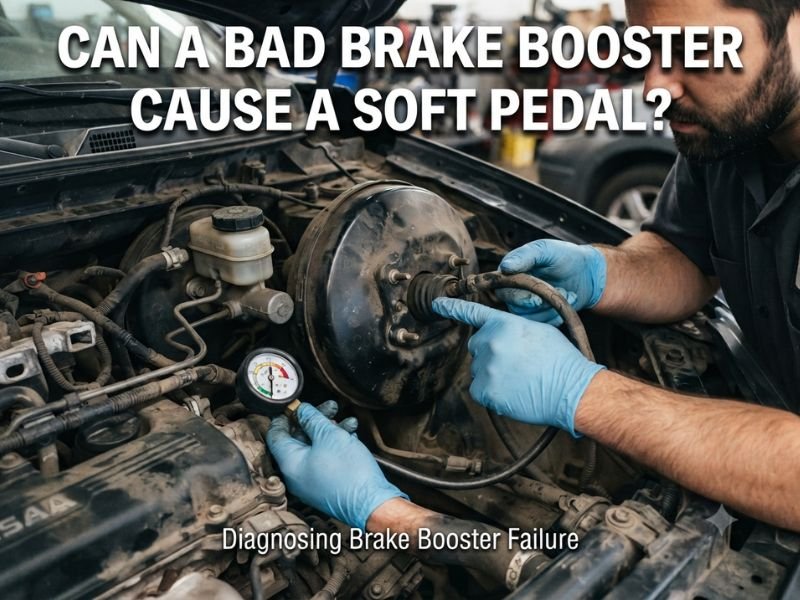
In most cases, a bad brake booster does not directly cause a soft brake pedal.
The brake booster sits between the brake pedal and master cylinder. Its main job is to multiply the force you apply with your foot.
If the booster loses vacuum assistance, the master cylinder can still create hydraulic pressure, but you must press much harder.
That usually produces a firm or hard pedal, not a spongy one.
A soft pedal usually means the hydraulic side of the braking system is not building or holding pressure correctly.
Possible causes include:
- air in the brake lines
- brake fluid leakage
- master cylinder problems
- poor brake bleeding
- overheated or moisture-contaminated fluid
- hydraulic hose problems
There are exceptions where booster-related problems can affect pedal travel or feel, but they are not the first place I would look when the pedal is genuinely soft.
Why a Bad Brake Booster Usually Causes a Hard Pedal
A vacuum brake booster uses engine vacuum or a separate vacuum pump to reduce the effort required at the pedal.
Inside the booster, a diaphragm and control valve use a pressure difference to assist your foot pressure.
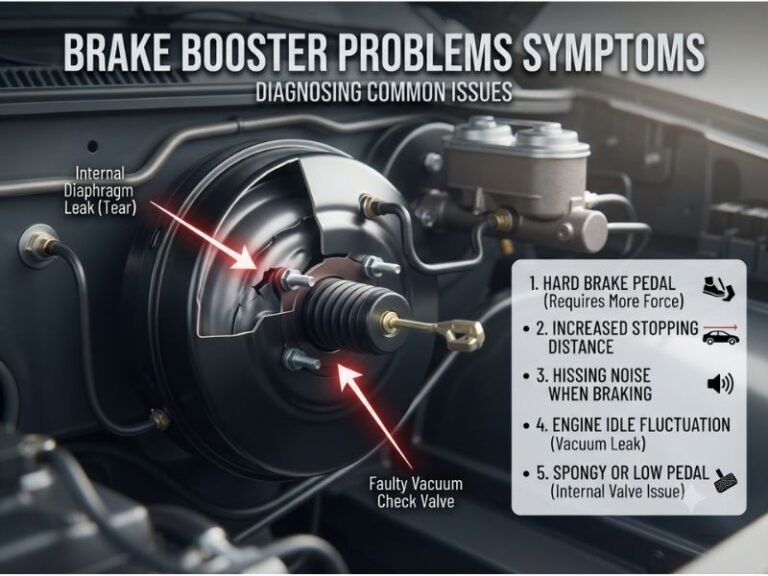
If vacuum is lost because of a failed diaphragm, broken check valve, cracked hose, or weak vacuum pump, the assist disappears.
You can still push the master cylinder mechanically, but it takes considerably more effort.
Typical booster-related complaints include:
- unusually hard brake pedal
- increased pedal effort
- reduced power assist
- hissing near the booster
- engine idle changes when braking
- inconsistent assist
If the pedal feels rock-hard rather than soft, I would check the vacuum supply, check valve, and booster operation before looking for air in the hydraulic system.
What Usually Causes a Soft or Spongy Brake Pedal?
Air in the Brake Lines
Air is one of the most common causes of a soft pedal.
Brake fluid transfers pressure efficiently because liquid does not compress much under normal braking conditions. Air does.
When air becomes trapped in the hydraulic system, some pedal movement is used to compress the air instead of immediately applying the brakes.
The result can be a soft or springy pedal.
Brake Fluid Leak
A hydraulic leak can lower fluid level and allow air into the system.
Common leak points include:
- brake calipers
- wheel cylinders
- brake hoses
- steel brake lines
- hydraulic fittings
- master cylinder
A leak becomes especially concerning if the pedal gets softer while the reservoir level continues to fall.
Failing Master Cylinder
A worn master cylinder can allow brake fluid to bypass its internal seals.
You may press the pedal and feel it gradually sink while holding steady pressure.
This is quite different from the hard pedal commonly associated with booster failure.
A master cylinder can fail internally even when you do not see an external leak.
Improper Brake Bleeding
If brakes were recently repaired and the pedal became soft afterward, trapped air may be the problem.
Caliper replacement, brake hose work, master cylinder replacement, or opening any hydraulic line can introduce air.
The system then needs to be bled correctly.
Some modern ABS systems require special bleeding procedures or scan-tool activation.
Old or Overheated Brake Fluid
Brake fluid that contains too much moisture has a lower boiling point.
During heavy braking, the fluid may become hot enough for vapor to form.
Vapor compresses, which can make the pedal feel soft after repeated braking.
If the pedal feels normal when cold but softer after a long downhill section or repeated hard stops, fluid condition may deserve inspection.
Deteriorated Flexible Brake Hose
A weakened flexible hose can sometimes expand more than it should when hydraulic pressure rises.
That expansion can contribute to unusual pedal feel.
This is less common than trapped air or a master cylinder problem, but aging hoses should still be inspected during diagnosis.
When Can a Brake Booster Affect Pedal Feel Indirectly?
Although booster failure normally causes a hard pedal, a few related issues can create confusing symptoms.
Incorrect Booster Pushrod Adjustment
The pushrod connects the booster to the master cylinder.
If it is adjusted incorrectly, pedal travel may become abnormal.
A pushrod that is too short can create extra travel before the master cylinder begins building pressure.
A pushrod that is too long can keep the master cylinder partially applied and contribute to brake drag.
Booster and Master Cylinder Problems Together
A vehicle can have more than one brake problem.
For example, a master cylinder may develop a hydraulic problem while the booster also has a vacuum leak.
In that situation, pedal feel may not match the textbook description of either failure.
Driver Perception
Drivers often use “soft,” “weak,” and “different” interchangeably.
A booster failure may make braking feel weak because more leg pressure is required, even though the pedal is technically hard rather than soft.
That is why describing exactly what the pedal does is important.
Brake Booster vs. Master Cylinder Pedal Symptoms
| Symptom | Brake Booster Problem | Master Cylinder Problem |
| Pedal feel | Usually hard | Often soft or sinking |
| Pedal effort | High | May stay normal initially |
| Hissing noise | Possible | Usually no |
| Engine idle change | Possible | Usually no |
| Pedal sinks while held | Uncommon | Common clue |
| Fluid leak | Usually no | Possible |
This comparison is not a final diagnosis, but it helps point the inspection in the right direction.
How to Check If the Brake Booster Is the Problem
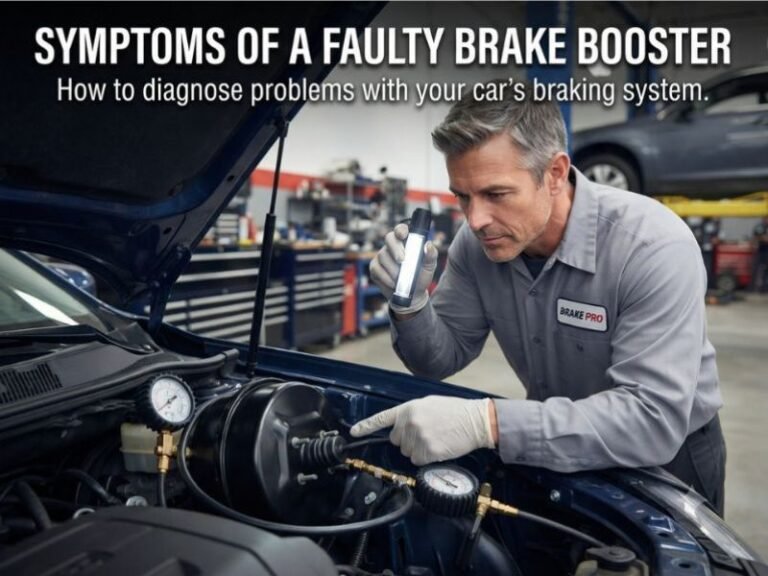
You can perform a simple basic booster test.
With the engine off, press the brake pedal several times. The pedal should gradually become firm as stored vacuum is used.
Keep steady pressure on the pedal and start the engine.
With a working booster and proper vacuum supply, the pedal should usually move slightly downward as assist becomes available.
If nothing changes, possible causes include:
- failed booster
- bad check valve
- damaged vacuum hose
- weak or failed vacuum pump
This test does not diagnose a soft pedal.
If the pedal remains spongy, the hydraulic system still needs separate inspection.
Can a Vacuum Leak Cause a Soft Pedal?
Usually not.
A vacuum leak affecting the booster typically causes reduced brake assist and a harder pedal.
You may also hear hissing or notice the engine idle change while pressing the brake.
If the pedal is genuinely soft or sinking, look more closely at the hydraulic side of the system.
That means checking the fluid level, brake lines, hoses, calipers, wheel cylinders, master cylinder, and bleeding condition.
Is It Safe to Drive With a Soft Brake Pedal?
A suddenly soft brake pedal should not be ignored.
Stop driving and arrange an inspection if:
- the pedal approaches the floor
- braking response becomes weak
- you need to pump the pedal repeatedly
- brake fluid is leaking
- the reservoir is very low
- a brake warning light appears with pedal changes
Even when the vehicle still stops, a changing pedal can mean the hydraulic system is losing pressure.
Do not assume you have plenty of time simply because the brakes worked on the last stop.
FAQs
Does a bad brake booster make the pedal hard or soft?
A failed brake booster usually makes the pedal hard because power assist is reduced or lost.
Can a bad master cylinder cause a soft pedal?
Yes. Internal seal failure can cause a soft or sinking pedal, especially when the pedal slowly moves downward under steady pressure.
Can air in the brake lines cause a soft pedal?
Yes. Trapped air is one of the most common reasons for a soft or spongy brake pedal.
Can the brake booster and master cylinder fail together?
Yes. They are separate components, so both can develop problems at the same time.
Can a vacuum leak change brake pedal feel?
Yes, but it usually makes the pedal harder to press rather than soft or spongy.
Conclusion
So, can a bad brake booster cause a soft pedal? Usually not. Brake booster failure normally produces a hard pedal because the driver loses vacuum-assisted braking.
A soft or spongy pedal more often points toward air in the brake lines, a hydraulic leak, improper bleeding, deteriorated fluid, or a master cylinder problem.
The exact pedal behavior is an important diagnostic clue. A hard pedal sends the inspection toward the brake-assist system, while a soft or sinking pedal puts more attention on the hydraulic side.
If braking response has changed, the pedal approaches the floor, or fluid is disappearing from the reservoir, have the system inspected before continuing normal driving. Replacing the booster without confirming the actual cause can leave the real brake problem untouched.