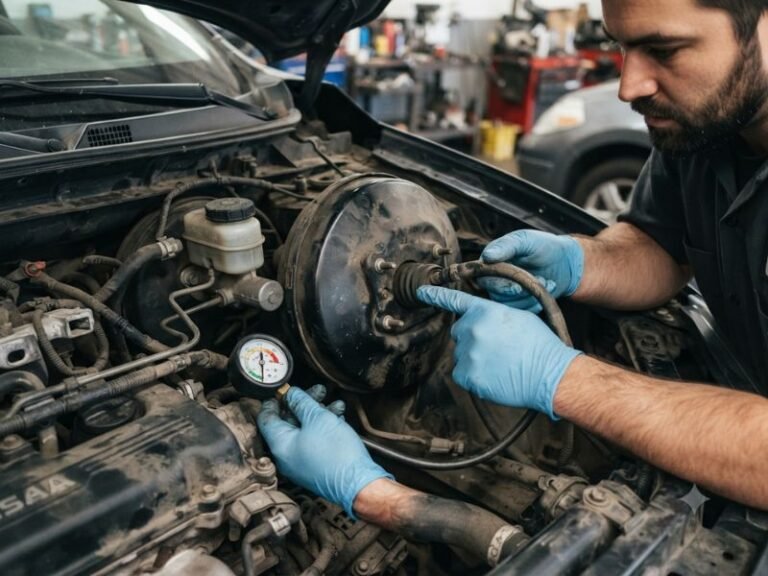
Brake Booster Rod Too Short Symptoms: 7 Critical Signs to Know
A brake booster push rod plays an important role in transferring force from the brake booster to the master cylinder. When the rod is too short, it may not engage the master cylinder correctly, which can change how the brake pedal feels and how quickly the brakes respond.
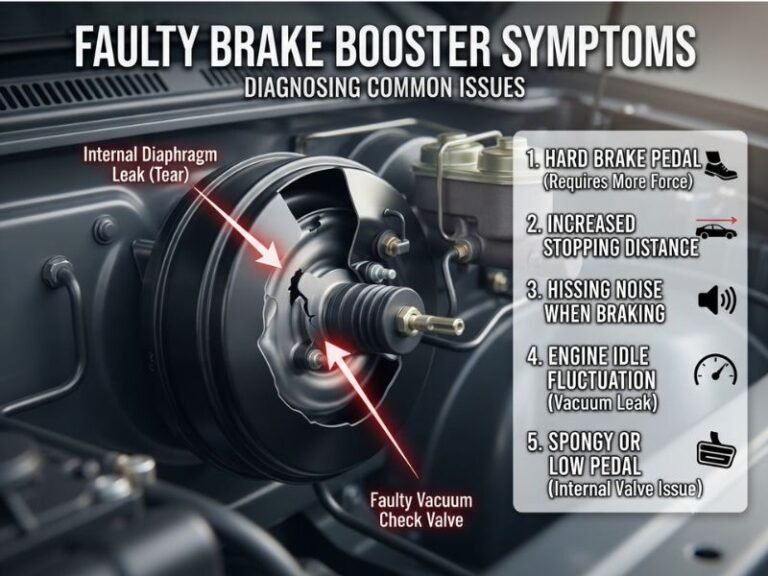
Common brake booster rod too short symptoms include excessive brake pedal travel, delayed brake engagement, a low or soft-feeling pedal, and reduced braking response. However, these symptoms can also be caused by air in the brake lines, worn brake components, or other hydraulic problems.
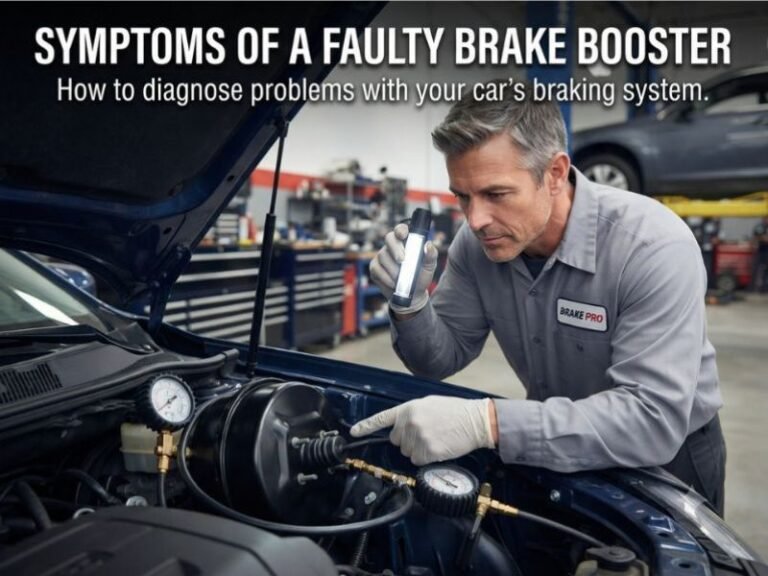
Understanding the symptoms and checking the push rod correctly can help you identify whether the problem is actually related to the booster rod or another part of the braking system.
Brake Booster Rod Too Short Symptoms: What to Look For
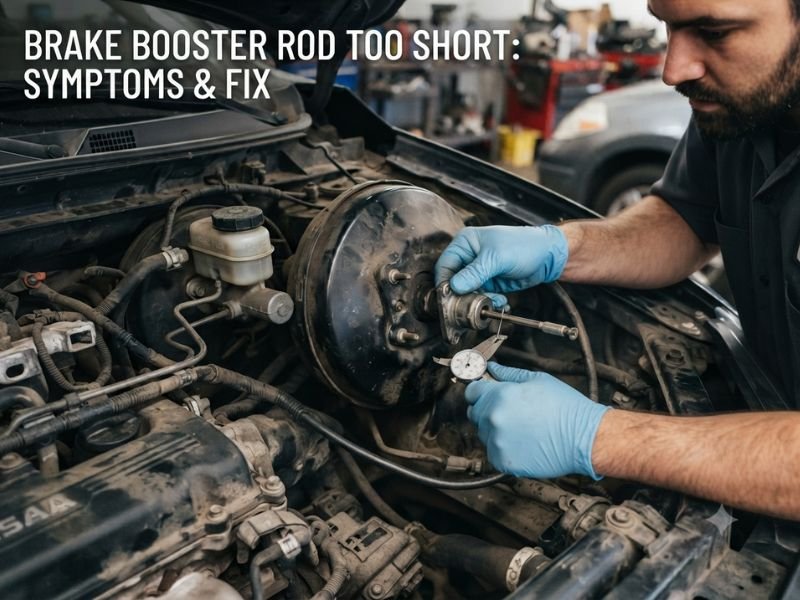
A brake booster rod that is too short may leave too much clearance between the rod and the master cylinder. As a result, the master cylinder may not begin moving as soon or as far as it should when you press the brake pedal.
The most common signs include:
- Excessive brake pedal travel
- A soft or spongy-feeling pedal
- Brakes engaging later than expected
- Reduced initial braking response
- A low brake pedal
- Needing to pump the brake pedal
- Incorrect clearance between the push rod and master cylinder
These symptoms do not automatically prove that the push rod is too short. A proper diagnosis should also rule out other brake system problems.
7 Common Symptoms of a Brake Booster Rod That Is Too Short
1. Excessive Brake Pedal Travel
One of the most noticeable symptoms is excessive brake pedal travel. The pedal may need to move farther than normal before the brakes begin applying properly.
If the push rod is too short, there can be excessive clearance before it effectively transfers force to the master cylinder. This can make the driver feel as though the brake pedal is traveling too far.
However, excessive pedal travel can also result from worn brake components, air in the hydraulic system, or other mechanical issues.
2. Soft or Spongy Brake Pedal
A brake pedal that feels soft or spongy can indicate that the braking system is not applying hydraulic pressure as expected.
A short booster push rod can contribute to unusual pedal behavior because the master cylinder may not receive the intended input from the booster.
Still, a spongy pedal is more commonly associated with problems such as air in the brake lines, contaminated brake fluid, or hydraulic component issues. Therefore, the push rod should not be blamed without further inspection.
3. Brakes Engage Too Late
Another possible sign is delayed brake engagement.
Normally, the brakes should begin responding shortly after you apply pressure to the pedal. If there is too much clearance between the booster push rod and master cylinder, the initial movement of the pedal may not immediately produce the expected hydraulic response.
This can make the brakes feel as though they engage later than usual.
4. Reduced Braking Response
A brake booster rod that is too short may contribute to reduced initial braking response because the master cylinder is not being actuated correctly.
You may notice that pressing the brake pedal does not produce the same immediate braking effect you are accustomed to. The vehicle may still stop, but the pedal response can feel different or less effective.
Any noticeable change in braking performance should be treated seriously because braking components are directly related to vehicle safety.
5. Pedal Feels Low During Braking
A low brake pedal is another symptom that can sometimes appear when the push rod is incorrectly adjusted.
The pedal may sit or travel lower than expected before sufficient braking force is produced. This can be especially noticeable after replacing the brake booster, master cylinder, or related components.
However, a low pedal does not necessarily mean the booster rod is too short. Brake adjustment, hydraulic problems, worn components, and air in the system can produce similar symptoms.
6. Multiple Pumps Are Needed to Get Better Braking
If repeatedly pumping the brake pedal temporarily improves the pedal feel, there may be a problem somewhere in the braking system.
A short push rod can potentially contribute to insufficient or delayed master-cylinder actuation. However, the same symptom can also occur because of air in the brake lines, excessive brake component movement, or other hydraulic issues.
If pumping the pedal significantly changes braking performance, the vehicle should be inspected rather than relying on repeated pedal pumping as a solution.
7. Unusual Clearance Between the Push Rod and Master Cylinder
Incorrect clearance between the brake booster push rod and master cylinder is one of the most direct clues.
If the rod is too short, there may be more clearance than specified by the vehicle manufacturer. This can prevent the master cylinder from being actuated correctly when the brake pedal is pressed.
Because the correct clearance varies by vehicle and component combination, it is important to use the manufacturer’s specifications rather than assuming that a particular measurement works for every vehicle.
Why Does a Brake Booster Rod Become Too Short?
A push rod does not usually become physically shorter during normal operation. In many cases, the problem occurs because the installed rod is incorrectly adjusted, the wrong component was installed, or different components are not properly matched.
Incorrect Push Rod Adjustment
An incorrectly adjusted push rod is one of the most common reasons for incorrect clearance.
If the rod was adjusted too far inward, the distance between the booster and master cylinder may become greater than intended. This can affect pedal travel and brake engagement.
Push rod adjustment should always be performed according to the vehicle and component manufacturer’s specifications.
Installing the Wrong Brake Booster or Master Cylinder
Different brake boosters and master cylinders can have different dimensions and push rod requirements.
Installing a replacement component that looks similar does not necessarily mean it is compatible with the existing brake system.
The master cylinder bore, mounting configuration, push rod length, and other specifications may need to match the vehicle and booster combination.
Incorrect Master Cylinder or Booster Position
Improper installation can also create an incorrect relationship between the booster and master cylinder.
For example, if the master cylinder is not seated correctly against the booster or the components are not properly aligned, the effective distance between the push rod and master cylinder can change.
Previous Brake System Modifications
Modified or customized braking systems can introduce compatibility problems.
Swapping a different brake booster, master cylinder, pedal assembly, or other braking component may change the required push rod length or adjustment.
This is especially important when combining parts from different vehicle models or years.
How Brake Booster Push Rod Length Affects Brake Pedal Feel
The length of the push rod determines how the force from the brake booster is transferred to the master cylinder.
What Happens When the Push Rod Is Too Short?
When the push rod is too short, excessive clearance may exist between the rod and the master cylinder.
This can result in:
- Increased pedal travel
- Delayed master-cylinder activation
- Delayed brake engagement
- An unusual or low pedal feel
- Reduced initial braking response
The exact symptoms depend on the vehicle and the components being used.
What Happens When the Push Rod Is Too Long?
A push rod that is too long can create a different and potentially serious problem.
If there is not enough clearance, the push rod may keep pressure on the master cylinder even when the brake pedal is released. This can prevent the hydraulic system from fully returning to its normal position.
Possible results include:
- Brake drag
- Overheating
- Premature brake wear
- Increased brake pressure
- Difficulty releasing the brakes
Therefore, the goal is not simply to make the push rod longer. It needs to have the correct adjustment and clearance specified for the particular braking system.
How to Diagnose a Brake Booster Rod That Is Too Short
Proper diagnosis is important because several different brake problems can create similar symptoms.
Check Brake Pedal Travel and Engagement
Start by paying attention to how the brake pedal behaves.
Notice:
- How far the pedal travels before braking begins
- Whether the pedal feels unusually low
- Whether braking begins immediately or after noticeable movement
- Whether the pedal feel has changed since a repair
Comparing the current pedal behavior with the vehicle’s normal operation can provide useful clues.
Inspect Push Rod and Master Cylinder Clearance
The clearance between the booster push rod and master cylinder should be checked carefully.
The correct procedure and measurement depend on the vehicle and brake components. Some systems require specific tools or measurements to determine the correct relationship between the booster and master cylinder.
Do not adjust the rod simply because there appears to be a gap. A certain amount of clearance may be required.
Verify Booster and Master Cylinder Compatibility
If the problem started after replacing a brake booster or master cylinder, verify that the components are designed to work together.
Check:
- Part numbers
- Vehicle application
- Push rod specifications
- Master cylinder specifications
- Mounting configuration
- Manufacturer installation instructions
A compatibility problem can easily be mistaken for an adjustment problem.
Measure the Push Rod Correctly
Measuring the push rod is often the best way to confirm whether its length or adjustment is correct.
The exact measurement procedure varies by design. Some applications require measuring the distance from the booster mounting surface to the end of the push rod and comparing it with the master cylinder specification.
Always follow the service manual or manufacturer’s instructions for the specific vehicle.
Brake Booster Rod Too Short vs. Other Brake Problems
The symptoms of a short push rod can overlap with several other brake problems. This is why diagnosis should consider the complete braking system.
| Symptom | Possible Cause |
| Low brake pedal | Short push rod, air in the system, worn components |
| Spongy pedal | Air in brake lines, hydraulic problems, flexible hoses |
| Excessive pedal travel | Short push rod, worn brakes, hydraulic issues |
| Brake drag | Push rod too long, seized caliper, other mechanical problems |
| Hard pedal | Brake booster, vacuum supply, or related problem |
For example, a spongy brake pedal is not automatically evidence of a short booster rod. Air trapped in the hydraulic system can create a similar sensation.
Likewise, a hard pedal is generally more associated with a brake booster or vacuum-related problem than a short push rod.
How to Fix a Brake Booster Rod That Is Too Short
The correct repair depends on why the push rod has incorrect clearance.
Adjust the Push Rod If It Is Adjustable
If the push rod is designed to be adjusted, its length may be corrected according to the manufacturer’s specifications.
The adjustment should be precise. Adding length until the pedal “feels right” is not a reliable repair method.
Incorrect adjustment in either direction can create additional braking problems.
Recheck Master Cylinder and Booster Installation
If the issue appeared after a brake component replacement, inspect the installation.
Confirm that:
- The master cylinder is seated correctly
- The booster is mounted properly
- The components are aligned correctly
- The correct hardware is being used
- The push rod has the specified clearance
Replace an Incorrect or Damaged Component
If the wrong booster, master cylinder, or other component was installed, adjustment may not solve the problem.
In some cases, the correct repair is to replace the incompatible component with the proper part.
A damaged or incorrectly manufactured component should also be replaced rather than modified beyond the manufacturer’s specifications.
Can You Drive With a Brake Booster Rod That Is Too Short?
It is not a good idea to continue driving a vehicle when you suspect a brake booster push rod problem, especially if the brake pedal feels different or braking performance has changed.
A short push rod can contribute to excessive pedal travel or delayed brake response. Even if the vehicle still stops, the braking system may not be operating as intended.
If the pedal suddenly feels low, braking distance increases, the brakes respond unusually, or you have doubts about the push rod adjustment, have the braking system inspected before normal driving.
Brake repairs are safety-critical, so a qualified technician should verify the push rod adjustment and the complete brake system when necessary.
Frequently Asked Questions
What happens if the brake booster push rod is too short?
A short push rod can create excessive clearance between the booster and master cylinder. This may cause increased brake pedal travel, delayed brake engagement, or unusual pedal feel.
How do I know if my brake booster push rod is too short?
Look for symptoms such as excessive pedal travel, delayed brake engagement, a low pedal, or unusual clearance between the push rod and master cylinder. Measuring the rod according to the manufacturer’s specifications provides a more reliable diagnosis.
Can a short brake booster rod cause a low brake pedal?
Yes, an incorrectly adjusted or too-short push rod can contribute to a low or unusually long-traveling brake pedal. However, air in the hydraulic system and other brake problems can produce similar symptoms.
Can a brake booster push rod be adjusted?
Some brake booster push rods are adjustable, while others are not. If adjustment is possible, it should be performed using the manufacturer’s specified procedure and measurement.
What is the correct clearance between the booster rod and master cylinder?
There is no single clearance measurement that applies to every vehicle. The correct clearance depends on the specific brake booster, master cylinder, and vehicle. Always use the applicable service specifications.
Final Thoughts on Brake Booster Rod Too Short Symptoms
Recognizing brake booster rod too short symptoms can help identify a potential problem after replacing or modifying brake components. Excessive pedal travel, delayed brake engagement, a low pedal, and unusual brake response can all be warning signs worth investigating.
However, these symptoms can have several causes, so it is important not to assume that the booster rod is responsible without proper diagnosis.
The most reliable approach is to check the push rod adjustment, verify booster and master cylinder compatibility, measure the required clearance, and compare the results with the manufacturer’s specifications.
Because the brake system is critical to vehicle safety, any significant change in pedal feel or braking performance should be inspected before continuing to drive normally.