How Long Can You Drive With a Bad Brake Booster?
A brake booster helps reduce the amount of force you need to apply to the brake pedal. When it works properly, pressing the pedal feels relatively easy while the booster amplifies your input before the braking system applies hydraulic pressure.
When the booster starts failing, the brake pedal may become harder to press, braking may feel different, and stopping the vehicle can require significantly more effort. This raises an important question: how long can you drive with a bad brake booster?
The safest answer is that you should not continue driving with a confirmed bad brake booster unless it is absolutely necessary to move the vehicle to a safe location. There is no reliable mileage or time limit because the severity of the failure can vary, and braking performance can deteriorate unexpectedly.
How Long Can You Drive With a Bad Brake Booster?
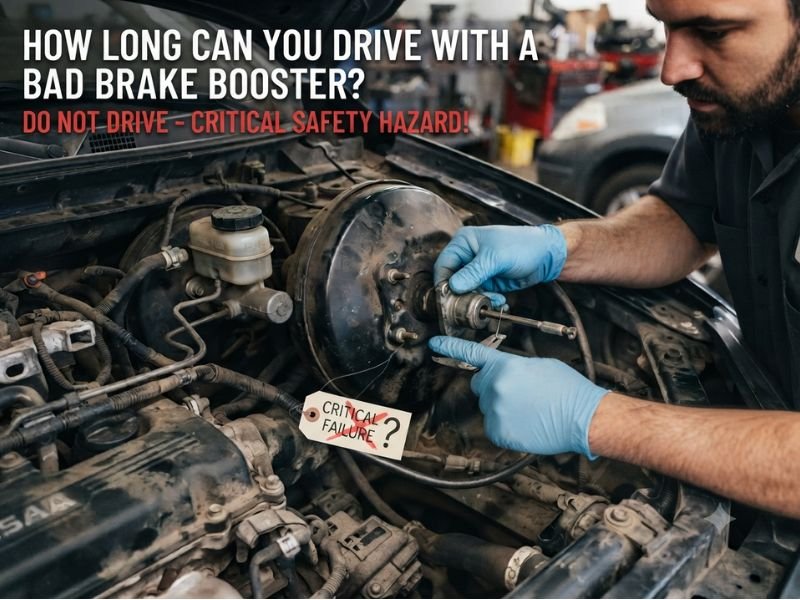
Ideally, you should not drive normally with a bad brake booster. If the booster has failed but the vehicle’s hydraulic brakes are still functioning, the car may technically be capable of stopping. However, you may need significantly more pedal force to achieve the same braking effect.
This is especially dangerous during emergency situations, when you may need to stop quickly.
There is also no universal answer such as “you can drive 10 miles” or “you can drive for two days.” A vehicle with partially reduced brake assistance may behave differently from one with a completely failed booster.
If the brake pedal suddenly becomes extremely hard, the vehicle takes much longer to stop, or braking performance changes significantly, it is safer to have the vehicle towed rather than driving it to a repair shop.
What Happens When a Brake Booster Goes Bad?
A failing brake booster primarily affects brake assist. The booster normally uses vacuum or another source of assistance to multiply the force applied through the brake pedal.
When that assistance is lost, the basic hydraulic braking system may still operate, but your leg has to provide much more of the force.
Reduced Power Assist
One of the first things you may notice is increased effort when pressing the brake pedal.
The pedal may feel noticeably harder than it normally does. You might have to press much more firmly to slow the vehicle at the same rate.
This can become particularly noticeable when stopping at higher speeds or when the vehicle is carrying additional weight.
Longer or More Difficult Stops
A bad brake booster does not necessarily mean that the brakes completely stop working. However, reduced assistance can make it harder to generate the braking force you need quickly.
If you do not apply enough additional pedal force, the vehicle may take longer to slow down.
That increased difficulty can become dangerous in situations such as:
- Sudden traffic stops
- Pedestrians crossing the road
- Emergency braking
- Heavy traffic
- Wet or slippery roads
- Driving downhill
Loss of Brake Assist
If the booster fails completely, you may lose most or all of the normal power assistance.
The hydraulic brakes can still potentially operate because the booster and hydraulic braking system perform different functions. However, without the booster, pressing the pedal requires substantially more physical effort.
This does not mean the vehicle is safe to drive normally. The additional pedal force and changed pedal behavior can make emergency braking much more difficult.
Symptoms of a Bad Brake Booster
Recognizing the symptoms early can help you avoid driving with a brake system that is becoming unsafe.
Hard Brake Pedal
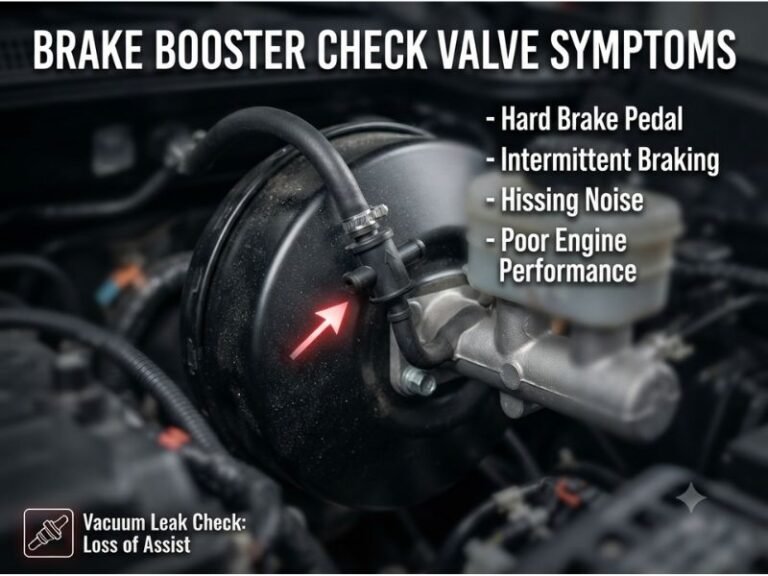
A hard brake pedal is one of the most common signs of a brake booster or vacuum-assist problem.
You may notice that the pedal requires much more pressure than usual. If the pedal suddenly becomes difficult to press, especially when the engine is running, the booster and its vacuum system should be inspected.
However, a hard pedal can have causes other than the booster, so proper diagnosis is important.
Increased Stopping Distance
If your vehicle suddenly requires more distance to stop, do not ignore it.
A failing booster can make it more difficult to apply sufficient braking force quickly. You may notice that you have to press the pedal much harder than before to achieve the same deceleration.
Any unexplained increase in stopping distance should be treated as a serious brake system problem.
Hissing Noise When Pressing the Brake Pedal
A hissing sound near the brake pedal or engine compartment can indicate a vacuum leak.
The brake booster relies on vacuum in many vehicles, so a damaged vacuum hose, faulty check valve, or leaking booster can interfere with brake assistance.
A small hissing noise does not automatically confirm that the booster itself has failed. The entire vacuum system should be checked.
Brake Pedal Sinks or Feels Unusual
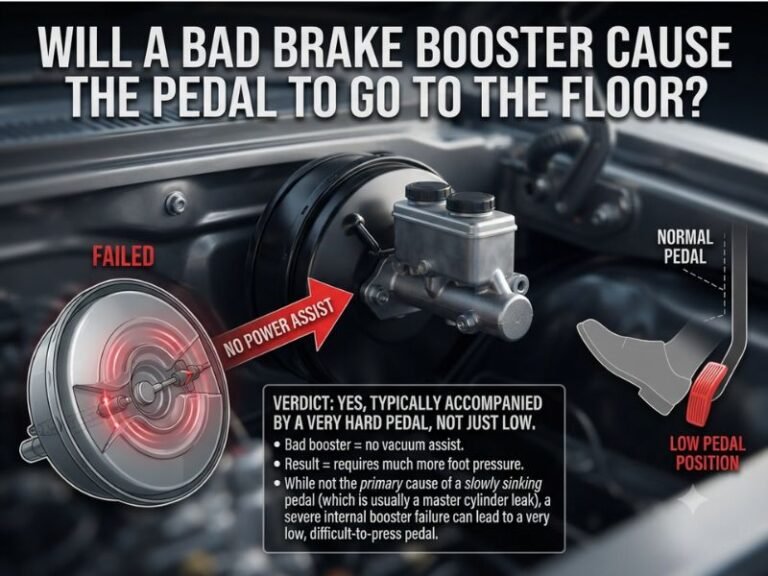
An unusual pedal that sinks toward the floor is generally more associated with hydraulic brake problems, such as a master cylinder issue, than with a typical booster failure.
Still, changes in pedal feel should never be ignored.
If the pedal feels lower, softer, or behaves differently than usual, the braking system should be inspected rather than assuming the booster is the only possible cause.
Engine Performance Problems
Because many brake boosters use engine vacuum, a vacuum leak can sometimes affect engine operation.
Depending on the vehicle and location of the leak, you might notice:
- Rough idle
- Engine hesitation
- Stalling
- Changes in engine performance
These symptoms can occur alongside brake booster problems when there is a significant vacuum leak.
Can You Drive a Car With a Bad Brake Booster?
Technically, some vehicles can still be stopped after losing brake assist because the hydraulic braking system may continue to function.
But technical capability is not the same as safe driving.
If the Brake Booster Has Completely Failed
If the booster has completely failed, the brake pedal may become extremely hard.
You may still be able to stop by applying substantially more force to the pedal. However, this requires greater physical effort and can make emergency braking much more difficult.
For normal transportation, the safer option is to repair the problem before driving the vehicle.
If the Booster Is Starting to Fail
A booster that is only showing occasional symptoms should not be ignored.
Intermittent braking assistance can create an unpredictable situation. A driver may become accustomed to normal pedal feel and then suddenly encounter a much harder pedal when trying to stop.
Because braking problems can worsen without warning, early diagnosis is preferable to waiting for complete failure.
How Far Can You Drive With a Bad Brake Booster?
There is no safe distance that applies to every vehicle with a bad brake booster.
Is It Safe to Drive a Few Miles?
Even a short drive can be unsafe if the brake booster has significantly reduced braking assistance.
The risk depends on factors such as:
- How severe the failure is
- How much brake assistance remains
- Vehicle weight
- Traffic conditions
- Road conditions
- Driving speed
- Driver’s ability to apply sufficient pedal force
For this reason, “it’s only a few miles” should not be used as a reason to continue driving a vehicle with seriously compromised braking.
When You May Need to Move the Vehicle
If the vehicle is already in a dangerous location, you may need to move it a short distance to a safer position.
If you must move it, use extreme caution, keep the speed very low, maintain a large following distance, and avoid unnecessary driving.
If braking performance is seriously compromised, roadside assistance or towing is the safer choice.
When Should You Stop Driving Immediately?
Some symptoms indicate that you should stop treating the problem as a minor repair.
Brake Pedal Becomes Extremely Hard
If the pedal suddenly requires significantly more force than normal, stop driving as soon as it is safe to do so and have the system inspected.
Vehicle Takes Much Longer to Stop
A noticeable change in stopping performance is a major warning sign.
Do not continue normal driving simply because the vehicle can still stop.
Brake Performance Changes Suddenly
Sudden changes in brake pedal feel, braking response, or stopping ability deserve immediate attention.
Brake Warning Light or Other Warning Signs Appear
A brake warning light can indicate a variety of problems. Combined with unusual pedal behavior or reduced braking performance, it should not be ignored.
You Lose Confidence in the Braking System
You do not need to wait for complete brake failure.
If something feels seriously different and you are no longer confident that the vehicle will stop reliably, it is safer to stop driving and arrange an inspection or tow.
How to Test a Brake Booster at Home
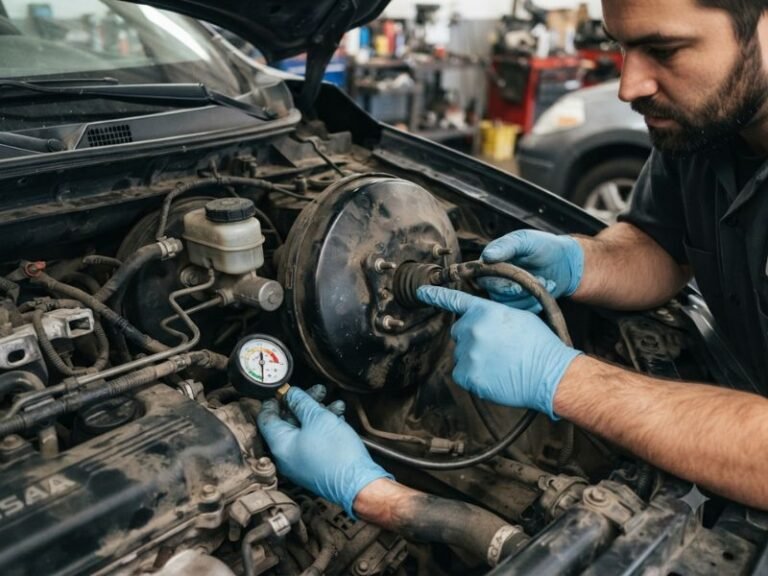
A few basic checks can help determine whether the booster is providing assistance. These checks do not replace a professional brake inspection.
Engine-Off Brake Pedal Test
Turn the engine off and press the brake pedal several times.
The pedal should become firmer as the stored vacuum assistance is used.
Then keep pressure on the pedal and start the engine.
Engine-On Brake Pedal Test
When the engine starts, a functioning vacuum-assisted brake booster will normally provide additional assistance.
You may notice the pedal move slightly downward as vacuum assistance becomes available.
If there is no noticeable change and the pedal remains unusually hard, the booster, vacuum supply, or related components may need inspection.
Check for a Vacuum Leak
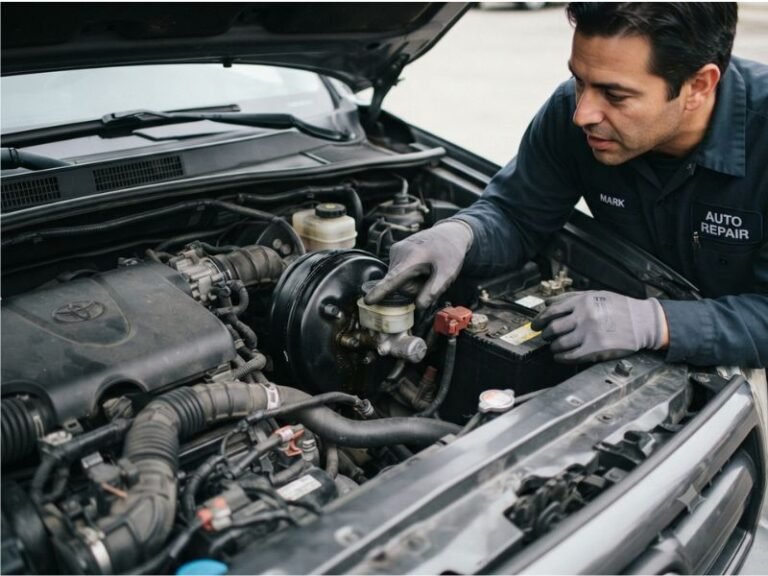
Listen carefully for an unusual hissing sound around the brake booster and vacuum hose area.
Also inspect the vacuum hose and connections for obvious cracks, damage, or loose fittings.
A vacuum leak can cause booster problems, but the absence of an obvious leak does not prove that the booster is working correctly.
What Causes a Brake Booster to Fail?
Several problems can reduce or eliminate brake booster assistance.
Vacuum Leaks
A damaged vacuum hose, loose connection, or leaking booster can prevent the system from maintaining the required vacuum.
Damaged Vacuum Hose or Check Valve
The vacuum check valve helps maintain the correct vacuum relationship between the engine and brake booster.
If the hose or check valve fails, brake assist can be affected.
Internal Booster Failure
The internal components of the booster can wear out or develop leaks.
When this happens, the booster may no longer provide the required assistance even if the external vacuum connections appear normal.
Contaminated or Damaged Components
Other brake system problems can sometimes affect booster operation or create symptoms that look similar to a booster failure.
That is why diagnosis should include the relevant vacuum, booster, hydraulic, and mechanical components.
How Much Does It Cost to Replace a Brake Booster?
The cost of replacing a brake booster depends heavily on the vehicle and the parts required.
The total repair cost can include:
- Brake booster
- Labor
- Related vacuum components
- Gaskets or hardware
- Additional diagnostic work
Some vehicles have relatively accessible boosters, while others require more labor to remove and install the component.
If the booster problem is caused by a vacuum hose or check valve rather than the booster itself, the repair may be considerably simpler.
It is therefore worth diagnosing the exact cause before replacing the entire booster.
Bad Brake Booster vs. Bad Master Cylinder
A bad booster and a bad master cylinder can produce different pedal symptoms, although some symptoms may overlap.
| Symptom | Possible Booster Problem | Possible Master Cylinder Problem |
| Hard pedal | Common | Less typical |
| Soft pedal | Less typical | Common |
| Pedal sinks | Less typical | Possible |
| Hissing sound | Possible | Unlikely |
| Increased pedal effort | Common | Possible |
| Reduced brake assist | Common | Unlikely |
A hard pedal combined with a hissing noise is more suggestive of a booster or vacuum problem.
A pedal that slowly sinks while pressure is maintained can point toward a hydraulic problem such as a master cylinder issue.
These are general clues rather than definitive diagnoses.
Frequently Asked Questions
Can you still drive with a bad brake booster?
A vehicle may still be capable of stopping if the hydraulic brakes remain functional, but driving with a bad booster is not recommended. Reduced brake assistance can make emergency braking much more difficult.
What happens if you keep driving with a bad brake booster?
You may experience a hard brake pedal, increased pedal effort, and more difficult braking. If the problem worsens, controlling the vehicle during an emergency stop can become significantly harder.
Can a bad brake booster cause an accident?
Yes. A failed or severely weakened booster can increase the effort needed to apply the brakes and make emergency braking more difficult. This can increase the risk of a collision, particularly if the driver is not prepared for the change in pedal feel.
How long does a brake booster last?
There is no fixed replacement interval for most brake boosters. Their service life depends on the vehicle, driving conditions, component quality, and exposure to wear or vacuum-system problems.
Can a bad brake booster damage the master cylinder?
A booster problem does not automatically damage the master cylinder. However, incorrect installation, push-rod adjustment, or related brake system problems can create additional issues. Both components should be checked when diagnosing abnormal pedal behavior.
Can you drive without power brakes?
A vehicle may still have hydraulic braking capability without power assistance, but the required pedal force can be much higher. Driving without normal brake assist is not recommended for routine use because emergency braking becomes more difficult.
Final Thoughts on How Long You Can Drive With a Bad Brake Booster
So, how long can you drive with a bad brake booster? There is no safe number of miles or hours that applies to every vehicle.
If the booster is failing, the safest approach is to diagnose and repair the problem before returning to normal driving. A hard pedal, increased pedal effort, hissing noise, or noticeable change in braking performance should not be ignored.
If braking performance is significantly reduced, arrange for the vehicle to be towed rather than taking the risk of driving it to a repair shop. A functioning brake system is essential for controlling the vehicle and stopping safely when you need to.