Does Brake Fluid Go Bad in a Sealed Container? Shelf Life Explained
Does brake fluid go bad in a sealed container? Yes, but it usually degrades much more slowly than brake fluid in an opened bottle. A factory-sealed container protects the fluid from moisture, dirt, and other contaminants, which helps preserve its original properties for a much longer time.
That does not mean unopened brake fluid lasts forever. Its usable shelf life still depends on the manufacturer, container material, storage temperature, and condition of the factory seal. For example, ATE lists a shelf life of up to five years for one of its DOT 4 products when kept in its original sealed container within the specified storage-temperature range. Bosch also notes long storage capability for properly sealed brake fluid packaging.
As a brake technician, I check the container and manufacturer guidance before putting older brake fluid into any hydraulic brake system.
Does Brake Fluid Go Bad in a Sealed Container?
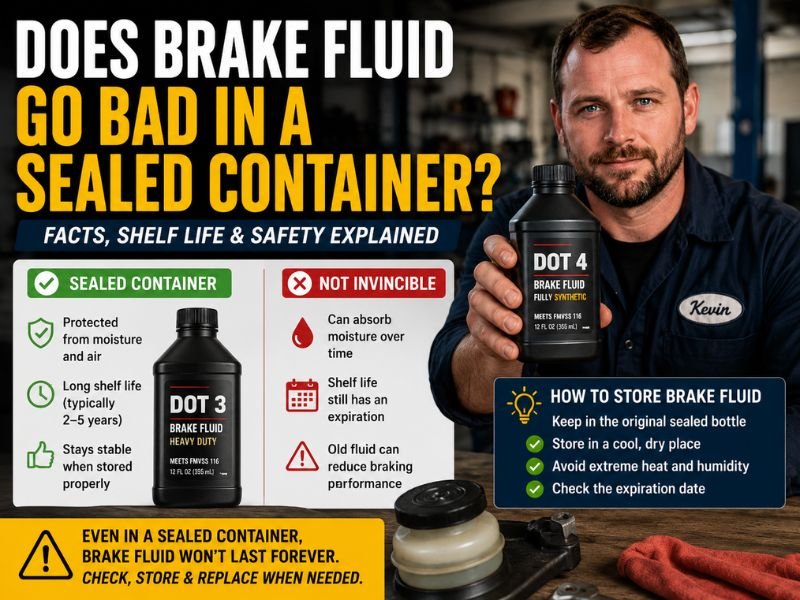
Yes, sealed brake fluid can eventually become unsuitable for use, but an intact factory seal greatly slows the process.
Most DOT 3, DOT 4, and DOT 5.1 brake fluids are hygroscopic. This means they can absorb water when exposed to moisture in the surrounding air. Bosch describes brake fluid as a hygroscopic medium and notes that increasing water content lowers its boiling point.
Inside a properly sealed container, however, the fluid has very limited contact with outside humidity. This is why unopened brake fluid generally has a much longer shelf life than an already opened bottle.
The important point is that sealed does not mean unlimited shelf life. Packaging materials can age, seals can deteriorate, and manufacturers may specify their own storage limits.
I always treat the manufacturer’s shelf-life recommendation as more reliable than a universal rule found online.
How Long Does Unopened Brake Fluid Last?
There is no single shelf-life number that applies to every brake fluid brand or formulation.
Some products have manufacturer-defined shelf lives of several years. For example, ATE states that its Super DOT 4 brake fluid can be stored for up to five years in the original sealed container when stored between -20°C and 40°C.
Bosch also states that certain brake fluids offer at least five years of storage capability when properly sealed in protective packaging.
I would not use those numbers as a rule for every bottle on the market, though.
Before using older brake fluid, check the:
- manufacturing or packaging date
- expiration or use-by information
- product batch code
- condition of the seal
- manufacturer’s storage instructions
If the manufacturer provides a specific shelf life, follow that guidance instead of assuming all unopened brake fluid lasts the same amount of time.
Why Sealed Brake Fluid Lasts Longer
Protection From Moisture
Moisture is one of the biggest concerns with common glycol-based brake fluids.
DOT 3, DOT 4, and DOT 5.1 fluids are generally hygroscopic. Once exposed to humid air, they can gradually absorb water.
As water content rises, the brake fluid’s boiling point can decrease. Bosch explains that higher water content can eventually increase the possibility of vapor formation under high brake temperatures, making braking performance less reliable.
A factory-sealed bottle dramatically limits that exposure.
Protection From Dirt and Contamination
The seal also keeps out dust, dirt, water, oil, and other foreign materials.
Brake hydraulic systems contain sensitive seals, valves, master-cylinder components, and ABS hydraulic parts. Introducing contaminated fluid can create problems that are far more expensive than buying another bottle.
This is why I never break the seal until I am ready to use the fluid.
Good Packaging Protects the Fluid
The container itself matters too.
Bosch specifically notes that protective packaging can help prevent water absorption during storage.
A bottle with an intact cap and factory seal provides far better protection than one that has been damaged or partially opened.
What Can Make Sealed Brake Fluid Go Bad?
Damaged Bottle or Broken Seal
A bottle can appear unopened while still having a compromised seal.
Check for a loose cap, cracked container, puncture, leaking seam, or damaged foil seal.
Once outside air can reach the fluid, I no longer treat it as properly sealed brake fluid.
Extreme Storage Temperatures
Storage conditions also matter.
Brake fluid should be kept according to the manufacturer’s instructions. ATE, for example, specifies storage at room temperature for its DOT 5.1 product and recommends dry conditions with the container tightly sealed.
Leaving brake fluid for years in extreme heat or other harsh conditions can also affect the bottle and seal.
Long-Term Storage
Age alone does not prove that brake fluid is bad.
However, a very old bottle deserves more scrutiny. Packaging can deteriorate over long periods, and you may no longer know whether it was stored correctly.
When the history is questionable, I prefer fresh fluid.
How to Tell If Sealed Brake Fluid Is Still Good
Start by inspecting the container before opening it.
Look carefully for cracks, swelling, stains, leakage, corrosion around metal packaging, or damage around the cap.
Next, confirm that the factory seal is completely intact.
Check the bottle for a manufacturing date, expiration date, or batch code. If necessary, use that information to check the fluid manufacturer’s shelf-life recommendation.
After opening an older sealed bottle, inspect the fluid before pouring it into the reservoir.
I would not use fluid containing visible particles, sediment, unusual cloudiness, or obvious separation.
Color can provide useful information, but it should not be your only test. Different brake fluid products may have slightly different appearances.
Most importantly, do not use brake fluid from a damaged or questionable container.
Is Old Sealed Brake Fluid Safe to Use?
It can be.
A properly stored bottle that remains within its manufacturer’s specified shelf life may still be suitable for use.
But I look at more than age.
For example, a five-year-old bottle with a documented storage history and an intact factory seal is different from an old bottle found in the back of an unknown garage with no readable date.
I ask three questions:
Is the seal intact? Was the bottle stored properly? Is it still within the manufacturer’s shelf-life recommendation?
If I cannot confidently answer those questions, I choose a fresh bottle.
Brake fluid is relatively inexpensive compared with repairing a master cylinder, ABS hydraulic unit, brake caliper, or other hydraulic components.
How to Store Sealed Brake Fluid Properly
Keep brake fluid in its original factory container until you are ready to use it.
Store the bottle upright in a clean, dry location. Avoid direct sunlight, excessive heat, water exposure, and areas with large temperature swings.
Do not transfer new brake fluid into another container for long-term storage. Doing so removes the protection of the original packaging and increases the chance of contamination or misidentification.
Keep brake fluid away from engine oil, transmission fluid, power steering fluid, grease, and other petroleum products.
Also make sure you are storing the correct specification for your vehicle. Depending on the application, a vehicle may require DOT 3, DOT 4, DOT 5.1, or another manufacturer-approved specification.
Always verify the owner’s manual before using it.
Does DOT 5 Brake Fluid Have the Same Shelf-Life Concerns?
DOT 5 is different from the common glycol-based DOT 3, DOT 4, and DOT 5.1 fluids.
DOT 5 is generally silicone-based and does not absorb moisture in the same way hygroscopic glycol-based brake fluid does.
However, it can still become contaminated if the container or seal is compromised.
Proper storage and manufacturer shelf-life recommendations still matter.
Also remember that DOT 5 and DOT 5.1 are not the same fluid. The similar names can be confusing, especially for beginners.
Never substitute or mix brake fluid types unless the vehicle manufacturer specifically approves it.
FAQs About Sealed Brake Fluid
Does unopened brake fluid expire?
It can have a manufacturer-defined shelf life. Check the bottle and product documentation rather than assuming unopened fluid lasts forever.
Can I use five-year-old sealed brake fluid?
Possibly. Some manufacturers specify shelf lives around five years for certain sealed products, but that does not apply universally. Check the specific brand, product, seal, and storage history.
Does brake fluid absorb moisture through a sealed bottle?
A properly sealed container greatly reduces exposure to atmospheric moisture. A damaged seal changes that situation.
Can heat damage unopened brake fluid?
Poor storage can affect the product or packaging over time. Follow the temperature and storage recommendations listed by the manufacturer.
Should I shake old brake fluid before using it?
Normally, no. Brake fluid should not need shaking to make it usable. If you notice separation, sediment, or unusual contamination, I would use fresh fluid instead.
Conclusion
So, does brake fluid go bad in a sealed container? Yes, but it generally lasts much longer than fluid from a bottle that has already been opened.
An intact factory seal protects DOT 3, DOT 4, and DOT 5.1 brake fluid from one of their biggest enemies: moisture contamination. Still, container condition, storage environment, age, and manufacturer shelf-life recommendations all matter.
As a brake technician, I use older sealed brake fluid only when I can verify that the packaging is undamaged, the product was stored correctly, and it remains within the manufacturer’s recommended shelf life.
When the age or storage history is uncertain, I prefer a fresh bottle. It is a simple way to avoid introducing questionable fluid into a safety-critical braking system.