Bad Master Cylinder or Brake Booster? How to Tell the Difference
When a vehicle develops a brake problem, it is not always obvious which component has failed. Two parts that are often confused are the master cylinder and the brake booster. Both affect how the brake pedal feels, but they perform very different jobs.
The master cylinder converts pedal input into hydraulic brake pressure, while the brake booster provides power assistance that makes the pedal easier to press.
So, when you have a bad master cylinder or brake booster, the symptoms can overlap, but there are important differences. A hard pedal is more commonly associated with a booster or vacuum-assistance problem, while a soft or sinking pedal is more suggestive of a hydraulic problem involving the master cylinder or another brake component.
Understanding these differences can help you narrow down the problem before replacing expensive parts.
Bad Master Cylinder or Brake Booster: What’s the Difference?
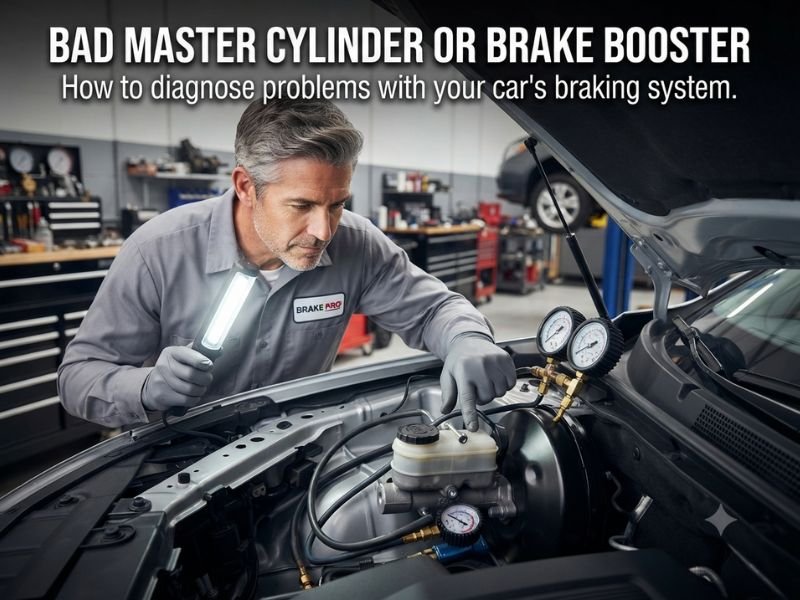
The master cylinder and brake booster work together, but they have separate functions.
The master cylinder is responsible for generating hydraulic pressure when you press the brake pedal. That pressure travels through the brake lines to the calipers or wheel cylinders.
The brake booster, on the other hand, reduces the physical effort needed to operate the master cylinder. On many vehicles, it uses engine vacuum to provide this assistance.
In simple terms:
- Master cylinder: Creates hydraulic pressure.
- Brake booster: Makes pressing the pedal easier.
- Brake calipers/wheel cylinders: Convert hydraulic pressure into braking force at the wheels.
Because these components work together, a problem with either one can change the way the brake pedal feels.
Bad Master Cylinder vs. Brake Booster Symptoms
The pedal symptoms can provide an important starting point when trying to identify the problem.
| Symptom | Bad Master Cylinder | Bad Brake Booster |
| Hard brake pedal | Less common | Common |
| Soft/spongy pedal | Common | Less typical |
| Pedal slowly sinks | Common | Less typical |
| Hissing sound | Uncommon | Common |
| Increased pedal effort | Possible | Common |
| Loss of power assist | No | Common |
| Brake fluid leakage | Possible | Uncommon |
| Rough engine idle | No | Possible |
| Engine stalls when braking | No | Possible |
These are general diagnostic clues rather than absolute rules. Other components, including the brake lines, vacuum hose, calipers, and ABS system, can also cause changes in brake performance.
Signs of a Bad Master Cylinder
A failing master cylinder usually creates problems with hydraulic pressure rather than vacuum assistance.
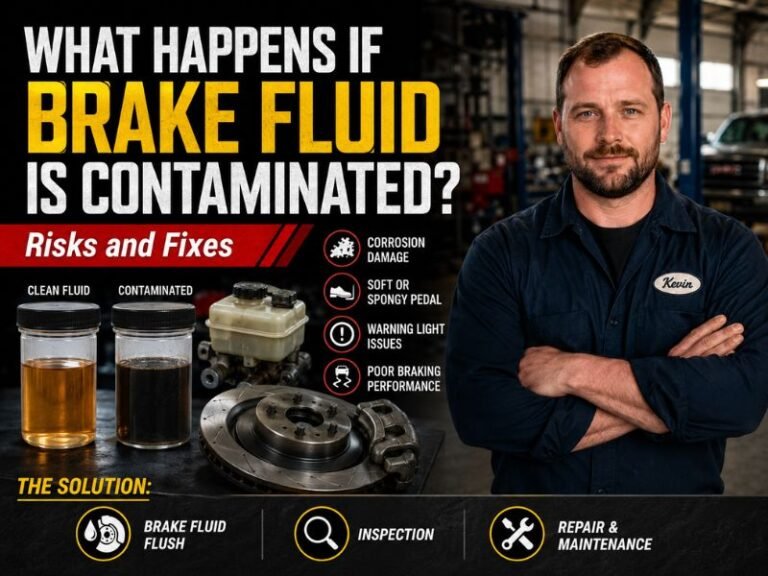
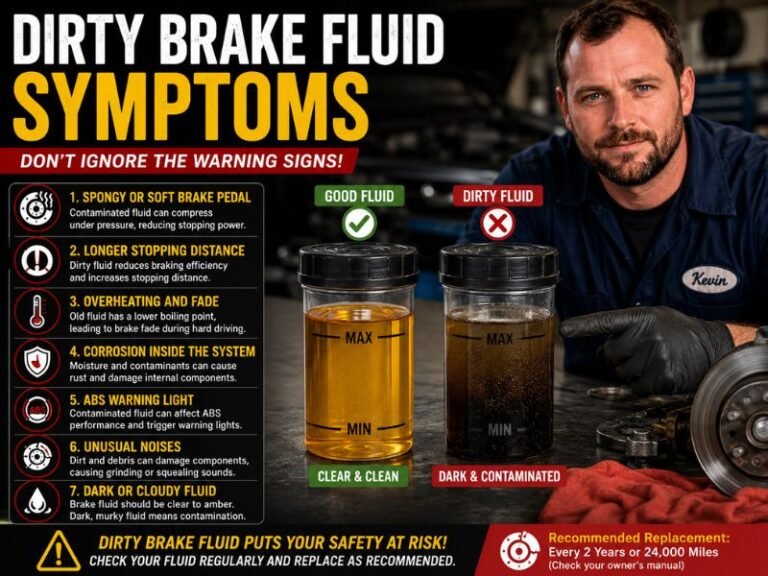
Soft or Spongy Brake Pedal
A soft or spongy brake pedal can indicate a hydraulic problem.
The pedal may feel less firm than normal and may require more travel before the vehicle begins to slow.
Possible causes include:
- Air in the brake lines
- Low brake fluid
- Hydraulic leaks
- Master cylinder problems
- Other brake-system issues
A soft pedal does not automatically mean the master cylinder has failed, but it warrants inspection.
Brake Pedal Slowly Sinks
A brake pedal that slowly moves toward the floor while you maintain steady pressure can be an important sign of a hydraulic pressure problem.
An internal master cylinder failure can allow brake fluid to bypass the internal seals instead of maintaining pressure properly.
If the pedal consistently sinks under steady pressure, the master cylinder and hydraulic system should be inspected.
Inconsistent Braking
A failing master cylinder can sometimes produce inconsistent pedal behavior.
The pedal may feel normal during one stop and different during another. Braking pressure may also feel less predictable.
Inconsistent braking should not be ignored because reliable hydraulic pressure is essential for safe stopping.
Low Brake Fluid or Fluid Leak
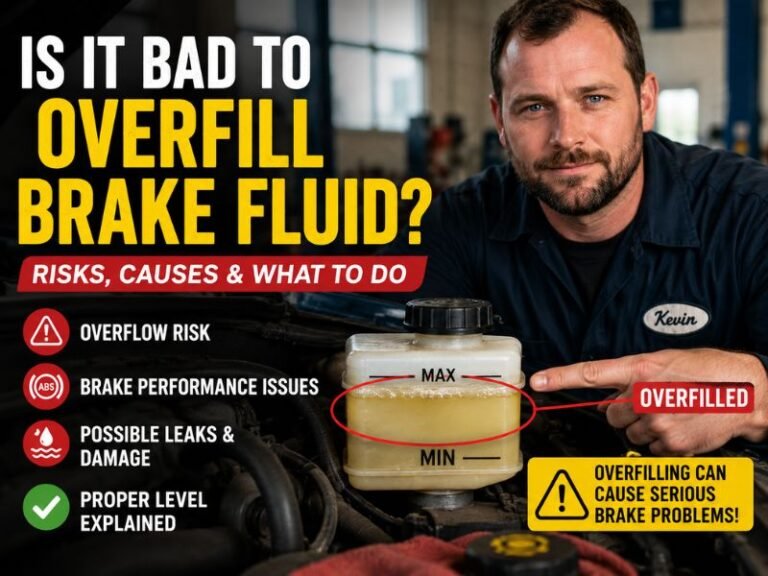
A low brake fluid level can indicate a leak or another brake-system problem.
Check the fluid reservoir and look for obvious signs of fluid leakage around:
- Master cylinder
- Brake lines
- Calipers
- Wheel cylinders
- Connections
However, brake fluid level can also decrease as brake pads wear, so the reservoir level alone does not prove that the master cylinder is bad.
Brake Warning Light
Some vehicles may illuminate a brake warning light when there is a hydraulic brake problem or low fluid level.
The exact meaning of the warning light varies by vehicle.
If a brake warning light appears together with a change in pedal feel, have the braking system inspected promptly.
Signs of a Bad Brake Booster
A bad booster generally affects power assistance rather than hydraulic pressure.
Hard Brake Pedal
A hard brake pedal is one of the most common signs of a brake booster problem.
When the booster is functioning properly, it helps multiply the force from your foot.
If power assistance is lost, you may have to press the pedal much harder to achieve similar braking force.
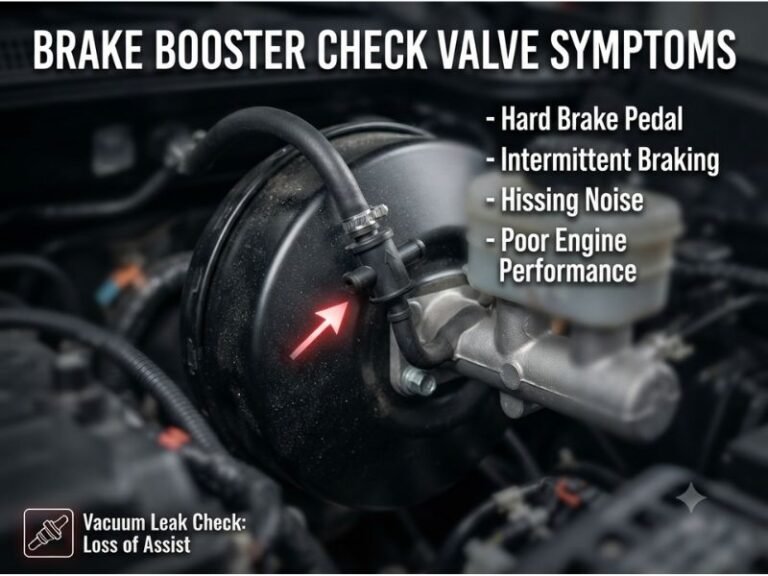
A hard pedal can also result from a vacuum hose or check-valve problem, so the entire vacuum system should be checked.
Hissing Noise When Braking
A noticeable hissing sound when you press the brake pedal can indicate a vacuum leak.
The leak may be located inside the booster or in an external component such as the vacuum hose or check valve.
Hissing combined with a hard pedal is a stronger clue toward a booster or vacuum problem.
Brake Pedal Does Not Drop When Engine Starts
You can perform a basic booster test by observing the pedal when the engine starts.
With the engine off, pump the brake pedal several times until it becomes firm. Keep pressure on the pedal and start the engine.
A functioning vacuum-assisted booster will normally cause the pedal to move slightly downward as assistance becomes available.
If the pedal remains very hard without noticeable movement, the booster or its vacuum supply may have a problem.
Rough Idle or Engine Stalling
A serious vacuum leak from the brake booster can sometimes affect engine operation.
Because the booster is connected to the engine’s vacuum system, an internal leak can introduce additional air into the intake system.
This may cause:
- Rough idle
- RPM fluctuations
- Engine hesitation
- Stalling when braking
These symptoms can have many other causes, but when they appear alongside a hard brake pedal, the booster vacuum system should be investigated.
Increased Braking Effort
A faulty booster can make normal braking physically harder.
You may notice that you need to push the brake pedal much harder than before, particularly during repeated stops or emergency braking.
This is different from a soft pedal, which generally points toward a hydraulic issue rather than loss of power assistance.
How to Tell if It’s the Master Cylinder or Brake Booster
The best approach is to combine pedal feel with other symptoms and simple tests.
Check the Brake Pedal Feel
Start by asking how the pedal feels.
Hard pedal: More suggestive of a brake booster, vacuum hose, or related power-assistance problem.
Soft or spongy pedal: More suggestive of air, fluid, or another hydraulic problem.
Pedal slowly sinks: Can indicate an internal hydraulic pressure problem such as a master cylinder issue.
These patterns are useful clues, but they are not a definitive diagnosis.
Listen for Vacuum Leaks
With the engine running, listen around the brake booster and vacuum hose.
A noticeable hissing sound that changes when you press the brake pedal can indicate a vacuum leak.
A master cylinder generally does not create this type of vacuum noise.
Check for Brake Fluid Problems
Inspect the brake fluid reservoir and look for obvious leaks.
If the brake fluid is low, determine why before simply adding more.
Possible leak locations include the master cylinder, brake lines, calipers, and wheel cylinders.
A leaking master cylinder may also leave fluid around the area where it connects to the brake booster.
Perform the Brake Booster Pedal Test
The engine-start pedal test can help determine whether the booster is providing assistance.
- Turn the engine off.
- Pump the brake pedal several times.
- Hold firm pressure on the pedal.
- Start the engine.
- Observe the pedal.
A small downward movement is generally expected when the booster begins providing assistance.
If there is no change and the pedal remains unusually hard, inspect the booster and vacuum system.
Check for Engine Symptoms
Engine behavior can provide another useful clue.
If pressing the brake pedal causes:
- Rough idle
- Significant RPM drop
- Engine hesitation
- Engine stalling
a vacuum-related problem becomes more likely.
These symptoms are not typical signs of a master cylinder failure because the master cylinder operates through the hydraulic brake system rather than engine vacuum.
Can a Bad Master Cylinder Cause a Hard Brake Pedal?
A master cylinder problem is not typically associated with an extremely hard brake pedal.
A hard pedal is more commonly associated with:
- Brake booster failure
- Vacuum hose problems
- Faulty check valve
- Other power-assistance issues
That said, brake-system symptoms can overlap, and a complete inspection may be needed to determine the exact cause.
If the pedal is hard and there is a hissing sound, investigate the booster and vacuum system first.
Can a Bad Brake Booster Cause a Soft Brake Pedal?
A faulty brake booster usually causes the opposite: a hard pedal.
A soft, spongy, or sinking pedal is more commonly associated with a hydraulic issue.
Possible causes include:
- Air in the brake lines
- Low brake fluid
- Hydraulic leaks
- Master cylinder problems
- Other brake-system faults
Therefore, if the main symptom is a soft pedal rather than a hard pedal, the master cylinder and hydraulic system deserve closer attention.
Can You Drive With a Bad Master Cylinder or Brake Booster?
Neither problem should be ignored because both components are important to safe braking.
A vehicle with a failed booster may still have hydraulic braking ability, but the pedal can become extremely hard and require much more force.
A serious master cylinder failure can result in inadequate hydraulic pressure and potentially severe loss of braking ability.
Avoid driving if:
- The brake pedal suddenly changes
- The vehicle is difficult to stop
- The pedal sinks toward the floor
- Braking performance is significantly reduced
- Brake fluid is leaking
- The pedal is extremely hard
- The engine stalls while braking
If braking performance is seriously compromised, towing the vehicle is safer than driving it to a repair facility.
How Much Does It Cost to Replace a Master Cylinder or Brake Booster?
The repair cost depends on the vehicle, parts required, labor rates, and whether related components also need attention.
A master cylinder replacement may involve:
- New master cylinder
- Brake fluid
- Bleeding the brake system
- Labor
A brake booster replacement may involve:
- New brake booster
- Related vacuum components
- Labor
- Adjustment or installation work
A damaged vacuum hose or check valve may be considerably cheaper to repair than replacing the entire booster.
Because several brake problems can create similar symptoms, diagnosis should come before purchasing replacement parts.
Frequently Asked Questions
How do I know if my master cylinder or brake booster is bad?
Look at the type of pedal problem. A hard pedal, increased effort, and hissing are more suggestive of a booster or vacuum problem. A soft, spongy, or sinking pedal is more suggestive of a hydraulic problem such as a master cylinder issue.
Is a hard brake pedal a master cylinder or booster problem?
A hard brake pedal is more commonly associated with the brake booster, vacuum hose, or check valve rather than the master cylinder.
Is a soft brake pedal a master cylinder or booster problem?
A soft or sinking pedal is more commonly associated with the hydraulic braking system. The master cylinder, brake fluid, brake lines, and other hydraulic components should be inspected.
Can a bad brake booster cause a brake fluid leak?
The booster itself does not normally contain the hydraulic brake fluid. A fluid leak is more likely to involve the master cylinder or another hydraulic component. However, problems can occur around the connection between the master cylinder and booster.
Can a bad master cylinder cause a hissing noise?
A master cylinder does not normally produce a vacuum hissing sound. Hissing around the brake pedal is more suggestive of a brake booster or vacuum-system problem.
Which is more dangerous, a bad master cylinder or brake booster?
Both can be dangerous because they can affect braking performance. A serious master cylinder failure can cause major loss of hydraulic braking pressure, while a booster failure can make the pedal extremely hard and significantly increase the effort required to stop.
Final Thoughts on Bad Master Cylinder or Brake Booster
When deciding between a bad master cylinder or brake booster, the brake pedal itself provides one of the most useful clues.
A hard pedal with hissing or loss of power assistance generally points toward the brake booster or its vacuum system. A soft, spongy, or slowly sinking pedal is more suggestive of a master cylinder or another hydraulic brake problem.
However, symptoms alone cannot always identify the failed component. A damaged vacuum hose, check valve, brake line, or other brake-system component can create similar symptoms.
Because both the master cylinder and brake booster are critical safety components, do not continue normal driving when braking performance has noticeably changed. Proper diagnosis should come before replacing either component.