Are Brake Pads and Brakes the Same Thing? Differences Explained
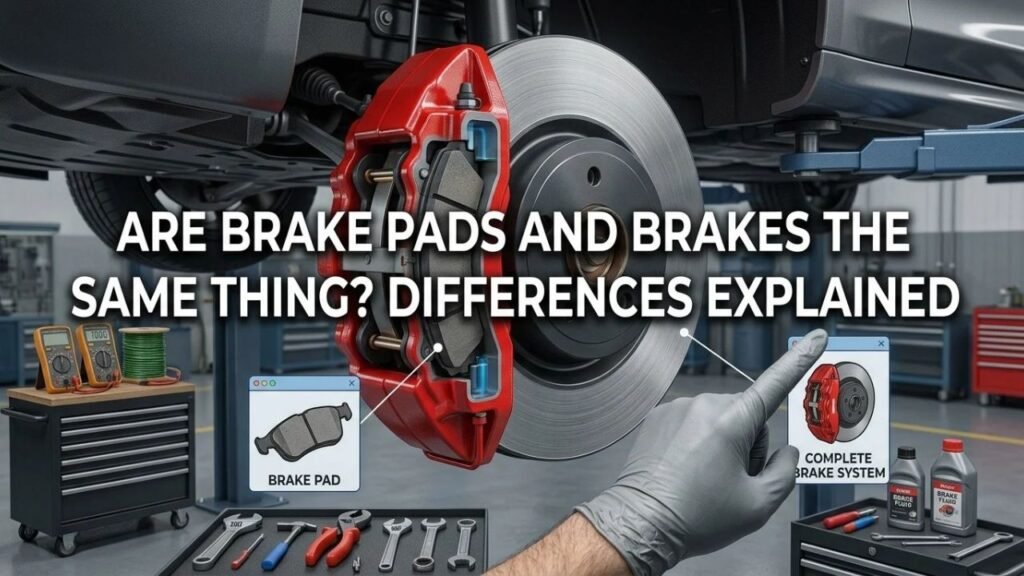
No. Brake pads are individual friction components inside a disc brake assembly, while “brakes” usually refers to the larger braking system or the brake assembly at a wheel. Pads press against rotors when the caliper applies force. The full system contains many other mechanical, hydraulic, and electronic parts.
The terms get mixed together because drivers and repair shops often use “brakes” as shorthand for brake-pad service. Someone may say, “I need new brakes,” when only the pads need replacement. In another case, the same phrase could refer to pads, rotors, calipers, or another braking-system repair.
Separating the terms matters because replacing worn pads is very different from repairing the whole brake system. If a shop says your vehicle “needs brakes,” the useful next question is which parts are actually worn, damaged, or outside specification.
U.S. vehicle regulations also distinguish friction components from complete brake systems. Federal safety requirements regulate braking-system operation and stopping performance, while an individual replacement brake pad is only one part of that larger system.
The simplest answer to are brake pads and brakes the same thing is that brake pads are one replaceable component within the brakes. In a disc brake setup, the pads sit inside the caliper and contact the rotor to create friction that slows the wheel.
That distinction becomes useful when dealing with squealing, grinding, vibration, pulling, a soft pedal, or a repair estimate. Some symptoms point toward worn pads, while others may come from rotors, calipers, brake fluid, hydraulic components, ABS hardware, or another fault.
What Are Brake Pads?
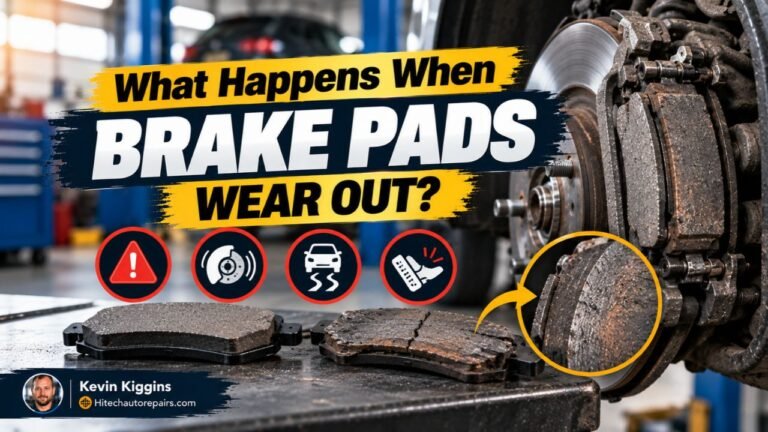
Brake pads are replaceable friction components used in a disc brake system. Each pad normally has a steel backing plate with friction material bonded or mechanically attached to the side facing the rotor.
When you press the brake pedal, hydraulic pressure moves the caliper piston. The caliper presses the pads against both sides of the spinning rotor. Friction slows the rotor, which slows the wheel and vehicle.
Because the friction surface rubs against the rotor during braking, the pads gradually become thinner. They are designed as wear components and normally need replacement more often than calipers, brake hoses, or many other brake-system parts.
Common brake-pad friction materials include:
- Ceramic
- Semi-metallic
- Organic or non-asbestos organic compounds
The correct material varies by vehicle design, braking load, operating temperature, noise targets, and manufacturer specifications.
I treat uneven pad wear as a diagnostic clue rather than normal wear. If one inner pad is far thinner than its outer partner, restricted caliper movement or another mechanical issue may be present.
What Does “Brakes” Mean on a Car?
The word “brakes” is a broad term. It may describe the complete braking system, the brake assembly at one or more wheels, or the brake service being performed.
A modern hydraulic braking system uses several components to turn pedal pressure into friction at the wheels.
Brake Pedal and Brake Booster
Braking begins when the driver presses the brake pedal.
Many vehicles use a brake booster to reduce the amount of physical force required at the pedal. The booster transfers or multiplies the driver’s input before hydraulic pressure reaches the wheel brakes.
A booster is part of the braking system, but it has no friction material like a brake pad.
Master Cylinder, Brake Fluid, and Lines
The master cylinder converts pedal movement into hydraulic pressure.
Brake fluid carries that pressure through metal lines and flexible hoses. Fluid leaks, trapped air, a failing master cylinder, or damaged hoses can cause braking problems even when the pads still have plenty of friction material.
Brake Calipers
A disc-brake caliper fits around the rotor and holds the pads.
Hydraulic pressure moves one or more caliper pistons, causing the pads to clamp the rotor. Many calipers also rely on slide pins so the caliper body can move correctly.
A sticking piston or seized slide pin may cause uneven pad wear, overheating, dragging, or pulling during braking.
Brake Rotors
The rotor is the round metal disc that turns with the wheel.
Brake pads clamp against its friction surfaces. Rotors can develop grooves, corrosion, heat damage, cracks, thickness variation, or wear below the specified minimum thickness.
ABS Components
Most modern vehicles use an anti-lock braking system, commonly called ABS.
Wheel-speed sensors, control electronics, hydraulic valves, and the ABS pump help control wheel slip during hard braking. Replacing pads does not mean these components have been replaced.
Key Takeaway: Brake pads are only one part of the braking system. “Brakes” may refer to pads, rotors, calipers, hydraulic parts, ABS components, or the entire system.
Are Brake Pads and Brakes the Same Thing in Repair Terms?
Technically, no. In everyday repair language, the terms are often used loosely.
A technician may say the “front brakes are worn” when the actual recommendation is to replace the front pads and rotors. A driver may also say they “changed the brakes” after installing only new pads.
This casual wording can make repair estimates confusing.
A brake-service recommendation might include:
- Front brake pads only
- Pads and rotors
- Rear brake shoes and drums
- One or more calipers
- Brake hoses
- Brake-fluid service
- Parking-brake components
- ABS diagnosis
The phrase “brake replacement” does not mean every component in the braking system gets replaced.
If a repair estimate says you need brakes, I recommend asking for the measured pad thickness, rotor condition, and the specific reason each listed part needs replacement. Those details are more useful than a general statement that the brakes are worn.
What Is the Difference Between Brake Pads and Rotors?
Brake pads and rotors work together, but they are completely different parts.
Brake Pads Stay Inside the Caliper
The brake pads sit inside or alongside the caliper, depending on the design.
Their friction material contacts the rotor only where braking occurs. Pads gradually lose thickness as the friction material wears.
Rotors Spin With the Wheels
The rotor mounts to or works with the wheel hub and spins whenever the wheel turns.
When you brake, the caliper squeezes the pads against the two rotor surfaces. The rotor absorbs friction and heat during this process.
Rotors may need replacement if they are:
- Below minimum thickness
- Severely scored
- Cracked
- Heavily corroded
- Heat damaged
- Mechanically damaged
- Producing braking vibration due to surface or thickness problems
New pads should not simply be installed without checking the rotor condition. Damaged rotors can create noise, vibration, poor pad contact, or shortened pad life.
Key Takeaway: Pads provide the replaceable friction material, while rotors provide the rotating surface the pads clamp against. Both are separate parts of a disc brake assembly.
Are Brake Pads and Brake Shoes the Same?
No. Brake pads and brake shoes perform similar friction duties, but they belong to different brake designs.
Brake Pads Work With Disc Brakes
Disc brakes use a rotor and caliper.
The brake pads press inward against both sides of the rotor when the driver applies the brakes.
Brake Shoes Work With Drum Brakes
Drum brakes use a round brake drum and curved brake shoes.
Instead of squeezing a rotor, the shoes move outward against the inside surface of the spinning drum.
Some vehicles use disc brakes at all four wheels. Others use front discs and rear drums. Certain vehicles with rear disc brakes also use a small drum-style system for the parking brake.
This matters when ordering replacement parts. A vehicle equipped with rear drums needs brake shoes at those wheel positions, not normal disc-brake pads.
Key Takeaway: Brake pads belong to disc brakes, while brake shoes belong to drum brakes. Both create friction but contact different braking surfaces.
Does Replacing Brake Pads Mean You Replaced the Brakes?
In casual conversation, people often describe a pad change as replacing the brakes. Mechanically, only the pads have been replaced unless additional components were serviced.
A basic pad replacement may involve:
- Removing the old pads
- Inspecting the rotors
- Checking caliper movement
- Checking pad hardware
- Installing the new pad set
- Reassembling the brake components
A larger brake repair may also include:
- New rotors
- Caliper hardware
- New calipers
- Brake hoses
- Brake fluid
- Parking-brake parts
The phrase “complete brake job” also has no single fixed definition across every repair shop.
If the front pads and rotors are replaced, a shop may call that a complete front brake job. The master cylinder, rear brakes, ABS module, booster, and brake lines remain untouched unless the repair order lists them.
When Do Brake Pads Need Replacement?
Brake pads need replacement when the friction material reaches the vehicle maker’s service limit or when damage makes the pads unsuitable for continued use.
There is no single mileage figure that applies to every vehicle.
City traffic, hills, towing, vehicle weight, driving habits, pad material, brake balance, rotor condition, and caliper operation can all change pad wear.
Squealing From the Brakes
Many brake pads use a mechanical wear indicator.
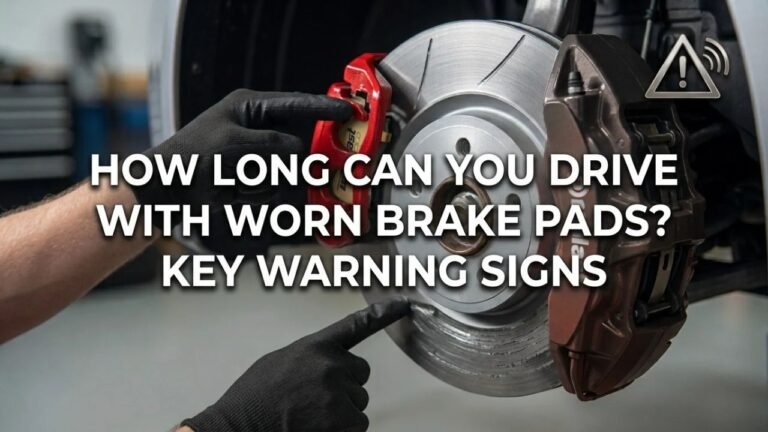
As the friction material becomes thin, the indicator may contact the rotor and produce a high-pitched squeal.
Noise alone does not prove that the pads are worn out. Rust, debris, glazed friction material, hardware problems, or rotor condition may also cause squeaking.
Grinding Noise
Grinding deserves prompt inspection.
If the friction material has worn completely away, the metal backing plate may contact the rotor. This can damage the rotor and reduce braking quality.
Grinding can come from other causes too, so an inspection is needed before assuming the pads are the only problem.
Thin Friction Material
The most direct way to judge pad wear is to inspect and measure the friction material.
Use the vehicle or brake manufacturer’s service limit rather than assuming one universal replacement thickness applies to every model.
Uneven Pad Wear
Uneven wear can reveal a problem elsewhere in the brake assembly.
Possible causes include:
- Sticking caliper piston
- Seized guide pin
- Corrosion under pad hardware
- Binding pad ears
- Damaged brake hardware
- Hydraulic restriction
Installing fresh pads without correcting the underlying fault can produce the same wear pattern again.
Key Takeaway: Pad replacement should be based on measured wear, physical condition, and vehicle specifications. Uneven wear often points to another brake-system problem.
Signs the Problem May Be More Than Brake Pads
Some brake symptoms have little to do with pad thickness.
Recognizing these differences can stop you from replacing pads while leaving the real fault untouched.
Soft or Spongy Brake Pedal
A soft pedal may indicate:
- Air in the hydraulic system
- Brake-fluid loss
- Damaged brake hose
- Master-cylinder problem
- Another hydraulic fault
Worn pads do not explain every soft-pedal complaint.
Vehicle Pulls While Braking
Pulling can occur when braking force differs between the left and right wheels.
Possible causes include a sticking caliper, contaminated friction surface, hydraulic restriction, tire problem, or suspension fault.
Steering Wheel or Brake Pedal Vibrates
Brake vibration may be linked to rotor thickness variation, rotor surface deposits, hub runout, loose parts, or another mechanical condition.
Installing new pads without inspecting the rotors may leave the vibration unchanged.
Brake or ABS Warning Light Comes On
A dashboard brake warning does not automatically mean the brake pads are worn.
Depending on the vehicle, the light may indicate:
- Low brake fluid
- ABS fault
- Parking-brake status
- Electronic pad-wear warning
- Hydraulic problem
- Sensor fault
Safety Tip: A pedal that suddenly sinks toward the floor, major brake-fluid loss, severely reduced braking force, or a sudden braking-system change calls for immediate attention. Do not assume a simple pad replacement will correct a hydraulic or mechanical failure.
Key Takeaway: Squealing can come from pads, but pedal problems, pulling, fluid loss, warning lights, and severe vibration may point to other brake-system components.
Do You Need New Rotors Every Time You Change Brake Pads?
No. Rotors do not automatically require replacement every time the pads are changed.
Rotor condition needs to be inspected and measured.
A rotor may remain in service if it:
- Remains above minimum thickness
- Has an acceptable friction surface
- Has no serious cracks
- Has no severe heat damage
- Does not have excessive runout or thickness variation
- Meets the vehicle maker’s service requirements
Rotor replacement may be required when the disc is too thin, heavily scored, cracked, severely corroded, or otherwise outside specification.
Some repair procedures permit rotor resurfacing when enough material remains. Many modern rotors have limited extra thickness available for machining, so replacement is common once wear becomes substantial.
I prefer judging rotors by measurements and condition instead of automatically replacing them or automatically reusing them.
Can You Replace Only One Brake Pad?
Normally, no. Brake pads are generally replaced as an axle set.
If the front pads need replacement, both front wheels usually receive a matching new set. The same principle applies to the rear axle.
Replacing only one worn pad creates mismatched friction surfaces and fails to address the reason that single pad wore differently.
If one pad is much thinner than the others, inspect the:
- Caliper piston
- Slide pins
- Pad mounting surfaces
- Brake hardware
- Rotor
- Hydraulic system
A large difference in pad thickness should be treated as a clue rather than ordinary wear.
Are Front and Rear Brakes the Same?
Not necessarily.
Front and rear brakes work together, but their parts may be different.
A vehicle may use:
- Larger front rotors
- Smaller rear rotors
- Different front and rear pad shapes
- Different caliper designs
- Different friction materials
- Front disc brakes and rear drum brakes
- An electronic parking brake in the rear calipers
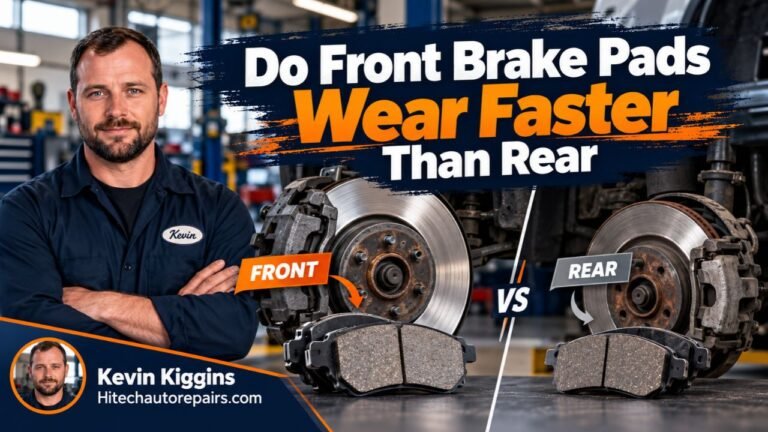
Front pads do not normally fit the rear brakes.
Vehicle weight shifts toward the front during braking, so front brakes often handle a large part of the braking load. Brake-force distribution varies by vehicle, which means front and rear pad wear rates can differ.
What Should You Ask When a Mechanic Says You Need Brakes?
Ask which exact components failed inspection and why.
Useful questions include:
- How much pad material remains?
- Are the inner and outer pads wearing evenly?
- Are the rotors above minimum thickness?
- Is there severe scoring or corrosion?
- Are the calipers moving correctly?
- Is any brake fluid leaking?
- Does the estimate include pads, rotors, or both?
- Is any caliper or hydraulic repair needed?
These questions separate a normal pad replacement from a larger brake repair.
I would also ask to see the measurements or worn components if the diagnosis is unclear. A measured pad thickness or visible mechanical fault gives far more information than simply being told that the brakes are bad.
Conclusion
The answer to are brake pads and brakes the same thing is no. Brake pads are replaceable friction components used inside disc brake assemblies, while “brakes” commonly refers to the larger assembly or the complete vehicle braking system.
Pads work with rotors and calipers at the wheels. The full braking system also contains hydraulic components such as the master cylinder, brake fluid, hoses, and lines, plus ABS components on modern vehicles. Drum-brake systems use shoes rather than disc-brake pads.
If someone says your vehicle needs brakes, find out which parts actually need service. Pad thickness, rotor measurements, caliper condition, and visible damage give a much clearer picture of the repair.
My recommendation is to focus on the inspection results instead of the general wording. That makes it easier to separate normal brake-pad wear from a problem elsewhere in the system.
FAQs About Brake Pads and Brakes
Do Brake Pads Count as Brakes?
Brake pads are part of the brakes, so people often call a pad replacement a brake job. Technically, pads are only one component.
A complete braking system also contains rotors or drums, calipers or wheel cylinders, hydraulic lines, brake fluid, the master cylinder, and other control components.
If I Need New Brakes, Does That Mean I Need Brake Pads?
Often, but not always.
Worn brake pads are a common reason for brake service, but the phrase “new brakes” does not identify the failed component. You may need pads alone, pads and rotors, brake shoes, a caliper, hydraulic repairs, or another part.
Do Brake Pads Touch the Rotors All the Time?
Pads sit very close to the rotor and may have slight incidental contact, but they should not remain firmly clamped against it after the brake pedal is released.
A pad that stays heavily applied may create excess heat and rapid wear. A sticking caliper piston or slide mechanism may be responsible.
Is a Brake Job the Same as Changing Brake Pads?
Not always.
A brake job may refer to pad replacement, but it can also include rotors, hardware, calipers, brake fluid service, or drum-brake components. Check the written repair estimate to see exactly which parts and labor are included.
Do All Cars Have Brake Pads?
Vehicles with disc brakes use brake pads at those wheel positions.
Many modern cars have disc brakes on all four wheels. Some vehicles still use drum brakes at the rear, and those systems use brake shoes instead of standard disc-brake pads.
Can Bad Brake Pads Damage Other Brake Parts?
Yes. If the friction material wears completely away, the metal backing plate can grind against the rotor and damage its friction surface.
A dragging or unevenly worn pad can also generate excess heat. Replacing worn pads before the friction material is exhausted reduces the chance of added rotor damage.
Are Rotors Part of the Brakes?
Yes. Rotors are part of a disc brake assembly.
They rotate with the wheels while the calipers press the brake pads against them. Pads and rotors are separate components, but both are required for a conventional disc brake to create the friction that slows the vehicle.