When to Replace Parking Brake Shoes: Signs, Wear, and Timing
Replace parking brake shoes when their friction lining reaches the vehicle manufacturer’s wear limit, cracks or separates from the metal shoe, becomes contaminated with oil or brake fluid, or is damaged by overheating. A parking brake that no longer holds the vehicle securely is another reason for immediate inspection, although the shoes are not always the part at fault.
Unlike ordinary rear brake pads, dedicated parking brake shoes often work only while the vehicle is parked. They can last for years because they are not supposed to rub against a moving drum during normal driving. That changes if a cable sticks, an adjuster is incorrect, or someone drives with the parking brake partly engaged.
Knowing what to replace requires more than counting miles or pulling the handbrake farther. The lining thickness, contact surface, springs, cable movement, and drum condition all matter. This guide covers the warning signs, inspection criteria, replacement timing, and when a simple adjustment may fix the problem without new shoes.
When to Replace Parking Brake Shoes: The Main Warning Signs
The Parking Brake Will Not Hold the Vehicle
A weak holding brake is often the first reason to check its shoes. If the car moves despite proper parking-brake application, the friction lining may be worn, improperly adjusted, or unable to grip the drum. Do not test this by allowing the vehicle to roll on a hill.
A cable that is stretched, disconnected, or seized can create the same symptom. RepairPal’s parking brake shoe overview lists failure to hold on a slight incline as a warning sign and explains that dedicated shoes press against the drum section inside certain rear rotors. Have the complete mechanism checked before deciding which part needs replacement.
The Hand Lever or Foot Pedal Travels Too Far
A hand lever that rises higher than normal, or a dedicated parking-brake pedal that needs excessive travel, can suggest excessive clearance between the shoes and drum. Shoe wear is one possible explanation, but so are an out-of-adjustment mechanism and cable problems.
Some vehicles have specified lever-click counts or pedal-travel measurements. Those values are model-specific. Repeatedly tightening a cable to compensate for thin shoes can mask wear and may leave the brake dragging after release.
Scraping, Grinding, or Rattling From the Rear
Unusual noises can develop when parking-brake lining breaks away, a spring comes loose, or a metal component contacts the drum. A grinding sound can also arise from the regular rear brakes or other wheel components, so noise alone cannot identify the parking shoes.
If a noise persists when the parking brake is released, do not continue driving in hopes that it will disappear. A loose shoe or detached lining can damage the drum surface and interfere with normal wheel rotation.
Burning Smell or Brake Drag After Release
A parking brake that remains partly applied can overheat its shoes, even when plenty of lining thickness remains. A sharp burning smell, unusual resistance during acceleration, or heat around a rear wheel after driving points to possible dragging brakes.
Stop safely rather than touching a hot wheel or forcing the vehicle to move. Once the assembly cools, it needs inspection for damaged friction material, weakened springs, and the underlying reason it failed to release.
Shoe Conditions That Require Replacement Even Without Obvious Symptoms
Lining Worn Below Its Service Limit
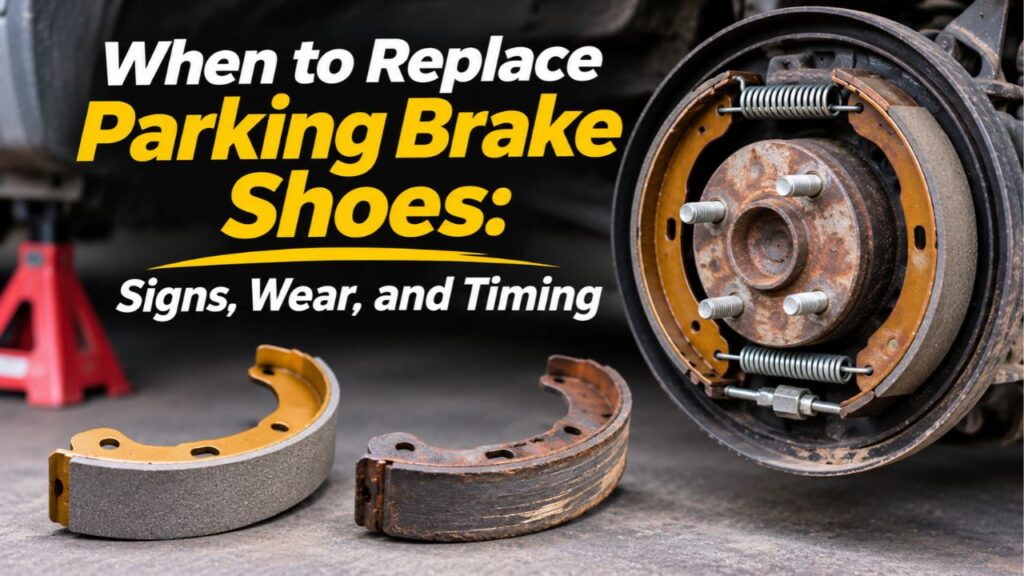
The friction lining is the replaceable material bonded or riveted to the curved metal shoe. It must remain thick enough to contact the drum correctly without exposing its backing or fasteners. The minimum acceptable thickness comes from the service manual for the exact vehicle.
For example, the 2007 Jeep Liberty factory service manual’s parking-brake shoe inspection specifies replacement of bonded lining at 1/16 inch (1.6 mm) and riveted shoes when the lining is within 1/32 inch (0.78 mm) of the rivet heads. Those are examples for the documented design, not universal replacement limits.
Measure the friction material, not the metal backing plate. A technician should compare the thinnest relevant areas with the prescribed limit and inspect both rear sides for uneven wear.
Cracked, Peeling, or Separated Friction Material
Replace a shoe if its lining has significant cracks, chunks missing, or separation from the metal backing. Friction material that has begun lifting at an edge can detach more extensively under use. The shoe should also be inspected for bending or damaged mounting points.
A small surface mark is not the same as a structurally damaged lining. The technician should assess the extent of cracking and follow the specific manufacturer’s inspection criteria rather than judging only by color.
Oil, Grease, or Brake Fluid on the Lining
Friction lining contaminated by an axle-seal leak, wheel-cylinder leak, or misplaced lubricant may no longer grip consistently. Merely wiping off visible liquid does not reliably restore porous, soaked lining.
Replace contaminated shoes where required and repair the source of the leak first. Otherwise the replacement can become contaminated again. Inspect the drum surface and other nearby brake components at the same time.
Severe Heat Damage or Uneven Contact
Heat can harden or glaze a friction surface, weaken springs, and damage the drum. Some shiny surfaces are not automatically a reason for replacement; assess actual damage, contact pattern, and holding performance. Crumbling material, heat-related cracks, or lining that has lost its grip are stronger reasons to replace.
A shoe touching only along one edge may also indicate a bent shoe, worn drum, or incorrect assembly. Installing a new shoe without correcting that mismatch may produce the same poor contact.
How Long Do Parking Brake Shoes Usually Last?
There is no fixed mileage or calendar interval for replacing dedicated parking-brake shoes. They primarily hold a stationary vehicle, so normal use can produce much less wear than service brakes. A set can remain usable through several brake-pad replacements if its condition and adjustment stay correct.
Do not confuse these shoes with the rear drum service-brake shoes on vehicles where the same friction parts stop the moving vehicle and serve as the parking brake. Those combined-use shoes wear during normal braking and may need replacement sooner.
Usage matters more than a mileage guess. Driving with the parking brake applied, frequent dragging from a sticking cable, heavy corrosion, and fluid leaks can shorten service life dramatically. Haynes’ rear drum brake shoe guidance discusses lining wear, oil contamination, and glazing after accidental parking-brake use. These conditions are more useful replacement clues than an arbitrary odometer reading.
When Should Parking Brake Shoes Be Inspected?
Include the parking-brake system in regular brake inspections at the intervals specified in the maintenance schedule. A complete visual inspection of dedicated shoes may require removing the rear rotor, so it is often practical when rear brake components are already being serviced.
Ask for an earlier inspection if the vehicle has been driven with the parking brake engaged, the brake no longer holds reliably, unusual rear-wheel noises begin, or the lever travel changes suddenly. Inspecting after a known incident is more useful than waiting for the next routine service date.
On vehicles exposed to road salt or long periods of storage, corrosion and stuck hardware can cause trouble even with thick lining remaining. A brake that has not been used for months should not be assumed healthy simply because it has not worn down.
How to Check Whether the Shoes Are Actually Worn
Step 01: Identify the Rear Parking-Brake Design
Check the owner’s manual or vehicle-specific service information. A drum-in-hat system uses small shoes inside the center of the rear disc rotor. A conventional rear drum may use the same shoes for parking and service braking. Some rear disc and electronic systems use a mechanical screw in the caliper and have no separate parking-brake shoes at all.
Ordering shoes before identifying the system can lead to buying a part the vehicle does not use.
Step 02: Note the Symptoms Without Testing on a Hill
While safely parked, observe the lever or pedal travel, indicator behavior, and whether the control fully releases. Note any rear scraping or prior overheating. Do not deliberately drive with the brake applied or shift into Neutral on a slope to challenge its holding strength.
If the vehicle cannot be secured reliably, use appropriate precautions and arrange service rather than continuing to operate it.
Step 03: Have the Lining and Drum Inspected
A qualified technician can securely raise the vehicle, remove the relevant rear components, and examine the exposed parking-brake shoes. The inspection should include lining thickness, cracks, separation, fluid contamination, and whether the shoes contact the drum evenly.
Brake dust should be handled with approved dust-control methods; do not blow it into the air with compressed air. Brake work also requires suitable vehicle supports, not a jack alone.
Step 04: Inspect Springs, Adjusters, Cables, and the Drum
A weak parking brake is not always a worn-shoe problem. The return springs should be sound, the adjuster should move correctly, and the cables or actuator should apply and release without binding. The drum surface must also be checked for deep scoring, cracks, corrosion, or excessive internal diameter.
These findings determine whether new shoes alone are sufficient or whether other repairs are needed.
When Adjustment Is Enough and When New Shoes Are Needed
Some parking-brake problems respond to the manufacturer’s adjustment procedure, provided the shoes and other components remain within specification. Adjustment restores the intended clearance; it cannot replace missing friction material or repair a cracked lining.
| Inspection Finding | More Appropriate Next Step |
| Shoes healthy, clearance incorrect | Adjust to the vehicle’s specification |
| Lining at or beyond wear limit | Replace the shoes |
| Lining oil-soaked or separating | Fix contamination source and replace affected shoes |
| Cable seized or disconnected | Repair cable and verify shoe condition |
| Springs or adjuster damaged | Replace faulty hardware; inspect shoes |
| Drum worn beyond its limit | Repair or replace drum/rotor as specified; inspect shoes |
Avoid adjusting a cable solely until the dashboard light turns on or the lever feels tight. Overadjustment can hold the shoes against the drum while driving, causing overheating and premature wear.
Should Both Parking Brake Shoe Sets Be Replaced Together?
When shoes have reached their wear limit, replacing both left and right rear sets together is generally the sound approach, subject to the manufacturer’s instructions. Matching friction material and adjustment help maintain balanced parking-brake holding. Some systems also have different leading and trailing shoe positions, so shoe orientation matters.
The technician should inspect hold-down hardware, return springs, adjusters, backing-plate contact points, and drum surfaces while everything is accessible. Springs weakened by overheating or badly rusted hardware should not be reused simply because they are still attached.
After repair, the parking brake needs correct shoe clearance and cable or actuator adjustment. Some manufacturers specify a controlled bedding procedure for new lining; others use different methods. Never improvise a high-speed parking-brake test on public roads.
If hydraulic brake lines were not opened, replacement of separate mechanical parking-brake shoes does not ordinarily require bleeding brake fluid. However, disturbing rear service-brake components requires their own inspection and reassembly checks.
What Happens if You Keep Using Worn Parking Brake Shoes?
Severely worn or detached lining can allow metal to scrape the drum, increasing repair costs. An unreliable parking brake can also allow an unattended vehicle to move if it is not otherwise secured. The transmission’s Park mechanism or a selected manual gear should not be treated as proof that a faulty parking brake is acceptable.
Dragging shoes create a different risk: heat builds during driving and may damage the rotor’s internal drum surface, springs, nearby seals, or other components. If the car smells hot, pulls, or resists movement after the parking brake is released, stop driving and arrange an inspection.
A persistent red brake warning can also indicate a hydraulic brake fault rather than worn parking shoes. If regular brake pedal feel is abnormal or brake fluid is leaking, do not drive until the entire brake system is checked.
FAQs About When to Replace Parking Brake Shoes
Do Parking Brake Shoes Wear Out if You Use the Brake Daily?
Yes, but dedicated shoes usually experience little wear when applied only after stopping and fully released before driving. Corrosion, contamination, or dragging may end their service life before normal friction wear does.
Can Worn Parking Brake Shoes Be Adjusted Instead of Replaced?
Only if the friction lining and other parts remain within their service limits. Adjustment corrects clearance; it cannot restore worn, cracked, or oil-soaked friction material.
How Many Miles Can Parking Brake Shoes Last?
There is no dependable universal mileage figure. Dedicated parking shoes can last many years, while combined rear drum service-brake shoes wear with ordinary braking. Inspection matters more than the odometer.
Do New Rear Brake Pads Mean I Need New Parking Brake Shoes?
Not necessarily. A drum-in-hat parking brake has separate shoes that should be inspected on their own condition. Some rear disc calipers have no separate parking shoes at all.
Can Driving With the Parking Brake On Ruin the Shoes?
Yes. Continued dragging can overheat and damage the lining even when it was thick beforehand. Have the shoes, springs, and drum checked if you noticed smoke, strong odor, or unusual drag.
Does a Loose Parking Brake Lever Always Mean Worn Shoes?
No. Excessive lever travel can also result from cable stretch, poor adjustment, or damaged linkage. The cause should be diagnosed before ordering replacement shoes.
Replace Parking Brake Shoes Based on Condition, Not Mileage
Knowing when to replace parking brake shoes means looking for worn, damaged, contaminated, or overheated lining rather than following a fixed mileage rule. Weak holding, excessive control travel, scraping, or dragging are reasons to inspect the system, not automatic proof that the shoes themselves are worn out.
A correct inspection compares lining thickness with the vehicle’s service limit and checks the drum, springs, cables, and adjuster. Healthy shoes may need adjustment or another hardware repair; defective lining needs replacement, usually with matching shoes on both rear sides.
If the parking brake cannot hold securely or remains partly applied after release, arrange a qualified inspection before relying on it. Replacing the right parts and correcting the original cause is what restores reliable parking-brake operation.