Can You Use the Parking Brake to Slow Down? Safety and Steps
Yes, you can use the parking brake to slow down a moving car in an emergency, particularly if the regular brakes have failed. But you should not use it for routine slowing. A mechanical parking brake usually works on the rear wheels, and pulling it suddenly can lock those wheels, cause a skid, and reduce steering control. Some electric parking brakes have a special emergency function that behaves differently.
The parking brake is designed primarily to hold a stopped vehicle in place. It may provide a backup way to reduce speed, but it generally cannot match the stopping performance or control of the normal service brakes. Its response depends on the brake design, traction, and the original fault.
Knowing the difference matters before an emergency happens. This guide explains how mechanical and electronic parking brakes slow a moving car, what to do if the main brake pedal stops working, why rear wheels can skid, and how to secure the vehicle after an emergency stop. The focus is maintaining control during a real emergency.
Can You Use the Parking Brake to Slow Down During Normal Driving?
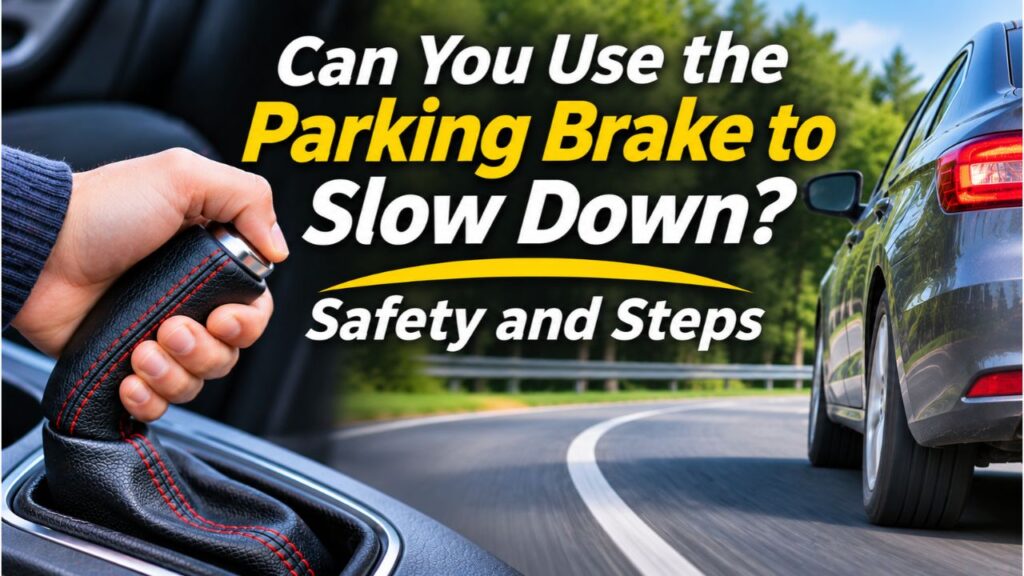
Technically, it can create braking force while a vehicle moves. That does not make it an appropriate replacement for the brake pedal. Use the service brakes for ordinary traffic, approaching intersections, downhill speed control, and gradual slowing. The parking brake is intended to hold a stationary vehicle and should be used while moving only when the manufacturer permits emergency operation and normal braking is unavailable.
A change in pedal feel does not always mean total brake failure. If vacuum assistance fails, a conventional hydraulic brake system may still work when you press the pedal much harder. If hydraulic pressure is lost, the pedal may sink or feel unusually soft. Both need attention.
An AAA Club Alliance explanation of emergency-brake use advises smooth, gradual parking-brake application when the primary brakes fail, warning that abruptly locking the rear wheels can cause a loss of control. That advice is especially relevant to a cable-operated lever that the driver can modulate.
How Does a Parking Brake Slow a Moving Vehicle?
A parking brake creates friction at the wheels, but its control and distribution of braking force differ from the main brake system. The design matters as much as the name on the control.
Mechanical Handbrakes and Foot Parking Brakes
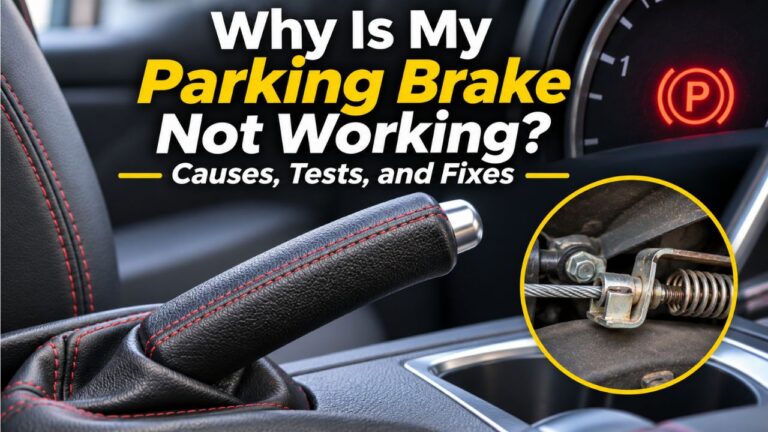
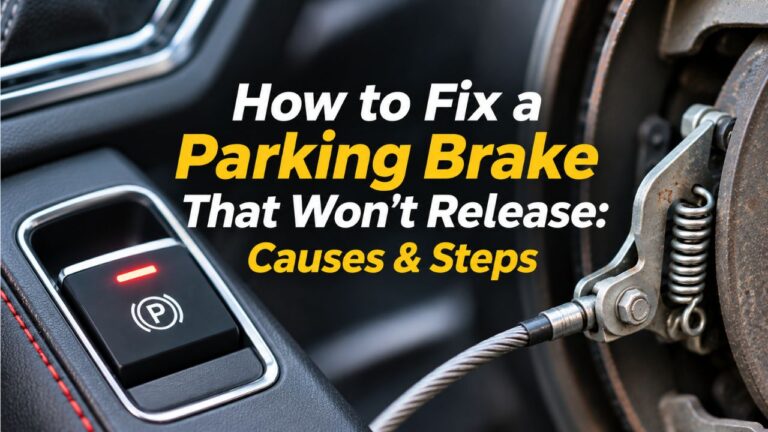
A traditional hand lever pulls cables that operate the rear brake shoes or a mechanism in the rear calipers. A foot-operated parking brake often uses a similar cable arrangement, although its release mechanism may latch differently. Most of these systems apply the rear wheels rather than all four.
A hand lever may allow gradual force adjustment. A ratcheting foot pedal may not offer the same easy control while the vehicle is moving. Do not assume a foot pedal can be feathered or released instantly; learn the control layout from the owner’s manual while parked.
Electric Parking Brakes and Emergency Hold Functions
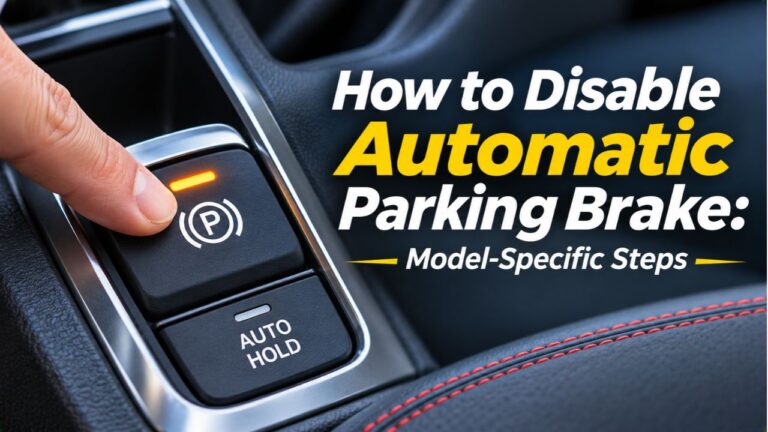
An electric parking brake, or EPB, uses an electric actuator to apply parking-brake force. Some modern vehicles have an emergency-braking mode that responds when the driver pulls and holds the switch while moving. Depending on the model, the system may coordinate hydraulic braking, ABS, or stability-control functions rather than simply clamping the rear brakes.
For example, the 2025 Kia K5 owner’s manual section on electronic parking brakes permits an emergency stop by pulling and holding the EPB switch if the brake pedal has a problem. It warns that stopping distance may be longer and that normal-speed operation outside an emergency can cause loss of control. Do not assume your vehicle responds exactly like this Kia.
How to Slow Down With the Parking Brake if Regular Brakes Fail
These steps describe an emergency response, not a practice drill. Procedures vary, and some electric systems may be disabled by the original fault. Prioritize steering into a safe path and avoiding collisions.
Step 01: Recognize the Brake Problem Without Panicking
If the brake pedal suddenly sinks, becomes hard, or stops slowing the car, act immediately. Keep both hands available for steering and look well ahead for traffic, pedestrians, and a possible stopping area. Avoid abrupt steering inputs that could destabilize the car.
A hard pedal may mean lost brake-booster assistance rather than total brake failure. A soft pedal that falls toward the floor more strongly suggests a hydraulic problem. Focus on slowing safely, not diagnosing the fault while moving.
Step 02: Release the Accelerator and Alert Nearby Drivers
Take your foot completely off the accelerator so the engine or motor is no longer adding speed. Increase following distance if possible, and use the horn or hazard lights to warn others when appropriate.
Avoid abrupt lane changes. Identify a clear route where the vehicle can lose speed gradually. On hills, look for an uphill route or designated escape ramp.
Step 03: Try to Restore Effective Service Braking
Press the normal brake pedal firmly. A hard pedal may still operate the hydraulic brakes with extra force. If the pedal falls toward the floor and the vehicle is not slowing, repeated pedal applications may temporarily build pressure in certain hydraulic failure situations.
Pumping is not universally appropriate. When ABS is operating normally during hard braking, drivers should maintain firm pressure rather than pump the pedal. If the service brake is ineffective, move to the remaining safe methods of slowing rather than endlessly repeating the same failed action.
Step 04: Reduce Speed With the Transmission When Appropriate
Select a progressively lower gear as vehicle speed allows, using the manufacturer’s recommended technique. Engine braking adds resistance without requiring extra friction-brake pressure. Use an appropriate lower-range setting in an automatic or downshift smoothly in a manual, avoiding engine over-revving.
Never shift into Park or Reverse while moving to try to stop. Keep the engine or drive system running so steering and other available assistance remain functional. If the vehicle uses unfamiliar electronic controls, follow its emergency-driving instructions rather than guessing at shift behavior.
Step 05: Apply a Mechanical Parking Brake Gradually
If the regular brakes cannot slow the car sufficiently and the vehicle has a controllable hand lever, pull it upward gently and progressively while maintaining a steady steering direction. On suitable lever designs, hold the release button so you can ease the lever downward if the rear tires begin to skid; do not latch it tightly at maximum travel.
Use the least force that achieves controlled deceleration. A sudden pull can lock the rear wheels. If the car starts to rotate or its rear wheels slide, ease off parking-brake force and concentrate on regaining steering control. A separate foot parking brake may have a different locking and release mechanism, so do not stamp on it or assume this hand-lever technique applies.
Step 06: Use an EPB Emergency Command Only as Your Manual Directs
If the car has an electric parking brake, follow its specified emergency procedure. Many models require pulling and holding the EPB switch, not tapping it once. Some systems keep braking only while the switch is held; others follow different logic or automatically apply the parking brake once speed falls sufficiently.
Behavior depends on vehicle speed, electrical power, and faults. Do not assume a modern EPB will always provide four-wheel braking or ABS control. If it doesn’t respond, keep steering toward safety and slowing through appropriate gears.
Step 07: Guide the Vehicle to a Safe Stop and Secure It
As speed drops, steer toward a clear, safe area away from moving traffic. Avoid people and fixed hazards. Once stopped, keep the car from rolling with the available service brake if it works, the parking brake if it can hold, the appropriate transmission position, and wheel chocks when safe and available.
Turn on hazard lights, stay protected from passing traffic, and call for roadside assistance or a tow. Do not resume driving because the brakes briefly seem normal again. A vehicle that required emergency stopping needs inspection of both the service and parking-brake systems.
Why the Parking Brake Can Make a Car Skid
During deceleration, weight shifts forward. The front tires gain some vertical load while the rear tires carry less, reducing the rear wheels’ available grip. Applying strong braking force only at the rear can therefore lock them before the vehicle slows adequately. Once the rear tires slide, the car may fishtail or rotate.
Wet roads, gravel, snow, and ice make the loss of traction more likely. A curve adds another demand on the tires because they must maintain lateral grip as well as resist braking. That is why aggressive handbrake use during a turn can be especially hazardous.
Modern electronic systems may moderate braking through their control logic, but this protection is not guaranteed on every vehicle or for every fault. The parking brake is an emergency backup, not a controlled high-speed stopping technique to practice on public roads.
Parking Brake Versus Regular Brakes for Slowing Down
| Feature | Regular Service Brakes | Parking Brake |
| Main purpose | Repeated, controlled vehicle slowing | Holding a stopped vehicle |
| Typical wheel coverage | All four wheels | Often the rear wheels; EPB emergency mode varies |
| Driver input | Main brake pedal | Lever, foot pedal, or switch |
| Normal ABS coordination | Yes, where ABS is fitted | Depends on parking-brake design and emergency mode |
| Recommended while moving | Yes | Only for a genuine emergency if applicable |
Service brakes distribute braking through a system designed for repeated deceleration. Parking brakes generally have less available braking force and may offer much less control. An EPB emergency function does not change its normal purpose.
What Happens if You Pull the Parking Brake at High Speed?
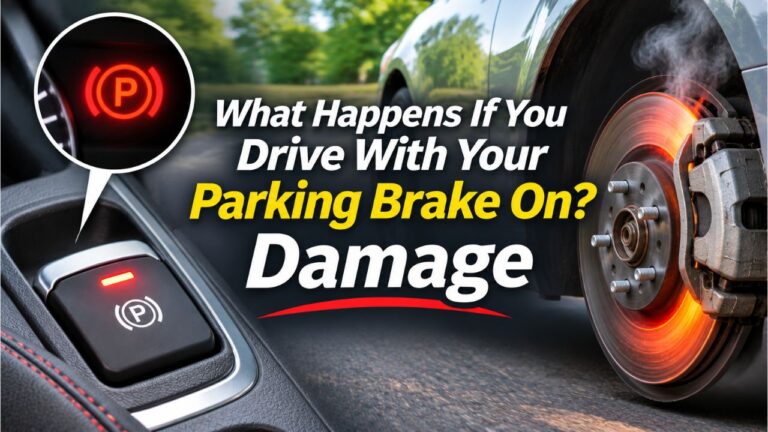
On a cable-operated system, a hard pull may abruptly lock the rear wheels. The car can slide, especially during a lane change or turn. Even without a skid, the rear friction components can overheat if the brake is held against high speed for too long. Braking effectiveness can fade as temperatures rise.
A vehicle with an electric parking brake may respond differently. Some systems command managed deceleration while the switch is held, and some refuse ordinary parking-brake application above certain speeds. Follow the manual; never test this behavior at speed.
Will the Parking Brake Still Work if the Main Brakes Fail?
Often, a mechanical cable parking brake remains available after a hydraulic pressure failure because it does not depend on the same fluid circuit. This allows emergency use. However, a broken cable, seized mechanism, worn shoes, or shared damaged rear friction components may limit its performance.
The Pennsylvania Driver’s Manual emergency-driving guidance recommends lower gears, appropriate pedal attempts, and using the parking brake when normal brakes fail. For older cable systems, it also advises controlling the release so the rear wheels do not remain locked if a skid begins.
An EPB may rely on electrical power and, during emergency braking, on parts of the service-brake control system. It is therefore unsafe to promise that every electric parking brake will function after every kind of brake failure.
When Not to Use the Parking Brake to Reduce Speed
Avoid parking-brake use during ordinary traffic, downhill driving with fully functioning service brakes, and routine stops at intersections. Never use it to test traction or compensate for faulty brakes. On a slippery surface, any emergency use must be especially cautious because a locked rear axle can destabilize the vehicle.
If the only problem is reduced booster assistance but the brake pedal still builds pressure, the regular brakes may remain the better means of stopping. If a vehicle is already skidding, adding a sharply applied mechanical parking brake can worsen control. Concentrate on steering and the appropriate recovery response for the situation.
What to Inspect After an Emergency Parking-Brake Stop
Have a qualified technician examine the original service-brake failure before the car moves again. The inspection should include relevant hydraulic components, brake fluid, warning messages, and booster or electronic assist equipment. It should also assess the parking-brake cables, actuators, pads or shoes, and rear rotors or drums for heat damage and proper release.
Signs such as a burning smell, smoke, dragging wheel, new grinding noise, or a parking-brake warning that remains on need attention. A cable or caliper may remain partly engaged after release. Do not touch hot parts or cool overheated rotors with water.
FAQs About Can You Use the Parking Brake to Slow Down
Can a Parking Brake Stop a Moving Car Completely?
It may stop a moving vehicle, but stopping distance and control may be much worse than with the service brakes. Effectiveness depends on speed, traction, brake condition, and the system design.
Is It Safe to Pull the Handbrake While Driving Slowly?
Not for routine slowing. Even at low speed, a strong pull can make the rear wheels lock on slippery pavement. Reserve it for a genuine emergency when normal stopping is unavailable.
Does an Electric Parking Brake Work at Highway Speed?
Some vehicles provide a manufacturer-approved emergency function that responds to a held switch while moving. Its action and limitations vary; never assume every model supports the same procedure.
Will the Parking Brake Activate ABS?
A cable handbrake generally does not directly command ABS modulation. Some electronic emergency-braking systems can involve ABS or hydraulic controls, depending on the vehicle.
Can Using the Parking Brake While Moving Damage It?
Yes. Extended or repeated application can overheat friction surfaces, wear linings, or damage parking-brake parts. Have the system inspected after an emergency stop that involved heavy braking.
Use the Parking Brake for Emergency Slowing, Not Everyday Stops
The answer to can you use the parking brake to slow down is yes, but only as a backup when normal braking is unavailable and the vehicle’s system allows it. A mechanical brake needs gentle, controlled application to reduce rear-wheel lockup; an electronic system may have a specific emergency switch-hold procedure.
If the main brakes fail, concentrate on steering, release the accelerator, try the appropriate service-brake response, and reduce speed with the transmission when safe. Use the parking brake carefully if necessary, then get the car to a secure stopping area.
Once stopped, do not continue driving until the braking problem has been diagnosed and repaired. The safest parking-brake technique is the one you never need outside a real emergency.