Is It Bad to Overfill Brake Fluid? Risks, Symptoms, and What to Do
Is it bad to overfill brake fluid? Yes. Filling the brake fluid reservoir above the manufacturer’s MAX line is not recommended. A small amount of extra fluid usually will not cause instant brake failure, but excessive fluid can overflow, damage painted surfaces, create a mess during brake service, and indicate that the fluid level was checked incorrectly.
Brake-system maintenance deserves attention because brake defects remain a major safety concern on U.S. roads. During the 2025 CVSA International Roadcheck, inspectors found 5,561 brake-related out-of-service violations, representing 41.1% of all vehicle out-of-service violations recorded during the event. During 2025 Brake Safety Week, inspectors also placed 2,296 of 15,175 commercial vehicles, or 15.1%, out of service because of brake-related violations.
These statistics involve commercial vehicles, but they show why proper brake maintenance should never be treated casually.
As a brake repair technician, I recommend treating the MAX line as a limit, not a target to exceed. Ford specifically warns that brake-system performance can be affected when fluid is either below MIN or above MAX.
In this guide, I will explain what actually happens when brake fluid is overfilled, which symptoms matter, how much is too much, and how to remove excess fluid safely.
Is It Bad to Overfill Brake Fluid?
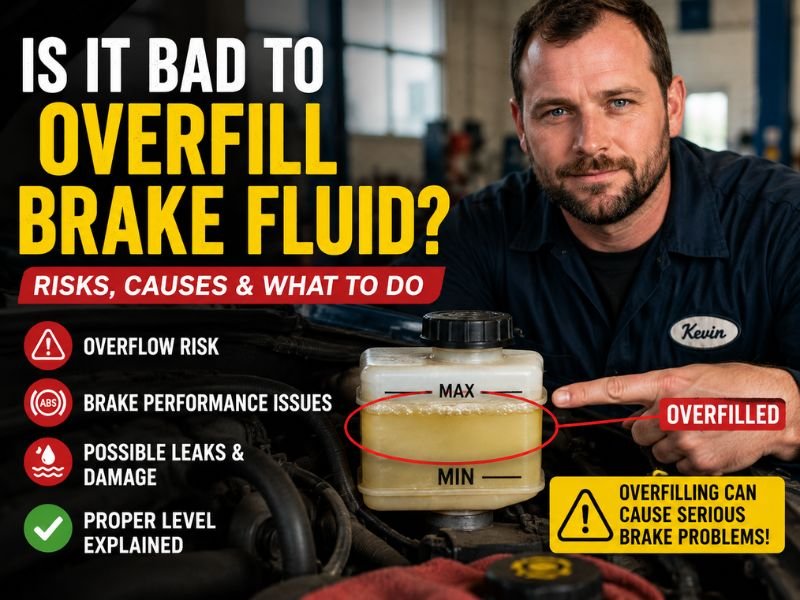
Yes, overfilling a brake fluid reservoir is bad practice, even when the vehicle seems to brake normally.
Your brake fluid reservoir is designed with MIN and MAX markings for a reason. The fluid should stay within the operating range specified by the vehicle manufacturer. Toyota, for example, instructs owners to keep brake fluid between the MIN and MAX marks.
A reservoir filled slightly above MAX is different from one filled all the way to the cap. A minor overfill may not immediately change pedal feel, while a severely overfilled reservoir leaves less available space and makes overflow more likely.
It is also important to understand that extra fluid does not automatically create excessive brake-line pressure. Hydraulic pressure is mainly produced when you press the brake pedal and move the master cylinder piston.
Still, I would correct an overfilled reservoir rather than leaving it that way. There is no performance benefit to having fluid above the specified MAX level.
What Happens If You Put Too Much Brake Fluid In?
Several things can happen when the reservoir contains more fluid than the manufacturer recommends.
Brake Fluid Can Overflow From the Reservoir
One of the most obvious problems is fluid escaping around the reservoir cap.
This can become especially noticeable during brake service. When brake pads are replaced, the caliper pistons are normally pushed back into their bores. That movement sends brake fluid back toward the master cylinder reservoir.
If someone previously topped the reservoir off too much, returning fluid can push the level even higher and cause an overflow.
You may notice wetness around the reservoir, master cylinder, firewall, or nearby engine-bay components.
Brake Fluid Can Damage Car Paint
Brake fluid should never be allowed to remain on painted automotive surfaces.
Toyota warns that brake fluid can damage painted surfaces, which is why spills should be dealt with promptly.
This matters because the master cylinder reservoir is usually positioned near painted areas in the engine compartment. One careless overfill can allow fluid to run down onto surrounding panels.
If I spill brake fluid during service, I clean the affected area immediately using a method appropriate for that vehicle and finish.
It Can Make Future Brake Service Messy
An overfilled reservoir can also make routine repairs unnecessarily difficult.
For example, imagine replacing worn front brake pads. When I compress the caliper pistons, fluid moves backward through the hydraulic system. If the reservoir is already overfilled, that returning fluid has nowhere useful to go.
The result may be fluid around the reservoir cap or fluid spilling into the engine bay.
That is one reason I always check the reservoir level before compressing caliper pistons.
Symptoms of an Overfilled Brake Fluid Reservoir
Overfilling has a few obvious signs, but many symptoms commonly blamed on excess brake fluid actually come from other brake problems.
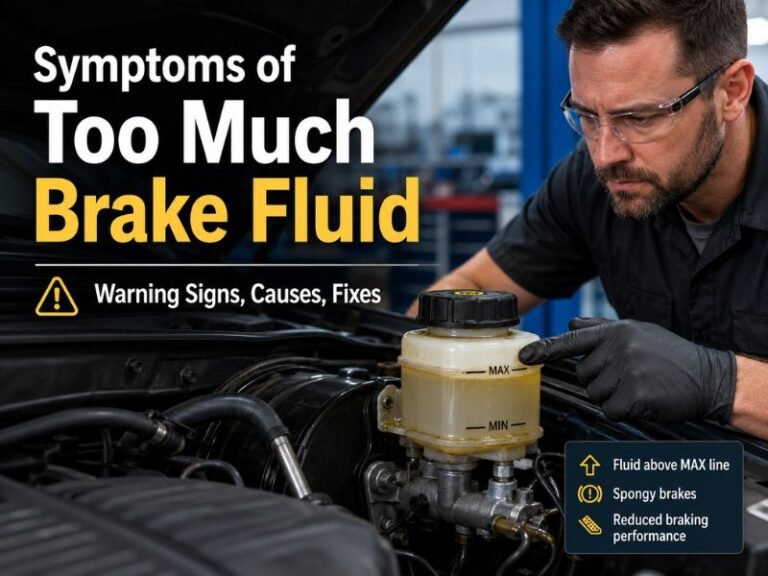
Fluid Is Above the MAX Line
This is the clearest indication.
Look at the translucent brake fluid reservoir and find the MAX and MIN markings. If the fluid level is clearly above MAX, the reservoir contains more fluid than recommended.
You do not need to guess based on how full the container looks. Use the markings and your owner’s manual as your reference.
Wetness Around the Reservoir Cap
Wet brake fluid around the reservoir cap may mean excess fluid has escaped.
However, it can also be left over from careless filling. Clean the area and monitor it before deciding that the reservoir itself is leaking.
If fresh fluid keeps appearing, inspect the cap, reservoir, and master cylinder.
Brake Fluid Dripping Into the Engine Bay
A badly overfilled reservoir can create visible dripping.
Because brake fluid may damage paint, I would not leave this situation untreated.
Remove the excess fluid and carefully inspect the surrounding area for contamination.
Unusual Braking Symptoms Need Separate Diagnosis
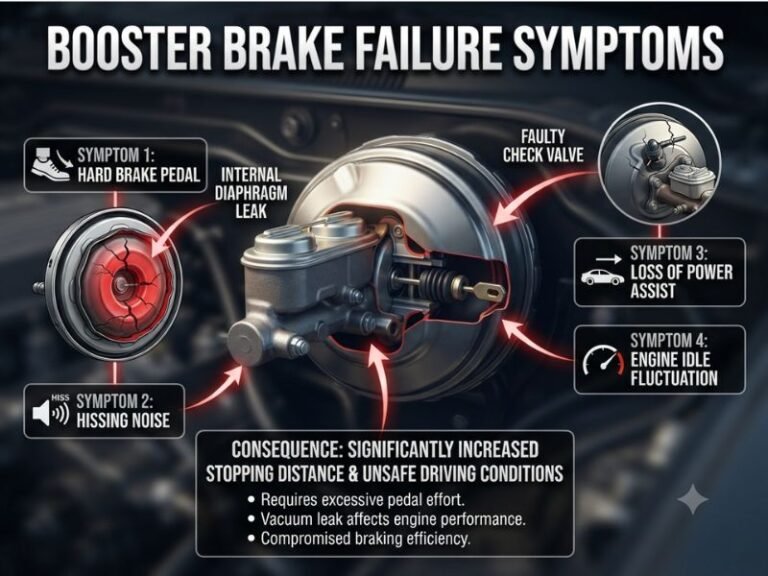
A hard brake pedal, brake drag, overheated wheel, ABS light, or vehicle pulling while braking should not automatically be blamed on an overfilled reservoir.
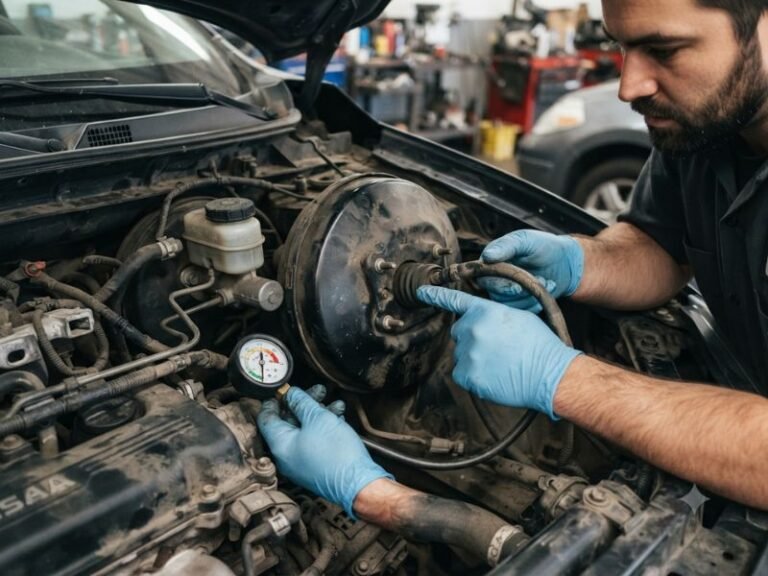
These problems can come from a sticking caliper, restricted brake hose, brake booster fault, master cylinder problem, parking brake issue, or ABS malfunction.
If the fluid level is corrected but the braking problem remains, the brake system needs a proper diagnosis.
Can Too Much Brake Fluid Cause Brakes to Lock Up?
A slightly overfilled brake fluid reservoir normally will not cause properly functioning brakes to lock by itself.
When a wheel stays partially or fully braked after you release the pedal, I start looking for another fault.
Common possibilities include a sticking caliper piston, seized caliper slide, internally damaged brake hose, blocked master cylinder compensation port, incorrectly adjusted booster pushrod, or parking brake problem.
A restricted hydraulic circuit can trap brake pressure and create brake drag. As the brake heats up, the problem may become worse.
If your vehicle struggles to roll, smells like hot brakes, or has one wheel that becomes much hotter than the others, do not assume removing excess reservoir fluid will fix everything.
The underlying cause should be identified first.
Can Overfilling Damage the Master Cylinder?
A small amount of excess fluid does not normally destroy the master cylinder immediately.
The master cylinder creates hydraulic pressure when the brake pedal is pressed. The reservoir above it supplies fluid to the braking system as needed.
However, manufacturers still specify a correct fluid range. Ford states that fluid outside the MIN-to-MAX operating range can compromise brake-system performance and should be checked.
From a repair perspective, contamination is often a greater threat to the master cylinder than a small overfill.
Petroleum products, dirty tools, water, or incorrect brake fluid can damage seals and other hydraulic components. Ford specifically warns that contamination with dirt, water, petroleum products, or other materials may result in brake-system damage or failure.
I would never replace a master cylinder just because someone overfilled the reservoir. I would test the component and diagnose the actual symptoms first.
Why Does Brake Fluid Become Overfilled?
Most overfilled reservoirs are caused by simple maintenance mistakes.
Adding Fluid Without Checking the Level
The easiest mistake is opening the reservoir and pouring in fluid without first checking the MAX line.
Some beginners assume a fluid reservoir should be filled almost to the cap. Brake fluid does not work that way.
Always inspect the level before adding anything.
Topping Off Fluid With Worn Brake Pads
Brake fluid level can gradually change as disc brake pads wear.
As the pads become thinner, the caliper pistons extend farther outward. More brake fluid stays in the calipers, which can make the reservoir level appear lower.
If you fill the reservoir to the top while the pads are badly worn, the situation may change when new pads are installed.
Pushing the caliper pistons back sends fluid toward the reservoir, potentially leaving it above MAX.
Incorrect Brake Service
Overfilling may also happen after:
- brake bleeding
- brake fluid flushing
- caliper replacement
- master cylinder repair
- brake pad replacement
I always perform a final reservoir-level check after completing hydraulic brake work.
How to Check Brake Fluid Level Correctly
Checking brake fluid is simple, but cleanliness is extremely important.
Step 1: Park on Level Ground
Park the vehicle on a flat surface and secure it properly.
Follow your owner’s manual if the manufacturer specifies a particular procedure for checking brake fluid.
Step 2: Locate the Brake Fluid Reservoir
The reservoir is usually found near the firewall on the driver’s side of the engine compartment.
It is attached to or positioned above the brake master cylinder.
Many reservoirs are translucent, allowing you to see the level without opening the cap.
Step 3: Find the MIN and MAX Marks
Look for markings molded into the reservoir.
The correct level should normally be between MIN and MAX, although the exact checking procedure depends on the vehicle. Ford and Toyota both identify this range as the appropriate reference for checking fluid level.
Do not fill the reservoir to the neck unless the manufacturer’s procedure specifically instructs you to do so.
Step 4: Check the Fluid Condition
Look at the fluid while checking the level.
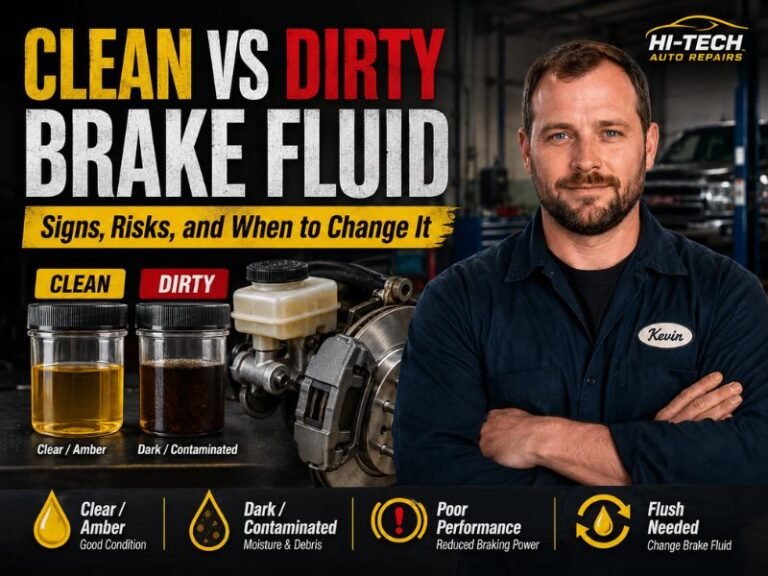
Brake fluid commonly starts clear to light amber, although appearance can vary by product and age.
Very dark or contaminated-looking fluid may indicate that service is due, but color alone should not replace the manufacturer’s maintenance schedule.
Step 5: Check the Owner’s Manual
Different vehicles may require different brake fluid specifications.
Common classifications include DOT 3 and DOT 4, but never choose fluid simply because it is available.
Use the exact specification approved by your manufacturer.
How to Remove Excess Brake Fluid Safely
If the only problem is a reservoir slightly above MAX, removing the excess is usually straightforward.
Use a Clean Fluid Syringe or Extractor
I prefer a dedicated brake fluid syringe or fluid extractor.
Open the reservoir carefully and remove only a small amount at a time. Recheck the level frequently until it falls within the correct range.
The tool must be perfectly clean.
Do not use a syringe, baster, or hose that previously contained engine oil, transmission fluid, power steering fluid, coolant, or grease.
Do Not Empty the Reservoir
This is extremely important for beginners.
You are trying to remove excess fluid, not drain the brake system.
If the reservoir becomes empty, air may enter the hydraulic system. Air compresses much more easily than brake fluid and can cause a soft or spongy brake pedal.
Keep enough fluid in the reservoir at all times.
Avoid Contaminating the Fluid
Brake hydraulic systems require extremely clean fluid.
Ford recommends using brake fluid from a sealed container and warns that contamination can damage the system.
Never introduce petroleum products into a brake fluid reservoir.
After correcting the level, reinstall the reservoir cap securely.
Do You Need to Bleed the Brakes After Removing Excess Fluid?
Usually, no.
Removing a small amount of fluid from the top of the reservoir does not normally require brake bleeding, provided you do not let the reservoir run empty.
Bleeding becomes necessary when air enters the hydraulic system or when brake components have been opened for repair.
For example, bleeding may be required after replacing a brake hose, caliper, wheel cylinder, or master cylinder.
A soft or spongy pedal after hydraulic work is another reason to investigate trapped air.
Some modern vehicles with ABS, electronic brake control, or hybrid braking systems may require special bleeding procedures or a diagnostic scan tool.
When I am working on one of those systems, I follow the manufacturer’s service procedure rather than using a generic bleeding method.
How Much Brake Fluid Is Too Much?
There is no universal answer in ounces or milliliters because reservoir size varies between vehicles.
A simple rule is more useful:
If the fluid is above the manufacturer’s MAX mark, it is too high.
That does not mean being one millimeter above MAX will immediately destroy the braking system. It means the level is outside the specified operating range and should be corrected.
Ford specifically states not to fill above the MAX line in its brake fluid service guidance.
Do not try to create your own fill level based on reservoir size.
Use the vehicle’s markings and owner’s manual.
When Should You See a Brake Technician?
A slightly overfilled reservoir can often be corrected easily, but some symptoms should never be treated as a simple fluid-level problem.
I recommend professional brake inspection if you notice:
- a brake pedal that sinks toward the floor
- an extremely hard brake pedal
- strong pulling during braking
- a wheel that becomes unusually hot
- visible brake fluid leakage
- fluid level that keeps dropping
- a red brake warning light
- an ABS light combined with poor braking
- grinding, smoke, or severe brake drag
If I see any of these conditions, I inspect the complete braking system rather than assuming excess fluid is the only problem.
Brakes are a safety system. Guessing is rarely worth the risk.
FAQs About Overfilling Brake Fluid
Can I Drive With Slightly Too Much Brake Fluid?
A very small amount above MAX may not immediately change braking performance, but I still recommend correcting it.
If fluid is leaking, the brakes are dragging, or the pedal feels abnormal, have the vehicle inspected before continuing normal driving.
Will Too Much Brake Fluid Cause a Hard Pedal?
Usually not by itself.
A hard brake pedal is more commonly associated with a brake booster problem, loss of vacuum assist, hydraulic restriction, or another mechanical fault.
Check the fluid level, but do not stop your diagnosis there.
Does Brake Fluid Expand When Hot?
Brake fluid and brake components experience temperature changes during vehicle operation.
The reservoir is designed to work within a specified fluid range, which is another reason to follow the MIN and MAX markings instead of filling it completely.
Can I Use a Turkey Baster to Remove Brake Fluid?
A new, completely clean baster dedicated only to brake fluid can remove fluid from a reservoir.
However, I prefer a dedicated fluid syringe or extractor because it provides better control and reduces the chance of contamination.
Should Brake Fluid Be Filled to the Top?
No.
The reservoir should be filled only to the level specified by the manufacturer, usually no higher than the MAX mark.
What Should I Do If Brake Fluid Spills on Paint?
Deal with it promptly.
Brake fluid can damage painted automotive surfaces, and Toyota specifically warns owners about this risk.
Follow your vehicle manufacturer’s recommended cleaning procedure and avoid simply leaving the fluid on the surface.
Conclusion
So, is it bad to overfill brake fluid? Yes. Even though a slightly overfilled reservoir usually will not cause immediate brake failure, there is no advantage to leaving the level above the manufacturer’s MAX mark.
Excess fluid can overflow, damage painted surfaces, and create problems when caliper pistons are pushed back during future brake work. More importantly, symptoms such as brake drag, a hard pedal, overheating, or warning lights should not automatically be blamed on the extra fluid because another brake fault may be present.
I recommend using a clean fluid extractor to bring the level back within the specified range without allowing the reservoir to run dry.
After correcting the level, pay attention to how the vehicle behaves. If braking still feels abnormal, I would inspect the complete hydraulic and mechanical brake system before considering the problem solved.