Can Bad Brake Fluid Cause Squeaking? Causes, Signs, and Fixes
Can bad brake fluid cause squeaking? In most cases, no. Old, moisture-contaminated, or degraded brake fluid usually causes hydraulic problems such as a soft pedal, brake fade, or reduced braking response rather than a high-pitched squeak. However, leaking brake fluid can contaminate brake components and indirectly contribute to unusual brake noise.
Brake problems deserve attention because they remain a major vehicle-safety concern. During the 2025 CVSA International Roadcheck, inspectors recorded 5,561 brake-related out-of-service violations, representing 41.1% of all vehicle out-of-service violations. During 2025 Brake Safety Week, U.S. inspectors conducted 13,700 commercial vehicle inspections and found 2,035 brake-related out-of-service violations, or 14.9% of inspected vehicles. These statistics involve commercial vehicles, but they show how important brake condition and maintenance are.
As a brake technician, I normally inspect the brake pads, rotors, calipers, and hardware before blaming brake fluid for a squeaking sound. In this guide, I will explain when brake fluid can contribute to noise, what usually makes brakes squeak, and how I diagnose the problem.
Can Bad Brake Fluid Cause Squeaking?
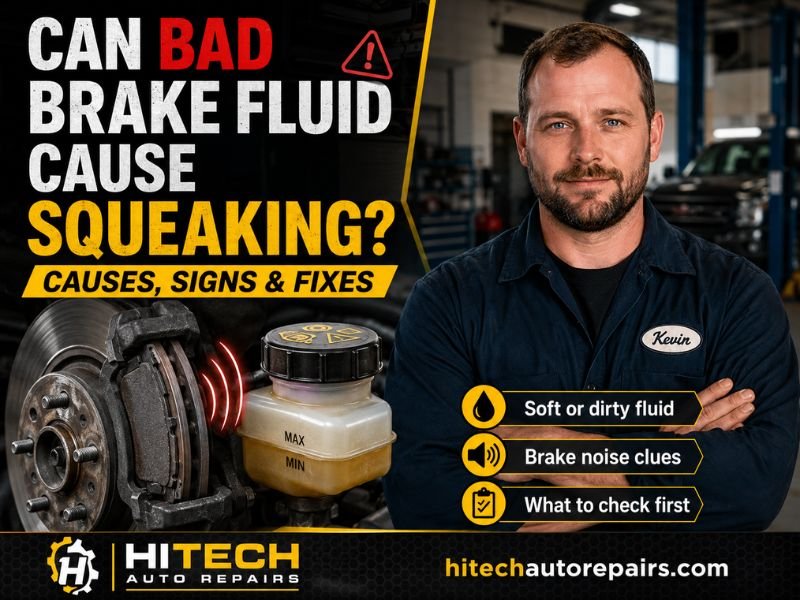
Bad brake fluid does not normally produce brake squeaking on its own.
Brake fluid operates inside a sealed hydraulic brake system. When you press the pedal, hydraulic pressure carries your braking force from the master cylinder to the calipers or wheel cylinders.
Squeaking, on the other hand, usually comes from vibration or friction at the brake pads, rotors, shoes, drums, or related hardware. The fluid normally does not touch these friction surfaces.
This is why changing old brake fluid usually will not make a squeaky brake suddenly become quiet.
There is one important exception. If brake fluid leaks onto a friction surface, contamination may affect how the pad or shoe contacts the rotor or drum. Noise, reduced braking performance, or uneven braking may follow.
So, when I hear brake squeaking, I check the friction components first and the hydraulic system for leaks second.
How Brake Fluid Actually Works
Brake fluid transfers force through the braking system.
When you press the brake pedal, the master cylinder pushes brake fluid through brake lines and flexible hoses. That hydraulic force moves the caliper pistons, which press the brake pads against the rotors.
The fluid must tolerate high temperatures while maintaining predictable hydraulic performance.
Many passenger vehicles use DOT 3, DOT 4, or DOT 5.1 brake fluid, depending on manufacturer requirements. I always use the exact specification listed in the owner’s manual or on the reservoir cap.
Over time, common glycol-based brake fluids absorb moisture. Brembo explains that increasing moisture content lowers the fluid’s boiling point and can contribute to vapor lock and a spongy brake pedal under high temperatures.
That is primarily a hydraulic-performance problem, not a squeaking problem.
When Brake Fluid Can Contribute to Squeaking
Brake Fluid Leaks Onto Pads or Rotors
This is the situation where brake fluid and brake noise can become connected.
A leaking caliper, wheel cylinder, fitting, hose connection, or another hydraulic component may allow fluid to reach nearby brake parts.
If brake fluid gets onto a brake pad or shoe, the friction material can become contaminated. The brake may then behave differently when it contacts the rotor or drum.
You might notice unusual noise, inconsistent braking, pulling, or reduced braking force.
The correct repair is not simply to add more brake fluid. I first locate and repair the leak, then inspect every friction component that may have been contaminated.
A Leak Can Create Other Brake Problems
A hydraulic leak can also cause the reservoir level to drop.
If enough fluid escapes, the pedal may feel soft or braking performance may decrease. A brake warning light may also appear on some vehicles.
That combination is much more serious than an ordinary squeak.
The Most Common Causes of Brake Squeaking
Most squeaking brakes have nothing to do with the condition of the brake fluid.
Worn Brake Pads
Many brake pads have a metal wear indicator designed to make noise when the friction material becomes thin.
When the pad reaches a certain thickness, the indicator touches the rotor and produces a high-pitched squeal.
If I hear a consistent squeak that becomes noticeable during braking, pad thickness is one of the first things I check.
Glazed Brake Pads or Rotors
Excessive heat can create a smooth, hardened surface on brake pads or rotors.
This condition is known as glazing.
Glazed components may squeak, especially during light braking. They may also provide less predictable friction than properly conditioned surfaces.
Moisture or Light Rust on the Rotors
A small amount of rotor surface rust can develop after a vehicle sits outside overnight, particularly after rain, high humidity, or a car wash.
You may hear squeaking or light scraping during the first few stops.
If the sound disappears after normal braking, surface moisture or light oxidation may have been the cause.
Persistent noise needs further inspection.
Brake Dust or Debris
Brake dust, road debris, and small contaminants can sometimes create noise around the pad and rotor.
The solution depends on what is found during inspection.
I do not recommend spraying random lubricants around the brake assembly because getting lubricant on the friction surfaces creates a much more serious problem.
Worn or Incorrect Brake Hardware
Brake pads rely on clips, shims, anti-rattle hardware, and correctly lubricated contact points to control movement and vibration.
Missing, damaged, incorrectly installed, or corroded hardware can allow the pads to vibrate.
That vibration can produce the classic high-frequency squeak many drivers hear.
Sticking Brake Caliper
A sticking caliper may keep a brake pad partially against the rotor after the pedal is released.
This creates excessive friction and heat.
Along with squeaking, you might notice a burning smell, excessive brake dust, reduced fuel economy, or one wheel becoming much hotter than the others.
I consider those signs more serious than a normal occasional brake squeak.
Signs Your Brake Fluid May Be Bad
Brake fluid problems usually produce different symptoms from noisy pads.
Dark or Contaminated-Looking Fluid
New brake fluid is generally clean and relatively light in appearance, although exact color varies by product.
Dark or cloudy fluid can suggest age or contamination. Brembo notes that brake fluid collects moisture and impurities over time and recommends replacement according to manufacturer service requirements.
Color alone should not be your only test, however.
Soft or Spongy Brake Pedal
A soft pedal is much more relevant to hydraulic problems.
Air in the system, fluid leaks, excessive moisture, or other hydraulic faults can change pedal feel.
Moisture becomes especially important because it lowers brake fluid’s boiling point. If the fluid becomes hot enough to produce vapor, those compressible vapor bubbles can contribute to a spongy pedal and reduced braking effectiveness.
Reduced Braking Performance
Old fluid may become more problematic during repeated hard braking or high-temperature operation.
That is why I pay more attention to brake fade or pedal changes when evaluating fluid condition than to squeaking.
Brake Warning Light
A warning light can indicate several problems, including low brake fluid on certain vehicles.
Do not automatically assume the fluid itself is old just because a warning appears. Check the system properly.
Can Old Brake Fluid Cause Brake Noise?
Old brake fluid generally does not directly cause brake noise.
The primary concern with aged fluid is moisture absorption. Ford states that brake fluid absorbs water over time, which degrades its effectiveness, while Brembo explains that moisture lowers the fluid’s boiling point.
This can increase the risk of brake fade or a spongy pedal under demanding conditions.
If an older vehicle has both dirty brake fluid and squeaky brakes, those may simply be two separate maintenance issues happening at the same time.
I would inspect both rather than assuming one caused the other.
Can Low Brake Fluid Cause Squeaking?
Low brake fluid normally does not create squeaking directly either.
However, there is an important connection.
As brake pads wear, caliper pistons remain farther outward to compensate for the thinner friction material. This can cause the reservoir level to gradually decrease.
At the same time, those worn pads may start squeaking because their wear indicators are contacting the rotors.
A driver may therefore notice low brake fluid and squeaking brakes together and assume the fluid caused the noise.
In reality, worn pads may be contributing to both observations.
A sudden or significant drop in fluid level is different and should be checked for a hydraulic leak.
How I Diagnose Squeaking Brakes
When a customer tells me the brakes squeak, I use a systematic inspection rather than immediately replacing parts.
Step 1: Inspect the Brake Pads
I check pad thickness, wear patterns, glazing, cracks, and contamination.
Uneven pad wear can also point toward a sticking caliper or hardware problem.
Step 2: Inspect the Rotors
I look for scoring, heavy rust, heat damage, glazing, and abnormal surface patterns.
A damaged rotor can create noise even when the brake pads still have plenty of material.
Step 3: Check the Brake Hardware
I inspect pad clips, shims, caliper slides, and mounting hardware.
Small hardware problems can create a surprising amount of noise.
Step 4: Look for Fluid Leaks
I inspect the calipers, flexible hoses, brake lines, wheel cylinders where equipped, and master-cylinder area.
Any hydraulic leak deserves immediate attention.
Step 5: Check Brake Fluid Level and Condition
Finally, I check the reservoir.
Ford states that brake fluid between the MIN and MAX marks is within the normal operating range and also warns that dirt, water, petroleum products, or other contaminants can damage the brake system.
What to Do If Brake Fluid Gets on Brake Pads
Brake fluid on friction material should not be ignored.
Brake pads and shoes are designed to operate with clean, dry friction surfaces. Once contaminated, their performance may become unpredictable.
I first repair the leak so additional fluid cannot reach the brakes.
Next, I inspect the pads or shoes and the mating rotor or drum. Because friction material can absorb contaminants, replacement may be safer than trying to rescue heavily contaminated pads.
Metal surfaces can be cleaned using an appropriate brake-service procedure, but I never assume contaminated friction material is safe simply because the surface looks dry.
Never ignore contaminated brake pads, especially if braking performance has changed.
Should You Change Brake Fluid to Stop Squeaking?
Usually, no.
A brake fluid change is useful when the fluid has reached the manufacturer’s service interval, contains excessive moisture, has become contaminated, or needs replacement after hydraulic repairs.
It is not normally a cure for squeaking caused by pads and rotors.
If your only symptom is brake squeak, I would inspect the pads, rotors, calipers, and hardware before paying for a fluid service solely to eliminate the noise.
However, if the fluid is due for replacement anyway, servicing both problems at the same visit can make sense.
When Should You See a Brake Technician?
Occasional light brake squeaking is not always an emergency, but some symptoms need prompt attention.
I recommend a brake inspection if the squeaking becomes grinding, the pedal feels soft, the vehicle pulls during braking, or you see fluid near a wheel.
You should also take the problem seriously if a wheel becomes unusually hot, you smell burning brakes, the reservoir keeps losing fluid, or stopping distance noticeably increases.
A brake warning light combined with braking problems is another reason not to delay diagnosis.
If noise appears together with a hydraulic leak or major pedal change, I treat the situation as more than a simple squeak.
FAQs About Bad Brake Fluid and Squeaking
Can contaminated brake fluid make brakes squeak?
Usually not while the fluid remains inside the hydraulic system.
If contaminated or leaking fluid reaches the brake pads, shoes, rotors, or drums, however, it may contribute to abnormal friction and noise.
Can low brake fluid cause brake noise?
Low fluid normally does not directly cause noise.
Worn brake pads can lower the reservoir level over time and can also squeak, which is why the two conditions may appear together.
Can old brake fluid damage brake pads?
Not under normal conditions because brake fluid stays inside the hydraulic circuit.
A leak that allows fluid onto the pads can contaminate the friction material and may require pad replacement.
Will changing brake fluid fix squeaky brakes?
Usually not.
A fluid change addresses hydraulic fluid condition. Squeaking more commonly requires checking the pads, rotors, hardware, and calipers.
Why do my brakes squeak with new pads?
New pads may squeak because of the pad compound, rotor condition, installation problems, missing hardware, glazing, or improper bedding.
New does not always mean correctly installed or perfectly matched to the rotor.
Is brake squeaking dangerous?
Sometimes it is harmless, but sometimes it is an early warning.
Noise caused by light surface rust is very different from squealing caused by worn pads or an overheating caliper. If you are unsure, I recommend having the brakes inspected.
Conclusion
So, can bad brake fluid cause squeaking? Usually, it does not cause squeaking directly. Old or moisture-contaminated brake fluid primarily affects hydraulic performance, while brake squeaks are much more commonly related to worn pads, glazed rotors, rust, brake hardware, or sticking calipers.
A brake fluid leak changes the situation because fluid can contaminate friction components and contribute to abnormal noise or reduced braking performance.
As a brake technician, I would inspect the pads, rotors, calipers, and hardware before blaming the fluid. I would also check the reservoir and hydraulic system for leaks or contamination.
If squeaking appears together with a soft pedal, fluid loss, overheating, pulling, or reduced stopping ability, I recommend treating it as a brake-system problem rather than simply a noise problem.
