How to Tell if Parking Brake Is Broken: Signs and Safe Tests
A parking brake may be broken if it cannot hold your stopped car, its lever or pedal moves without normal resistance, or it stays engaged after you release it. On a vehicle with an electronic parking brake (EPB), a persistent fault message or an actuator that will not respond can also indicate a problem. A dashboard indicator lighting up is not proof that the brakes actually hold.
The word broken can mean several different failures. A snapped cable may disconnect the driver’s control from the rear brakes, while worn parking-brake shoes can leave the lever feeling normal but provide little holding force. A seized cable or caliper can cause the opposite problem: the brake remains on when you want to drive. Electric systems have their own battery, motor, and control-related faults.
You can recognize many warning signs without dismantling anything or testing at road speed. The safest approach is to examine the control, check the visible hardware, and assess holding and release only in controlled conditions. Below are the signs that matter, a step-by-step inspection, ways to narrow down the failed component, and what to do when the vehicle cannot be secured.
How to Tell if Parking Brake Is Broken: Three Main Failure Types
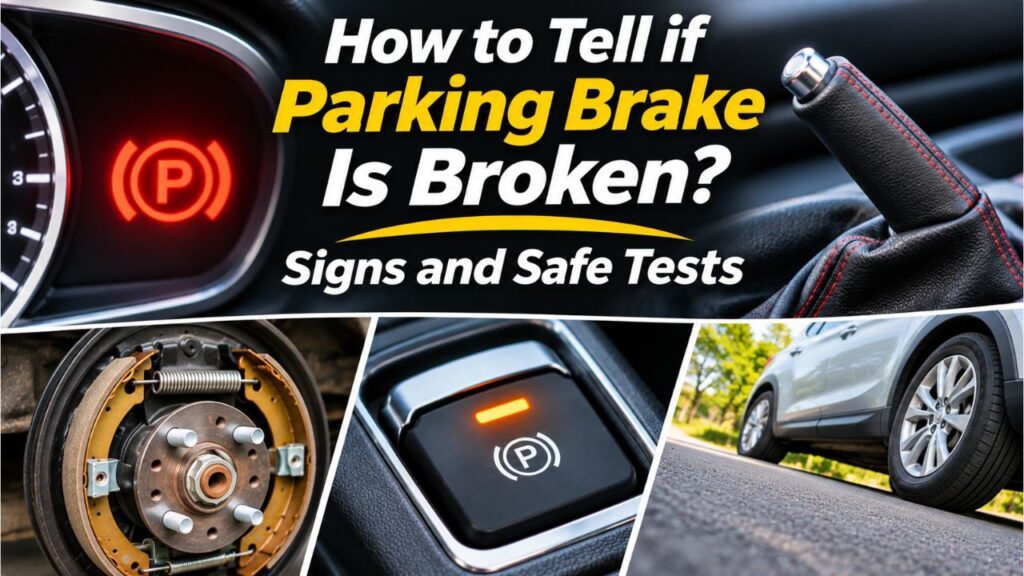
A working parking brake should apply, hold, and release. Its control must move the mechanism into the engaged position, the rear brake hardware must develop enough friction to hold the stationary vehicle, and everything must return when released.
| What Fails | What You May Notice | Likely Areas to Inspect |
| Brake will not apply | Loose lever, pedal will not latch, or EPB will not activate | Cable, control linkage, switch, motor, power supply |
| Brake applies but will not hold | Vehicle creeps even though the control is fully engaged | Adjustment, worn shoes or pads, rear caliper mechanism |
| Brake will not release | Rear brake drag, grinding, resistance to rolling, or release warning | Seized cable, return spring, caliper, or EPB actuator |
An automatic transmission’s Park setting can conceal a failed parking brake by holding the drivetrain independently. Likewise, choosing a gear in a manual transmission may keep the car still even when the parking brake needs repair. Do not mistake that backup holding force for proof of proper parking-brake operation.
Signs Your Parking Brake May Be Broken
The Vehicle Moves After the Brake Is Applied
A parking brake that cannot secure a stationary car has failed its main purpose. Rolling on a slight slope is especially concerning when the control is fully applied. However, do not create an uncontrolled roll to confirm a suspicion; stop testing and arrange an inspection if the brake has already slipped.
The Handbrake Lever Pulls Up With Little Resistance
A suddenly loose lever may indicate a disconnected, damaged, or broken cable. Excessive travel can also result from worn brake shoes, incorrect adjustment, or linkage wear. Compare the feel with your vehicle’s usual behavior, not a universal number of clicks. A lever that rises farther than before is a clue, not a complete diagnosis.
The Foot Parking Brake Pedal Will Not Stay Down
On systems with a foot-operated parking brake, a defective ratchet, latch, or release linkage may prevent the pedal from staying engaged. If the pedal latches normally but the car still creeps, the control might be working while the braking hardware is not. Do not keep forcing a pedal that jams or releases unpredictably.
The Brake Remains Stuck After You Release It
A parking brake can be broken even when it holds too firmly. Rear wheel drag, scraping, a hot-brake smell, or a release lever that refuses to return can indicate a binding cable, caliper mechanism, or return spring. A parking brake stuck on may damage brakes if the car is driven against it.
The Electronic Parking Brake Reports a Malfunction
An EPB may display messages such as “Park Brake Not Applied,” “Park Brake Not Released,” or “Service Required.” A brief motor sound while operating the switch is usually normal, but grinding, repeated unsuccessful attempts, or an unresponsive switch is not. Some warnings result from low battery voltage or unmet release conditions rather than a broken actuator.
How to Check if Your Parking Brake Is Broken Step by Step
These are stationary owner-level checks, not instructions for replacing parts or proving full braking capacity. Use the exact vehicle manual for an EPB or unusual parking mechanism. If the car has already rolled with the brake applied, or the brake will not release, do not attempt another holding test.
Step 01: Park on Firm, Level Ground and Secure the Vehicle
Choose a clear area away from traffic, people, steep slopes, and garage doors. Hold the regular brake pedal while selecting Park or the appropriate gear, and use wheel chocks when needed. Remain in the driver’s seat for any operating check. Never ask someone to stand in the path of the car to watch whether it moves.
Before continuing, confirm that the regular service brakes feel normal. If the foot brake is also weak, sinking, or showing a serious warning, stop and arrange professional assistance; a parking-brake check cannot make a damaged hydraulic braking system safe.
Step 02: Identify Whether the System Is Mechanical or Electronic
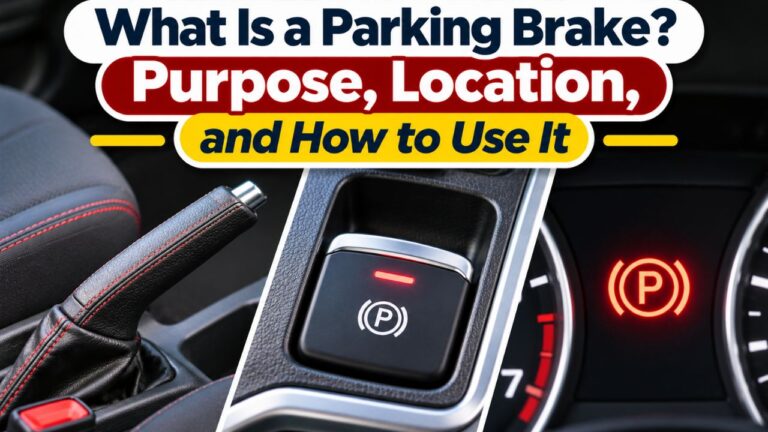
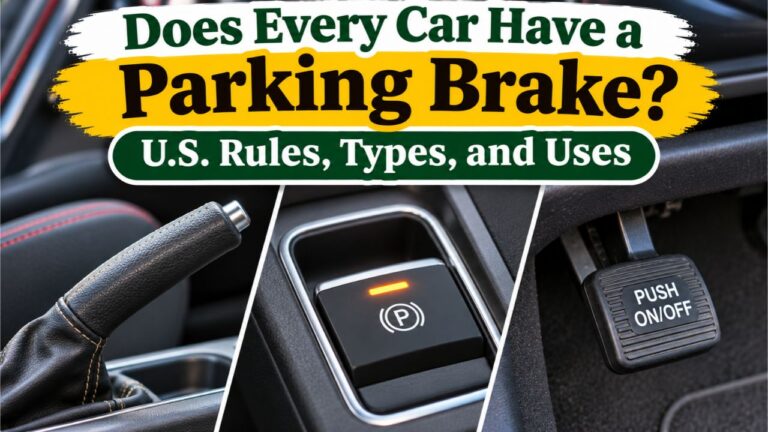
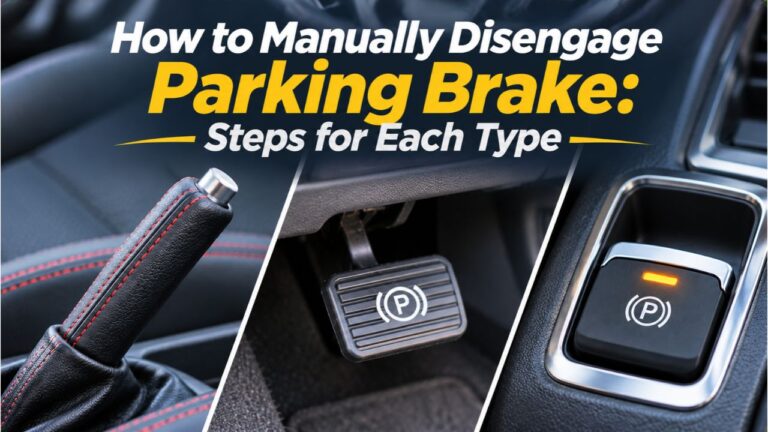
A conventional hand lever or foot pedal usually moves cables or linkages connected to the rear brakes. A small switch often indicates an EPB with an electric motor and control module. Some vehicles have automatic engagement, drive-away release, or specific conditions involving the seat belt, door, or service brake.
Read the owner’s manual before judging a switch that does not operate with the ignition off. A system waiting for the required conditions is not necessarily broken.
Step 03: Apply the Parking Brake and Observe the Control
Keep your foot on the regular brake. Pull the lever, depress the parking pedal, or operate the electronic switch exactly as instructed. Feel for normal resistance and latching on a mechanical control. On an EPB, check whether it finishes the apply cycle and displays the expected status without a persistent fault.
If a lever suddenly moves freely, a pedal will not latch, or a switch repeatedly fails, stop forcing it. Those are useful symptoms to report to a technician. A lit parking-brake symbol alone does not prove that the rear brakes developed holding force.
Step 04: Listen for Unusual Sounds and Look for Visible Damage
With the car stationary and the engine off, inspect only what is safely accessible from above or beside the vehicle. Look for damaged control trim, disconnected linkages visible at the lever, frayed cable ends, corrosion, or obvious wetness around brake hardware. Do not reach behind a wheel, touch hot brakes, or crawl under a car supported by a jack.
A normal EPB may whir briefly. Persistent grinding or repeated cycling, however, supports investigating the actuator or rear brake mechanism. No sound at all may be normal on a cable system and is not a fault by itself.
Step 05: Check Holding Ability Only When Conditions Permit
If there are no obvious faults and your owner’s manual permits it, a controlled check on a very gentle incline may reveal weak holding force. Stay belted in the driver’s seat, keep the area clear, apply the parking brake while holding the regular brake, and use the vehicle-approved procedure to separate parking-brake holding from the transmission’s Park position. On some conventional vehicles this involves selecting Neutral and cautiously easing foot-brake pressure.
The moment the car starts to creep, press the service brake fully and end the test. Do not use a steep hill, accelerate against the brake, or defeat a shift-by-wire safety interlock. AAA Club Alliance’s parking-brake guidance recommends occasional checks on a gentle incline and service if the control becomes weak, loose, or noisy.
Step 06: Release the Brake and Look for Signs of Dragging
While holding the regular brake, return the transmission to a secure position and release the parking brake as specified. The control should return normally, and an EPB should indicate release. Do not begin driving if the mechanism stays jammed, the warning persists, or the rear brakes seem locked.
A stuck brake can overheat its friction parts. If the brake would not release earlier, skip this test entirely and request roadside or workshop assistance rather than trying to overpower it with the engine.
Step 07: Compare the Findings and Decide on the Next Action
Record whether the failure was to apply, hold, or release; whether the issue began suddenly or gradually; and any warning messages. Mention recent rear pad replacement, caliper work, a discharged battery, or long storage, since each can change the likely cause.
Do not try to correct an unknown problem simply by tightening the parking-brake cable. Incorrect adjustment can cause dragging without restoring holding power. A qualified mechanic can verify brake force, component movement, and electronic fault codes where needed.
Which Part Is Broken? Match the Symptom to the Mechanism
Broken Cable Versus Poor Adjustment
A disconnected cable may produce almost no resistance at the hand lever. An intact cable with excessive slack, worn parking-brake shoes, or incorrect adjustment may allow the lever to move farther than expected while still producing some tension. The difference cannot always be confirmed without inspecting the cable connections and rear brake assembly.
Worn Shoes or Seized Rear Caliper
Some rear disc brakes have separate parking-brake shoes inside the rotor hat, while others use a mechanism built into the rear caliper. Worn, contaminated, or badly adjusted friction material may reduce holding force even when the cable is intact. Seized caliper levers or broken return hardware can stop proper release.
YourMechanic’s troubleshooting guide for a parking brake that will not release identifies corroded cables, damaged return springs, and seized rear caliper mechanisms as common areas to inspect. A shop can distinguish these faults without relying solely on the driver’s control feel.
Ratchet, Lever, or Foot Pedal Faults
If the lever does not lock in place or the parking pedal springs back unexpectedly, the problem may be in the control rather than the wheel-end components. A broken ratchet tooth, damaged pawl, loose mounting point, or faulty release linkage can prevent engagement. Cable adjustment will not repair a control that cannot latch.
How to Recognize a Broken Electronic Parking Brake
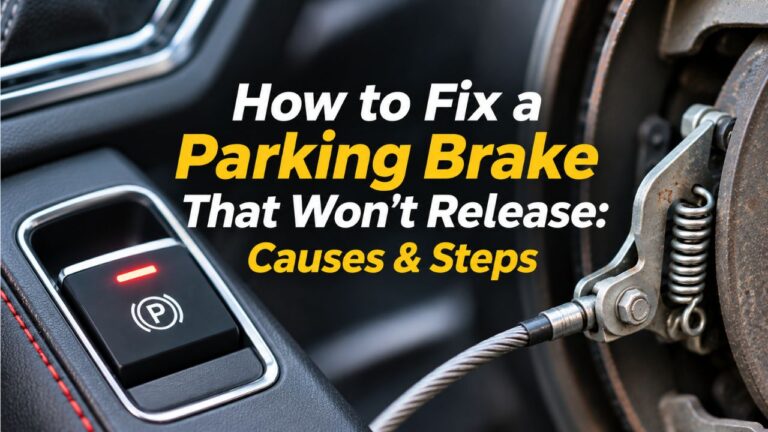
An electric parking brake adds a switch, wiring, power supply, motor, and control logic to the mechanical rear brake hardware. When it fails to respond, the motor is not always the culprit. Weak 12-volt power, an open circuit, a stuck caliper, or a missing release prerequisite can cause similar symptoms.
In Ford’s electric parking brake troubleshooting information, “Park Brake Not Applied” and “Park Brake Not Released” are different conditions, while a “Malfunction Service Now” message indicates a detected fault. The same instructions distinguish those warnings from a reminder to press the foot brake before releasing. Those messages are Ford examples, not standardized wording for every manufacturer.
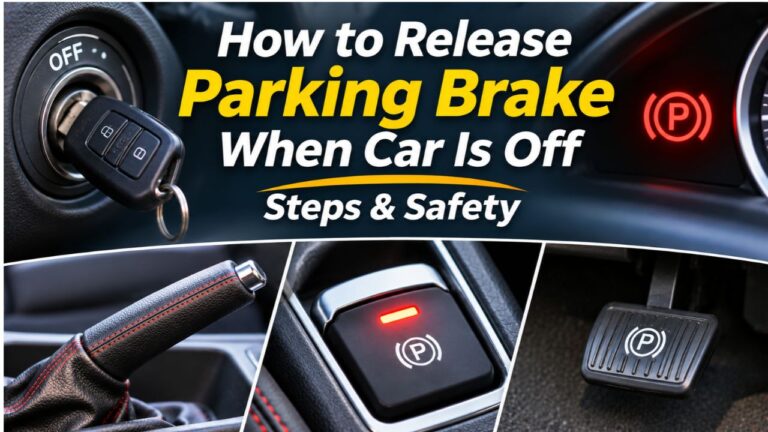
If the brake remains engaged after battery power is lost, that may be normal mechanical retention rather than a broken brake. Restore power only by the vehicle-approved procedure. Do not cut cables, force caliper pistons, or unplug an actuator while the car might roll.
Is It Safe to Drive With a Broken Parking Brake?
A parking brake that cannot hold creates a rolling risk when parked, even if the normal foot brakes still work. A brake that cannot release can damage the rear brakes and affect control while moving. If it is stuck, dragging, or accompanied by abnormal service-brake behavior, do not drive; arrange towing.
For a brake that will not hold but releases fully, the immediate danger is securing the parked car. Follow the vehicle’s transmission and wheel-chocking instructions, avoid slopes, and arrange prompt professional repair. Do not assume that selecting Park is an adequate long-term substitute for a functional parking brake.
FAQs About How to Tell if Parking Brake Is Broken
Can a Parking Brake Cable Snap Without Warning?
Yes. Corrosion or mechanical damage can lead to sudden failure, although loose operation or increasing lever travel may appear beforehand. A disconnected cable can make the lever feel unusually light.
Can the Parking Brake Be Broken Even if the Light Turns On?
Yes. A warning light may reflect the control position or electronic command, not the actual holding force at the rear wheels. Mechanical wear can exist with no dashboard fault.
Why Does My Parking Brake Hold on Flat Ground but Not on a Hill?
A weak brake may appear effective when little force is needed to prevent movement. Worn shoes, poor adjustment, or other mechanical problems can become obvious on a slope. Do not use a steep hill to prove failure.
Does a Stuck Parking Brake Mean the Cable Is Broken?
Not necessarily. A cable can seize inside its sheath, and return springs, caliper levers, or EPB actuators can also bind. These problems need inspection before a part is replaced.
Can You Repair a Broken Parking Brake Without Replacing Everything?
Often, yes. Repair may involve a cable, adjustment, rear brake hardware, switch, or actuator rather than the entire system. The correct choice depends on which component failed and whether associated parts were damaged.
A Reliable Parking Brake Must Apply, Hold, and Release
Learning how to tell if parking brake is broken comes down to checking three functions: does the control engage, does the brake keep the stopped car stationary, and does it release fully afterward? A loose lever, creeping vehicle, dragging rear brakes, or persistent EPB fault is enough reason to investigate rather than assume the system is fine.
Use stationary checks only where the car can be controlled safely, and stop if the brake behaves abnormally. A mechanic can inspect cables, friction parts, calipers, and electronic controls to identify the real fault.
Until that fault is corrected, avoid relying on the parking brake to secure a car on a slope. Proper repair and verification are safer than repeated testing or tightening parts by guesswork.