How to Manually Disengage Parking Brake: Steps for Each Type
To manually disengage a parking brake, hold the regular brake pedal down and release the parking-brake control according to its design. For a hand-operated brake, lift the lever slightly, press its release button, and lower it completely. For a foot-operated brake, pull the release handle or press the parking-brake pedal again, depending on the vehicle. An electronic parking brake usually releases when you press the regular brake pedal and operate its switch with the ignition on.
These methods work when the parking brake is functioning normally. If a cable is seized, the brake mechanism is frozen, or an electronic actuator has failed, releasing the control may not actually free the rear wheels.
The important part is knowing which system your vehicle uses and confirming that the brakes have fully released before driving. This guide explains the correct steps for manual levers, foot pedals, and electronic parking brakes. It also covers stuck brakes, dead batteries, warning lights, and situations where a mechanical release requires professional service.
How to Manually Disengage Parking Brake Controls Safely
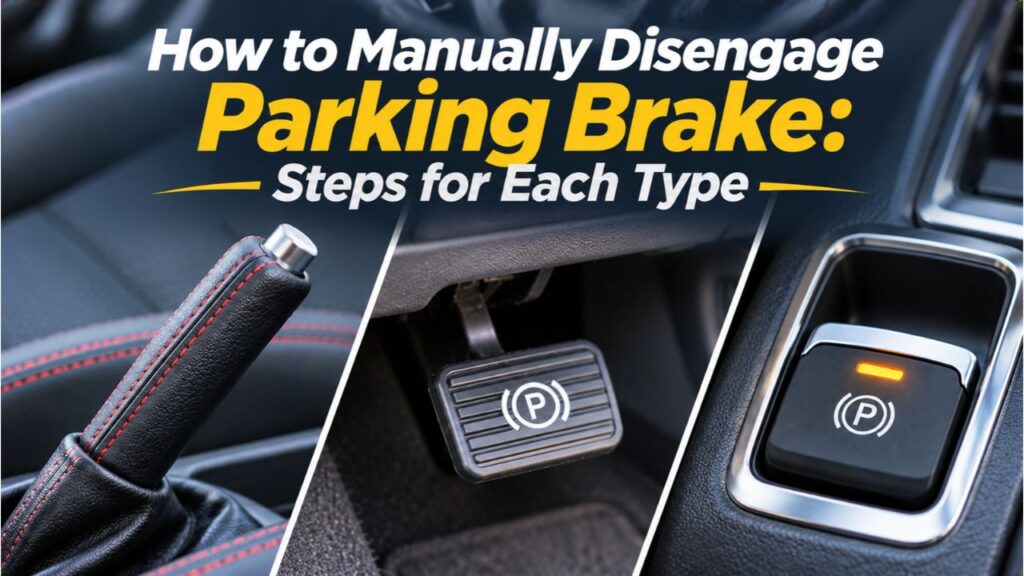
Parking brakes are commonly operated through three types of controls. Each uses a different release action, even though all are designed to prevent a stationary vehicle from rolling.
| Parking Brake Type | Normal Release Method |
| Hand-operated lever | Lift slightly, press the button, and lower the lever |
| Foot-operated pedal | Pull the release handle or press the pedal again |
| Electronic parking brake (EPB) | Hold the regular brake pedal and operate the electronic release switch |
Manual disengagement does not always mean disconnecting a cable or bypassing the mechanism. In most cases, it simply means using the parking-brake control yourself instead of relying on an automatic release feature.
If the normal control fails, further action depends on the vehicle’s mechanical or electronic design.
Before Releasing Any Parking Brake
Before attempting to disengage a parking brake, make sure the vehicle cannot move unexpectedly.
For a normal release, remain in the driver’s seat with your foot firmly on the regular brake pedal. If the vehicle is being repaired or the parking brake is stuck, choose level ground when possible, select Park on an automatic transmission, and use appropriate wheel chocks.
Keep these precautions in mind:
- Keep the regular brake pedal depressed while releasing the parking brake.
- Make sure the vehicle is fully stopped.
- Identify the correct parking-brake control before operating it.
- Never reach beneath a vehicle that is supported only by a jack.
- Do not force a lever, cable, or electronic actuator that refuses to move.
- Avoid releasing the only effective holding brake while parked on a steep slope.
If the regular brakes are not working, do not release the parking brake merely to move the vehicle. Arrange appropriate assistance.
How to Manually Release a Hand-Operated Parking Brake
A traditional handbrake usually has a lever between the front seats, although some vehicles position it near the dashboard. The lever pulls cables that operate the rear parking-brake mechanisms.
Follow these steps when the control is functioning normally.
Step 01: Press and Hold the Regular Brake Pedal
Sit in the driver’s seat and press the regular brake pedal firmly with your right foot.
This keeps the vehicle stationary while the parking brake is being released. On an automatic vehicle, you can initially leave the transmission in Park. On a manual vehicle, keep the clutch and gear position under control according to the owner’s manual.
If the vehicle is on an incline, be especially careful. Removing parking-brake force before establishing another reliable way to hold the car can allow it to roll unexpectedly.
Step 02: Pull the Parking Brake Lever Up Slightly
Hold the parking-brake lever firmly and lift it a small distance.
This takes tension off the ratchet mechanism that holds the lever in its raised position. The release button may become easier to press once the load on the ratchet decreases.
Do not pull the lever sharply or use excessive force. A small upward movement is normally sufficient.
Honda’s official parking-brake lever instructions describe this sequence: raise the lever slightly, press the release button, and lower the lever completely.
Step 03: Press the Release Button and Lower the Lever
While holding the lever slightly raised, press and hold the release button, normally located at the end of the handle.
Keep the button depressed as you lower the lever smoothly to its resting position. Once the lever is fully down, release the button.
The movement should be controlled and should not require unusual force. If the lever refuses to move or the release button remains jammed, stop rather than forcing the mechanism.
A lever that returns normally does not guarantee that a corroded cable or sticking rear brake has released.
Step 04: Confirm the Parking Brake Has Released
Check the parking-brake indicator on the dashboard. On many cars, the red BRAKE or parking-brake symbol turns off when the lever reaches its released position.
Keep your foot on the regular brake while preparing to move. Before entering traffic, verify that there is no warning indicating an unresolved brake fault.
If the car resists movement, makes unusual noises, or produces a burning smell, stop immediately. Do not accelerate against a brake that may still be applied.
How to Manually Disengage a Foot-Operated Parking Brake
A foot-operated parking brake typically sits to the far left of the regular pedals. Some designs use a separate release handle, while others release when the parking-brake pedal is pressed a second time.
The correct action depends on the vehicle.
Step 01: Find the Parking Brake Pedal and Release Mechanism
Look beneath the left side of the dashboard for a smaller parking-brake pedal. It may have a parking-brake symbol or a textured rubber pad.
Next, check whether a separate release handle is installed beneath the dashboard or near the steering column.
If there is no visible release handle, the mechanism may use a push-to-release design. Consult the owner’s manual rather than assuming that pressing the pedal again is correct for every vehicle.
Step 02: Hold the Regular Brake Pedal Firmly
Press the regular brake pedal with your right foot while keeping the vehicle stationary.
Maintain this pressure throughout the parking-brake release procedure. Do not rely entirely on the transmission’s Park position, especially when the vehicle is on a slope.
If the parking-brake pedal feels unusually loose, jammed, or disconnected, stop and investigate rather than repeatedly operating it.
Step 03: Operate the Correct Foot-Brake Release
For a release-handle design, pull the designated handle while holding the regular brake pedal. The parking-brake pedal should move back toward its released position.
For a push-to-release design, press the parking-brake pedal again as directed by the manufacturer, then allow it to return.
Ford’s official parking-brake operating instructions describe a foot-operated arrangement that uses a separate parking-brake release lever. Other vehicles use different pedal mechanisms, which is why identifying the design first matters.
Never pull an unidentified cable beneath the dashboard to release the brake.
Step 04: Check That the Pedal Fully Returns
After operating the release, observe the parking-brake pedal. It should return to its specified resting position.
A pedal that stays partly depressed may indicate a binding mechanism, damaged return spring, or seized cable. Even if the dashboard indicator turns off, the rear parking brakes may not have released completely.
If the pedal does not return normally, arrange an inspection before driving.
How to Manually Release an Electronic Parking Brake
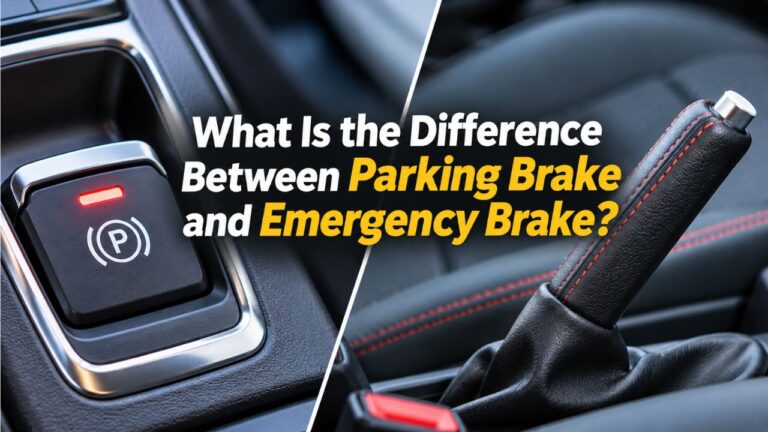
An electronic parking brake uses an electrical control system rather than a traditional mechanical lever. It usually has a small switch marked with a P inside a circle.
In this context, manual release means commanding the electronic system through its switch. It does not mean mechanically disconnecting the electric motor.
Step 01: Sit in the Driver’s Seat and Secure the Vehicle
Make sure the vehicle is fully stopped and keep the regular brake pedal depressed.
Select Park if the automatic transmission and the manufacturer’s procedure require it. On vehicles with automatic parking-brake functions, opening a door or changing transmission position may affect how the system operates.
Remain seated while completing the release procedure so you can maintain control of the foot brake.
Step 02: Turn the Ignition or Vehicle Power On
Many electronic parking brakes require the ignition or vehicle power mode to be ON before they can release.
Start the engine or activate the appropriate power mode according to the owner’s manual. On hybrids and electric vehicles, the vehicle may need to enter a particular operating mode.
If the battery is completely dead, the parking brake may not respond. Repeatedly operating the switch will not necessarily release it.
Step 03: Press the Brake Pedal and Operate the EPB Switch
Keep the regular brake pedal depressed and operate the parking-brake switch in the release direction.
On many vehicles, you press the switch downward to disengage the electronic parking brake. Some designs use different switch arrangements, so follow the symbol and manufacturer instructions.
Ford’s electric parking brake owner’s-manual guidance describes switching the ignition on, pressing the brake pedal, and then pressing the electric parking-brake switch.
You may hear an electric motor operating near the rear wheels. A brief motor sound can be normal.
Step 04: Wait for the Release Confirmation
After operating the switch, watch the dashboard indicator and any message displayed on the instrument cluster.
A successful release normally turns off the parking-brake indicator. However, if a warning remains illuminated or flashes, the system may not have completed the release.
Do not repeatedly press the switch when the system reports a fault or overheating condition. Follow the owner’s manual and arrange service if the message persists.
Step 05: Confirm Normal Operation Before Moving
Keep the regular brake applied until the parking brake has released and the vehicle is ready to move.
If the electronic parking brake is still engaged, do not attempt to overpower it with the accelerator.
Some vehicles support automatic drive-away release, but that feature has operating conditions and is not a substitute for resolving a malfunction.
How to Release a Parking Brake That Is Stuck
A parking brake can remain engaged even after the lever, pedal, or switch moves to its released position.
Common causes include a corroded cable, frozen components, stuck rear brake shoes, seized caliper hardware, or an electronic actuator problem.
Check Whether the Control or the Brakes Are Stuck
First determine what is actually failing.
If the hand lever or foot pedal cannot move, the problem may involve its release mechanism, linkage, or cable.
If the control moves normally but the vehicle remains restrained, the problem may be farther along the system, including the cable, caliper, or brake shoes.
Do not try to identify the fault by accelerating against the parking brake. Excessive force can damage brake components or cause sudden, uncontrolled vehicle movement.
Frozen Parking Brake Cables
Water can enter a cable housing or collect around brake hardware. In freezing temperatures, the water may prevent the mechanism from releasing.
Allowing the affected components to warm naturally may restore movement in some cases. Avoid using open flames, torches, or uncontrolled high heat around brake parts, fuel lines, rubber seals, or wiring.
If the system does not release normally after warming, have it inspected. A frozen cable may also be corroded or damaged.
Rusted Cables or Seized Rear Brakes
A vehicle left parked for an extended period may develop corrosion around parking-brake cables, rear caliper mechanisms, or drum-brake hardware.
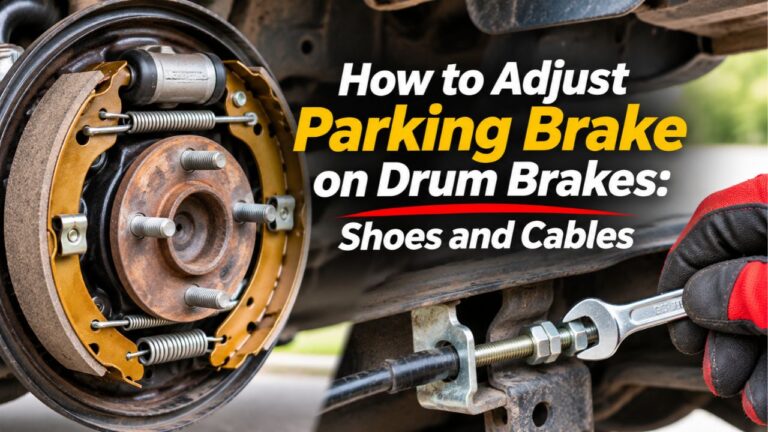
A stuck cable may fail to return even when the dashboard control appears disengaged. A seized caliper lever or brake shoe can create the same symptom.
These conditions require mechanical diagnosis and possibly replacement parts. Disconnecting the cable without correcting the cause may leave the parking brake inoperative.
Can You Manually Disengage an Electronic Parking Brake With a Dead Battery?
A dead battery may prevent an electronic parking brake from releasing because its actuator needs electrical power. The normal switch cannot necessarily disengage the brake without a functioning power supply.
Some manufacturers specify connecting a suitable booster battery or restoring the vehicle’s electrical supply before using the normal release switch.
Step 01: Verify That Battery Power Is the Problem
Look for other low-voltage symptoms, such as dim dashboard lights, no electrical response, or a battery warning.
A parking-brake fault can occur even with a healthy battery, so do not assume every nonresponsive EPB has a power-supply problem.
Step 02: Follow the Manufacturer’s Approved Power-Restoration Procedure
If the owner’s manual permits jump-starting or connecting auxiliary power, follow that exact procedure.
Use suitable equipment and observe the specified connection points and polarity. Hybrids, electric vehicles, and some modern cars may have special jump-starting restrictions.
Once adequate electrical power is available, retry the normal electronic parking-brake release procedure.
Step 03: Use an Approved Emergency Release Only if Provided
Some vehicles have a model-specific emergency release or service procedure. Others do not provide a driver-accessible mechanical release.
There is no universal cable, bolt, or switch that safely releases every electronic parking brake.
Do not disconnect actuator wiring, apply battery voltage directly to a motor, or remove caliper components based on a generic online procedure.
If the manufacturer does not provide an appropriate emergency release, arrange professional assistance or towing using the approved transport method.
How to Tell Whether the Parking Brake Is Fully Disengaged
A released control is only one part of confirming successful disengagement.
Look for the following:
- The hand lever or parking-brake pedal has returned fully to its normal released position.
- The electronic parking-brake system has confirmed release.
- The parking-brake indicator has turned off, with no unresolved warning.
- No visible cable or linkage remains obviously jammed.
- There is no evidence of recent brake overheating, smoke, or a burning smell.
A warning light turning off does not prove that a seized mechanical brake has released.
If a brake was previously stuck, have the affected wheel-brake hardware checked before driving. Do not touch brake rotors or calipers after suspected overheating because they may remain extremely hot.
Why You Should Not Force a Parking Brake to Release
A stuck parking brake is not always a minor inconvenience.
Pulling a cable with excessive force can damage its housing or connections. Forcing a seized caliper mechanism may damage seals or hardware, and attempting to move the vehicle while the rear wheels remain restrained can overheat the brakes.
Electronic parking brakes introduce additional hazards because actuators may move unexpectedly during service procedures.
If a component cannot be released using its normal control, the next step should be diagnosis rather than increasing force.
Professional mechanical release may involve safely supporting the vehicle, inspecting the cable linkage, checking rear brake components, or following an approved electronic service procedure.
How to Prevent Parking Brakes From Becoming Stuck
Regular maintenance reduces the likelihood of parking-brake problems.
Use the parking brake according to the manufacturer’s instructions and have its operation checked during routine brake service. Pay attention to increasing lever travel, unusual resistance, slow pedal return, or an actuator that makes abnormal noises.
In areas with road salt, moisture, or frequent freezing temperatures, inspect cables and rear brake hardware for corrosion. Follow any manufacturer-specific cold-weather parking precautions.
For electronic parking brakes, maintain a healthy 12-volt battery and follow the correct maintenance mode when servicing rear brakes.
FAQs About How to Manually Disengage Parking Brake
Can I Release a Parking Brake Without Starting the Engine?
Yes, on many mechanical systems. A hand-operated or foot-operated parking brake can generally be released without the engine running. Electronic parking brakes may require the ignition or power mode to be ON.
How Do I Release a Parking Brake Without a Release Button?
A foot-operated brake may use a separate release handle or a push-to-release pedal. An electronic brake uses a switch. Check the owner’s manual to identify the correct mechanism.
Why Won’t My Parking Brake Release Even Though the Lever Is Down?
A cable, caliper mechanism, or rear brake shoe may be stuck. A normal-looking lever position does not guarantee that the brakes have released. Arrange inspection rather than forcing the vehicle to move.
Can I Disconnect the Parking Brake Cable to Release It?
A trained technician may disconnect or service a cable as part of a repair, but doing so is not a general driver-level release method. The vehicle must be secured against rolling, and the parking brake must be restored to working condition.
Can I Release an Electronic Parking Brake Manually Without a Scan Tool?
Usually, normal manual release through the EPB switch does not require a scan tool. However, faults, maintenance procedures, and certain emergency releases may require diagnostic equipment or manufacturer-specific tools.
What Happens if I Drive With the Parking Brake Partially Engaged?
The rear brakes can overheat, wear prematurely, and lose braking effectiveness. Severe overheating may damage rotors, pads, calipers, seals, or nearby components. Stop safely if you suspect brake drag.
Make Sure the Parking Brake Is Fully Released Before Driving
Understanding how to manually disengage parking brake controls starts with identifying whether your vehicle uses a hand lever, foot pedal, or electronic switch. Each has a specific release method, but the regular brake pedal should remain under your control throughout the process.
When the mechanism is functioning normally, releasing it is straightforward. If the control moves but the brakes remain applied, the issue may involve seized cables, rear brake hardware, or an electronic actuator rather than the release control itself.
Always confirm that the parking brake has disengaged before moving the vehicle. If it remains stuck, especially after an electrical fault or long period of storage, arrange qualified service instead of forcing the vehicle to move.