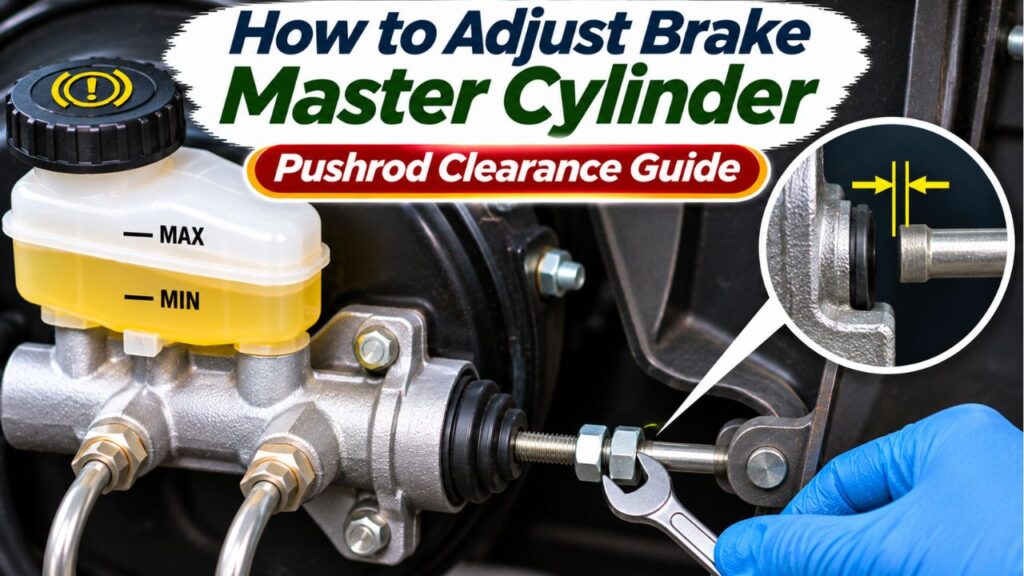
How to Adjust Brake Master Cylinder: Pushrod Clearance Guide
Most modern brake master cylinders cannot be adjusted internally; what technicians may adjust is the brake-pedal linkage or the pushrod between the brake booster and master cylinder. Proper clearance lets the master-cylinder piston return fully after braking. A pushrod that’s too long can keep pressure trapped and make brakes drag or lock; one that’s too short may cause excessive pedal travel.
The correct adjustment depends on your vehicle and braking system. Some older vehicles and aftermarket setups have threaded pushrods or clevises, while many modern systems use fixed-length components. Certain power boosters require a special depth gauge, and electronic braking systems may have no owner-serviceable adjustment at all.
Before changing anything, identify whether the complaint is low pedal height, excessive free play, dragging brakes, or a soft pedal. Air in the lines, a hydraulic leak, failing master-cylinder seals, and sticking calipers cannot be repaired by adjusting a pushrod.
In this guide, I explain which parts are adjustable, how professionals inspect pedal free play and booster-to-master clearance, and the safe sequence for making a model-approved adjustment. You’ll also learn common measurements, warning signs, and when replacement or brake-system diagnosis is necessary.
How to Adjust Brake Master Cylinder: Quick Overview
Brake master cylinder adjustment generally means checking and correcting the brake-pedal pushrod or brake-booster pushrod clearance, not adjusting the master cylinder’s internal pistons.
The purpose is to ensure that the master cylinder operates through its intended stroke and fully returns to its resting position.
Brake Master Cylinder Adjustment Chart
| Component | Adjustable? | Purpose |
| Master-cylinder internal piston | Generally no | Generates hydraulic pressure |
| Brake-pedal pushrod | On certain vehicles | Controls pedal position and linkage geometry |
| Booster-to-master pushrod | On certain boosters | Establishes correct piston clearance |
| Pushrod clevis | On certain designs | Adjusts linkage length |
| Brake pedal stop | On certain designs | Controls pedal resting position |
| Brake light switch | Often adjustable or self-setting | Controls brake light activation |
| Master-cylinder bore diameter | No | Determines hydraulic displacement characteristics |
| Brake proportioning valve | Only on certain systems | Controls front-to-rear brake pressure distribution |
Not every vehicle has all these adjustments.
A fixed-length factory pushrod should not be modified simply because the brake pedal feels unusual.
What Is the Correct Adjustment?
A correctly adjusted system should provide:
- Brake-pedal free play within specification
- Appropriate pedal height
- Full master-cylinder piston return
- Correct booster-to-master pushrod clearance
- Proper brake light operation
- Complete brake release
- Sufficient remaining pedal travel
- No abnormal hydraulic pressure retention
The exact measurements come from the vehicle’s factory service manual.
Important: Incorrect adjustment can cause brake drag, overheating, locked wheels, or reduced braking effectiveness. If you do not have the required specifications and tools, have a qualified brake technician perform the adjustment.
What Part of the Brake Master Cylinder Can Be Adjusted?
Understanding the components helps prevent adjusting the wrong part.
Master Cylinder
The master cylinder converts force from the brake pedal into hydraulic pressure.
Inside it are pistons, seals, springs, and hydraulic passages.
These internal components are not normally adjusted to change brake-pedal feel.
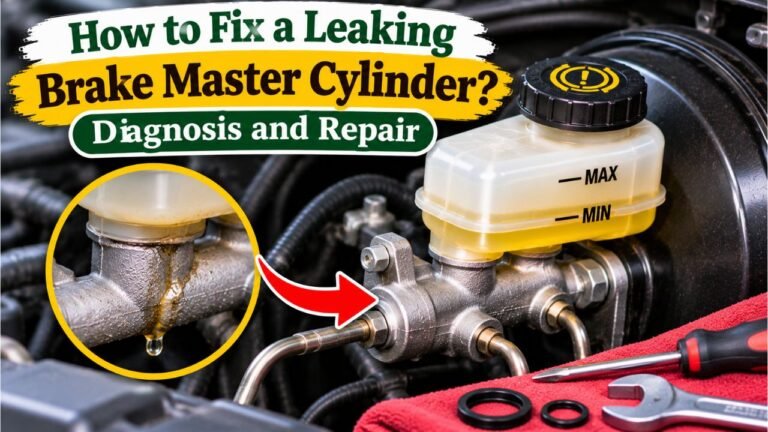
If a master cylinder has worn seals, internal leakage, or damaged components, it may need replacement.
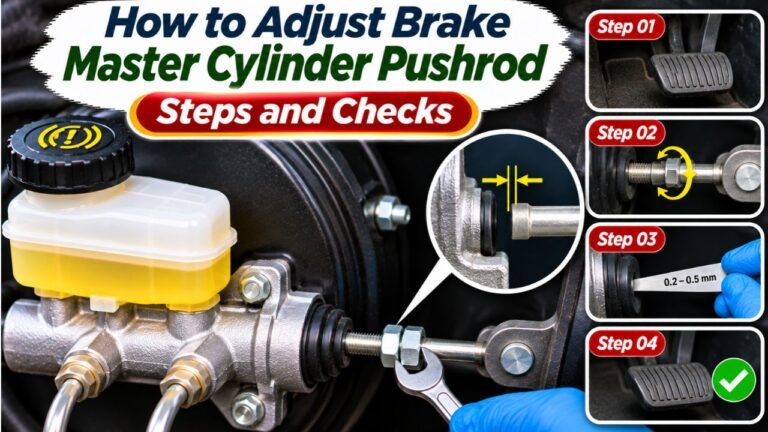
Brake Pedal Pushrod
The brake-pedal pushrod connects the pedal linkage to the master cylinder or brake booster.
On some vehicles, it has a threaded section and locknut.
This allows the linkage length to be adjusted according to factory specifications.
Changing the length may affect pedal height, free play, and the master cylinder’s resting position.
Brake Booster Pushrod
In a power-assisted brake system, the booster is generally located between the brake pedal linkage and the master cylinder.
A pushrod extends from the booster toward the master-cylinder piston.
Some boosters allow this pushrod to be adjusted.
The clearance must be correct.
If the rod is too long, it can hold the master-cylinder piston partly depressed.
If the rod is too short, the pedal may travel excessively before hydraulic pressure builds.
Brake Pedal Stop
Certain brake-pedal assemblies have an adjustable stop.
An incorrectly positioned stop may prevent the pedal and master-cylinder piston from returning fully.
However, adjusting the pedal stop is not the correct solution for every brake problem.
Brake Light Switch
The brake light switch is often mounted near the brake pedal.
Its position may affect the pedal’s return or resting position on certain designs.
An incorrectly installed switch can cause brake lights to remain on or fail to illuminate.
In some vehicles, incorrect positioning may also interfere with normal pedal return.
Key Takeaway: The adjustable components are generally external linkage parts. The internal master-cylinder pistons are not adjusted to compensate for brake-system faults.
Why Is Brake Master Cylinder Pushrod Adjustment Important?
Pushrod clearance affects the master cylinder’s ability to generate and release hydraulic pressure.
Both excessive and insufficient clearance can cause problems.
What Happens if the Pushrod Is Too Long?
An excessively long pushrod can keep the master-cylinder piston partially depressed.
The piston may fail to return to its correct resting position.
That can prevent the internal compensating port from opening fully.
As a result, hydraulic fluid may not return to the reservoir normally.
Possible symptoms include:
- Brakes remaining partially applied
- Increasing brake drag
- Overheated brake rotors
- Reduced vehicle acceleration
- Brake lockup
- Wheels becoming difficult to rotate
- Braking problems that worsen as components heat up
According to Wilwood’s technical article on tandem master-cylinder pushrod problems, the master-cylinder piston must return far enough for its primary seal to uncover the compensating port.
Wilwood explains that an overextended pushrod can prevent proper piston return and interfere with normal hydraulic operation.
What Happens if the Pushrod Is Too Short?
A pushrod that is too short may create excessive movement before it contacts or operates the master-cylinder piston.
Possible symptoms include:
- Excessive initial brake-pedal travel
- Delayed brake engagement
- Pedal height that feels incorrect
- Reduced available pedal stroke
However, a low or soft pedal can also indicate air, hydraulic leaks, worn components, or other problems.
Pushrod adjustment should not be used to conceal those faults.
Can Pushrod Adjustment Change Braking Power?
It can affect how effectively pedal movement is transferred into hydraulic pressure.
However, it does not directly increase the friction capability of the brake pads and rotors.
Correct adjustment restores the intended system operation.
Key Takeaway: Proper pushrod clearance allows the master-cylinder piston to apply and release hydraulic pressure correctly.
Signs Your Brake Master Cylinder Pushrod May Need Adjustment
Several symptoms may indicate an adjustment problem.
However, none proves that the pushrod is the cause.
Pushrod Adjustment Symptoms Chart
| Symptom | Possible Adjustment Problem | Other Possible Causes |
| Brakes drag after pedal release | Pushrod too long | Sticking caliper, restricted hose |
| Brakes lock after warming up | Master-cylinder piston not returning | Hydraulic restriction, ABS problem |
| Excessive initial pedal travel | Pushrod too short | Air in lines, incorrect brake adjustment |
| Brake pedal rests too high | Pedal linkage misadjusted | Incorrect parts or pedal assembly |
| Brake pedal rests too low | Linkage or stop adjustment incorrect | Worn parts, hydraulic problems |
| Brake lights remain on | Switch or pedal position incorrect | Defective brake light switch |
| Brakes fail to release fully | Inadequate free play | Caliper or hose problem |
| Pedal slowly sinks under pressure | Usually not a simple adjustment issue | Internal master-cylinder leakage or hydraulic leak |
Can a Bad Master Cylinder Cause the Same Symptoms?
Yes.
A defective master cylinder can cause low pressure, internal leakage, or other hydraulic problems.
However, adjustment and internal component failure are different issues.
A worn internal seal cannot be repaired by changing pushrod length.
When Is Adjustment More Likely to Be the Problem?
Pushrod clearance deserves particular attention when symptoms begin immediately after:
- Replacing the master cylinder
- Replacing the brake booster
- Installing an aftermarket brake assembly
- Modifying the brake pedal linkage
- Changing a manual brake system to power-assisted brakes
- Installing a custom pedal assembly
In these situations, component dimensions or linkage geometry may have changed.
Key Takeaway: Symptoms appearing after brake-booster or master-cylinder replacement can indicate a pushrod mismatch, but other hydraulic faults must still be ruled out.
Tools Needed to Check Brake Master Cylinder Adjustment
The correct tools depend on the vehicle.
A basic pedal inspection may require relatively simple measuring equipment.
Precise booster-to-master clearance adjustment usually requires specialized tools.
Common Inspection and Service Tools
| Tool | Purpose |
| Factory service manual | Provides exact procedures and specifications |
| Ruler or measuring scale | Measures pedal height and free play |
| Flashlight | Helps inspect pedal linkage |
| Suitable wrenches | Used for approved linkage adjustments |
| Torque wrench | Tightens fasteners to specification |
| Pushrod depth gauge | Measures booster-to-master clearance |
| Feeler gauge | Measures small specified gaps |
| Brake service equipment | Used if hydraulic disassembly or bleeding is required |
| Diagnostic scan tool | May be required for electronically controlled brake systems |
A pushrod depth gauge is particularly important because clearance at the booster is often much smaller than visible brake-pedal movement.
Can You Adjust a Master Cylinder Without Special Tools?
Some older or aftermarket pedal linkages can be inspected using ordinary hand tools.
However, accurate adjustment still requires the manufacturer’s dimensions and correct procedures.
For booster pushrods, estimating clearance by eye is not reliable.
A small error can affect brake release or pedal travel.
Key Takeaway: Use the exact service specifications and measuring tools required for the vehicle. Avoid guessing at pushrod length.
Step 1: Identify the Type of Brake Master Cylinder
Before attempting an adjustment, determine what braking system the vehicle uses.
Manual Brake System
A manual brake system transfers pedal force to the master cylinder without a conventional vacuum power booster.
Some manual brake systems have an adjustable pedal pushrod.
Other designs use fixed components.
Vacuum-Assisted Brake System
A vacuum-assisted system uses a brake booster to increase the force applied to the master cylinder.
Depending on the design, the pedal-side linkage or booster-to-master pushrod may be adjustable.
These are separate adjustments.
Hydro-Boost Brake System
Hydro-boost systems use hydraulic power assistance rather than conventional vacuum assistance.
Their pushrod and linkage specifications can differ from those of vacuum boosters.
Use the exact service instructions.
Electronic Brake System
Some hybrid and electric vehicles use electronically controlled braking systems.
They may include brake-by-wire functions, electronic pressure controls, and specialized hydraulic components.
Traditional master-cylinder adjustment procedures may not apply.
Do not perform a conventional pushrod adjustment on an electronically controlled braking system unless the manufacturer specifically provides that procedure.
Key Takeaway: Determine whether the system is manual, vacuum-assisted, hydraulically boosted, or electronically controlled before considering any adjustment.
Step 2: Check the Brake Pedal Height
Brake pedal height is the pedal’s resting position relative to a specified reference point.
The reference point may be the floor panel, dash insulator, or another location defined by the vehicle manufacturer.
How Brake Pedal Height Is Checked
A technician generally:
- Parks and secures the vehicle.
- Identifies the correct factory measurement reference.
- Confirms the pedal has fully returned.
- Measures the pedal height.
- Compares the result with the factory specification.
No adjustment should be made until the correct measurement is known.
What Is Normal Brake Pedal Height?
There is no universal height for every vehicle.
Different vehicle designs use different pedal positions and measurement reference points.
The specification must come from the factory service manual.
How Is Pedal Height Adjusted?
On certain systems, an adjustable clevis or threaded pushrod controls pedal height.
The technician follows the specified procedure to change the linkage length and secure the locknut.
However, some systems adjust pedal position through a different mechanism.
Others have no approved pedal-height adjustment.
Changing the wrong component can alter the pedal ratio, pushrod preload, or master-cylinder resting position.
Key Takeaway: Measure pedal height using the manufacturer’s reference points before adjusting any linkage.
Step 3: Measure Brake Pedal Free Play
Brake pedal free play is the small amount of initial movement before substantial hydraulic resistance is felt.
The correct free play helps ensure the master-cylinder piston returns fully while keeping excessive pedal travel under control.
How Is Brake Pedal Free Play Measured?
For certain conventional vacuum-assisted systems, the factory procedure involves:
- Switching the engine off.
- Depressing the brake pedal several times to reduce stored booster vacuum.
- Allowing the pedal to return fully.
- Gently pressing the pedal until resistance begins.
- Measuring the initial pedal movement.
- Comparing the result with the vehicle’s specification.
This is not a universal procedure for every electronically controlled or hydraulically boosted brake system.
Always follow the correct manual.
How Much Brake Pedal Free Play Is Normal?
The specification varies by vehicle.
For example, a Toyota Land Cruiser factory brake service manual identifies a brake-pedal free-play range of 3–6 mm (approximately 0.12–0.24 inch) for the particular brake system covered by that manual.
That figure should not be applied to all vehicles.
Other vehicles may specify different measurements.
What Happens if There Is No Free Play?
Insufficient free play may prevent proper master-cylinder piston return.
This can contribute to trapped hydraulic pressure and brake drag.
What Happens if There Is Too Much Free Play?
Excessive free play can increase the distance the pedal moves before the brakes begin responding.
However, a pedal with excessive travel may also indicate unrelated brake-system problems.
Key Takeaway: Correct pedal free play is essential, but the allowable measurement must come from the exact vehicle specification.
Step 4: Inspect the Brake Pedal Pushrod and Clevis
The pedal pushrod connects the brake pedal mechanism to the master cylinder or booster.
Some designs use a threaded rod and clevis.
How to Identify an Adjustable Pushrod
A technician may look for:
- A threaded pushrod
- A clevis attached to the brake pedal
- A locknut on the linkage
- An adjustable pedal stop
- A manufacturer-specified adjustment point
However, the presence of a threaded component does not automatically mean it is intended for routine adjustment.
General Adjustment Sequence
For a system with a factory-approved adjustable pedal pushrod, the service procedure generally includes:
- Confirming the correct pedal-height and free-play specifications.
- Inspecting the linkage for damage or incorrect assembly.
- Checking the brake light switch and pedal stop.
- Releasing the specified adjustment locknut.
- Changing the pushrod or clevis length as directed by the service manual.
- Securing the adjustment to the specified torque.
- Rechecking pedal height and free play.
- Confirming complete pedal return and normal brake light operation.
The actual direction, amount of adjustment, torque, and linkage removal procedure vary by vehicle.
Do not adjust based on a universal number of turns.
Should You Shorten the Pushrod to Fix Brake Drag?
Only when professional diagnosis establishes that an overextended adjustable pushrod is the cause.
Brake drag can also result from seized calipers, restricted hoses, contaminated hydraulic components, or other faults.
Shortening the pushrod without measuring the system may create excessive pedal travel.
Should You Lengthen the Pushrod to Fix a Low Pedal?
Not automatically.
Air in the brake lines, incorrect brake adjustment, worn components, or hydraulic leaks can cause excessive pedal movement.
Extending the pushrod can make the problem worse or prevent the master cylinder from returning fully.
Key Takeaway: Adjust a pedal pushrod only when the manufacturer permits it and measurements confirm the need.
Step 5: Check Brake Booster-to-Master Cylinder Pushrod Clearance
Booster-to-master clearance is one of the most critical measurements when replacing a brake booster or master cylinder.
It is also one of the easiest areas to adjust incorrectly.
What Is Booster Pushrod Clearance?
It is the specified relationship between the end of the booster pushrod and the master-cylinder piston when the components are in their resting positions.
The objective is to avoid excessive free movement while preventing unintended pressure against the master-cylinder piston.
Why Is the Gap Important?
If the gap is too large, the pedal may move farther before the booster pushrod begins operating the master cylinder.
If the gap is too small, the pushrod may prevent the piston from returning fully.
That can cause hydraulic pressure to remain in the brakes.
Is There a Standard Pushrod Clearance?
No universal clearance applies to every booster and master-cylinder combination.
Some aftermarket brake systems specify a gap around 0.020 inch (approximately 0.5 mm).
However, this value is product-specific and must not be used as a general factory specification.
Certain vehicles require different measurements, special testing conditions, or alternative adjustment methods.
How Is Clearance Measured?
A qualified technician generally uses a pushrod depth gauge or other specified measuring equipment.
The measurement compares the master-cylinder piston recess with the booster pushrod’s position relative to the mounting surfaces.
The procedure may require partial disassembly.
Do All Boosters Have Adjustable Pushrods?
No.
Some use threaded adjustable pushrods.
Others have fixed-length components.
Do not grind, cut, or modify a fixed pushrod unless the exact component manufacturer’s approved instructions specifically require that procedure.
Key Takeaway: Booster-to-master clearance is a precision measurement. Incorrect adjustment can cause serious braking problems.
Step 6: Understand the Correct Booster Pushrod Adjustment Procedure
The precise procedure depends on the manufacturer.
Some brake boosters require additional preparation before a valid measurement can be made.
Example: Honda and Acura Brake Boosters
CARDONE publishes a technical bulletin addressing brake lockup after replacement of certain Honda and Acura brake boosters or master cylinders.
The bulletin explains that original-equipment variations make the pushrod-to-piston clearance important.
Its technical guide to Honda and Acura booster lockup specifies that the correct adjustment requires vacuum applied to the booster and a special measuring gauge.
This is important because a measurement made without the required conditions may be inaccurate.
Professional Adjustment Overview
For a vehicle with an approved adjustable booster pushrod, the procedure generally involves:
- Confirming the replacement components are correct for the vehicle.
- Inspecting the booster and master-cylinder mounting surfaces.
- Establishing the manufacturer’s required testing conditions.
- Measuring pushrod-to-piston clearance using the specified gauge.
- Comparing the result with the service specification.
- Adjusting the designated pushrod mechanism if the design permits it.
- Securing the adjustment according to the manufacturer’s procedure.
- Reassembling the components correctly.
- Performing all required hydraulic service and functional checks.
The exact disassembly, vacuum requirements, adjustment direction, and hardware specifications are vehicle-specific.
These steps describe the professional workflow, not a universal do-it-yourself repair procedure.
Why You Should Not Guess the Pushrod Length
A very small adjustment error can affect the master-cylinder piston position.
An excessively long pushrod can prevent pressure release.
An excessively short rod can cause excessive travel before braking begins.
Both conditions can compromise vehicle safety.
Can You Use Washers to Correct the Gap?
Do not use improvised washers or spacers between the booster and master cylinder as a substitute for a correct adjustment.
The master cylinder must mount correctly against the appropriate surface according to the manufacturer’s design.
Improvised spacing can create alignment and structural problems.
Key Takeaway: Booster pushrod adjustment requires precise measurements and model-specific procedures, especially when replacing brake-system components.
Step 7: Check the Brake Light Switch and Pedal Return
The brake light switch is often located near the pedal assembly.
On certain designs, its position interacts with the pedal’s resting position.
An incorrectly installed switch may cause brake-light problems and, in some arrangements, interfere with pedal return.
What Should Be Checked?
The technician should verify that:
- The pedal returns fully.
- The switch is correctly positioned.
- Brake lights illuminate when the pedal is pressed.
- Brake lights turn off when the pedal is released.
- The switch does not interfere with the pedal’s intended resting position.
- Any required switch clearance is within specification.
Can a Brake Light Switch Cause Brake Drag?
In some pedal designs, incorrect switch positioning can interfere with full pedal return.
However, this is not the cause of every brake-drag problem.
A sticking caliper, restricted hose, or master-cylinder fault may produce similar symptoms.
Should You Adjust the Brake Light Switch Yourself?
Only according to the vehicle’s service instructions.
Some switches are self-adjusting and require a specific installation procedure.
Incorrect adjustment can affect brake lights and other vehicle systems that depend on pedal-position signals.
Key Takeaway: Brake-pedal adjustment is incomplete until pedal return and brake light operation have been verified.
Step 8: Verify Brake Operation After Adjustment
A brake linkage or pushrod adjustment is not complete merely because the pedal feels different.
The system must be checked for proper operation.
Important Post-Adjustment Checks
A qualified technician should verify:
- Correct pedal height
- Correct pedal free play
- Sufficient pedal reserve travel
- Full master-cylinder piston return
- Brake light operation
- No hydraulic leaks
- Correct brake release
- No unusual pedal sinking
- No warning indicators
- No abnormal brake drag
The exact checks and specifications depend on the vehicle.
Does the Brake System Need Bleeding?
If hydraulic lines were opened or air entered the system, bleeding may be required.
Replacing a master cylinder can also require the appropriate master-cylinder preparation and hydraulic bleeding procedures.
Some ABS and electronically controlled systems require special diagnostic equipment.
However, adjusting an external linkage without opening the hydraulic system does not automatically require a complete brake-fluid flush.
Can You Test the Brakes by Driving Immediately?
A vehicle should not be driven on public roads until the adjustment and hydraulic system have passed all required service checks.
A qualified technician may perform a controlled low-speed functional test and road test after confirming that the vehicle is safe.
If the brakes drag, the pedal behaves abnormally, or the system fails to release correctly, the vehicle should not be driven.
Key Takeaway: A successful adjustment must be verified through measurements, brake-release checks, and the manufacturer’s complete service procedure.
How to Adjust Brake Master Cylinder Pushrod on Manual Brakes
Manual brake systems operate without a conventional power booster.
The pedal linkage directly operates the master cylinder.
Some older vehicles and aftermarket systems use adjustable pushrods.
What Is Different About Manual Brakes?
Manual brake systems rely on pedal leverage and the master-cylinder bore to generate hydraulic pressure.
The pedal ratio and pushrod alignment are important.
The pushrod must remain properly aligned with the master-cylinder piston.
What Can Be Adjusted?
Depending on the design:
- Pedal linkage length
- Pushrod clevis position
- Pedal stop
- Certain aftermarket pedal-balance mechanisms
However, these adjustments are not universally available.
Why Is Proper Pedal Ratio Important?
The pedal ratio describes the mechanical leverage between pedal movement and master-cylinder actuation.
Changing linkage geometry incorrectly can affect pedal effort and travel.
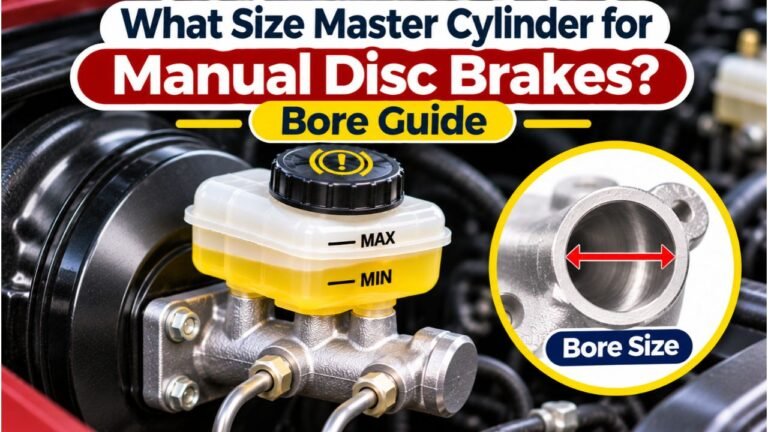
A pedal that feels too hard may have an unsuitable pedal ratio or master-cylinder bore size rather than an incorrect pushrod length.
Can You Change Brake Balance by Adjusting the Master Cylinder?
Some racing systems use separate front and rear master cylinders with an adjustable balance bar.
These systems are different from ordinary passenger-car tandem master cylinders.
Balance-bar adjustment changes brake force distribution according to the system’s design.
It should not be confused with correcting master-cylinder pushrod free play.
Key Takeaway: Manual brake pushrod adjustment must preserve proper alignment, pedal ratio, and piston return.
How to Adjust Brake Master Cylinder After Replacement
A replacement master cylinder can sometimes introduce a fitment or adjustment problem.
This is particularly relevant when replacing aftermarket or non-identical components.
Why Might a New Master Cylinder Need Adjustment?
The replacement part may have a different piston recess depth or configuration.
This can affect the relationship between the master cylinder and existing booster pushrod.
However, a correct direct-replacement part may require no adjustment.
What Should Be Checked Before Installation?
The technician should confirm:
- Correct part number and vehicle application
- Master-cylinder bore specification
- Piston recess design
- Pushrod compatibility
- Mounting surface dimensions
- Brake-line connection arrangement
- Required hydraulic preparation
- Booster-to-master clearance
Can You Fix an Incorrect Master Cylinder by Adjusting the Pushrod?
Not necessarily.
A master cylinder with an unsuitable bore, piston design, or incompatible mounting configuration should not be forced to work through excessive linkage adjustment.
The correct solution may be installing the proper component.
Does the New Master Cylinder Need Bench Bleeding?
Many conventional replacement master cylinders require preparation to remove trapped air.
The exact procedure varies.
Some modern systems have special requirements.
Follow the manufacturer’s installation instructions rather than assuming one bleeding method works for every vehicle.
What if the Brakes Drag Immediately After Replacement?
An incorrect booster pushrod relationship is one possible cause.
Other possibilities include hydraulic restrictions, improper installation, and component faults.
The vehicle should not be driven until the cause has been identified and repaired.
Key Takeaway: Check component compatibility and required clearances before treating pushrod adjustment as the solution to every post-replacement problem.
How Much Brake Master Cylinder Pushrod Free Play Is Needed?
There is no universal measurement that applies to all vehicles.
The required clearance depends on the specific linkage and brake-system design.
Pushrod and Pedal Measurement Comparison
| Measurement | What It Represents | Why It Matters |
| Pedal height | Pedal position at rest | Controls driver interface and linkage position |
| Pedal free play | Initial movement before substantial resistance | Helps ensure proper return without excess travel |
| Booster pushrod clearance | Relationship between booster rod and master-cylinder piston | Prevents preload or excessive initial travel |
| Pedal reserve distance | Remaining pedal clearance under specified braking force | Helps verify adequate pedal travel |
| Pushrod stroke | Linear movement of the linkage | Determines master-cylinder actuation |
| Master-cylinder bore diameter | Internal piston diameter | Affects fluid displacement and pedal effort |
Is 1–6 mm of Pedal Free Play Normal?
Some Toyota passenger-car specifications use a range of 1–6 mm.
Other models specify different amounts.
This is an example, not a universal target.
Pedal free play must also not be confused with booster pushrod clearance.
A small clearance at the master-cylinder piston can correspond to a much larger movement at the pedal because of pedal leverage.
Can You Use a 0.020-Inch Booster Gap on Every Vehicle?
No.
Approximately 0.020 inch is used in certain aftermarket brake-system guidance.
Other brake systems require different values, special measurement conditions, or fixed pushrods.
Always use the exact applicable specification.
Key Takeaway: Pedal free play and booster pushrod clearance are different measurements. Never substitute one specification for the other.
Can Master Cylinder Adjustment Fix a Soft Brake Pedal?
Sometimes an incorrect pushrod length can contribute to excessive initial pedal movement.
However, many soft-pedal problems have nothing to do with adjustment.
Common Causes of a Soft Brake Pedal
Possible causes include:
- Air in the brake lines
- Hydraulic leaks
- Internal master-cylinder seal problems
- Incorrectly adjusted drum brakes
- Flexible hose problems
- Brake-fluid vapor formation
- Certain ABS hydraulic faults
- Excessive mechanical movement
How Can You Tell the Difference?
A pushrod that is too short generally produces unwanted initial movement before the master cylinder begins operating.
Air in the hydraulic system may make the pedal feel compressible after hydraulic pressure begins building.
Internal master-cylinder leakage can cause the pedal to sink under sustained pressure.
These symptoms can overlap.
Professional diagnosis is necessary to identify the actual cause.
Should You Lengthen the Pushrod to Make the Pedal Firmer?
Not without confirming the adjustment is incorrect.
Increasing pushrod length can remove necessary clearance.
This may cause brake drag, overheating, or lockup.
Key Takeaway: A soft pedal is not sufficient evidence that the master-cylinder pushrod needs adjustment.
Can Master Cylinder Adjustment Fix Brakes That Won’t Release?
An incorrectly adjusted pushrod can prevent normal brake release.
However, not every case of brake drag is caused by the master cylinder.
Common Causes of Brake Drag
| Possible Cause | How It Can Affect Brake Release |
| Pushrod too long | Keeps master-cylinder piston from fully returning |
| Pedal stop incorrect | Prevents full pedal return |
| Brake light switch interference | May obstruct pedal return on certain designs |
| Seized caliper | Prevents pad retraction |
| Restricted brake hose | May trap hydraulic pressure |
| Faulty master cylinder | May interfere with hydraulic return |
| ABS hydraulic problem | May affect pressure release |
| Parking brake problem | May keep rear brakes applied |
What Are the Signs of Brake Drag?
Possible symptoms include:
- Vehicle feels unusually slow
- Poor fuel economy
- Hot wheel or brake components
- Burning smell near a wheel
- Difficulty rotating a wheel during service
- Brakes that become progressively tighter
- Vehicle pulling to one side
Can Brake Drag Damage the Vehicle?
Yes.
Continued brake drag can overheat rotors, pads, calipers, wheel components, and brake fluid.
Severe overheating can reduce braking reliability and cause expensive damage.
Should You Keep Driving With Dragging Brakes?
No.
If significant brake drag, overheating, or lockup is suspected, stop using the vehicle and arrange professional repair.
Do not attempt to solve the problem by randomly loosening hydraulic connections or changing pushrod length.
Key Takeaway: Incorrect pushrod adjustment can cause brake drag, but the entire braking system must be checked before deciding on a repair.
What If the Brake Master Cylinder Has No Adjustment?
Many modern master cylinders and factory brake boosters have fixed dimensions.
They are not intended to be adjusted internally.
If the system has no approved adjustment mechanism, changing component dimensions is not an appropriate repair.
What Should You Check Instead?
Depending on the symptoms, a technician may inspect:
- Brake pedal assembly
- Correct replacement parts
- Booster operation
- Master-cylinder internal condition
- Brake-fluid level
- Hydraulic leaks
- Air in the brake lines
- Brake calipers
- Flexible hoses
- ABS hydraulic unit
- Brake warning indicators
Can You Repair a Bad Master Cylinder by Adjusting It?
No.
Worn internal seals, corrosion, leakage, and other master-cylinder faults require proper repair or replacement.
Changing the pedal linkage does not restore damaged internal components.
Can an ABS or Brake-by-Wire System Be Adjusted?
Some modern systems require special calibration or diagnostic procedures.
Other systems have no mechanical adjustment equivalent to that found on older vehicles.
Use the manufacturer’s service information.
Key Takeaway: If the master cylinder is not adjustable, investigate and repair the actual fault rather than modifying the component.
Common Mistakes When Adjusting a Brake Master Cylinder
Several adjustment mistakes can make a braking problem significantly worse.
Adjusting Without Factory Specifications
A measurement suitable for one vehicle may be unsafe for another.
Making the Pushrod Too Long
Excessive length can prevent master-cylinder piston return and cause brake drag.
Making the Pushrod Too Short
Insufficient length can increase initial pedal travel and delay braking response.
Ignoring Brake Pedal Free Play
Pedal free play is an important part of the overall linkage adjustment.
Using Washers as Improvised Spacers
Improvised spacing between the master cylinder and booster is not an approved replacement for correct component fitment and adjustment.
Forgetting the Brake Light Switch
An incorrect switch position may affect brake-light operation and pedal return on certain designs.
Adjusting a Fixed-Length Factory Pushrod
Not every pushrod is designed for modification.
Changing the Pushrod to Hide a Hydraulic Problem
Air, leaks, worn master-cylinder seals, and sticking calipers require appropriate diagnosis and repair.
Failing to Secure the Locknut
A loose adjustable linkage can move out of its intended position.
Fasteners must be tightened according to the manufacturer’s specifications.
Skipping Post-Adjustment Checks
The pedal may appear normal while the brakes fail to release fully.
Complete functional checks are necessary.
Driving Before Confirming Safe Brake Operation
An unverified brake adjustment can create a serious safety risk.
Key Takeaway: Incorrect adjustment can be more dangerous than the original symptom. Precision and verification are essential.
When Should You Replace the Brake Master Cylinder Instead of Adjusting It?
Adjustment is appropriate only when the problem involves an approved adjustable component.
A defective master cylinder may need replacement.
Signs That Replacement May Be Necessary
Potential warning signs include:
- Internal hydraulic pressure loss
- Brake pedal sinking under sustained pressure
- External master-cylinder leakage
- Internal corrosion
- Damaged pistons or seals
- Repeated hydraulic problems linked to the cylinder
However, these symptoms can overlap with other braking faults.
A professional diagnosis should confirm the cause.
Can Internal Master-Cylinder Seals Be Adjusted?
No.
The internal seals are designed to operate within the cylinder bore.
If they are worn or damaged, changing pushrod length does not repair them.
Is Rebuilding an Option?
Some older or specialty master cylinders may be rebuildable using approved components.
However, many modern passenger-car master cylinders are commonly replaced as complete assemblies.
The correct approach depends on the component’s condition and manufacturer guidance.
Should the Master Cylinder Be Replaced When Brakes Drag?
Not automatically.
An overextended pushrod or incorrect pedal stop may cause brake drag even when the master cylinder itself is functional.
Likewise, a restricted hose or sticking caliper can produce similar symptoms.
Diagnose the fault before replacing parts.
Key Takeaway: Replace a master cylinder when it is defective, not simply because pedal adjustment is incorrect.
How to Know if the Master Cylinder Is Adjusted Correctly
A properly adjusted system should operate smoothly and meet all specified measurements.
Final Brake Adjustment Checklist
| Inspection | Expected Result |
| Brake pedal height | Within factory specification |
| Pedal free play | Within factory specification |
| Booster pushrod clearance | Meets applicable service requirement |
| Pedal return | Returns completely without obstruction |
| Brake light switch | Activates and releases correctly |
| Master-cylinder piston | Returns fully |
| Hydraulic pressure | Applies and releases normally |
| Brake-fluid system | No leaks |
| Brake pedal reserve travel | Meets service specification |
| Warning indicators | No relevant unresolved faults |
| Brake release | No abnormal drag or lockup |
| Final functional test | Completed using approved procedures |
Passing these checks is more important than achieving a pedal feel that merely seems comfortable.
A brake pedal that feels firm can still conceal an incorrectly adjusted hydraulic system.
Key Takeaway: Correct adjustment must be confirmed through specifications and functional testing, not pedal feel alone.
Conclusion
Learning how to adjust brake master cylinder components starts with understanding that most master cylinders do not have an internal adjustment mechanism.
Where adjustment is permitted, the relevant parts are usually the brake-pedal pushrod, clevis, pedal stop, or booster-to-master pushrod.
These components control pedal geometry, free play, and the master-cylinder piston’s resting position.
A pushrod that is too long can prevent the piston from returning fully, causing brake drag or even wheel lockup.
A pushrod that is too short may produce excessive pedal travel before braking begins.
However, brake problems can also result from air, hydraulic leaks, worn seals, sticking calipers, and other mechanical faults.
The correct adjustment requires vehicle-specific measurements, suitable tools, and confirmation that the braking system operates properly afterward.
Never assume that a universal pushrod gap or pedal free-play measurement applies to every vehicle.
If the system uses an electronically controlled brake assembly, specialized booster, or fixed-length pushrod, follow the manufacturer’s service procedures rather than attempting an improvised adjustment.
For most drivers, professional diagnosis is the safest choice when brake-pedal height, braking response, or release behavior is abnormal.
The goal is not simply a firmer pedal; it is a braking system that applies and releases hydraulic pressure correctly and safely.
FAQs About How to Adjust Brake Master Cylinder
Can You Adjust a Brake Master Cylinder?
Most brake master cylinders cannot be adjusted internally. However, certain vehicles have adjustable brake-pedal pushrods, booster pushrods, or linkage components. The correct procedure depends on the vehicle’s design and factory specifications.
How Do You Adjust a Brake Master Cylinder Pushrod?
On systems with an approved adjustable pushrod, a qualified technician measures pedal free play or booster-to-master clearance, adjusts the designated threaded mechanism according to the service manual, secures the hardware, and verifies proper braking operation. The exact adjustment differs by vehicle.
What Happens if the Master Cylinder Pushrod Is Too Long?
An excessively long pushrod can keep the master-cylinder piston partially depressed. This may prevent fluid pressure from releasing normally and cause brake drag, overheating, or wheel lockup. The problem requires prompt professional diagnosis and correction.
What Happens if the Brake Master Cylinder Pushrod Is Too Short?
A short pushrod may create excessive initial pedal travel before the master cylinder begins generating hydraulic pressure. However, a low or soft brake pedal can also result from air, leaks, or defective components. Confirm the cause before adjusting.
How Much Free Play Should a Brake Pedal Have?
The correct free play depends on the vehicle. Certain Toyota specifications use approximately 1–6 mm, while other applications specify different values. Use the exact factory service information. Pedal free play is not the same as booster pushrod clearance.
Can Adjusting the Master Cylinder Fix a Soft Brake Pedal?
Sometimes, when excessive movement results from an incorrectly adjusted pushrod. However, a soft pedal often indicates air in the lines, hydraulic leaks, or other faults. Do not lengthen the pushrod without confirming that adjustment is required.
Can a Bad Master Cylinder Cause Brakes to Stick?
Yes. Certain master-cylinder faults can interfere with hydraulic pressure release. An excessively long booster pushrod can also prevent piston return. However, sticking calipers, restricted hoses, and other hydraulic problems may cause similar symptoms.
Do You Need to Bleed Brakes After Adjusting the Master Cylinder?
Not automatically if only an approved external linkage adjustment was performed and the hydraulic system remained closed. However, bleeding may be necessary after master-cylinder replacement, opening brake lines, or introducing air into the system. Follow the vehicle’s service procedure.