How Long Do Brake Master Cylinders Last? Age and Failure Signs
A brake master cylinder commonly lasts at least 70,000–100,000 miles and can keep working well beyond 150,000 miles, but it has no fixed replacement age or mileage. Many remain in service for the life of the vehicle, while others fail earlier because of seal wear, contaminated brake fluid, corrosion, or hydraulic damage. Replacement should be based on a confirmed problem, not simply the odometer reading.
The master cylinder creates the hydraulic pressure that operates your brakes. Its internal pistons and seals must build and maintain pressure every time you press the brake pedal. When those seals fail, the pedal may slowly sink without any visible fluid leak. External seal damage can also cause fluid loss, sometimes into the brake booster.
A failing master cylinder is a serious safety concern. However, a soft pedal or brake warning light alone does not establish that the master cylinder is defective. Other hydraulic faults can produce similar symptoms.
In this article, I explain typical master cylinder lifespan, what causes early failure, and the warning signs to watch for. I also cover brake fluid maintenance, diagnosis, replacement costs, and why a functioning cylinder should not be replaced merely because it is old.
How Long Do Brake Master Cylinders Last? Quick Answer
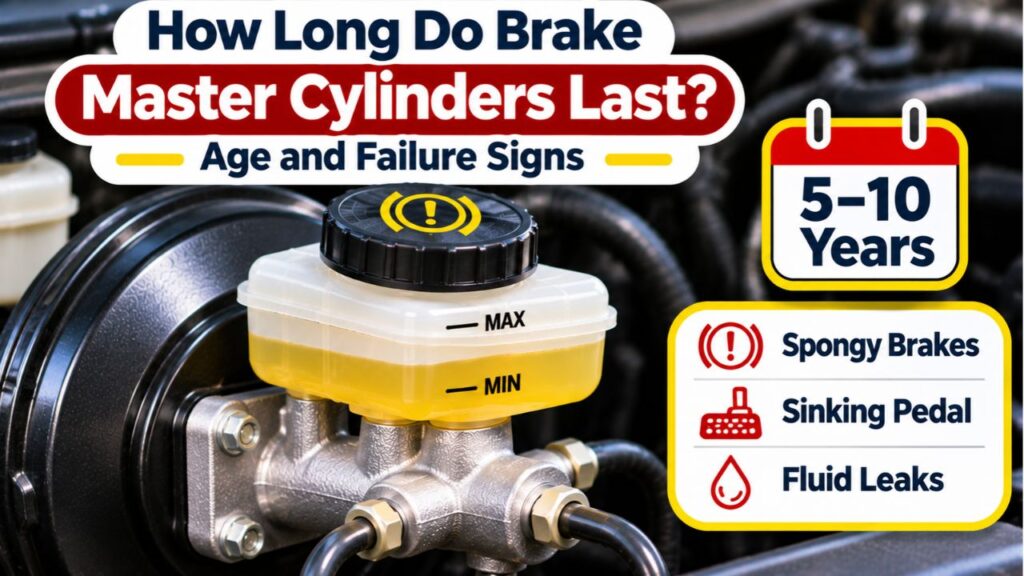
Most conventional brake master cylinders are designed for long service, often lasting 100,000 miles or considerably longer.
There is no universal replacement interval comparable to an engine oil change or scheduled brake fluid replacement.
According to CARFAX’s guide to brake master cylinders, a typical master cylinder lasts at least 70,000–100,000 miles and frequently much longer.
However, mileage is only a general reference.
A master cylinder might fail at 60,000 miles, remain reliable at 180,000 miles, or continue functioning throughout the vehicle’s useful life.
Brake Master Cylinder Lifespan Chart
| Vehicle mileage | What it means for master cylinder life |
| Under 50,000 miles | Generally early for replacement, but failure is possible |
| 50,000–70,000 miles | Inspect if symptoms develop; no automatic replacement |
| 70,000–100,000 miles | Within a commonly cited minimum lifespan range |
| 100,000–150,000 miles | Many original master cylinders remain functional |
| 150,000–200,000 miles | Continued service is possible if the unit is healthy |
| Over 200,000 miles | Some cylinders still work; inspect based on condition |
This table is an age-and-mileage reference, not a prediction of failure probability.
The mileage ranges do not establish manufacturer replacement requirements.
How Many Years Does a Brake Master Cylinder Last?
A master cylinder can last 10–15 years or longer, depending on the vehicle and its maintenance history.
Some remain functional for 20 years, while others fail much sooner.
However, there is no reliable way to convert vehicle age directly into remaining master cylinder life.
A 15-year-old vehicle with a properly functioning hydraulic system does not automatically need a replacement cylinder.
Should You Replace a Master Cylinder Every 100,000 Miles?
No.
Reaching 100,000 miles is not, by itself, a reason to replace a functioning master cylinder.
The component should be inspected when braking symptoms develop or when other maintenance reveals a possible problem.
Key Takeaway: Brake master cylinders generally last many years. Replace them when professional diagnosis confirms failure, not simply because the car reaches a particular age or mileage.
What Determines Brake Master Cylinder Lifespan?
Several factors affect how long a brake master cylinder remains functional.
These include mechanical wear, fluid condition, corrosion, and the overall health of the braking system.
1. Brake Fluid Condition
Brake fluid is essential to master cylinder operation.
Most passenger vehicles use glycol-based DOT 3, DOT 4, or DOT 5.1 fluid.
These fluids gradually absorb moisture.
Moisture contamination can contribute to corrosion inside hydraulic components.
The master cylinder contains metal surfaces, pistons, and seals that must remain in suitable condition.
Excessive contamination may accelerate deterioration.
2. Internal Seal Wear
The master cylinder contains rubber sealing components that help maintain hydraulic pressure.
Every brake application moves internal pistons.
Over time, these seals can experience friction, pressure, and age-related deterioration.
If a seal stops holding pressure properly, brake fluid may bypass the piston.
This is known as internal hydraulic bypass.
3. Corrosion Inside the Cylinder
Corrosion can damage internal metal surfaces.
A damaged cylinder bore may wear or cut piston seals.
It can also interfere with smooth piston movement.
Moisture-contaminated fluid increases corrosion concerns.
However, corrosion is not necessarily the cause of every master cylinder failure.
4. Driving Conditions
Driving habits can affect the number and intensity of brake applications.
Stop-and-go traffic involves repeated pedal operation.
Highway driving may involve fewer braking events.
However, mileage and braking frequency alone do not determine master cylinder life.
Fluid condition and component quality also matter.
5. Vehicle Age
Rubber components can deteriorate with age.
The rate depends on material formulation, temperatures, fluid compatibility, and other conditions.
A low-mileage older vehicle can still develop seal-related problems.
Therefore, age and mileage should be considered together.
6. Incorrect Brake Fluid
Using an unapproved brake fluid can damage hydraulic seals or create other problems.
For example, petroleum-based products must not be introduced into conventional glycol-based braking systems.
Similarly, silicone-based DOT 5 should not be mixed with ordinary DOT 3, DOT 4, or DOT 5.1 fluids.
Incorrect fluid can lead to extensive hydraulic-system damage.
7. Manufacturing and Component Quality
Master cylinder construction and material quality influence reliability.
Different vehicles use different hydraulic system designs.
A high-quality replacement part installed correctly may provide long service.
However, even a new component can fail prematurely if contaminated or improperly installed.
How Does a Brake Master Cylinder Work?
Understanding the component’s function helps explain how it wears out.
The master cylinder converts mechanical force from the brake pedal into hydraulic pressure.
Step 1: The Driver Presses the Brake Pedal
Pressing the pedal moves a pushrod or another brake-actuation mechanism.
On many conventional vehicles, a brake booster helps reduce the effort required.
Step 2: The Master Cylinder Pistons Move
The pushrod moves pistons inside the cylinder.
Their movement builds pressure in the brake fluid.
Step 3: Hydraulic Pressure Reaches the Wheels
Brake fluid transmits the pressure through the brake lines.
That pressure operates the brake calipers or wheel cylinders.
Step 4: The Brakes Slow the Vehicle
Calipers press brake pads against rotors.
Drum brake wheel cylinders press brake shoes against drums.
The resulting friction slows the wheels.
Step 5: The Pedal Is Released
Hydraulic pressure decreases.
The internal components return according to their design.
The braking system becomes ready for the next application.
Why Do Master Cylinder Seals Matter?
The internal seals help maintain hydraulic pressure.
When they deteriorate, the master cylinder may not hold pressure consistently.
This can cause excessive pedal travel or a sinking pedal.
A serious seal failure may compromise braking performance.
Signs Your Brake Master Cylinder Is Going Bad
A failing master cylinder may produce several warning signs.
However, these symptoms are not exclusive to master cylinder failure.
Other braking-system problems can cause similar behavior.
Bad Master Cylinder Symptoms Chart
| Symptom | Possible master cylinder problem | Other possible causes |
| Pedal slowly sinks | Internal seal bypass | External hydraulic leak |
| Soft brake pedal | Hydraulic pressure problem | Air in lines, leaks |
| Excessive pedal travel | Pressure loss | Air, adjustment problems |
| Low brake fluid | External cylinder leak | Pad wear, leaks elsewhere |
| Brake warning light | Fluid loss or hydraulic fault | Parking brake, sensors |
| Inconsistent braking | Failure to maintain pressure | ABS or other hydraulic problems |
| Fluid near brake booster | Rear master cylinder seal leak | Nearby hydraulic connection |
| Hard brake pedal | Less typical of ordinary seal failure | Brake booster or assist fault |
| Grinding noise | Usually unrelated directly | Worn pads or damaged rotors |
1. Brake Pedal Slowly Sinks Toward the Floor
A pedal that gradually sinks under steady pressure is an important warning sign.
Worn internal piston seals may allow brake fluid to bypass the sealing surfaces.
As hydraulic pressure decreases, the pedal can continue moving downward.
However, an external hydraulic leak can cause similar symptoms.
A sinking brake pedal requires immediate professional inspection.
2. Brake Pedal Feels Spongy
A soft or spongy brake pedal can indicate a problem with the hydraulic system.
Possible causes include:
- Air trapped in brake lines.
- Hydraulic fluid leakage.
- Improper brake bleeding.
- Master cylinder problems.
- Other hydraulic-component failures.
The feeling alone cannot establish which component has failed.
3. Brake Pedal Travels Farther Than Normal
If the pedal requires unusually long travel before the brakes respond, hydraulic pressure may not be developing properly.
The master cylinder could be responsible.
However, brake adjustment problems, air, or leaks elsewhere can produce similar symptoms.
4. Brake Fluid Level Keeps Dropping
A master cylinder can leak externally.
Fluid may escape around its seals, fittings, or reservoir connections.
On vehicles with conventional vacuum brake boosters, fluid can also enter the booster through a damaged rear master-cylinder seal.
This may happen without leaving a visible puddle.
5. Braking Becomes Inconsistent
A failing master cylinder may not maintain reliable hydraulic pressure.
This can lead to unpredictable pedal response.
Braking performance may feel normal at one moment and weaker at another.
Stop driving if braking becomes inconsistent.
6. Brake Warning Light Appears
Some vehicles monitor brake fluid level or hydraulic-system conditions.
A warning light may illuminate if a problem develops.
However, a brake warning light can also indicate the parking brake is applied or another system fault exists.
An illuminated warning light does not automatically mean the master cylinder has failed.
7. Fluid Appears Near the Brake Booster
Fluid around the master cylinder mounting area may indicate an external leak.
A damaged rear seal may allow fluid into the booster.
A technician must inspect the assembly to determine the source.
8. Braking Performance Deteriorates
A serious master cylinder failure can reduce hydraulic pressure and stopping ability.
If the brakes no longer respond normally, the vehicle should not be driven.
Arrange towing and professional repair.
The O’Reilly Auto Parts guide to brake pedal problems explains how master cylinder seal wear, hidden fluid leaks, and air in the hydraulic system can produce overlapping symptoms.
Can a Master Cylinder Fail Without Leaking Fluid?
Yes.
A brake master cylinder can fail internally without losing fluid from the system.
What Is Internal Master Cylinder Bypass?
Internal bypass occurs when hydraulic fluid moves past a worn or damaged piston seal.
Instead of maintaining pressure in the intended circuit, some fluid moves around the seal.
The brake pedal may slowly sink.
However, the fluid can remain inside the hydraulic system.
This means the reservoir level may not change significantly.
Does Internal Bypass Cause a Puddle?
Not necessarily.
Because the fluid remains within the system, internal bypass does not automatically create an external leak.
This is why a master cylinder cannot be judged solely by looking for puddles.
What About External Leaks?
An external leak is different.
It allows fluid to escape from the hydraulic system.
Possible leak locations include:
- Rear master-cylinder seal.
- Hydraulic connections.
- Reservoir mounting seals.
- Damaged cylinder housing.
External fluid loss may eventually allow air to enter the braking system.
Can Fluid Leak Into the Brake Booster?
Yes, on vehicles equipped with a conventional vacuum booster.
A failed rear master-cylinder seal may allow brake fluid to collect inside the booster housing.
The reservoir level can decline even when no fluid reaches the ground.
The booster may require inspection or replacement if contaminated.
Can a Brake Master Cylinder Last the Lifetime of a Car?
Yes.
Some master cylinders remain functional throughout a vehicle’s useful life.
Others need replacement earlier.
Unlike brake pads, which wear through friction and require periodic replacement, master cylinders do not have a universal scheduled replacement mileage.
Does a 10-Year-Old Car Need a New Master Cylinder?
Not automatically.
A 10-year-old master cylinder may still be functioning correctly.
A qualified mechanic should assess braking-system condition rather than recommending replacement based on age alone.
Does a 15-Year-Old Car Need Replacement?
Not necessarily.
An older vehicle may deserve closer attention during brake inspections.
However, a properly functioning master cylinder does not require automatic replacement at 15 years.
What About a 20-Year-Old Vehicle?
A master cylinder can remain functional after 20 years.
However, older vehicles may have additional concerns involving:
- Corroded brake lines.
- Deteriorated hoses.
- Aging seals.
- Brake fluid contamination.
- Worn hydraulic components.
A thorough brake-system inspection is sensible.
Should You Replace It Preventively?
Routine preventive replacement is generally unnecessary unless the manufacturer specifies it or an inspection reveals a problem.
Replacing a functioning master cylinder introduces additional hydraulic-system work.
That work must be completed correctly to avoid air entry or other safety problems.
Does Brake Fluid Maintenance Make a Master Cylinder Last Longer?
Proper brake fluid maintenance can help protect hydraulic components.
However, it cannot guarantee a particular lifespan.
Why Brake Fluid Condition Matters
Most cars use glycol-based brake fluid.
Over time, it can absorb moisture.
Moisture may contribute to corrosion inside components such as:
- Master cylinder.
- Brake calipers.
- Wheel cylinders.
- Hydraulic control units.
- Brake lines.
Corrosion can damage internal surfaces and seals.
How Often Should Brake Fluid Be Changed?
Many vehicles have brake fluid replacement intervals around every two or three years.
However, schedules vary by manufacturer.
Some specify different inspection or replacement requirements.
Always follow your vehicle’s owner’s manual.
Does Changing Brake Fluid Prevent Seal Wear?
It may help limit fluid-related deterioration and corrosion.
However, mechanical seal wear can still occur.
A fluid change cannot make every master cylinder last indefinitely.
Can Old Brake Fluid Cause Master Cylinder Failure?
Old or contaminated fluid can contribute to internal corrosion and seal-related problems.
However, not every master cylinder failure results from neglected fluid maintenance.
Other factors include material aging, manufacturing defects, and mechanical wear.
Should You Use a Higher DOT Brake Fluid?
Not automatically.
Use the exact brake fluid specification approved for your vehicle.
DOT 3, DOT 4, DOT 5, and DOT 5.1 have different characteristics.
DOT 5 silicone fluid is not interchangeable with conventional glycol-based brake fluids.
Selecting the wrong fluid can shorten hydraulic-component life.
How to Check Brake Master Cylinder Condition
A basic visual inspection can identify some warning signs.
However, it cannot confirm whether the master cylinder maintains pressure internally.
Step 1: Check the Brake Fluid Level
Park on level ground.
Locate the brake fluid reservoir according to the owner’s manual.
Most reservoirs have MIN and MAX markings.
Check the fluid level without opening the reservoir unnecessarily.
A gradual level decline can occur with disc brake pad wear.
A rapid or unexplained decline requires inspection.
Step 2: Look for Visible Leaks
From a safe, accessible position, look for wetness near:
- Master cylinder.
- Brake fluid reservoir.
- Hydraulic fittings.
- Brake booster mounting area.
Do not disassemble the braking system to look for hidden fluid.
Step 3: Pay Attention to Brake Pedal Changes
Unusual symptoms include:
- Pedal sinking.
- Excessive pedal travel.
- Spongy feel.
- Inconsistent pressure.
- Reduced braking response.
These symptoms require professional evaluation.
Step 4: Check Warning Lights
A red brake warning light or another braking-system warning may indicate a problem.
Consult the owner’s manual.
Do not assume the master cylinder is responsible without diagnosis.
Step 5: Review Maintenance History
Check whether the vehicle has received:
- Scheduled brake fluid changes.
- Brake hydraulic repairs.
- Brake hose replacements.
- Caliper or wheel-cylinder repairs.
- Previous master cylinder service.
Maintenance history can help a technician identify possible contributing factors.
Step 6: Arrange Professional Diagnosis
A qualified mechanic can perform manufacturer-approved hydraulic tests.
These may include checking for external leaks, evaluating pedal behavior, and determining whether pressure is bypassing internally.
Do not perform improvised brake-line isolation or pressure tests. Incorrect procedures can damage hydraulic components and create unsafe braking conditions.
Master Cylinder Failure vs. Other Brake Problems
Several brake faults can look similar to master cylinder failure.
Identifying the differences helps avoid unnecessary parts replacement.
Master Cylinder vs. Brake Booster
The master cylinder generates hydraulic pressure.
The brake booster reduces the effort required to press the brake pedal.
| Symptom | More commonly associated with |
| Pedal gradually sinks | Master cylinder internal bypass or hydraulic leak |
| Hard pedal requiring excessive force | Brake booster or assist-system fault |
| Low reservoir level | Pad wear or external hydraulic leak |
| Spongy pedal | Air in the hydraulic system or related fault |
| Hissing near brake pedal | Possible booster vacuum problem |
| Fluid inside booster | Possible master cylinder rear-seal leak |
These are general diagnostic clues, not conclusive tests.
Master Cylinder vs. Worn Brake Pads
Brake pads are friction components.
They gradually wear as the vehicle stops.
A master cylinder does not wear through friction against the rotors.
Worn pads may cause:
- Squealing.
- Grinding.
- Reduced friction-material thickness.
- Other braking symptoms.
A failing master cylinder more commonly affects hydraulic pressure or pedal travel.
Master Cylinder vs. Brake Line Leak
A leaking brake line allows fluid to escape.
This can reduce hydraulic pressure and create a soft or sinking pedal.
Internal master cylinder bypass may create similar pedal symptoms without external fluid loss.
Both conditions are serious.
Master Cylinder vs. Air in Brake Lines
Air trapped in brake lines can compress when the driver applies the brakes.
This may produce a soft or spongy pedal.
A technician must determine whether the cause is trapped air, master cylinder failure, or another hydraulic problem.
Master Cylinder vs. ABS Problem
ABS systems contain hydraulic and electronic components that control brake pressure.
An ABS fault may create warning lights or unusual braking behavior.
However, a warning light does not establish that the master cylinder has failed.
Some modern hybrid and electric vehicles also use integrated brake-control systems that differ from conventional layouts.
When Should You Replace a Brake Master Cylinder?
Replace the master cylinder when professional diagnosis confirms that it is defective or when an applicable manufacturer procedure requires replacement.
Signs That Replacement May Be Necessary
Replacement may be appropriate when:
- Internal seals no longer maintain hydraulic pressure.
- An external master cylinder leak is confirmed.
- The cylinder bore is damaged.
- Severe internal corrosion is found.
- The unit is physically damaged.
- An approved repair is unavailable or unsuitable.
- A manufacturer-required replacement condition is met.
Does a Sinking Pedal Automatically Mean Replacement?
No.
Although a sinking pedal can indicate internal master cylinder failure, an external leak or another hydraulic problem may produce similar symptoms.
Diagnosis is necessary.
Should You Replace the Master Cylinder With Brake Pads?
Not routinely.
Brake pads and master cylinders have different functions and wear patterns.
Installing new brake pads does not require replacing a properly functioning master cylinder.
Should You Replace It During a Brake Fluid Flush?
Not unless a problem is identified.
A brake fluid flush is a maintenance service.
Master cylinder replacement is a component repair.
Can a Master Cylinder Be Rebuilt?
Some conventional master cylinders can be rebuilt using manufacturer-approved parts and procedures.
However, many modern units are replaced as assemblies.
The decision depends on the component design, bore condition, parts availability, and manufacturer recommendations.
How Much Does It Cost to Replace a Brake Master Cylinder?
Replacement cost depends on the vehicle and the complexity of its braking system.
According to RepairPal’s brake master cylinder replacement cost estimate, updated September 3, 2026, the average U.S. replacement cost is approximately 656–796.
The estimate includes parts and labor but excludes taxes, additional fees, and related repairs.
Brake Master Cylinder Replacement Cost Breakdown
| Expense | RepairPal estimate |
| Replacement parts | 450–493 |
| Labor | 206–303 |
| Estimated total | 656–796 |
These are national estimates, not a quote for a particular vehicle.
Some repairs cost less, while more complicated vehicles may cost substantially more.
What Affects the Price?
Important factors include:
- Vehicle make and model.
- Master cylinder design.
- Parts availability.
- OEM or approved replacement component.
- Local labor rates.
- Accessibility.
- ABS service requirements.
- Hydraulic bleeding procedures.
- Additional damaged components.
Does the Brake Booster Need Replacement Too?
Not automatically.
However, if a master cylinder has leaked fluid into a vacuum booster, the booster must be inspected for contamination or damage.
Additional replacement may be necessary.
Does Replacement Include Brake Bleeding?
A master cylinder replacement generally requires an appropriate bleeding procedure.
The new unit may require bench bleeding or another manufacturer-specified preparation method.
The hydraulic circuits must then be properly serviced.
Certain ABS and electronically controlled brake systems require additional procedures.
How Long Does Replacement Take?
Labor time depends on vehicle design and access.
A straightforward conventional replacement may take a few hours, but additional hydraulic repairs or specialized bleeding can increase the required time.
Ask the repair shop for an estimate specific to the vehicle.
Can You Drive With an Old Brake Master Cylinder?
Yes, age alone does not make a master cylinder unsafe.
A vehicle with an older but properly functioning master cylinder may be suitable for normal operation.
However, a suspected or confirmed failing cylinder is a different situation.
When Is an Older Master Cylinder Still Usable?
A master cylinder may remain in service when:
- No defect has been identified.
- Brake pedal behavior is normal.
- No hydraulic leaks are present.
- Braking performance is normal.
- Required fluid maintenance has been completed.
- The braking system passes appropriate inspections.
The absence of symptoms does not replace scheduled inspections, but it is not a reason for automatic replacement.
Can You Drive With a Failing Master Cylinder?
No.
A master cylinder that cannot maintain hydraulic pressure can cause unpredictable braking.
Stopping distances may increase substantially.
In severe cases, braking ability may be lost.
When Should You Stop Driving Immediately?
Stop driving and arrange professional assistance if:
- The pedal sinks toward the floor.
- The pedal becomes unusually soft.
- Braking performance decreases.
- Brake fluid is leaking.
- The reservoir level is dangerously low.
- A red brake warning light remains on with an abnormal pedal.
- Braking becomes inconsistent.
Arrange towing rather than driving to the repair shop with unreliable brakes.
How to Make a Brake Master Cylinder Last Longer
Good maintenance can help reduce avoidable hydraulic-system deterioration.
However, no maintenance procedure guarantees a fixed master cylinder lifespan.
1. Change Brake Fluid on Schedule
Follow the manufacturer’s brake fluid service interval.
Fresh, properly specified fluid helps maintain appropriate hydraulic conditions.
2. Use the Correct Brake Fluid
Check the owner’s manual and reservoir cap.
Never substitute engine oil, transmission fluid, power steering fluid, or an incompatible brake fluid.
3. Keep the Reservoir Properly Closed
Avoid opening the reservoir unnecessarily.
Dirt and moisture can contaminate the hydraulic system.
4. Inspect Brake Fluid Level
Check the reservoir according to the manufacturer’s instructions.
A gradual decline can occur as disc brake pads wear.
However, sudden or repeated fluid loss requires diagnosis.
5. Repair Hydraulic Leaks Promptly
Brake line, hose, caliper, and wheel-cylinder leaks require attention.
Do not repeatedly top off the reservoir without identifying the cause.
6. Maintain Brake Pads and Other Components
Regular brake inspections help identify wear and hydraulic problems.
A properly maintained overall braking system reduces the chance that one neglected issue will damage additional components.
7. Avoid Contaminating Brake Fluid During Repairs
Use clean equipment and approved fluid from an appropriate sealed container.
Contamination can damage seals and other hydraulic components.
8. Follow Correct Bleeding Procedures
If hydraulic repairs are necessary, the system must be bled according to the manufacturer’s requirements.
Air left in the braking system can cause a soft pedal.
Some ABS systems require specialized diagnostic equipment.
9. Address Unusual Brake Pedal Behavior
Do not ignore changes in pedal travel or resistance.
Early diagnosis can prevent further damage and reduce safety risks.
10. Keep Maintenance Records
Record brake fluid replacements and hydraulic repairs.
This helps establish the system’s service history.
Common Mistakes About Brake Master Cylinder Lifespan
Several misconceptions can lead to unnecessary replacement or delayed repairs.
Assuming Every Master Cylinder Fails at 100,000 Miles
There is no universal 100,000-mile replacement requirement.
Many cylinders last longer.
Assuming a Low-Mileage Car Cannot Have a Bad Master Cylinder
A master cylinder can fail early because of contamination, defects, corrosion, or seal damage.
Mileage alone cannot rule out failure.
Replacing the Cylinder Just Because the Car Is Old
Age may increase concern about component deterioration, but it does not prove failure.
Replace based on proper diagnosis.
Ignoring Brake Fluid Maintenance
Old or contaminated fluid can contribute to hydraulic-system corrosion.
Follow the maintenance schedule.
Assuming a Spongy Pedal Always Means Master Cylinder Failure
Air in the brake lines and other hydraulic faults can produce similar symptoms.
Assuming a Hard Pedal Means the Master Cylinder Has Failed
A hard pedal often involves the brake booster or assist system rather than an internal master cylinder seal problem.
Looking Only for External Fluid Leaks
Internal master cylinder bypass may reduce pressure without an external leak.
Trying to Fix Damaged Seals With Fresh Brake Fluid
A fluid flush does not restore worn or damaged master cylinder seals.
Replacing the Master Cylinder Without Checking Other Components
Caliper leaks, brake hoses, ABS faults, and other issues can produce overlapping symptoms.
A complete diagnosis prevents unnecessary repairs.
Driving With a Sinking Brake Pedal
A sinking pedal can signal serious hydraulic failure.
Do not continue driving.
Conclusion
So, how long do brake master cylinders last? A commonly cited lifespan is at least 70,000–100,000 miles, and many remain functional for 150,000 miles or considerably longer.
Some cylinders last for the entire useful life of a vehicle.
Others fail earlier because of seal wear, corrosion, contaminated brake fluid, or component defects.
There is no universal age or mileage at which every master cylinder must be replaced.
Instead, its condition and ability to maintain hydraulic pressure determine whether replacement is necessary.
A slowly sinking brake pedal, external fluid leakage, and inconsistent hydraulic pressure are important warning signs.
However, these symptoms can overlap with other brake-system faults, so professional diagnosis is essential.
My recommendation is to keep the correct brake fluid maintained, inspect the braking system regularly, and replace the master cylinder only when a qualified diagnosis identifies a defect.
If the brake pedal sinks or stopping performance becomes unreliable, do not drive until the problem has been repaired.
FAQs About How Long Do Brake Master Cylinders Last
Can a Brake Master Cylinder Last 200,000 Miles?
Yes. Some master cylinders remain functional at 200,000 miles or beyond. However, there is no guarantee. Fluid condition, internal seal wear, corrosion, and component quality affect service life. A properly functioning cylinder does not automatically need replacement at that mileage.
How Many Years Does a Brake Master Cylinder Usually Last?
A master cylinder can last 10–15 years or longer, but there is no fixed service-life requirement. Some fail sooner, while others remain functional for the life of the vehicle. Age alone is not a reason to replace a good master cylinder.
Should I Replace My Master Cylinder After 100,000 Miles?
Not automatically. A master cylinder should generally be replaced when testing confirms that it cannot maintain hydraulic pressure, has an external leak, or has another serious defect. Reaching 100,000 miles does not establish that it has failed.
What Are the First Signs of a Bad Master Cylinder?
Possible warning signs include a slowly sinking brake pedal, excessive pedal travel, inconsistent braking pressure, and external fluid leakage. However, these symptoms can also indicate other hydraulic problems. Have the system professionally diagnosed.
Can a Master Cylinder Fail Without Leaking Brake Fluid?
Yes. Worn internal piston seals can allow hydraulic fluid to bypass inside the cylinder. This can reduce pressure without creating an external leak or lowering the reservoir level. A slowly sinking pedal is one possible symptom.
Does Changing Brake Fluid Make the Master Cylinder Last Longer?
Proper brake fluid maintenance can help reduce moisture-related corrosion and contamination. However, it cannot prevent all mechanical wear or guarantee a particular lifespan. Follow the vehicle manufacturer’s fluid replacement schedule.
How Much Does It Cost to Replace a Brake Master Cylinder?
RepairPal’s September 2026 U.S. estimate is approximately 656–796 for parts and labor, excluding taxes, fees, and related repairs. Actual prices depend on the vehicle, location, component design, and required hydraulic service.