How Tight Should Parking Brake Be? Correct Feel and Safe Checks
A parking brake should be firm enough to hold your vehicle when parked but free enough to release fully before you drive. A hand lever should build resistance as you pull it and lock before reaching the end of its travel. A foot pedal should engage securely through its designed travel. There is no single correct click count for every car.
That’s the short answer, but the feel matters. A lever that pulls almost to the ceiling may have too much travel. One that barely moves might be adjusted too tightly. Either condition deserves attention, especially if you park on a sloped driveway.
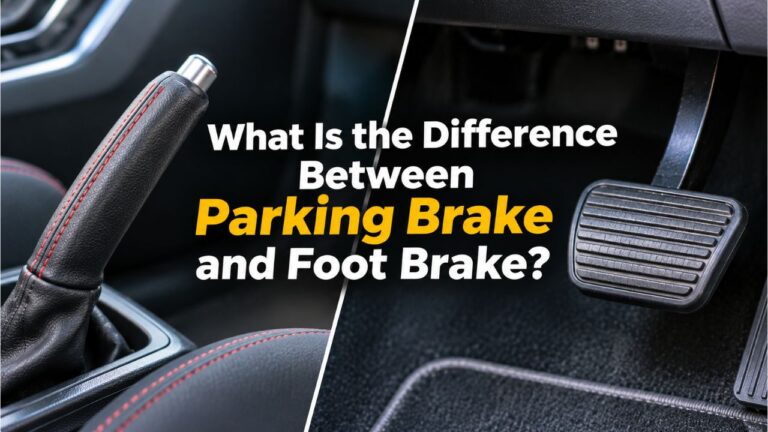
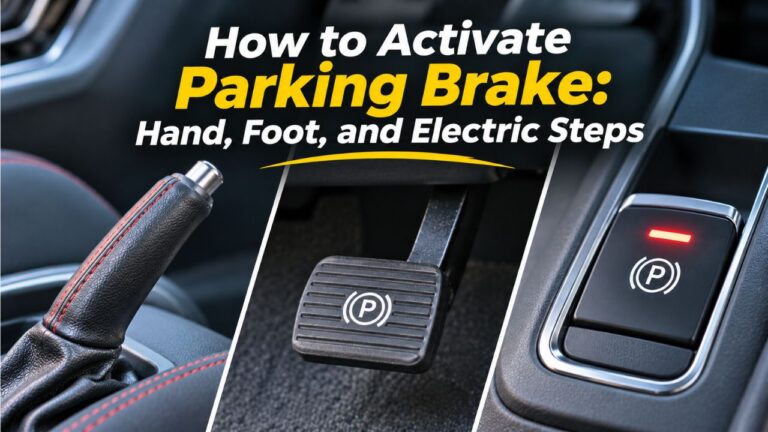
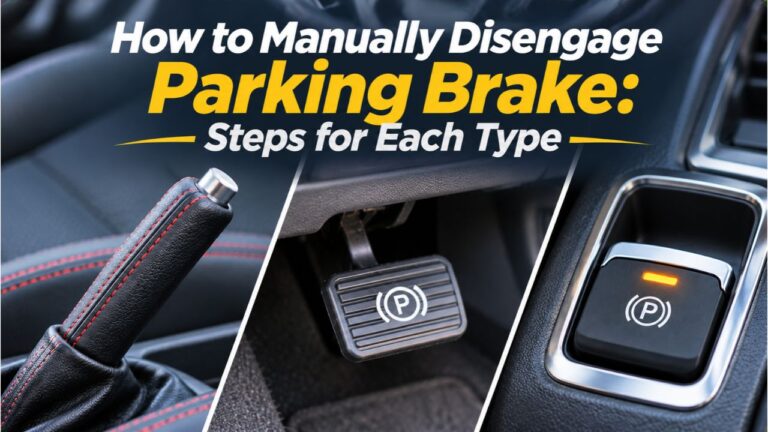
Parking brakes vary more than many drivers expect. Some use a hand lever, some use a foot pedal, and newer vehicles may have an electric switch. Each has a different way of applying force to the rear brakes or another parking-brake mechanism.
This guide covers the normal feel, what clicking sounds tell you, safe ways to check for trouble, and when an adjustment belongs in a repair shop. You can make a useful first check without tools or taking a wheel off.
| Quick Answer: Apply the parking brake firmly until it locks and holds the parked vehicle, without forcing the lever or pedal past its normal stop. For hand levers, follow the click range in the vehicle’s service information; no universal number applies. Once released, the brakes must not drag. |
How Tight Should a Parking Brake Feel?
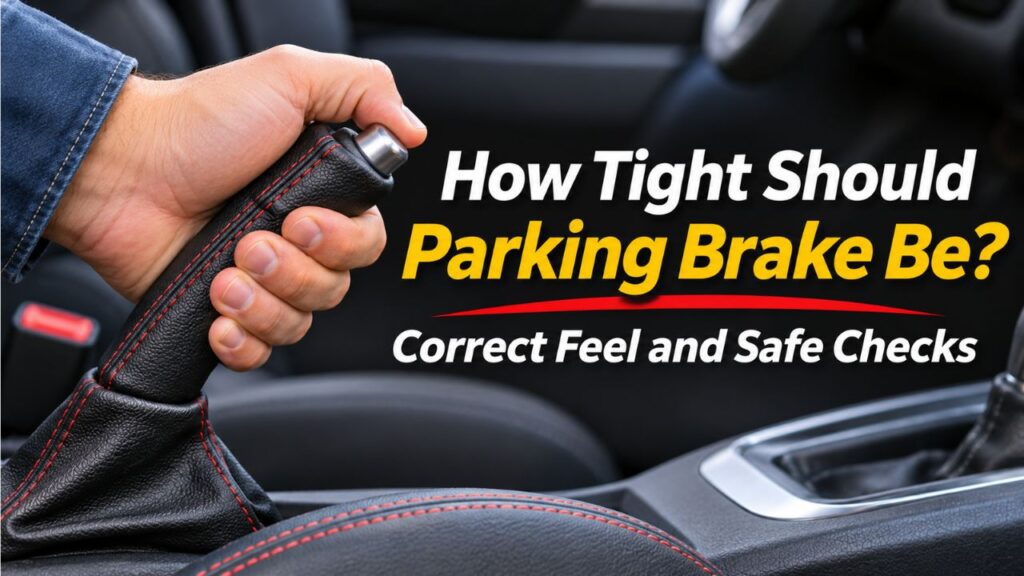
A properly working parking brake should give steady resistance, reach a definite engaged position, and release completely when you let it off. The exact amount of hand or foot effort varies by vehicle, so judge the control by its normal travel and holding ability rather than how hard you can pull.
Think of closing a door. You want a solid latch, not a handle you have to wrench until something bends. A parking brake works best with that same controlled, firm motion.
| Brake control | Normal feel | Possible warning sign |
| Hand lever | Resistance builds; the notched locking mechanism clicks and holds the lever | Lever rises unusually high, feels floppy, or stops almost at once |
| Foot pedal | Pedal moves through its designed travel and locks firmly | Pedal suddenly travels farther, fails to latch, or won’t return |
| Electric switch | Indicator confirms the brake has engaged | Warning message, flashing fault light, or brake failing to apply or release |
Hand levers and foot pedals
Pull a hand lever smoothly while pressing the regular brake pedal. It should grip without a snap or a long stretch of slack. A foot pedal also needs a positive lock.
The red brake indicator can tell you the control is engaged. It does not prove the brake has enough holding force. A worn cable system may light the dash while the brake itself barely grips.
Electric parking brakes
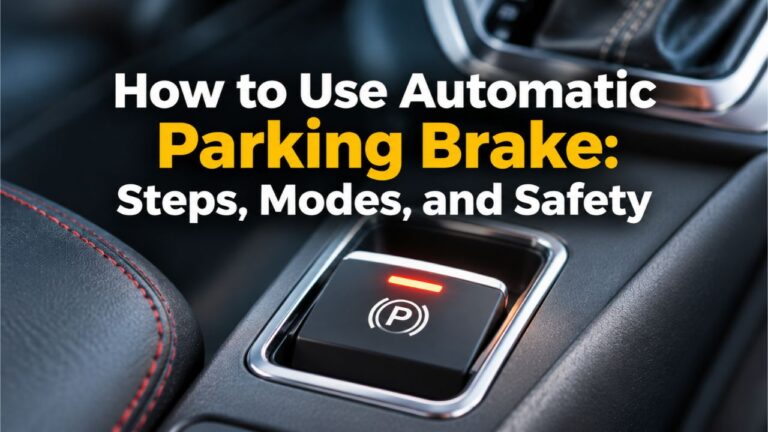
An electric parking brake, or EPB, uses a switch and motor. Judge it by normal engagement, release, and its warning indicators, not clicks.
How Many Clicks Should a Parking Brake Have?
There is no standard number of parking brake clicks that fits every vehicle, because lever designs and adjustment limits differ. Several clicks under firm, normal use may be correct, but the only dependable target is the range listed for your exact make, model, year, and brake system.
For example, the factory service procedure for certain 2023–2026 GR Corolla models specifies 5 to 8 notches when the hand lever is pulled with about 45 pounds of force. That is a service measurement for those vehicles, not a rule for every car.
How to count clicks without forcing anything
- Park on level ground, stop fully, and hold the regular brake pedal.
- Find the parking brake instructions for your exact vehicle.
- Release the parking brake, then pull its lever smoothly.
- Count the clicks until normal firm engagement. Don’t yank farther to chase a number.
- Compare the count with the specified range, then release the lever fully.
If your lever used to stop at six clicks and now reaches ten with the same effort, that change deserves attention. The actual number is less useful without its history.
What click counts cannot tell you
Clicks measure lever movement, not braking strength. A cable can move the lever while worn or poorly adjusted shoes fail to grip. Brake shoes are friction pieces that press against a metal drum surface. Compare the specified travel with holding performance and full release. If the car is not secure, a normal click count does not mean the brake is safe.
How Can You Check Whether It Holds Safely?
You can make a basic parking brake check while stationary on level ground by watching the control engage and release, then checking for warning signs during normal parking. A home check cannot prove the brake’s full holding capacity, especially on a steep hill, so don’t create a rolling test to find its limit.
In a clear, level parking area, away from people and traffic:
- Stop fully and keep your foot on the service brake, the normal brake pedal.
- Apply the parking brake firmly, following your owner’s manual.
- Confirm the lever or pedal locks, or the electric brake indicates engagement.
- Shift an automatic into Park, or secure a manual in the recommended gear.
- Ease pressure off the service brake gently, ready to press it again. If the vehicle moves or feels unstable, stop the check.
- Release the parking brake before driving, and check that its warning indicator goes out as expected.
Safety Note: A car remaining still in Park or in gear does not prove the parking brake works alone. The transmission may be holding it. Don’t shift into Neutral on a hill or push the accelerator against an engaged brake to test it.
Say your driveway slopes toward the street. If the car moves unexpectedly when parked, secure it and arrange an inspection instead of repeating the check on a steeper slope.
A repair shop can measure holding performance under controlled conditions and inspect the mechanism at the wheels. That is the right call when grip is in doubt.
What Are the Signs of a Loose Parking Brake?
A loose parking brake often has extra lever or pedal travel and may fail to keep the vehicle securely parked, even when the control is fully applied. The warning signs can appear gradually, so changes from the way your brake normally works are often more useful than an isolated click count.
Watch for these clues:
- The hand lever rises much higher than it used to.
- The foot pedal travels farther before it latches.
- The control feels unusually light, with little resistance.
- The vehicle shifts more than expected after parking or cannot stay secured.
- The lever reaches its stop, yet the brake still feels weak.
These are red flags, not proof that the cable simply needs tightening. A brake that feels loose can have a problem farther back at the wheels.
Why a parking brake gets loose
Common causes include worn parking brake shoes, too much gap between shoes and their drum surface, a cable with excessive slack, or a damaged adjuster. Rust and seized parts can also keep the mechanism from moving correctly.
For example, if the rear brakes were serviced last week and the hand lever suddenly travels farther, the shoe setting or reassembly may need checking. Tightening the cable first could hide the actual problem.
Can a Parking Brake Be Too Tight?
Yes. A parking brake can be adjusted so tightly that its shoes or pads rub after you release the control, causing heat and early wear. A lever that takes very little movement to engage may be a clue, but unwanted brake drag is the more serious warning because it can affect driving.
| What you notice | What it may mean | What to do |
| Lever locks with unusually little travel | Cable or shoe setting may be too tight | Compare with the vehicle’s specification |
| Car feels held back after release | Parking brake may be dragging | Stop in a safe place and have it checked |
| Burning smell near a wheel | A brake may be overheating | Stop driving and arrange service or a tow if needed |
| Lever or pedal won’t release normally | Cable, spring, linkage, or motor may be stuck | Don’t force the control; request service |
Tight when parked is good; tight when released is not
If the car feels sluggish after you leave the driveway, the parking brake may still be rubbing.
Brake drag means the friction parts keep rubbing when they should be free. Heat can damage pads, shoes, rotors, drums, and nearby parts. Never touch a wheel or brake part to check its temperature; it may be hot enough to burn you.
An educational parking brake adjustment explanation describes the tradeoff: excessive cable slack can reduce holding force, while too much tension can leave the brakes rubbing. The goal is correct clearance, not maximum cable tension.
If you smell hot brakes, hear scraping, or feel the car dragging, play it safe and get the system checked before continuing a trip.
How Is Parking Brake Tension Adjusted?
Parking brake adjustment depends on the brake design, and correcting a weak brake often starts at the rear brake mechanism rather than at the cable nut. A technician should check the friction parts, levers, springs, and cable movement before setting travel to the manufacturer’s specification and confirming that the brakes release freely.
What a correct adjustment involves
- Check lever or pedal travel against the vehicle’s service specifications.
- Inspect the parking brake cables, hardware, and rear brake shoes or pads.
- Correct worn or stuck parts and set the brake clearance, if the design allows it.
- Adjust cable travel in the order the manufacturer specifies.
- Apply and release the brake, checking for holding force and unwanted drag.
Some cars use small parking brake shoes inside the rear rotor. Others use the rear caliper, which squeezes brake pads against a disc. Those designs call for different procedures.
Why tightening one nut can backfire
Cable tension cannot fix worn shoes or a stuck mechanism. If the hand lever changed after a rear brake repair, improper shoe adjustment might be the cause. Turning the cable nut could put you back to square one with dragging brakes.
If you lack the exact service instructions and proper tools, ask a qualified brake technician to handle the adjustment. Electric systems may need electronic service equipment.
How Tight Should It Be When Parking on a Hill?
On a hill, apply the parking brake firmly through its normal full engagement, then use the transmission and wheel position as added protection. A slope does not call for wrenching a lever beyond its regular stop; it calls for correct parking steps and a brake that has enough grip to secure the vehicle.
A solid rule of thumb is to set the brake every time you park. That makes the action familiar on sloping streets.
For an automatic transmission
- Stop completely and hold the regular brake pedal.
- Set the parking brake firmly.
- Shift into Park and shut off the engine, following the owner’s manual.
- Turn the front wheels for the curb and slope.
- Ease off the regular brake only after securing the vehicle.
For a manual transmission
Set the parking brake, shut off the engine, and leave the car in the gear its manufacturer recommends, commonly first or reverse. Never rely on Neutral to hold the car.
Point the wheels toward the curb downhill and away from the curb uphill. With no curb, aim them toward the road edge, away from traffic. The hill-parking guidance for drivers explains the wheel positions.
If you’re towing a trailer or carrying a heavy load, follow the manufacturer’s parking instructions and use wheel chocks when needed. Don’t leave a vehicle on a slope if the parking brake may be weak.
Frequently Asked Questions
Is five clicks enough for a parking brake?
Five clicks can be correct on some hand-lever parking brakes, but it is not a pass-or-fail number for every vehicle. Check the service specification for your model and pay attention to holding ability. If the brake won’t secure the car or drags when released, the click count alone doesn’t matter.
Is it bad to pull the parking brake all the way up?
Pulling a hand lever to its normal firm engagement point is fine. Yanking it harder after it has stopped can strain the handle or mechanism. If you must pull nearly to the physical end of its travel before the brake works, have the system inspected rather than using extra force.
Should the parking brake feel loose when released?
The released lever or pedal may move freely through a small normal range, but it should return to its resting position and stay there. A floppy handle, dangling cable, or unusual slack can signal trouble. The main requirement is that the brake disengages fully, without rubbing at the wheels.
Can I drive if my parking brake is too loose?
A loose parking brake may leave normal pedal braking intact, but it creates a rollaway risk when parked and can fail safety inspections. Don’t rely on it for parking, especially on hills. Arrange repair promptly and use a secure parking location until it is fixed.
Can I tighten the parking brake cable myself?
Some mechanical parking brakes have an adjustable cable, but turning its nut without checking the wheel-end mechanism can cause brake drag. The correct order and travel setting vary by model. If you lack a service manual and the right tools, have a brake technician make the adjustment and check the release.
A Firm Hold Without Brake Drag Is the Goal
A parking brake does not need to feel brutally tight. It needs to engage with a firm, repeatable motion, hold the vehicle when parked, and release completely before driving. That balance matters more than chasing a particular number of clicks.
For a hand lever, compare the travel with your vehicle’s specification. A foot pedal should latch positively through its designed travel. An electric brake should report normal engagement and release. None of these checks replaces a proper holding-force test if something feels wrong.
Avoid ignoring a weak brake or tightening its cable until the rear brakes drag. Either problem can leave your car less safe.
Your next step: On level ground, check how the control feels and whether it releases normally. If the travel has changed, the car won’t stay secured, or the brakes rub after release, book an inspection before parking on a hill again.