How Long Does a Brake Booster Last? Mileage and Failure Signs
A brake booster can last 100,000 miles or more, and many continue working for most or all of a vehicle’s service life. There is no universal replacement mileage or fixed number of years. A healthy booster generally stays in place until it fails, develops a leak, or no longer provides the brake assistance the vehicle requires.
That makes its service life different from brake pads and other parts that wear through normal friction. A car with 160,000 miles may still have its original booster, while a lower-mileage vehicle can develop problems because of a damaged seal, poor vacuum supply, or brake-fluid contamination. Age, climate, and maintenance history matter alongside mileage.
Knowing what to watch for can prevent needless replacement and help identify a dangerous change in braking effort. This guide covers expected lifespan, what shortens it, warning symptoms, differences between booster types, simple condition checks, maintenance habits, and when replacement is the right decision.
How Long Does a Brake Booster Last in Miles and Years?
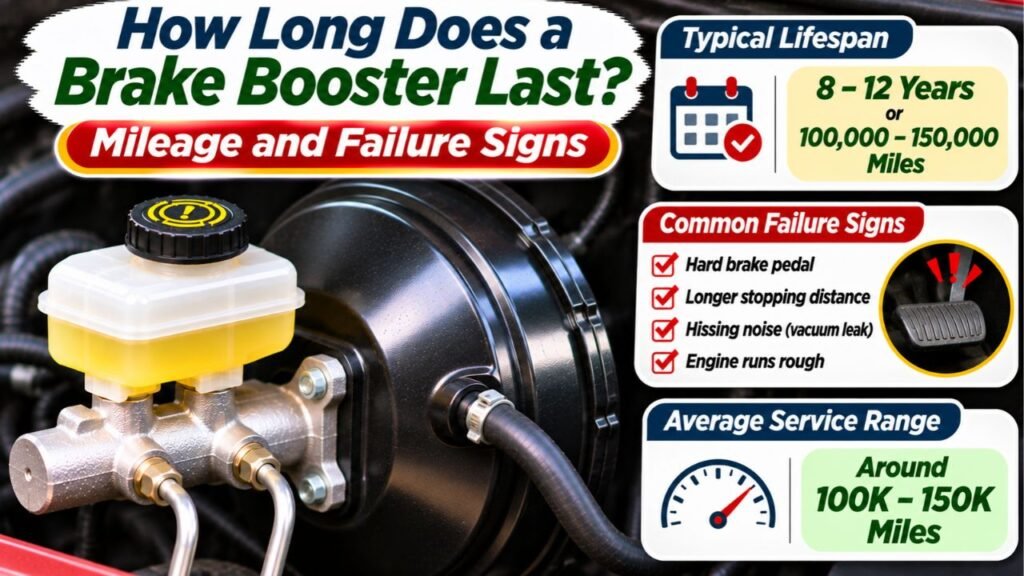
For a traditional vacuum brake booster, more than 100,000 miles and well over a decade of service are possible, but neither figure should be treated as a scheduled replacement point. Some boosters keep working as long as the vehicle; others fail earlier because their seals or supporting parts deteriorate.
Mechanic Base’s brake booster guide describes vacuum boosters as components intended to last much of a car’s life, with many reaching 150,000 miles or more. That is general experience-based guidance, not a guaranteed manufacturer lifespan for every model.
Does Mileage or Vehicle Age Matter More?
Both can matter, but neither tells the whole story. Mileage reflects use, including repeated brake applications. Calendar age reflects years of exposure to changing temperatures, moisture, and environmental conditions, even when the car is parked.
A low-mileage vehicle stored outdoors for many years may have aging rubber parts. A frequently driven vehicle with a dry, protected booster and a sound vacuum system may still work well after high mileage. Judge the actual condition rather than choosing a replacement date from the odometer.
Is There a Scheduled Brake Booster Replacement Interval?
Usually not. Unlike brake fluid or friction components, a conventional booster is commonly replaced because of a confirmed fault, not because it reaches a fixed service interval. Always follow any model-specific inspection or replacement instructions in the owner’s or service manual.
A high-mileage booster that passes the proper checks does not automatically need replacing. Equally, a recently installed unit with lost assistance should be diagnosed immediately.
Why a Brake Booster Can Last So Long
A vacuum brake booster normally doesn’t grind against a rotor or wear away like a brake pad. Inside its sealed housing, a diaphragm, valve mechanism, and springs work together to help push the master cylinder when the pedal is applied.
Bosch Mobility’s vacuum brake booster overview explains that the booster creates a pressure difference between chambers to add force to the driver’s pedal input. Its basic mechanism is built for repeated operation without routine internal adjustment.
However, that durability depends on the seals maintaining the required pressure difference. The booster also relies on the rest of its assist system. A perfectly sound diaphragm cannot provide normal assistance if the vacuum hose or pump fails.
What Causes a Brake Booster to Wear Out Early?
The most important causes involve aging seals, leaks, and damage from nearby components. These problems do not appear at the same mileage in every vehicle.
Aging Diaphragm and Internal Seals
A traditional booster uses flexible sealing materials. Over time, heat and repeated movement may cause them to harden, crack, or lose their sealing ability. Once air leaks into the wrong chamber, the booster may produce less assist.
An internal valve can also become worn or fail to seal correctly. Because many boosters are sealed assemblies, damage to these internal parts commonly leads to replacement rather than a simple adjustment.
Brake Fluid Leaking From the Master Cylinder
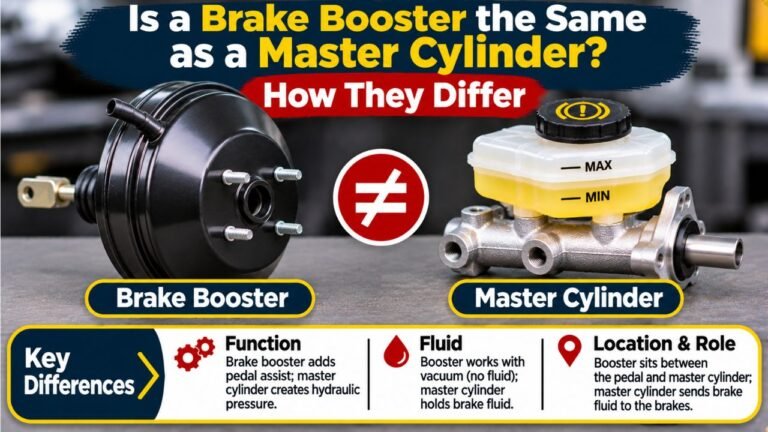
The master cylinder sits directly in front of many vacuum boosters. If its rear seal leaks, brake fluid can enter the booster housing and damage components that were not designed to contact it.
This matters because replacing only the booster will not correct the leak that caused the damage. The master cylinder and booster should both be evaluated when fluid is found between them or inside the booster.
Cracked Vacuum Hose or Faulty Check Valve
The booster depends on a reliable vacuum supply. Rubber hoses can split, loosen, or deteriorate, while a one-way check valve can stop retaining vacuum. Either problem may create the same hard-pedal complaint as a failed booster.
These are important distinctions: a vacuum supply fault does not necessarily mean the booster itself has worn out. A technician should identify the faulty part before recommending a complete assembly.
Rust, Moisture, and Installation Damage
A damaged or corroded housing can lose its seal. Exposure to road salt, water intrusion, or physical damage may shorten service life in some environments. Improper installation or incorrect pushrod adjustment can also create problems, although not every pedal complaint caused by adjustment indicates internal booster wear.
Warning Signs a Brake Booster May Be Near Failure
A booster often gives some indication that assistance is changing, but not every failure develops gradually. Watch for symptoms that are new or becoming more frequent.
Hard Brake Pedal
A pedal that suddenly needs much more foot pressure is one of the clearest warnings of lost brake assistance. The basic hydraulic brakes may still operate, but the driver can have difficulty generating enough braking force, particularly during an emergency stop.
A hard pedal can also come from poor vacuum supply or another assist-system fault. It is a reason for immediate inspection, not proof that the booster housing is defective.
Hissing or Whistling During Braking
A continuous or unusually loud hiss near the booster, pedal, or vacuum hose may indicate an air leak. The sound may become more noticeable when the pedal is pressed.
Some normal brake mechanisms make brief sounds. Compare a new noise with the vehicle’s usual behavior, and have a persistent hiss checked. Do not diagnose the location solely by listening from the driver’s seat.
Longer Stops or Unpredictable Pedal Effort
If the vehicle requires extra force to slow down, or assistance seems to come and go, a booster-related fault is possible. Because stopping distance depends on tires, road conditions, and driver response, a change in brake effort is more useful as an early warning than trying to measure stopping distance on public roads.
A pedal that sinks toward the floor suggests a hydraulic problem and must also be treated as dangerous, even though it is not the typical sign of a failed vacuum booster.
Rough Idle or Engine Stalling When Braking
On vehicles that use engine intake vacuum, a substantial leak in the booster circuit can disturb the engine’s air supply. The engine may stumble or change idle speed when the brakes are applied.
This symptom does not apply in the same way to every vacuum-pump-equipped, hybrid, or electric vehicle. Engine-related faults can also cause rough idle, so professional diagnosis should confirm the connection.
Brake Booster Lifespan vs. Other Brake Parts
Brake parts have different service needs. Pads and rotors wear through friction; brake fluid changes condition over time; the booster usually remains in service while it operates correctly.
| Component | Typical Service Approach |
| Brake booster | Inspect when symptoms appear; replace for a confirmed defect or specified service requirement |
| Vacuum hose or check valve | Replace when leaking, damaged, or failing a functional check |
| Brake pads and rotors | Inspect for wear and replace when they reach vehicle-specific limits |
| Brake fluid | Service according to the vehicle manufacturer’s interval and condition guidance |
| Master cylinder | Diagnose leaks or pressure loss; replace or repair as specified |
How to Check Whether an Older Brake Booster Still Works
A few observations can help you decide whether further diagnosis is needed. They do not replace a full brake-system inspection, and tests differ for hydraulic and electronic boosters.
Check 01: Compare Normal Pedal Effort
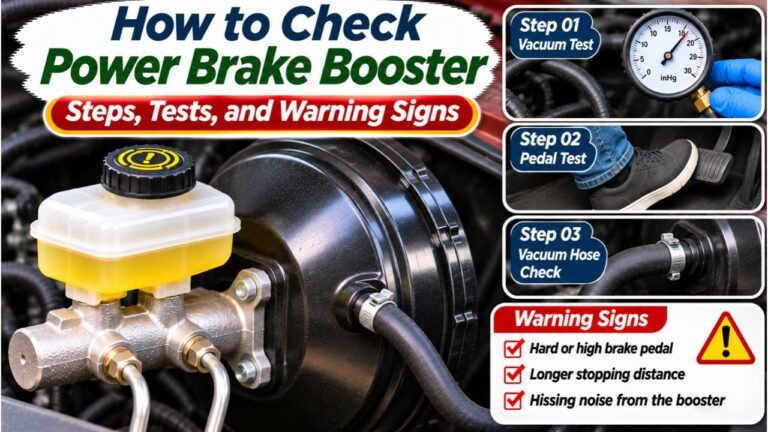
While parked, notice whether the pedal feels unusually hard compared with its normal operation. A hard pedal after the engine has been off and the vacuum reserve has been depleted can be normal on a conventional vacuum-assisted vehicle. A hard pedal with the engine running is more concerning.
Check 02: Observe the Engine-Start Response
On many conventional vacuum boosters, pressing the brake pedal several times with the engine off uses stored vacuum. Holding steady moderate pressure while starting the engine may then produce a small downward pedal movement as assistance returns.
AutoZone’s guide to signs of a bad brake booster describes this stationary check and explains why a vacuum supply problem can imitate booster failure. A missing pedal movement is a clue, not a final diagnosis.
Check 03: Look for Accessible Vacuum-Line Damage
With the engine off and cool, inspect visible hose sections for cracking, disconnection, or obvious deterioration without taking anything apart. Also note unusual hissing or a change in idle that occurs with brake application.
Do not remove the master cylinder, disconnect brake lines, or test braking on the road to investigate a suspected failure. A technician can measure vacuum supply, evaluate the check valve, and follow the manufacturer’s diagnostic procedure.
Do Different Brake Booster Types Last Different Lengths of Time?
Yes, their failure mechanisms differ, but there is no reliable single mileage figure that covers every design.
Vacuum boosters rely on a diaphragm, air-control valves, and a vacuum source. A bad pump, hose, or check valve may interrupt assistance before the main housing wears out.
Hydraulic boosters, including systems commonly called Hydro-Boost, use hydraulic pressure from an approved supply. Their service life depends on seals, hoses, fluid supply, and other hydraulic components rather than a vacuum diaphragm.
Electromechanical boosters use motors, sensors, and control systems to assist braking. Faults may involve electronics or power supply, and testing requires model-specific procedures. Some hybrid and electric vehicles also integrate braking assistance with regenerative braking controls.
Do not apply a conventional engine-off vacuum test to a different booster type without the proper service instructions.
Can Regular Maintenance Make a Brake Booster Last Longer?
There is usually no routine internal service for a sealed vacuum booster. Useful preventive care focuses on the components and conditions around it.
- Follow the manufacturer’s brake-fluid service schedule and investigate leaks promptly, especially around the rear of the master cylinder.
- Have damaged vacuum hoses, loose fittings, and faulty check valves repaired rather than allowing the system to operate with leaks.
- Pay attention to newly increased pedal effort, changes in engine idle during braking, and persistent hissing.
- Inspect the brake system during scheduled service, including pedal operation and accessible connections.
- Use the correct replacement parts and installation specifications after repairs.
These steps cannot guarantee a certain lifespan. They can, however, prevent avoidable damage and reduce the chance of replacing a good booster because a supporting part was overlooked.
Should You Replace a Brake Booster at 100,000 or 150,000 Miles?
Not based on mileage alone. A properly functioning booster at 150,000 miles may not need replacement, while a failed one at 40,000 miles needs attention. Neither number is a universal service limit.
If you own an older vehicle, treat its age and mileage as context for inspection rather than permission to ignore symptoms or a reason to replace parts that still work. Review the service manual, check for recalls or service information that apply to the specific model, and have changes in pedal feel assessed.
Repairing a Brake Booster vs. Replacing It
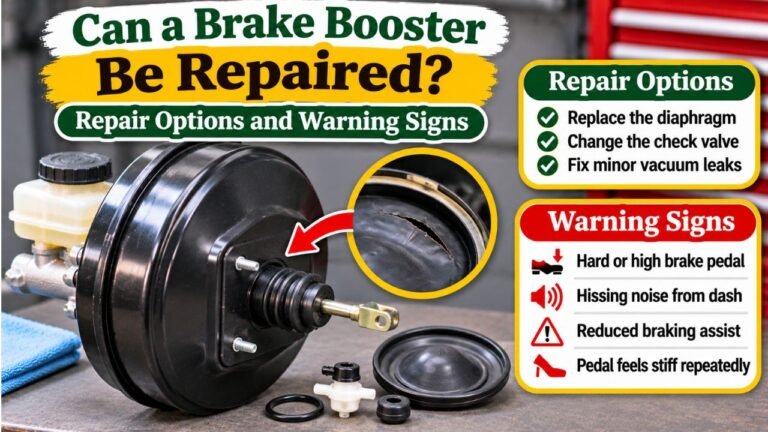
If the problem is an external hose, grommet, or separately replaceable check valve, a repair may restore assistance without changing the booster assembly. When the diaphragm, sealed internal valve, or housing has failed, replacement is often the practical choice.
Some older units can be rebuilt by specialists, but availability and suitability depend on the design. New or remanufactured replacements must match the vehicle’s mounting, pushrod connection, assist characteristics, and applicable electronic equipment.
There is also no universal replacement price. Cost varies with access, part design, labor, and whether related components need work. Request a diagnosis before paying for a new booster.
Is It Safe to Drive With a Failing Brake Booster?
No. If brake assistance is unreliable, stopping the vehicle may require far more force than expected. Normal-looking brake fluid and a pedal that feels firm do not establish that the assist system is safe.
Stop in a safe location if braking effort changes suddenly. Arrange inspection and towing rather than using traffic as a test. A pedal that sinks, visible brake-fluid loss, or a brake-system warning also calls for immediate attention, whether or not the booster is responsible.
FAQs About How Long Does a Brake Booster Last
Can a Brake Booster Last 20 Years?
Yes. Some boosters remain functional for 20 years, especially when the housing stays sound and seals retain their integrity. Age alone cannot confirm their condition, so unusual pedal effort or leaks still need investigation.
Can a Brake Booster Last 200,000 Miles?
It can. High mileage is possible, but it is not a promise for every vehicle. A booster should be evaluated by function and condition rather than replaced or trusted solely because of an odometer reading.
Does a Brake Booster Wear Out Gradually or Fail Suddenly?
Either can happen. Seals may deteriorate gradually, causing worsening assistance, while a hose or internal component may fail abruptly. Any significant change in braking effort needs prompt inspection.
Can a Bad Check Valve Make the Booster Seem Worn Out?
Yes. A faulty one-way valve can allow stored vacuum to escape, producing a hard pedal or reduced assistance. Correct diagnosis may show that the valve or hose, rather than the booster itself, needs replacement.
Will a New Brake Booster Make Worn Brakes Work Better?
A new booster can restore missing assist if the original has failed. It does not correct worn pads, damaged rotors, leaking hydraulic lines, or poor tire grip. Those problems require their own repairs.
Brake Booster Service Life Depends on Condition, Not Just Mileage
The answer to how long does a brake booster last is that many work beyond 100,000 miles and for much of a vehicle’s life, but there is no universal expiration point. Internal sealing, the condition of the vacuum or hydraulic supply, fluid contamination, and environmental exposure can all influence how long assistance remains dependable.
Rather than replacing an otherwise healthy booster at a particular mileage, pay attention to hard pedal effort, hissing, and changes in braking response. Have the whole assist system inspected before deciding which component has failed. When braking becomes unreliable, leave the vehicle parked until it is repaired and verified safe.