Are Anti-Rattle Clips Necessary? Brake Pad Retaining Clip Guide
If you are replacing brake pads and notice thin metal clips around the pads or caliper bracket, it may be tempting to leave them out—especially if the new pads seem to fit without them. These small pieces of brake hardware are commonly called anti-rattle clips, brake pad retaining clips, abutment clips, or brake hardware clips.
So, are anti rattle clips necessary? In most brake systems that were designed to use them, yes. Anti-rattle clips help hold the brake pads in the correct position, reduce vibration and noise, allow the pads to move smoothly, and prevent unnecessary contact between the pads and caliper bracket.
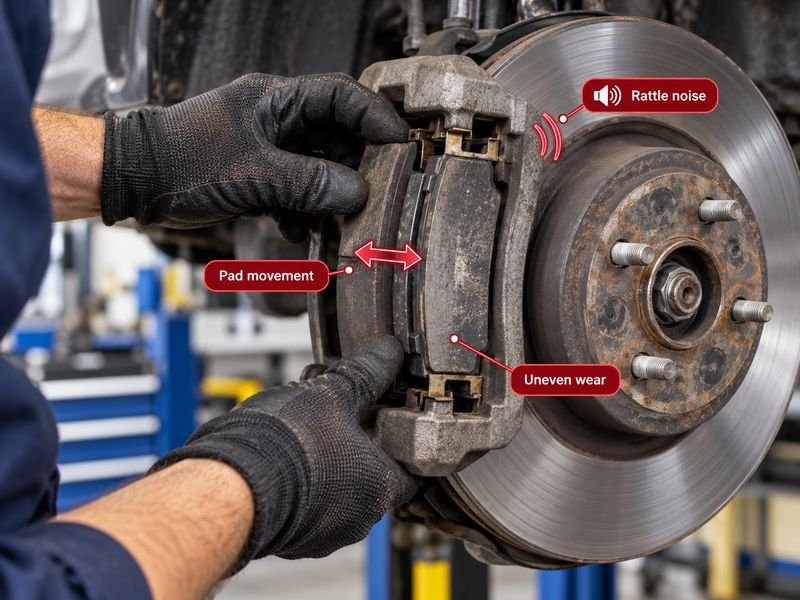
Likewise, if you are wondering whether brake pad retaining clips are necessary, the answer is generally yes when the original brake design includes them. Leaving the clips out can cause rattling, clicking, uneven pad movement, accelerated wear, or brake drag depending on the design.
These clips are inexpensive compared with the rest of the brake system, and replacing worn or corroded hardware during a brake job is usually the better approach.
Are Anti Rattle Clips Necessary?
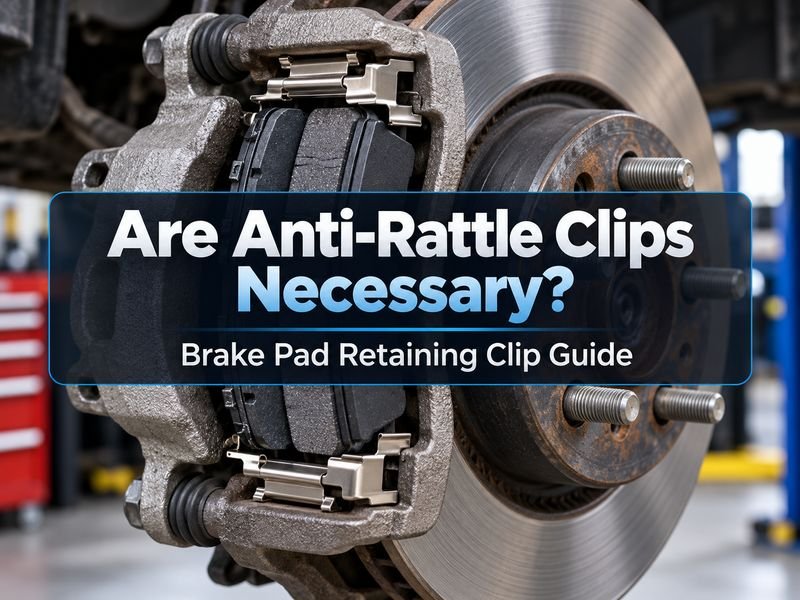
Yes, anti-rattle clips are necessary when the brake system was designed to use them.
Their exact job varies by brake design, but they typically help control brake pad movement inside the caliper or caliper bracket.
Without the correct clips, the pads may move more than intended whenever you:
- Drive over bumps
- Apply the brakes
- Release the brakes
- Change direction
- Accelerate after braking
This extra movement can create rattling, clicking, clunking, or squeaking noises.
More importantly, brake hardware can also help the pads remain properly positioned and slide correctly as they wear.
For that reason, anti-rattle clips should not be considered optional decorative pieces.
Are Brake Pad Retaining Clips Necessary?
Yes, brake pad retaining clips are generally necessary if they were part of the original brake assembly.
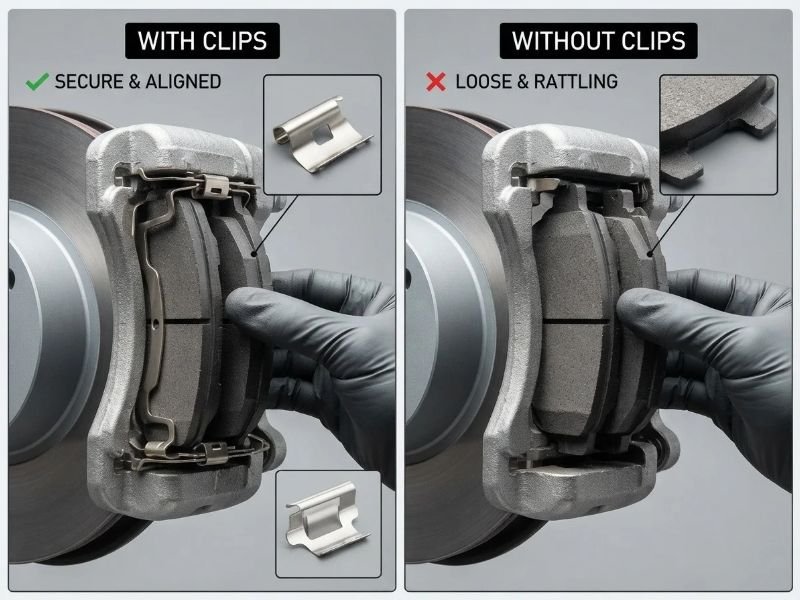
A retaining clip may:
- Hold the brake pad in position
- Reduce pad movement
- Maintain proper tension
- Prevent rattling
- Help the pad slide correctly
- Keep the pad from contacting the bracket incorrectly
Different vehicles use different clip designs.
Some clips snap into the caliper bracket. Others attach directly to the brake pad. Some act as springs that apply tension to the pads.
Because the design varies, you should install the same type and number of clips that the brake system originally used.
What Are Anti-Rattle Clips?
Anti-rattle clips are small spring-steel components used in many disc brake systems.
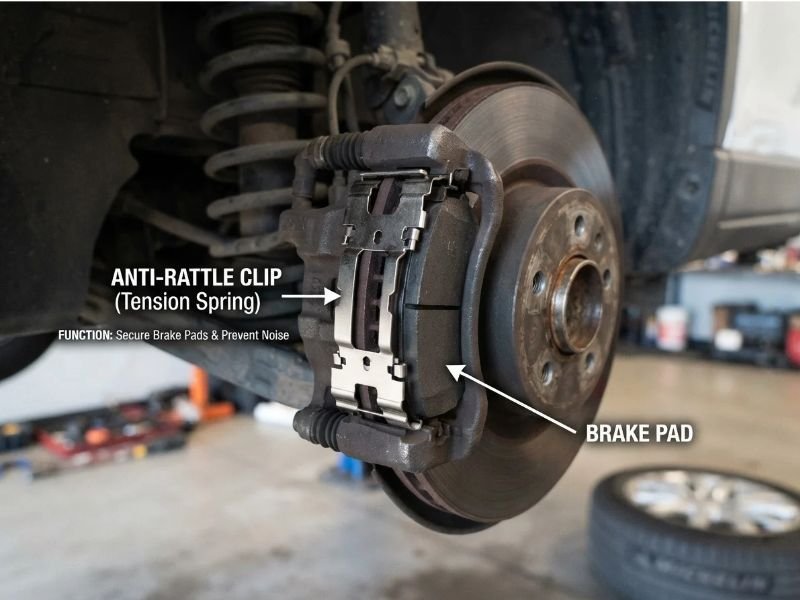
They are often installed:
- Between the brake pad and caliper bracket
- On the ends of the brake pads
- Across the outside of the caliper
- Between the pad and piston
- Around specific pad mounting points
Their main purpose is to control unwanted brake pad movement.
Brake pads need enough freedom to move toward and away from the rotor, but they should not be loose enough to bounce around inside the caliper.
Anti-rattle clips provide that controlled fit.
What Are Brake Pad Retaining Clips?
The term brake pad retaining clip can refer to several types of brake hardware.
Depending on the brake system, a retaining clip may physically hold the pad against:
- The caliper piston
- The caliper bracket
- The caliper body
Some brake pads have small spring clips built into their backing plates.
For example, an inner pad may use a spring clip that fits inside the hollow portion of the caliper piston.
That clip helps keep the pad properly positioned against the piston.
Other vehicles use stainless-steel abutment clips along the caliper bracket.
Although people use terms such as anti-rattle clip and retaining clip interchangeably, they are not always exactly the same component.
Anti-Rattle Clips vs Abutment Clips
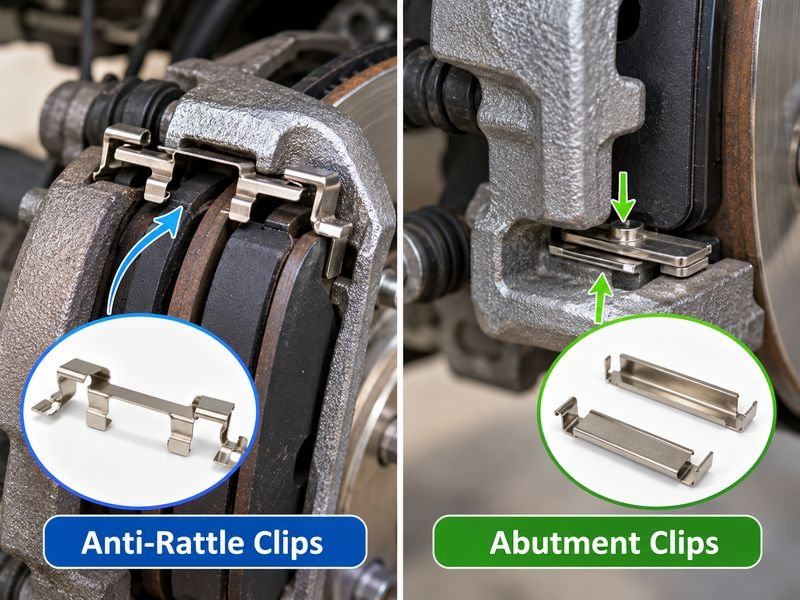
Abutment clips are the thin stainless-steel pieces commonly installed where the brake pad ears contact the caliper bracket.
They create a smooth surface for the pads to slide against.
They also help protect the bracket from direct pad contact and corrosion.
Anti-rattle hardware may include abutment clips, but some brake systems also have separate spring clips specifically designed to apply tension and prevent movement.
The important point is that all original brake hardware should generally be reinstalled or replaced correctly.
Why Do Brake Pads Need Clips?
Brake pads cannot simply be clamped tightly into the bracket.
They need to move.
When you press the brake pedal, hydraulic pressure causes the caliper piston to push the pads against the rotor.
When you release the pedal, hydraulic pressure drops and the pads must be able to relax slightly away from the rotor.
The brake hardware helps balance these requirements.
The pads remain controlled but still have enough movement to operate correctly.
Without the clips, movement may become excessive or restricted depending on the brake design.
What Happens If Anti-Rattle Clips Are Missing?
Missing clips can produce several symptoms.
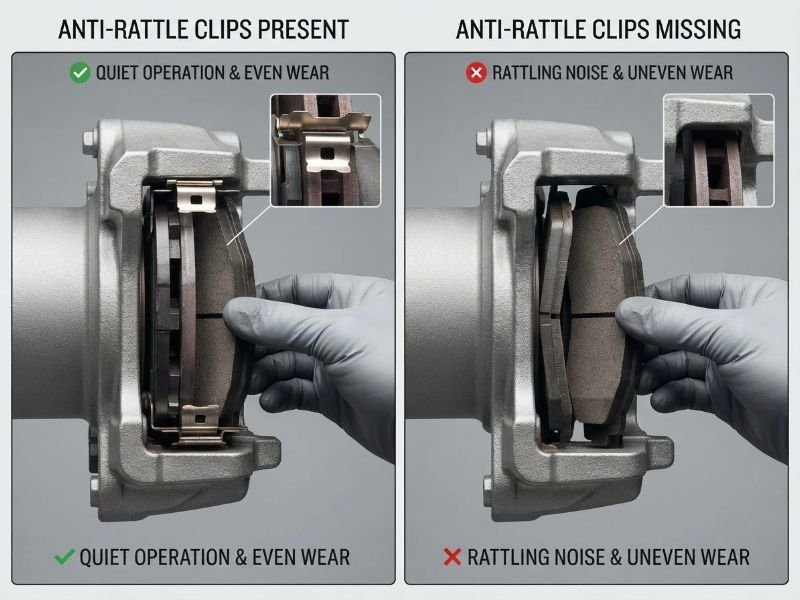
Brake Pads May Rattle
The most obvious problem is brake pad rattle.
Without spring tension from the clips, the pads may move inside the bracket when you drive over uneven pavement.
You may hear a metallic:
- Rattle
- Click
- Clunk
- Tapping sound
The noise may seem to come from the wheel area.
Brakes May Click When Changing Direction
Loose brake pads can shift inside the bracket.
For example, the pads may move one direction when braking while driving forward and shift the opposite way when braking in reverse.
This can create a noticeable click or clunk.
Pads May Wear Unevenly
If the pads do not remain correctly positioned, their movement against the rotor may become inconsistent.
This can potentially contribute to abnormal or uneven wear.
Brake Noise Can Increase
Missing hardware may allow additional vibration.
That can increase:
- Squeaking
- Squealing
- Clicking
- Rattling
Not every brake noise comes from clips, but missing hardware is one possible cause.
Can You Drive Without Anti-Rattle Clips?
A vehicle may still brake if an anti-rattle clip is missing, but driving without hardware that the brake system was designed to use is not recommended.
The brake pad will not necessarily fall out immediately.
However, the missing clip can allow excessive movement or interfere with proper pad positioning.
You may also develop additional brake noise or wear.
Because brakes are a safety-critical system, reinstall the correct hardware rather than treating missing clips as acceptable.
Can Brake Pads Fall Out Without Retaining Clips?
Normally, the overall caliper and bracket design prevents a brake pad from simply falling out during normal operation.
However, retaining hardware still serves an important purpose.
It controls the position and movement of the pads.
You should not assume the clips are unnecessary merely because the caliper physically traps the pads.
A brake assembly is engineered to operate with all of its specified components installed.
Can Missing Brake Clips Cause Rattling Over Bumps?
Yes.
Brake pad rattle over bumps is one of the classic symptoms of loose or missing anti-rattle hardware.
When the wheel moves over rough pavement, the suspension and brake assembly experience vibration.
If the pads have excessive clearance inside the bracket, they may bounce against surrounding metal components.
The resulting sound may disappear when you lightly apply the brakes.
That happens because the caliper clamps the pads against the rotor and temporarily removes the free movement.
If a rattle disappears when you lightly press the brake pedal, loose brake pads or brake hardware should be considered during diagnosis.
Can Missing Brake Clips Cause Clicking?
Yes.
A clicking sound may occur when the pads move inside the caliper bracket.
This can happen when:
- Braking after changing direction
- Starting from a stop
- Releasing the brake pedal
- Driving over bumps
However, clicking can also come from other components, including:
- Loose caliper bolts
- Worn suspension parts
- CV joints
- Wheel bearings
- Loose wheel hardware
Never assume that every wheel-area click is caused by brake clips.
Can Missing Anti-Rattle Clips Cause Brake Squeal?
They can contribute to brake noise.
Brake squeal often occurs because vibration develops between brake components.
Anti-rattle hardware helps control some of this movement.
Without proper clips, the pads may vibrate more easily.
However, squealing can also result from:
- Glazed brake pads
- Worn pads
- Rotor condition
- Improper bedding
- Contamination
- Pad compound
- Missing shims
Brake noise should therefore be diagnosed as a complete system.
Can Anti-Rattle Clips Cause Brake Drag?
Yes, if they are installed incorrectly, damaged, or badly corroded.
A clip that sits out of position can interfere with normal brake pad movement.
The pad may have difficulty sliding away from the rotor after you release the brake pedal.
Possible symptoms include:
- Wheel running hotter than normal
- Burning smell
- Reduced fuel economy
- Vehicle pulling
- Rapid pad wear
- Excess brake dust
The issue is usually not that anti-rattle clips are bad by design.
Instead, the hardware may be incorrectly installed or corrosion beneath the clip may be pushing it inward.
Rust Under Brake Pad Clips
This is an important problem in areas where road salt is common.
The abutment clips themselves are often stainless steel and may look relatively clean.
However, the steel caliper bracket underneath the clips can rust.
As corrosion builds underneath, it pushes the clip upward.
That reduces the available space for the brake pad.
Eventually, the pad may become too tight in the bracket and stop sliding normally.
This can cause:
- Uneven wear
- Brake drag
- Overheating
- Premature pad wear
During brake service, the bracket surfaces beneath the clips should be inspected and cleaned correctly before new hardware is installed.
Should Brake Pads Move Freely in the Clips?
Yes, but they should not be excessively loose.
The pads should generally be able to slide through their intended range without binding.
They should not require heavy hammering to install.
If the pads are extremely tight, check for:
- Rust beneath abutment clips
- Incorrect clips
- Wrong brake pads
- Bent hardware
- Dirt or debris
- Damaged caliper bracket
Do not grind large amounts of material from brake pads simply to make an incorrect or corroded installation fit.
Find the actual cause of the binding.
Should You Reuse Old Anti-Rattle Clips?
Sometimes they can be reused if they are specifically designed for reuse and remain in excellent condition, but installing new brake hardware during a pad replacement is often a better choice.
Old clips may become:
- Bent
- Corroded
- Weak
- Distorted
- Contaminated
Spring clips can also lose some tension after years of heat cycling.
Many quality brake pad kits include new hardware for this reason.
If replacement clips are included and they match the original design, use the new hardware.
Do New Brake Pads Come With Clips?
Some do.
Brake pad kits may include:
- Abutment clips
- Anti-rattle springs
- Retaining clips
- Pad shims
- Wear indicators
Other kits include only the brake pads.
What is included varies by brand, vehicle, and product line.
Before starting the job, inspect the replacement kit and compare the new components with the original brake hardware.
What If the New Clips Look Different?
Slight differences in appearance can be normal with updated replacement hardware.
However, the clips should still fit the bracket and pads correctly.
Do not install hardware that clearly:
- Does not seat correctly
- Interferes with the rotor
- Prevents pad installation
- Places the pad in the wrong position
Confirm the brake pad kit and hardware are correct for the exact vehicle.
Can You Install Brake Pads Without the Clips Temporarily?
It is better not to.
If the brake system originally uses clips and you discover that they are missing or damaged during a brake job, obtain the correct replacement hardware.
Brake parts are safety-critical components.
Temporary shortcuts can create noises, poor pad movement, or additional wear that requires the brakes to be disassembled again.
Do All Cars Have Anti-Rattle Clips?
No.
Brake hardware designs vary significantly between vehicles.
Some systems use obvious external anti-rattle springs.
Others rely mainly on:
- Abutment clips
- Integrated pad springs
- Caliper piston clips
- Pad shims
Some designs may use very little separate hardware.
The fact that one vehicle can operate without a certain style of clip does not mean that another vehicle can.
Follow the brake design used on your specific model.
What Are the Clips on the Back of Brake Pads?
Some brake pads have spring clips attached to the backing plate.
An inner brake pad may use a clip that fits into the caliper piston.
This helps hold the pad against the piston.
Other clips can help maintain pad position or reduce vibration.
These should not be removed unless the brake manufacturer or vehicle service procedure specifies otherwise.
What Is the Large Spring Clip on the Outside of a Caliper?
Some brake calipers use a larger external spring or retaining clip.
This component applies tension to the caliper or pad assembly and helps prevent unwanted movement.
If the brake system originally has this spring, it should be installed correctly.
An incorrectly installed external caliper spring can cause:
- Rattling
- Incorrect caliper movement
- Hardware interference
Take a photo of the original installation before removal if you are unfamiliar with the design.
Should You Lubricate Brake Pad Clips?
Certain contact points may require a small amount of high-temperature brake lubricant, but lubrication must be applied correctly.
Suitable lubrication points may include the areas where brake pad ears slide against approved hardware.
Do not apply lubricant to:
- Rotor friction surface
- Brake pad friction material
- Tire
- Wheel braking surface
Do not coat the entire brake assembly with grease.
Some brake systems and hardware have specific lubrication instructions, so follow the service procedure for your vehicle.
Can Regular Grease Be Used on Brake Clips?
No.
Use a lubricant specifically designed for brake components and compatible with the temperatures and rubber materials present.
General-purpose grease may:
- Break down under brake heat
- Damage rubber components
- Wash away
- Contaminate braking surfaces
Only a small amount is generally needed where lubrication is specified.
How to Install Brake Pad Retaining Clips Correctly
Exact installation varies by vehicle, but the general process is straightforward.
1. Remove the Old Brake Hardware
After removing the caliper and pads, remove the old abutment or retaining clips from the bracket.
Note their orientation before removal.
2. Inspect the Caliper Bracket
Look for corrosion where the clips sit.
Heavy rust can prevent new clips from seating properly.
3. Clean the Hardware Mounting Surfaces
Remove loose rust and debris using an appropriate cleaning method.
The goal is to provide a clean, flat surface for the hardware.
Do not remove unnecessary metal from the bracket.
4. Install the New Clips
Snap the clips completely into their intended positions.
Make sure they sit flat.
5. Check Brake Pad Movement
Install the pads and verify they move correctly within the hardware.
The pads should not be jammed tightly into the bracket.
6. Reassemble the Brakes
Reinstall the remaining components according to the vehicle manufacturer’s procedure and torque specifications.
Because brakes are safety-critical, uncertain installation should be checked by a qualified technician.
What Happens If Anti-Rattle Clips Are Installed Backward?
Incorrect installation can cause several problems.
The clip may:
- Rub the rotor
- Restrict pad movement
- Fail to control pad movement
- Produce noise
- Become damaged
Some clips look almost symmetrical even though they have a specific orientation.
Compare new hardware carefully with the original installation.
If necessary, use the vehicle’s brake service information.
Can a Brake Clip Touch the Rotor?
Brake hardware should not normally drag against the rotor.
If a clip is contacting the rotor, something is wrong.
Possible causes include:
- Clip installed backward
- Clip not fully seated
- Bent hardware
- Incorrect hardware kit
- Incorrect brake pads
A metal clip rubbing against a spinning rotor can create scraping noises and damage.
Correct the installation before driving normally.
Brake Pad Clips vs Brake Pad Shims
Clips and shims are different components.
Brake pad clips usually help position the pad or control its movement.
Brake pad shims are typically attached to or installed behind the brake pad backing plate.
Their main purpose is often reducing vibration and brake noise.
Some modern brake pads come with factory-installed multilayer shims.
Do not automatically remove them because the old pads had a different design.
Anti-Rattle Clips vs Wear Indicators
A brake wear indicator is also different from an anti-rattle clip.
A mechanical wear indicator is typically a small metal tab positioned so it contacts the rotor when the friction material becomes sufficiently thin.
That contact produces a high-pitched squealing sound to warn the driver.
The wear indicator is not intended primarily to hold the brake pad in place.
Can Missing Clips Cause Uneven Brake Pad Wear?
They can contribute to abnormal movement or positioning, which may affect pad wear.
However, uneven pad wear can have many other causes, including:
- Sticking caliper slide pins
- Seized caliper piston
- Corrosion beneath abutment clips
- Rotor problems
- Incorrect pad installation
If one pad is significantly more worn than another, inspect the entire caliper system rather than replacing clips alone.
Can Anti-Rattle Clips Wear Out?
Yes.
Brake hardware experiences:
- Heat
- Road water
- Salt
- Dirt
- Repeated movement
Over time, clips may lose spring tension, corrode, bend, or become damaged during brake service.
This is why replacing brake hardware along with pads is often recommended when appropriate replacement hardware is available.
What If Your Brake Pads Rattle Even With New Clips?
New clips do not guarantee that every rattle will disappear.
If the brakes still rattle, inspect for:
- Incorrect pad size
- Worn caliper bracket
- Loose caliper bolts
- Worn slide pins
- Incorrect clip installation
- Missing external caliper spring
- Excessive clearance in the pad bracket
The noise might also come from a suspension component rather than the brakes.
A useful clue is whether the noise changes when you lightly press the brake pedal while driving over bumps.
Are Aftermarket Brake Clips Safe?
Quality aftermarket brake hardware can be suitable when it is correctly designed for the vehicle.
Fit is important.
Poorly fitting hardware can cause:
- Excessive looseness
- Pad binding
- Incorrect alignment
- Rotor contact
Use reputable brake components specifically listed for your year, make, model, and brake configuration.
When Should Brake Hardware Be Replaced?
Inspect the hardware whenever brake pads are replaced.
Replacement is appropriate when clips are:
- Corroded
- Bent
- Cracked
- Missing
- Loose
- No longer providing tension
- Included as replacement items in the new pad kit
Brake hardware is relatively inexpensive, and fresh clips can help the new pads move as intended.
Is It Safe to Do This Brake Repair Yourself?
Brake pad and hardware replacement can be a DIY job for someone with the correct tools and experience.
However, improper brake assembly can affect vehicle safety.
Make sure you understand:
- Jacking and support points
- Caliper installation
- Slide pin condition
- Hardware orientation
- Torque specifications
- Brake pedal preparation after reassembly
After working on the brakes, the brake pedal may need to be pressed several times before driving so the caliper pistons and pads return to their normal operating position.
If you are uncertain about the assembly, have it inspected professionally before driving.
FAQs About Are Anti Rattle Clips Necessary
Are brake pad retaining clips necessary?
Yes, brake pad retaining clips are necessary when the brake system was designed to use them. They help keep the pads positioned correctly and can reduce excessive movement, vibration, and noise.
What happens if brake pad clips are missing?
Missing brake clips can allow brake pads to move excessively, potentially causing rattling, clicking, squeaking, or abnormal wear.
The exact symptoms depend on the brake design.
Can you drive with missing brake pad clips?
The vehicle may still have braking ability, but driving with intentionally missing original brake hardware is not recommended.
Install the correct clips as soon as possible.
Can missing brake clips cause rattling over bumps?
Yes. Loose brake pads can move inside the caliper bracket and make metallic rattling noises over rough roads.
If the noise disappears when the brakes are lightly applied, brake pad movement is one possible cause.
Should you replace anti-rattle clips with brake pads?
It is often a good idea, especially if the old hardware is corroded, bent, weak, or if the new brake pad kit includes replacement clips.
Can brake pad clips cause grinding?
Incorrectly installed or bent clips can sometimes contact the brake rotor and produce a scraping or grinding-type noise.
The brakes should be inspected if hardware is touching the rotor.
Do brake pad clips need grease?
Certain pad-to-hardware contact points may use a small amount of appropriate high-temperature brake lubricant when specified.
Never put grease on the brake pad friction surface or rotor.
Why do my new brake pads not fit with the clips installed?
Rust beneath the abutment clips is a common cause. Corrosion can push the clips inward and reduce the space available for the brake pad.
Incorrect clips or wrong brake pads can also cause the problem.
Conclusion
So, are anti rattle clips necessary? Yes, if your brake system was designed with them, they should be installed correctly. The clips help control brake pad movement, reduce rattling and vibration, and allow the pads to remain properly positioned in the caliper assembly.
The same applies if you are asking whether brake pad retaining clips are necessary. Leaving required hardware out may not immediately stop the brakes from working, but it can lead to noise, poor pad movement, premature wear, and other brake problems.
When replacing brake pads, inspect the clips, clean corrosion from the caliper bracket, and install the correct replacement hardware in the proper orientation. Brake hardware may be small, but it plays an important role in keeping a disc brake system quiet and working as designed.