Signs You Need Brake Fluid: 7 Warning Signs to Watch For
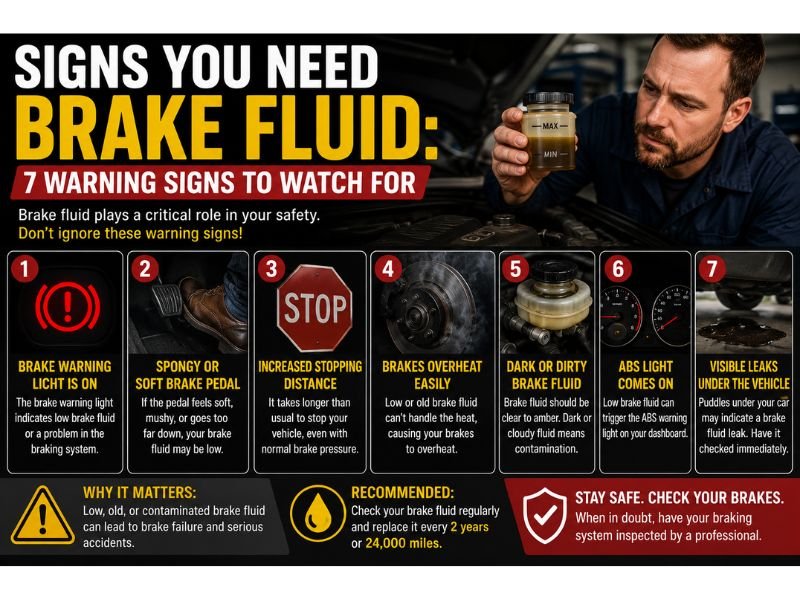
The most common signs you need brake fluid include a reservoir level below the MIN mark, a brake warning light, a soft or spongy pedal, longer pedal travel, and changes in braking response. However, low brake fluid usually tells you something about the brake system rather than simply meaning you should pour in more fluid.
Brake fluid transfers hydraulic pressure from the master cylinder to the brake calipers or wheel cylinders. When the level becomes too low, air may enter the system and braking performance can become less predictable.
Ford states that brake fluid between the MIN and MAX marks is within the acceptable range and recommends having the vehicle checked when the level falls below MIN.
When I see low brake fluid, I first ask why the level dropped. You should take the same approach because worn brake pads, a leaking caliper, damaged brake line, or master cylinder problem can all affect the reservoir level.
7 Signs You Need Brake Fluid
1. Brake Fluid Is Below the MIN Line
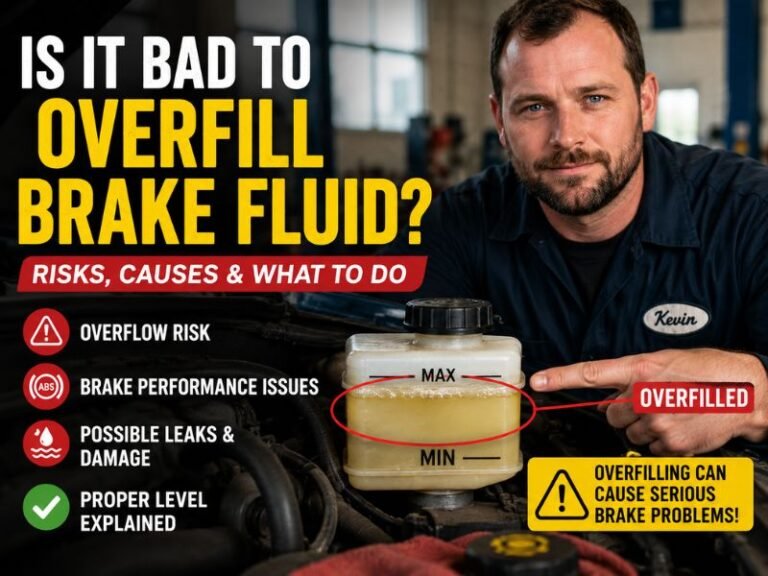
The most direct sign is a fluid level below the MIN mark on the brake fluid reservoir.
Most modern reservoirs are translucent, so you can usually see the fluid level without removing the cap. Park on a level surface and compare the fluid level with the MIN and MAX markings.
Ford specifically advises that fluid between these marks is acceptable and that a level below MIN should be checked.
If the level is only slightly lower than before, do not immediately assume there is a leak. Disc brake pad wear can gradually change the reservoir level.
A rapid drop, however, is different and needs investigation.
2. Brake Warning Light Comes On
A red brake warning light may be one of the first clues that the brake fluid is low.
The exact meaning depends on your vehicle. The warning may indicate low fluid, a parking brake that is still applied, or another hydraulic brake problem.
Toyota lists low brake fluid and brake-system malfunction as possible reasons for a red brake warning light and advises drivers to stop the vehicle safely.
If your brake warning light stays on after the parking brake is fully released, check the owner’s manual and brake fluid level.
You should not ignore the light simply because the brakes still seem to work normally.
3. Soft or Spongy Brake Pedal
A soft or spongy brake pedal can appear when the hydraulic system contains air.
If the brake fluid becomes low enough, air may enter the master cylinder or brake lines. Unlike brake fluid, air compresses easily, so the pedal can feel springy or less firm.
You may notice that pumping the pedal makes it temporarily firmer.
Low fluid is not the only possible cause, though. A hydraulic leak, improper bleeding, damaged brake hose, or master cylinder problem can create similar symptoms.
If your pedal suddenly becomes soft, you need to inspect the brake system instead of simply adding fluid.
4. Brake Pedal Travels Farther Than Normal
You may notice that the pedal moves closer to the floor before the brakes engage.
This excessive brake pedal travel can happen when hydraulic pressure is not building normally.
Low brake fluid may contribute if air has entered the system, but other faults can cause the same problem.
A leaking caliper, failed wheel cylinder, master cylinder issue, or air trapped after brake repairs should also be considered.
If I find long pedal travel together with low fluid, I treat it as a hydraulic problem until I know what caused it.
You should avoid driving normally if the pedal is approaching the floor.
5. Braking Feels Weak or Inconsistent
Low brake fluid can sometimes appear together with reduced or inconsistent braking.
You may feel that the pedal responds differently from one stop to the next or that you need more pedal travel before the vehicle begins slowing.
However, braking performance depends on many components.
Worn pads, damaged rotors, poor tires, overheated brakes, sticking calipers, or hydraulic leaks can all produce similar symptoms.
Do not automatically assume adding fluid will restore normal braking.
If stopping behavior has noticeably changed, the entire brake system needs attention.
6. You See Brake Fluid Leaking
Visible fluid loss is one of the strongest signs that low brake fluid is more than routine maintenance.
Possible leak locations include:
- brake calipers
- wheel cylinders
- flexible brake hoses
- steel brake lines
- master cylinder
- hydraulic fittings
A leaking caliper may leave fluid around the inside of a wheel. A leaking wheel cylinder may hide fluid inside a drum brake assembly.
That means you can have a significant brake fluid leak without seeing a large puddle underneath the car.
If you find a leak, adding more fluid is not the repair. The leaking component needs to be fixed first.
7. Brake Fluid Level Keeps Dropping
A reservoir that repeatedly becomes low is one of the clearest signs of an unresolved problem.
If you add fluid today and the level drops again soon afterward, you need to find where the fluid is going.
Brake fluid does not normally get consumed like engine oil or gasoline.
Some gradual level change can happen as brake pads wear, but repeated or rapid fluid loss usually requires inspection.
If I have to refill the same reservoir repeatedly, I stop treating it as a simple top-off and start looking for hydraulic leakage.
You should do the same.
What Does Low Brake Fluid Actually Mean?
Low brake fluid usually points to one of two situations: brake pad wear or fluid loss.
As disc brake pads wear, the caliper pistons move farther outward to keep the pads close to the rotors.
More brake fluid remains inside the calipers, so the reservoir level can gradually decrease.
That change is normally slow.
A hydraulic leak is different. A damaged brake line, hose, caliper seal, wheel cylinder, or master cylinder can allow fluid to escape much more quickly.
If the level falls suddenly, becomes extremely low, or keeps dropping after you add fluid, you should suspect a leak rather than normal pad wear.
A nearly empty reservoir is especially concerning because air may already have entered the hydraulic system.
Can Worn Brake Pads Make Brake Fluid Low?
Yes, worn brake pads can make the reservoir level decrease gradually.
As the pads become thinner, the caliper pistons stay farther out of their bores. This requires more fluid to remain inside the calipers.
That fluid comes from the reservoir.
This is why I usually check brake pad thickness before topping off a reservoir that is only mildly low.
There is another reason to be careful.
If you fill the reservoir to MAX while the brake pads are badly worn and later install new pads, the caliper pistons are pushed back into their bores.
The displaced fluid returns to the reservoir and may push the level too high.
So, before adding fluid to a slightly low reservoir, you should check whether normal pad wear explains the level change.
What Causes Brake Fluid to Get Low?
Several problems can lower brake fluid.
Worn Brake Pads
This usually creates a gradual change rather than sudden fluid loss.
Leaking Brake Caliper
A damaged caliper piston seal can allow fluid to escape near a wheel.
Fluid may also contaminate the brake pad or rotor.
Leaking Wheel Cylinder
Vehicles with rear drum brakes may use wheel cylinders.
These can leak inside the drum, making the problem less obvious from outside.
Damaged Brake Hose
Flexible brake hoses can crack, deteriorate, or leak around their fittings.
A leak may become worse when you press the pedal and hydraulic pressure rises.
Rusted Brake Line
Steel brake lines can corrode, especially in areas where winter road salt is common.
A weakened section can start as a small leak and eventually rupture.
Master Cylinder Leak
A master cylinder can lose fluid externally around seals or mounting areas.
Some problems may be difficult to see without closer inspection.
If your reservoir level keeps dropping, do not assume the fluid simply evaporated.
How to Check If You Need Brake Fluid
Start by parking the vehicle on a level surface.
Locate the brake fluid reservoir near the master cylinder, usually toward the driver’s side of the engine compartment.
Look at the MIN and MAX markings without opening the cap if possible.
Ford advises keeping the reservoir cap in place and fully tight except when fluid is actually being added, helping reduce contamination.
If the level is below MIN, check for obvious leaks around the master cylinder and underneath the vehicle.
Look near each wheel for unusual wetness.
You should also consider brake pad wear if the level is only slightly low.
If you need to open the reservoir, clean dirt away from the cap first.
Never insert dirty tools into the reservoir. Contaminating brake fluid with dirt, water, or petroleum products can damage the hydraulic system. Ford specifically warns against this type of contamination.
Should You Add Brake Fluid If It Is Low?
Sometimes, but you should understand why it is low first.
If the level is slightly below specification and no major leak is present, topping off with the correct fluid may be appropriate according to the vehicle manufacturer’s procedure.
But adding fluid should not become a habit.
Do not simply top off the reservoir if:
- the reservoir is almost empty
- the fluid level drops repeatedly
- the brake pedal feels soft
- you see a hydraulic leak
- braking performance has changed
Topping off brake fluid does not repair a leak.
If the system has lost enough fluid for air to enter, you may also need to bleed the brakes after the leak is repaired.
What Brake Fluid Should You Add?
Always use the brake fluid specification required by your vehicle manufacturer.
Common types include DOT 3, DOT 4, DOT 5, and DOT 5.1, but they are not all interchangeable.
Check:
- the owner’s manual
- the reservoir cap
- manufacturer service information
Ford advises using only brake fluid that meets the vehicle’s specified requirements.
Do not assume a higher DOT number automatically means a better upgrade for your vehicle.
Also remember that DOT 5 and DOT 5.1 are very different fluids despite their similar names.
Use fresh fluid from a sealed container and avoid contamination.
What Happens If You Keep Driving With Low Brake Fluid?
Continuing to drive with significantly low brake fluid can become dangerous.
If the level drops far enough, air may enter the hydraulic system.
The pedal can become soft, braking may become inconsistent, and stopping distance can increase.
The leak causing the fluid loss may also suddenly become worse.
Toyota advises stopping safely when a brake-system warning indicates low brake fluid or a brake malfunction.
If the reservoir is nearly empty, the pedal is sinking, or braking performance is noticeably reduced, you should not continue normal driving.
Have the vehicle towed when braking reliability is uncertain.
Do You Need to Bleed the Brakes After Adding Fluid?
Not always.
If the reservoir remained above the point where air could enter the hydraulic system, simply correcting the level may not require bleeding.
Bleeding may be necessary if:
- the reservoir ran empty
- a hydraulic line was opened
- a leaking component was replaced
- air entered the brake lines
- the pedal remains spongy
Some ABS and electronically controlled brake systems require special bleeding procedures or a scan tool.
Follow the manufacturer procedure for your specific vehicle.
When Should You See a Brake Technician?
You should have the vehicle inspected if the reservoir repeatedly becomes low or nearly empty.
A soft or sinking pedal, visible leak, persistent brake warning light, increased stopping distance, or vehicle pulling while braking also needs attention.
If I see low fluid together with a pedal change, I look for a hydraulic fault before recommending a simple top-off.
You should avoid assuming that adding a few ounces of brake fluid has solved the problem.
Brake fluid level is a clue. The important part is understanding why it changed.
FAQs About Signs You Need Brake Fluid
Can low brake fluid make the pedal soft?
Yes. If the level becomes low enough for air to enter the hydraulic system, the pedal may feel soft or spongy.
Can I just add brake fluid?
You can add the correct fluid when appropriate, but first determine why the level is low. A leak must be repaired.
Why does my brake fluid keep getting low?
Possible causes include brake pad wear or a leak from a caliper, wheel cylinder, hose, line, or master cylinder.
Does low brake fluid mean I need new brakes?
Not necessarily. Worn pads can lower the reservoir level, but a low level can also indicate hydraulic fluid loss.
How low is too low?
Fluid below the manufacturer’s MIN mark requires attention. Ford recommends having the vehicle checked when the level falls outside the MIN-to-MAX range.
Can low brake fluid cause the brake light to come on?
Yes, on many vehicles. However, brake warning lights can indicate several conditions, so check the owner’s manual.
Can I drive with low brake fluid?
Not if the reservoir is extremely low, braking performance has changed, or a significant leak is suspected.
Conclusion
Recognizing the signs you need brake fluid can help you spot a hydraulic brake problem before it becomes more serious.
A level below MIN, brake warning light, soft pedal, excessive pedal travel, visible leaks, and repeated fluid loss are all signs that deserve attention.
When I find a slightly low reservoir, I usually check brake pad wear and look for leaks before adding fluid. You should follow the same basic approach rather than treating every low level as a simple top-off.
If the reservoir is nearly empty, the pedal feels abnormal, or fluid keeps disappearing, find and repair the cause first.
Then refill the system with the correct brake fluid and bleed it if air has entered. Reliable braking depends on fixing the problem behind the low fluid level, not just restoring the level in the reservoir.